
Chip Seal Driveway Cost in 2026: Price per Square Foot, Tar and Chip Prices and Real Examples
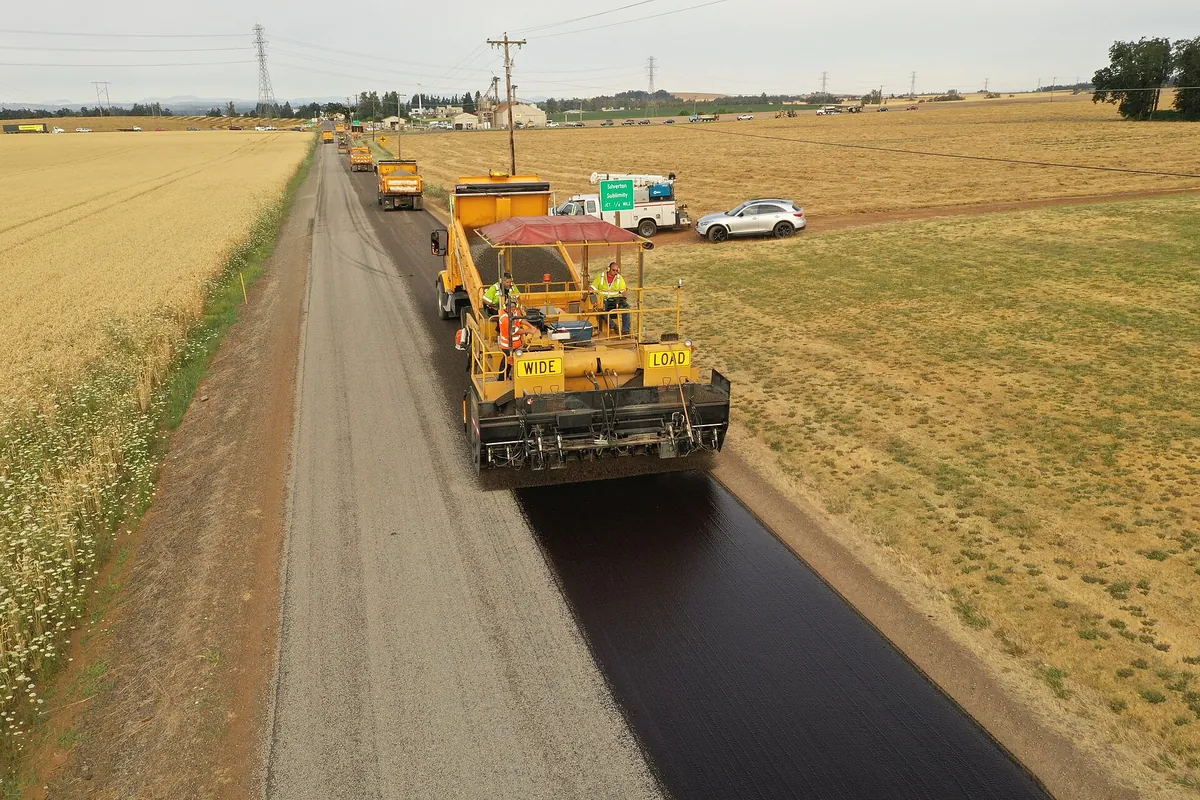
Photo: Oregon DOT, Wikimedia Commons, CC BY 2.0
Quick Answer
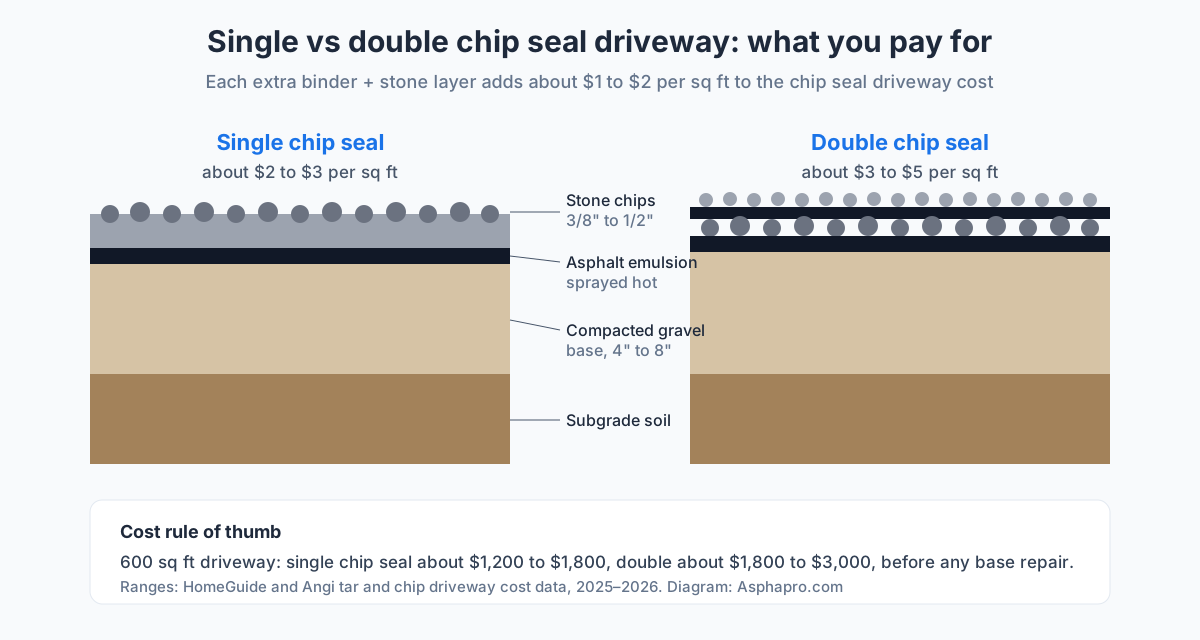
Chip seal driveway cost is about $2 to $5 per square foot installed in 2026. A single chip seal runs about $2 to $3 per square foot and a double chip seal about $3 to $5. For a typical 600 sq ft driveway that is $1,200 to $1,800 single or $1,800 to $3,000 double, before any base repair. Tar and chip driveway cost is the same thing under an older name, and it is usually less than half of what a new asphalt driveway costs.
A chip seal driveway is hot liquid asphalt binder sprayed over a compacted gravel base, covered right away with a layer of crushed stone chips, and rolled so the stone sets into the binder. You end up with a hard, dark, textured surface that looks like a country road. It sits between gravel and asphalt on price, and that is why so many people with long rural driveways look up the chip seal driveway cost before they decide.
This guide breaks down the chip seal driveway cost per square foot, the cost by driveway size, the difference between a single and a double chip seal, what pushes a quote up, and how the chip and seal driveway cost compares with gravel, asphalt and concrete. Every price range comes from published 2025–2026 cost data listed in the sources at the bottom. You can also run your own numbers in the calculator below.
Chip Seal Driveway Cost Calculator
Enter your driveway length, width and number of layers to get a chip seal cost estimate. The calculator uses the same per-square-foot ranges as this guide, so you can compare your result with the tables further down. If you only know the shape of your driveway, measure it first with our driveway size calculator.
Prefer the full page? Open the chip seal cost calculator or the tar and chip driveway cost calculator, which adds the stone tonnage and binder gallons for ordering material.
Chip Seal Driveway Cost per Square Foot
Contractors quote chip seal by the square foot or by the square yard (9 square feet). The chip seal cost per square foot depends mostly on how many layers you get and how much work the base needs. These are the 2026 ranges for a residential chip seal driveway:
| Chip seal type | Cost per sq ft | Cost per sq yard | What you get |
|---|---|---|---|
| Single chip seal | $2 – $3 | $18 – $27 | One coat of binder and one layer of stone |
| Double chip seal | $3 – $5 | $27 – $45 | Two coats of binder, larger stone then smaller stone |
| Chip seal + new gravel base | $3.25 – $8 | $29 – $72 | Gravel base built or rebuilt first, then the seal |
| Re-seal of an old chip seal | $1.50 – $3 | $13.50 – $27 | New binder and stone over a sound old surface |
The double chip seal costs more because the crew sprays binder twice and spreads stone twice, and it uses more material. In return it gives a smoother, tighter surface that sheds water better and lasts longer. The re-seal price applies when the old chip seal is still well bonded and the base underneath is solid; it is the cheapest way to renew a tar and chip driveway.
Some cost guides quote a higher chip seal cost of $5 to $10 per square foot. Those figures usually include grading, new base stone, culvert work or small-job minimums. When you compare chip seal driveway cost quotes, always ask whether the price covers the seal only or the seal plus base preparation.
Chip Seal Driveway Cost by Driveway Size
Here is what tar and chip costs for common driveway sizes, using the per-square-foot ranges above. A standard one-car driveway is about 10 to 12 feet wide; a two-car driveway is about 20 to 24 feet wide.
| Driveway size | Area | Single chip seal | Double chip seal |
|---|---|---|---|
| 10 × 40 ft (one car, short) | 400 sq ft | $800 – $1,200 | $1,200 – $2,000 |
| 12 × 50 ft (one car) | 600 sq ft | $1,200 – $1,800 | $1,800 – $3,000 |
| 20 × 40 ft (two car) | 800 sq ft | $1,600 – $2,400 | $2,400 – $4,000 |
| 24 × 50 ft (two car) | 1,200 sq ft | $2,400 – $3,600 | $3,600 – $6,000 |
| 12 × 200 ft (rural lane) | 2,400 sq ft | $4,800 – $7,200 | $7,200 – $12,000 |
| 12 × 1,320 ft (quarter-mile lane) | 15,840 sq ft | $31,680 – $47,520 | $47,520 – $79,200 |
Small jobs often cost more per square foot than the table shows. A chip seal crew brings a distributor truck that sprays the binder, a chip spreader, dump trucks with stone and a roller. Moving that equipment costs the same whether your driveway is 400 or 4,000 square feet, so many contractors set a minimum job charge or add a mobilization fee. If your neighbors also need work, ask for a combined price: sharing the mobilization is one of the easiest ways to lower your chip seal driveway cost.
Long rural driveways are where tar and chip pays off most. On a quarter-mile lane the chip seal driveway cost is roughly $32,000 to $79,000, while the same lane in new asphalt at $7 to $15 per square foot would run about $111,000 to $238,000. For more on long private lanes, see our guide on how much it costs to pave a private road.
Tar and Chip Driveway Cost vs Chip Seal Driveway Cost
Tar and chip driveway cost and chip seal driveway cost are the same number, because they are the same surface. "Tar and chip" is the older name from when coal tar was the binder. Today the binder is almost always an asphalt emulsion (asphalt droplets suspended in water) or a hot asphalt cement, but many contractors, especially in the Northeast and Midwest, still call the result a tar and chip driveway. In parts of the UK it is called surface dressing, and some people say chip and seal.
So when one company quotes a tar and chip driveway and another quotes a chip and seal driveway, compare them line by line as the same product. The things that really change the price are the number of layers, the stone size and type, and the base work, not the name on the quote.
What Goes Into the Cost of a Chip Seal Driveway
Every chip seal quote is built from the same four parts. Knowing them helps you read a quote and spot where a price is high.
1. Base preparation
Chip seal does not add strength; it only seals and protects the base under it. If the gravel base is soft, rutted or full of potholes, the new surface will crack and ravel. A proper base is 4 to 8 inches of compacted crushed stone, graded with a crown so water runs off the sides. If your gravel is already firm and well drained, base prep may be only grading and rolling. If it needs new stone, budget about $1.25 to $3 per square foot extra, the same range a new gravel driveway costs. Our road base calculator and crushed stone calculator show how many tons of base stone you would need.
2. Binder
The binder is the liquid asphalt that glues the stone down. It is sprayed hot from a distributor truck at a controlled rate, typically in the range of about 0.3 to 0.5 gallons per square yard for each layer, depending on stone size and the surface underneath. A double chip seal needs two shots of binder, which is a big part of why the double chip seal cost is higher.
3. Stone chips
The aggregate is clean, crushed stone of one size, usually 3/8 inch to 1/2 inch, spread at roughly 15 to 30 pounds per square yard. Clean, angular stone locks together and holds better than rounded or dusty stone. Specialty colored stone (white limestone, red granite, river-washed pea stone) can add to the chip seal cost, especially where it has to be trucked in from far away.
4. Equipment, labor and mobilization
A chip seal crew is usually three to six people with a distributor truck, a chip spreader or tailgate spreader, dump trucks and a pneumatic roller. Labor and equipment time are a large part of the chip and seal driveway cost on residential work, and they explain the job minimums on small driveways.
Factors That Raise or Lower Chip Seal Cost
- Number of layers. Going from single to double chip seal adds about $1 to $2 per square foot. A triple seal is rare on driveways and costs more again.
- Base condition. This is the biggest swing in any quote. Firm, crowned gravel needs little work; soft or muddy gravel may need excavation and new stone.
- Driveway size and shape. Large, straight driveways cost less per square foot. Short driveways, tight turns and narrow access cost more because the trucks maneuver more and lay less per hour.
- Distance from the asphalt plant and quarry. Binder and stone are heavy. The farther they travel, the more the chip seal cost rises.
- Stone type. Local gray limestone is usually the cheapest; decorative colors cost more.
- Season. Chip seal needs warm, dry weather, generally above about 50 to 60°F, so most crews work late spring to early fall. Booking in spring before the busy season can get a better price.
- Drainage work. Culverts, ditches and swales are priced on top of the seal itself, but skipping them shortens the life of the surface.
- Region. Labor and material prices are higher in the Northeast and West Coast than in the South and Midwest.
Single vs Double Chip Seal: Which Is Worth Paying For?
The single-or-double choice is the biggest decision you control, and it moves the chip and seal driveway cost by about $1 to $2 per square foot. Here is how to decide.
A single chip seal is one shot of binder and one layer of stone. It works well as a re-seal over an old chip seal or old asphalt that is still sound, and on lightly used driveways where the base is already firm. It is the cheapest option, but with only one layer, any spot where the stone did not bond leaves bare binder that can pick up on tires in hot weather.
A double chip seal puts down a first layer of larger stone, then a second shot of binder and a layer of smaller stone that fills the gaps. The result is tighter, quieter and smoother under foot, sheds water better and holds up longer under turning tires. On a brand new tar and chip driveway over gravel, most contractors recommend a double seal for this reason, and that is the option most homeowners end up paying for.
| Situation | Better choice | Why |
|---|---|---|
| New tar and chip driveway over gravel | Double | Seals the base fully and lasts longer |
| Re-seal of an old chip seal in good shape | Single | The old layer already acts as the first coat |
| Chip seal over old asphalt | Single | The asphalt is already a sealed surface |
| Steep or curved driveway, heavy trucks | Double | Turning tires scuff a single layer faster |
| Tight budget, light traffic, firm base | Single | Lowest chip seal cost that still ends the dust |
Choosing Stone for a Tar and Chip Driveway
The stone is what you see every day, so it is worth a moment before you sign. Most crews use whatever clean, crushed stone the nearest quarry sells, which keeps the tar and chip driveway cost down. Common choices are:
- Gray limestone or trap rock. The standard choice in most of the U.S. It gives the classic dark-gray country-road look once the binder darkens it.
- White or light limestone. A brighter, cleaner look that stays cooler in summer. It can cost more if it is not local.
- Brown or tan river stone (crushed). A warmer color that suits farmhouses and stone homes. Rounded, uncrushed river gravel holds poorly, so make sure it is crushed.
- Red or pink granite. A decorative option where it is quarried locally; it can raise the chip seal cost noticeably where it has to be trucked in.
Ask to see a sample or a driveway the contractor has already done with the same stone. Stone size matters too: 3/8 inch stone gives a finer, smoother surface that is nicer to walk on, while 1/2 inch stone is more rugged and better for trucks and farm equipment.
Steep, Shaded or Wet Driveways
Chip seal works on slopes, and its texture gives better grip than smooth asphalt on a hill in the rain. On steep grades, though, the crew may need to work slower and the binder can run before the stone is spread, so expect the price to be at the higher end of the range. Check the grade with our driveway slope calculator before you ask for quotes.
Shaded driveways stay damp longer, and moisture is what breaks down any driveway surface from below. On a shaded or wet site, spend part of your budget on drainage first: a crowned base, side ditches and a culvert where the driveway crosses a low spot. A tar and chip driveway on a dry base can last well past ten years; the same surface on a wet base may start breaking up in a few seasons, which makes it the more expensive choice over time.
Chip and Seal Driveway Cost vs Gravel, Asphalt and Concrete
The main reason to choose tar and chip is price. Here is how the chip and seal driveway cost compares with the other common driveway surfaces per square foot, along with how long each typically lasts.
| Surface | Installed cost per sq ft | 600 sq ft driveway | Typical life |
|---|---|---|---|
| Gravel | $1.25 – $3 | $750 – $1,800 | Needs regrading and new stone often |
| Single chip seal | $2 – $3 | $1,200 – $1,800 | About 7 – 10 years |
| Double chip seal | $3 – $5 | $1,800 – $3,000 | About 7 – 10+ years |
| Plain concrete | $4 – $8 | $2,400 – $4,800 | 25 – 30+ years |
| New asphalt | $7 – $15 | $4,200 – $9,000 | 15 – 20+ years |
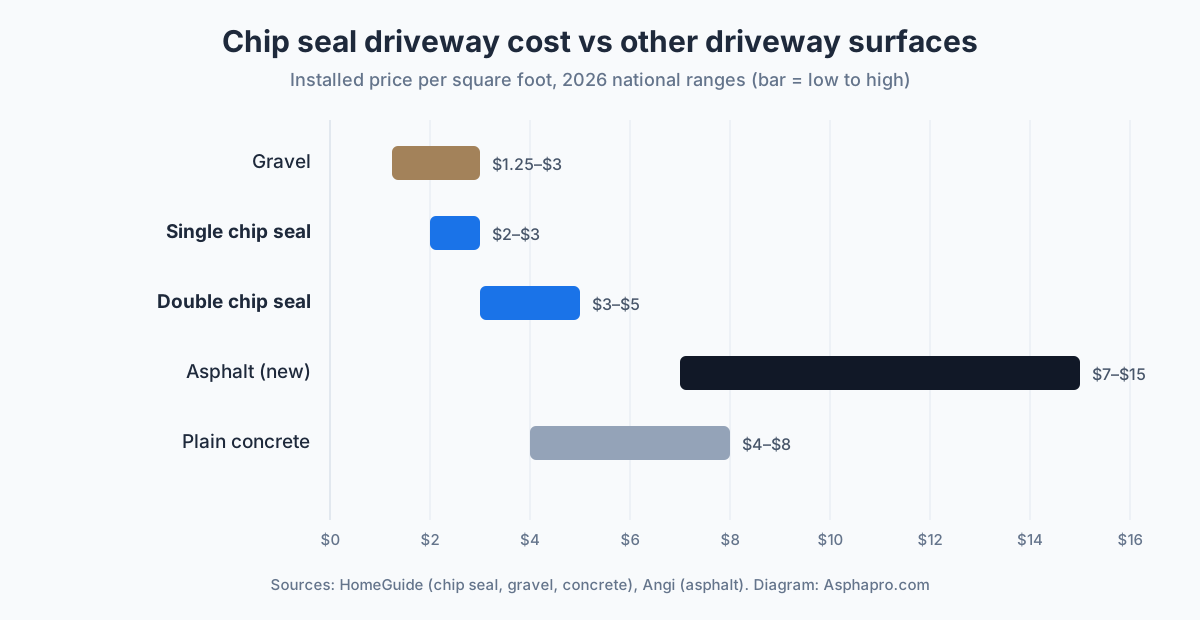
Against gravel, a chip seal driveway costs a little more up front but ends the dust, the washboard ruts and most of the regrading. Against asphalt, the chip seal driveway cost is far lower, but the surface is rougher and loose stone can stick to shoes and snow shovels for the first few weeks. Asphalt is smoother and better for basketball, skateboards and heavy plowing. We compare the two in more detail in chip seal vs asphalt driveway cost, and you can price a paved version with the asphalt driveway calculator or read how much an asphalt driveway costs.
Worked Example: Pricing a 600 sq ft Tar and Chip Driveway
Say your driveway is 12 feet wide and 50 feet long, with an existing gravel base that is firm but has a few soft spots near the road. Here is how a realistic tar and chip driveway cost adds up:
| Line item | Low | High |
|---|---|---|
| Area: 12 × 50 = 600 sq ft (66.7 sq yd) | — | — |
| Fix soft spots: 100 sq ft new base at $1.25 – $3 | $125 | $300 |
| Grade and roll the full base (often included) | $0 | $300 |
| Double chip seal: 600 sq ft at $3 – $5 | $1,800 | $3,000 |
| Total tar and chip driveway cost | $1,925 | $3,600 |
With a single chip seal instead of a double, the same driveway would come to about $1,325 to $2,400. If your contractor has a minimum charge above these totals, that minimum is your real chip seal driveway cost, so it is worth asking about it before anything else.
How Much Does Chip Seal Cost to Maintain?
The low upkeep is part of the appeal. A chip seal driveway does not need sealcoating the way asphalt does. In the first two to four weeks some loose stone will come up; a light sweep or a pass with a leaf blower takes care of it. After that, maintenance is mostly keeping water off the base.
- Keep ditches and culverts clear so water does not soak the base.
- Patch small holes early with cold patch or a little binder and stone.
- Plow with the blade raised slightly or with shoes on the plow, so it does not scrape the stone off.
- Plan a re-seal after about 7 to 10 years, when the stone starts to wear thin.
A re-seal over a sound surface costs roughly $1.50 to $3 per square foot, which keeps the long-term chip seal cost low. Compare that with asphalt, where the sealcoating cost comes around every two to three years and a full driveway resurfacing eventually follows.
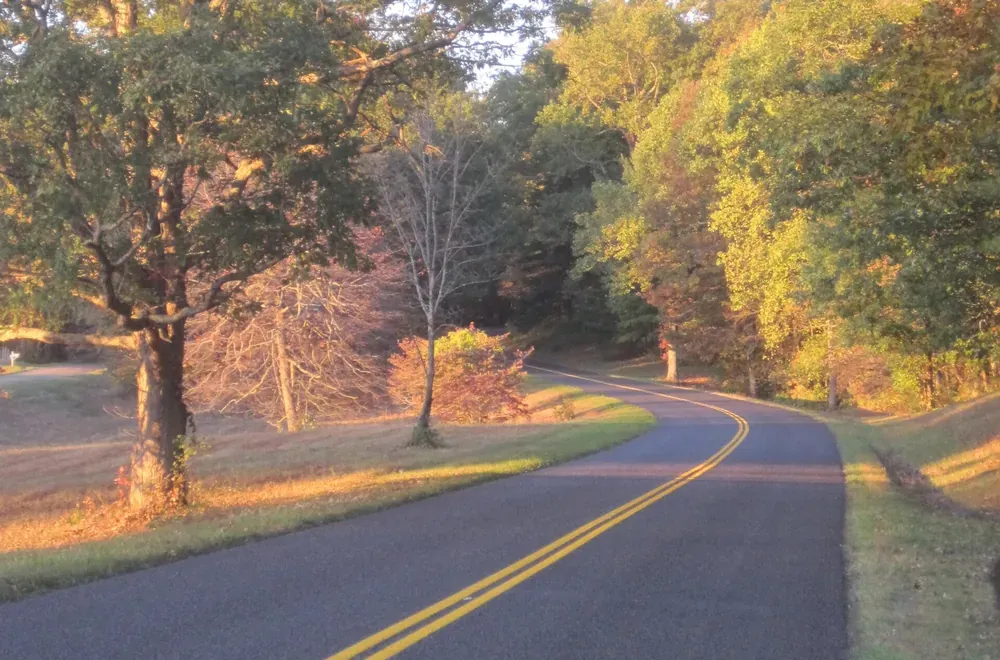
Photo: NPS, Wikimedia Commons, public domain
Is a Chip Seal Driveway Worth the Cost?
For most long rural or farm driveways, yes. A chip seal driveway costs less than half of asphalt, it handles cars and pickup trucks well, it does not get as hot in summer, and the stone texture gives good grip in rain. For short suburban driveways the case is weaker: the job minimum can push the chip seal driveway cost close to asphalt, and some HOAs do not allow a stone surface.
Pros
- Low chip seal cost per square foot
- Ends gravel dust and washboarding
- Good traction in wet weather
- Rustic look that suits country homes
- No sealcoating schedule
Cons
- Rougher surface than asphalt
- Loose stone for the first few weeks
- Snow plows can scrape it
- Only as good as the base under it
- Few contractors do small residential jobs
Can You Do a Chip Seal Driveway Yourself?
Not really. A proper chip seal needs hot binder sprayed at an even rate across the full width, then stone spread within minutes before the binder breaks, then rolling with a rubber-tired roller. Without a distributor truck and spreader, the binder goes on too thick in some places and too thin in others, and the stone either drowns or never sticks. You can save money by doing the prep yourself, such as clearing brush, cleaning ditches, filling soft spots with crushed stone, and grading, but the chip seal itself is a contractor job. That is also why most of the price is labor and equipment rather than material.
How to Get an Accurate Chip Seal Driveway Cost Quote
- 1
Measure the driveway
Length × width for each straight section, plus any turnaround or parking pad. Use the square footage calculator for odd shapes.
- 2
Check the base
Note soft spots, potholes, standing water and missing gravel. This tells you whether you need base work on top of the chip seal cost.
- 3
Ask for single and double prices
Get both chip seal options on the same quote so you can compare the price per square foot.
- 4
Ask what is included
Grading, new stone, rolling, culverts, cleanup of loose stone after a few weeks, and any minimum or mobilization fee.
- 5
Compare at least three quotes
Compare each quote's tar and chip driveway cost per square foot, not just the total, and check the stone size and binder type match.
Frequently Asked Questions
How much does chip seal cost per square foot?
Chip seal costs about $2 to $5 per square foot installed in 2026: about $2 to $3 for a single chip seal and $3 to $5 for a double chip seal. Base repair and new gravel are extra.
How much does a chip seal driveway cost for 600 square feet?
About $1,200 to $1,800 with a single seal and $1,800 to $3,000 with a double seal, before base repair or a minimum job charge.
Is tar and chip driveway cost the same as chip seal driveway cost?
Yes. Tar and chip and chip seal are the same surface. Compare the quotes on layers, stone size and base work, not on the name.
How long does a chip seal driveway last?
Usually about 7 to 10 years before it needs a re-seal. A double chip seal on a solid, well-drained base lasts longest.
Is chip seal cheaper than asphalt?
Yes. At $2 to $5 per square foot versus $7 to $15 for new asphalt, a chip seal driveway costs less than half as much for the same area.
Can you chip seal over gravel?
Yes, that is the normal method. The gravel must be graded, crowned and rolled firm first, and any soft areas fixed before the binder goes down.
Can you chip seal over an old asphalt driveway?
Yes, if the asphalt is still structurally sound. Cracks and potholes should be repaired first. A chip seal over old asphalt is a low-cost way to renew the surface; see our asphalt repair cost calculator for the patching part.
Sources
- HomeGuide, "How much does a chip seal or tar and chip driveway cost?" — single and double chip seal price ranges per square foot. homeguide.com
- Angi, "How much does tar and chip driveway cost" and "Chip seal vs asphalt" — national average chip seal cost and asphalt comparison. angi.com, angi.com
- HomeGuide, "How much does a gravel driveway cost?" and "How much does a driveway cost?" — gravel and plain concrete per square foot. homeguide.com, homeguide.com
- Transportation Research Board, NCHRP Synthesis 342, "Chip Seal Best Practices" — binder and aggregate application practice.
- Image credits: hero photo by Oregon Department of Transportation (CC BY 2.0) and finished-surface photo by the U.S. National Park Service (public domain), both via Wikimedia Commons. Diagrams by Asphapro.com.
Prices checked November 2026. They are national ranges; local quotes can be higher or lower.