
Asphalt Shingle Roof Replacement in New Jersey — 2026 Cost & Complete Guide
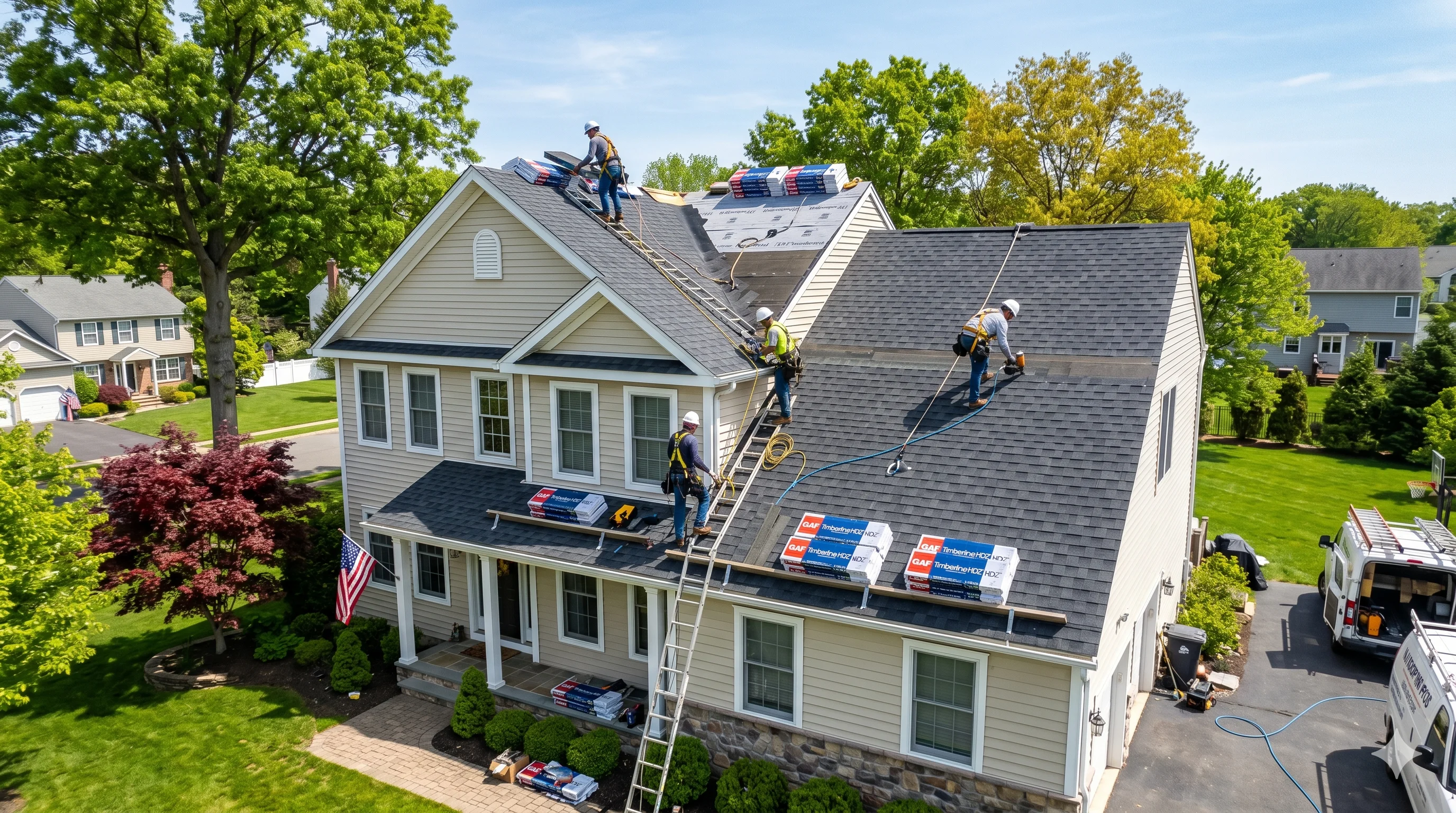
Asphalt shingle roof replacement in New Jersey costs $8,000–$22,000 for a typical home in 2026, with most NJ homeowners paying $12,000–$16,000 for a standard architectural shingle replacement on a 1,500–2,000 sqft roof. New Jersey's coastal weather, heavy snow loads, and strict building codes make choosing the right shingle and contractor especially important. This guide covers NJ-specific costs, permits, and what to look for when hiring a roofing contractor in New Jersey.
Asphalt Shingle Roof Replacement Cost in New Jersey (2026)
All prices below include tear-off of existing shingles, disposal, ice-and-water underlayment, drip edge, and full installation. NJ permit cost is additional ($150–$600):
| Home Size | Roof Area | 3-Tab | Architectural | Premium/SBS |
|---|---|---|---|---|
| Small (1,000 sqft) | ~1,200 sqft | $6,000–$10,000 | $8,000–$13,000 | $12,000–$20,000 |
| Medium (1,500 sqft) | ~1,800 sqft | $9,000–$15,000 | $12,000–$19,000 | $18,000–$28,000 |
| Large (2,000 sqft) | ~2,400 sqft | $12,000–$20,000 | $16,000–$25,000 | $24,000–$38,000 |
| XL (2,500 sqft) | ~3,000 sqft | $15,000–$25,000 | $20,000–$31,000 | $30,000–$46,000 |
Prices for New Jersey market, April 2026. Includes tear-off, disposal, underlayment, drip edge, and installation. Permits additional. Get 3 quotes from licensed NJ HIC contractors for your specific home.
Asphalt Shingle Replacement Cost by New Jersey County
NJ's labor market varies significantly by region — a Bergen County roof costs meaningfully more than the same job in Salem County:
| County / Region | vs. State Average | Notes |
|---|---|---|
| Bergen, Essex, Union | +20–30% | High labor market, proximity to NYC |
| Hudson, Passaic | +15–25% | Urban density premium, high overhead |
| Monmouth, Ocean | +5–15% | Shore area, elevated storm demand |
| Morris, Somerset | +10–20% | Affluent suburban market |
| Mercer, Middlesex | Base price | Central NJ — state average |
| Camden, Gloucester | -5–10% | More competitive contractor market |
| Cumberland, Salem, Cape May | -5–15% | Rural South Jersey, lower labor costs |
What Is Included in a Full NJ Roof Replacement?
A complete asphalt shingle roof replacement in New Jersey should include all of the following. Request an itemized quote to verify each line item is covered:
| Line Item | Typical NJ Cost | Notes |
|---|---|---|
| Tear-off & disposal | $1,000–$3,000 | NJ disposal fees are high; varies by layers |
| Underlayment (ice & water shield + felt) | $500–$1,500 | NJ code: ice barrier required 24"+ from eave |
| Drip edge & flashing | $300–$800 | Required by NJ building code |
| Shingles — material | $2,000–$8,000+ | Varies by type and roof size |
| Labor | $3,000–$8,000 | Highest cost variable by county |
| Permit (all NJ municipalities) | $150–$600 | Contractor should pull — not homeowner |
| Cleanup & haul-away | Included in labor | Verify this is explicitly included |
Best Asphalt Shingles for New Jersey Climate
NJ's position between the coast and the Appalachian highlands creates a demanding climate for roofing materials. The right shingle choice depends on your specific NJ location:
Wind Resistance — Critical for Shore and Coastal NJ
New Jersey experiences nor'easters, occasional tropical storms, and sustained coastal winds that can exceed 70 mph. A minimum 110 mph wind resistance rating is essential — look for this on the shingle packaging or data sheet. Architectural (dimensional) shingles significantly outperform 3-tab in wind uplift resistance due to their laminated construction and heavier weight. For shore towns from Sandy Hook to Cape May, premium shingles with 130+ mph wind ratings are worth the additional cost.
Ice Dam Protection — Northern NJ and the Highlands
Morris, Sussex, Warren, Hunterdon, and Passaic counties regularly experience ice dam conditions when snow accumulates and partially melts. NJ building code requires a self-adhering ice and water shield membrane on at least the first 24 inches from the eave — but in snow-prone northern NJ areas, 36–48 inches is better practice. SBS polymer-modified shingles resist cracking in repeated freeze-thaw cycles better than standard fiberglass shingles.
Recommended Shingle Grades for NJ
| Shingle Type | NJ Recommendation | Best Where |
|---|---|---|
| 3-Tab (standard) | ❌ Not recommended | Inadequate wind resistance for NJ |
| Architectural / Dimensional | ✅ Minimum standard | All NJ locations — 30-yr warranty |
| Impact-Resistant (Class 4) | ✅ Worth considering | Morris, Sussex, Warren counties (hail) |
| Premium / SBS-Modified | ⭐ Best for coastal NJ | All shore towns and high-wind areas |
New Jersey Roofing Permits and Code Requirements
📋 NJ Permit Requirements at a Glance
- Permit required: Yes, in all 21 NJ counties — no exceptions
- Permit cost: $150–$600 depending on municipality
- Final inspection: Required after completion in all municipalities
- Ice barrier: Self-adhering membrane minimum 24" from eave — more in northern NJ
- Drip edge: Required at eaves and rakes per NJ building code
- Maximum layers: Most NJ municipalities allow max 2 total layers before requiring full tear-off
- Contractor license: All NJ roofing contractors must hold a valid NJ HIC license
The permit is not optional and should always be pulled by your contractor — not the homeowner. A contractor who suggests "skipping the permit to save money" is a serious red flag in New Jersey. Unpermitted work can invalidate your homeowner's insurance coverage for storm damage and creates disclosure complications when selling your home.
How to Find and Vet a NJ Roofing Contractor
Required Credentials in New Jersey
- NJ Home Improvement Contractor (HIC) registration — verify the registration number at njconsumeraffairs.gov before signing any contract
- Workers' compensation insurance — mandatory in NJ; if a worker is injured on your property without this, you can be held liable
- General liability insurance — minimum $1 million; request a certificate of insurance from their insurer directly
- Local business presence — a physical NJ address and verifiable history of local projects
Getting Quotes — What Each Should Include
Get at least 3 detailed written quotes. Each should specify: shingle brand and exact model, manufacturer's warranty (duration and coverage), contractor's workmanship warranty (minimum 5 years is standard in NJ), whether permits are included, and the payment schedule. Under NJ consumer protection law, HIC contractors cannot legally require more than one-third of the total contract as an upfront deposit — any contractor demanding 50%+ upfront is a warning sign.
🚩 Red Flags to Avoid in New Jersey
- Storm chasers — out-of-state contractors appearing after nor'easters who won't be around for warranty claims
- Cash-only payments — no paper trail, no recourse if work is incomplete
- No NJ HIC license — illegal to perform home improvement work in NJ without it
- Suggesting to skip permits — illegal and puts your insurance at risk
- Dramatically lower bids — often indicate inferior materials, no underlayment, or no permits pulled
- Door-to-door solicitation — reputable NJ roofing contractors don't cold-knock
How Long Does a NJ Roof Replacement Take?
Most New Jersey roof replacements complete in 1–3 days depending on roof size, complexity (valleys, dormers, skylights), and crew size. Weather delays are common in NJ — contractors need a minimum of 2–3 consecutive dry days without rain forecast. Wet underlayment or decking creates moisture trapping problems that shorten roof lifespan significantly.
✅ Best Time to Schedule in NJ
Late spring (May–June) and early fall (September–October) are the optimal windows. Temperatures are above 40°F for proper shingle sealing, contractor scheduling is more flexible than peak summer backlog, and NJ weather is most predictable. Avoid August–September (hurricane season peak) and January–March (freeze-thaw risks during installation).
Asphalt Shingle Brands Available in New Jersey
New Jersey roofing contractors work with all major shingle manufacturers. The most commonly installed brands in NJ include:
- GAF — headquartered in Parsippany, NJ. The "hometown brand" for NJ contractors. GAF Timberline HDZ and HDZ RS are among the most popular architectural shingles in the state, known for their StainGuard Plus algae resistance (critical in NJ's humid summers) and strong wind resistance ratings.
- CertainTeed — Landmark and Landmark Pro series are widely installed across NJ. SureStart PLUS warranty coverage is popular with NJ homeowners.
- Owens Corning — Duration series with SureNail technology is a strong performer in NJ's wind environment.
- Atlas — Pinnacle Pristine and StormMaster Shake are alternatives worth considering for their impact resistance in northern NJ counties.
Ask your contractor which brands they are certified to install — manufacturer certifications often extend the standard warranty from 25 to 50 years for labor and materials combined.
Frequently Asked Questions
How much does it cost to replace an asphalt shingle roof in New Jersey?
Asphalt shingle roof replacement in NJ costs $8,000–$22,000 for a typical home in 2026. The average NJ homeowner with a 1,500–1,800 sqft roof pays $12,000–$16,000 for architectural shingles, fully installed including permits, tear-off, underlayment, and cleanup. Bergen, Essex, and Union counties run 20–30% higher than state average; South Jersey counties run 5–15% lower.
Do I need a permit to replace my roof in New Jersey?
Yes — permits are required in all NJ municipalities. Your contractor should pull the permit and arrange the final inspection. Never agree to "skip the permit to save money" — unpermitted roofing work can invalidate your homeowner's insurance storm coverage, complicate your home sale disclosure, and result in fines from your municipality. Cost: $150–$600 depending on your town.
What is the best shingle type for New Jersey?
Architectural (dimensional) shingles are the minimum recommended for all NJ locations. They outperform 3-tab in wind uplift resistance — critical for coastal NJ exposed to nor'easters. For shore communities from Sandy Hook to Cape May, premium SBS-modified shingles with 130+ mph wind ratings are the better investment. Avoid 3-tab shingles in NJ entirely.
How long does a roof last in New Jersey?
Architectural asphalt shingles last 25–30 years in NJ with proper installation. 3-tab shingles last 15–20 years. NJ's demanding climate — repeated nor'easters, high summer humidity (algae growth), wide temperature swings, and ice dam conditions in the north — shortens lifespan more than in moderate climates. Regular annual inspection after major storms extends effective roof life.
How do I verify a NJ roofing contractor's license?
Visit njconsumeraffairs.gov and search the NJ Division of Consumer Affairs Home Improvement Contractor (HIC) database. Enter the contractor's name or their HIC number. Also request a certificate of insurance sent directly from their insurer — not a copy from the contractor — to verify current workers' compensation and general liability coverage.
What is the best time of year to replace a roof in New Jersey?
Late spring (May–June) and early fall (September–October) offer the best conditions for NJ roof replacement. Temperatures are consistently above 40°F for proper shingle sealing, contractor availability is better than summer peak season, and the risk of weather delays is lowest. Avoid January–March installation when freeze-thaw cycles can compromise deck moisture and shingle sealing.
Can I put new shingles over my existing roof in NJ?
Most NJ municipalities allow one layer of new shingles over existing shingles (maximum 2 total layers). However, full tear-off is strongly recommended by most NJ roofing professionals because it: (1) allows full inspection of the decking for rot or damage, (2) is required when 2 layers already exist, (3) produces better final results and longer life, and (4) is required by most premium shingle manufacturer warranties to qualify for extended coverage.