
Best Time to Pave a Driveway: Seasonal Guide & Savings Tips
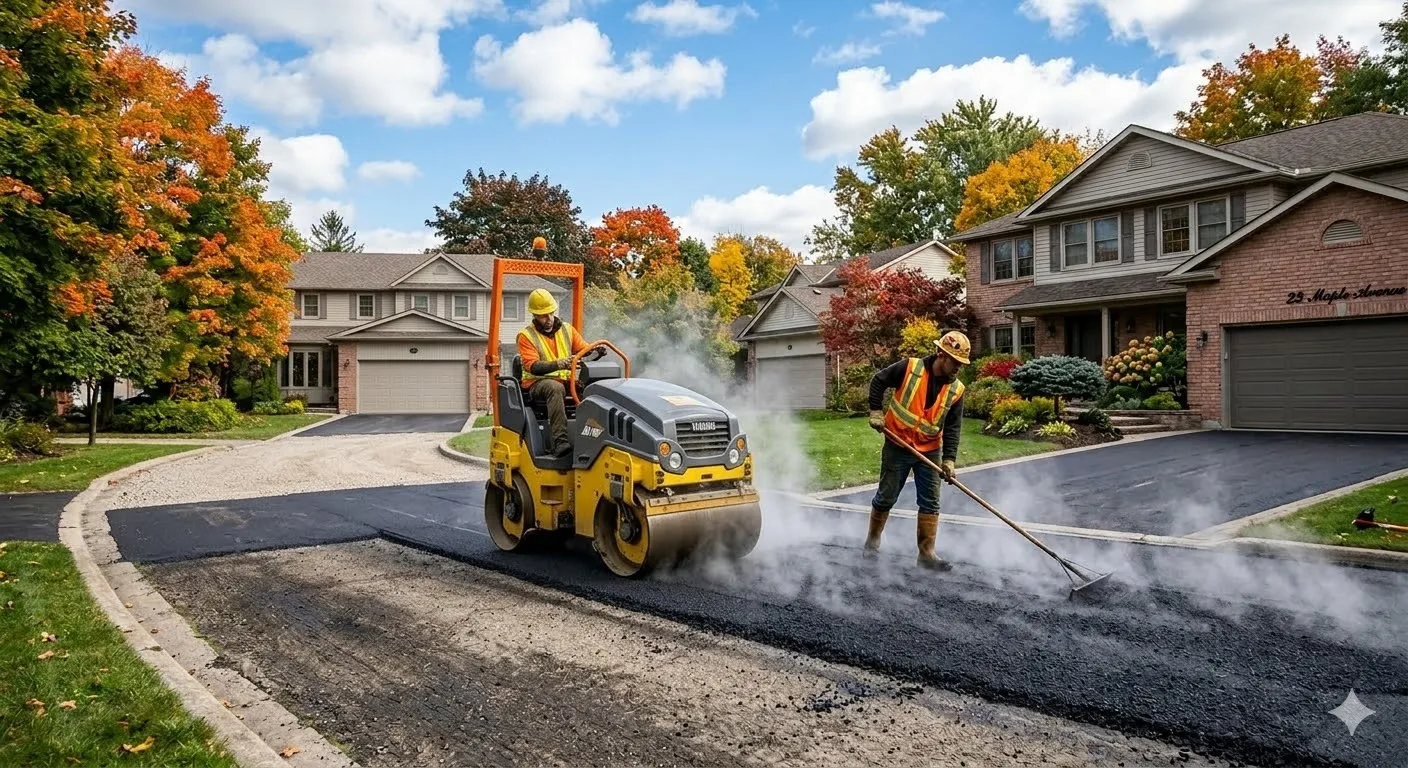
Choosing the best time to pave a driveway can save you 10–15% on costs and ensure a longer-lasting result. The best time to pave a driveway is late spring through early fall — specifically May through September in most regions. But the ideal month depends on your location, budget, and weather conditions.
Ready to estimate your project? Use our Driveway Cost Calculator or Asphalt Driveway Calculator for 2026 pricing.
Best Time to Pave a Driveway by Season
| Season | Rating | Pricing | Quality | Notes |
|---|---|---|---|---|
| Late spring (May–Jun) | ⭐⭐⭐⭐⭐ | 10–15% below peak | Excellent | Best overall — good weather + lower prices |
| Summer (Jul–Aug) | ⭐⭐⭐⭐ | Peak pricing | Excellent | Best weather but highest demand/cost |
| Early fall (Sep–Oct) | ⭐⭐⭐⭐⭐ | 10–15% below peak | Excellent | Best value — great weather + discounts |
| Late fall (Nov) | ⭐⭐⭐ | 15–20% below peak | Good (risky) | Cold nights may affect compaction |
| Winter (Dec–Mar) | ⭐ | Lowest (if available) | Poor | Not recommended in cold climates |
| Early spring (Apr) | ⭐⭐⭐ | 10% below peak | Good | Wet conditions, ground may be saturated |
The best time to pave a driveway combines good weather with lower demand. May–June and September offer the sweet spot.
Best Time to Pave a Driveway by Region
| Region | Best Months | Acceptable Range | Avoid |
|---|---|---|---|
| Northeast | May–September | April–October | November–March |
| Southeast | March–November | Year-round possible | Heavy rain season |
| Midwest | May–September | April–October | November–March |
| Southwest | October–April | Year-round | Peak summer heat (110°F+) |
| West Coast | April–October | March–November | Rainy season (Dec–Feb) |
Weather Requirements for Paving
Regardless of the best time to pave a driveway by calendar, these conditions MUST be met:
- Air temperature: 50°F+ (10°C+) and rising — asphalt placed at 275–325°F cools rapidly in cold air
- Ground temperature: 50°F+ — cold ground steals heat from the asphalt, preventing proper compaction
- No rain: 24 hours before and 24 hours after paving
- No frost: No overnight frost forecast for 3+ days after paving
- Wind: Light winds preferred — high winds accelerate cooling
Why this matters: Improperly cooled asphalt won't compact to the required 92–96% density. This creates a porous surface that fails years earlier. See: How Long Does an Asphalt Driveway Last?
How Timing Affects Driveway Cost
| Timing | Cost Difference | 600 ft² Savings | Why |
|---|---|---|---|
| Peak summer | Baseline (+0%) | $0 | Highest demand |
| Late spring | -10% to -15% | $240–$630 | Before the rush |
| Early fall | -10% to -15% | $240–$630 | End-of-season deals |
| Late fall | -15% to -20% | $360–$840 | Contractors need work |
At the average asphalt driveway cost of $3,500, a 15% seasonal savings means $525 in your pocket. For asphalt price per ton by season, material costs also drop in off-peak months.
More Ways to Save (Beyond Timing)
- Get 3+ quotes: Prices vary 20–40%. Verify using our Driveway Cost Calculator
- Bundle with neighbors: Contractors offer 10–20% bulk discounts
- Consider resurfacing: Resurfacing costs 40–60% less if your base is good. See: Driveway Resurfacing Cost
- Use recycled asphalt: 30–40% cheaper than virgin HMA
- DIY the prep: Clearing, grading, and demolition can save $500–$1,500
- Compare materials: Cost per square foot varies widely. Asphalt ($4–$7/ft²) isn't always the cheapest — gravel starts at $1/ft²
- Maintain after paving: Sealcoating every 2–3 years extends life by 50%, deferring the next paving project by years
Best Time to Sealcoat a Driveway
While we're discussing timing, the best time to sealcoat follows virtually the same rules:
- Temperature: 50°F+ and rising
- No rain: 24 hours before and after
- Best months: May–September (same as paving)
- Wait period: 6–12 months after new paving before first sealcoat
Get your sealcoating estimate: Sealcoating Calculator | Sealcoating Cost Guide
Paving Checklist: Before You Start
- ☑️ Get 3+ quotes from licensed contractors
- ☑️ Verify using our Cost Per Sq Ft Calculator
- ☑️ Check weather forecast — 5+ days of 50°F+ and no rain
- ☑️ Decide: new installation vs overlay
- ☑️ Calculate materials: Tonnage Calculator
- ☑️ Verify drainage slope
- ☑️ Check thickness: Is 2 Inches Enough?
- ☑️ Plan post-paving maintenance: Driveway Lifespan Guide
Frequently Asked Questions
What is the best time to pave a driveway?
The best time to pave a driveway is late spring (May–June) or early fall (September–October). These months offer warm temperatures, lower humidity, and 10–15% lower prices than peak summer.
Can you pave a driveway in winter?
Not recommended in cold climates. Asphalt requires 50°F+ temperatures for proper compaction. In warm climates (FL, TX, AZ), winter paving is possible. Read more about asphalt durability.
Is it cheaper to pave in certain months?
Yes — late spring and early fall are 10–15% cheaper than peak summer. This can save $250–$600 on a typical driveway project.
How long after paving can I drive on it?
Light vehicles: 2–3 days. Heavy vehicles: 5–7 days. Full cure: 6–12 months (avoid pointed heels, kickstands, and sharp turns during the first year). First sealcoat should wait 6–12 months.