
Is 2 Inches of Asphalt Enough for a Driveway?
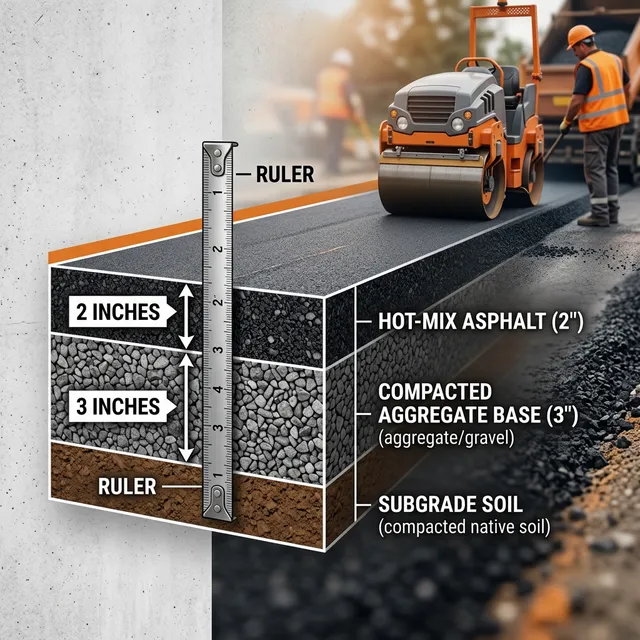
If you're getting quotes for a new driveway, you've probably noticed contractors offering different asphalt thicknesses — and wondered whether 2 inches of asphalt is enough for a driveway. The short answer: it depends on your base, traffic, and climate. Let's break it down so you can make the right decision and avoid costly mistakes.
Use our Asphalt Driveway Calculator to estimate exact material quantities and costs for any thickness.
The Short Answer: When 2 Inches Works (And When It Doesn't)
2 inches of asphalt is the absolute minimum for a residential driveway and only works under ideal conditions:
- ✅ Light traffic only (passenger cars)
- ✅ Properly prepared base (6–8" compacted gravel)
- ✅ Mild climate (no severe freeze-thaw cycles)
- ✅ Good drainage (no water pooling)
If ANY of these conditions aren't met, you need 2.5–4 inches of asphalt. Here's why thickness matters so much:
Recommended Asphalt Thickness by Use
| Use Case | Asphalt Thickness | Base Required | Expected Life |
|---|---|---|---|
| Light residential (cars only) | 2–2.5" | 6–8" gravel | 8–12 years |
| Standard residential | 2.5–3" | 6–8" gravel | 15–20 years |
| Heavy use (trucks, RVs) | 3–4" | 8–12" gravel | 20–25 years |
| Commercial/parking lot | 3–6" | 8–12" gravel | 20–30 years |
| Overlay (over existing) | 1.5–2" | Existing pavement | 8–15 years |
Our recommendation: Always go with at least 2.5–3 inches for a residential driveway. The extra half-inch costs only $0.35–$0.75/sq ft more but can add 5–10 years of service life.
What Happens If You Go Too Thin?
Installing only 2 inches when you need 3 will cause problems that cost far more to fix:
- Cracking within 2–3 years: Thin asphalt flexes too much under load, causing fatigue cracks. Use our Crack Fill Calculator to estimate repair costs.
- Rutting: Hot weather softens thin asphalt, and heavy vehicles create permanent depressions.
- Shorter lifespan: 2" driveways typically last 8–12 years vs 15–20 years for 3". That's half the life for only 15% savings.
- Water damage: Thin pavement cracks faster, letting water enter and destroy the base — leading to potholes and full replacement.
How Much Does the Extra Inch Cost?
| Thickness | Material Cost (600 sq ft) | Installed Cost | Cost Per Year of Life |
|---|---|---|---|
| 2 inches | $600–$900 | $1,800–$2,700 | $180–$270/yr |
| 3 inches | $900–$1,350 | $2,250–$3,300 | $113–$165/yr ✅ |
| 4 inches | $1,200–$1,800 | $2,700–$4,200 | $108–$168/yr |
As you can see, 3 inches gives you the best value per year. The extra $450–$600 upfront saves you a full replacement in 10 years. Calculate your exact cost with our Asphalt Cost Per Square Foot Calculator.
The Base Matters More Than the Asphalt
Here's what many homeowners don't realize: the gravel base is more important than the asphalt thickness. A 2-inch asphalt layer on a perfectly prepared 8-inch base will outperform 4 inches of asphalt on poor soil every time.
Proper base preparation includes:
- Excavation: Remove topsoil, organics, and soft material (use our Cut & Fill Calculator)
- Sub-base: 4–6" of compacted crushed stone (use our Gravel Calculator)
- Base course: 2–4" of dense-graded aggregate, compacted to 95%+ density
- Grading: 2–5% slope for proper drainage (check with our Driveway Slope Calculator)
If a contractor quotes you 2 inches of asphalt but doesn't mention base preparation, that's a red flag. Get your full project estimate with our Driveway Installation Cost Calculator.
When 2 Inches IS Enough
There are legitimate scenarios where 2 inches works fine:
- Overlay/resurfacing: Adding 1.5–2" over existing sound pavement is standard practice and extends life by 8–15 years. See our Asphalt Repair Cost Calculator.
- Walking paths and bike paths: No heavy vehicle traffic, so 2" is adequate.
- Budget constraints: 2 inches today is better than no driveway — you can always overlay later.
Bottom Line
For a new residential driveway that needs to last, go with 2.5–3 inches of asphalt over 6–8 inches of compacted base. The cost-per-year of ownership is lower, and you'll avoid expensive repairs down the line.
Ready to estimate your driveway? Use these calculators:
- 📐 Asphalt Driveway Calculator — material quantities
- 💰 Driveway Cost Calculator — full project cost
- ⚖️ Asphalt Tonnage Calculator — exact tonnage needed
FAQ
Is 2 inches of asphalt enough for a driveway?
Only as a top layer over a 6–8" compacted gravel base with light car traffic. For most driveways, 2.5–3" is recommended. Heavy vehicles require 3–4".
How thick should an asphalt driveway be?
2.5–3" of hot mix asphalt over 6–8" of compacted aggregate base. Commercial areas need 3–4". Full-depth (no gravel base) needs 4–6".
How much does 1 extra inch of asphalt cost?
About $0.75–$1.50/sq ft, or $450–$900 for a 600 sq ft driveway. This can double the lifespan — the best ROI upgrade available.