
How Long Does Asphalt Take to Dry? Cure Times, Walk-On & Drive-On Guide (2026)
Quick Answer
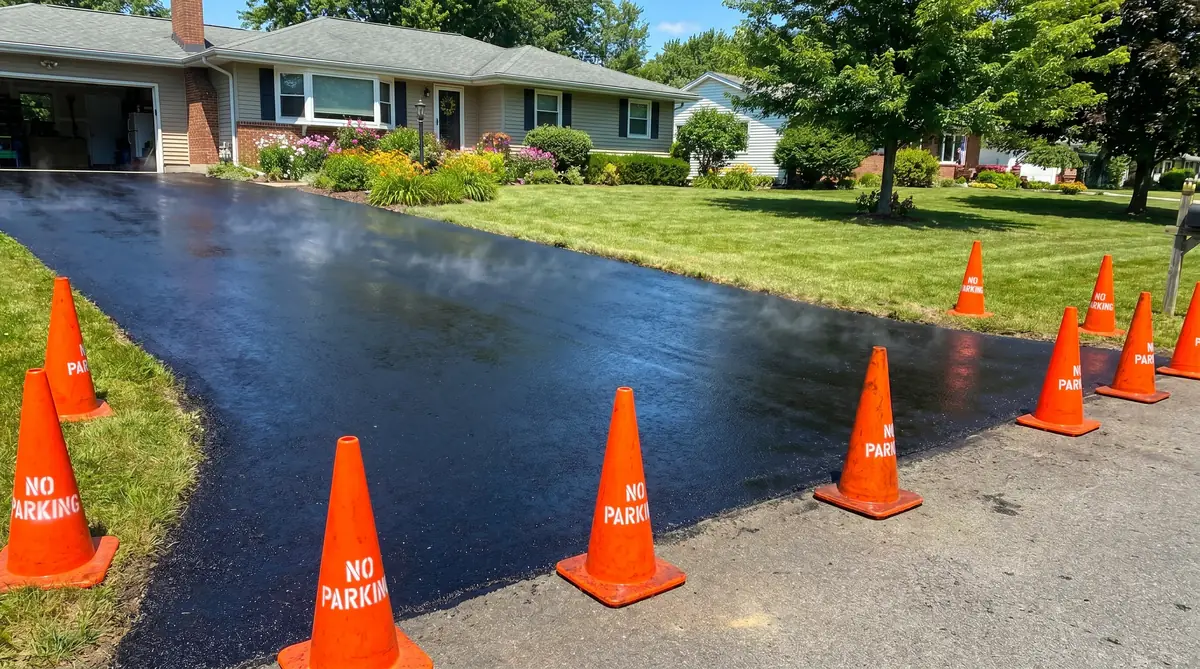
Hot mix asphalt is walk-safe in 24–48 hours, drive-safe for passenger vehicles in 3–5 days, and reaches full structural cure in 6–12 months. Sealcoat dries in 24–48 hours. Cold patch accepts traffic in 1–2 hours but hardens over 30–90 days. Temperature is the biggest variable — every 10°F below 70°F adds roughly 50% more cure time.
Dry vs Cure — What's the Difference?
These two terms are often used interchangeably but they describe different stages of asphalt hardening. Understanding the distinction helps you know when it's actually safe to use your new pavement.
Surface dry means the top layer has cooled and stiffened enough that it no longer transfers heat to your hand and does not leave black marks when walked on. This happens within hours of installation. But surface-dry asphalt is not structurally cured — it still deforms under concentrated loads like vehicle tires or high heels.
Structural cure is the long-term process where residual petroleum oils and solvents evaporate from the binder (the bitumen that holds aggregate together), and oxidation gradually hardens the asphalt matrix. This takes months. During this period the pavement gets progressively stiffer and more resistant to deformation — but it also becomes more brittle as it ages, which is why crack maintenance and sealcoating become important after year 2–3.
5-Stage Asphalt Cure Timeline
| Stage | Timeframe | What's Happening | What's Allowed |
|---|---|---|---|
| Surface cool | 2–6 hours | Top layer drops below 120°F; surface firms up | Nothing — keep all foot and vehicle traffic off |
| Walk-on safe | 24–48 hours | Surface hardened enough that footprints won't form | Walking; avoid high heels and hard-soled work boots |
| Light vehicle traffic | 3–5 days (70°F+) / 5–7 days (50–65°F) | Top 1–2 inches have stiffened; subbase still consolidating | Passenger cars, light SUVs; avoid parking in sun; no heavy vehicles |
| Normal traffic | 2–4 weeks | Full-depth stiffening through all lifts | Standard vehicle use; still avoid repeated heavy loads in same spot |
| Full structural cure | 6–12 months | Residual oils fully volatilized; binder oxidized to design hardness | All traffic including heavy vehicles; safe to apply sealcoat |
Factors That Affect Asphalt Drying Time
| Factor | Faster Cure | Slower Cure |
|---|---|---|
| Air temperature | 70–85°F ideal range | Below 50°F — cure may halt entirely in hard freeze |
| Humidity | Below 60% RH | Above 80% RH traps solvents, slows evaporation |
| Sun exposure | Full sun (thermal assist) | Heavy shade keeps pavement cooler and softer |
| Asphalt thickness | 1.5–2 inch surface lift | 3–4 inch structural lift cures from outside in — core cures last |
| Mix type | Fine-graded dense mix | Open-graded or recycled-content mixes with higher void ratio |
| Oil content | Lower AC% (5.0–5.5%) | Higher AC% (6%+) stays softer and tacky longer |
| Traffic volume | Minimal traffic during cure | Heavy repetitive loads slow cure and cause rutting |
| Subbase condition | Dry, well-drained compacted base | Wet or poorly draining base extends cure and risks subsidence |
Temperature Impact on Cure Time
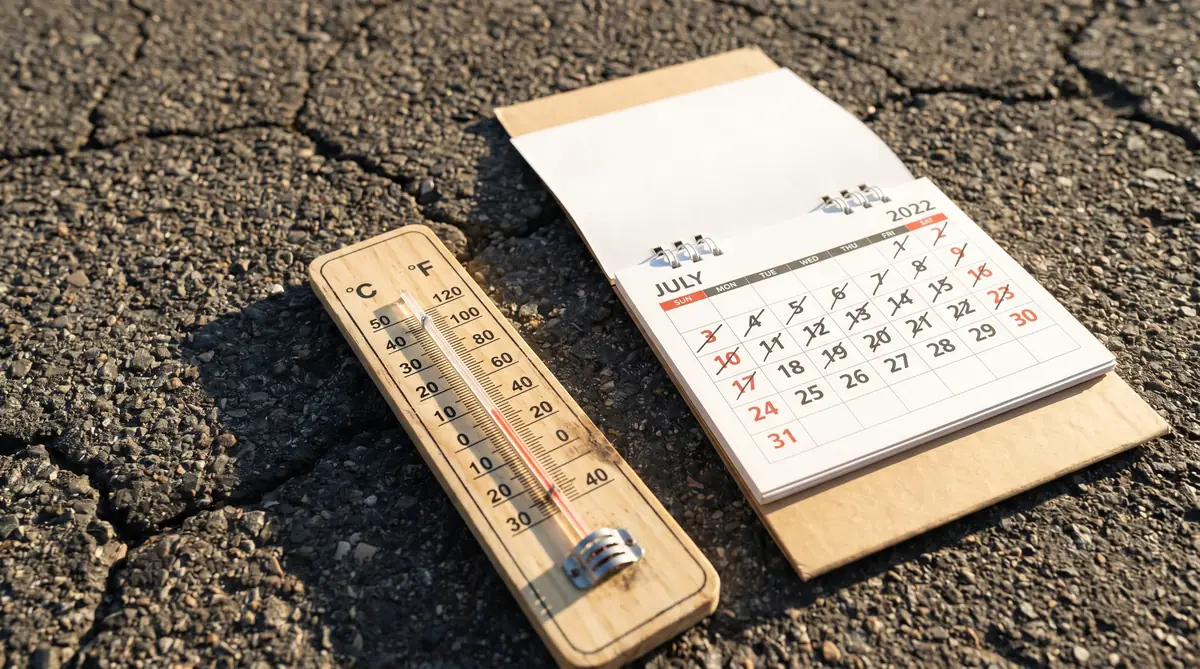
Temperature is the dominant variable. Use this table to adjust the standard 3–5 day drive-on timeline based on your conditions at the time of installation.
| Temperature Range | Surface Dry | Drive-On (Passenger Car) | Heavy Vehicles | Notes |
|---|---|---|---|---|
| Below 40°F | 6–12+ hrs | 7–14+ days | 30+ days | Paving below 40°F is not recommended — binder may not bond properly |
| 40–50°F | 4–8 hrs | 7–10 days | 21–30 days | Cold weather significantly slows cure; watch for overnight freeze events |
| 50–65°F | 2–4 hrs | 5–7 days | 14–21 days | Typical spring/fall install conditions; add 2 extra days vs summer |
| 65–85°F | 1–3 hrs | 3–5 days | 10–14 days | Ideal installation window; fastest cure with best compaction |
| Above 85°F | 1–2 hrs | 3–5 days | 10–14 days | Surface dries fast but binder stays soft — avoid parking same spot in first month |
New Driveway vs Commercial Parking Lot
Residential driveways are typically paved in a single 2–3 inch lift, which cures faster than a commercial parking lot or road built in multiple lifts. Here's how the timeline varies by project type:
| Project Type | Typical Thickness | Walk-On | Passenger Cars | Full Cure |
|---|---|---|---|---|
| Residential driveway | 2–3 inches | 24–48 hrs | 3–5 days | 6–9 months |
| Commercial parking lot | 3–4 inches (2 lifts) | 48–72 hrs | 5–7 days | 9–12 months |
| Road / heavy-duty surface | 4–6 inches (3+ lifts) | 72 hrs | 7–10 days | 12–18 months |
| Overlay / resurfacing | 1.5–2 inches | 12–24 hrs | 2–3 days | 3–6 months |
| Patch repair (hot mix) | 2–3 inches | 24 hrs | 2–3 days | 3–6 months |
Asphalt Sealcoat Dry Time
Sealcoating dries much faster than new asphalt — but the timeline still depends heavily on humidity and temperature. Sealcoat is a water-based or solvent-based emulsion applied as a thin surface coating. It doesn't cure structurally the way asphalt does; it simply dries as the carrier evaporates.
| Condition | Walk-On | Drive-On (Light Car) | Heavy Traffic |
|---|---|---|---|
| Ideal (75°F, sunny, <50% humidity) | 4–6 hours | 24 hours | 48 hours |
| Good (65–75°F, partly cloudy) | 6–8 hours | 36–48 hours | 48–72 hours |
| Marginal (55–65°F, overcast) | 8–12 hours | 48–72 hours | 72–96 hours |
| Poor (below 55°F or above 85% humidity) | 12–24 hours | 72–96 hours | Do not apply — risk of wash-off or peeling |
Cold Asphalt Patch Dry Time
Cold asphalt patch behaves very differently from hot mix. It uses a petroleum solvent or water-activated binder to stay workable at room temperature, and it never achieves the density of hot mix. Here's what to expect:
| Cold Patch Type | Walk-On | Light Vehicle | Working Hardness | Full Hardness |
|---|---|---|---|---|
| Standard petroleum-based | 20–30 min | 1–2 hours | 7–14 days | 60–90 days |
| Polymer-modified (QPR) | 15–20 min | 30–60 min | 3–7 days | 30–60 days |
| Water-activated (Aquaphalt, EZ Street) | 20–30 min | 1 hour | 2–5 days | 30–60 days |
| Rapid-set polymer | 10–15 min | 20–30 min | 24–48 hours | 7–14 days |
For more on cold patch types, application steps, and brand comparisons, see our complete cold asphalt patch guide.
Signs Asphalt Is Not Fully Dry
Before you drive on new asphalt, do a quick visual and physical check. If any of these signs are present, wait longer:
- Footprints left behind — press your heel firmly into the surface. If an impression forms, it needs more time.
- Tire marks visible after driving — wheel scuffs or ruts forming means the surface is still too soft.
- Tacky or sticky to the touch — reach down and press a finger to the surface. Stickiness means residual solvent is still present.
- Soft spots that flex under pressure — walk the perimeter and press with your foot; any give indicates incomplete cure or subbase drainage issues.
- Strong petroleum odor — some smell is normal for the first week, but an overwhelming odor after 30 days suggests slow cure from cool temperatures or poor drainage.
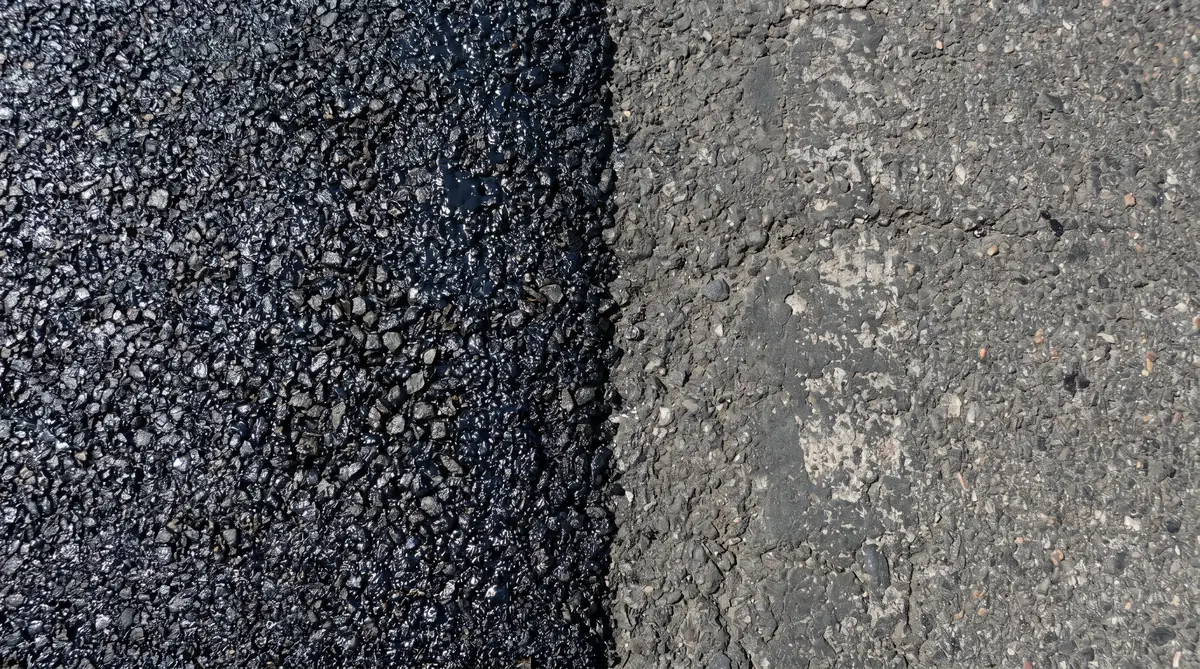
- Dark, shiny wet appearance in dry conditions — fresh asphalt should transition from glossy black to a matte dark gray as surface oils volatilize.
Common Mistakes That Ruin New Asphalt
- Drive on it too soon — vehicle tires create permanent ruts in under-cured asphalt. Even a single pass with a loaded pickup truck can leave marks that won't disappear.
- Park in the same spot repeatedly — concentrated load points during the first 6 months can create depressions, especially in hot weather. Rotate parking positions.
- Use a power washer before 30 days — high-pressure water can erode the surface aggregate from fresh asphalt before the binder has fully set.
- Spill gasoline, oil, or other petroleum products — these solvents attack the bitumen binder and cause accelerated softening and pothole formation. Clean any spills immediately.
- Set up a dumpster or portable storage container — the concentrated point loads from containers and heavy equipment will permanently damage curing asphalt. Wait at least 30 days minimum, 90 days ideally.
- Seal too early — applying sealcoat before 90 days traps residual oils, prevents proper cure, and causes the sealcoat to peel within the first season.
Seasonal Tips for Asphalt Drying
Summer Installs (June–August)
Summer offers the fastest surface drying but keeps the binder softer for longer due to sustained high temperatures. The pavement will feel firm within 3 days but remains susceptible to indentation from concentrated loads for the first 4–6 weeks. Rotate parking positions and avoid leaving vehicles stationary in the same spot overnight during the first summer.
Spring / Fall Installs (April–May, September–October)
Ideal installation weather — warm enough for good compaction, cool enough that the binder sets relatively quickly. Expect the standard 3–5 day drive-on timeline. Watch for overnight lows below 40°F in late fall; a frost in the first two weeks can slow surface cure significantly.
Late Fall / Early Winter (November–December)
Marginal installation season. Asphalt paved at air temperatures below 45°F may not compact properly, and cure times double or triple. If your contractor paves in these conditions, ask about heated-screed equipment and verify the air temperature was above 40°F during the entire paving window. Expect 7–14 days before any vehicle traffic.
Rain Rules
Rain itself does not damage properly installed asphalt — the mix is essentially waterproof once compacted. However, rain that falls before surface cooling is complete (within the first 2–4 hours after installation) can cause surface wash-out. A light rain after 24 hours does no harm. For sealcoating, any rain within 24 hours of application risks wash-off.
Frequently Asked Questions
How long does asphalt take to dry?
Hot mix asphalt is walk-safe within 24–48 hours and drive-safe for passenger vehicles after 3–5 days in warm weather (70°F+). Full structural cure takes 6–12 months. Temperature is the biggest variable — cool conditions add 50% or more to each timeline.
How long does asphalt take to cure?
Surface hardening happens in the first week, but structural cure — where asphalt reaches its final load-bearing hardness — takes 6 to 12 months. During this period avoid repetitive heavy loads in the same spot and do not apply sealcoat until at least 90 days after installation.
When can you drive on new asphalt?
Passenger vehicles (cars, light SUVs, pickups) after 3–5 days at 70°F+. In cooler weather, wait 5–7 days. Heavy vehicles (box trucks, RVs, trailers, concrete trucks) should wait at least 14 days. Avoid repeated parking in the same spot for the first 6 months.
How long does asphalt sealcoat take to dry?
Walk-safe in 4–8 hours, drive-safe in 24–48 hours under ideal conditions (70°F+, low humidity). In cool or humid conditions extend to 48–72 hours. Never apply when rain is forecast within 24 hours, and never apply to asphalt less than 90 days old.
How long does cold asphalt patch take to dry?
Walk-safe in 20–30 minutes, light vehicle traffic in 1–2 hours. Working hardness is reached in 7–14 days for standard petroleum patch, 2–5 days for polymer-modified products. Full hardness takes 30–90 days — but cold patch never achieves hot-mix density.
Does heat or cold affect how long asphalt takes to dry?
Yes — dramatically. Below 50°F, asphalt takes 2–3× longer to surface-dry and structural cure extends beyond 12 months. Above 85°F, surface dries fast but the binder stays soft for weeks, increasing indentation risk. The ideal range is 65–85°F with dry, sunny conditions.
Can you apply sealcoat right after paving?
No. Minimum 90 days, with 6–12 months preferred. Sealing too early traps residual oils in the binder, prevents proper hardening, and causes the sealcoat to peel within the first season. If a contractor recommends sealing immediately, that is a red flag.
What are the signs that asphalt is not fully dry?
Footprints left in the surface, tire marks or ruts after driving, a tacky or sticky feel to the touch, soft spots that flex under foot pressure, and a strong petroleum smell after 30 days. Any of these signs mean the asphalt needs more cure time before normal traffic.