
Blacktop vs Concrete — Cost, Durability, Maintenance & Which to Choose (2026)
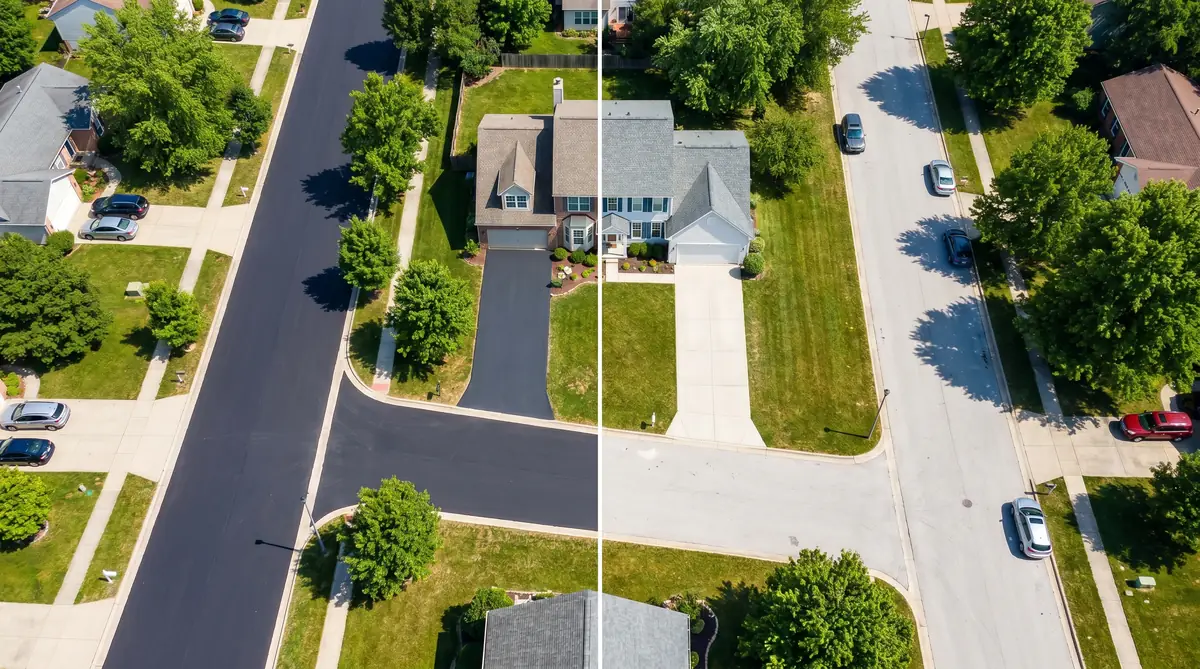
Blacktop or Concrete — Quick Verdict
Choose blacktop if: budget is a priority ($3–$5/sq ft vs $6–$12 for concrete), you're in a cold freeze-thaw climate, or you want easier and cheaper repairs. Choose concrete if: you want 30–50 year lifespan with minimal maintenance, live in a hot climate, or want decorative options. For most northern-state driveways, blacktop wins on value. For hot-climate and long-term ownership, concrete wins on total cost of ownership.
Blacktop vs Concrete — What's the Difference?
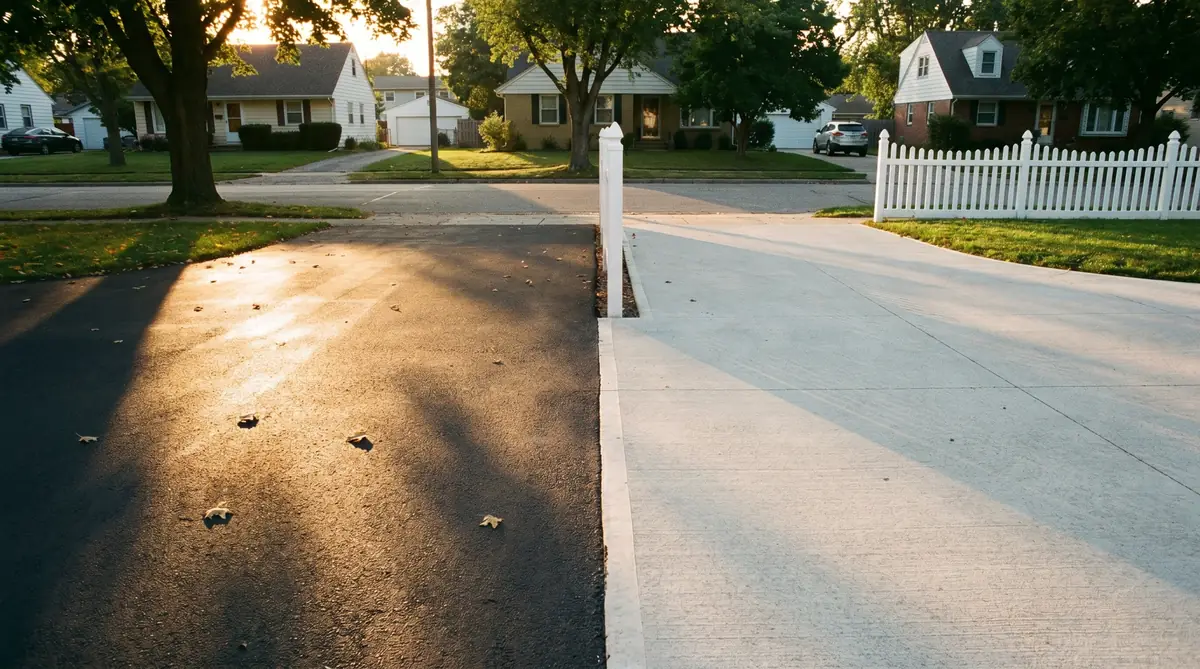
Blacktop (also called asphalt) is a flexible pavement made from aggregate — crushed stone, sand, and gravel — bound together with bitumen, a dark sticky petroleum byproduct. The bitumen acts as a flexible glue, which is why blacktop bends slightly under load rather than cracking rigidly. It's installed hot (275–325°F), compacted, and typically ready to drive on within 24–48 hours.
Concrete is a rigid pavement made from aggregate bound with Portland cement, which hardens through a chemical hydration reaction. Unlike blacktop, concrete does not flex — it resists load through compressive strength. It's installed wet, screeded flat, and requires 7–28 days to fully cure before heavy traffic.
12-Factor Master Comparison
| Factor | Blacktop (Asphalt) | Concrete | Winner |
|---|---|---|---|
| Upfront cost | $3–$5 / sq ft installed | $6–$12 / sq ft installed | Blacktop |
| Lifespan | 20–30 years (with maintenance) | 30–50 years | Concrete |
| Maintenance cost | Higher — sealcoat every 2–3 yrs, crack repair | Lower — occasional crack sealing only | Concrete |
| Cold climate performance | Excellent — flexible, handles freeze-thaw | Poor — salt damage, rigid cracking | Blacktop |
| Hot climate performance | Poor — softens, surface temps 150–180°F | Excellent — stays rigid, 30–50°F cooler | Concrete |
| Repairability | Easy — cold patch, crack filler, overlay | Difficult — cracks hard to hide, costly to fix | Blacktop |
| Install speed | Fast — drive on in 24–48 hrs | Slow — 7 days minimum, 28 days full cure | Blacktop |
| Appearance options | Limited — black only, can be coated | Many — stamped, exposed aggregate, colored, stained | Concrete |
| Heat island effect | Worse — absorbs and re-radiates heat | Better — lighter color reflects more heat | Concrete |
| Recyclability | Excellent — 99% of asphalt is recycled | Moderate — crushed as aggregate, cement is energy-intensive | Blacktop |
| Resale / curb appeal | Good — clean black driveway is universally appealing | Better — decorative concrete adds premium value | Concrete |
| Total 30-yr cost of ownership | Moderate — lower install, higher maintenance | Moderate — higher install, lower maintenance | Roughly equal |
Cost Breakdown by Project Type
| Project | Blacktop Cost | Concrete Cost | Blacktop Saves |
|---|---|---|---|
| Standard driveway (700 sq ft) | $2,100–$3,500 | $4,200–$8,400 | $1,500–$5,000 |
| Large driveway (1,500 sq ft) | $4,500–$7,500 | $9,000–$18,000 | $3,500–$10,000 |
| Small parking lot (5,000 sq ft) | $15,000–$25,000 | $30,000–$60,000 | $10,000–$35,000 |
| Patio (400 sq ft) | $1,200–$2,000 | $2,400–$4,800 | $1,000–$3,000 |
Use our Blacktop Driveway Calculator or Asphalt Driveway Calculator to get a precise cost estimate for your specific project dimensions.
Lifespan & Durability
What degrades blacktop
- UV oxidation — sunlight breaks down the bitumen binder, causing the surface to gray, become brittle, and crack
- Water infiltration — unsealed cracks allow water to reach the base, causing base erosion and pothole formation
- Traffic fatigue — heavy repeated loads cause alligator (fatigue) cracking in the surface layer
- Heat softening — extreme temperatures soften the surface, making it vulnerable to rutting and point-load deformation
- Edge failure — unconfined edges without curbing crumble under lateral load
What degrades concrete
- Freeze-thaw cycling — water enters micro-cracks, freezes and expands, widening cracks over time
- Deicing salt damage — chloride ions penetrate concrete and corrode steel reinforcement, causing internal expansion and spalling
- Shrinkage cracking — concrete shrinks as it cures; control joints manage but can't eliminate cracking
- Tree root heaving — rigid concrete is lifted and cracked by expanding roots more dramatically than flexible blacktop
- Joint failure — expansion joint sealant degrades, allowing water infiltration at joints
Climate Performance Guide
| Climate | Blacktop | Concrete | Recommend |
|---|---|---|---|
| Northern states / Canada (freeze-thaw) | Excellent — flexible, tolerates movement | Poor — salt damage, joint cracking, spalling | Blacktop |
| Sun Belt / Southwest (extreme heat) | Fair — softens, high surface temps | Excellent — rigid, cooler surface, no softening | Concrete |
| Moderate / Mid-Atlantic (mixed) | Good | Good | Either works |
| High rainfall / coastal | Good — sealing prevents water intrusion | Good — needs joint sealing | Either works |
| High UV (desert) | Poor — bitumen oxidizes faster, needs more frequent sealing | Excellent — unaffected by UV | Concrete |
Maintenance Comparison
| Maintenance Task | Blacktop | Concrete |
|---|---|---|
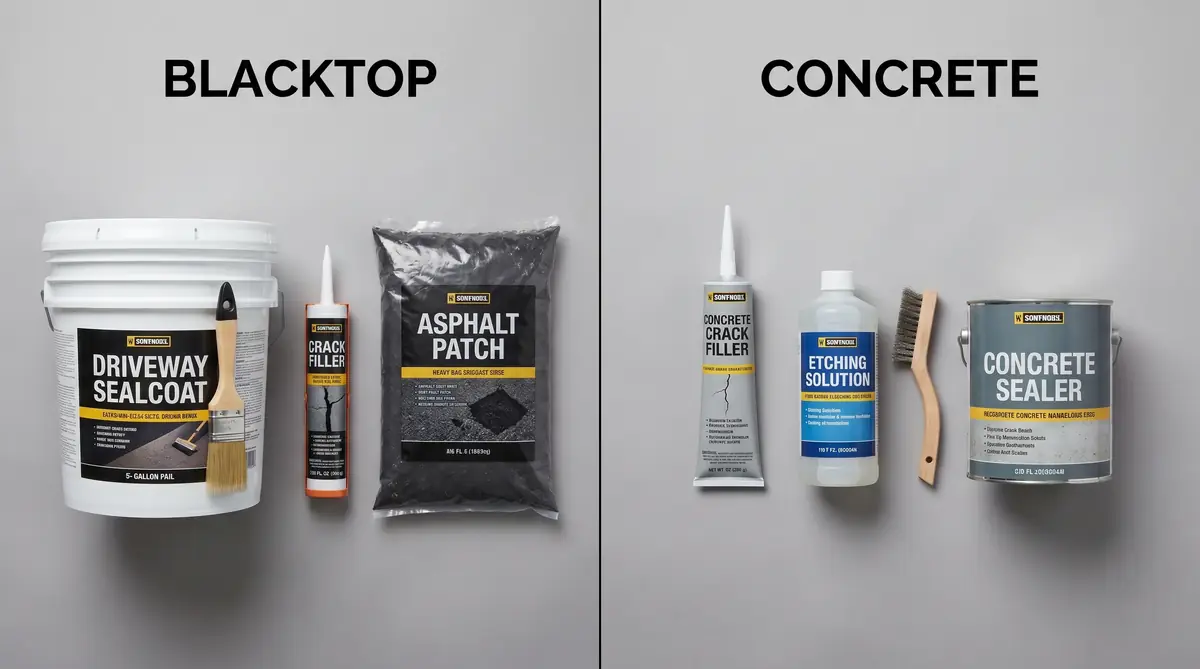
| Sealcoating / sealing | Every 2–3 years — $90–$250 DIY, $150–$450 pro (600 sq ft) | Optional penetrating sealer every 5–10 years — $50–$150 |
| Crack repair | Easy — liquid crack filler $8–$15, DIY in 30 min | Harder — concrete crack filler $10–$20, cosmetically difficult to hide |
| Pothole / section repair | Cold patch ($8–$14/bag) or hot mix overlay | Expensive — concrete section removal and replacement $300–$800+ |
| Resurfacing | Asphalt overlay at year 15–20 — $2–$5/sq ft | Rarely needed — grind and resurface at year 30+ only |
| Stain removal | Difficult — oil stains absorb into surface | Easier — pressure wash + concrete degreaser |
| 30-year maintenance cost estimate (700 sq ft) | $1,500–$3,500 (sealing + repairs + overlay) | $400–$1,200 (crack sealing + occasional repairs) |
Read our full sealcoating cost guide to budget blacktop maintenance accurately.
Appearance & Curb Appeal
Blacktop has one look: dark black when new, fading to grey over time as the bitumen oxidizes. Regular sealcoating restores the dark appearance. It can be painted or coated for sport courts or decorative markings, but the underlying material offers no variation. A freshly sealed blacktop driveway looks clean and sharp — it's a universally accepted residential aesthetic.
Concrete offers significantly more design flexibility: broomed, troweled, stamped, exposed aggregate, stained, or colored finishes. Decorative concrete (stamped patterns, integral color) can add $3–$8/sq ft over basic concrete cost but dramatically increases perceived property value. For homeowners in HOA communities with appearance requirements or those investing in premium curb appeal, concrete's design range is a genuine advantage.
Environmental Considerations
| Factor | Blacktop | Concrete |
|---|---|---|
| Recyclability | Excellent — 99% of removed asphalt is recycled into new pavement (RAP) | Moderate — crushed as aggregate; Portland cement production is CO₂-intensive |
| Heat island effect | Worse — dark surface absorbs up to 95% of solar radiation | Better — light surface reflects 35–50% more solar radiation |
| Permeability | Standard: impermeable. Permeable asphalt available as specialty product | Standard: impermeable. Pervious concrete available as specialty product |
| Production carbon footprint | Lower — bitumen processing is energy-intensive but less than cement kiln | Higher — Portland cement production accounts for ~8% of global CO₂ emissions |
| Stormwater runoff | High runoff (standard); permeable asphalt can reduce runoff 80–100% | High runoff (standard); pervious concrete can reduce runoff 80–100% |
Which Should You Choose? — Scenario Guide
| Your Situation | Choose | Why |
|---|---|---|
| Budget is the primary concern | Blacktop | 50–60% lower upfront cost |
| Cold climate (Minnesota, Michigan, New England, Canada) | Blacktop | Handles freeze-thaw and salt better; flex absorbs movement |
| Hot climate (Texas, Arizona, Southern California, Florida) | Concrete | Stays rigid and cool; blacktop softens and radiates heat |
| Want 40+ year lifespan with minimal effort | Concrete | Outlasts blacktop by 10–20 years with less maintenance |
| Decorative finish / stamped patio | Concrete | Blacktop has no decorative options; concrete has unlimited finishes |
| HOA with appearance requirements | Concrete | Lighter color, cleaner look; some HOAs prohibit blacktop |
| Need it driveable quickly (event, rental property) | Blacktop | Drive on in 24–48 hrs vs 7+ days for concrete |
| Commercial parking lot | Blacktop | Much lower cost, easier patching, standard commercial choice |
| Repair is needed, not full replacement | Blacktop | Cold patch and overlay options far cheaper than concrete repair |
| Maximize resale / premium curb appeal | Concrete | Stamped or exposed aggregate concrete adds more perceived value |
| Environmentally conscious / LEED project | Blacktop | Higher recyclability; lower cement-production carbon footprint |
- "You need 4-inch concrete for a driveway" — standard residential concrete driveway is 4 inches with proper base; 6 inches is for commercial or heavy loads. Don't pay for thickness you don't need.
- "Blacktop needs to be sealed immediately after install" — new blacktop should wait 6–12 months before first sealcoat. Sealing too early traps solvents and inhibits curing.
- "Your concrete driveway needs to be torn out and replaced" — get a second opinion. Resurfacing, grinding, or overlay is often viable and costs far less.
- "Premium blacktop mix is worth the extra cost for residential" — standard hot mix asphalt is appropriate for almost all residential driveways. Premium mixes are specified for highways and high-load commercial.
- Low-ball quote with "oil and stone" or chip seal — chip seal is not the same as blacktop and degrades far faster. Confirm you're getting true hot mix asphalt, not a surface treatment.
Frequently Asked Questions
Is blacktop or concrete better for a driveway?
Blacktop is better value for cold-climate and budget-first buyers ($3–$5/sq ft vs $6–$12). Concrete is better for hot climates, long-term low-maintenance ownership, and decorative applications. Both are legitimate choices — climate and budget determine the right answer.
What is the difference between blacktop and asphalt?
They're the same material. "Blacktop" is the residential term; "asphalt" is the technical and commercial term. Both refer to aggregate bound with bitumen. No meaningful performance difference in practice.
How much does blacktop cost compared to concrete?
Blacktop: $3–$5/sq ft installed ($2,100–$3,500 for a 700 sq ft driveway). Concrete: $6–$12/sq ft installed ($4,200–$8,400 for the same area). Concrete is 2–3× more expensive upfront but has lower 30-year maintenance costs. Total cost of ownership over 30 years is often comparable.
Which lasts longer — blacktop or concrete?
Concrete lasts longer: 30–50 years vs blacktop's 20–30 years with regular maintenance. Without maintenance, blacktop degrades in 15–20 years. Both lifespans depend heavily on base preparation and climate.
Does blacktop or concrete crack more?
Both crack differently. Blacktop develops alligator cracking, raveling, and edge failure — generally easy and cheap to repair. Concrete develops shrinkage cracks and spalling from salt damage — harder and more expensive to repair and hard to match cosmetically.
Is blacktop or concrete better in cold climates?
Blacktop — its flexibility handles freeze-thaw cycles well. Concrete is highly vulnerable to deicing salt damage (chloride corrosion of rebar) and rigid cracking under thermal movement. This is why blacktop dominates in northern states and Canada.
Is blacktop or concrete better in hot climates?
Concrete — it stays rigid in heat and runs 30–50°F cooler than blacktop in direct sun. Blacktop softens, develops surface deformation under point loads, and becomes uncomfortably hot to walk on barefoot in peak summer.
Can you put blacktop over concrete?
Yes — a 2-inch minimum asphalt overlay over structurally sound concrete is common. Risk: reflective cracking where concrete joints telegraph through the asphalt layer. An interlayer geotextile fabric reduces but doesn't eliminate this. The concrete base must be stable with no heaving or shifting.
Related Guides
References: Asphalt Institute · Portland Cement Association · FHWA Pavement Technology