
Cold Asphalt Patch — How It Works, Types, Best Brands & Application Guide (2026)
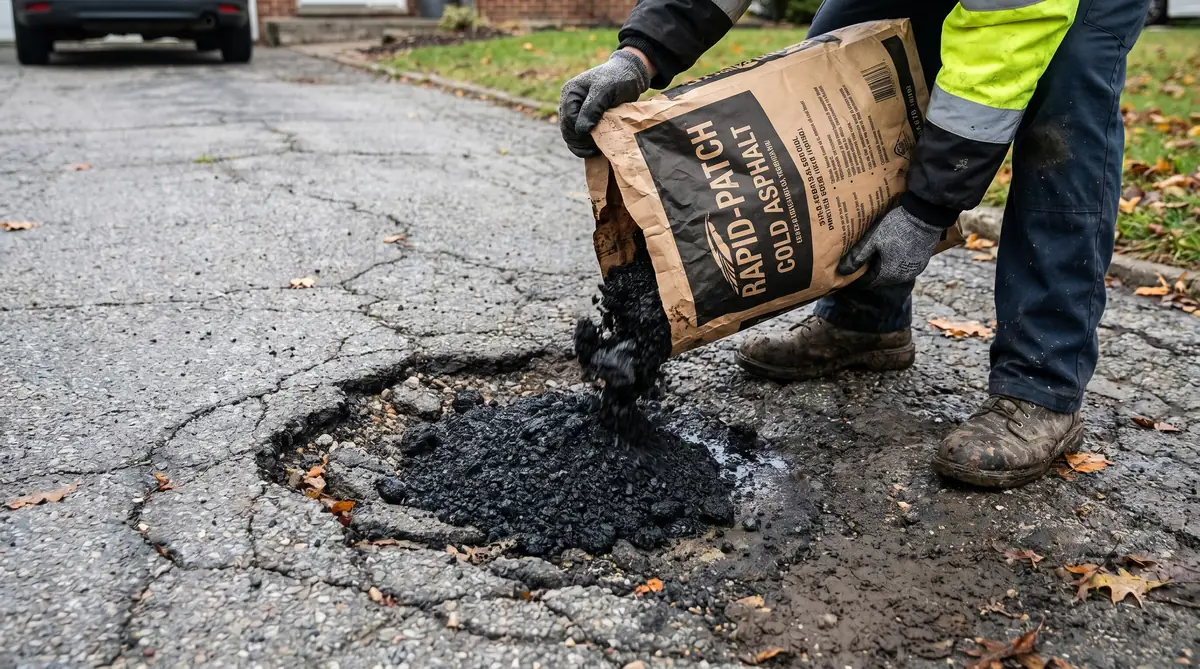
Quick Answer: What Is Cold Asphalt Patch?
Cold asphalt patch is a pre-mixed asphalt repair material that works at ambient temperature — no heating, no hot mix delivery required. A petroleum solvent or polymer binder keeps the mix pliable until compacted; the solvent then evaporates over 30–90 days as the patch cures. A 50 lb bag costs $8–$28 depending on type and covers roughly 1.5–2.5 sq ft at 2-inch depth. Best for potholes, edge crumbles, and utility cuts up to ~10 sq ft. Not a substitute for hot mix on structural failures or full resurfacing.
How Cold Asphalt Patch Works
Standard hot mix asphalt bonds through thermal compaction: aggregates and bitumen are heated to 275–325°F, placed while hot, and compacted before cooling — the heat drives out air voids and fuses the mix into a dense, bound matrix. Cold patch solves the temperature requirement by introducing a petroleum-based solvent (cutback asphalt) or polymer emulsion that keeps the bitumen fluid at ambient temperature.
When you place and compact cold patch, you're mechanically interlock the aggregate particles — the mix achieves density through physical force rather than thermal fusion. The solvent then slowly evaporates (or the emulsion breaks), and the remaining bitumen gradually hardens. This is why cold patch takes 30–90 days to reach full hardness, why it never quite matches hot mix density, and why it's classified as a semi-permanent rather than permanent repair.
Polymer-modified and water-activated cold patches use different chemistry — polymer chains replace or supplement the petroleum solvent, giving better adhesion, lower odor, and often faster cure to working hardness. These products are worth the premium for critical repairs or wet conditions.
Cold Patch vs Hot Mix Asphalt
| Factor | Cold Asphalt Patch | Hot Mix Asphalt (HMA) |
|---|---|---|
| Application temp | Any ambient temperature | Must be placed above 275°F, compacted before 175°F |
| Equipment needed | None (hand tamp OK) | Paver + roller + hot mix delivery |
| Density achieved | 75–85% of Gmm | 92–96% of Gmm |
| Repair size | Best under 10 sq ft | Any size — scales to roads |
| Longevity | 1–3 years (standard), 3–5 years (polymer-modified) | 10–20+ years |
| Cost per sq ft | $5–$25 (DIY materials only) | $3–$8/sq ft installed (contractor) |
| Traffic ready | Immediately after compaction | After cooling (~1–2 hours) |
| Weather window | Any (water-activated = rain OK) | Dry, above 50°F air temp, no rain forecast |
| Best for | Emergency repairs, small patches, DIY | New paving, overlays, large patches, structural repair |
| Structural failure? | No — surface fix only | Yes — correct base and surface |
The 4 Types of Cold Asphalt Patch
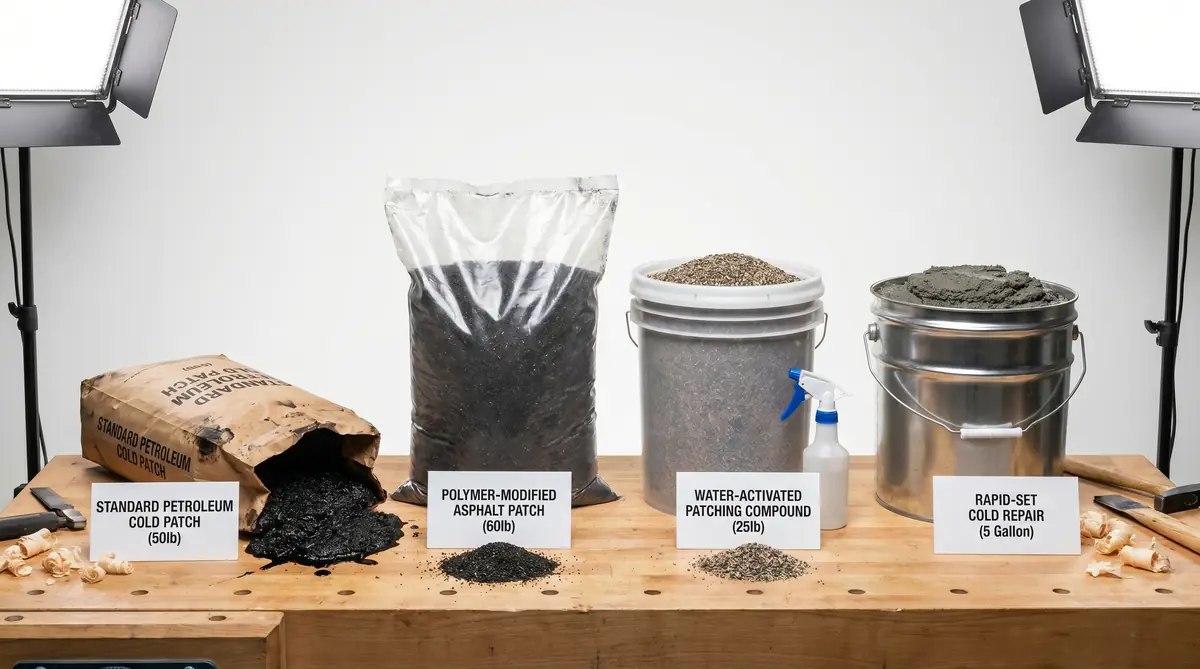
Type 1 — Standard Petroleum Cold Patch
The baseline product — aggregates bound with petroleum-solvent-cut bitumen. No heating required; workable from freezer temperatures to summer heat. Petroleum odor during application dissipates as solvent evaporates. Requires dry surface for adhesion.
Brands: Ben's Asphalt, Quikrete Asphalt Patch, Sakrete Asphalt Patch, Dalton Cold Patch
Best for: Standard residential potholes in dry conditions, budget-conscious repairs, areas where appearance doesn't matter
Avoid when: Surface is wet, repair is in a submerged or chronically wet area, or you need it to look finished
Type 2 — Polymer-Modified Cold Patch
Polymer chains (SBS, SBR, or acrylic) are blended into the bitumen to improve adhesion, flexibility, and resistance to reflective cracking. Lower petroleum solvent content means less odor and faster initial cure to a workable hardness — though full cure still takes weeks. Outperforms standard cold patch in adhesion tests and real-world longevity.
Brands: QPR (Quick Patch Road), Unique Paving Materials UPM, UNIQUE Cold Patch
Best for: High-traffic residential driveways, repairs that need to last longer, areas with temperature extremes
Avoid when: Budget is the primary constraint and standard cold patch is adequate for the damage
Type 3 — Water-Activated Cold Patch
Uses a proprietary emulsion system that bonds using water — not despite it. Can be placed directly into standing water and bonds to wet pavement surfaces. Virtually no petroleum odor. Excellent for emergency winter repairs, drainage channels, areas prone to pooling, and jurisdictions with solvent-odor restrictions.
Brands: Aquaphalt 6.0, EZ Street Cold Asphalt, Road Rescue Emergency Repair
Best for: Wet pavement, rainy season repairs, standing water in potholes, year-round emergency maintenance
Avoid when: Budget is the key factor — these products cost 2–3× standard cold patch per covered square foot
Type 4 — Rapid-Set / Fast-Cure Cold Patch
Formulated with fast-reacting polymers or resin binders that reach working hardness within 1–4 hours vs 30–90 days for petroleum products. Critical for high-traffic roads, municipal repairs, or parking lots that can't be closed overnight. Some products reach near hot-mix density within 24 hours under traffic loading.
Brands: Crafco EZ-Patch, TechniSoil Rapid-Set, Perma-Patch
Best for: Municipal road maintenance, parking lots, commercial properties, anywhere downtime must be minimized
Avoid when: You have time for a standard patch — the premium is significant and not necessary for most residential use
Best Uses by Damage Type
| Damage Type | Best Cold Patch Type | Notes |
|---|---|---|
| Pothole, dry conditions | Standard petroleum or polymer-modified | Standard for budget; polymer-modified for longevity |
| Pothole, wet / rainy season | Water-activated | Aquaphalt / EZ Street only viable option in standing water |
| Edge crumbling (up to 3" wide) | Standard or polymer-modified | Pack firmly into crumbled edge; tack coat the void walls first |
| Utility cut backfill (temporary) | Standard petroleum (bulk) | Utility companies use bulk cold patch totes for volume efficiency |
| Crack filling (over ¾") | Any cold patch pressed into crack | Use liquid crack filler for cracks under ¾"; cold patch for wider gaps |
| High-traffic road repair | Rapid-set or water-activated | Must return to traffic quickly; standard petroleum too soft initially |
| Winter emergency repair | Water-activated or standard | Both work in cold; water-activated handles wet; warm bags if below 20°F |
| Alligator / base failure | None — do not use cold patch | Base must be repaired; cold patch is surface-only and will re-fail |
Coverage Guide — How Much Do You Need?
| Patch Depth (compacted) | 50 lb bag covers | Standard pothole 12"×12" | Large pothole 24"×24" |
|---|---|---|---|
| 1 inch | 3–5 sq ft | 0.5 bags | 2 bags |
| 2 inches (minimum recommended) | 1.5–2.5 sq ft | 1–1.5 bags | 4–6 bags |
| 3 inches | 1–1.5 sq ft | 1.5–2 bags | 6–8 bags |
| 4 inches | 0.75–1 sq ft | 2–3 bags | 8–12 bags |
Step-by-Step: How to Apply Cold Asphalt Patch
-
Dry and clean the pothole completely
Remove all standing water, loose material, vegetation, and debris. Use a wire brush, broom, or compressed air. For wet holes: bail out water, dry with a heat gun or propane torch if using standard petroleum patch. Skip this step for water-activated products only.
-
Square up crumbling edges (if present)
Use a cold chisel, angle grinder, or circular saw with diamond blade to cut back ragged, crumbling edges to solid pavement. Straight vertical walls give the patch mechanical support; tapered crumbling edges undermine patch stability from day one.
-
Apply tack coat to walls and base
For holes deeper than 3 inches or any repair where maximum adhesion is needed: brush a thin coat of asphalt tack coat, roofing primer, or even used motor oil on the hole walls and floor. This acts as an adhesive primer between the existing pavement and the patch material.
-
Fill in 2–3 inch lifts for deep holes
For holes deeper than 3 inches, fill and compact in layers — never fill in a single pour. Filling all at once means the bottom material never gets adequately compacted under the weight above it. Each lift: fill, compact firmly, then add the next.
-
Overfill the final lift by ½ inch
The final pour should sit ½ inch proud of the surrounding surface. After compaction it will settle flush or very slightly proud (1/8 inch maximum). Filling to exact flush and then tamping leaves the patch sunken — water pools there and the repair fails prematurely.
-
Compact aggressively
This is the most important step. Cold patch requires substantial compactive effort — light tamping is not enough. Aim for 10–15 firm strikes per square foot with a hand tamper. A plate compactor or rental roller produces the best result. See compaction methods below.
-
Check height and top up if needed
After compaction, verify the patch is flush with or 1/8 inch proud of surrounding pavement. If sunken: add more material and compact again. If the patch crowns more than 1/4 inch above the surface, use a scraper or shovel to remove excess before it hardens.
-
Open to traffic immediately
Cold patch is trafficable right after compaction. Avoid concentrated point loads (dumpster trucks, heavy forklifts) for 2 weeks while the petroleum solvent finishes evaporating and the patch reaches working hardness. Full hardness develops over 30–90 days.
Compaction Methods Compared
| Method | Quality | Cost | Best Patch Size | Notes |
|---|---|---|---|---|
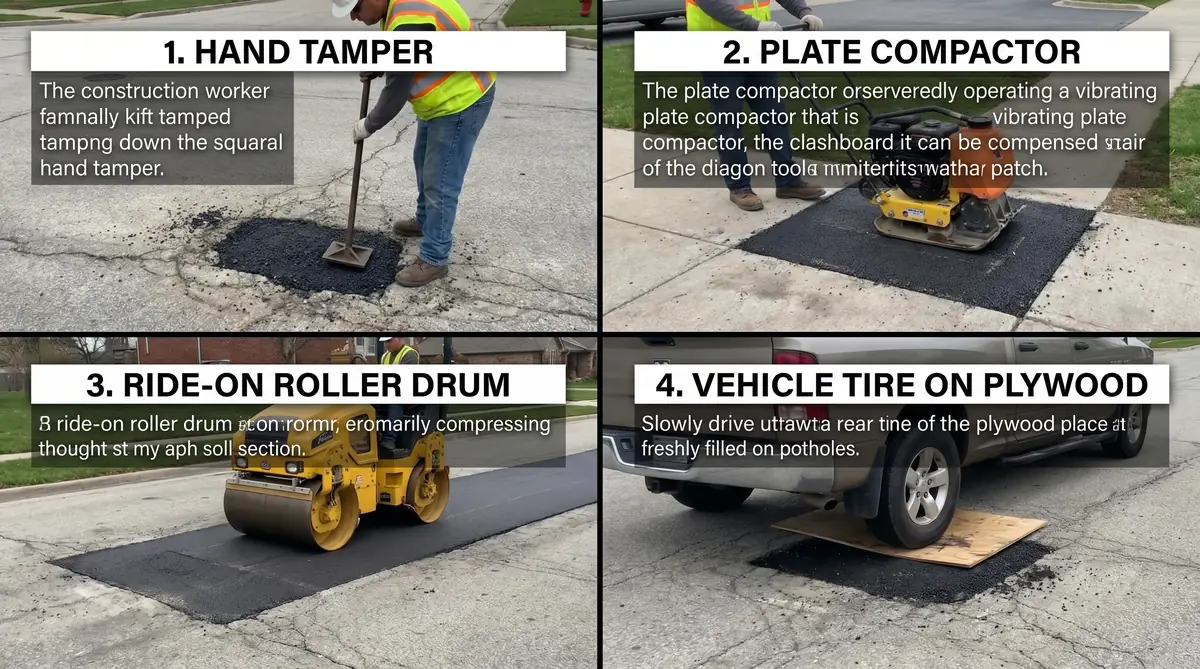
| Hand tamper | Adequate | $0 (use existing tools) | Under 1 sq ft | 10–15 strikes/sq ft minimum; use flat-head tamper or back of a square shovel — never a round shovel |
| Plate compactor | Good | $70–$120/day rental | 1–50+ sq ft | Best no-roller option; dramatically better than hand tamping; available at Home Depot Tool Rental, Sunbelt, United Rentals |
| Walk-behind drum roller | Very good | $120–$220/day rental | Any size | Best finish quality; see roller rental guide for sizes and options |
| Vehicle wheel method | Good | $0 (use your vehicle) | 1–10 sq ft | Place a 3/4" plywood sheet over the patch, drive a 1–2 ton vehicle over it 3–5 times; surprisingly effective for residential driveways |
Cold Weather Application
Cold patch is one of the few pavement repair products specifically designed for winter use. Here's how to get the best results in cold conditions:
- Standard petroleum patch below 32°F: The material becomes stiff and difficult to spread. Store bags indoors or in a heated vehicle overnight before use. Leave them in direct sunlight for 30–60 minutes before opening if possible.
- Water-activated patch (Aquaphalt, EZ Street): Works as stated down to 0°F with no pre-warming required. The preferred choice for genuine winter emergency repairs.
- Surface prep still matters: Remove ice and standing water. A frozen pavement surface doesn't prevent adhesion the way wet-unfrozen does, but ice in the hole prevents mechanical interlock.
- Compact harder in cold: Cold stiffens the material and makes it resist compaction. Increase tamping effort by 25–50% vs warm weather application.
- Plan for a spring top-up: Cold-weather patches often need a fresh top coat in spring once temperatures stabilize — this is normal and expected, not a product failure.
Shelf Life & Storage
| Product Type | Shelf Life (unopened) | After Opening | Key Storage Rules |
|---|---|---|---|
| Standard petroleum cold patch | 12–18 months | 3–6 months (reseal tightly) | Store shaded or indoors; heat accelerates solvent evaporation and curing; cold stiffens but doesn't ruin it |
| Polymer-modified cold patch | 18–24 months | 6–12 months (reseal) | Same as standard; more stable in temperature extremes due to polymer content |
| Water-activated (Aquaphalt) | 24+ months | 6–12 months (cap tightly) | Keep sealed; does not require freezing-temperature precautions like petroleum products |
| Rapid-set cold patch | 12–18 months | 1–3 months | Fast-reacting chemistry; once opened, reactivation begins — use promptly or discard |
Brand Quick Reference
| Brand | Type | Price Range (50 lb) | Where to Buy | Best For |
|---|---|---|---|---|
| Ben's Asphalt | Standard petroleum | $8–$14 | Home Depot, Lowe's, Tractor Supply | Budget residential repairs |
| Quikrete Asphalt Patch | Standard petroleum | $9–$15 | Home Depot, Lowe's, Amazon | Consistent quality, wide availability |
| Sakrete | Standard petroleum | $9–$14 | Home Depot, Lowe's, Ace Hardware | General residential pothole repair |
| QPR Cold Patch | Polymer-modified | $18–$28 | Lowe's, Amazon, masonry suppliers | Better longevity, lower odor |
| Aquaphalt 6.0 | Water-activated | $28–$38 (3.5 gal pail) | Amazon, specialty suppliers | Wet conditions, winter repairs, year-round |
| EZ Street | Water-activated | $25–$35 | Amazon, online distributors | Emergency repairs in wet or cold weather |
| Perma-Patch | Rapid-set | $22–$32 | Municipal suppliers, online | Commercial / high-traffic road repair |
For a full brand-by-brand deep-dive on consumer products, see our Ben's Asphalt review and the complete asphalt repair products guide.
- Wet or damp surface with standard petroleum patch — the #1 failure cause. Cold patch won't bond to wet pavement; it pops out in weeks. Only water-activated products (Aquaphalt, EZ Street) work in wet conditions.
- Insufficient compaction — the #2 failure cause. A few light taps is not enough. Cold patch needs sustained, aggressive compaction to develop any density. Use a plate compactor for anything over 2 sq ft.
- Single pour for deep potholes — filling a 6-inch deep hole in one lift means the bottom material receives zero compaction. Fill in 2–3 inch lifts, compact each lift before adding the next.
- Using cold patch on alligator cracking — alligator (fatigue) cracking means the base has failed. Cold patch on the surface does nothing; the base movement re-cracks any surface repair within one season.
- Buying aged, hardened bags — squeeze before buying. Hard chunks = partially cured = won't compact = early failure. Only buy pliable bags.
- Filling to flush then tamping — always overfill by ½ inch. Compaction reduces volume. A flush fill becomes a sunken patch that collects water.
When to Stop DIYing and Call a Pro
Cold asphalt patch is the right tool for small, isolated damage. Call an asphalt patching contractor when:
- The repair area is larger than 10–15 sq ft (DIY cold patch becomes more expensive per sq ft than professional hot mix)
- Damage shows alligator cracking — base failure requires excavation and base repair, not surface patching
- The same area has been patched 2+ times with cold patch and keeps failing — structural problem, not a product problem
- Edge failures run more than 12 inches from the pavement edge — likely base erosion or drainage issue
- You need a finished, uniform appearance — cold patch doesn't match the surrounding pavement color or texture
Frequently Asked Questions
What is cold asphalt patch?
A pre-mixed asphalt repair product that stays workable at ambient temperature. Uses petroleum solvent, polymer binder, or water-activated chemistry to keep the bitumen pliable until compacted. Available in bags, pails, and bulk totes for pothole repair, edge crumbles, and utility cuts.
How long does cold asphalt patch last?
Standard petroleum cold patch lasts 1–3 years with correct application. Polymer-modified products last 3–5 years. Longevity depends on surface prep, compaction effort, patch depth, and whether underlying structural issues exist. It is semi-permanent — plan for periodic re-application.
How much cold patch do I need?
At 2-inch compacted depth, a 50 lb bag covers 1.5–2.5 sq ft. A standard 12"×12"×3" pothole needs 1.5–2 bags. Use our Pothole Repair Cost Calculator for exact quantities. Always buy 20% more than your estimate.
Can I use cold patch in the rain?
Standard petroleum cold patch — no. Water-activated products (Aquaphalt, EZ Street) — yes, even in standing water. For rainy season repairs, buy water-activated specifically; standard products won't bond to wet surfaces.
What's the best cold asphalt patch?
For budget DIY: Quikrete, Sakrete, or Ben's ($8–$14/50 lb). For better longevity: QPR polymer-modified ($18–$28). For wet/winter conditions: Aquaphalt or EZ Street ($28–$38). The best product depends on your conditions, not just brand ranking.
How do I compact cold patch without a roller?
Plate compactor (best, $70–$120/day rental), vehicle wheel method (drive over plywood 3–5 times), or hand tamper (10–15 firm strikes/sq ft). Plate compactor produces significantly better results than hand tamping for anything over 1–2 sq ft.
How deep should cold patch be?
Minimum 2 inches compacted. For holes deeper than 3 inches, fill in 2–3 inch lifts and compact each lift. Never go thinner than 1.5 inches — thin patches crack and dislodge quickly under vehicle traffic.
Is cold patch permanent?
No — cold patch is classified as semi-permanent (1–3 years standard, 3–5 years polymer-modified). For a permanent repair, hot mix asphalt installed by a contractor is required. Cold patch is the right tool for maintenance and emergency repair, not for structural rehabilitation.
Related Guides
References: FHWA Pavement Preservation · Asphalt Institute · ASTM D4215 Cold Mix Standard