
Is Asphalt Cheaper Than Concrete in 2026? (Real Numbers)
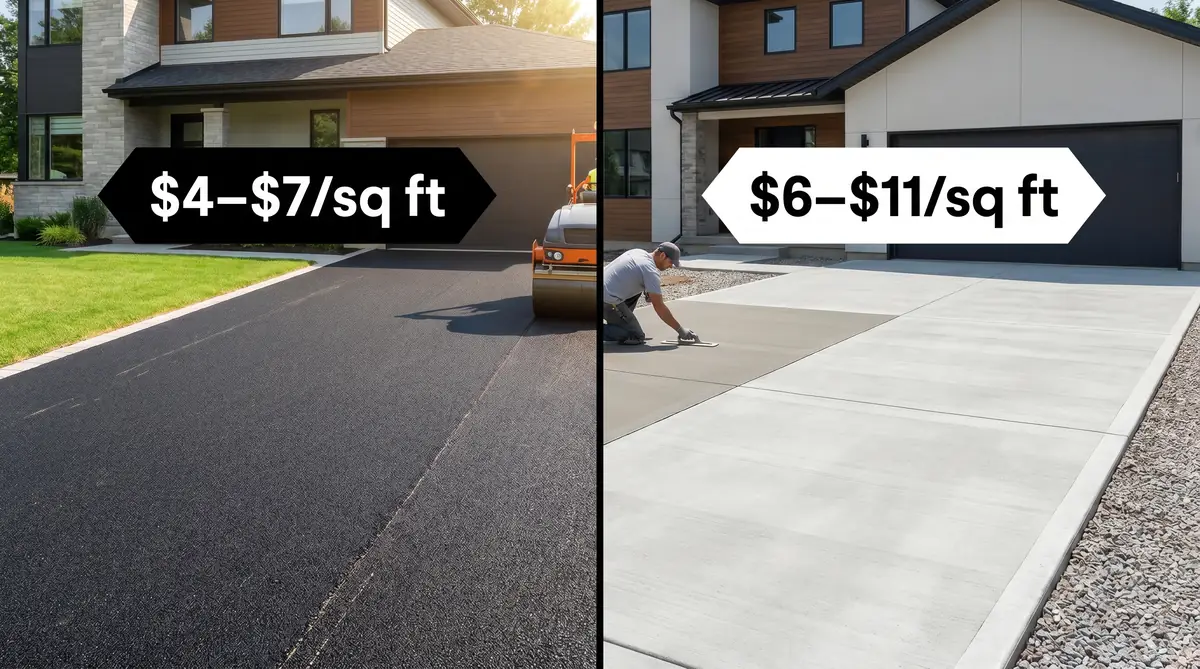
If you're deciding between asphalt and concrete for a driveway, parking lot, or patio, cost is almost always the first question. This guide answers it with actual 2026 numbers — installation, maintenance, long-term lifecycle, and regional pricing — so you can make the right call for your budget and climate.
Calculate your exact project cost: Asphalt Driveway Calculator | Concrete Driveway Calculator
2026 Installation Cost: Asphalt vs Concrete
| Driveway Size | Asphalt Cost | Concrete Cost | Asphalt Savings |
|---|---|---|---|
| 400 sq ft | $1,600–$2,800 | $2,400–$4,400 | $800–$1,600 |
| 600 sq ft | $2,400–$4,200 | $3,600–$6,600 | $1,200–$2,400 |
| 800 sq ft | $3,200–$5,600 | $4,800–$8,800 | $1,600–$3,200 |
| 1,000 sq ft | $4,000–$7,000 | $6,000–$11,000 | $2,000–$4,000 |
| 1,500 sq ft | $6,000–$10,500 | $9,000–$16,500 | $3,000–$6,000 |
Use our Driveway Cost Calculator to get an instant estimate for your specific dimensions and region.
Why Is Asphalt Cheaper to Install?
Three main reasons asphalt consistently undercuts concrete on installation price:
- Thinner layers required. Asphalt driveways are typically 2–3 inches thick. Concrete requires 4–6 inches, using significantly more material per sq ft.
- Faster installation. Asphalt can be laid and compacted in a single day. Concrete needs formwork, 7+ days of curing, and can't be driven on for nearly a week — all of which adds labor hours.
- Less finishing work. Concrete requires smoothing, jointing, edging, and often decorative finishing. Asphalt is rolled and done.
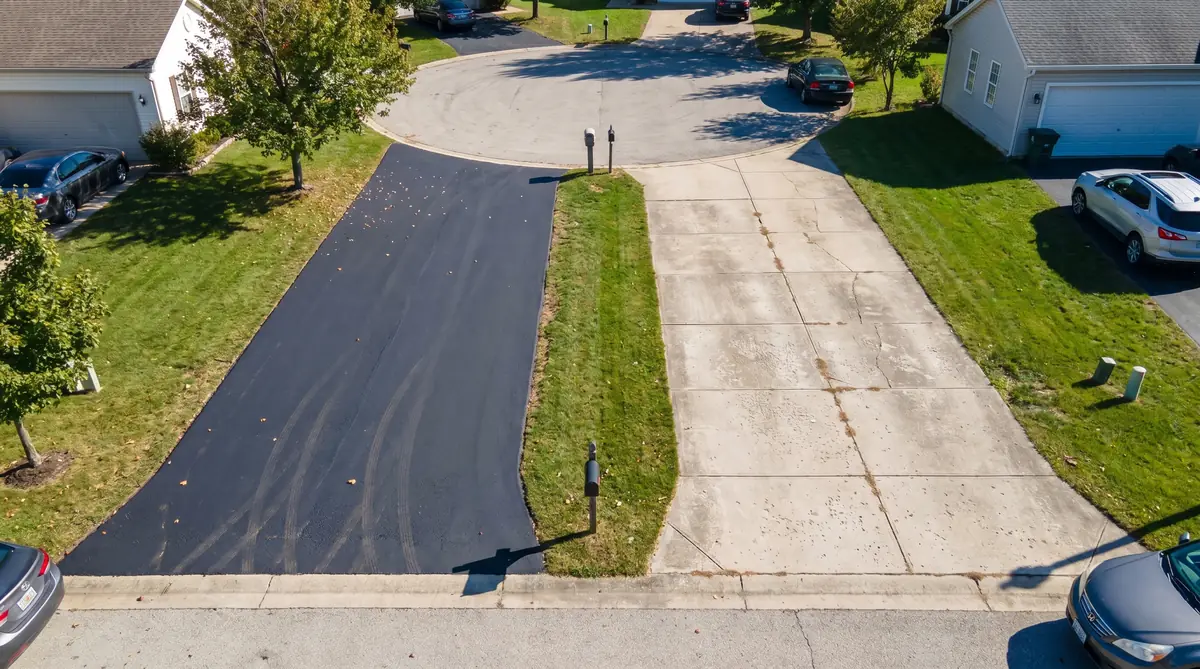
Regional Pricing: Where You Live Changes Everything
| Region | Asphalt (per sq ft) | Concrete (per sq ft) | Price Gap |
|---|---|---|---|
| Northeast (NY, MA, CT) | $5–$8 | $8–$13 | ~38% cheaper |
| Midwest (IL, OH, MI) | $4–$6.50 | $6–$10 | ~35% cheaper |
| South (TX, FL, GA) | $3.50–$6 | $5.50–$9 | ~33% cheaper |
| West (CA, WA, CO) | $5–$8 | $7–$12 | ~36% cheaper |
| Canada (ON, BC) | CAD $5–$9 | CAD $8–$14 | ~37% cheaper |
Asphalt is cheaper across every region — but the gap is widest in the Northeast and West where concrete labor is most expensive. In the South, both materials are cheaper overall, but the ratio holds.
Hidden Costs That Apply to Both
- Excavation & grading: $500–$2,000 depending on slope and soil condition. Required for both materials.
- Base preparation: 4–6 inches of compacted gravel sub-base adds $1–$2/sq ft. Skipping this is the #1 cause of premature failure.
- Old surface removal: $1–$3/sq ft to break out and haul away existing asphalt or concrete.
- Permits: $50–$400 in most municipalities. Concrete decorative work sometimes triggers additional review.
- Drainage: French drains or channel drains add $500–$2,500 if your yard doesn't naturally slope away from the house.
Get an accurate contractor quote using our Paving Cost Calculator — it factors in all line items including base prep and removal.
Long-Term Cost: The 20-Year Picture
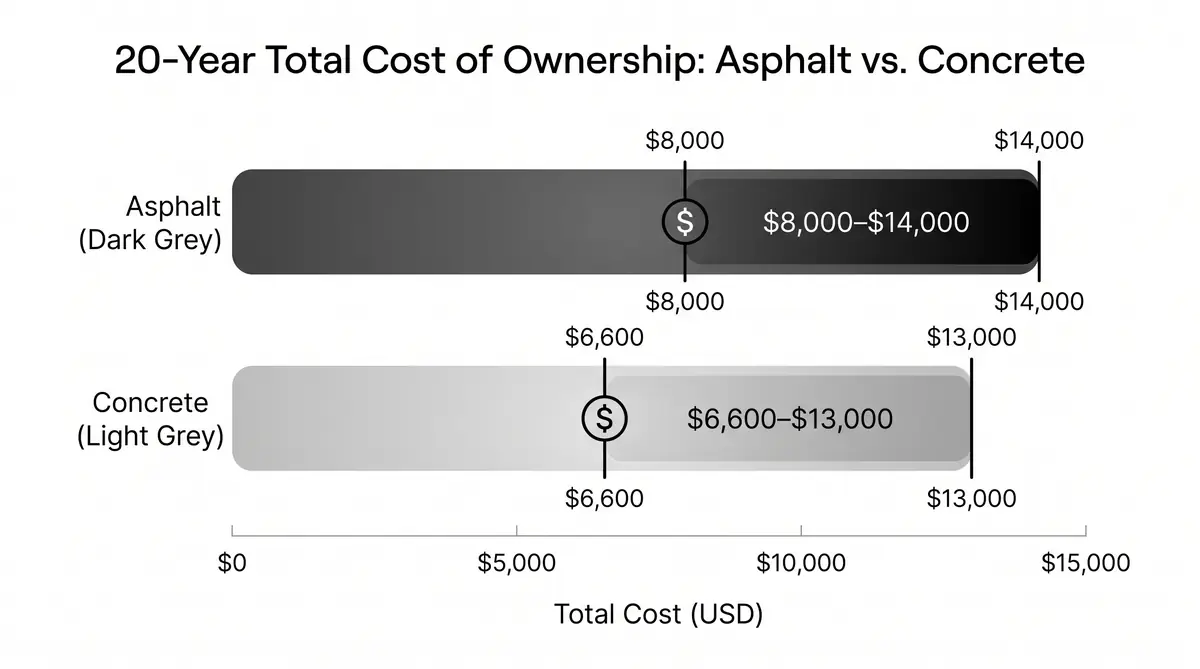
Asphalt's lower upfront cost comes with a trade-off: it needs more ongoing care. Here's what that looks like over 20 years for a 600 sq ft driveway:
| Cost Item | Asphalt (20 yr) | Concrete (20 yr) |
|---|---|---|
| Installation | $2,400–$4,200 | $3,600–$6,600 |
| Sealcoating (every 2–3 yr) | $1,200–$3,600 | $0 |
| Crack filling (as needed) | $400–$800 | $300–$600 |
| Resurfacing (~yr 12–15) | $1,200–$2,400 | Not possible — full replace |
| Major repair / replacement | $0–$3,000 | $0–$2,000 |
| 20-year total | $5,200–$14,000 | $3,900–$9,200 |
| Cost per year | $260–$700 | $195–$460 |
When Concrete Is Actually Cheaper
Concrete wins on lifetime economics in these specific scenarios:
- Warm climates with no freeze-thaw. In states like Florida, Arizona, or Texas, concrete routinely hits 30–40 years without major work. The no-maintenance premium pays off.
- You plan to stay 20+ years. If you won't move for decades, concrete's long lifespan and low annual upkeep beats asphalt's resurfacing cycle.
- Premium curb appeal matters. Stamped or exposed aggregate concrete adds home value that bare asphalt can't match.
- You hate sealing. Asphalt requires sealcoating every 2–3 years — that's a recurring DIY chore or contractor bill. Concrete needs nothing equivalent.
Cost by Project Type
| Project | Asphalt Cost | Concrete Cost | Better Value |
|---|---|---|---|
| Residential driveway | $2,400–$7,000 | $3,600–$11,000 | 🏆 Asphalt (upfront) |
| Parking lot (5,000 sq ft) | $20,000–$35,000 | $30,000–$55,000 | 🏆 Asphalt |
| Patio (200 sq ft) | $800–$1,400 | $1,200–$2,200 | 🏆 Concrete (aesthetics + lifespan) |
| Walking path (100 sq ft) | $400–$700 | $600–$1,100 | 🏆 Asphalt (cost) or Concrete (looks) |
| Private road (per mile) | $40,000–$80,000 | $80,000–$160,000 | 🏆 Asphalt |
For parking lots and roads, asphalt dominates on cost. For patios and decorative surfaces, concrete's design flexibility often justifies the premium. See our Asphalt Paving Contractor Guide for tips on getting competitive quotes.
DIY Cost: Asphalt vs Concrete
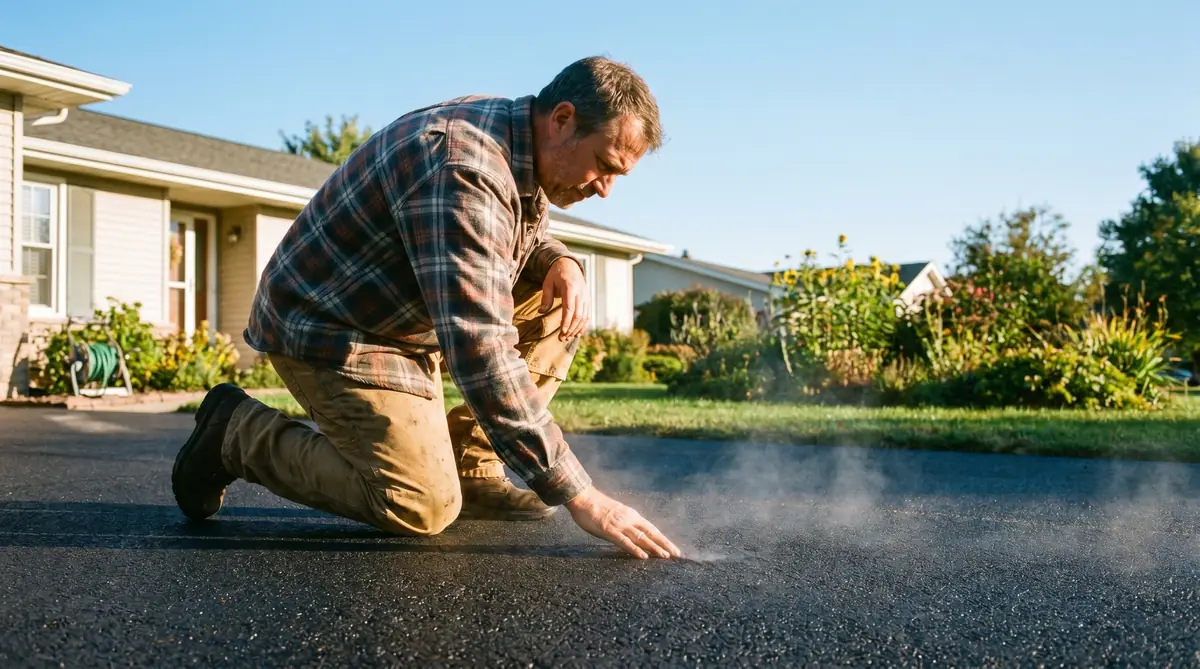
This is where the picture flips significantly:
| Factor | Asphalt DIY | Concrete DIY |
|---|---|---|
| Feasibility | Very difficult | Doable for small areas |
| Equipment needed | Roller compactor ($300–$600/day rental), asphalt lute, tamper | Mixer or ready-mix truck, screed, float, edger |
| Material availability | Hot mix cools fast — needs immediate paving | Ready-mix widely available in bags or truck |
| DIY material cost | $2–$3.50/sq ft (cold patch only) | $1.50–$3/sq ft |
| Labor savings vs pro | $1.50–$3/sq ft | $3–$5/sq ft |
| Risk of failure | High — improper compaction causes early cracking | Moderate — common mistakes are workable |
Bottom line on DIY: For new asphalt paving, hire a contractor — the equipment requirements and hot-mix timing make true DIY asphalt impractical. Concrete patios and small slabs are much more DIY-friendly and can save $3–$5 per sq ft in labor. For asphalt repairs, DIY cold patch is affordable — our Crack Fill Calculator and Repair Cost Calculator can estimate your savings.
The Bottom Line
| Priority | Best Choice |
|---|---|
| Lowest upfront cost | 🏆 Asphalt (30–40% cheaper) |
| Lowest 20-year cost (warm climate) | 🏆 Concrete |
| Best in cold/freeze-thaw climate | 🏆 Asphalt (flexes, easy to repair) |
| Best for large areas (lots, roads) | 🏆 Asphalt |
| Best for aesthetics & home value | 🏆 Concrete |
| Fastest to install & use | 🏆 Asphalt (usable in 2–3 days) |
| DIY-friendly | 🏆 Concrete |
For most homeowners in cold and mixed climates who want the lowest out-of-pocket cost, asphalt wins. For warm-climate homeowners who plan to stay long-term and want minimal maintenance, concrete pays off over time. Either way, get at least 3 contractor quotes and use our calculators to verify pricing before signing anything.
More on the full comparison: Asphalt vs Concrete Driveway — Full 2026 Comparison
Frequently Asked Questions
Is asphalt cheaper than concrete?
Yes. Asphalt costs $4–$7/sq ft installed vs $6–$11 for concrete in 2026 — roughly 30–40% cheaper at installation. A 600 sq ft driveway runs $2,400–$4,200 in asphalt vs $3,600–$6,600 in concrete.
Is asphalt cheaper than concrete over 20 years?
Not necessarily. Asphalt requires sealcoating every 2–3 years ($200–$600 each time) and resurfacing around year 12–15 ($1,200–$2,400). Over 20 years, concrete often has a lower total cost per year — especially in warm climates where it lasts 30–40 years without major work.
Why is asphalt cheaper than concrete?
Asphalt needs thinner layers (2–3 inches vs 4–6 for concrete), cures in hours rather than days, and requires less finishing labor. The petroleum-based binder is also less expensive than Portland cement at current market prices.
Is concrete ever cheaper than asphalt?
In the long run, yes — particularly in warm, dry climates like the Southwest or Southeast where concrete can last 35–40 years with almost no maintenance. Asphalt's resurfacing and sealing costs eventually close the gap.
Can I DIY asphalt to save money?
Not for full installation — hot-mix asphalt requires industrial rollers and must be paved immediately after delivery. For small repairs, cold-patch asphalt is a viable DIY option. Use our Repair Cost Calculator to see if DIY repair saves enough to be worth it.