
Rapid Set Asphalt Repair Mix — Best Products, Cure Times & How to Use Them (2026)
What Is Rapid Set Asphalt Repair Mix?
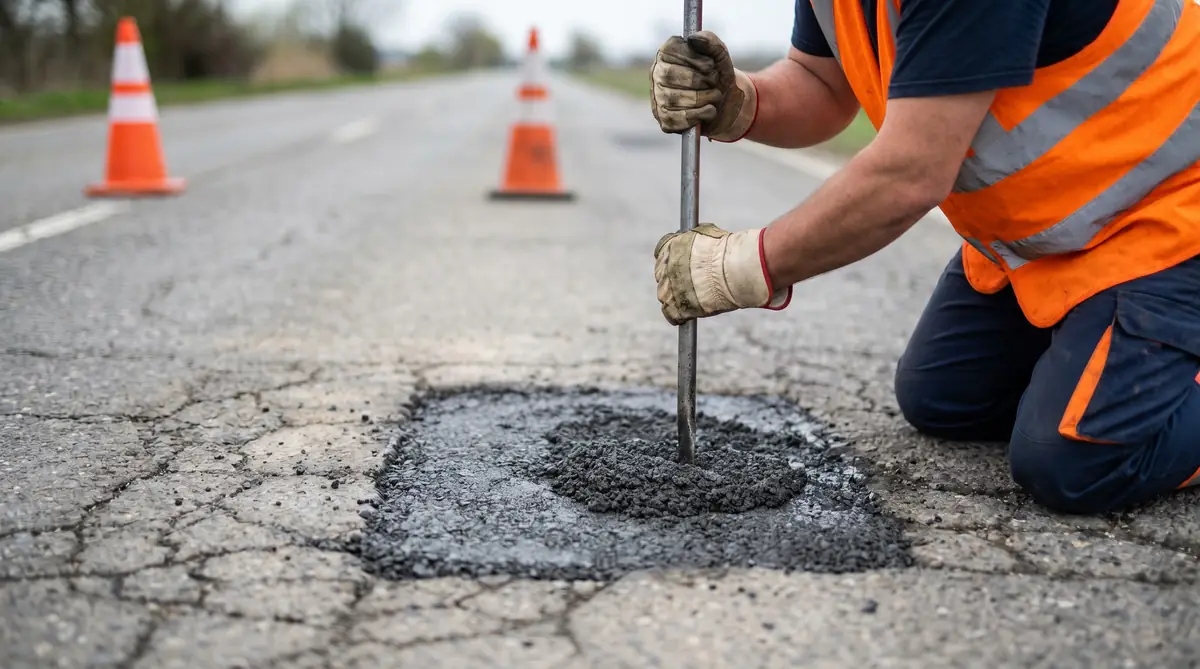
Rapid set asphalt repair mix is a pre-mixed patching compound that opens to vehicle traffic within 30–60 minutes of placement — compared to 24–48 hours for standard cold patch. It's used by municipalities, DOT crews, and contractors for potholes, utility cuts, and urgent pavement repairs where minimizing traffic disruption is the priority. The fast cure comes from polymer modification, hydraulic binder chemistry, or resin systems — not heat.
What Makes a Mix "Rapid Set"
Standard cold patch uses cutback asphalt or emulsified binder — the solvent or water carrier must evaporate before the mix gains strength. That process takes hours to days depending on temperature and traffic. Rapid set products bypass this by using one of three fast-cure mechanisms:
| Cure Mechanism | How It Works | Traffic Open Time | Example Products |
|---|---|---|---|
| Polymer-modified binder | Pre-coated aggregate with tackified polymer binder — bonds on contact and under compaction pressure | 30–60 min | EZ Street, Aquaphalt |
| Hydraulic cement additive | Small % of rapid-setting cement mixed into asphalt — chemically hardens independent of temperature | 45–90 min | Rapid Set Concrete Mix hybrids |
| Resin/epoxy binder | Two-component or pre-catalyzed resin coats aggregate — hardens through chemical reaction, not evaporation | 20–45 min | Perma-Patch, UPM |
| Warm mix polymer blend | Polymer additives lower viscosity at moderate temps, allowing bond without 300°F HMA heat | 60–120 min | Sakrete Blacktop Patch, Quikrete |
Cure Time Comparison
| Product Type | Traffic-Open Time (60°F) | Full Cure | Cold Weather (<40°F) |
|---|---|---|---|
| Standard cold patch | 12–48 hours | 3–7 days | 48–72 hours |
| Rapid set polymer-modified | 30–60 min | 24–48 hours | 2–4 hours |
| Resin/epoxy rapid set | 20–45 min | 12–24 hours | 1–3 hours |
| Hydraulic binder blend | 45–90 min | 24 hours | 2–5 hours |
| Hot mix asphalt (HMA) | Immediate after compaction | Immediate | Not usable below 40°F |
Top Rapid Set Asphalt Repair Products (2026)
| Product | Type | Traffic Open | Min Temp | Bag Size | Est. Price | Durability |
|---|---|---|---|---|---|---|
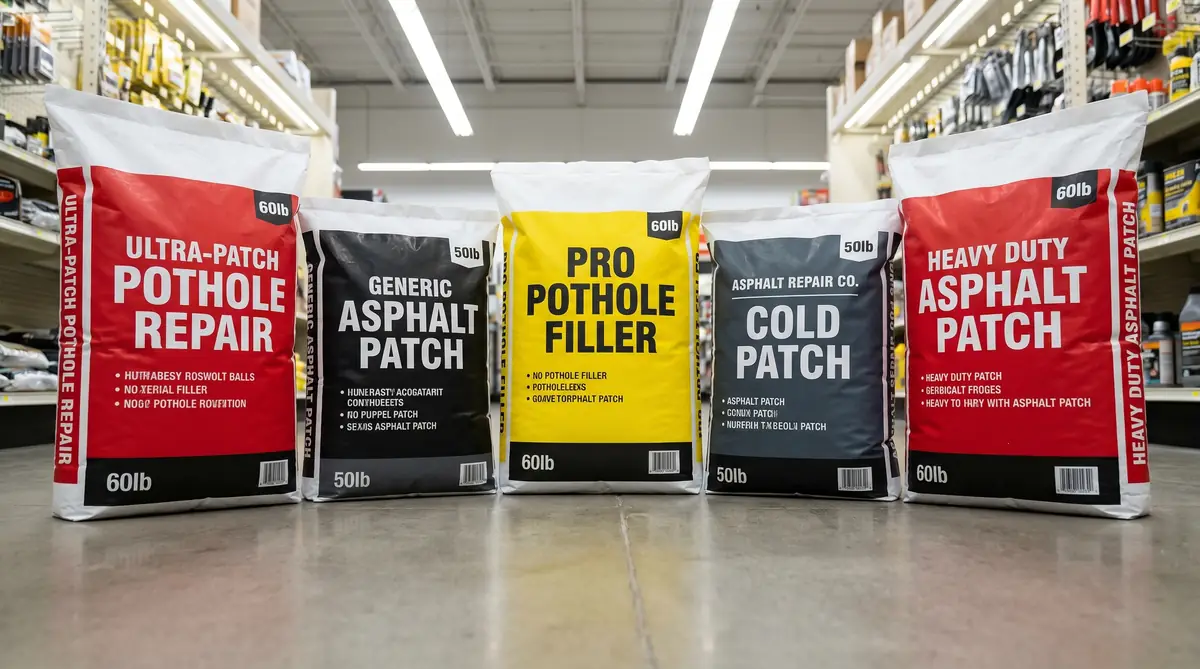
| EZ Street | Polymer-modified | 30 min | 0°F (-18°C) | 50 lb | $28–$35 | Excellent |
| Aquaphalt 6.0 | Polymer-modified | 20–30 min | 20°F (-7°C) | 3.5 gal pail | $45–$60 | Excellent |
| UPM Cold Mix | Resin-based | 45 min | 25°F (-4°C) | 50 lb | $30–$40 | Excellent |
| Perma-Patch | Polymer-modified | 30–60 min | 20°F (-7°C) | 50 lb | $25–$35 | Very Good |
| Sakrete Blacktop Patch | Warm mix blend | 60–90 min | 40°F (4°C) | 60 lb | $15–$22 | Good |
| Quikrete Blacktop Repair | Warm mix blend | 60–120 min | 40°F (4°C) | 50 lb | $14–$20 | Good |
For a broader comparison of DIY repair products including crack fillers and epoxy compounds, see the full asphalt repair kit guide.
How to Use Rapid Set Asphalt Repair Mix — 5 Steps
- Clean the repair area. Remove all loose material, standing water, dirt, and vegetation from the pothole or damaged area. A stiff broom, air compressor, or leaf blower works well. Wet patches fail faster — dry the surface thoroughly, especially in cold weather. Cut or saw straight vertical edges if the damaged area has an irregular perimeter.
- Apply tack coat. Spray or brush a thin layer of asphalt emulsion (tack coat) onto the cleaned surfaces — bottom and walls of the patch area. This is the most skipped step and the most important one. Without tack, even rapid set mix can delaminate under traffic within weeks. A small hand-pump sprayer with diluted SS-1h or CRS-1 emulsion works for small patches. See the tack coat guide for full application details.
- Fill and level. Pour or shovel the rapid set mix into the repair area. Overfill slightly — approximately 1/2 inch above the surrounding surface to account for compaction. For deep potholes (over 4 inches), fill in two lifts: compact the first lift before adding the second.
- Compact thoroughly. Use a hand tamper, plate compactor, or the tires of a vehicle (drive slowly back and forth over the patch) to compact the mix. Proper compaction is the difference between a patch that lasts years and one that dislodges within weeks. The finished surface should be flush with or very slightly proud of the surrounding pavement.
- Allow cure time before reopening. Follow the product's traffic-open time — don't rush it. In cold weather, add additional time. Mark the patch with cones until it's firm to hand pressure and no longer tacky.
Temporary vs Permanent Repair
| Scenario | Rapid Set Sufficient? | Recommended Approach |
|---|---|---|
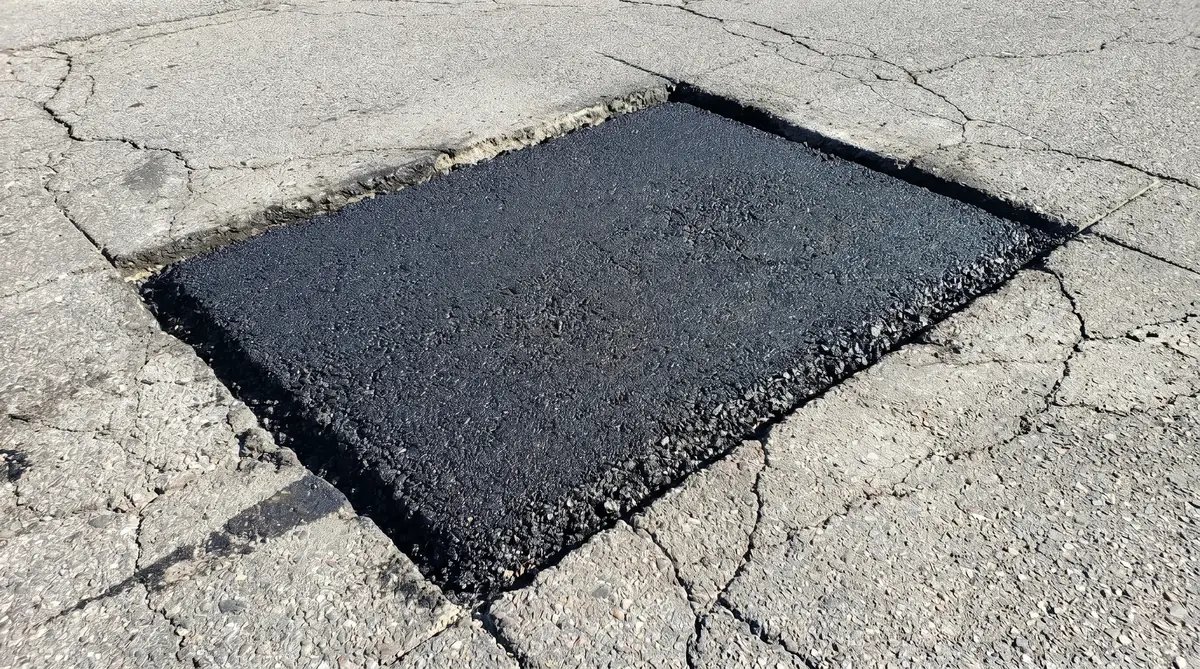
| Small pothole (<6 in diameter, <3 in deep) on low-traffic road | Yes — permanent | Premium rapid set (EZ Street, UPM) |
| Utility cut reinstatement on residential street | Yes — permanent | Rapid set with proper tack and compaction |
| Large pothole (>12 in, >4 in deep) on arterial road | Temporary only | Rapid set as temp; hot mix patch when weather allows |
| Winter emergency pothole repair | Yes — best option | Cold-rated rapid set (EZ Street, Aquaphalt) |
| Structural failure / base failure | No | Full-depth reclamation or HMA base repair required |
| High-traffic highway lane repair | Short-term only | HMA or high-performance epoxy patch for permanent fix |
| Driveway pothole or surface crack | Yes — permanent | Any rapid set or standard cold patch with proper prep |
If the damage is too extensive for a patch repair, use our Asphalt Repair Cost Calculator to estimate whether overlay or full replacement makes more financial sense. For professional contractor options, see asphalt patching near me.
Cost Per Square Foot
| Product Tier | Bag Price | Coverage (2 in depth) | Cost per Sq Ft |
|---|---|---|---|
| Budget (Quikrete, Sakrete) | $14–$22 / 50–60 lb | 0.6–0.8 sq ft | $18–$30/sq ft |
| Mid-range (Perma-Patch, UPM) | $25–$40 / 50 lb | 0.6–0.8 sq ft | $30–$55/sq ft |
| Premium (EZ Street, Aquaphalt) | $28–$60 / 50 lb or pail | 0.5–0.7 sq ft | $40–$90/sq ft |
| Contractor bulk (ton pricing) | $400–$700 / ton | ~80 sq ft / ton at 2 in | $5–$9/sq ft |
Where to Buy Rapid Set Asphalt Mix
| Source | Products Available | Best For | Notes |
|---|---|---|---|
| Home Depot / Lowe's | Quikrete, Sakrete, some UPM | Homeowner / small DIY | Widely stocked, budget tier |
| Contractor supply stores | UPM, Perma-Patch, EZ Street | Contractors, municipalities | Better quality, bulk options |
| Online (Amazon, direct) | Aquaphalt, EZ Street, all brands | Specialty products, comparison shopping | Shipping cost significant for heavy bags |
| Asphalt plant / supplier | Bulk rapid set, warm mix products | Large-volume contractor orders | Best unit cost at scale |
| Municipal supply contracts | UPM, Perma-Patch bulk | City / county maintenance crews | Pre-negotiated pricing, delivery included |
Common Mistakes
- Skipping tack coat: The single most common failure cause. Even 10 seconds of spray emulsion on patch walls dramatically improves bond strength and longevity.
- Patching over water: Standing water in the hole prevents bonding. Rapid set is not magic — blot or blow out all water before filling, especially after rain.
- Under-compaction: Pouring and walking away without tamping leaves air voids that collapse under tire loads within days. Compact until the surface is firm and flush.
- Overfilling without lifts: Filling a deep pothole in one pass means the bottom never gets properly compacted. Two lifts, each compacted separately, produce a far stronger patch.
- Using budget mix on high-traffic roads: Big-box cold patch products work for driveways and parking lots — on arterials or roads with truck traffic, spend the extra $10–$20 on a contractor-grade rapid set product.
- Opening to traffic before cure: "Rapid set" means 30–60 minutes — not 5 minutes. Vehicles driving over an uncured patch drag the aggregate, deforming the patch before it has bonded.
Frequently Asked Questions
What is rapid set asphalt repair mix?
A pre-mixed patching compound that cures fast enough to open to traffic within 30–60 minutes using polymer, resin, or hydraulic binder chemistry — as opposed to standard cold patch, which requires 12–48 hours. Used for potholes, utility cuts, and emergency repairs where traffic disruption must be minimized.
How long does it take to cure?
Traffic-open time is 20–90 minutes depending on product and temperature. Full structural cure takes 12–48 hours. Cold weather (below 40°F) extends traffic-open time to 1–4 hours for most products — but most rapid set mixes will still work at temperatures where hot mix cannot be placed.
Can it be used in cold weather?
Yes — cold weather performance is a primary advantage of premium rapid set products like EZ Street and Aquaphalt, which are rated down to 0–20°F. Standard cold patch from big-box stores typically requires 40°F minimum. Always check the product's cold-weather rating before winter use.
Is rapid set patch permanent?
For small potholes and utility cuts on low-to-medium traffic roads — yes, when properly installed with tack coat and compaction. For large structural failures, high-traffic highways, or base failures — no. Rapid set handles the surface; base failures require full-depth repair.
How much does it cost?
Retail bags run $14–$60 per 50–60 lb bag covering roughly 0.5–0.8 sq ft at 2-inch depth. Contractor bulk pricing drops to $400–$700/ton. Use the pothole repair cost calculator to estimate total project cost based on hole dimensions.