
Asphalt Crack Filler — Best Products, Types & How to Do Asphalt Crack Repair (2026)
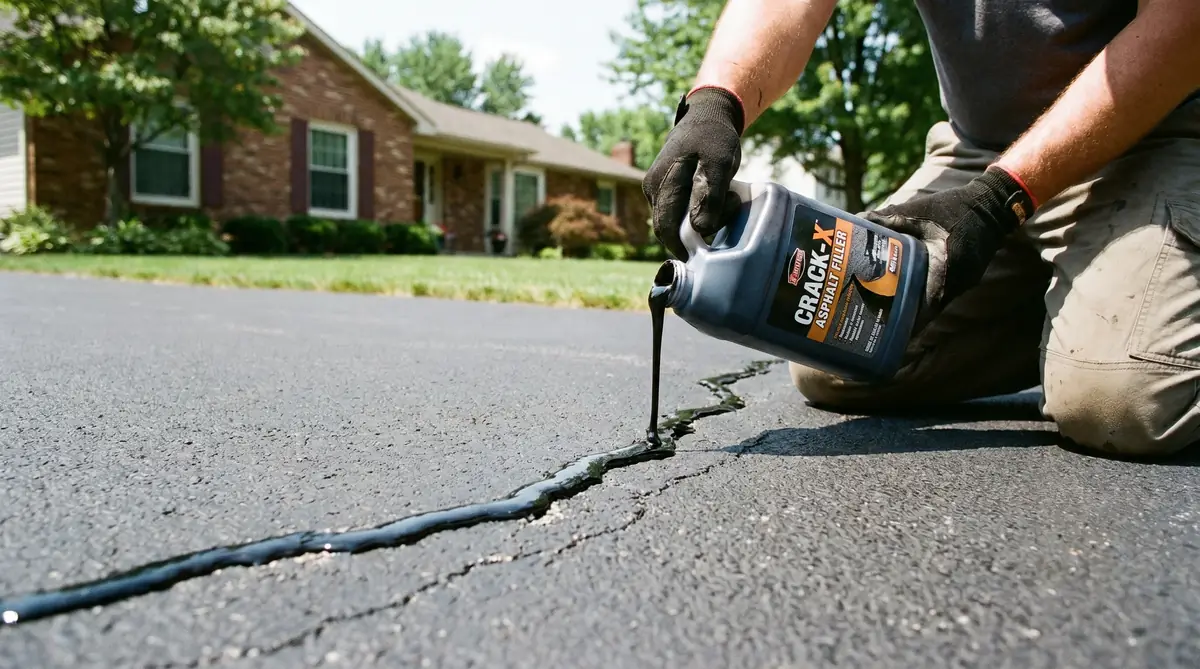
A crack in your asphalt driveway is not just an eyesore — it's water's first entry point into the base material beneath. Left alone, that crack widens every winter as trapped moisture freezes, expands, and heaves the pavement. Within two or three seasons a hairline crack becomes a pothole, and a pothole repair costs 10–20× more than the asphalt crack filler you could have used in an afternoon.
This guide covers every type of asphalt crack filler and asphalt crack repair product on the market: which ones to use based on crack width, step-by-step application, how much everything costs, and exactly when a crack is too far gone to fill.
In this guide
Types of Asphalt Crack Filler
Walk into any home improvement store and you'll find a shelf of products all claiming to fix driveway cracks. They are not the same. Each type works best in a specific crack width range and has different durability.
1. Cold-Pour Liquid Filler
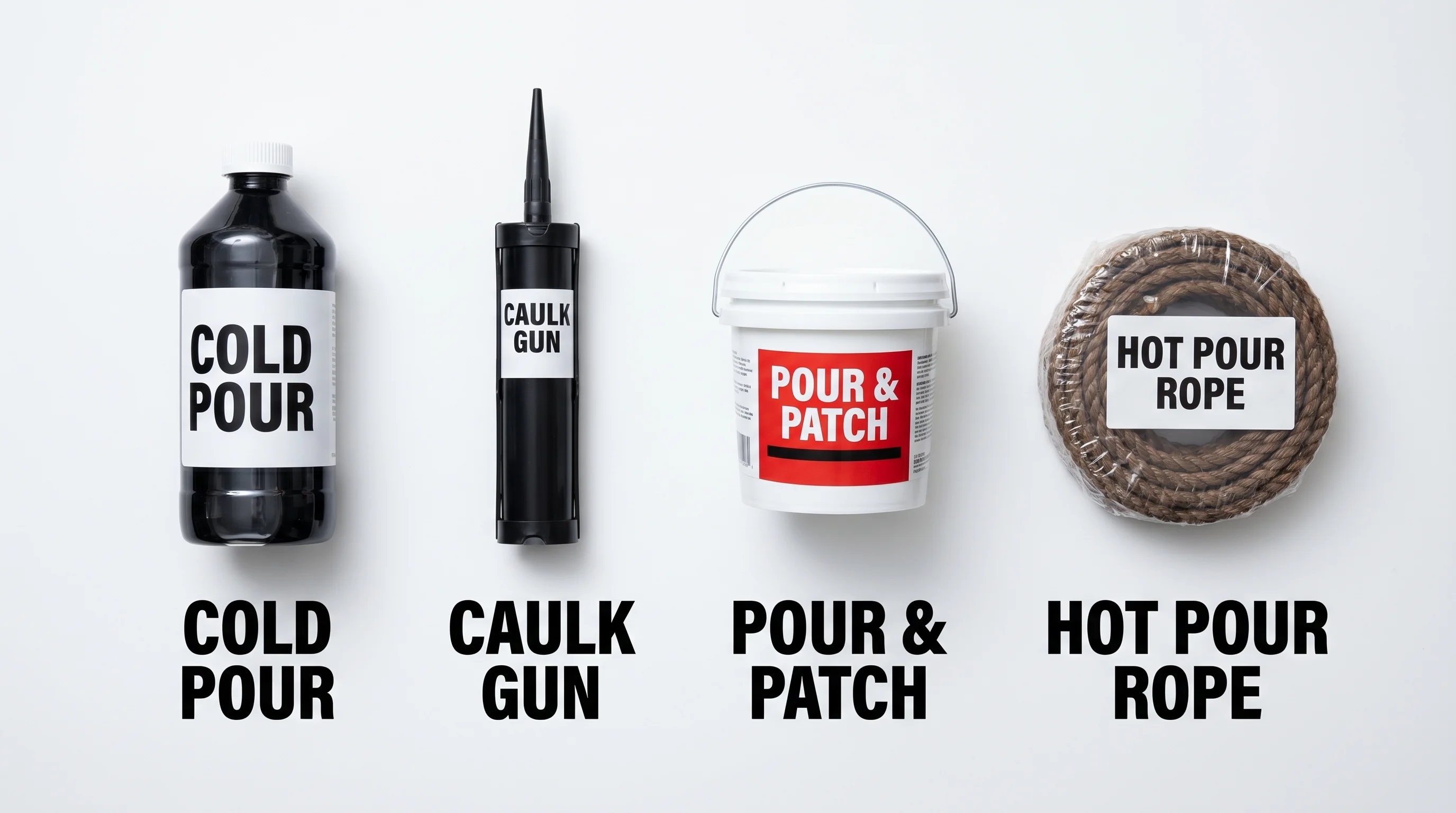
The most common DIY product. Sold in 1-gallon jugs or squeeze bottles, cold-pour fillers are rubberized asphalt emulsions that flow into a crack and flex with the pavement. They work well on cracks up to 3/4 inch wide. Cure time: 24–48 hours. Lifespan: 2–3 years. Cost: $8–$18 per gallon.
Best brands: Latex-ite, Gardner, Dalton Enterprises Pour-N-Roll.
2. Caulk-Tube Polymer Filler
Applied with a standard caulk gun, these cartridges give you more control over placement — ideal for isolated cracks, concrete expansion joints, or areas where you want a cleaner finish. They work on cracks up to 1/2 inch wide. Lifespan: 3–5 years because the polymer formulation is more flexible than standard emulsions. Cost: $6–$12 per cartridge.
Best for: precision work, garage aprons, transitions between asphalt and concrete.
3. Hot-Pour Rubberized Crack Filler
The same material professional contractors use. Heated to 350–375°F with a melter applicator, hot-pour filler flows deep into the crack and bonds aggressively to both sidewalls. It is the longest-lasting option — 5–7 years — and handles wide cracks up to 1.5 inches effectively. Downside: you need a crack melter ($60–$150 rental or $200+ purchase). Cost per crack: $1–$3 per linear foot in materials.
4. Backer Rod + Filler (Wide Cracks)
For cracks wider than 3/4 inch, simply pouring filler creates a shallow, unsupported repair that cracks again quickly. The solution is a backer rod — a foam cylinder inserted into the crack to reduce depth — followed by your filler on top. The backer rod reduces material waste and creates a proper hour-glass shaped bond line that flexes correctly. Rod diameter should be 25% larger than crack width.
5. Cold-Patch Asphalt (Severe Damage)
When a crack has edge breakage or is wider than 2 inches, it's no longer a crack — it's a structural failure. Cold-patch products like Sakrete or QPR are pre-mixed asphalt used to rebuild the area. Use our crack fill calculator to estimate how much material you'll need for your specific repair area.
Quick rule: Under 1/4" wide = sealcoat is enough. 1/4"–3/4" wide = cold-pour or caulk tube. 3/4"–1.5" wide = backer rod + cold-pour or hot-pour. Over 1.5" wide = cold-patch or professional repair.
Which Asphalt Crack Filler to Use by Crack Size
| Crack Width | Crack Type | Best Product | DIY? | Expected Life |
|---|---|---|---|---|
| Under 1/8" | Hairline / spiderwebbing | Asphalt sealer / sealcoat | Yes | 2–4 years |
| 1/8"–1/4" | Surface crack | Cold-pour liquid or caulk tube | Yes | 2–3 years |
| 1/4"–3/4" | Standard crack | Cold-pour liquid (best value) | Yes | 2–3 years |
| 3/4"–1.5" | Wide crack | Backer rod + cold-pour or hot-pour | Yes (hot-pour needs rental) | 3–7 years |
| 1.5"–2" | Structural crack | Backer rod + hot-pour + sealcoat | Moderate difficulty | 5–7 years |
| Over 2" | Edge break / pothole forming | Cold-patch asphalt + seal | Rental equipment needed | 3–5 years |
Asphalt Crack Filler Cost Breakdown (2026)
Material costs are low — the expensive part of crack repair is paying a contractor to do what's essentially a 30-minute job. Here's what to budget:
| Product | Price | Coverage | Cost per 10 Linear Feet |
|---|---|---|---|
| Cold-pour liquid (1 gal) | $10–$18 | ~60–80 linear ft (1/4" crack) | ~$2 |
| Caulk tube (10 oz) | $6–$12 | ~20–30 linear ft (1/4" crack) | ~$4 |
| Hot-pour block (30 lb) | $35–$60 | ~100–150 linear ft | ~$3 |
| Backer rod (per 50 ft) | $8–$15 | 50 linear ft | ~$1.50 |
| Cold-patch (50 lb bag) | $25–$40 | ~1 sq ft at 2" depth | Varies |
| Professional repair | $1.50–$4/linear ft | — | $15–$40 |
Use our free crack fill calculator to get an accurate material estimate based on your specific crack dimensions and count. After repairs, protect your investment with a fresh coat of asphalt driveway sealer — see our full sealer guide to choose the right product.
Pro tip: buy a little more than you need
Cold-pour filler shrinks slightly as it cures — plan for a second pass on wider cracks. A single gallon typically handles 150–200 linear feet of 1/8" cracks or 60–80 linear feet of 1/4" cracks. Leftover sealed filler stores for 1–2 years.
How to Fill Asphalt Cracks: Step-by-Step Asphalt Crack Repair
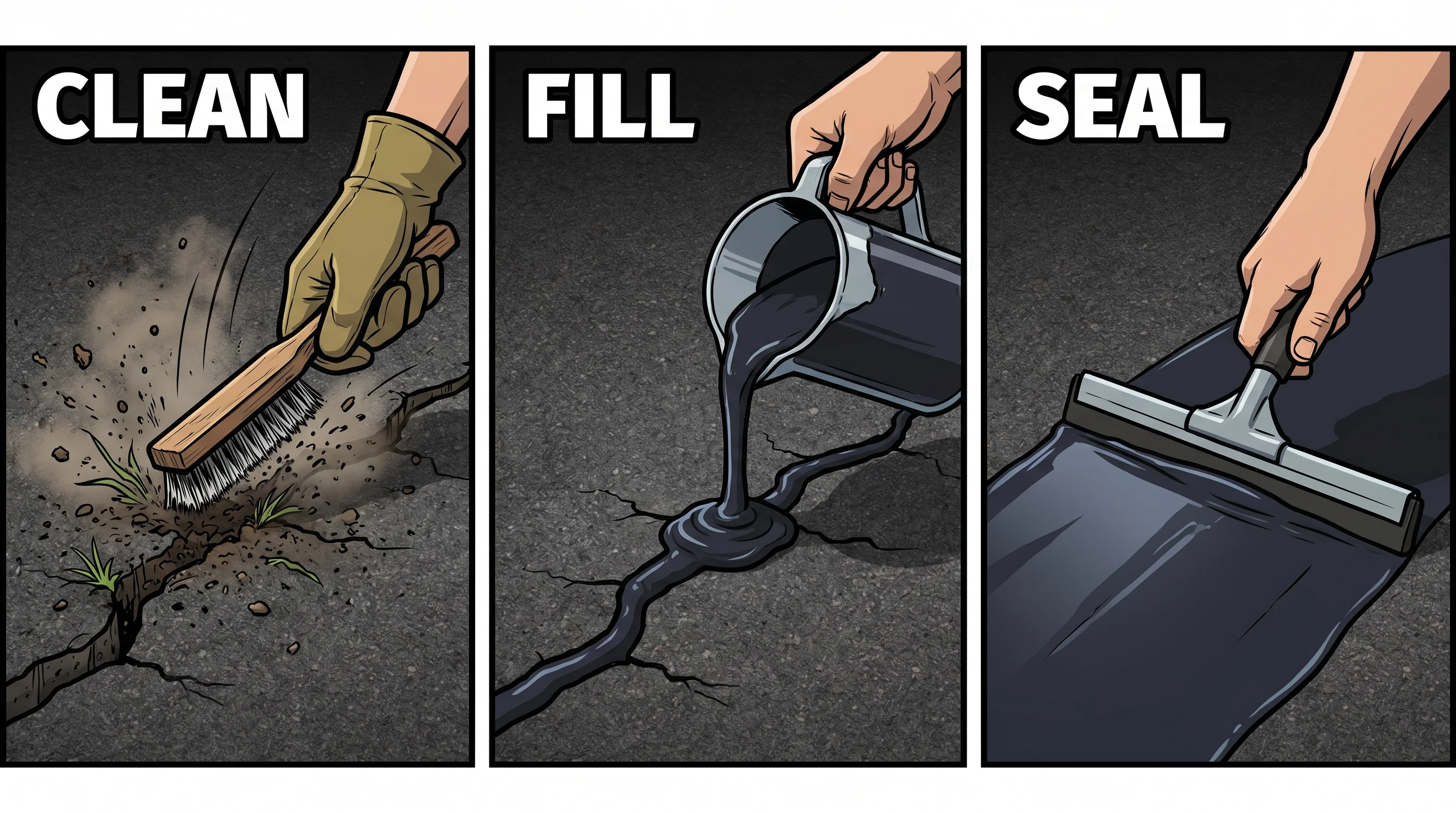
Done right, a DIY asphalt crack repair takes about 30–60 minutes for a typical driveway and lasts 2–5 years depending on the product. Here's the exact process:
-
Check the weather — You need at least 2–3 dry days with temperatures above 50°F. Filling a crack on a cold or wet day guarantees a failed repair. The pavement itself must be dry and above 40°F.
-
Clean the crack thoroughly — Use a wire brush, putty knife, or screwdriver to remove loose asphalt, dirt, and vegetation. Blow out debris with a leaf blower or compressed air. Any dirt left in the crack will prevent adhesion. For wide cracks, use a cold chisel to square up the edges.
-
Insert backer rod if needed — For cracks over 3/4" wide, press a foam backer rod into the crack with a screwdriver until it sits about 1/4" below the surface. This prevents filler from sinking too deep and wasting material.
-
Apply crack filler — Pour or squeeze filler into the crack, slightly overfilling (about 1/8" above surface). Work in sections of 10–15 feet. For caulk tubes, hold at a 45° angle and apply steady pressure while moving at a consistent pace.
-
Smooth and feather the edges — Use a putty knife or squeegee to press the filler into the crack and feather the edges flat with the surrounding pavement. Mounding filler above the surface creates a trip hazard and traps water on the edges.
-
Apply a second pass if needed — Cold-pour filler shrinks as it cures. Check after 24 hours — if the repair has sunk below the pavement surface, apply a thin second coat.
-
Let cure completely — Stay off the repair for 24 hours minimum (48 hours for traffic). Full cure takes 30 days. Do not sealcoat over fresh filler for at least 24–48 hours.
-
Sealcoat the driveway — Once filler has cured, apply a fresh coat of asphalt driveway sealer over the entire surface to lock in the repair and protect against future cracking. Use our sealcoating calculator to estimate how much sealer you need.
Common mistakes that cause failed repairs
- Filling a dirty crack — Filler won't bond to dirt, sand, or loose aggregate. Clean thoroughly first.
- Applying in cold weather — Below 50°F, emulsion-based fillers don't bond properly and peel within weeks.
- Skipping the second coat — A sunken repair collects water and re-cracks faster than the original damage.
- Sealing over unfilled cracks — Sealant bridges cracks but does not fill them. Trapped moisture causes rapid expansion.
Before & After: What Good Asphalt Crack Repair Looks Like
A properly done asphalt crack repair should be nearly flush with the surrounding pavement, slightly darker in color (this fades within a few weeks), and completely sealed with no gaps at the edges. After sealcoating, the repair blends almost invisibly into the driveway surface.
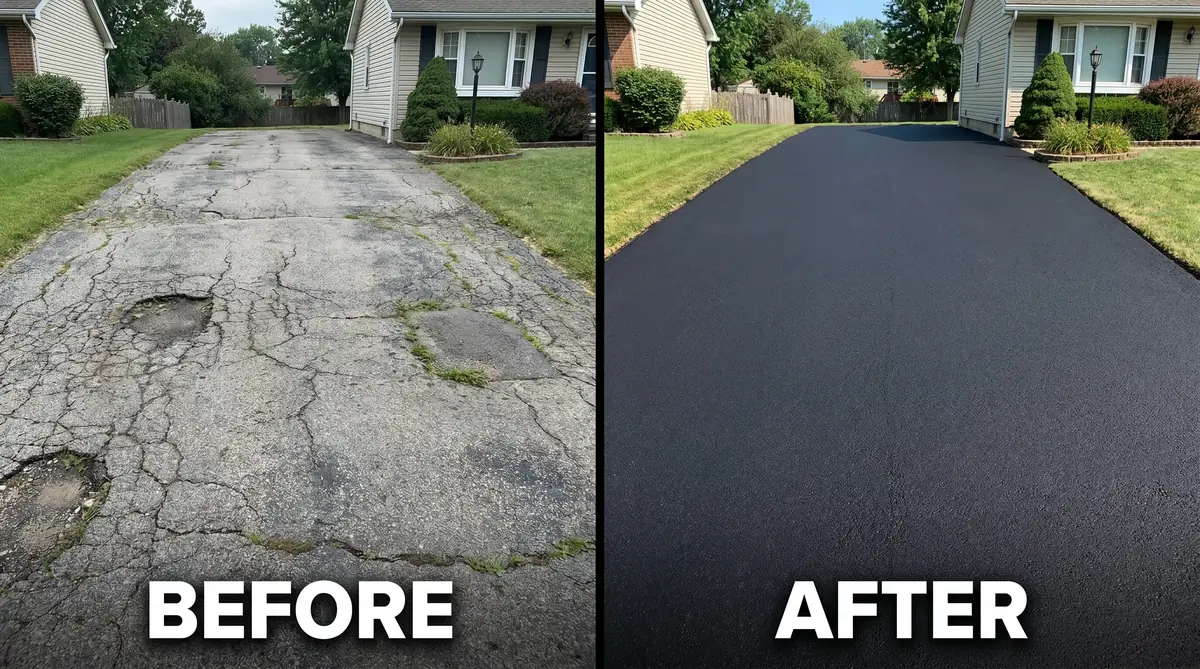
The key difference between a professional-looking repair and a sloppy one is surface preparation and feathering. Contractors spend more time cleaning than filling. If you rush the cleaning step, the filler won't stick — you'll see it peel at the edges within one freeze-thaw cycle.
How long does asphalt crack repair keep the driveway looking good? With cold-pour filler plus sealcoating every 2–3 years, most driveways look solid for 15–20 years. Read our full guide on how long an asphalt driveway lasts for a complete maintenance timeline.
When to Stop Filling Cracks and Resurface
Crack filling is maintenance, not a cure-all. There comes a point where the pavement has deteriorated too far to patch effectively — and continuing to fill cracks is throwing money at a surface that needs replacement.
Time to consider resurfacing or overlay if:
- More than 30–35% of the surface is cracked, alligatored, or deteriorated
- You have alligator cracking (interconnected cracks forming a pattern like lizard scales) — this indicates base failure, and no surface repair will last
- Cracks reappear within 6 months of filling — the base is moving
- The driveway is over 25 years old with heavy cracking throughout
- You see heaving, depressions, or drainage pooling — structural problems that crack filler cannot address
An asphalt overlay (1.5"–2" new layer over existing pavement) typically costs $3–$5 per square foot — compared to $1–$3 per square foot for crack fill + sealcoat. Use our asphalt repair cost calculator to compare your options side by side.
The 30% rule: If cracked area is under 30% of the total surface, crack fill and sealcoat. If over 30%, get quotes for overlay or replacement. Filling heavily deteriorated asphalt delays the inevitable and costs more in the long run.
Asphalt Crack Filler vs Asphalt Driveway Sealer — What's the Difference?
These two products are often confused but serve completely different purposes:
- Asphalt crack filler fills the physical void of a crack. It's thick, rubberized, and goes into the crack. It does not protect the surrounding surface.
- Asphalt driveway sealer is a thin surface coating applied over the entire pavement. It protects against UV, water, and oil damage but cannot fill gaps wider than a hairline.
You need both: fill cracks first, let cure, then sealcoat. Skipping crack filler and just sealcoating bridges cracks temporarily but allows water to continue working underneath.
Frequently Asked Questions About Asphalt Crack Filler
What is the best asphalt crack filler?
For cracks up to 1/2 inch: Latex-ite Pour-N-Roll or Gardner Rubberized Crack Filler — both flow well, cure fast, and are available at Home Depot. For wider cracks: a backer rod paired with Dalton Enterprises Pli-Stix hot-pour rope gives the longest-lasting repair without needing a melter machine. For precision work: a polymer caulk tube (NPC or Sashco) gives the cleanest finish.
Can I fill asphalt cracks myself?
Yes — cracks up to 1 inch wide are a straightforward DIY project. Budget 30–60 minutes for a typical driveway plus $15–$35 in materials. You need a wire brush, leaf blower or compressed air, your crack filler of choice, and a putty knife. The only cracks worth hiring out are alligator cracking (base failure) or anything requiring a hot-pour melter on a large scale.
How long does asphalt crack filler last?
Cold-pour rubberized filler: 1–3 years. Caulk-tube polymer filler: 3–5 years. Hot-pour rubberized filler: 5–7 years. Longevity depends heavily on preparation — a clean, dry crack that's correctly filled lasts 2–3× longer than one filled over debris or moisture. Sealcoating over the repair adds another layer of protection.
Should I fill cracks before sealing my driveway?
Always. Applying asphalt sealer over open cracks traps moisture. In winter that moisture freezes, expands to 9% greater volume, and rapidly widens the crack. Fill all cracks wider than 1/4 inch, let cure 24 hours minimum, then sealcoat.
What's the difference between asphalt crack filler and asphalt crack sealer?
Crack filler physically fills the void of a crack (you pour or squeeze it in). Crack sealer is a thin liquid applied over hairline cracks and the surrounding surface. For cracks wider than 1/8 inch, use filler. For surface micro-cracks or spiderwebbing, a standard sealcoat handles them without needing a separate filler product.
How wide a crack can I fill with liquid asphalt crack filler?
Liquid cold-pour fillers work best up to 3/4 inch wide. For 3/4"–1.5" wide cracks, insert a backer rod first to reduce depth before pouring. Cracks over 1.5" wide with edge breakage need cold-patch asphalt, not liquid filler — the edges are structurally compromised and need rebuilt material, not just a surface bridge.