
Asphalt Sealer Guide 2026 — Types, Cost, How to Apply & Best Products
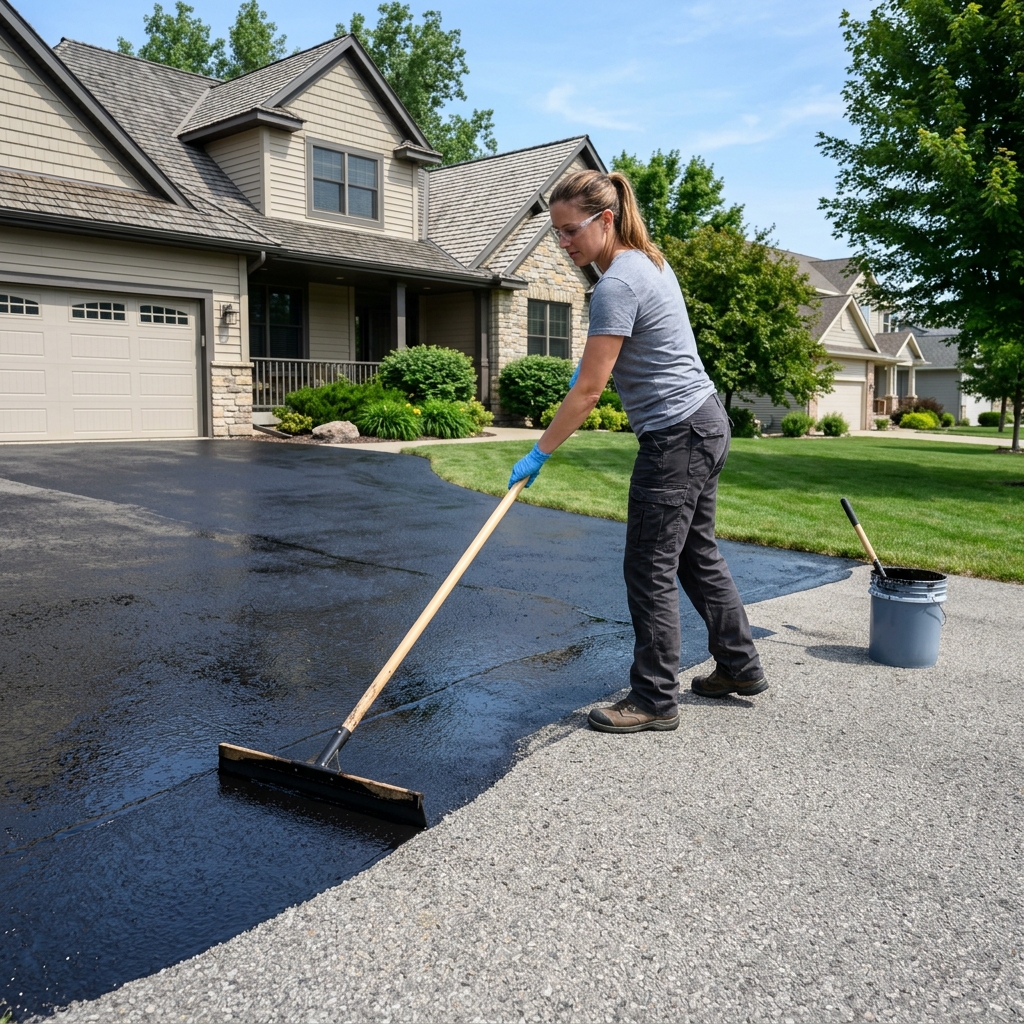
Asphalt sealer costs $0.06–$0.30 per square foot and should be applied every 2–3 years to protect your driveway from UV damage, water infiltration, and oil stains. There are 4 main types: coal tar emulsion, asphalt emulsion, acrylic, and fast-dry. Choosing the wrong sealer is one of the most common and costly driveway maintenance mistakes. Use our free sealcoating calculator to estimate exactly how much sealer you need and what it will cost. For a full product comparison and step-by-step application, see our asphalt driveway sealer guide.
Types of Asphalt Sealer — Full Comparison
Each sealer type offers a different balance of protection, durability, drying speed, and environmental impact:
| Type | Cost/Sqft | Durability | Drying Time | Best For | Restrictions |
|---|---|---|---|---|---|
| Coal Tar Emulsion | $0.08–$0.18 | 3–5 years | 24–48 hrs | High-traffic driveways | ⚠️ Banned in MN, WI, DC |
| Asphalt Emulsion | $0.06–$0.14 | 2–4 years | 24–48 hrs | Eco-conscious, all states | ✅ Legal everywhere |
| Acrylic Sealer | $0.10–$0.20 | 2–3 years | 4–8 hrs | New driveways, appearance | ✅ Legal everywhere |
| Fast-Dry / Rubberized | $0.18–$0.30 | 3–4 years | 2–4 hrs | Commercial, quick turnaround | ✅ Legal everywhere |
| Oil-Based (penetrating) | $0.15–$0.25 | 3–5 years | 24–72 hrs | Old/oxidized asphalt | ⚠️ Some city restrictions |
Coal Tar Sealer — The Most Protective Option
Coal tar emulsion is derived from coal processing — not petroleum like asphalt itself — which makes it exceptionally resistant to gasoline, motor oil, and UV radiation. It provides the longest-lasting protection of any residential sealer at 3–5 years per application, which is why commercial parking lots and gas station aprons almost always use it.
The downsides are significant: strong odor during application (keep children and pets away for 48 hours), and it has been banned in Minnesota, Washington DC, and several municipalities due to polycyclic aromatic hydrocarbon (PAH) runoff contaminating waterways. Before purchasing, check whether it is legal in your area. Where it is available and legal, coal tar is the professional's choice for high-traffic residential driveways that need maximum durability.
Asphalt Emulsion Sealer — The Recommended Alternative
For a complete deep-dive into emulsion sealers — solid content explained, all four subtypes, and step-by-step application — see our dedicated Asphalt Emulsion Sealer Guide. For a breakdown of product prices by brand and container size, see Asphalt Sealer Prices (2026).
Asphalt emulsion sealer is made from the same base material as the driveway — petroleum asphalt — which means it bonds naturally and compatibly with the surface. It is legal in all 50 states, produces no strong odor, and is significantly more eco-friendly than coal tar. For most homeowners, it is the practical first choice. Look for products labeling at least 50% solid content — lower-quality products with 30–40% solids wear away faster and require more frequent reapplication.
The one trade-off vs coal tar: asphalt emulsion is slightly less resistant to prolonged gasoline or solvent spills. For a standard residential driveway with typical traffic, this rarely matters. For driveways adjacent to workshops, vehicles with known leaks, or commercial use, coal tar (where legal) or a rubberized sealer is preferable. Compare the full DIY vs professional sealcoating cost breakdown before deciding.
Acrylic Driveway Sealer — Best Appearance
Acrylic sealers are fully water-based and offer the fastest drying time (4–8 hours) and the most striking jet-black finish of any sealer type. They are the most environmentally friendly option and can be colored — some contractors offer tinted acrylic sealers for decorative applications. For curb appeal and a fresh-from-the-plant look, nothing beats a freshly applied acrylic coat.
The weakness: acrylic does not penetrate or fill surface pores as effectively as coal tar or asphalt emulsion, and it bonds less aggressively to oxidized or aged asphalt. Use acrylic on driveways less than 5 years old in good physical condition. If your driveway has significant cracking, surface deterioration, or has turned gray with oxidation, start with an asphalt emulsion sealer that will bond and fill better. Always address cracks first with our crack fill calculator before applying any sealer.
How Much Asphalt Sealer Do I Need?
Coverage varies by sealer type and surface condition. A rough, oxidized surface absorbs more product than a smooth newer surface. Standard coverage: 1 gallon covers 60–80 sqft on a rough surface and 80–100 sqft on a smooth surface. Always apply 2 coats — a single coat is never sufficient for proper protection.
| Driveway Size | Gallons (1 coat) | Gallons (2 coats) | 5-gal Buckets |
|---|---|---|---|
| 200 sqft | 2.5–3.3 gal | 5–6.7 gal | 2 buckets |
| 400 sqft | 5–6.7 gal | 10–13.3 gal | 3 buckets |
| 600 sqft | 7.5–10 gal | 15–20 gal | 4 buckets |
| 800 sqft | 10–13.3 gal | 20–26.7 gal | 6 buckets |
| 1,000 sqft | 12.5–16.7 gal | 25–33.3 gal | 7 buckets |
For a precise calculation including sealer type, surface condition, and local pricing, use our free sealcoating calculator.
How to Apply Asphalt Sealer — Step by Step
- Check weather. Temperature must be above 50°F, with no rain forecast for at least 48 hours. Avoid application in direct midday summer sun — heat causes the sealer to dry unevenly before it can bond properly. Early morning or overcast days are ideal.
- Clean the surface thoroughly. Blow off all leaves and debris. Pressure wash any oil stains with a degreaser. Let the entire surface dry completely — at least 24 hours after washing. Any moisture beneath the sealer will cause bonding failure.
- Fill all cracks first. Any crack wider than 1/4 inch must be filled with asphalt crack filler and allowed to cure for 24 hours before sealing. Sealing over cracks traps moisture underneath, which accelerates cracking. Use our crack fill calculator to estimate the filler you need.
- Protect edges and borders. Apply painter's tape along the garage door threshold, any adjoining concrete, and the grass line. Cover any painted markings you want to preserve. Remove tape before the sealer fully dries.
- Apply edge coat with a brush. Use a 4–6 inch brush to coat all edges, expansion joints, and tight corners first. Squeegees can't reach these areas evenly, and edges are the first to deteriorate.
- Apply first coat with a squeegee. Pour sealer in ribbons directly onto the driveway surface. Use a long-handled squeegee or brush applicator to spread evenly. Work away from the garage door toward the street. Maintain a wet edge so you don't create lap lines.
- Allow to dry between coats. Wait a minimum of 4–8 hours (24 hours for coal tar) before applying the second coat. Check that the first coat is fully dry and no longer tacky to the touch.
- Apply second coat in the opposite direction. Cross-hatching the second coat perpendicular to the first ensures even coverage and eliminates any thin spots from the first pass. Keep all traffic — foot and vehicle — off the sealed surface for 24–48 hours total.
Asphalt Sealer Cost — DIY vs. Professional
| Method | Cost/Sqft | 600 Sqft Total | Notes |
|---|---|---|---|
| DIY — asphalt emulsion | $0.06–$0.10 | $36–$60 | Material only; 5-gal bucket ~$25–$35 |
| DIY — coal tar (where legal) | $0.08–$0.14 | $48–$84 | Stronger protection, stronger odor |
| Professional — standard | $0.14–$0.20 | $85–$120 | Spray application, 2 coats, even finish |
| Professional — premium | $0.20–$0.30 | $120–$180 | Coal tar or rubberized, 2 coats |
✅ When to DIY
Driveways under 500 sqft, surface in good condition without extensive cracking, and you're comfortable with outdoor physical work. DIY saves 50–60% on material cost. Budget 2–3 hours for a 400 sqft driveway plus 24 hours drying time between coats.
⚠️ When to Hire a Professional
Driveways over 500 sqft (spray equipment is dramatically faster and more even than hand-rolling), commercial driveways, driveways with significant cracking or base issues needing pre-treatment, or driveways where streaks and lap marks would be visible from the street. Use our driveway sealing cost calculator to compare true DIY vs professional cost for your size.
How Often to Apply Asphalt Sealer
Apply sealer every 2–3 years for most US climates. In harsh northern states (Minnesota, Wisconsin, Michigan) with severe freeze-thaw cycles, every 2 years is appropriate. In mild southern climates (Florida, Arizona), every 3 years is usually sufficient.
Signs it is time to seal: driveway has faded from black to gray (UV oxidation), water no longer beads on the surface and soaks in instead, or the surface feels rough and porous. Critical warning: do NOT seal too frequently. Sealer buildup from annual applications creates a brittle layer that flakes, peels, and looks worse than an unsealed driveway. Always wait a minimum of 2 years between applications. For brand new driveways, wait 6–12 months before the first sealing — new asphalt needs time to cure and off-gas before sealer is applied.
5 Common Mistakes to Avoid
- Sealing over unfilled cracks. The single most common mistake. Always crack-fill first, cure 24 hours, then seal. Sealer over cracks traps water and accelerates cracking.
- Applying sealer in cold weather. Below 50°F, the sealer won't bond properly and will peel within months. Check both the current temperature and whether overnight lows will dip below 50°F during the curing period.
- Applying one thick coat instead of two thin coats. A single thick coat takes longer to dry, cures unevenly, and cracks prematurely. Two thin coats always outperform one heavy application.
- Using a paint roller instead of a squeegee. Paint rollers apply sealer too unevenly and leave behind air bubbles. Use a professional-grade squeegee or brush applicator for flat, consistent coverage.
- Sealing every year. Annual sealing builds up a thick, brittle layer that flakes and peels. The sealer never fully cures between applications. Two to three years between applications is the correct interval.
Frequently Asked Questions
What is the best asphalt sealer?
For most homeowners: asphalt emulsion sealer with at least 50% solid content. It is legal in all 50 states, eco-friendly, and provides 2–4 years of solid protection. Coal tar provides superior protection (3–5 years) where it is still legal. Acrylic sealers deliver the best-looking finish and are ideal for newer driveways under 5 years old. For a full brand-by-brand breakdown, see our best asphalt sealer for driveways comparison guide.
How much does asphalt sealer cost?
DIY: $0.06–$0.14/sqft in materials — about $36–$84 for a 600 sqft driveway. A 5-gallon bucket costs approximately $25–$35. Professional: $0.14–$0.30/sqft installed, or $85–$180 for a 600 sqft driveway. Use our driveway sealing cost calculator for a precise estimate.
How long does asphalt sealer last?
Asphalt emulsion sealer lasts 2–4 years. Coal tar lasts 3–5 years. Acrylic sealer lasts 2–3 years. Climate, traffic volume, and application quality all affect longevity. Heavy vehicle traffic, intense UV exposure, and harsh freeze-thaw winters all shorten sealer life.
How do I know if my driveway needs sealer?
Three reliable signs: (1) The color has faded from black to gray — UV oxidation is degrading the asphalt binder. (2) Water no longer beads and rolls off but soaks directly into the surface. (3) The surface feels rough, gritty, and porous rather than smooth. Any of these signals it is time to seal.
Can I apply asphalt sealer over cracks?
No — always fill cracks wider than 1/4 inch with asphalt crack filler first, and let it cure for 24 hours before sealing. Sealing over unfilled cracks traps moisture underneath. When that moisture freezes and expands in winter, it widens the crack rapidly. Use our crack fill calculator to estimate filler quantities.
What is the difference between asphalt sealer and sealcoating?
They are the same thing. "Sealcoating" is the professional term for the process. "Asphalt sealer" is the product applied. Both refer to applying a thin protective layer of coal tar emulsion, asphalt emulsion, or acrylic to an existing asphalt surface to protect it from UV rays, water, and chemical damage.
Can I apply asphalt sealer myself?
Yes — DIY sealing is practical for driveways under 500 sqft. You'll need: a long-handled squeegee or brush applicator ($15–$30), asphalt crack filler ($10–$20 per tube), a pressure washer or garden hose, and 2–3 days of dry weather above 50°F. For driveways over 500 sqft, professional spray application produces faster, more even results — and the cost difference often isn't as large as you'd expect.