
Asphalt Mixing Plant — Types & Costs (2026)
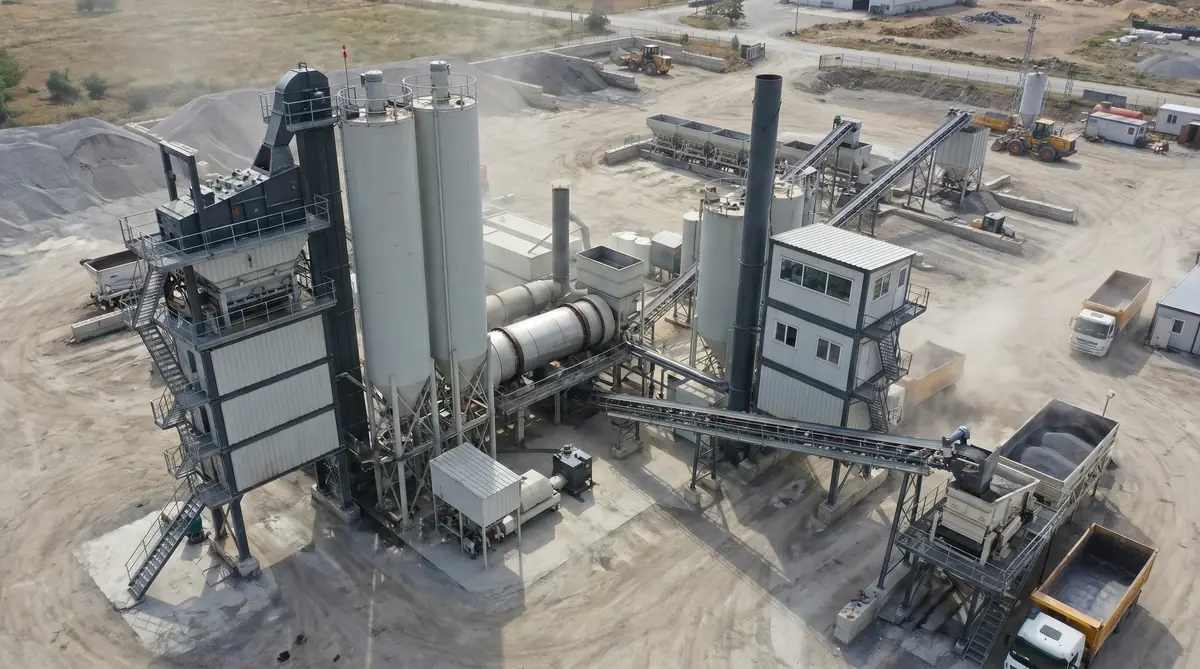
Every asphalt driveway, parking lot, and road starts at an asphalt mixing plant. Before hot mix reaches a paving crew it has been dried, heated, weighed to the gram, and blended to an exact engineering specification — at a facility that most people never think about, but that fundamentally determines how long the pavement lasts.
This guide explains how mixing plants work, the critical difference between drum and batch plants, what output capacities mean for buyers, and how to source hot mix for your project in 2026.
Contents
What Is an Asphalt Mixing Plant?
An asphalt mixing plant — also called a hot mix plant or asphalt concrete plant — combines three raw materials to produce hot mix asphalt (HMA):
- Aggregate: Crushed stone, gravel, and sand in graded sizes (⅜ inch, ¾ inch, and fines)
- Bitumen binder: Petroleum-based asphalt cement, heated to 300–350°F to become pourable
- Mineral filler: Limestone dust or Portland cement added in small quantities to improve stiffness
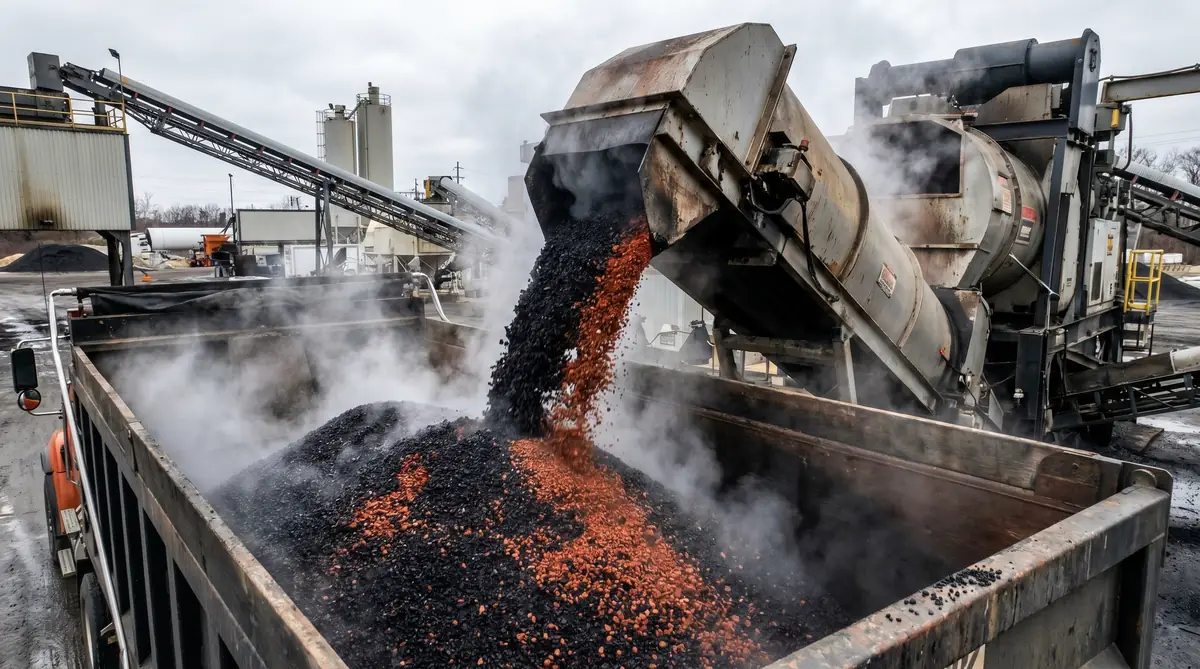
The plant heats and dries the aggregate to exactly the right temperature, then coats every particle evenly with bitumen binder at a controlled ratio — typically 4–7% bitumen by weight. The finished product leaves at 275–325°F and must reach the paving site within 30–90 minutes before cooling below workable temperature.
Drum Mix vs Batch Mix Plants
| Factor | Drum Mix Plant | Batch Mix Plant |
|---|---|---|
| Process | Continuous | Discrete batches |
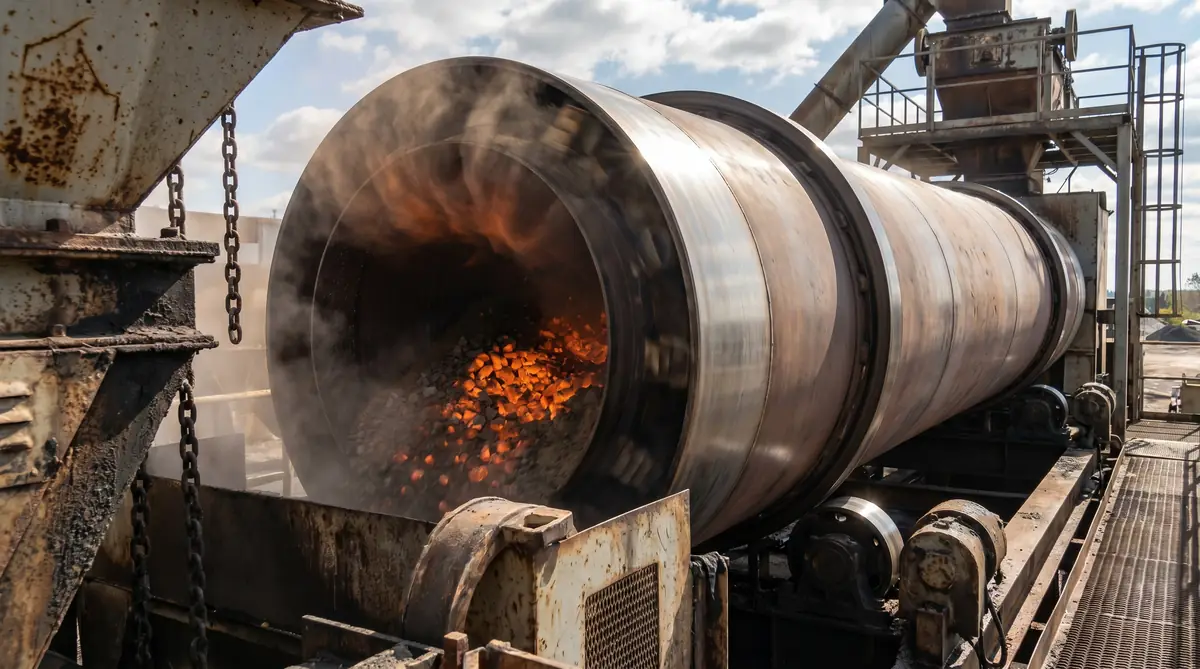
| How it works | Aggregate and bitumen fed simultaneously into a rotating drum — mixing and drying in one pass | Aggregate dried first, then weighed and mixed separately in a pugmill |
| Output rate | 80–400+ tph | 40–320 tph |
| Quality control | Good — consistent when calibrated | Excellent — each batch weighed and verified |
| Mix flexibility | One mix type at a time | Multiple specs per shift |
| Capital cost | Lower | 20–40% premium |
| RAP capability | Up to 30–40% RAP | Up to 50%+ RAP |
| Best for | High-volume highway and commercial paving | Airport runways, premium road specs, multiple mix types |
For most residential and commercial contractors, drum mix plants dominate because of their lower cost and high throughput. Batch plants are specified when contracts require strict mix verification records — airport work, major DOT highway projects, or jobs with sample testing requirements.
Plant Configurations
| Configuration | Mobility | Setup Time | Best For | Capital Cost |
|---|---|---|---|---|
| Stationary | Permanent site | N/A | Urban supply, high-volume regional production | $800K–$8M+ |
| Relocatable | Move every 1–3 years | 2–6 weeks | Regional contractors, changing work zones | $400K–$3M |
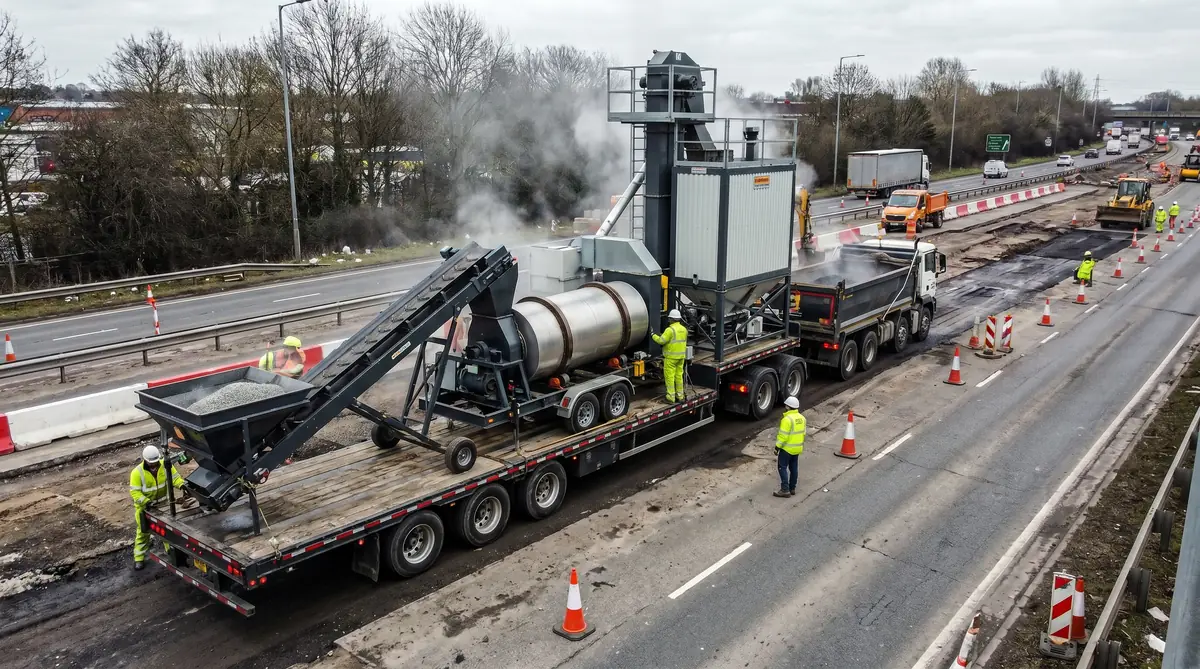
| Portable / Mobile | Move every job | 1–3 days | Remote projects, rural road construction | $200K–$1.2M |
Mobile plants sacrifice output capacity for flexibility — a portable plant producing 60 tph on-site is far better than trucking hot mix 80 miles from a stationary plant and arriving with material already cooled below spec.
Key Components of an Asphalt Plant
- Cold aggregate feeder bins: 3–6 bins holding different aggregate sizes. Variable-speed conveyors control the proportion of each size fed into the system.
- Dryer drum: A rotating steel cylinder 5–15 feet in diameter and 20–50 feet long. A burner heats aggregate to 275–325°F while tumbling blades shower material through the flame for even drying.
- Mixer / pugmill (batch plants): Twin-shaft paddle mixer that combines aggregate, bitumen, and filler per batch. In drum plants, mixing happens inside the drum itself.
- Bitumen storage tanks: Insulated tanks (10,000–100,000+ gallon capacity) that keep bitumen at 300–350°F continuously — it solidifies at room temperature.
- Filler silo: Stores limestone dust and delivers it by screw conveyor in precise small quantities per batch.
- Baghouse dust collector: Captures fine particles from dryer exhaust — both an environmental requirement and a source of recovered filler that goes back into the mix.
- Control system: Modern plants use computerised control rooms that monitor temperatures, aggregate feed rates, bitumen injection, and mix proportions in real time for QA documentation.
Output Capacity & Capital Cost (2026)
| Plant Size | Output | Daily Output (8 hr) | Typical Use | Capital Cost |
|---|---|---|---|---|
| Small portable | 40–80 tph | 320–640 tons | Rural roads, remote projects, small contractors | $200K–$600K |
| Medium stationary | 80–160 tph | 640–1,280 tons | Regional contractor, suburban supply | $500K–$2M |
| Large drum plant | 160–320 tph | 1,280–2,560 tons | Major highway contractor, urban supply hub | $1.5M–$4M |
| Mega plant | 320–600+ tph | 2,560–4,800+ tons | National contractor, DOT supply contracts | $4M–$10M+ |
Mix Types Produced
| Mix Type | Temp | Plant Required | Typical Use |
|---|---|---|---|
| Hot Mix Asphalt (HMA) | 275–325°F | Any | Driveways, roads, parking lots — standard pavement |
| Warm Mix Asphalt (WMA) | 200–250°F | Any with WMA additive system | Cooler weather paving, longer haul, reduced emissions |
| RAP-blended mix | 275–325°F | RAP bin and feeder required | Sustainable paving using 20–50% recycled asphalt |
| Stone Matrix Asphalt (SMA) | 290–340°F | Batch plant preferred | High-traffic highways, airport taxiways, rut resistance |
| Open Graded Friction Course | 275–310°F | Any | Permeable surface layer for drainage and noise reduction |
| Cold mix | Ambient | Separate cold mix plant | Stockpile repairs, utility cuts, remote patching |
For typical residential driveways and parking lots, standard HMA is what you need. Use our Hot Mix Asphalt Calculator to estimate tonnage, and check current pricing at our Hot Mix Price Per Ton guide.
How to Source Hot Mix Near You
Most homeowners never deal with a plant directly — their contractor handles sourcing. But if you're managing a self-build or verifying contractor pricing, here's what to know:
- Delivery radius: Hot mix must reach the paving site within 30–50 miles of the plant before cooling below 275°F at the paver. Always confirm your site is within a plant's operational radius.
- Minimum orders: Most plants require a minimum of one truckload — typically 15–25 tons. Some smaller operations supply 5-ton minimums for residential work.
- Price per ton (2026): HMA costs $65–$120 per ton at the plant gate depending on region and mix spec. Delivery adds $8–$25/ton. See our Hot Mix Price Per Ton guide for regional breakdowns.
- Lead time: Most plants operate by appointment — call 24–48 hours ahead. In peak summer paving season, popular plants book out 3–5 days.
- Find a plant: Use our Asphalt Plant Near Me tool or search your state DOT's list of approved hot mix producers.
Environmental & Regulatory
Asphalt plants are regulated under the Clean Air Act in the US and equivalent legislation internationally:
- Baghouse emissions: Plants must capture particulate matter from dryer exhaust. Modern systems remove 99%+ of particulates before stack discharge. Regular stack testing is required by state environmental agencies.
- VOC limits: Bitumen fumes contain volatile organic compounds. WMA technology reduces VOC emissions by operating at lower temperatures — a key driver of its growing adoption.
- RAP recycling rates: The US averages 90%+ recycling of reclaimed asphalt pavement — one of the highest recycling rates of any construction material. Federal projects increasingly mandate minimum RAP content.
- Noise & operating hours: Urban plants are typically permitted for daytime operation only (6am–10pm). Night paving projects require special permits and often use portable plants closer to the work site.
- Stormwater: Aggregate stockpile areas must have stormwater controls to prevent sediment runoff. Bitumen tank areas require secondary containment.
Frequently Asked Questions
What is an asphalt mixing plant?
An asphalt mixing plant combines heated aggregate, bitumen binder, and mineral filler to produce hot mix asphalt (HMA). It dries and heats aggregate to 275–325°F, mixes it with liquid bitumen at a controlled ratio, then loads the finished product into dump trucks for delivery to paving crews within 30–50 miles.
What is the difference between a drum mix and batch mix plant?
A drum mix plant continuously blends aggregate and bitumen in a single rotating drum — high throughput (80–400+ tph), lower cost, ideal for large-volume highway work. A batch mix plant weighs and mixes discrete batches separately — slower, more expensive, but delivers tighter quality control and greater mix type flexibility for premium specifications.
How much does an asphalt mixing plant cost?
Small portable plants (40–80 tph) start at $200,000–$600,000. Medium stationary plants run $500,000–$2,000,000. Large drum plants cost $1.5M–$4M. Mega plants exceed $8M. Annual operating costs add $500,000–$15M+ depending on volume and fuel prices. Most contractors source from existing plants rather than building their own.
How do I find an asphalt plant near me?
Use our Asphalt Plant Near Me tool or search your state DOT's list of approved hot mix producers. Confirm the plant is within 30–50 miles of your site and ask about minimum order quantities (typically 5–25 tons) and current price per ton including delivery.
What mix types can an asphalt plant produce?
Standard plants produce Hot Mix Asphalt (HMA) — used in virtually all driveways and roads. Plants with additional equipment also produce Warm Mix Asphalt (WMA), RAP-blended recycled mixes, Stone Matrix Asphalt (SMA), and Open Graded Friction Courses. Batch plants offer the widest range of specialty specifications.