
Asphalt Plant Near Me — How to Find One, What You Can Buy & 2026 Prices
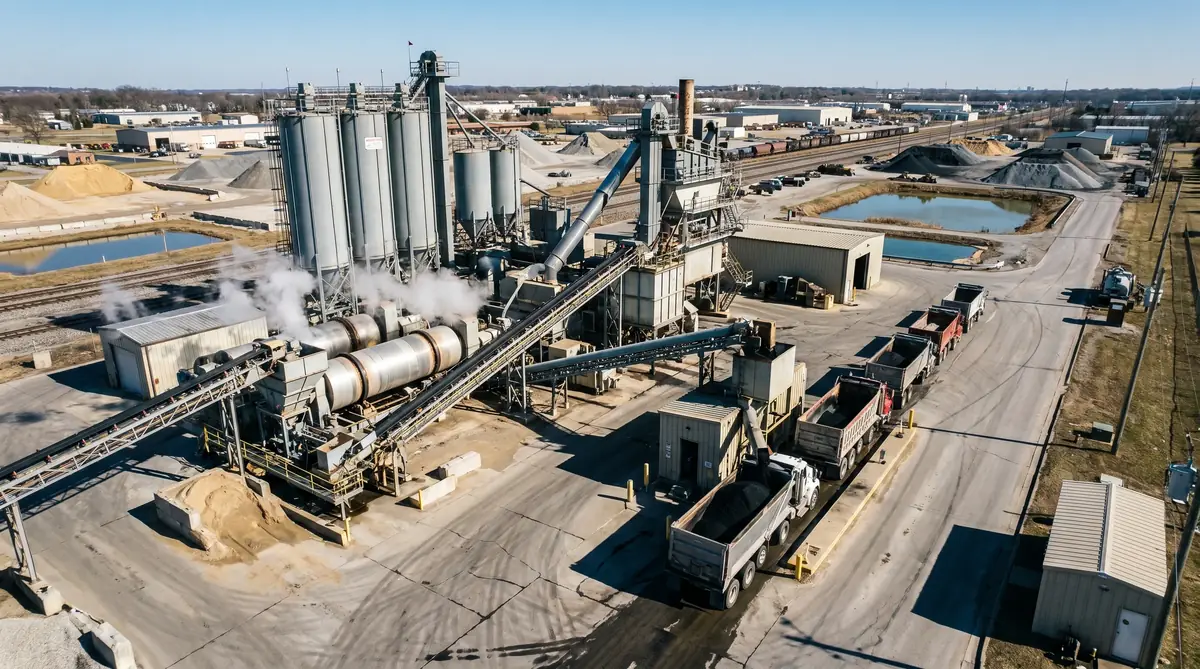
Whether you're a contractor trying to source material or a homeowner patching a driveway yourself, finding an asphalt plant near you can save you hundreds of dollars compared to buying bagged cold-patch at a hardware store. Hot mix asphalt from the plant runs $80–$160 per ton — the same material contractors use — versus $1.50–$2.50 per pound for bagged product.
🏭 Find an Asphalt Plant Near You
Enter your city, state, or ZIP code to see asphalt plants in your area on Google Maps.
Opens Google Maps in a new tab · Results include CRH, Vulcan, Martin Marietta, and independent plants
This guide covers everything about buying from an asphalt plant: what types of plants exist, what you can actually buy as a retail customer, current 2026 prices, and exactly what to do when you arrive.
In this guide
How to Find an Asphalt Plant Near You
Asphalt plants aren't listed in the Yellow Pages the way hardware stores are, but they're not hard to track down once you know where to look.
Google Maps search
The fastest method. Open Google Maps and search "asphalt plant", "hot mix asphalt plant", or "asphalt supplier" with your city name or zip code. Most active plants appear as business listings with hours and phone numbers. Call before driving — hours vary seasonally and some plants are wholesale-only.
Search by major producer name
A handful of large companies own the majority of asphalt plants across the US. Searching their names plus your state will surface local facilities:
- CRH (Oldcastle Materials) — largest US asphalt producer, plants in all 50 states
- Vulcan Materials — strong presence in the South and Southeast
- Martin Marietta — Mid-Atlantic, Southeast, and Texas
- APAC (a CRH company) — widespread in the Midwest and South
- Colas Group — Northeast and Pacific Northwest
- Granite Construction — West Coast and Mountain states
State DOT approved supplier lists
Every state Department of Transportation maintains a public list of approved hot mix asphalt suppliers for road construction. These lists include plant addresses, plant IDs, and mix types. Search "[your state] DOT approved asphalt plant list" — it's a free, up-to-date directory of every licensed plant in your state.
Ask a local paving contractor
If you're having work done or getting quotes, ask your paving contractor which plant they source from. Contractors often have good relationships at plants and may be able to facilitate a direct purchase for you — sometimes at contractor pricing.
Always call ahead. Plants run on production schedules. Walk-in availability depends on what mix is running that day. Some mixes are made to order for contractors and won't be available for retail pickup. Calling 24 hours ahead guarantees the mix you need is ready.
Types of Asphalt Plants
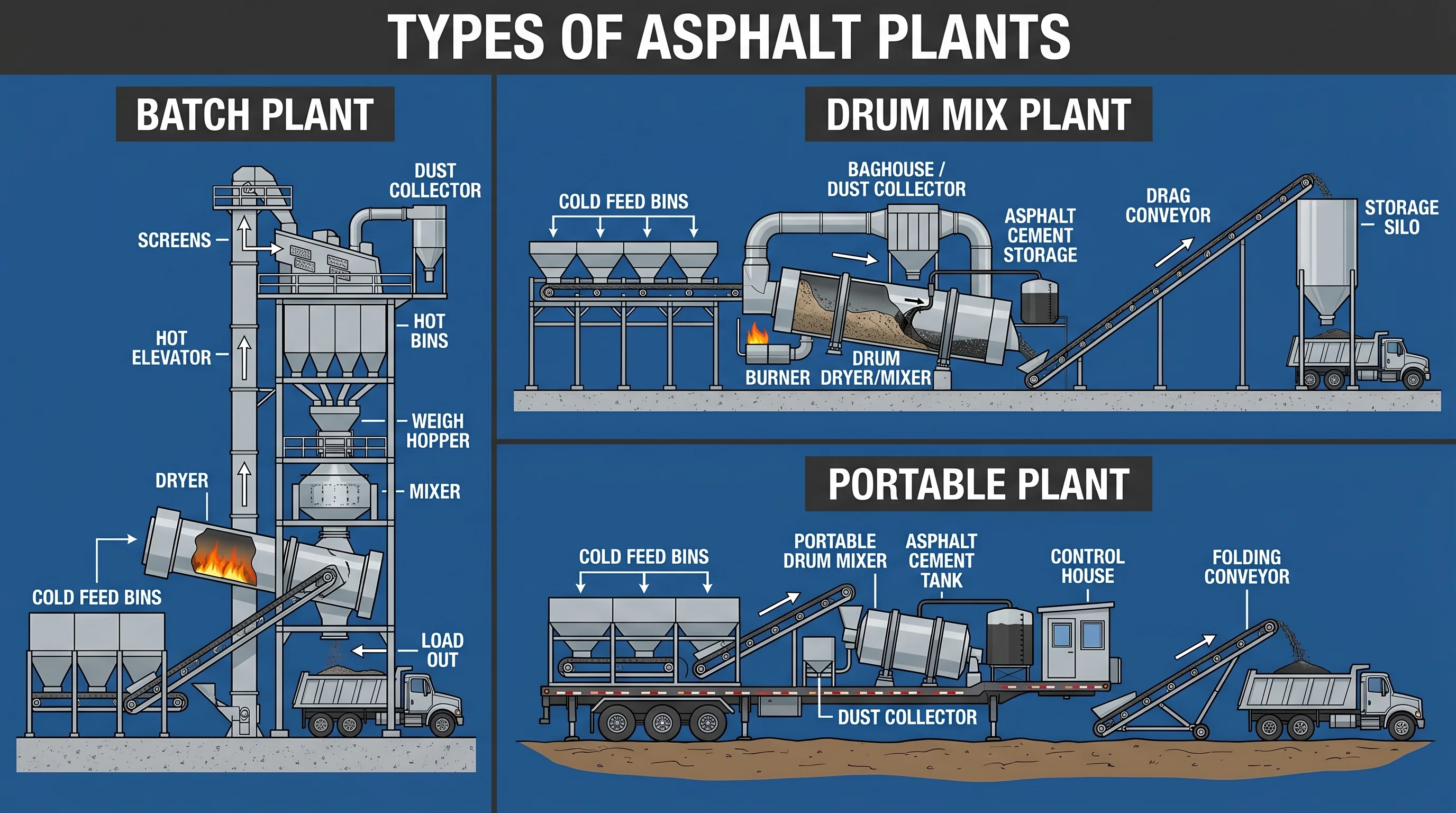
Not every facility that mixes asphalt is the same. Understanding the differences helps you know what to expect when you arrive — and which plants are most likely to accept retail customers.
Batch Plants
Batch plants produce asphalt in discrete batches — typically 2–5 tons per batch — where aggregates and liquid asphalt are weighed and mixed in measured portions. They offer high precision and are ideal for producing multiple mix types throughout the day. Most urban and suburban asphalt plants are batch plants. They tend to be larger permanent facilities and are more likely to have a retail sales counter.
Drum Mix Plants (Continuous Mix)
Drum mix plants produce asphalt continuously rather than in batches. Aggregate and liquid asphalt enter one end of a rotating drum and exit as finished mix. They're highly efficient for large-volume production (highway projects) but less flexible for switching mix types. Common in rural areas with major road projects nearby.
Portable / Mobile Plants
Portable asphalt plants are smaller trailer-mounted units that can be relocated to a project site. They're used for remote road construction, rural highway maintenance, and large private developments far from permanent facilities. Retail sales from portable plants are rare — they're usually set up for a specific project and not open to the public.
Warm Mix vs Hot Mix Plants
Traditional plants produce hot mix asphalt (HMA) at 300–350°F. Newer facilities also produce warm mix asphalt (WMA) at 250–275°F using additives or foaming technology. Warm mix has lower emissions and can be transported farther. For retail purchases, ask specifically for hot mix — it's the standard for driveways and small repairs.
What You Can Buy at an Asphalt Plant
Most plants sell several products. Knowing the terminology before you call makes the conversation much easier.
Hot Mix Asphalt (HMA)
The primary product. Hot mix is produced at 275–325°F and must be placed and compacted immediately after pickup. It's sold by the ton. Minimum order at most plants: 1–2 tons for retail customers, 5 tons at some facilities. One ton of HMA covers approximately 80 square feet at 2 inches thick — use our asphalt tonnage calculator to work out exactly how much you need before you call.
Mix Types Available
Plants produce different mix designations for different applications. When you call, ask for a mix appropriate for your use:
- Surface mix (Type A / SM-9.5 / similar) — fine-graded, smooth finish. Best for driveways and parking lots.
- Binder / base mix (Type B / BM-25) — coarser aggregate, used as a structural base layer under surface mix.
- Cold patch / UPM (Utility Patching Mix) — pre-mixed, stored at room temperature, used for pothole repairs and can be stored for later use. Available at many plants year-round even when hot mix isn't running.
Millings / Reclaimed Asphalt Pavement (RAP)
Many plants sell asphalt millings — ground-up reclaimed asphalt pavement — at $10–$40 per ton. Millings are excellent for unpaved driveways, parking areas, and paths. They compact well and shed water. Not the same as hot mix and cannot be used as a finished paved surface. See our asphalt millings guide for full details.
Asphalt Plant Prices Per Ton (2026)
Prices vary significantly by region, driven by local aggregate costs, liquid asphalt (bitumen) prices, and transportation distances from refineries. Here's a realistic range for 2026:
| Product | Price Per Ton (Plant Gate) | Notes |
|---|---|---|
| Hot mix asphalt (surface mix) | $80–$160/ton | National average ~$110–$130 |
| Hot mix asphalt (base mix) | $70–$145/ton | Slightly cheaper than surface mix |
| Warm mix asphalt | $85–$165/ton | ~5–10% premium over HMA |
| Cold patch / UPM | $120–$200/ton | Higher cost, year-round availability |
| Asphalt millings (RAP) | $10–$40/ton | Widely available, great value |
| Delivery surcharge | $80–$200 flat + $8–$15/mile | If plant delivers to your site |
| Region | Typical Hot Mix Price (Per Ton) |
|---|---|
| Northeast (NY, NJ, MA, CT) | $120–$160/ton |
| Southeast (FL, GA, SC, NC) | $85–$120/ton |
| Midwest (OH, IN, IL, MI) | $90–$130/ton |
| South Central (TX, LA, AR) | $80–$115/ton |
| Mountain West (CO, UT, AZ) | $95–$135/ton |
| Pacific Coast (CA, OR, WA) | $110–$155/ton |
Use our asphalt cost calculator to estimate total material cost for your project, or the asphalt price per ton guide for a deeper look at what drives regional pricing differences.
Prices change weekly
Asphalt prices are tied to crude oil prices, which fluctuate constantly. The figures above are 2026 averages — always call your local plant for a current quote. Prices can swing $15–$30 per ton within a single month during periods of oil price volatility.
How to Buy Asphalt at a Plant: Step by Step
-
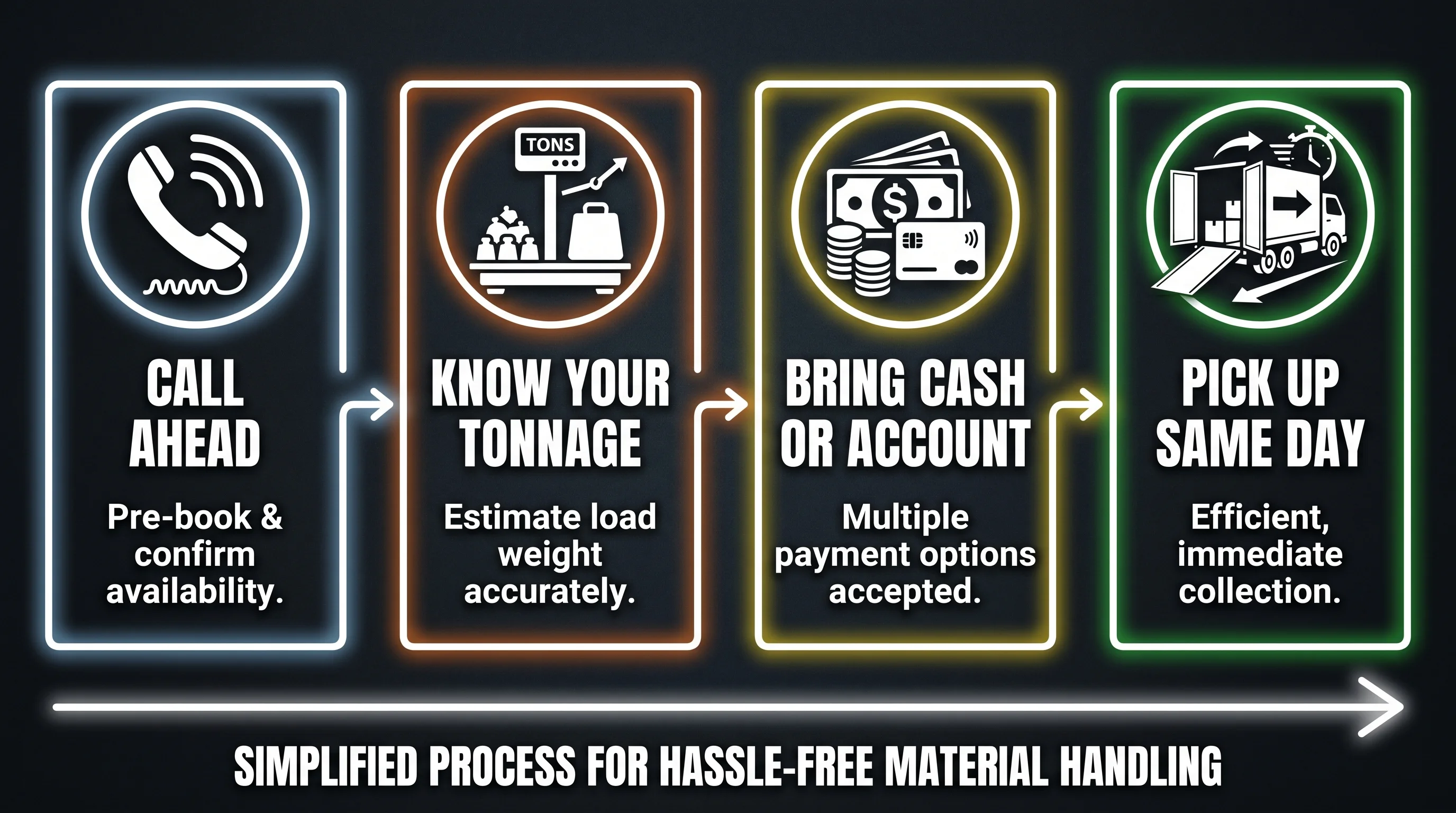
Calculate how much you need — Use our asphalt tonnage calculator before you call. Plants sell by the ton and won't help you estimate square footage. Know your project dimensions and desired depth (typically 2" for driveways, 3–4" for base layer).
-
Call the plant 24 hours ahead — Ask for: (1) whether retail pickup is available, (2) which mix types are running, (3) minimum order quantity, (4) current price per ton, (5) accepted payment methods, (6) what time to arrive. Plants often have a retail window (commonly 7 AM–2 PM) outside of which they stop loading trucks.
-
Arrange your hauling vehicle — You need a dump truck, dump trailer, or flatbed with side boards. Pickup trucks can handle up to 1 ton (a half-ton truck should carry no more than 800 lbs — check your payload rating). Standard dump trailers handle 5–10 tons. Line the bed with a tarp to keep material from sticking and make unloading easier.
-
Arrive at the scale house — The scale house is where you check in. Give them your name, the mix type, and the quantity you need. You'll be weighed in (tare weight), loaded, then weighed out. You pay based on net weight (loaded minus empty). Keep receipts — they show the exact mix type and tonnage.
-
Get loaded and go immediately — Hot mix loses temperature fast. You have roughly 30–45 minutes before it cools below workable temperature in warm weather, less in cold weather. Have your site prepped before you leave for the plant — base compacted, edges edged, tools ready.
-
Place and compact immediately — Spread the asphalt at 275–325°F with a lute or asphalt rake, then compact with a plate compactor or roller while it's still hot. Attempting to compact cold asphalt produces a loose, crumbly surface that won't hold. If you're doing a large area, consider renting a roller — hand tamping is only adequate for patches under 10 square feet.
Hauling Hot Mix Asphalt: What You Need to Know
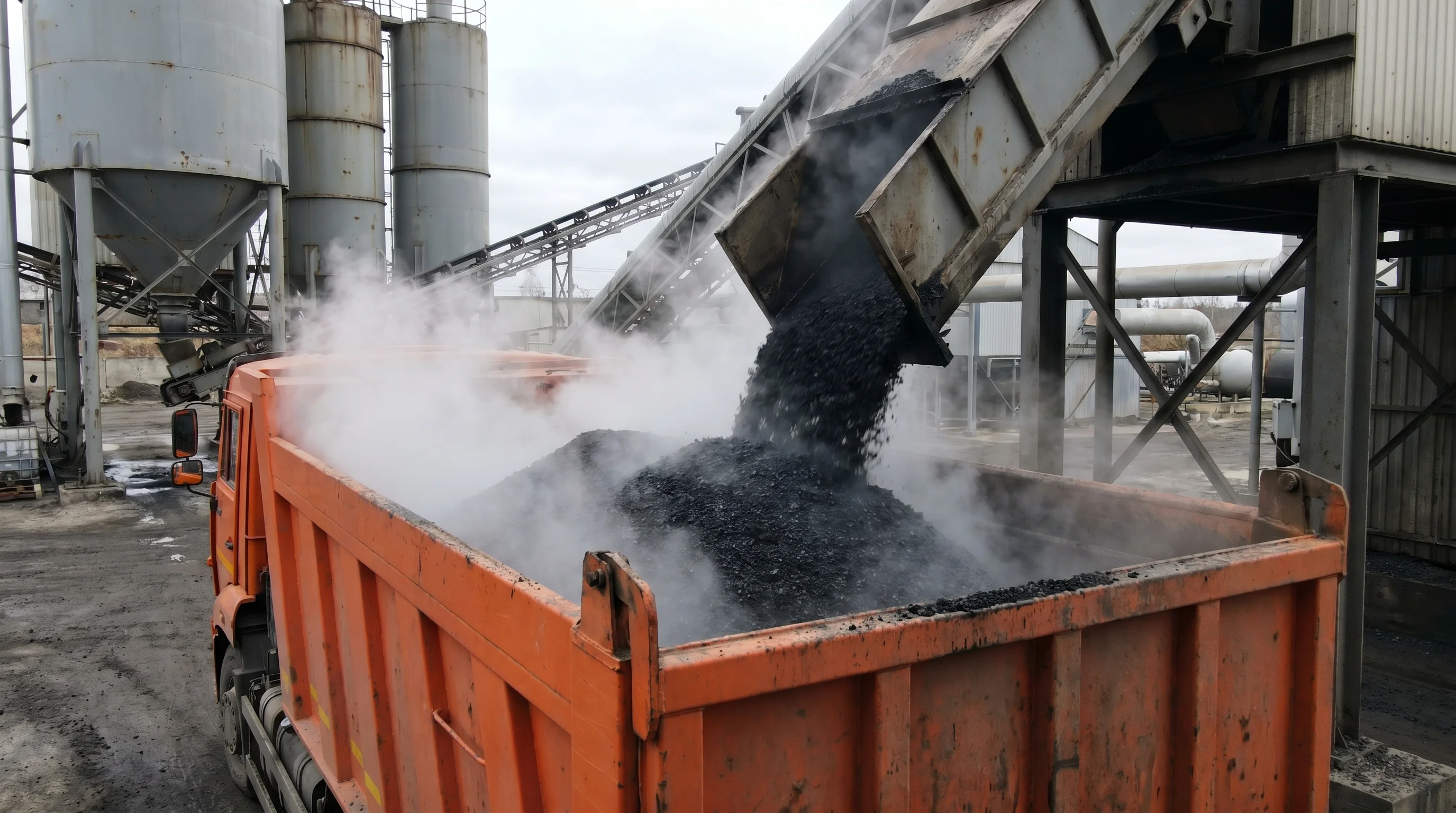
The biggest mistake DIYers make when buying from an asphalt plant is underestimating how quickly hot mix cools down. Here's what determines your working window:
- Ambient temperature — In summer (85°F+), you may have 45–60 minutes. In fall (50°F), you might have 20–25 minutes. Below 40°F, hot mix is nearly impossible to work with by the time it reaches a typical job site.
- Load size — Larger loads retain heat longer because the interior stays insulated by the outer material. A full truck holds temperature much better than a partial load.
- Covered vs open bed — An insulated tarp cover over the load significantly extends working time. Plants often supply these — ask when you call.
- Distance from plant — Stay within 30–40 miles for reliable workability. Beyond 50 miles is risky without an insulated trailer.
Tip: schedule your project for a warm afternoon
If possible, pick up your asphalt in mid-to-late morning on a warm, sunny day. The pavement surface will be warm from sunlight, the air temperature will be near its daily high, and you'll have the most working time. Avoid early morning pickups in spring and fall when ground and air temps are still cold.
Asphalt Plant vs Buying Bagged Cold Patch: Cost Comparison
For small repairs (under 0.5 tons), a bagged cold-patch product from a hardware store is often more convenient than a plant trip. For anything larger, the plant wins decisively on cost:
| Option | Cost per Ton | Coverage at 2" | Best For |
|---|---|---|---|
| Bagged cold patch (hardware store) | $1,500–$2,500/ton | ~50 sq ft/bag (50 lb) | Single pothole, <2 sq ft repair |
| Plant cold patch / UPM | $120–$200/ton | ~80 sq ft/ton | Multiple potholes, year-round repairs |
| Hot mix asphalt (plant pickup) | $80–$160/ton | ~80 sq ft/ton at 2" | Driveways, large patches, new paving |
| Installed by contractor | $200–$500/ton installed | — | Large projects, no equipment access |
For a complete installed cost breakdown, use our asphalt driveway calculator or read the asphalt driveway cost per square foot guide.
After Your Paving Project: Maintenance
New hot mix asphalt should cure for 6–12 months before its first sealcoat. Once cured, regular maintenance keeps it looking new and lasting 20+ years:
- Year 1: Let cure. No sealcoat yet — fresh asphalt needs to off-gas and harden.
- Year 1–2: Apply first asphalt driveway sealer coat.
- Every 2–3 years: Reseal. Fill any cracks wider than 1/4" with asphalt crack filler before sealing.
- As needed: Fill potholes promptly — use our pothole repair cost calculator to estimate DIY vs professional repair cost.
Frequently Asked Questions About Asphalt Plants
Can I buy asphalt directly from an asphalt plant?
Yes — most plants sell to the public, not just contractors. You need a vehicle capable of hauling the load (dump truck or heavy trailer). Call 24 hours ahead to confirm availability, mix type, minimum order, and payment methods. Most plants require you to arrive during their retail window (typically 7 AM–2 PM).
How much does asphalt cost per ton at a plant?
$80–$160 per ton at the plant gate in 2026, with a national average around $110–$130 per ton for standard surface mix. Prices change weekly with crude oil markets. Always call for a current quote. Regional pricing details are in the table above.
What is the minimum amount of asphalt I can buy at a plant?
Usually 1–2 tons for retail customers, though some plants require 5-ton minimums. One ton covers roughly 80 square feet at 2 inches thick — enough for a small driveway apron, short section of path, or several large pothole repairs. Use our tonnage calculator to figure out your exact needs before calling.
Do I need a commercial account to buy from a plant?
No. Most plants accept cash or credit card from individual customers. Contractors open accounts for net-30 billing, but retail purchases can usually be paid at the scale house. Some plants require pre-payment by phone for retail customers — ask when you call.
How far can you haul hot mix asphalt?
Stay within 30–40 miles of the plant for reliable workability. Hot mix loses roughly 5–10°F per 10 minutes in warm weather. An insulated tarp or covered truck bed extends your range. Below 50°F ambient temperature, plan to place and compact within 20–25 minutes of loading regardless of distance.
What's the difference between hot mix asphalt and cold patch?
Hot mix asphalt is produced at 275–325°F, must be placed immediately, and creates a permanent structural repair. Cold patch is a pre-mixed product that can be used at any temperature and stored — it's more convenient but less durable. For permanent driveway work, hot mix is always the better choice when a plant is within range. Cold patch is ideal for emergency pothole repairs in winter.