
Epoxidized Soybean Oil in Asphalt — How ESO & Amine Epoxy Modify Binders (2026)
What Is Epoxidized Soybean Oil in Asphalt?
Epoxidized soybean oil (ESO) is a bio-based modifier added to asphalt binder to improve flexibility, reduce low-temperature cracking, and rejuvenate aged RAP binder. When paired with an amine curing agent, the epoxide groups in ESO react to form a crosslinked polymer network inside the binder — improving both cracking resistance and high-temperature rutting resistance simultaneously.
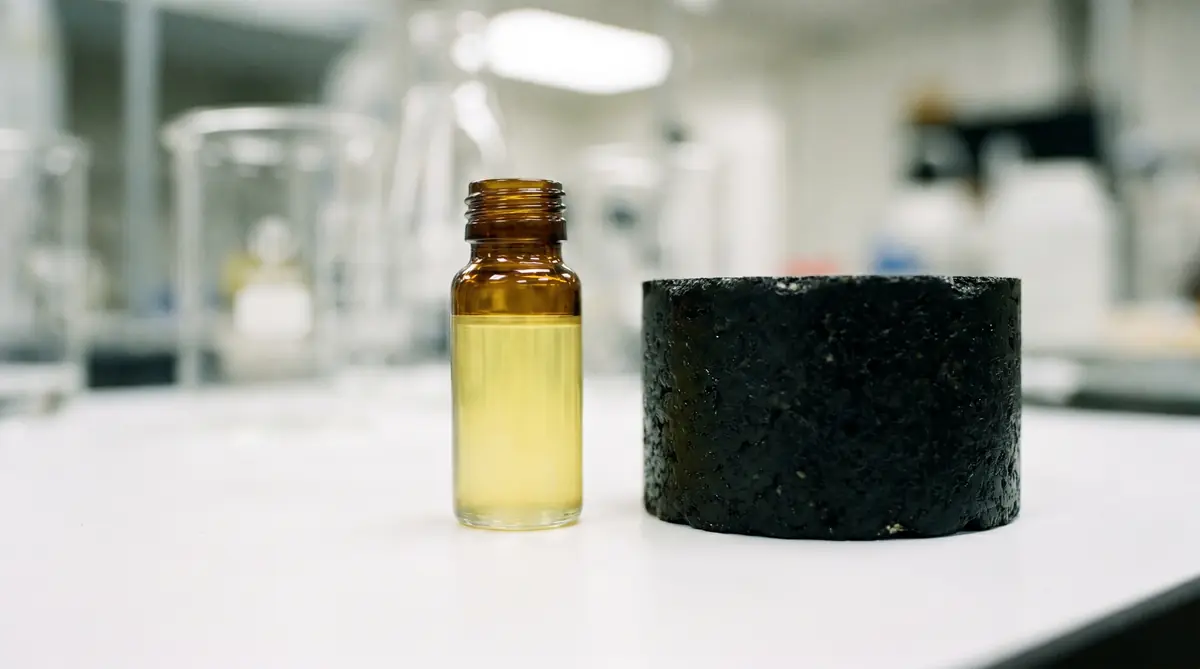
What Is Epoxidized Soybean Oil (ESO)?
Soybean oil is a triglyceride — a molecule with three long fatty acid chains attached to a glycerol backbone. Those fatty acid chains contain carbon-carbon double bonds (unsaturated sites). Epoxidation is an industrial chemical process that converts those double bonds into epoxide groups (a three-membered ring containing oxygen).
The resulting product — epoxidized soybean oil — is a pale yellow viscous liquid with an oxirane oxygen content of roughly 6–7% by weight. This high epoxide content is what makes ESO reactive and useful in asphalt modification: the epoxide groups can open and form covalent bonds with other molecules under heat or in the presence of a curing agent.
What Is an Amine Epoxy Curing Agent?
In polymer chemistry, an epoxy system requires two components: the epoxy resin (ESO in this case) and a curing agent (hardener) that reacts with the epoxide groups. Amine compounds are the most common curing agents for epoxide-containing materials.
In the context of asphalt modification, the amine reacts with ESO's epoxide groups through a ring-opening addition reaction. Each amine nitrogen can react with one or two epoxide groups, forming a covalent bond at each site. The result is a crosslinked network — individual ESO molecules are now chemically bonded to each other and to the asphalt binder's polar functional groups.
Common Amine Types Used with ESO in Asphalt
| Amine Type | Reactivity | Effect on Binder | Notes |
|---|---|---|---|
| Aliphatic amine (e.g., DETA, TETA) | High | Strong crosslink density, higher stiffness improvement | Pot life shorter; must control blending time |
| Polyamide amine | Medium | Flexible crosslinks, better fatigue improvement | Preferred for fatigue-critical applications |
| Cycloaliphatic amine | Medium–High | Good balance of stiffness and flexibility | Higher cost, used in lab research contexts |
| Aromatic amine | Low–Medium | High-temp stiffness improvement | Less common in asphalt; toxicity concerns in some formulations |
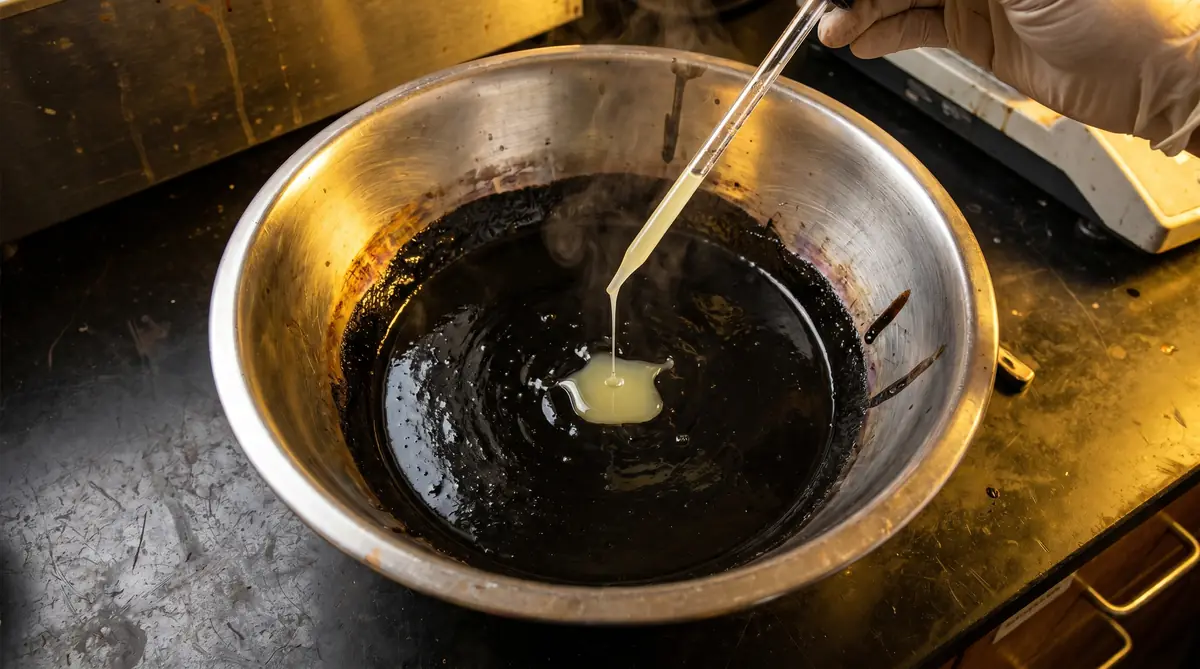
How the ESO + Amine System Modifies Asphalt Binder
The modification process works in two stages:
- Plasticization (immediate): ESO molecules disperse within the asphalt binder matrix. Their long fatty acid chains interact with asphalt's maltene fraction, increasing intermolecular spacing and reducing viscosity. This is the rejuvenating effect — aged, stiff binder becomes more workable and flexible.
- Reactive crosslinking (heat-activated): At mixing temperatures (150–180°C), the amine curing agent reacts with ESO's epoxide groups. Covalent bonds form between ESO molecules and between ESO and asphalt's polar functional groups (acids, ketones). This builds a polymer network that reinforces the binder matrix at high temperatures.
The combined effect is a modified binder with improved performance across the full temperature range — more flexible at low temperatures due to the plasticizing phase, and stiffer at high temperatures due to the crosslinked network. This is sometimes described as "functional grade widening" in research literature.
Dosage Rates
| Application | ESO Dosage (% by binder wt.) | Amine Dosage (% by binder wt.) | Primary Effect |
|---|---|---|---|
| RAP rejuvenation (<30% RAP) | 2–3% | Not required | Restores ductility, reduces viscosity |
| RAP rejuvenation (30–50% RAP) | 3–4% | 0.5–0.8% | Rejuvenation + partial crosslink reinforcement |
| Reactive binder modification | 4–5% | 0.8–1.2% | PG grade widening, fatigue improvement |
| High-performance reactive modification | 5–6% | 1.0–1.5% | Maximum crosslink density, rutting + cracking |
| Over-dosage (avoid) | >6% | Any | Over-softening; binder may not meet PG high-temp grade |
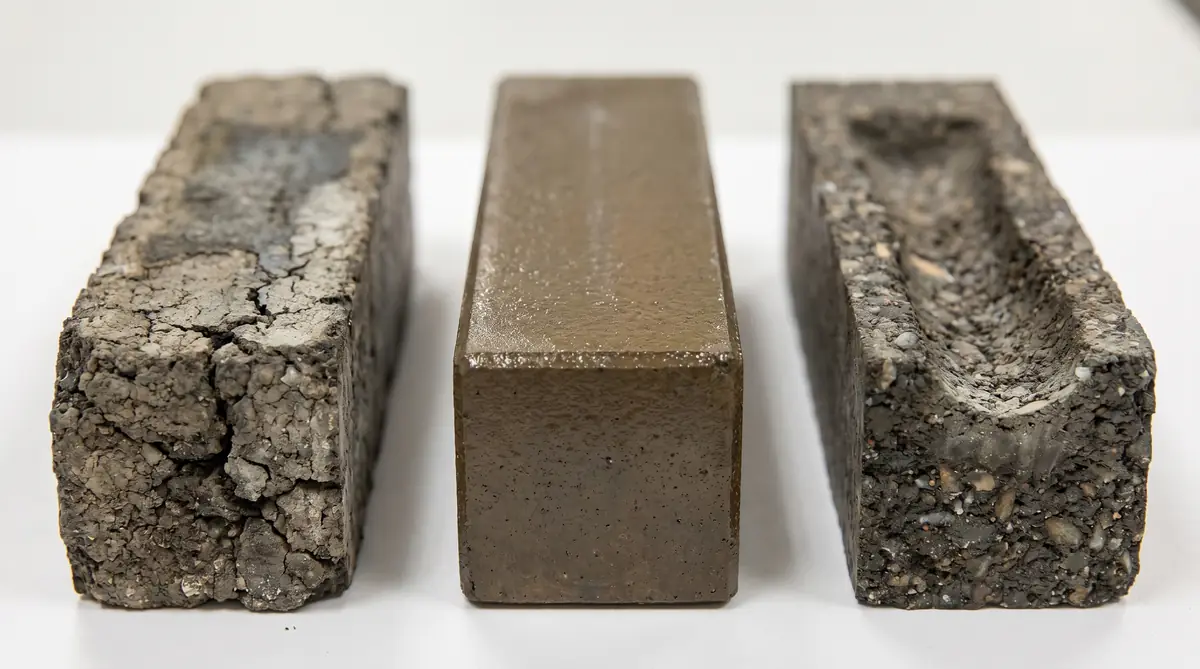
Performance: ESO+Amine vs Unmodified vs SBS
| Property | Unmodified Binder | SBS-Modified | ESO+Amine Modified |
|---|---|---|---|
| High-temp rutting resistance | Poor–Fair | Good–Excellent | Good (at 5–6% + amine) |
| Low-temp cracking resistance | Fair | Good | Good–Excellent |
| Fatigue cracking resistance | Poor | Good | Very Good |
| RAP compatibility | Fair | Fair | Excellent |
| Bio-based content | None | None | High (ESO is bio-derived) |
| Modifier cost vs virgin binder | Baseline | +$40–$80/ton binder | +$15–$35/ton binder (est.) |
| Commercial availability | Universal | Universal | Limited (research/specialty) |
| Mixing complexity | Standard | Moderate | Moderate (two-stage blend) |
RAP Rejuvenation: The Most Practical Application
The most commercially relevant use of ESO in asphalt today is as a RAP rejuvenator in high-RAP recycled mixes. When pavement ages, the asphalt binder oxidizes — its maltene fraction depletes, the asphaltene fraction grows, and the binder becomes brittle and high in viscosity. This is why high-RAP mixes without rejuvenation tend to crack prematurely.
ESO addresses this directly: its long non-polar fatty acid chains restore the maltene-to-asphaltene balance, lowering viscosity and recovering ductility toward virgin binder performance. At 2–4% ESO by total binder content (combining RAP binder + added virgin binder), mixes with up to 50% RAP have achieved target PG grades in lab studies without full virgin binder replacement.
The ability to use more RAP while maintaining performance grade — and to do so with a bio-derived product — makes ESO an attractive sustainability tool. See the asphaltic concrete mix types guide for more on how RAP is incorporated into dense-graded mixes.
Mixing Procedure
- Heat binder to 150–160°C in a high-shear mixer or laboratory blender.
- Add ESO at the target dosage (by weight of total binder). Blend at 1,500–3,000 rpm for 30–60 minutes until fully homogeneous.
- Reduce temperature slightly to 140–150°C before amine addition (reduces risk of premature gelation).
- Add amine curing agent dropwise or in small increments while maintaining shear mixing. Blend for an additional 30–45 minutes.
- Verify homogeneity visually (no lumps or phase separation) and by spot-testing viscosity at 135°C.
- Use promptly — ESO+amine-modified binder continues to crosslink over time. Store at 130–140°C if not using immediately; extended storage accelerates gelation.
Effect on Mix Design
ESO modification affects the volumetric properties of the resulting mix. Because ESO acts as a plasticizer at lower dosages, it can slightly reduce the optimum binder content needed to achieve target air voids — the binder film is more effective at coating aggregate at lower viscosity. At higher dosages with amine, the crosslinked binder behaves more like a polymer-modified binder and the mix should be designed using the same Superpave volumetric approach as SBS-modified mixes.
Refer to the hot mix asphalt price guide for how modifier additions affect total material cost, and use the HMA calculator to estimate tonnage for your project.
Environmental and Sustainability Context
ESO is derived from soybean oil — a renewable, annually harvested agricultural crop. This gives it a significantly lower carbon footprint than petroleum-derived SBS polymer modifiers. Bio-based content of ESO is typically >95% by ASTM D6866 (radiocarbon testing), qualifying it as a bio-based material under USDA BioPreferred program criteria.
When used as a RAP rejuvenator, the sustainability benefit compounds: ESO enables higher RAP utilization (less virgin aggregate and binder required) while itself being a renewable material. Some lifecycle assessment (LCA) studies have found ESO-rejuvenated high-RAP mixes can reduce pavement-related CO₂ by 20–35% compared to conventional virgin HMA, depending on RAP content and mix design. For more on RAP use, see the asphaltic concrete mix types guide.
Cost Comparison vs Other Modifiers
| Modifier | Typical Dosage | Est. Added Cost (per ton binder) | Availability |
|---|---|---|---|
| SBS polymer | 3–5% by binder wt. | $40–$80 | Universal |
| Crumb rubber (CRM) | 15–20% by binder wt. | $20–$45 | Widely available |
| ESO alone (rejuvenator) | 2–4% by binder wt. | $10–$20 | Specialty / lab |
| ESO + amine epoxy | 4–6% ESO + 0.8–1.5% amine | $15–$35 (est.) | Research / specialty |
| GTR (ground tire rubber) | 8–15% by binder wt. | $25–$55 | Growing availability |
Contractor & Specifier Red Flags
- Pre-mixed supply claims: ESO+amine is a reactive system — binders that have been pre-blended and stored for extended periods may have already crosslinked partially or fully, making them too stiff or gelled. Always verify the modified binder meets PG grade requirements at the time of use.
- No PG verification: Any supplier claiming a specific PG grade improvement from ESO+amine modification must provide DSR and BBR test data. Do not accept verbal claims.
- Single-component products labeled "ESO epoxy": Some products marketed as soy-based asphalt modifiers are ESO without an amine component — these provide plasticizing/rejuvenating effects only, not the reactive crosslinked improvement. Know which system you're specifying.
- Incorrect mixing order: Adding amine before ESO is fully dispersed causes uneven crosslinking and possible phase separation. Confirm the contractor follows the two-stage blend protocol.
Current Research Status and Commercial Outlook
As of 2026, ESO-modified asphalt is in active research and early field trial stages. Notable work has been published by several state DOTs and university research centers, with field trials in the US, Europe, and China showing promising performance on low-volume and secondary roads. Full-scale highway deployment remains limited due to the lack of standardized mix design protocols and the absence of ESO+amine products in standard asphalt supplier inventories.
The trajectory is positive: FHWA and several state DOTs have included bio-based rejuvenators (including ESO) in their sustainable pavement initiative frameworks, and increasing RAP mandates at state level are driving interest in effective rejuvenation chemistry. Contractors and agencies interested in ESO modification for current projects should engage with research institutions or specialty chemical suppliers directly rather than expecting off-the-shelf availability.
For how modified binders interact with standard mix design, see the asphalt mixing plant guide and the stone matrix asphalt guide for high-performance mix types where modifier quality is most critical.
Frequently Asked Questions
What is epoxidized soybean oil in asphalt?
ESO is a bio-based modifier derived from soybean oil that acts as a plasticizer and rejuvenator in asphalt binder. It softens aged, oxidized binder, restores ductility, and improves low-temperature cracking resistance. When combined with an amine curing agent, the reactive ESO+amine system also improves high-temperature rutting resistance through crosslink formation.
What does the amine epoxy component do?
The amine acts as a curing agent that reacts with ESO's epoxide groups at mixing temperatures, forming covalent crosslinks throughout the binder. This converts ESO from a simple softener into a reactive modifier that reinforces the binder matrix at high service temperatures — delivering the "dual improvement" of both cracking and rutting resistance.
How much ESO do you add to asphalt binder?
For RAP rejuvenation: 2–4% ESO by weight of total binder content. For reactive modification: 4–6% ESO plus 0.8–1.5% amine by weight of binder. Dosages above 6% ESO risk over-softening the binder at high temperatures unless offset by increased amine content.
Can ESO rejuvenate high-RAP mixes?
Yes — this is ESO's most practical near-term application. At 2–4% by total binder content, ESO can restore aged RAP binder toward virgin binder performance metrics, enabling mixes with 30–50% RAP to achieve target PG grades without full virgin binder replacement.
Is ESO-modified asphalt commercially available?
Not widely as of 2026. ESO is commercially available as an industrial chemical, but pre-formulated ESO+amine asphalt modifier products are primarily in research and early commercialization. Interested parties should engage specialty chemical suppliers or research institutions for project-specific formulation development.