
Asphaltic Concrete — Definition, Mix Types, Specs & How It Compares to Portland Cement (2026)
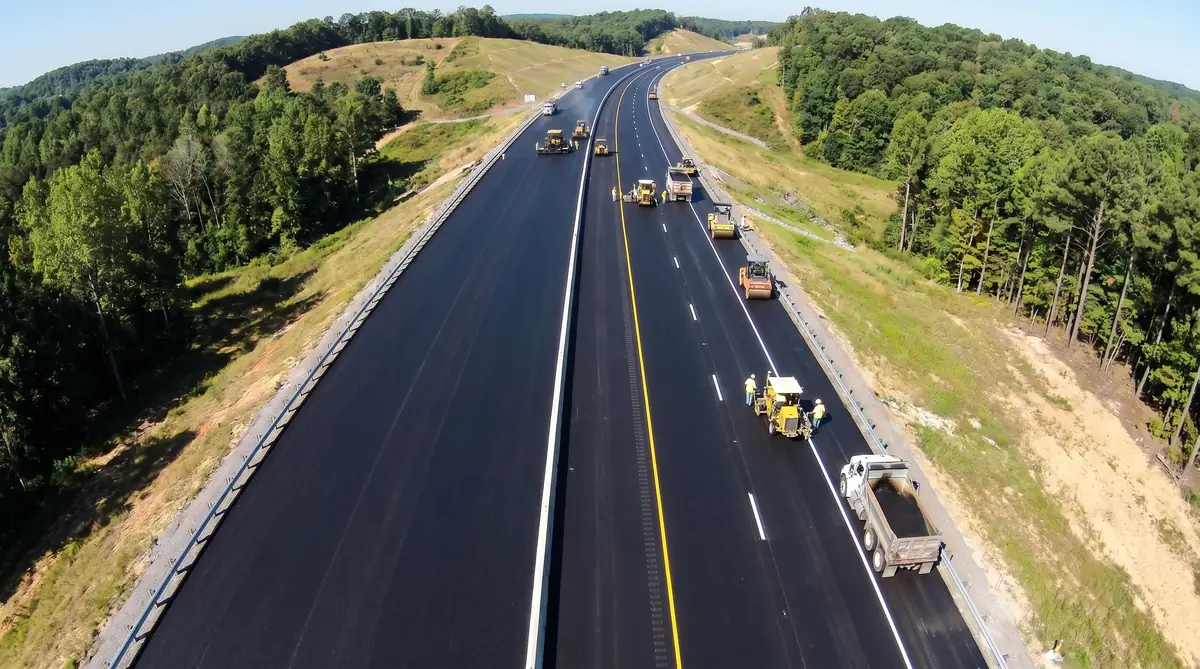
If you've read an engineering specification or a state DOT project document, you've seen the term "asphaltic concrete." It appears where a contractor would say "hot mix asphalt" and a homeowner would say "blacktop." All three terms describe the same material — but asphaltic concrete is the formal engineering designation, and understanding what it means unlocks everything from mix design to structural layer specification.
Quick Answer
Asphaltic concrete (AC) is the formal engineering term for hot mix asphalt — a composite paving material made from mineral aggregate bound with asphalt binder. The word "concrete" refers to the composite structure, not Portland cement. AC appears in ASTM standards, AASHTO specs, and DOT project documents as the precise technical term for what is commonly called "asphalt pavement" or "blacktop."
Terminology: AC, HMA, Blacktop — What's the Difference?
The same material goes by many names depending on context. All refer to aggregate bound with asphalt binder, produced at elevated temperature and compacted in place.
ASTM and AASHTO Specifications
Asphaltic concrete is governed by a family of standards that define material requirements, mix design procedures, and performance testing:
| Standard | Covers |
|---|---|
| ASTM D3515 | Hot-Mixed, Hot-Laid Bituminous Paving Mixtures — aggregate and binder requirements |
| AASHTO M 323 | Superpave volumetric mix design — the primary highway mix design standard |
| ASTM D6925 | Marshall stability and flow of bituminous mixtures |
| AASHTO T 283 | Resistance to moisture-induced damage (stripping) |
| ASTM D6927 | Marshall stability and flow test procedure |
| AASHTO R 35 | Superpave volumetric design for hot-mix asphalt |
Asphaltic Concrete Mix Types
Not all asphaltic concrete is the same. The mix type is selected based on the structural layer position, traffic loading, climate, and performance requirements.
| Mix Type | Gradation | Layer Position | Key Property |
|---|---|---|---|
| Dense-Graded HMA | Continuous, well-graded | Surface, binder, base | Standard structural layer — most common |
| Stone Matrix Asphalt (SMA) | Gap-graded, stone skeleton | Surface course | Rut resistance on high-traffic highways |
| Open-Graded Friction Course (OGFC) | Open, high void content | Surface course only | Drainage, noise reduction, wet traction |
| Warm Mix Asphalt (WMA) | Any gradation | Any layer | Produced 30–120°F cooler — reduced emissions |
| RAP Mix | Dependent on RAP content | Base, binder course | 15–50% reclaimed material — reduced cost |
| Porous Asphalt | Open-graded | Surface course | Stormwater infiltration, permeable pavement |
For more detail on the premium surface mix, see our Stone Matrix Asphalt guide. For pricing across mix types, see Hot Mix Asphalt Price Per Ton.
Structural Composition of Asphaltic Concrete
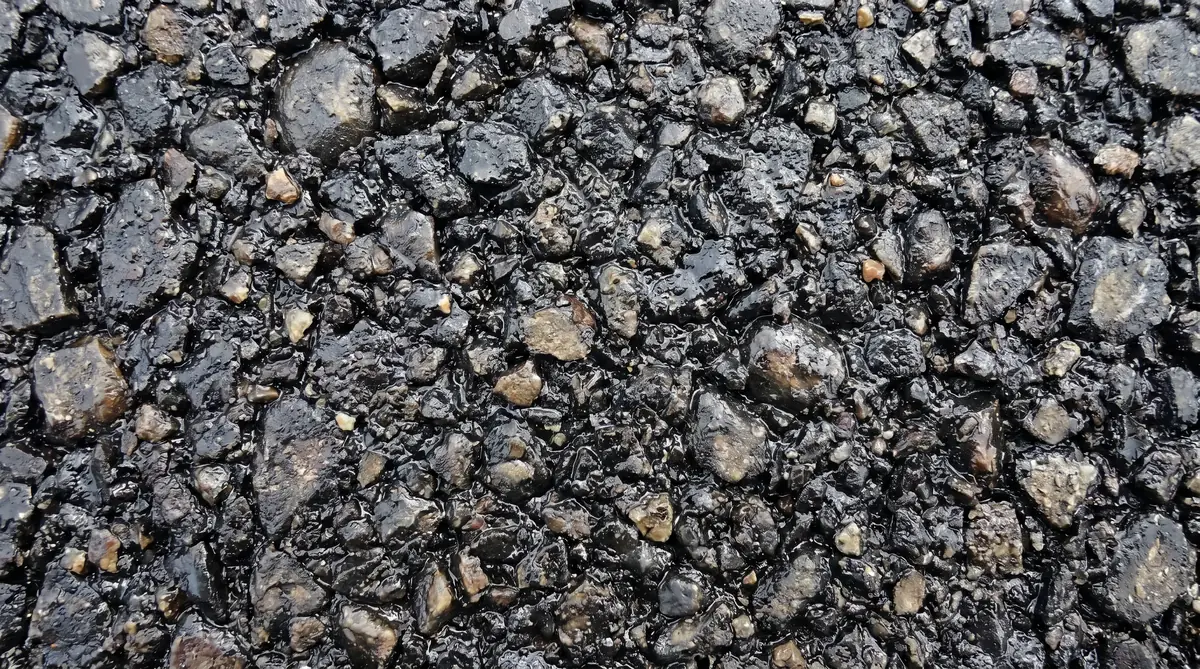
A typical dense-graded asphaltic concrete mix consists of:
- Aggregate (93–96% by weight): Crushed stone, gravel, or sand graded to produce a continuous particle size distribution. Aggregate quality — angularity, hardness, texture — significantly affects rut and fatigue resistance.
- Asphalt binder (4–7% by weight): Petroleum-derived bitumen, modified with polymers (SBS, SBR) for performance grades in extreme climates. The binder coats aggregate particles and provides the composite's flexibility and water resistance.
- Air voids (3–5%): Intentional void space after compaction — too few voids causes bleeding and rutting; too many causes raveling and water infiltration. Target is typically 4% in-place.
- Voids in the Mineral Aggregate (VMA): The total void space between aggregate particles, filled by binder and air. Minimum VMA is specified by AASHTO and varies with nominal maximum aggregate size.
Pavement Structure — How AC Layers Work Together
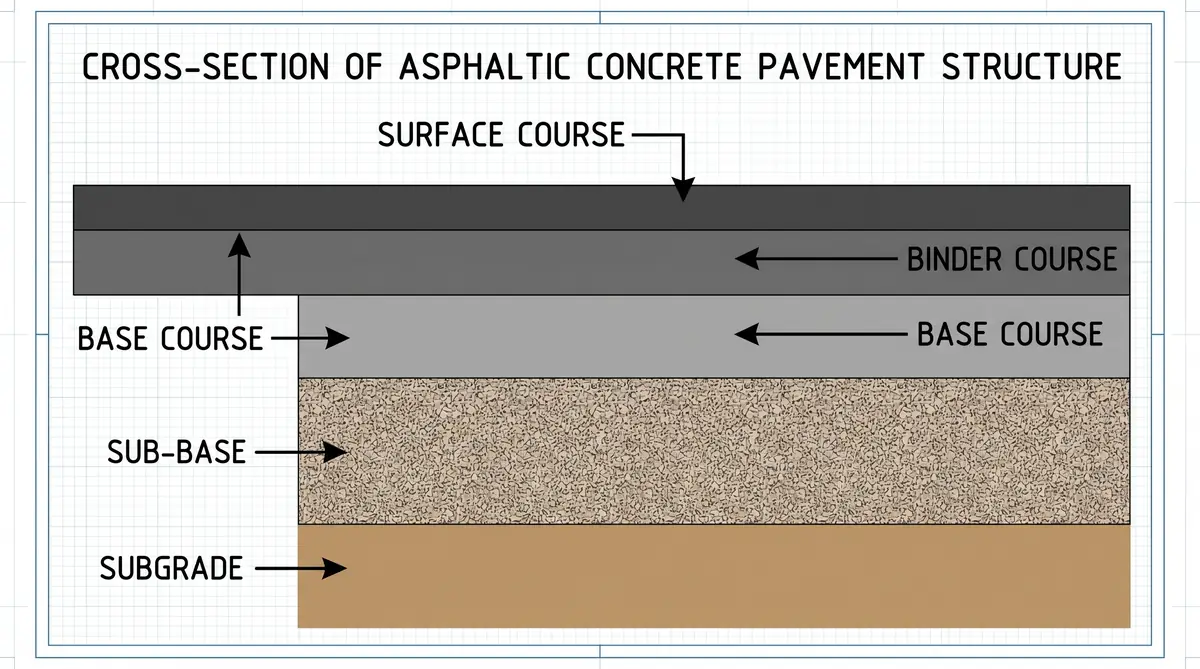
Asphaltic concrete is typically placed in multiple lifts, each with a specific structural role:
| Layer | Typical Thickness | Function |
|---|---|---|
| Surface course | 1.5–2 inches | Ride quality, friction, weather resistance |
| Binder course (intermediate) | 2–4 inches | Structural load distribution between surface and base |
| Base course | 4–8 inches | Primary structural layer — distributes load to sub-base |
| Sub-base (aggregate) | 6–12 inches | Drainage, frost protection, load spreading |
| Subgrade (native soil) | — | Ultimate load bearing — compaction and stability critical |
Tack coat is applied between each asphaltic concrete lift to ensure full bond. Without it, layers behave independently and delamination is inevitable under traffic.
Asphaltic Concrete vs Portland Cement Concrete
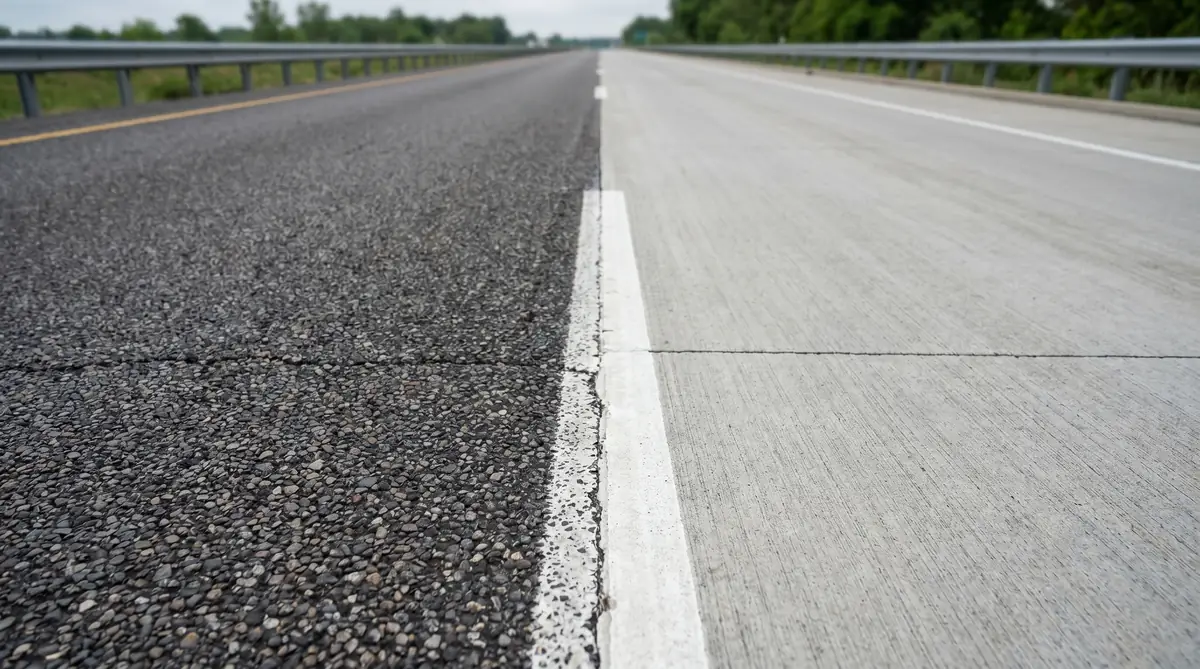
| Property | Asphaltic Concrete (AC) | Portland Cement Concrete (PCC) |
|---|---|---|
| Installed cost | $4–$7/sq ft | $8–$15/sq ft |
| Design life | 15–25 years (with maintenance) | 30–50 years |
| Load distribution | Flexible — deforms and recovers | Rigid — distributes over larger area |
| Repair | Easy — patch sections independently | Difficult — panel replacement required |
| Maintenance frequency | Higher — sealing, crack fill every 3–5 years | Lower — joint sealing only |
| Recyclability | 99%+ recyclable as RAP | Partially recyclable as aggregate |
| Construction time | Open to traffic same day | 7–28 day cure required |
| Heat sensitivity | Can soften in extreme heat (120°F+) | Not heat-sensitive |
| Noise | Quieter — absorbs tire noise | Louder — tire-pavement noise higher |
For a detailed cost breakdown comparing both materials on driveways, see Asphalt vs Concrete Driveway Cost and Is Asphalt Cheaper Than Concrete?
Mix Design Methods
Before asphaltic concrete is produced, a laboratory mix design establishes the optimal binder content and aggregate gradation for the intended application. There are two primary methods in use:
Marshall Method (ASTM D6925/D6927)
Developed in the 1940s and still used for lower-volume roads and parking lots. Specimens are compacted with a standard number of blows, then tested for stability (load resistance) and flow (deformation). The design binder content is selected at a target air void level of 4%. Simple and practical but doesn't directly account for traffic loading or climate extremes.
Superpave (AASHTO M 323 / R 35)
The modern standard for highway asphaltic concrete, developed under the SHRP program in the 1990s. Superpave selects binder performance grade (PG) based on local high and low pavement temperatures, then designs aggregate gradation using volumetric parameters (VMA, VFA, air voids). Traffic level determines compaction effort in the Superpave Gyratory Compactor (SGC). Superpave has replaced Marshall on virtually all state DOT and federal highway projects.
Where Asphaltic Concrete Is Specified
- Highways and roads — primary application; Superpave mixes specified by state DOTs
- Airport runways and taxiways — FAA-specified mixes with tight rut and fatigue requirements
- Parking lots — typically Marshall-designed, lighter structural sections
- Racetracks — smooth, dense-graded mixes optimized for tire grip and repairability
- Dam liners and reservoir covers — impermeable asphaltic concrete used as waterproofing membrane
- Industrial yards and port facilities — heavy-load mixes with polymer-modified binders
Cost Context
Asphaltic concrete material costs $80–$160/ton depending on mix type, binder grade, and region. Use our Hot Mix Asphalt Calculator to estimate tonnage and material cost for your project area and lift thickness. Full production and supply context is covered in our Asphalt Mixing Plant guide.
Frequently Asked Questions
What is asphaltic concrete?
The formal engineering term for hot mix asphalt — a composite paving material consisting of mineral aggregate bound with asphalt binder. Used in ASTM standards, AASHTO specifications, and DOT project documents. Functionally identical to what contractors call HMA and homeowners call blacktop.
What is the difference between asphaltic concrete and regular asphalt?
No functional difference. Asphaltic concrete, HMA, and bituminous concrete all describe the same material. "Asphaltic concrete" is the precise engineering term; "asphalt" is the colloquial shorthand. The word "concrete" refers to the composite material structure, not Portland cement.
What are the ASTM standards for asphaltic concrete?
Key standards include ASTM D3515 (hot-mixed bituminous paving mixtures), AASHTO M 323 (Superpave volumetric mix design), ASTM D6925/D6927 (Marshall stability and flow), and AASHTO T 283 (moisture resistance). State DOTs typically reference AASHTO standards in their specifications.
What is the difference between asphaltic concrete and Portland cement concrete?
AC uses asphalt binder — it's flexible, lower cost ($4–$7/sq ft), opens to traffic same day, and is highly recyclable. PCC uses hydraulic cement — it's rigid, longer-lasting (30–50 years), more expensive ($8–$15/sq ft), and requires a 7–28 day cure. AC requires more maintenance but is far easier and cheaper to repair.
What is Superpave asphaltic concrete?
The modern mix design system for highway asphaltic concrete — it selects binder by performance grade (PG) based on local temperature extremes, then designs aggregate gradation using volumetric properties. Has replaced the older Marshall method on most state DOT and federal highway projects since the late 1990s.