
Pothole Repair: How to Fix a Pothole in an Asphalt Driveway, Step by Step
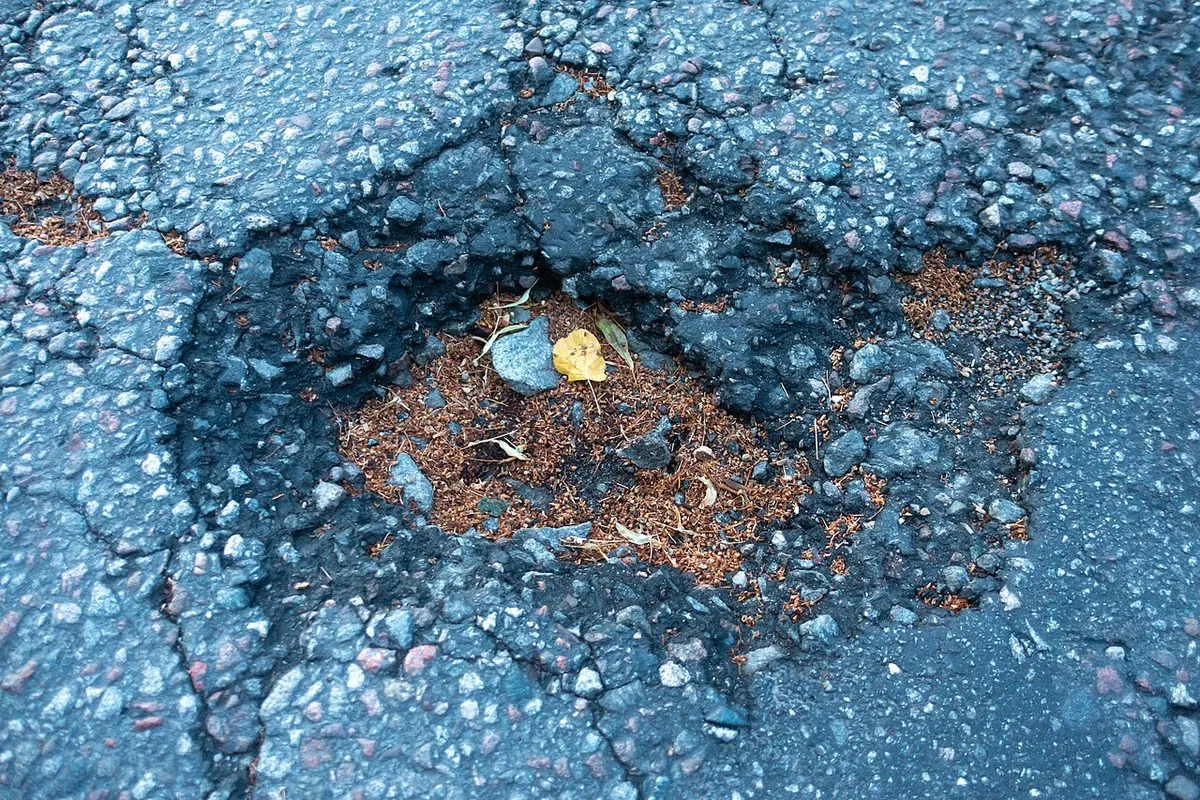
Photo: Frankie Fouganthin, Wikimedia Commons, CC BY-SA 4.0
Quick Answer
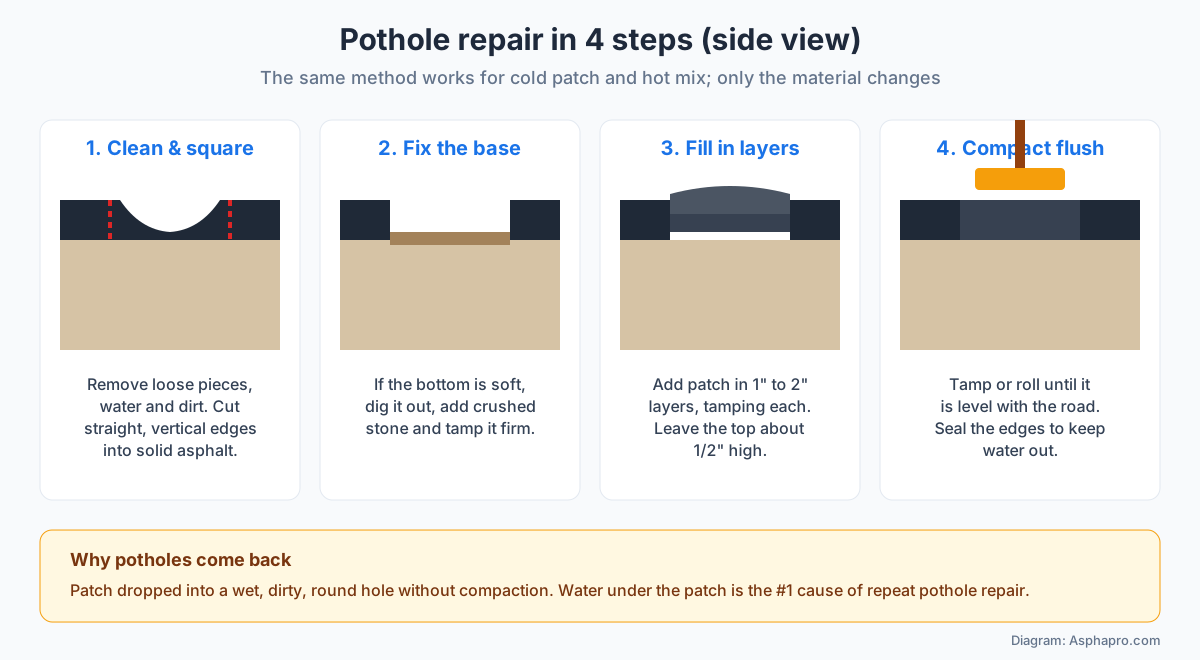
To fix a pothole in an asphalt driveway: (1) clean out loose pieces, dirt and water and cut the edges square into solid asphalt; (2) if the bottom is soft, dig it out and tamp in crushed stone; (3) fill with cold patch or hot mix in 1 to 2 inch layers, tamping each layer; (4) leave the top about 1/2 inch high and compact it flush. A 2 × 2 ft hole 3 inches deep takes about three 50 lb bags of cold patch. DIY pothole repair costs about $15 to $30 per bag; a professional pothole repair is usually $100 to $400 per hole.
A pothole starts as a crack. Water gets through the asphalt, softens the gravel base underneath, and in cold climates freezes and expands. Each car that drives over the weak spot breaks off a little more asphalt until a hole opens. That is why pothole repair is not just about filling the hole: if the base is wet and soft, or the edges are loose, the hole will open again in the same spot. Fixing the cause along with the hole is what separates a one-season patch from a repair that lasts for years.
This guide shows how to fix a pothole properly on a driveway or small private lot, the way road crews do it but at homeowner scale. It covers the tools and materials, how many bags of cold patch you need, the step-by-step pothole repair method for cold patch and hot mix, what it costs, and the mistakes that make potholes come back.
Pothole Repair Material Calculator
Enter the length, width and depth of your pothole to estimate how much cold mix asphalt you need. Measure the hole after you have cut it square, not before, because squaring the edges makes it a little bigger.
Prefer the full page? Use the cold mix asphalt calculator, or the pothole repair cost calculator to compare DIY and professional prices.
Tools and Materials for Pothole Repair
You do not need heavy equipment to fix a pothole in a driveway. Here is what to gather before you start:
Materials
- Cold patch asphalt in 40 to 50 lb bags
- Crushed stone (3/4 inch) for holes deeper than about 4 inches
- Asphalt crack sealer or tack primer for the edges (optional but helps)
- Sand, to dust the finished patch so it does not stick to tires
Tools
- Square shovel and stiff broom
- Cold chisel and hammer, or a circular saw with a masonry blade
- Hand tamper (a plate compactor for larger holes)
- Work gloves, safety glasses and a leaf blower or shop vacuum
If you have several holes or one larger than about 4 × 4 feet, rent a plate compactor for the day. Hand tamping works on small holes, but larger patches need more force to reach the density that stops the patch from sinking later.
How Much Cold Patch Do You Need?
Compacted cold patch weighs roughly 120 to 130 pounds per cubic foot. Using 125 as a middle figure, the number of 50 lb bags is:
Bags = sq ft × depth (in) ÷ 12 × 125 ÷ 50
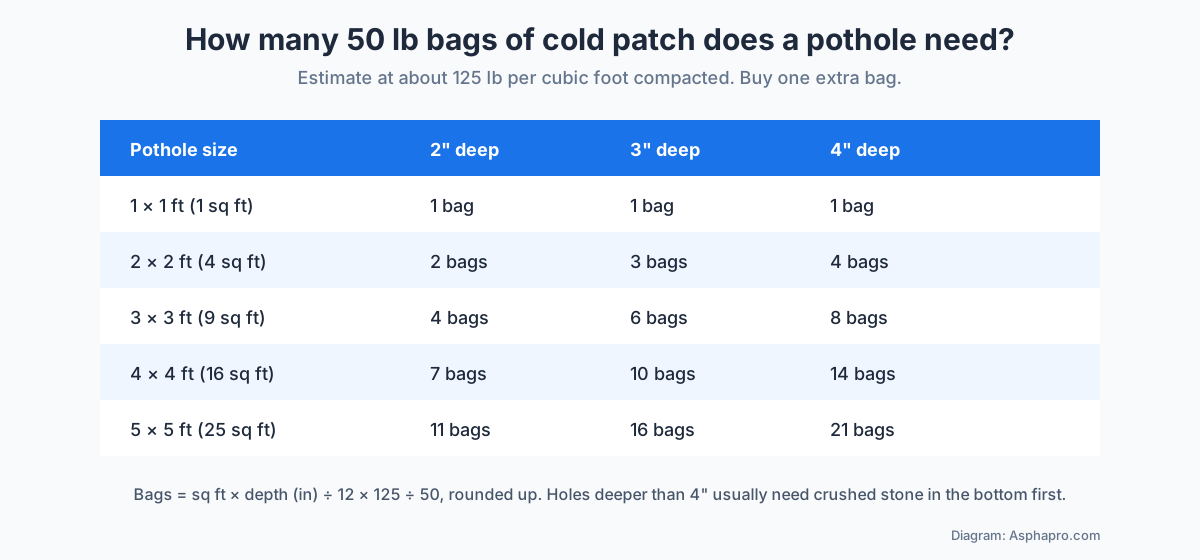
For example, a typical 3 × 3 ft driveway hole that is 3 inches deep works out to 9 × 3 ÷ 12 × 125 ÷ 50 = 5.6, so six bags. Always buy one more bag than the math says. Cold patch compacts more than you expect, and an under-filled pothole repair is the one that fails first. Unopened bags keep for a long time in a dry garage, so a spare bag is useful for next season's hole.
How to Fix a Pothole Step by Step (Cold Patch)
This is how to fix a pothole the most common DIY way: a cold patch pothole repair on an asphalt driveway. It takes about one to two hours for a typical hole.
- 1
Pick a dry day
Cold patch can go into a damp hole, but it bonds and lasts far better in a dry one. If you must work in wet weather, sweep and blow out as much water as possible first.
- 2
Clean out the hole
Remove every loose chunk of asphalt, stone, leaves and dirt with a shovel, broom and blower. The patch has to sit on solid material, not debris.
- 3
Square the edges
Chisel or saw the edges straight and vertical, a couple of inches into sound asphalt, so the hole becomes a square or rectangle. Vertical edges hold the patch in place; sloped, crumbly edges let it push out.
- 4
Check and fix the base
Push a screwdriver into the bottom. If it sinks easily or the bottom is mud, dig out the soft material and add crushed stone in layers, tamping each one firm. Stop about 2 to 3 inches below the surface for the patch.
- 5
Prime the edges (optional)
Brushing a little asphalt crack sealer or tack primer on the vertical edges helps the new patch stick to the old asphalt.
- 6
Fill in layers
Pour in cold patch about 1 to 2 inches at a time and tamp each layer hard. Deep holes filled all at once stay loose in the middle.
- 7
Overfill and compact
Leave the last layer about 1/2 inch above the surface, then tamp until it is flush. For extra compaction, lay a piece of plywood over the patch and drive a car tire slowly over it several times.
- 8
Seal the seams and dust with sand
Run crack sealer along the joint between the patch and the old asphalt to keep water out, and sprinkle sand on top so the fresh patch does not stick to tires.
How to Fix a Pothole in a Driveway Without Special Tools
If you only have one small hole and no tamper, you can still fix a pothole well enough to last. Clean it out with a trowel and a shop vacuum, chip the loose edges back to solid asphalt with a cold chisel, and fill it with cold patch in thin layers. For compaction, use the end of a 4 × 4 post as a tamper, then lay a scrap of plywood over the patch and drive your car slowly back and forth over it a dozen times. The plywood spreads the weight and stops the tire from picking up the fresh mix.
This simple driveway pothole repair works for holes up to about a foot or two across. For anything bigger, renting a hand tamper or plate compactor makes a real difference, because the most common reason people fail to fix a pothole for good is a patch that was never compacted properly.
- Dry hole, or as dry as you can get it
- All loose material and dirt removed
- Square, vertical edges in solid asphalt
- Firm base; crushed stone added if the bottom was soft
- Patch placed in thin layers, each one tamped
- Finished about level after compaction, not dished
- Seams sealed and the top dusted with sand
How Soon Can You Drive on a Pothole Repair?
With a hot mix pothole repair, you can usually drive on the patch as soon as it has cooled, often within an hour or two. With cold patch, most products can take light traffic right away, and driving over the patch actually helps compact it, but avoid turning the steering wheel while stopped on it for the first few days, because that can twist the soft surface. Water-activated and reactive cold patch products set faster; follow the bag instructions for the exact time.
Pothole Repair by Size and Depth
Not every hole needs the same treatment. Match the pothole repair method to what you see:
| What you see | Likely cause | How to fix it |
|---|---|---|
| Small, shallow hole (under 2" deep) | Surface wear, a crack that broke open | Clean, square, one or two layers of cold patch, compact |
| Deep hole (over 4" deep) | Water softened the base | Dig out soft base, add crushed stone in layers, finish with 2"–3" of patch |
| Wide, shallow dip that holds water | Base settlement | Cut out the area and rebuild the base; a thin skim of patch will not last |
| Hole at the driveway edge | No edge support | Patch and backfill soil or stone along the edge |
| Many holes in cracked "alligator" pavement | Base failure over a wide area | Full-depth repair of the whole area by a contractor |
The deeper and wider the damage, the more the pothole repair is really a base repair. Driveway asphalt is usually only 2 to 3 inches thick, so any hole deeper than that has already reached the gravel, and the gravel has to be firm before patching is worth doing.
Choosing a Cold Patch Product
Cold patch is not all the same. The bag price is a small part of the job, so it is worth buying the better product for a pothole repair you want to last:
- Standard cold patch. Asphalt with a solvent or oil that keeps it workable. Cheapest, fine for small holes and temporary fixes, but it can stay soft and shove under turning tires.
- High-performance cold patch. Uses polymer-modified binders or special additives so it sets harder and bonds better, even in wet holes. Costs more per bag but usually lasts longer.
- Water-activated or reactive patch. Sets when water is poured on it or reacts with moisture, so it hardens quickly. Useful for busy driveways where you need to drive on the repair soon.
Read the coverage on the bag and compare it with your calculation. Our guides to asphalt repair kits and asphalt in bags compare the main options.
Pothole Repair in Winter
Winter is pothole season. Water in cracks freezes and expands, lifting and breaking the asphalt, and then thaws and leaves voids under the surface. Hot mix plants in colder states shut down or cut back in winter, so winter pothole repair is almost always cold patch.
- Keep the bags indoors so the mix is warm and soft when you use it.
- Clear snow, ice and water from the hole; a propane torch used carefully can dry the hole, but keep it away from the bag and anything flammable.
- Compact harder than usual; cold mix is stiffer and needs more force.
- Treat it as a temporary repair and check it after each freeze-thaw cycle; top up any dips.
- Plan a proper hot patch in late spring once plants reopen.
Fixing a Pothole at the Driveway Apron or Street Edge
Holes often form where the driveway meets the street, because that is where cars turn, water runs off the road and the asphalt is thinnest. Before you fix a pothole here, check who owns the apron: in many towns the strip between the street and the sidewalk belongs to the city, and they may want to make the repair or require a permit. If it is yours, use the same method but pay extra attention to the edge against the street, sealing the joint well so road water does not get under the patch.
Pothole Repair on Private Roads and HOA Streets
On private roads, shared driveways and HOA-maintained streets, pothole repair is the owners' responsibility, not the city's. A few things make it easier:
- Inspect in early spring after the worst freeze-thaw, and again in fall before winter.
- Batch the work. Hiring one hot patch crew for all the holes at once is far cheaper per hole than separate visits.
- Keep a simple log of where holes form; repeated failures in one area point to a drainage or base problem worth fixing properly.
- Budget for resurfacing. Pothole repair is maintenance. A private road with many patches will eventually need an overlay; see the cost to pave a private road.
What Road Crews Do Differently
Public works crews use a few pothole repair methods that are good to know about, because some contractors offer them for driveways and lots too:
- Throw-and-roll: the crew throws cold mix into the hole and compacts it with the truck tires. It is fast and cheap, and it works best with good material, but it is usually treated as temporary.
- Semi-permanent repair: the hole is cleaned, squared and tacked before filling and compacting, which is the method in this guide. It lasts much longer than throw-and-roll.
- Spray injection: a truck-mounted machine blows out the hole, sprays emulsion and blows in coated stone. It is fast and durable for roads.
- Infrared repair: a heater softens the surrounding asphalt so the new and old material blend with no cold joint.
Research on pothole repair for the Federal Highway Administration found that the quality of the material and the care taken in preparation make a big difference to how long a patch lasts. For a homeowner that means a good bag of cold patch and a clean, square, well-compacted hole.
Hot Mix Pothole Repair
Hot mix asphalt is what road crews use for lasting pothole repair asphalt work. It is the same material as the rest of your driveway, laid at around 275 to 300°F, and once compacted it bonds tightly with the surrounding pavement. The steps are the same as above, with two differences: a tack coat is applied to the edges and bottom before filling, and the hot mix must be placed and compacted quickly before it cools.
Hot mix is harder for homeowners to use because asphalt plants sell it by the ton, often with a minimum, and it has to be hauled in an insulated truck or hot box. For one or two driveway potholes it is usually easier to hire a paving crew, which brings hot mix and a compactor and does a proper hot patch in a few hours. Our asphalt repair cost guide covers professional patching prices.

Cold Patch vs Hot Mix: Which Pothole Repair Lasts Longer?
| Cold patch | Hot mix | |
|---|---|---|
| Best for | DIY, small holes, winter emergencies | Lasting repairs, larger holes |
| Weather | Works in cold and damp conditions | Needs warm, dry weather and an open plant |
| Cost | About $15 – $30 per 40 – 50 lb bag | Usually hired: about $100 – $400 per pothole |
| Typical life | Often 1 – 3 years | Several years, close to the surrounding pavement |
| Skill needed | Low | Moderate to high, plus equipment |
A good plan for many homeowners is a cold patch pothole repair as soon as the hole appears, then a professional hot patch of the worst spots the next summer, ideally along with crack filling. For product choices, see our cold asphalt patch guide and rapid set asphalt repair mix review.
How Much Pothole Repair Costs
DIY costs very little. A typical driveway pothole takes two to four bags of cold patch, so materials run about $30 to $120, plus a tube of crack sealer. A professional pothole repair on a driveway is usually about $100 to $400 per hole, and many contractors have a minimum charge of about $100 to $250, which makes it worth fixing all your holes in one visit. For the detailed breakdown see our pothole repair cost guide.
Driveway Pothole Repair vs Other Fixes
It helps to see where driveway pothole repair sits among the other asphalt fixes, so you do not overspend or underspend:
| Fix | When it fits | Typical cost |
|---|---|---|
| DIY cold patch pothole repair | One to a few small holes | $15 – $30 per bag |
| Professional hot mix pothole repair | Larger or repeat holes | $100 – $400 per hole |
| Patching larger damaged areas | Broken sections, sunken spots | $2 – $5 per sq ft patched |
| Overlay of the whole driveway | Holes and cracks everywhere, base still solid | $2 – $5 per sq ft of driveway |
If you find yourself doing a pothole repair in a new spot every few months, add up what you are spending. At some point the pothole repair cost over a few years is higher than resurfacing once and fixing the drainage that causes the holes.
Why Potholes Come Back (and How to Stop It)
When people fix a pothole and it fails, it is almost always for the same few reasons:
- Water in the hole. Patch placed over standing water or mud never bonds to the bottom.
- Loose, sloped edges. Traffic pushes the patch out sideways.
- No compaction. Uncompacted patch stays spongy and sinks into a new dip.
- Soft base left in place. The hole was a symptom; the weak base underneath is still there.
- Too thin a patch. A skim of cold patch over a deep hole breaks up quickly.
The fix for each one is in the steps above: dry, clean, square, solid base, layers, compaction, sealed seams. Beyond that, deal with the water source. If a downspout empties onto the driveway or water pools in one spot, redirect it, or the next pothole will form right next to your repair.
When to Call a Professional
- The hole is larger than about 4 × 4 feet, or there are many holes close together.
- The surrounding asphalt has alligator cracking (a pattern of small blocks), which means the base has failed over a wider area.
- The same spot keeps failing after careful repairs.
- The driveway is sinking or holds water.
- The hole is in a public road or sidewalk; report it to your city or county instead.
When damage is widespread, pothole repair alone stops being good value. Patching many areas can cost as much as resurfacing the whole driveway; see asphalt overlay cost for that option.
Pothole Repair on Gravel and Concrete
Gravel driveways
On gravel, a pothole is a low spot where stone has been pushed out and water collects. Do not fill it with asphalt. Rake out the loose stone, fill the hole with fresh crushed stone that contains fines (often sold as crusher run), tamp it in layers, and regrade the area so water runs off. Our gravel calculator estimates how much stone you need.
Concrete driveways
Concrete does not get potholes in the same way, but it can spall or break. Small holes are repaired with a concrete patching compound, not asphalt cold patch. Larger broken areas usually need the slab section cut out and replaced.
How to Prevent Potholes
- Fill cracks every year before winter, so water cannot reach the base. See the crack fill calculator.
- Sealcoat every two to three years to slow surface wear.
- Keep water off the driveway: gutters, downspouts and drainage slopes.
- Repair small holes right away, before freeze-thaw makes them bigger.
- Keep heavy trucks and trailers off driveway edges.
For a full yearly routine, read our asphalt driveway maintenance guide.
Frequently Asked Questions
What is the best way to fix a pothole in a driveway?
Clean it, cut it square into solid asphalt, fix any soft base with crushed stone, fill in compacted layers and seal the edges. Hot mix lasts longest; cold patch is the practical DIY choice.
How much cold patch do I need for a pothole?
Square feet × depth in inches ÷ 12 × 125 ÷ 50 gives the number of 50 lb bags. A 2 × 2 ft hole 3 inches deep needs about 3 bags.
How long does a cold patch pothole repair last?
Often about one to three years. A clean, dry, square and well-compacted patch lasts much longer than one dropped into a wet hole.
Can you fix a pothole in the rain or winter?
Yes, with cold patch, as a temporary fix. Remove as much water as you can and compact well. Plan a permanent repair when the weather is warm and dry.
Can you fill a pothole with gravel?
Only as a temporary fix on asphalt. Use crushed stone to rebuild the base of a deep hole, then finish the top 2 to 3 inches with cold patch or hot mix.
How do you repair a pothole permanently?
To repair a pothole permanently, fix the cause as well as the hole: rebuild any soft base with compacted crushed stone, use hot mix (or a high-performance cold patch), compact it well, seal the edges, and stop water from reaching the spot. A hot mix pothole repair done this way can last about as long as the pavement around it.
Is it worth fixing a pothole yourself?
Yes, for small and medium holes on a driveway. A DIY cold patch pothole repair costs a fraction of a service call and takes about an hour. For large holes, many holes, or base failure, hire a contractor.
How much does pothole repair cost?
DIY cold patch is about $15 to $30 per bag. Professional driveway pothole repair is usually about $100 to $400 per hole.
Sources
- Caltrans, Flexible Pavement Maintenance Manual, Chapter 5 "Patching" — pothole patching methods and the importance of square edges, tack and compaction. dot.ca.gov
- Federal Highway Administration, LTPP pothole repair research and manual of practice — repair methods and material performance. fhwa.dot.gov (PDF)
- American Public Works Association, Pothole Fact Sheet — how potholes form. APWA (PDF)
- HomeGuide and Thumbtack asphalt repair cost pages — professional pothole repair and minimum charges. homeguide.com, thumbtack.com
- Image credits: hero photo by Frankie Fouganthin (CC BY-SA 4.0) via Wikimedia Commons. Diagrams and the cold patch image by Asphapro.com.
Prices checked November 2026. Bag counts are estimates; check the coverage printed on your product.