
Martin Marietta Maple Grove Asphalt Plant — Hours, Products & How to Order (2026)
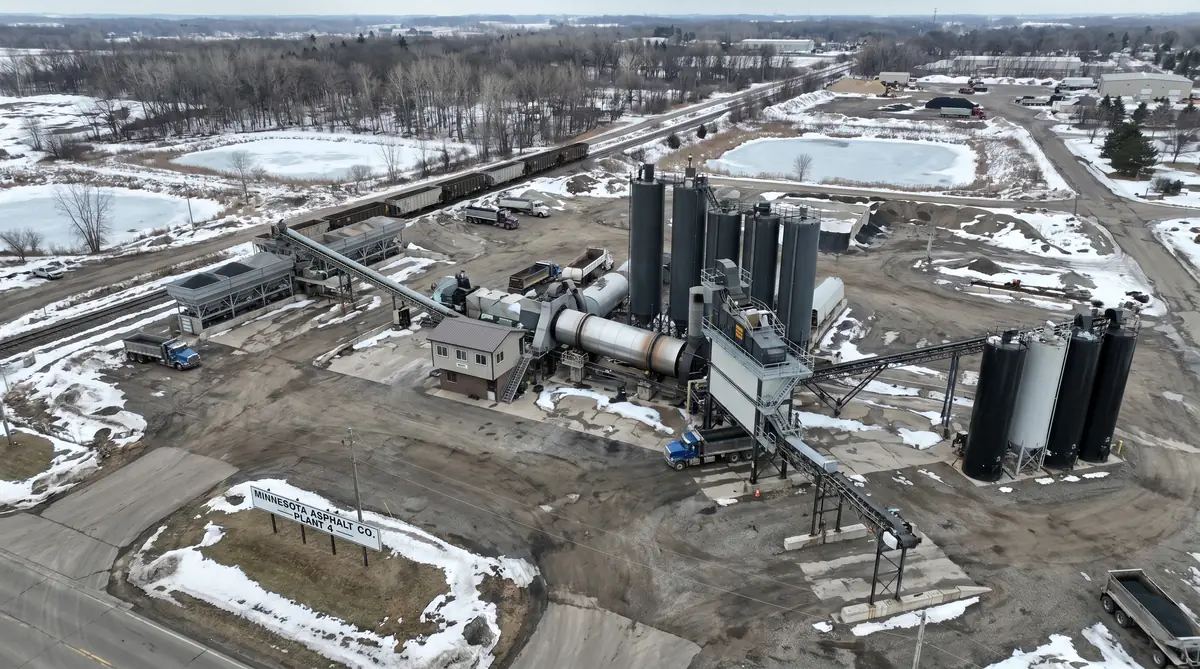
Martin Marietta Maple Grove Asphalt Plant — Quick Overview
Martin Marietta operates an asphalt production facility in Maple Grove, Minnesota, serving the Twin Cities metro area. The plant produces MnDOT-approved hot mix asphalt mixes for road construction, commercial paving, and maintenance projects. Contact the plant directly to confirm current mix availability, pricing, and delivery scheduling — production hours and product offerings vary seasonally.
About Martin Marietta's Minnesota Operations
Martin Marietta is one of the largest suppliers of construction aggregates and heavy building materials in the United States, operating quarries, ready-mix concrete plants, and asphalt facilities across multiple states. Their Minnesota division serves the Twin Cities metro and surrounding regions with both aggregate materials and hot mix asphalt production.
The Maple Grove facility is positioned to serve Hennepin County and the northwest metro corridor — one of the most active construction zones in Minnesota, with ongoing residential development, highway maintenance, and commercial paving demand year-round (within the April–November asphalt season typical for the region).
Mix Types Produced
Minnesota DOT uses the Superpave (SP) mix designation system for all state and county road projects. Plants serving MnDOT contracts must be certified and produce mixes that meet MnDOT specification 2360. Common mixes produced at Twin Cities area facilities include:
| MnDOT Mix Designation | Application | Traffic Level | Max Aggregate Size |
|---|---|---|---|
| SPWEA340B | Wear course (surface) | High traffic / arterials | 3/4 in (19mm) |
| SPWEB340B | Wear course (surface) | Medium traffic | 3/4 in (19mm) |
| SPWEA330B | Wear course (surface) | High traffic | 1/2 in (12.5mm) |
| SPNWB330B | Non-wear binder course | Medium traffic | 1/2 in (12.5mm) |
| SPNWB340C | Non-wear binder course | Heavy traffic / highways | 3/4 in (19mm) |
| SPNWB350C | Non-wear base course | Heavy / deep lift | 1 in (25mm) |
For a full explanation of mix types, designation codes, and how Superpave mixes are designed, see our asphaltic concrete mix types guide.
Delivery Radius & Coverage Area
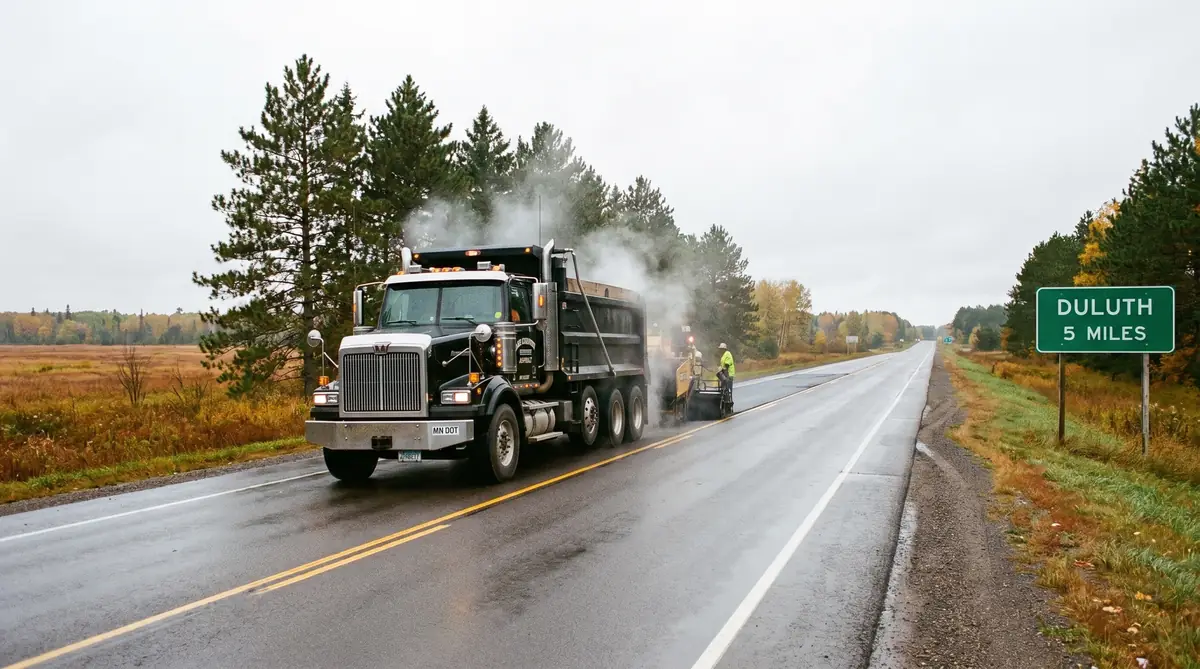
Hot mix asphalt is temperature-sensitive — it must be placed and compacted while still above approximately 275°F (135°C). From the time it leaves the plant, a paving crew typically has a 30–60 minute window before the mix cools too much for proper compaction. That delivery window, combined with Twin Cities metro traffic patterns, defines the practical delivery radius from Maple Grove.
| Area / City | Approx. Distance from Maple Grove | Delivery Feasibility |
|---|---|---|
| Brooklyn Park, Osseo, Corcoran | 5–10 miles | Straightforward |
| Plymouth, Minnetonka | 10–15 miles | Straightforward |
| Rogers, Dayton, Champlin | 10–18 miles | Straightforward |
| Minneapolis (northwest) | 15–20 miles | Feasible — coordinate timing |
| St. Louis Park, Golden Valley | 18–25 miles | Feasible — coordinate timing |
| Anoka, Blaine | 20–28 miles | Feasible — confirm with dispatcher |
| St. Paul, Woodbury | 35–45 miles | Marginal — discuss with plant |
For projects near or beyond the edge of the delivery radius, consider whether a closer plant may be more practical. Use our Asphalt Plant Near Me tool to find other certified HMA suppliers in your area.
Minnesota Asphalt Pricing in 2026
HMA pricing in Minnesota fluctuates with the liquid asphalt index (LAI), which tracks crude oil prices. Most commercial plant contracts include a price adjustment clause tied to the LAI — meaning the quoted price per ton at signing may differ from the invoiced price at pour time if crude oil prices shift significantly.
| Mix Type | Est. Plant Pickup Price (2026) | Est. Delivered Price (2026) |
|---|---|---|
| Standard wear course (SPWEA/SPWEB) | $90–$115/ton | $105–$130/ton |
| Non-wear binder course | $85–$110/ton | $100–$125/ton |
| Polymer-modified wear course | $110–$140/ton | $125–$155/ton |
| Cold mix / patching mix | $95–$120/ton | $110–$135/ton |
Use our Hot Mix Asphalt Calculator to estimate how many tons your project requires before calling for a quote. See national pricing context in the HMA price per ton guide.
How to Order Hot Mix Asphalt
Before calling the plant, have the following information ready — it speeds up the quote process and reduces errors:
- Mix type: MnDOT SP designation (e.g. SPWEA340B) or project spec reference. If you're unsure, describe the application (wear course, binder course, driveway, parking lot) and the plant can advise.
- Total tonnage: Calculate area × thickness × density. Use the HMA calculator if needed.
- Pour date and start time: Most plants require 24–48 hours advance notice for commercial orders. Large pours (>200 tons) may need longer lead time.
- Delivery or pickup: If delivery, provide the project address and confirm truck access (haul road width, weight limits, site conditions).
- Number of trucks needed: For continuous paving operations, coordinate truck cycle times with the plant dispatcher to avoid gaps at the paver.
- Billing and tax-exempt status: MnDOT contractors and municipalities may qualify for sales tax exemption — have your project number or exemption certificate ready.
What to Ask When Getting a Quote
| Question | Why It Matters |
|---|---|
| Is the mix MnDOT 2360 certified? | Required for any state, county, or city road project |
| What PG binder grade is in production? | Must match your project spec — PG 58-34 vs PG 64-34 are not interchangeable |
| Is there a LAI price adjustment clause? | Protects both parties if crude oil prices shift between order and delivery |
| What is the minimum order? | Most plants have a 5–10 ton minimum; small jobs may need to self-haul or use a cold mix alternative |
| What are current plant hours and shutdown dates? | Plants schedule maintenance shutdowns — confirm availability around your pour window |
| Can you accommodate a split pour? | If your project spans multiple days, confirm the plant can hold production across days |
Seasonal Considerations for Minnesota Asphalt
Minnesota's climate limits the practical asphalt paving season. MnDOT specification 2360 restricts HMA placement when air temperature is below 40°F (4°C) and falling, and when the surface being paved is below 35°F (2°C). In practice, this means:
- April–May: Season opening — plants ramp up production. Book early as crews and equipment compete for early-season slots.
- June–August: Peak season. Highest availability but also highest demand. Schedule 1–2 weeks out for large pours.
- September–October: Good paving conditions. Final window for overnight-temperature-sensitive projects.
- November: Season close. Most plants shut down production by mid-November. Emergency patching mixes may still be available.
- December–March: No plant production. Cold mix patching and temporary repairs only.
Contractor Red Flags
- No MnDOT plant certification: Any HMA used on a state, county, or city road contract must come from a MnDOT-certified plant. Ask for the plant's current certification number before ordering for public-sector work.
- Vague mix designation: A contractor or supplier quoting "regular asphalt" or "standard mix" without a specific SP designation is a red flag on any spec-driven project. Insist on the full mix code.
- No price adjustment clause on large orders: For multi-ton orders extending over weeks, a fixed price with no LAI clause means one party absorbs all crude oil risk. Understand who that is before signing.
- Truck cycle time mismatch: If the plant is producing faster than your trucks can cycle back, HMA may sit in surge bins longer than ideal. Coordinate truck count with plant output rate.
About Martin Marietta
Martin Marietta Materials, Inc. is a Fortune 500 company headquartered in Raleigh, North Carolina. It is one of the top three construction aggregates producers in the US, alongside Vulcan Materials and CRH. The company's Building Materials segment — which includes asphalt production — operates facilities across the Southeast, Midwest, and Mountain states. Their Minnesota operations are part of the Midwest region group.
For current plant contact information, production schedules, and certified mix documentation, visit Martin Marietta's official website or contact their Minnesota regional office directly. Information about specific plant output, personnel, or scheduling is subject to change and should always be verified with the company before project planning.
For a full technical overview of how asphalt mixing plants work — drum vs batch, plant capacity, and production process — see the Asphalt Mixing Plant guide.
Frequently Asked Questions
What does the Martin Marietta Maple Grove asphalt plant produce?
The Maple Grove facility produces MnDOT-approved hot mix asphalt for road construction and commercial paving. Typical products include Superpave wear course and non-wear course mixes (SPWEA, SPWEB, SPNWB designations) meeting MnDOT specification 2360. Contact the plant to confirm current mix availability.
What is the delivery radius from Maple Grove?
Roughly 20–35 miles under normal traffic conditions, covering most of the northwest Twin Cities metro. This includes Brooklyn Park, Plymouth, Rogers, Champlin, Osseo, Corcoran, and parts of Minneapolis. Projects beyond 30 miles should coordinate closely with the dispatcher on truck timing.
How do I order hot mix from Martin Marietta?
Contact Martin Marietta's Minnesota division with your mix type, total tonnage, pour date, and delivery address. Have your project spec, MnDOT project number (if applicable), and billing information ready. Most plants require 24–48 hours advance notice for standard commercial orders.
What is asphalt pricing in Maple Grove MN in 2026?
Standard dense-graded wear course mixes run approximately $90–$115/ton at pickup and $105–$130/ton delivered in the Twin Cities metro in 2026. Prices fluctuate with the liquid asphalt index tied to crude oil markets. Request a current price sheet from the plant for accurate project budgeting.
What MnDOT mix types are available?
Common mixes include SPWEA340B and SPWEB340B (wear courses), SPNWB330B and SPNWB340C (non-wear binder courses), and SPNWB350C (base course). The letter suffix indicates traffic level; the number indicates maximum aggregate size. Your project engineer's specifications will dictate which mix is required.