
Pavement Paint — Types, Costs, How to Apply & How Long It Lasts (2026)
What Is Pavement Paint?
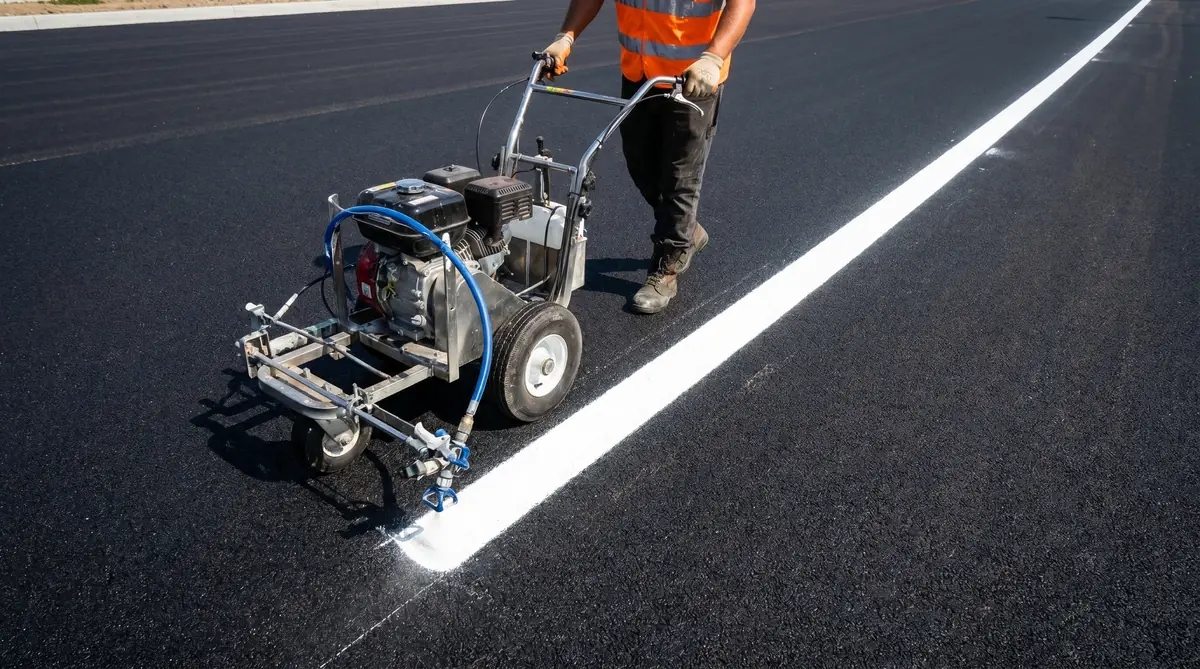
Pavement paint is a traffic-grade coating applied to asphalt or concrete to create road markings, parking lines, crosswalks, directional arrows, sports courts, and decorative surfaces. Unlike wall paint, it's formulated to resist tire abrasion, UV exposure, oil and fuel contamination, and freeze-thaw cycling. The main types are water-based latex, solvent-based alkyd, thermoplastic, epoxy, and MMA — each with different cost, durability, and application requirements.
Pavement Paint Types Compared
| Type | Base | Best For | Dry Time | Lifespan | Cost/Gal |
|---|---|---|---|---|---|
| Water-based latex | Acrylic emulsion | Parking lots, driveways, sports courts | 15–30 min | 1–3 years | $20–$50 |
| Solvent-based alkyd | Oil/alkyd resin | Roads, high-traffic parking, cold climates | 30–60 min | 2–4 years | $35–$75 |
| Chlorinated rubber | Rubber polymer | Airport runways, industrial floors, ports | 20–45 min | 3–5 years | $50–$100 |
| Thermoplastic | Hot-applied resin | Highway markings, crosswalks, high-traffic roads | 2–5 min (cools) | 3–7 years | $2–$5/lb applied |
| Epoxy | Two-part epoxy | Parking structures, warehouses, low-traffic | 2–8 hours | 4–10 years | $60–$150 |
| MMA (Methyl Methacrylate) | Reactive acrylic | Cycle lanes, crosswalks, premium road markings | 15–30 min | 5–10+ years | $80–$200 |
Where Each Type Is Used
Water-Based Latex — The DIY Standard
Water-based acrylic traffic paint is the most widely used pavement paint for parking lots, driveways, sports courts, and playgrounds. It's easy to apply with a brush, roller, or walk-behind striping machine, dries in 15–30 minutes in normal conditions, cleans up with water, and has low VOC content. It bonds well to both asphalt and concrete when the surface is clean and dry.
The tradeoff is durability — water-based paint on a busy parking lot will fade and wear within 1–2 years, especially in freeze-thaw climates where snowplow blades accelerate abrasion. For light-use surfaces (residential driveways, basketball courts, private lots with low traffic), it's the right choice on cost and ease. For high-turnover commercial lots, plan to restripe every 1–2 years or upgrade to a more durable product.
Solvent-Based Alkyd — Workhorse for Cold Climates
Solvent-based (oil-based) traffic paint penetrates asphalt more deeply than water-based, producing better adhesion in cold temperatures and more resistance to snowplow abrasion. It remains workable in temperatures as low as 35°F (2°C), whereas most water-based products require 50°F minimum. The downside: higher VOC content (regulated under EPA VOC rules), longer dry time (30–60 min before traffic), and solvent cleanup required. Preferred by many highway contractors and northern state DOTs for road line marking applications.
Thermoplastic — Highway Standard
Thermoplastic pavement marking is not a paint — it's a solid material (polyester or alkyd resin with pigment and glass beads) that is melted to 400°F and applied as a liquid that immediately begins to solidify on contact with the cool pavement surface. Open to traffic in 2–5 minutes. Glass beads mixed in and dropped on top provide retroreflectivity (night visibility). Thermoplastic is the standard for highway centerlines, lane lines, crosswalks, and stop bars on high-volume roads in most US states, per FHWA pavement marking guidelines. It is not DIY-applicable — requires specialized melting and extrusion equipment.
Epoxy — For Structures and Industrial Floors
Two-component epoxy pavement coatings cure through chemical reaction rather than solvent evaporation. They produce an extremely hard, chemical-resistant surface ideal for parking structures, warehouses, loading docks, and airport aprons where fuel and oil resistance is critical. Long cure time (2–8 hours before light traffic, 24–72 hours for full cure) and higher material cost limit their use to low-traffic or scheduled maintenance windows. Not recommended for outdoor asphalt — thermal cycling causes delamination over time.
MMA — Premium Durability, Fast Cure
Methyl methacrylate (MMA) is a reactive acrylic that cures chemically in 15–30 minutes to a very hard, extremely durable surface. Used for protected bike lanes, colored crosswalks, bus rapid transit lanes, and premium road marking applications where durability and fast return-to-service are both required. MMA bonds to both asphalt and concrete, is available in any color, and resists oil, fuel, UV, and tire abrasion far better than any paint product. High material cost ($80–$200/gallon) and strong odor during application (requires proper ventilation) limit it to professional use.
Coverage Rates
| Paint Type | Coverage per Gallon | Application Thickness | Notes |
|---|---|---|---|
| Water-based latex | 300–400 sq ft | 15–20 mils wet | Porous asphalt absorbs more — use two coats on new pavement |
| Solvent-based alkyd | 250–350 sq ft | 15–20 mils wet | Better penetration into asphalt surface |
| Chlorinated rubber | 200–300 sq ft | 20–25 mils wet | Higher film build for better durability |
| Epoxy (2-part) | 150–250 sq ft | 8–12 mils dry | Self-leveling; apply by squeegee or notched trowel |
| MMA | 100–200 sq ft | 40–60 mils dry | High film build is key to durability; apply thicker than paint |
| Thermoplastic | ~50 sq ft/lb at 90 mils | 90–125 mils | Applied by weight, not volume — typically priced per linear foot |
Cost Breakdown
| Scope | DIY Cost | Professional Cost |
|---|---|---|
| Single parking stall line (4 in × 18 ft) | $1–$3 materials | $8–$20 per stall |
| Full 50-stall parking lot restriping | $150–$400 materials + rental | $800–$2,500 |
| Driveway number / decorative marking | $15–$40 materials | $80–$200 |
| Basketball half-court striping | $50–$120 materials | $300–$700 |
| Crosswalk (thermoplastic, per each) | Not DIY-applicable | $800–$2,500 |
| Road centerline (per linear mile) | Not DIY-applicable | $3,000–$8,000 |
Surface Preparation
Pavement paint fails prematurely on dirty, oily, cracked, or unstable surfaces — not because the paint is poor, but because adhesion depends entirely on surface quality. Prep is 80% of the job. For overlay work, understanding asphalt tack coat bonding principles also helps explain why surface cleanliness matters so much.
- Clean thoroughly: Sweep, blow, or pressure wash to remove all dirt, dust, grease, oil stains, and loose material. Oil stains on asphalt require a degreaser applied and scrubbed before washing. Paint will not bond over oil — period.
- Repair cracks and damage first: Any cracks wider than 1/8 inch should be filled before painting. Paint bridges over cracks temporarily but will crack at the same point within weeks. Use a rapid set repair mix for potholes and a crack filler for linear cracks. See our asphalt repair kit guide for product options.
- Allow full dryness: Surface must be completely dry — minimum 24 hours after rain for asphalt, 48 hours for concrete. Moisture trapped under paint causes blistering and adhesion failure.
- Prime if required: New concrete (under 28 days cure) and highly porous asphalt surfaces benefit from a bonding primer before painting. Water-based paint on new asphalt may bleed through without primer. Epoxy and MMA always require their specified primer systems.
- Temperature check: Most pavement paints require surface and air temperature above 50°F (10°C) and no rain forecast for 4–8 hours. Check product data sheet — solvent-based paints often allow lower temperatures.
Application Methods
| Method | Best For | Quality | Speed | Equipment Cost |
|---|---|---|---|---|
| Brush / roller | Small areas, touch-ups, decorative work | Fair | Slow | $5–$20 |
| Airless sprayer | Large surfaces, colored coatings | Good | Moderate | $200–$800 (or rent) |
| Walk-behind striping machine | Parking lot lines, sports courts | Excellent | Fast | $250–$500 (or $50–$100/day rent) |
| Ride-on striping machine | Large parking lots, roads | Excellent | Very fast | Professional only |
| Thermoplastic extruder | Highway markings, crosswalks | Excellent | Fast | Professional only — $15,000+ |
Durability by Traffic Level
| Paint Type | Low Traffic (driveway, residential) | Medium Traffic (commercial lot) | High Traffic (highway, busy road) |
|---|---|---|---|
| Water-based latex | 2–4 years | 1–2 years | 6–12 months |
| Solvent-based alkyd | 3–5 years | 2–3 years | 1–2 years |
| Chlorinated rubber | 4–6 years | 3–4 years | 2–3 years |
| Thermoplastic | Overkill / not typical | 4–6 years | 3–7 years |
| Epoxy | 6–10 years | 4–7 years | Not recommended outdoors |
| MMA | 7–10+ years | 5–8 years | 5–10 years |
DIY vs Professional Pavement Painting
| Factor | DIY | Professional |
|---|---|---|
| Line straightness | Difficult without a machine | Crisp, consistent with striping equipment |
| Paint type access | Water-based, some solvent-based | All types including thermoplastic and MMA |
| Glass bead application | Possible but inconsistent | Precision drop applicator built into machine |
| Best for | Driveways, basketball courts, small lots | Commercial lots, roads, crosswalks, large areas |
| Material cost (50-stall lot) | $150–$400 | $800–$2,500 total |
| Time (50-stall lot) | Full day or more | 2–4 hours |
For large commercial lots or public road markings, professional striping contractors deliver faster, straighter, and more durable results. See Bay Cities Paving & Grading as an example of what full-service commercial paving companies include in their striping programs, or use our contractor hiring guide to vet local options.
Common Mistakes
- Painting over oil stains: Engine oil on asphalt acts as a release agent — paint peels within days. Degrease and rinse thoroughly, then allow 48 hours to dry before painting.
- Painting new asphalt too soon: Wait 30–90 days. Fresh asphalt bleeds petroleum oils that destroy paint adhesion. The surface must be fully cured and matte before any paint is applied.
- Skipping crack repair: Painting over cracks without filling them first means your paint will mirror every crack within one freeze-thaw cycle. Fix the surface before you paint it. See asphalt repair kit for options.
- Applying too thin: A single thin coat of water-based paint on asphalt will fade within 6 months. Apply two coats — allow full dry between coats. Film thickness matters more than number of coats.
- Painting in direct sunlight on hot pavement: Paint applied to pavement above 100°F (38°C) dries too fast, leaving bubbles and poor film formation. Paint in the morning or on cloudy days when surface temp is below 90°F.
- Using exterior wall paint instead of traffic paint: Regular exterior paint has no abrasion resistance. It will scuff off under tire contact within weeks. Always use paint specifically rated for pavement or traffic markings.
Retroreflectivity and Glass Beads
Any road marking that must be visible at night — centerlines, lane lines, crosswalks, stop bars — requires retroreflective glass beads dropped into the wet paint or thermoplastic immediately after application. The beads act as tiny spherical mirrors, reflecting headlight beams back toward the driver.
For DIY parking lot work, glass beads are optional. For any marking adjacent to or on a public road, retroreflectivity is typically required by MUTCD (Manual on Uniform Traffic Control Devices) standards and enforced by local engineering departments. Most professional striping equipment has a built-in bead dispenser that drops beads at precisely the right density as the paint is applied.
Frequently Asked Questions
What is pavement paint?
A traffic-grade coating applied to asphalt or concrete for road markings, parking lines, crosswalks, and decorative surfaces. Formulated to resist tire abrasion, UV, fuel, and freeze-thaw cycling — not interchangeable with wall or floor paint.
How long does pavement paint last?
Water-based latex: 1–3 years. Solvent-based: 2–4 years. Thermoplastic: 3–7 years. Epoxy: 4–10 years in low-traffic/indoor use. MMA: 5–10+ years. Traffic volume, surface prep quality, and climate are the main variables.
How much does pavement painting cost?
DIY materials run $20–$80/gallon covering 300–400 sq ft. Professional parking lot restriping runs $800–$2,500 for a 50-stall lot. Thermoplastic crosswalks run $800–$2,500 each professionally applied.
Can I paint asphalt myself?
Yes for driveways, sports courts, and small private lots using water-based traffic paint and a walk-behind striping machine (rental ~$50–$100/day). Professional striping is recommended for commercial lots, road markings, and any application requiring retroreflective glass beads.
What's the best pavement paint for a parking lot?
Water-based acrylic traffic paint for cost-effectiveness (1–3 year lifespan). Solvent-based for cold climates or longer life. Thermoplastic or MMA for permanent, high-durability commercial markings. Never use exterior wall paint — it has no abrasion resistance.