
Asphalt Millings — What They Are, Uses, Cost & Complete Installation Guide
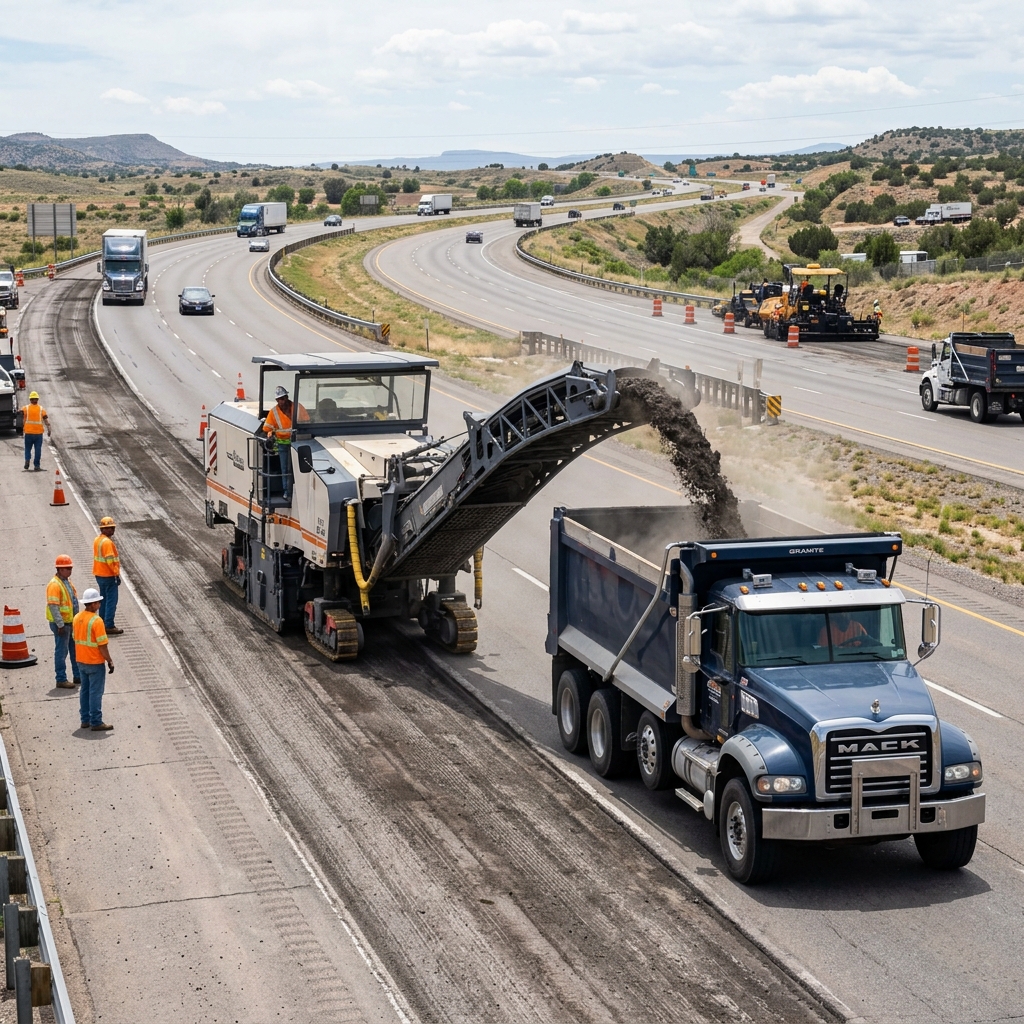
Asphalt millings (also called recycled asphalt pavement or RAP) are the ground-up material produced when old asphalt roads and parking lots are milled off during resurfacing. They look like coarse gravel but contain residual asphalt binder that makes them compact and harden when rolled. Asphalt millings cost $10–$40 per ton and are one of the most affordable driveway and road surface materials available — sometimes free from local contractors. Use our free asphalt millings calculator to calculate exactly how much you need.
What Are Asphalt Millings?
When road crews resurface a deteriorated road or parking lot, they first use a cold milling machine — a large, self-propelled machine with a rotating drum lined with hardened carbide cutting teeth — to grind off the top 1–3 inches of old asphalt pavement. This process is precise: the machine can be calibrated to remove exactly the right depth without disturbing the base layer. The ground material is simultaneously loaded via conveyor belt directly into waiting dump trucks.
In appearance, fresh asphalt millings are a dark gray-black coarse aggregate ranging from fine dust particles to chunks up to 1 inch in size — similar to crushed stone but with a slightly oily feel from the residual bitumen coating. The gradation (size distribution) varies depending on the original pavement's aggregate size and how aggressively the milling drum was set.
The key to why millings work as a surface material lies in their chemistry: they retain 5–6% asphalt binder by weight from the original pavement. This residual bitumen acts as a natural glue — when the millings are compacted tightly and exposed to summer heat, the binder softens slightly and fuses the particles together. Over a full season of traffic and heat, a properly compacted millings surface transitions from a loose aggregate feel to a semi-solid, asphalt-like surface that can last 7–15 years.
Asphalt Millings vs. Gravel vs. New Asphalt
| Factor | Asphalt Millings | Gravel | New Asphalt |
|---|---|---|---|
| Material cost | $10–$40/ton | $15–$45/ton | $90–$160/ton |
| Installed cost/sqft | $0.50–$1.50 | $0.75–$2.00 | $4.00–$7.00 |
| Lifespan | 7–15 years | 5–10 years | 15–20 years |
| Hardens over time | ✅ Yes (residual binder) | ❌ No | N/A (already hard) |
| Dust in summer | Minimal | Yes — significant | None |
| Snow plowing | Good | Scatters material | Excellent |
| Appearance | Dark gray-black | Natural stone colors | Uniform jet black |
| Eco-friendly | ✅ Recycled material | Quarried stone | Petroleum-based |
Common Uses for Asphalt Millings
Residential Driveways
The most common application. At 3–4 inches compacted depth, millings provide a firm, durable surface for standard residential traffic. The driveway hardens significantly after the first summer of heat exposure and traffic. Total installed cost: $0.50–$1.50/sqft vs $4–$7 for new asphalt — a saving of 75–85%. Particularly valuable for long rural driveways where new asphalt could cost $30,000–$80,000. For detailed cost calculations, see our asphalt millings cost guide.
Private and Farm Roads
Millings are excellent for long private roads and farm lanes. A quarter-mile single-lane road (5,280 sqft) at 4 inches deep requires approximately 800–900 tons — costing $8,000–$36,000 vs $75,000–$100,000+ for new asphalt. Use our road base calculator to estimate material quantities for your road length and width.
Parking Areas
Millings work well for overflow parking lots, equipment storage areas, staging areas, and informal rural parking. Not recommended for formal commercial parking lots where a smooth uniform finish and clean appearance are required — but ideal for agricultural operations, construction staging, and rural businesses.
Pathways and Walking Trails
At 2–3 inches compacted, millings make an excellent surface for walking paths, bike trails, and campground roads. More stable and less dusty than gravel, cost-effective for long linear paths where concrete or asphalt would be prohibitively expensive. Many county parks and campgrounds use millings for their trail systems.
Sub-base Layer Under New Asphalt
Recycled asphalt millings are increasingly used as a base layer under new hot mix asphalt. Compacted millings are more stable than loose crushed stone, bond well with the new HMA tack coat above, and cost 30–50% less than traditional crushed stone base. This approach — millings base + new asphalt surface — delivers near-new construction quality at significantly lower total cost. Use our road base calculator to size your base layer.
Pothole Filling (Temporary)
Cold millings can serve as emergency pothole fill material where cold mix asphalt is unavailable or too expensive. Cheaper, widely available, and easier to place than formal cold-patch products. This is a temporary solution — millings lack the binding agent additives of commercial cold mix — but effective for keeping a road passable until permanent repair is scheduled. See our pothole repair cost calculator for permanent repair estimates.
How Asphalt Millings Are Made
The milling machine's rotating drum — typically 4–7 feet wide — spins at high speed while the machine advances at 10–50 feet per minute. The carbide cutting teeth impact the old pavement surface at precise angles, grinding it to the specified depth. A water spray system keeps the drum and freshly milled material cool, preventing the residual binder from overheating and sticking excessively. The milled material passes up a conveyor and drops into a truck driving alongside.
Different grinding settings produce different gradations: fine millings (smaller particles, more binder surface area) compact more densely and harden faster — better for driveways. Coarse millings (larger aggregate chunks, less binding) drain better and are preferred for base layers under new pavement. Most residential millings from road projects are a mixed gradation suitable for both uses.
Asphalt Millings Cost Per Ton (2026)
| Source | Price Per Ton | Notes |
|---|---|---|
| Free (contractor surplus) FREE | $0 | Must self-haul; quality varies |
| Paving contractor BEST | $10–$25/ton | Call local pavers — most productive source |
| Quarry / aggregate supplier | $15–$35/ton | Consistent quality, reliable supply |
| Delivered to site | $25–$55/ton | Includes trucking ($50–$150 flat) |
Regional pricing: Southeast and Midwest are cheapest ($10–$25/ton) due to abundant road resurfacing activity. Northeast and West Coast run $20–$40/ton due to higher demand, stricter material tracking regulations, and longer trucking distances. For a full regional breakdown, see our asphalt millings cost guide.
How Much Asphalt Millings Do You Need?
RAP density is approximately 140 lbs/ft³ (slightly less than compacted new asphalt at 145 lbs/ft³). Use the formula: Tons = Area (sqft) × Thickness (inches) × 0.00578 × 1.15 (15% for spreading and compaction loss). Or use our asphalt millings calculator for instant results:
| Area | 3 inches | 4 inches | 6 inches |
|---|---|---|---|
| 200 sqft | 4.0 tons | 5.3 tons | 8.0 tons |
| 400 sqft | 8.0 tons | 10.6 tons | 15.9 tons |
| 600 sqft | 11.9 tons | 15.9 tons | 23.9 tons |
| 1,000 sqft | 19.9 tons | 26.5 tons | 39.8 tons |
| 2,000 sqft | 39.8 tons | 53.0 tons | 79.7 tons |
All figures include 15% waste/compaction factor. Formula: Area × Thickness × 0.00578 × 1.15
How to Install Asphalt Millings — Complete DIY Guide
- Excavate to proper depth. Remove existing surface material to 4–6 inches below the finished grade for driveways, 2–3 inches for walking paths. The excavation depth equals your desired compacted millings thickness plus 1 inch for compaction settlement.
- Install edging on both sides. Steel, aluminum, or concrete landscape edging prevents millings from spreading laterally — especially critical during the first 1–2 years before the binder sets fully. Edges without containment crumble and widen over time.
- Grade for drainage. Establish a minimum 2% slope (1/4 inch of drop per foot of run) away from structures, garage doors, and buildings. Proper drainage is the single most important factor in longevity.
- Compact the subgrade. Use a plate compactor or roller on the native soil before any millings go down. A soft or unstable subgrade will cause rutting regardless of how well the millings themselves are compacted.
- Spread first lift (2–3 inches). Dump millings and spread evenly using a skid steer, tractor with bucket, or manually with a rake and shovel. Work in sections for large areas. Break up any clumps larger than 2 inches before spreading.
- Compact first lift. Make 3–4 passes with a plate compactor (driveways and small areas) or a vibratory roller (large areas and roads). Compact until the surface does not shift or depress underfoot. Water lightly while compacting to help activate the binder.
- Spread second lift (remaining thickness). Add the remaining 1–2 inches of millings to reach final depth. Spreading in two lifts produces much better compaction density than a single thick application.
- Final compaction — multiple directions. Compact the second lift with the same thoroughness as the first. Cross your compaction passes: north-south then east-west. Check that the surface crown/slope is maintained and no low spots have formed.
- Allow to cure. The surface will harden progressively over the first summer season. Avoid digging, cutting, or heavy equipment pivot turns for the first 30 days. Light water applications during hot weather in the first season help accelerate binder reactivation.
Pros and Cons of Asphalt Millings
✅ Pros
- 60–80% cheaper than new asphalt installed
- Hardens over time — improves with age and heat
- Eco-friendly — diverts material from landfill
- Easy to repair — add millings and re-compact
- Good traction and skid resistance when compacted
- Less dusty than gravel in summer
- Widely available near active paving markets
- Can serve as base layer under future new asphalt
❌ Cons
- Can track residual tar onto light-colored garage floors
- Non-uniform appearance — not for high-visibility sites
- May soften in extreme summer heat (95°F+)
- Edges crumble without proper edging containment
- Quality varies by source and original pavement
- Not suitable for formal commercial applications
- Requires compaction equipment — not hand-tamped
Where to Find Asphalt Millings Near Me
- Local paving contractors. The single most productive source. Call 5–10 local paving companies and ask if they have surplus millings from recent road milling jobs. Many will sell cheaply or give away material rather than pay disposal or stockpile fees. Search "paving contractor [your city]" and start calling.
- Asphalt plants. Plants that accept and recycle RAP often maintain stockpiles available for retail purchase. Search "asphalt plant near me" and call to ask about millings availability and price per ton picked up.
- State and county road departments. DOT road repaving projects generate massive quantities. Contact your state DOT or county highway department — some allow free public pickup from active project sites for small quantities.
- Online marketplaces. Facebook Marketplace, Craigslist, and local classified sites regularly list millings for sale or free pickup. Search "asphalt millings," "RAP," or "recycled asphalt" with your zip code. Listings are most frequent during active paving season (May–October).
Frequently Asked Questions
What are asphalt millings used for?
Asphalt millings are used for driveways, private roads, parking areas, walking paths, base layers under new asphalt, and temporary pothole filling. They are most popular for residential driveways and long rural roads where new asphalt would be cost-prohibitive — a 1/4-mile driveway can cost $75,000+ in new asphalt vs $10,000–$20,000 with millings. Millings are produced by asphalt milling machines that grind the surface layer off existing pavement.
Are asphalt millings as good as new asphalt?
Good budget alternative — not an equivalent replacement. New hot mix asphalt lasts 15–20 years, is smooth and uniform, and has no tracking issues. Millings last 7–15 years, have a coarser appearance, and may track residual tar. However, at 60–80% lower installed cost, millings deliver excellent value for rural driveways, farm roads, and any application where appearance is secondary.
How much do asphalt millings cost per ton?
$10–$40 per ton in 2026. From a paving contractor: $10–$25/ton. From a supplier or quarry: $15–$35/ton. Delivered to site: $25–$55/ton including trucking. Free millings are available from contractors with surplus material — see our full pricing guide for regional breakdowns and free source tips.
Do asphalt millings need to be compacted?
Yes — compaction is essential. Uncompacted millings remain loose and shift under traffic, creating ruts and an unstable surface. Use a plate compactor for driveways and small areas, or a vibratory drum roller for roads and large parking areas. Make multiple passes in different directions. Light watering while compacting is the single most effective technique for activating the residual binder.
Will asphalt millings harden on their own?
Yes — with heat and time. The residual asphalt binder re-activates in summer heat and under compaction pressure, fusing particles together. After one full summer of use, a properly compacted millings surface becomes significantly firmer. After 2–3 years of heat cycling and traffic, it can feel nearly as solid as new asphalt in the most-traveled areas. Edges and less-trafficked zones harden more slowly.
How thick should asphalt millings be for a driveway?
3–4 inches compacted for a standard residential driveway with passenger vehicles and light trucks. 4–6 inches for driveways regularly supporting heavy vehicles — dump trucks, RVs, semi-trailers, or farm equipment. Always install in two compacted lifts rather than one thick pass for maximum density. Never go below 3 inches for vehicle use.
Can I pave over asphalt millings with new asphalt?
Yes — and this is a smart, cost-effective approach. Install millings as a base, compact thoroughly, allow one season to stabilize, then apply a tack coat and pave new hot mix asphalt on top. The millings base is more stable than loose crushed stone and saves $0.50–$1.50/sqft in base construction. Use our asphalt calculator to size the new surface layer.
Are asphalt millings environmentally friendly?
Yes — among the most sustainable paving choices available. The US recycles approximately 99% of removed asphalt pavement, making it the most recycled material by weight in North America — more than aluminum, glass, or cardboard combined. Using millings directly as a surface material is even more sustainable than reprocessing at a plant, as it skips the energy-intensive heating and mixing process entirely.