
Asphalt Disposal Near Me — Where to Take It, Costs & Free Options (2026)
Quick Answer: Asphalt Disposal Near Me
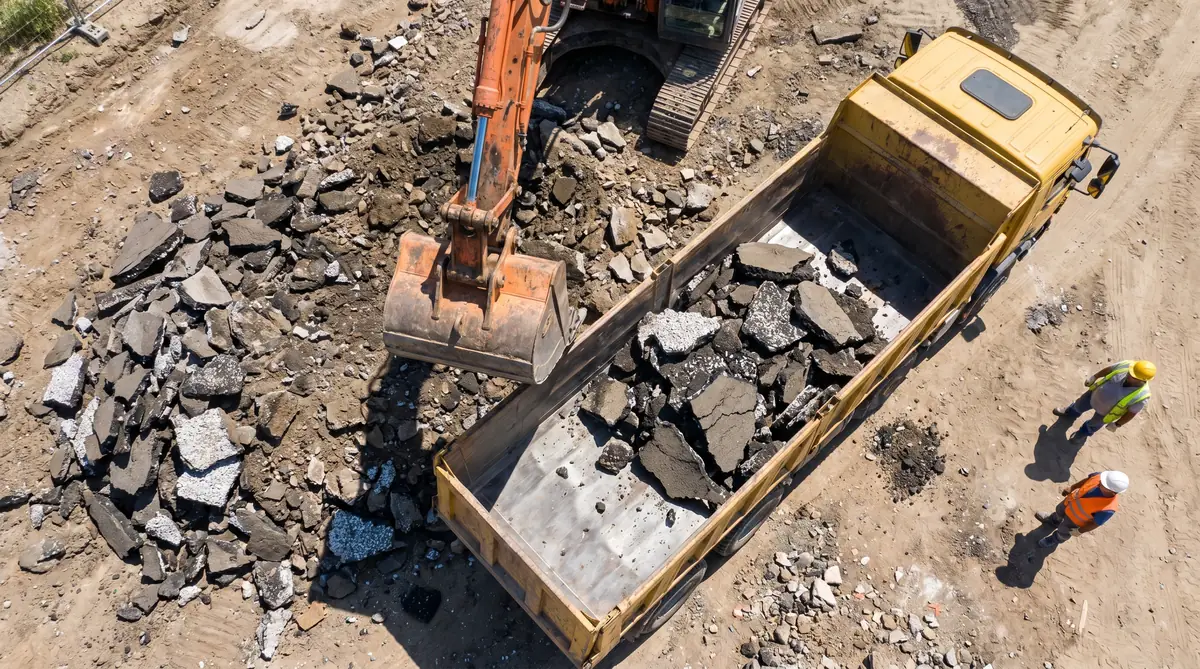
The best options for asphalt disposal near you: (1) asphalt recycling facilities — most accept clean millings and broken slabs free or for $10–$30/ton; (2) your paving contractor — removal and haul-away is usually included in their quote; (3) roll-off dumpster rental — $300–$600 for a 10-yard container; (4) municipal transfer station — accepted as C&D debris at $40–$80/ton. Search Earth911.com with "asphalt pavement" and your zip code to find the nearest facility.
Asphalt Disposal Options — Free vs Paid
| Option | Cost | Best For | Notes |
|---|---|---|---|
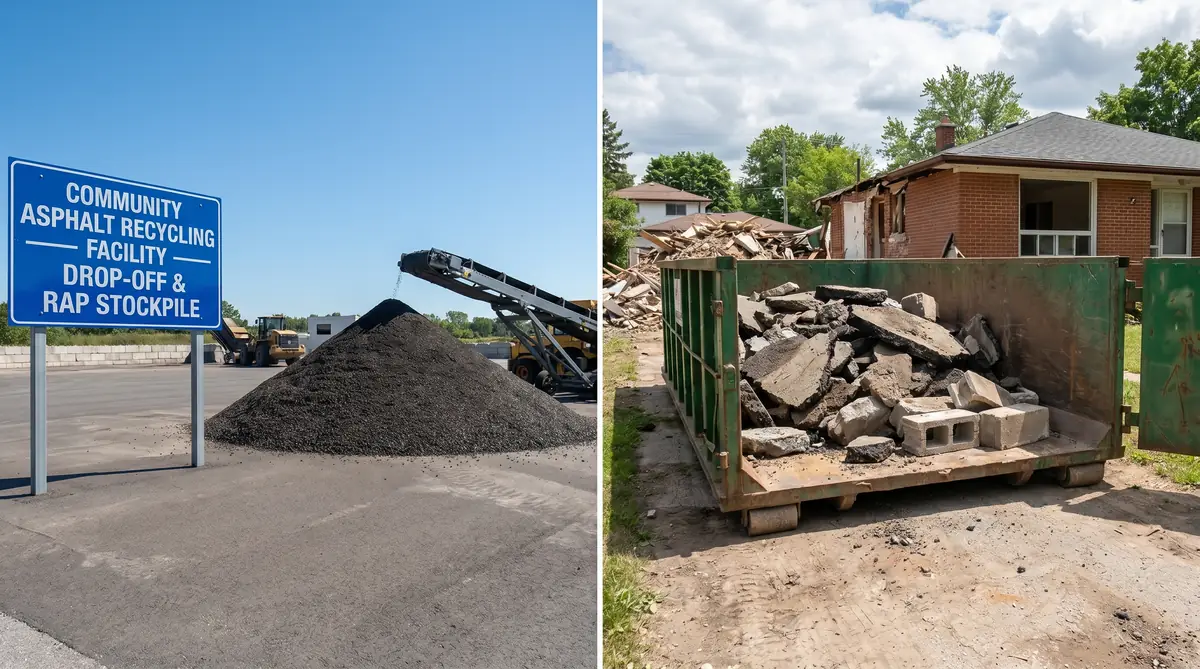
| Asphalt recycling facility (drop-off) | Free – $30/ton | Clean millings, broken slabs | Most economical — asphalt has value as RAP |
| Paving contractor haul-away | Usually included in removal quote | Full driveway/lot removal | Contractor takes it to their facility or a recycler |
| Roll-off dumpster rental | $300–$600 per 10-yd container | DIY removal, small-medium projects | Most flexible — you load on your schedule |
| Junk removal service | $200–$500 per load | Small amounts, no heavy equipment | Team loads and hauls — convenient but expensive per ton |
| Municipal transfer station | $40–$80/ton | Mixed C&D debris | Not all accept asphalt — call ahead to confirm |
| C&D landfill | $40–$80/ton | Last resort | Wasteful and costs more than recycling |
| Give away as millings | Free (you save disposal cost) | Asphalt millings in good condition | Post on Craigslist, Facebook Marketplace, or Nextdoor — millings are in demand for driveways and paths |
How to Find Asphalt Disposal Near You
Asphalt disposal facilities are not always easy to find because they operate under different names — asphalt plants, recycling facilities, C&D recyclers, or transfer stations. Here is how to locate one near you:
- Earth911.com: Search "asphalt pavement" or "asphalt shingles" with your zip code. The most comprehensive recycling locator in the US.
- Call local asphalt paving contractors: Most have a relationship with a nearby plant or recycler and can tell you where they take removed asphalt. Some will accept a load from you directly, especially for millings.
- Search "[your city] asphalt recycling" or "[your city] asphalt plant": Hot mix asphalt plants almost always accept RAP drop-offs — they reuse it in new mixes.
- Contact your county public works department: Many municipalities have C&D recycling programs or can direct you to a permitted facility.
- Ask at a concrete recycler: Many concrete recycling yards also accept asphalt pavement — they process it separately or as part of mixed aggregate.
🗺️ Asphalt Disposal Finder — Pick Your State
Select your state to see landfill rules, typical tipping fees, state agency contacts, and a one-click Earth911 recycler search pre-filled for your area.
Asphalt Disposal Cost Breakdown (2026)
| Method | Typical Volume | Cost Range | Cost Per Ton (Est.) |
|---|---|---|---|
| Recycling facility drop-off | Any | Free – $30/ton | $0–$30 |
| 10-yard roll-off dumpster | ~3–4 tons asphalt | $300–$600 | $75–$150 |
| 20-yard roll-off dumpster | ~6–8 tons asphalt | $450–$800 | $60–$110 |
| 30-yard roll-off dumpster | ~9–12 tons asphalt | $550–$950 | $50–$90 |
| Contractor haul-away (driveway) | 1 driveway (~5–15 tons) | $0–$400 added to removal quote | $0–$50 |
| Junk hauler (small amount) | <1 ton | $150–$350 | $150–$350 |
| C&D landfill tipping fee | Any | $40–$80/ton | $40–$80 |
| Hazardous waste (coal tar asphalt) | Any | $200–$500/ton | $200–$500 |
Can You Put Asphalt in a Dumpster?
Yes — with conditions. Most roll-off dumpster rental companies accept asphalt pavement debris, but the rules vary:
- Clean asphalt pavement (slabs, millings): Accepted by most companies, sometimes at a C&D rate. Confirm the dumpster company sends it to a recycler, not a landfill, if that matters to you.
- Asphalt shingles: Many companies restrict or surcharge shingles — they require separate handling and are harder to recycle. Always ask before mixing shingles and pavement in the same container.
- Asphalt mixed with concrete: Generally accepted but will be charged at mixed C&D rates, which are often higher than clean asphalt rates. If you want to maximize recycling value, keep them separate.
- Coal tar-sealed asphalt: Some dumpster companies will not accept it. Disclose this upfront — improper disposal of hazardous material creates liability for you.
Asphalt Pavement vs Asphalt Shingles — Different Disposal Rules
| Factor | Asphalt Pavement (Driveways, Roads) | Asphalt Shingles (Roofing) |
|---|---|---|
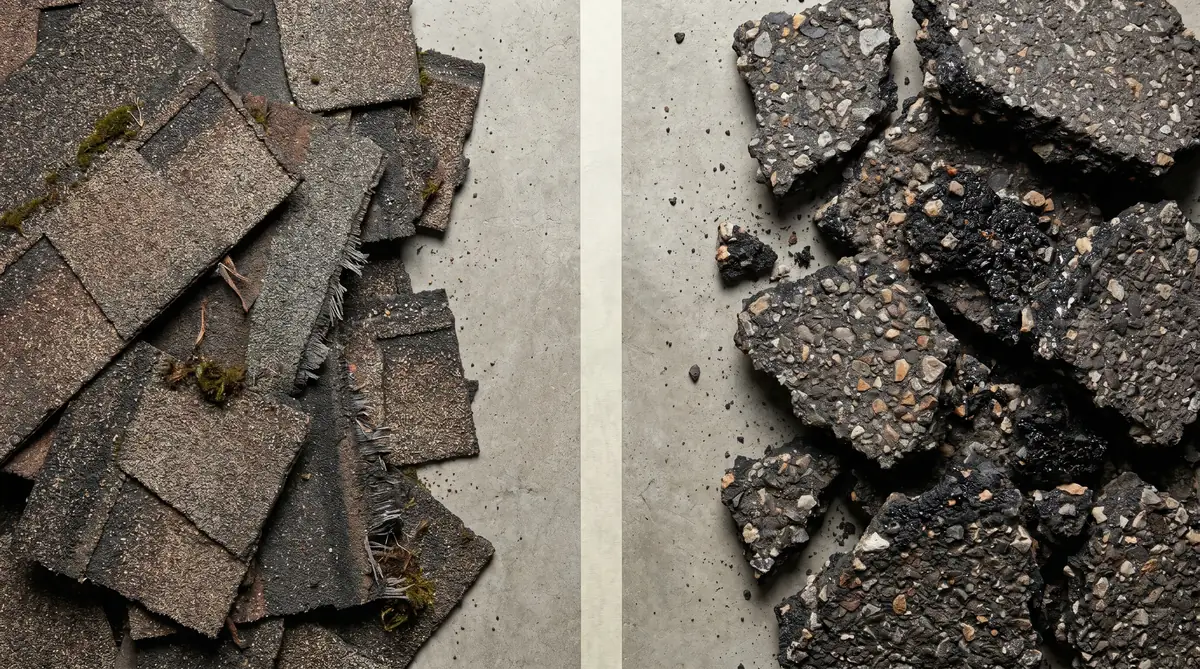
| Recycling availability | Widely accepted — nearly all asphalt plants take RAP | Less common — requires shingle-specific recycler |
| Recycling cost | Free to $30/ton | $30–$80/ton at shingle recyclers |
| Landfill acceptance | Accepted at most C&D landfills | Accepted but some states restrict |
| Dumpster rules | Accepted by most companies | Often restricted or surcharged |
| Hazardous content | Risk only if coal tar sealer was applied | Pre-1980 shingles may contain asbestos — test before disposal |
| Typical weight per square | ~2 tons per 100 sq ft (2-inch slab) | ~240–350 lbs per roofing square (100 sq ft) |
| Recycled into | New HMA mixes as RAP, base aggregate | Pavement mixes, pothole patching, aggregate base |
DIY Haul vs Hiring a Contractor
| Factor | DIY Haul | Hire a Contractor |
|---|---|---|
| Cost | $300–$600 dumpster + your labor | Included in removal quote or $150–$400 added fee |
| Equipment needed | Jackhammer, wheelbarrow, loading labor | None — contractor provides all equipment |
| Speed | 1–3 days for a typical driveway | Hours — crews have skid steers and trucks |
| Best for | Small areas (<500 sq ft), tight budgets | Full driveways, lots, or anywhere access is easy |
| Disposal destination | Your choice — recycler or landfill | Contractor's usual facility — ask where it goes |
| Permit required? | Usually no for residential | Usually no — contractor handles it |
The Coal Tar Hazard — What to Check Before Disposing
Most asphalt pavement is safe to recycle and dispose of as standard C&D debris. The major exception is asphalt that has been sealed with coal tar-based sealcoat. Coal tar contains polycyclic aromatic hydrocarbons (PAHs), which are classified as probable human carcinogens by the EPA and are regulated as hazardous waste in several states.
Asphalt-based (petroleum-based) sealers are a different product and are safe to recycle normally. If you are unsure which type was applied, a simple test kit can distinguish coal tar from asphalt-based sealers — available at environmental testing suppliers for around $30.
What Happens to Disposed Asphalt
Clean asphalt pavement that goes to a recycling facility is processed into reclaimed asphalt pavement (RAP) — crushed, screened, and stockpiled for reuse. RAP is one of the most recycled materials in the US by volume. It gets used in:
- New hot mix asphalt: RAP replaces 10–40% of virgin aggregate and binder in new HMA — reducing material cost and environmental impact
- Cold mix patch material: RAP-based pothole patch products used for emergency repairs
- Base and sub-base aggregate: Processed RAP as a granular base layer under new pavement or for gravel driveways
- Road shoulder and unpaved surface stabilization: Millings spread and compacted as a low-cost driveway or parking surface
For a deeper look at how RAP is processed and where to find recycling facilities, see our full asphalt recycling near me guide.
State Landfill Rules — Can Asphalt Go to a Landfill?
Quick regional summary below — for a full 50-state breakdown with one-click recycler search, use the asphalt disposal finder above.
| State / Region | Asphalt Pavement in Landfill | Asphalt Shingles in Landfill | Notes |
|---|---|---|---|
| California | Restricted — recycling required for clean C&D asphalt | Accepted with surcharge at many facilities | CalRecycle mandates diversion of C&D materials |
| Texas | Accepted at C&D facilities | Accepted | No statewide ban — check local facility rules |
| Florida | Accepted at C&D facilities | Accepted | Some counties have recycling incentives |
| New York | Accepted — recycling preferred | Accepted | NYC has specific C&D debris regulations |
| Midwest (IL, OH, MI) | Accepted at most C&D facilities | Accepted — coal tar issue common in this region | Coal tar sealers widely used historically — verify before recycling |
| Pacific Northwest (WA, OR) | Accepted — recycling strongly encouraged | Shingle recycling programs available | Some facilities offer reduced rates for clean asphalt |
Asphalt Disposal FAQs
Where can I dispose of old asphalt near me?
Best options: asphalt recycling facilities (free–$30/ton), your paving contractor's haul-away (usually included), roll-off dumpster ($300–$600 for 10 yards), or a municipal transfer station ($40–$80/ton). Search Earth911.com with "asphalt pavement" and your zip code to find the nearest facility.
Is asphalt disposal free?
Clean pavement millings and slabs are often free at asphalt recycling facilities because they have value as RAP. Some charge $10–$30/ton. Shingles are almost always charged at $30–$80/ton. Landfill disposal is never free — $40–$80/ton for C&D debris.
Can I put asphalt in a dumpster?
Yes — clean asphalt pavement is accepted by most dumpster companies. Shingles are often restricted or carry a surcharge. Never mix with concrete if you want recycling rates. Disclose coal tar-sealed asphalt before booking — some companies won't accept it.
How much does asphalt disposal cost?
$0–$30/ton at recycling facilities for clean pavement. $300–$600 for a 10-yard dumpster holding 3–4 tons. $40–$80/ton at C&D landfills. Contractor haul-away is typically included in removal quotes or runs $150–$400 for a standard driveway load.
Can asphalt go in a landfill?
Clean asphalt is accepted at most C&D landfills. California restricts it to encourage recycling. Coal tar-sealed asphalt may be classified as hazardous and require special disposal. Always call ahead and confirm acceptance before hauling.
How do I dispose of asphalt shingles?
Shingle-specific recycling facilities (search Earth911.com), C&D landfills at standard rates, or contractor tear-off disposal. Pre-1980 shingles may contain asbestos — have them tested before disposal. Never grind or break suspected asbestos-containing shingles.