
Asphalt Paving Machine — Types, How They Work & What They Cost (2026)
Quick Answer
An asphalt paving machine (also called a paver or finisher) receives hot mix from a dump truck, spreads it via a conveyor and auger, then levels it with a heated screed. There are four main types: highway pavers, parking lot pavers, mini pavers, and hand screeds. Rental costs range from $400/day for a mini paver to $3,500/day for a full highway paver — most projects are better served by hiring a contractor who owns the machine.
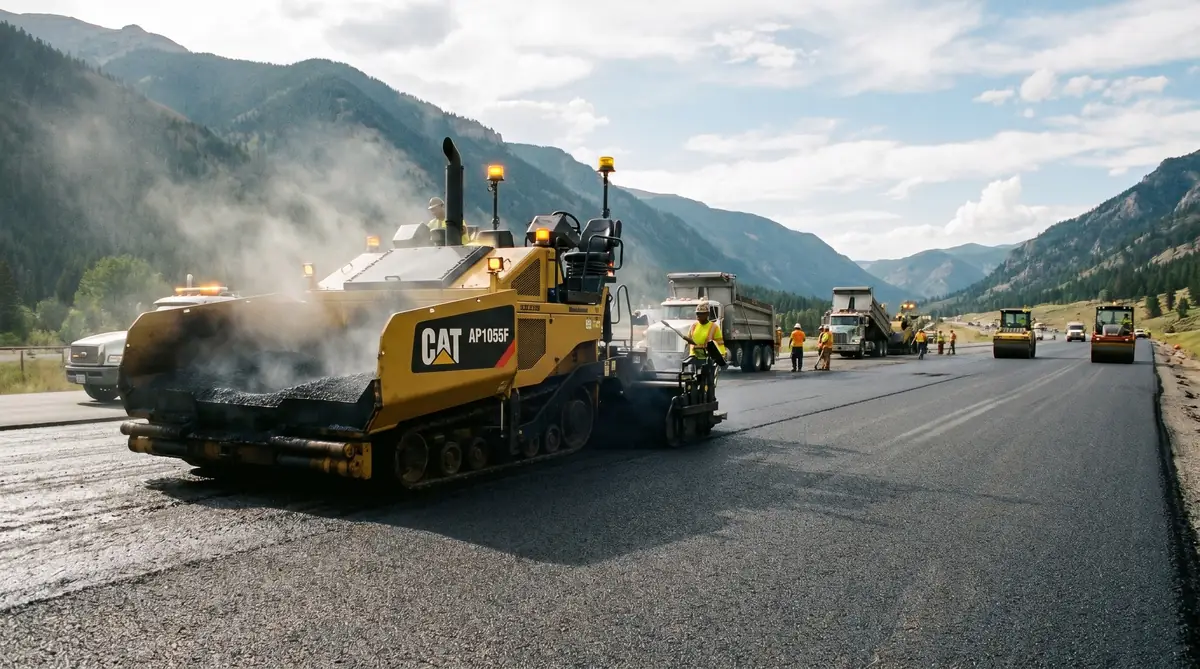
How an Asphalt Paving Machine Works
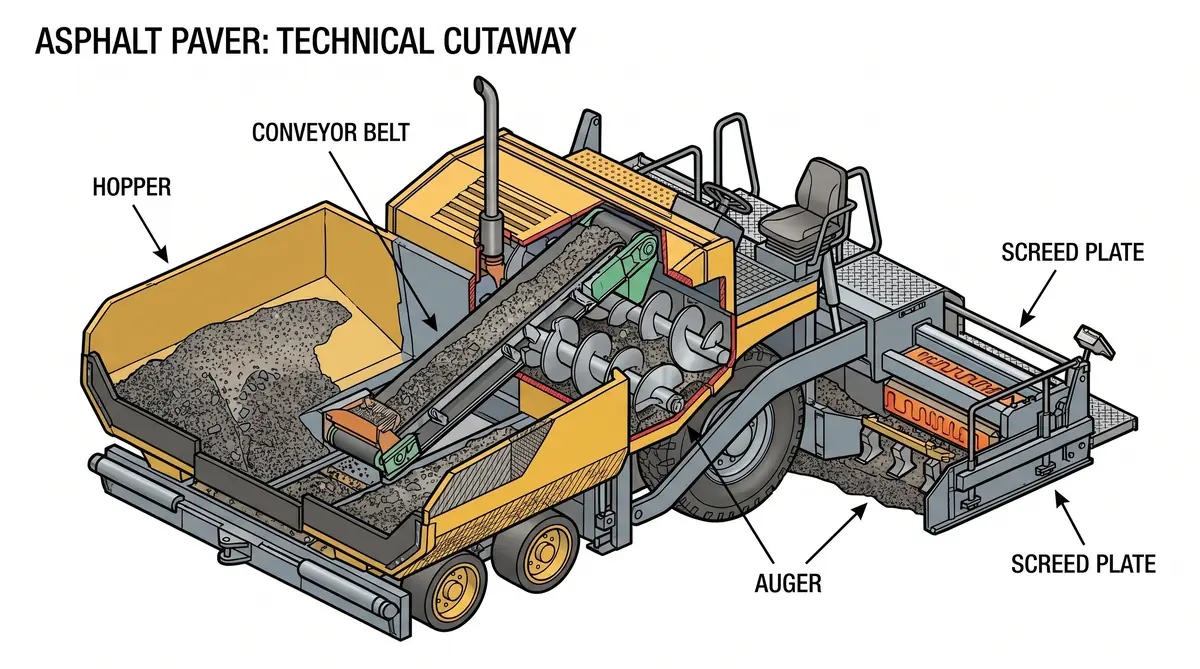
Despite looking like one continuous operation, a paving machine does four distinct jobs simultaneously as it creeps forward at 15–50 ft/min:
Asphalt Paving Machine Types
The right machine depends on project width, tonnage, and site access.
| Type | Paving Width | Typical Use | Daily Output |
|---|---|---|---|
| Highway Paver | 8–30 ft (extendable) | Roads, highways, runways | 2,000–6,000 tons/day |
| Parking Lot Paver | 6–16 ft | Commercial lots, driveways | 500–2,000 tons/day |
| Mini Paver | 2–6 ft | Pathways, bike lanes, patches | 50–300 tons/day |
| Hand Screed | 2–4 ft | Repairs, confined spaces | 5–40 tons/day |
For large projects, use our Asphalt Tonnage Calculator to estimate how much HMA the machine will need to lay before the job starts.
Tracked vs Wheeled Asphalt Pavers
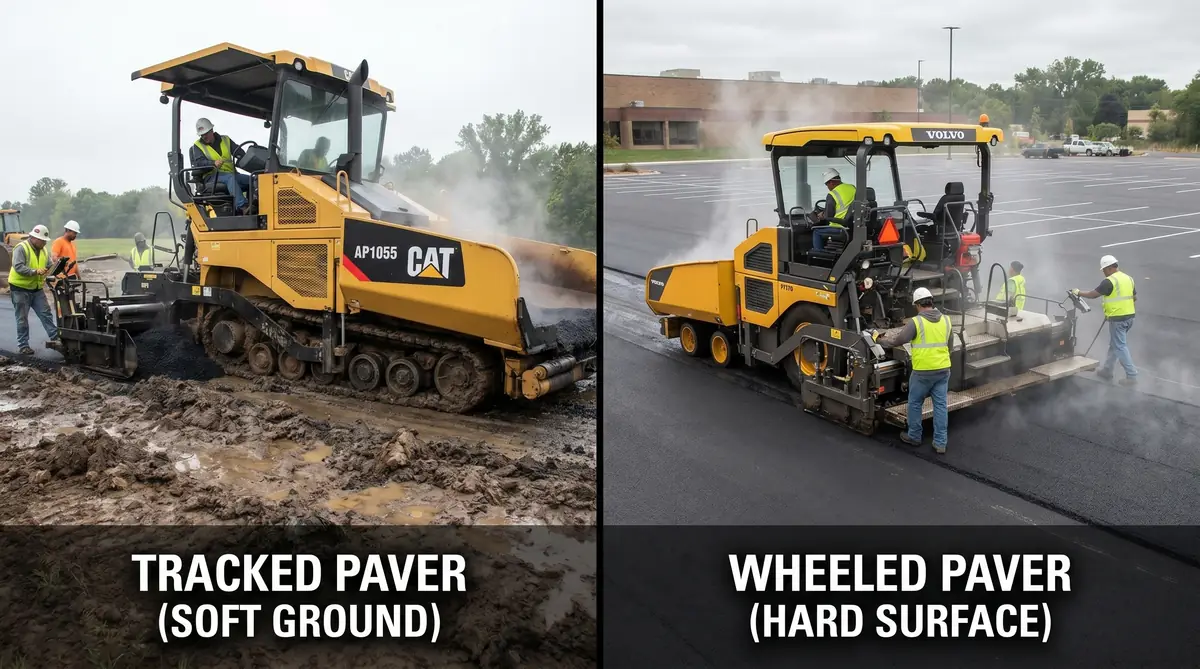
Both deliver the same end result but have different strengths depending on site conditions.
| Feature | Tracked Paver | Wheeled Paver |
|---|---|---|
| Traction | Excellent on soft/steep ground | Good on firm, level ground |
| Sub-base disturbance | Higher — can disturb loose sub-base | Lower — less ground pressure per point |
| Maneuverability | Moderate — slower to turn | Better — tighter turning radius |
| Paving speed | Slightly slower | Slightly faster |
| Best for | Highways, slopes, rural roads | Parking lots, commercial paving |
| Purchase price | $180,000–$650,000 | $120,000–$450,000 |
Key Specs to Know Before Hiring a Machine or Contractor
When reviewing contractor quotes or rental specs, these are the numbers that matter:
- Base paving width: The minimum width without extensions. A 6 ft base covers a standard driveway lane in a single pass.
- Maximum paving width: How far screeds extend. A highway paver can extend to 30 ft+ for wide roads.
- Screed type: Fixed screeds are simpler; extendable screeds (hydraulic or mechanical) allow width adjustment on the fly.
- Laydown rate: Tons per hour the machine can process. Underfeed the machine and you get segregation; overfeed and the screed bogs down.
- Mat thickness range: Most commercial pavers lay 1–8 inches. Thin lifts (under 1.5 in) are hard to compact without cooling too fast.
- Engine power: 75–300 HP depending on size. More power = more reserve for high laydown rates in cold weather.
Major Asphalt Paving Machine Brands
A handful of manufacturers dominate the global market. Rental fleets in North America are largely Volvo, Cat, and Roadtec.
| Brand | Notable Models | Typical Base Width | Known For |
|---|---|---|---|
| Volvo CE | P4370B, P6820C, P8820C | 8–16 ft | Screed quality, fuel efficiency |
| Caterpillar | AP300F, AP600F, AP1055F | 8–20 ft | Build durability, dealer network |
| Roadtec | RP-175, RP-195, RP-250 | 8–20 ft | Anti-segregation technology |
| Dynapac | F1200CS, F5000CS | 6–16 ft | Precision screed control |
| Bomag | BF 300 C, BF 700 C | 5–16 ft | Compact pavers, European market |
| Wirtgen (Vögele) | Super 1303-3i, Super 3000-3i | 8–40 ft | Highway-scale output, wide screeds |
2026 Asphalt Paving Machine Rental Costs
Rental rates below are for the machine only — operator, fuel, delivery, and hot mix are additional costs.
| Machine Type | Daily Rate | Weekly Rate | Operator Cost/Day |
|---|---|---|---|
| Hand screed / walk-behind | $150–$350 | $600–$1,200 | $350–$500 |
| Mini paver (2–6 ft) | $400–$700 | $1,400–$2,400 | $400–$600 |
| Parking lot paver (6–14 ft) | $800–$1,500 | $2,800–$5,000 | $500–$750 |
| Highway paver (14 ft+) | $1,500–$3,500 | $5,000–$11,000 | $600–$900 |
Buy vs Rent vs Hire — When Each Makes Sense
| Option | Best For | Approximate Cost |
|---|---|---|
| Hire a contractor | Homeowners, single projects | Included in project quote |
| Rent a paver | Municipal crews, 1–2 jobs/year | $400–$3,500/day + operator |
| Buy used | Small paving company (5+ jobs/year) | $15,000–$120,000 (used) |
| Buy new | Established paving contractor | $120,000–$650,000 |
Once you know the machine cost is factored in, use our Paving Cost Calculator to estimate the full project cost including materials and labor.
The Role of Tack Coat Before Paving
Before the machine lays any asphalt, a tack coat (emulsified asphalt sprayed on the existing surface) is applied to bond the new lift to the layer below. Without it, the new mat can slide or delaminate under traffic. Use our Tack Coat Calculator to estimate how much emulsion you need per square yard before paving begins.
For material pricing ahead of your project, see our Hot Mix Asphalt Price Per Ton guide and learn where the mix is produced in our Asphalt Mixing Plant breakdown.
If you're specifying a high-performance mix for a highway or heavy-load surface, see Stone Matrix Asphalt — the mix type specifically designed to resist rutting under highway pavers.
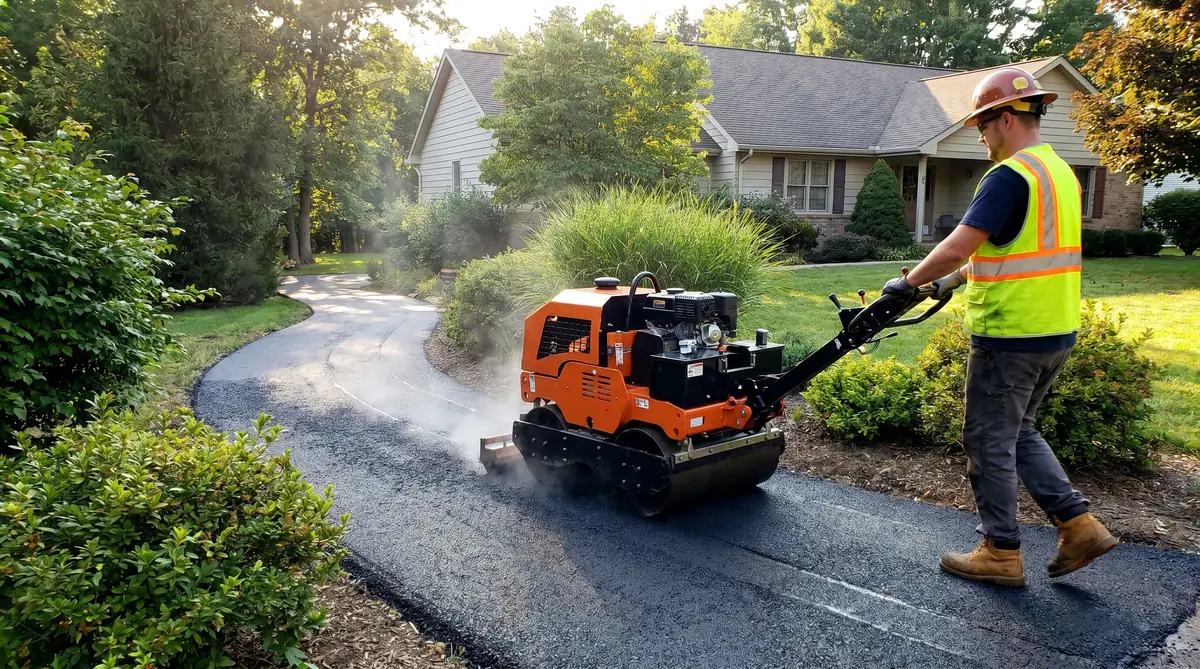
Compaction: What the Paver Doesn't Finish
The screed achieves roughly 70–80% of required density. The remaining compaction is done by steel drum rollers immediately behind the machine while the mat is still above 175°F (80°C). A typical rolling train uses:
- Breakdown roller (steel drum, 8–12 tons) — first pass for initial compaction
- Intermediate roller (pneumatic tire, 12–25 tons) — kneads the mix to eliminate voids
- Finish roller (steel drum, 8–12 tons) — removes tire marks, smooths surface
The window is tight. Once mat temperature drops below 175°F, the mix becomes too stiff to compact properly and you risk permanent under-compaction — the leading cause of early cracking and raveling.
Frequently Asked Questions
What is an asphalt paving machine?
An asphalt paving machine (paver or finisher) is a self-propelled machine that receives hot mix asphalt from a truck, spreads it uniformly across a set width using a conveyor and auger, and levels it with a heated floating screed. Roller compactors follow to finish the job.
How much does it cost to rent an asphalt paving machine?
Mini pavers rent for $400–$700/day. Parking lot-sized pavers run $800–$1,500/day. Full highway pavers cost $1,500–$3,500/day. These rates exclude operator, fuel, and delivery. Most residential and commercial jobs are better handled by hiring a contractor who brings their own equipment.
What is the difference between a tracked and wheeled asphalt paver?
Tracked pavers have better traction on soft, steep, or uneven terrain and are preferred for highway work. Wheeled pavers maneuver more easily, cause less sub-base disturbance on firm surfaces, and are common for parking lots and commercial paving.
What are the main parts of an asphalt paver?
The receiving hopper (holds dump truck load), conveyor (moves mix to rear), auger (spreads mix across the width), screed (levels and partially compacts the mat), and the traction unit (tracks or wheels). The screed is the most critical — screed quality directly determines mat smoothness and rideability.
Can you rent an asphalt paver for a driveway?
You can, but it rarely saves money. Renting a mini paver plus operator, delivery, and roller comes to $3,000–$6,000+ for a typical driveway — often more than a contractor quote that includes hot mix delivery and a professional crew. The DIY option only makes sense for large self-performed municipal or commercial projects.