
Best Asphalt Sealer & Sealant (2026) — Top 7 Products Reviewed & Ranked
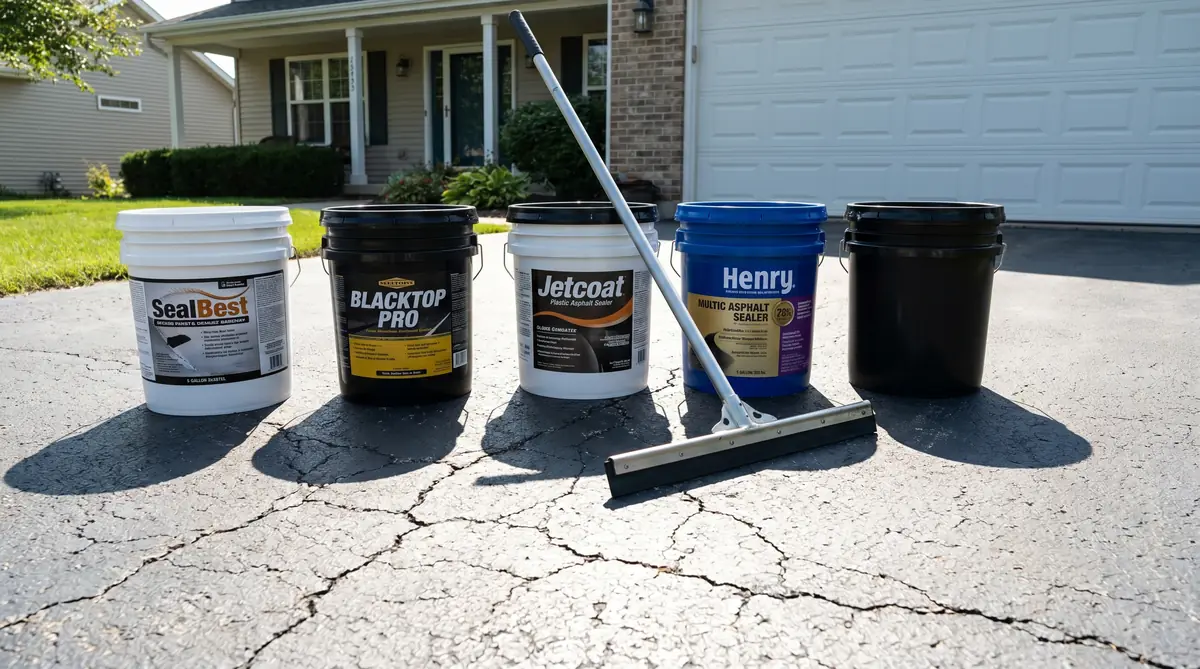
Quick Picks
Best Overall: Latex-ite Airport Grade Driveway Filler & Sealer — covers 250–500 sq ft, fills fine cracks, widely available.
Best Penetrating: Armor AR350 — soaks in, no surface film, preserves natural look.
Best Budget: Jetcoat Farm & Ranch — lowest cost per sq ft, solid protection for large driveways.
Best Crack Sealant: Sikaflex Self-Leveling Polyurethane — stays flexible, flows into irregular cracks.
Sealer vs Sealant — Two Different Products
Before buying, make sure you're getting the right product. These terms are often confused:
| Asphalt Sealer | Asphalt Sealant | |
|---|---|---|
| What it does | Protective surface coating over the entire driveway | Flexible filler for cracks and joints only |
| How applied | Squeegee, brush, or spray across full surface | Caulk gun, pour pot, or trowel into specific cracks |
| Texture after cure | Thin film, dark protective coat | Flexible, rubberized — moves with thermal expansion |
| When to use | Every 3–5 years on the full surface | Immediately when any crack over 1/8 inch appears |
| Products | Latex-ite, Armor, Jetcoat, Gardner, Rust-Oleum | Sikaflex, Quikrete, Crafco, Latex-ite Trowel Patch |
The correct workflow: fill cracks with sealant first → let cure 24 hours → apply sealer over the full surface. Most homeowners need both products.
Top 7 Best Asphalt Driveway Sealers
Latex-ite Airport Grade Driveway Filler & Sealer
Asphalt emulsion with crack-filling solids — the most complete single-product solution
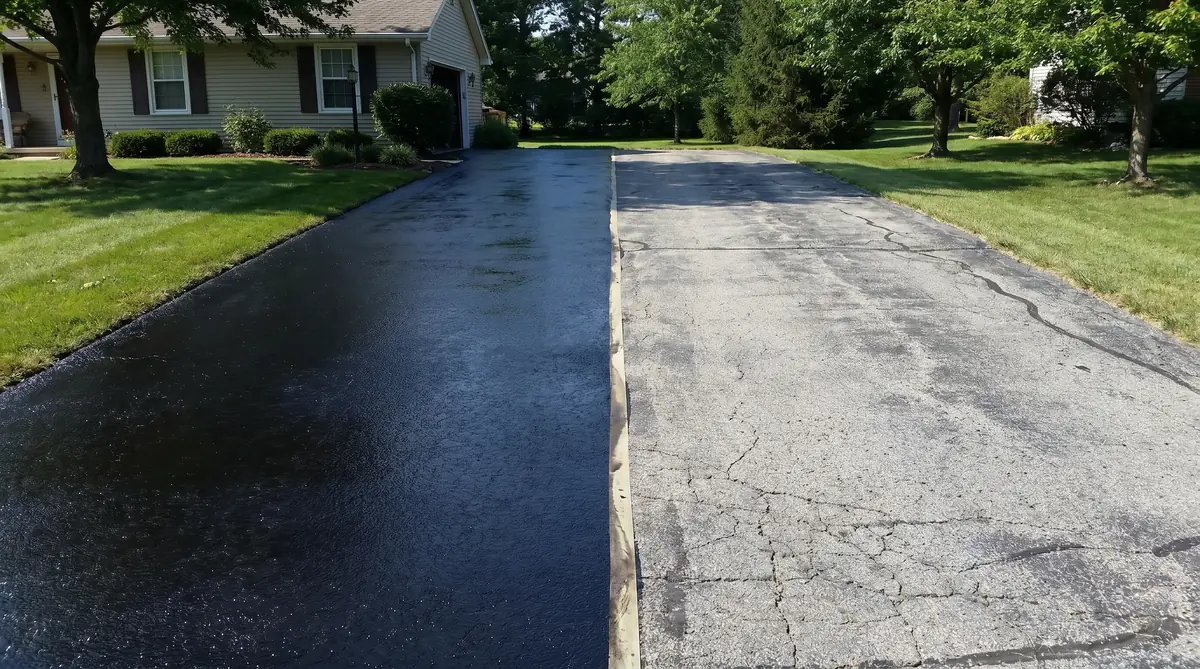
Latex-ite Airport Grade is the go-to for most residential driveways. Its higher solids content (compared to standard Latex-ite) means it fills hairline cracks as it seals, eliminating the need for a separate crack-fill step on lightly cracked surfaces. Available at Home Depot nationwide, it applies cleanly with a squeegee and dries to a uniform matte black finish.
Pros
- Widely available, easy to find
- Fills fine cracks while sealing
- Good coverage per can
- Water-based, low odor
- Works well in 2-coat system
Cons
- Not for cracks over 1/4 inch
- Shorter protection than coal tar
- Needs re-application every 2–4 yrs
Armor AR350 Solvent-Based Penetrating Asphalt Sealer
Deep-penetrating acrylic — seals from inside without a surface film
Armor AR350 penetrates into the asphalt matrix rather than sitting on top as a film. It strengthens the binder from within, making it ideal for porous or older driveways that absorb surface sealers too quickly. The cured surface looks natural — no glossy or plastic-like sheen — making it popular for homeowners who want protection without a color change.
Pros
- Penetrates — won't peel or flake
- Preserves natural surface appearance
- Longer protection interval
- Excellent for porous/aged asphalt
Cons
- Higher cost per gallon
- Solvent-based — strong odor
- Not available in all stores
- Doesn't darken surface dramatically
Rainguard Micro-Seal Penetrating Asphalt Sealer
Silane-siloxane hybrid — deep penetration for porous, weathered surfaces
Rainguard Micro-Seal uses a silane-siloxane chemistry that bonds chemically with the asphalt substrate rather than coating it. It excels on driveways 10+ years old that have opened up significantly in porosity. Water beads aggressively after application with no surface sheen whatsoever — ideal for driveways where owners want maximum protection with zero visible change.
Pros
- Longest protection interval (4–6 yrs)
- Completely invisible after cure
- Chemically bonds — won't peel
- Excellent freeze-thaw protection
Cons
- Expensive per gallon
- Low coverage rate on porous surfaces
- Must be re-applied if surface is resurfaced
Gardner 10-Year Driveway Filler & Sealer
High-solids emulsion — best for driveways with moderate cracking
Gardner's high-solids formula is the best value filler-sealer combo on the market. The "10-year" claim is marketing — realistic protection is 3–5 years — but the high filler content genuinely bridges cracks up to 3/8 inch wide without separate treatment. Good spreadability with a squeegee and a consistent dark finish. Widely available at Lowe's and True Value.
Pros
- Fills cracks up to 3/8 inch
- Good coverage per can
- Affordable price point
- Easy squeegee application
Cons
- "10-year" claim is overstated
- Thicker consistency — harder to apply in cold
- Can build up if over-applied
Rust-Oleum EpoxyShield Blacktop Coating
Epoxy-enhanced formula — toughest film for commercial or heavy-traffic driveways
Rust-Oleum EpoxyShield adds a cross-linked epoxy component to the standard asphalt emulsion base. The result is a harder, more abrasion-resistant surface film that holds up to frequent vehicle traffic, turning radius stress, and fuel/oil drips better than plain emulsion sealers. Best choice for driveways that see heavy daily use, tight turning movements, or vehicles that leak oil regularly.
Pros
- Harder, more durable film
- Better fuel and oil resistance
- Longer interval between applications
Cons
- More expensive than plain emulsion
- Can look glossy — not everyone's preference
- Harder to apply at lower temps
Jetcoat Farm & Ranch Driveway Sealer
Economy asphalt emulsion — lowest cost per sq ft for large driveways
Jetcoat offers the highest coverage per dollar of any sealer on this list. The thinner formula spreads easily with a squeegee and delivers adequate UV and water protection for driveways in mild climates. Not the best for harsh freeze-thaw environments or heavily cracked surfaces, but for a large, mostly sound driveway in a moderate climate, it's the most economical choice.
Pros
- Lowest cost per sq ft
- High coverage — great for large areas
- Easy to apply, thin consistency
Cons
- Shorter protection interval
- Lower solids — not for cracked surfaces
- Not ideal for cold climates
Foundation Armor SX5000 Silane-Siloxane Sealer
Professional-grade water repellent — invisible, maximum depth penetration
Foundation Armor SX5000 is a contractor-grade product used on concrete, brick, and asphalt. Its 40% silane-siloxane concentration delivers deeper penetration than consumer-grade alternatives. Extremely low coverage rate on porous asphalt means high material cost, but the 5–7 year protection interval makes the math work on large projects. Available online only — not stocked in big-box stores.
Pros
- Longest lasting (5–7 years)
- Professional-grade concentration
- Works on asphalt and concrete
- Completely invisible finish
Cons
- Highest cost per gallon
- Very low coverage on porous asphalt
- Online only — no local pickup
Best Seal Coating Products Comparison
This best seal coating products comparison covers the five main sealcoating types available to homeowners and contractors — ranked by cost, coverage, durability, and ideal use case so you can match the right product to your specific driveway.
| Type | Cost/Gal | Coverage | Finish | Lifespan | Best For |
|---|---|---|---|---|---|
| Asphalt emulsion | $8–$15 | 250–500 sq ft | Matte dark black | 2–4 years | Most residential driveways |
| Coal tar emulsion | $10–$18 | 250–400 sq ft | Matte black | 4–6 years | Commercial; where permitted |
| Acrylic penetrating | $40–$80 | 200–400 sq ft | Natural / slight sheen | 3–5 years | Porous, aged driveways |
| Silane-siloxane | $60–$90 | 100–250 sq ft | Invisible | 5–7 years | Max protection, no appearance change |
| Epoxy-enhanced | $12–$20 | 250–400 sq ft | Semi-gloss black | 4–5 years | High-traffic, fuel-exposed driveways |
Top 4 Best Asphalt Crack Sealants
Sika Sikaflex Self-Leveling Polyurethane Sealant
Flows into irregular cracks, stays permanently flexible
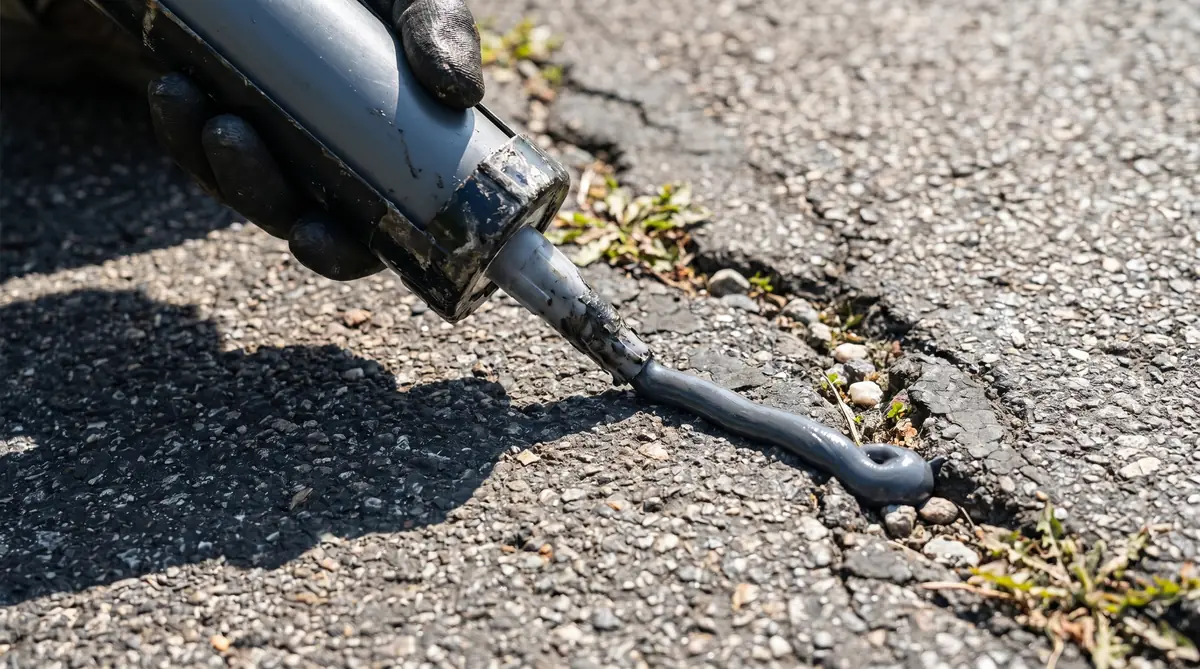
Sikaflex is the professional standard for horizontal joint and crack sealing. The self-leveling formula flows under gravity into uneven crack profiles, eliminating air voids without tooling. Cures to a flexible polyurethane that expands and contracts with the asphalt through freeze-thaw cycles without debonding. Available in black — blends with asphalt surface after cure.
Quikrete Polyurethane Non-Sag Crack Sealant
Caulk-gun applied, non-sag — for cracks on slopes and vertical faces
Quikrete's non-sag version is ideal for wider cracks or any crack on a sloped section where self-leveling products would run. Applied with a standard caulk gun, tooled flush with a putty knife, and paintable after 24-hour cure. Use a foam backer rod in cracks deeper than 1/2 inch before applying.
Latex-ite Trowel Patch
Rubberized trowel compound for larger voids, spalls, and edge repairs
Latex-ite Trowel Patch bridges the gap between crack filler and cold patch. It's the right product for surface spalls, wide shallow voids, and areas with surface delamination — conditions where liquid sealant is too thin and cold patch is overkill. Apply 1/4–1/2 inch thick, smooth with a trowel, and feather edges. Walk-on in 2 hours, vehicle traffic after 24 hours.
Crafco Polyflex Hot-Applied Crack Sealant
Hot-pour rubberized asphalt — the professional road repair standard
Crafco Polyflex is what road crews use — a rubberized asphalt applied hot from a melting kettle or pour pot. It flows perfectly into any crack profile, bonds on contact, and cures in minutes. For homeowners, this means hiring a contractor with the equipment; but if you're sealing a long driveway or private road with many cracks, the professional result is worth the cost. Longer-lasting than any cold-applied product.
How to Choose the Right Product
| Your Situation | Best Choice |
|---|---|
| Standard residential driveway, light cracking | Latex-ite Airport Grade (sealer) + Sikaflex (cracks) |
| Older driveway, very porous surface | Armor AR350 or Rainguard Micro-Seal (penetrating) |
| Large driveway, tight budget | Jetcoat Farm & Ranch + Quikrete crack sealant |
| Heavy vehicle traffic, oil drips | Rust-Oleum EpoxyShield |
| Want invisible protection, no color change | Foundation Armor SX5000 or Rainguard Micro-Seal |
| Cracks under 3/4 inch on flat surface | Sikaflex Self-Leveling Sealant |
| Cracks on sloped or vertical surface | Quikrete Non-Sag Polyurethane |
| Surface spalls and wide shallow voids | Latex-ite Trowel Patch |
Application Tips
- Surface prep is everything. Sweep, degrease oil stains, and blow out cracks with compressed air. Sealer applied to a dirty surface will peel within months.
- Fill cracks first. Apply sealant to all cracks over 1/8 inch and allow 24-hour cure before sealing the full surface.
- Temperature window: 65–85°F. Below 50°F, water-based sealers won't film-form. Above 90°F, they dry too fast and leave squeegee marks.
- Two thin coats beat one thick coat. Apply the first coat, let dry 24 hours, then apply the second at 90 degrees to the first for even coverage.
- Block traffic for 24–48 hours after the final coat. Set up sawhorses or cones the night before.
- Edge to edge, not center out. Start at the far edge and work backward toward the street — never paint yourself into a corner.
- Sealing new asphalt too early — wait minimum 90 days, ideally 6–12 months. Sealing too early traps residual oils and prevents proper cure.
- Over-sealing — more than one application every 3 years builds up a brittle layer that cracks and peels. More is not better.
- Coal tar in restricted areas — coal tar sealer is banned in several states (MN, WA) and many municipalities. Check local regulations before purchasing.
- Sealing over structural damage — sealcoat hides alligator cracking and potholes without fixing them. Address structural issues first.
Frequently Asked Questions
What is the best asphalt sealer?
Latex-ite Airport Grade is the best overall for most residential driveways — widely available, good coverage, and fills fine cracks. For penetrating protection without changing the surface look, Armor AR350 or Foundation Armor SX5000 are top choices. For budget, Jetcoat Farm & Ranch has the lowest cost per sq ft.
What is the difference between asphalt sealer and asphalt sealant?
Sealer is a surface coating applied over the entire driveway every 3–5 years. Sealant is a flexible crack filler applied into specific cracks and joints. You typically need both: sealant in the cracks first, then sealer over the full surface after 24 hours.
How often should you seal an asphalt driveway?
Every 3–5 years. Sealing more than once every 3 years builds up excessive layers that crack and peel. Signs it's time: gray surface, fine cracking, water no longer beads on the surface. Never seal new asphalt less than 90 days old.
Is coal tar or asphalt emulsion sealer better?
Coal tar lasts longer (4–6 years) and is more fuel-resistant, but is banned in several states and carries environmental/health concerns. Asphalt emulsion is safer, easier to apply, and adequate for most residential use lasting 2–4 years. For most homeowners, asphalt emulsion is the practical choice.
Can you apply asphalt sealer yourself?
Yes. Clean and degrease first, fill all cracks, let cure 24 hours, then apply sealer in two thin coats 24 hours apart. Block the driveway for 24–48 hours after the final coat. A 600 sq ft driveway takes 4–6 hours total and costs $80–$200 in materials.
What temperature is needed to apply asphalt sealer?
50°F minimum, ideally 65–85°F with no rain in the 24-hour forecast and low humidity. Below 50°F, water-based sealers won't cure properly. Above 90°F, they dry too fast and leave marks. Morning application on a warm day is ideal.
How many coats of asphalt sealer do you need?
Two coats for full protection. Apply the first coat, wait 24 hours, then apply the second at 90 degrees to the first pass for even coverage. One-coat formulas with higher solids content may be adequate on a well-prepared surface.
What is the best asphalt crack sealant?
Sikaflex Self-Leveling Polyurethane for cracks on flat surfaces (flows in, stays flexible). Quikrete Non-Sag for cracks on slopes. Latex-ite Trowel Patch for wider spalls and voids. Crafco Polyflex for professional hot-applied results.