
Recycled Asphalt Driveway — Cost, Pros & Cons, Installation & How It Compares (2026)
Quick Answer
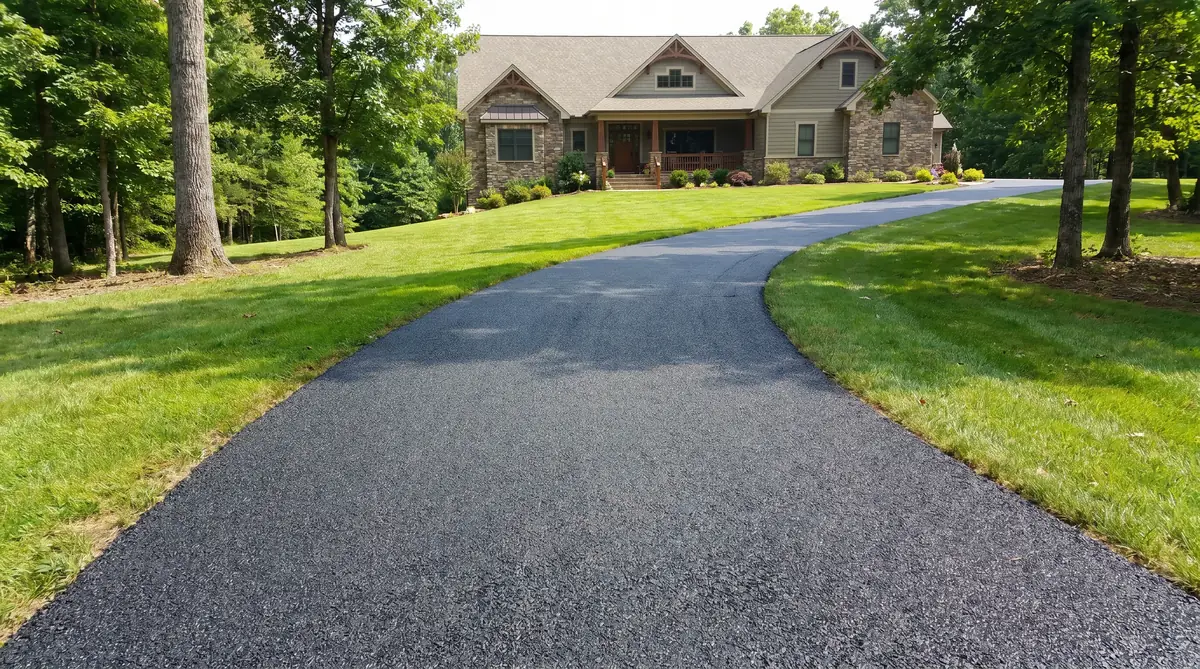
A recycled asphalt driveway uses reclaimed asphalt pavement (RAP) — ground-up old road and driveway material — compacted into a durable, semi-rigid surface. Installed cost runs $0.50–$2.00 per sq ft vs $3–$7 for new asphalt. It self-cements over time, lasts 20–30 years with maintenance, and is one of the most cost-effective driveway surfaces available.
What Is a Recycled Asphalt Driveway?
Recycled asphalt — also called reclaimed asphalt pavement (RAP) or asphalt millings — is the material produced when old asphalt roads, parking lots, and driveways are ground up by a cold milling machine during resurfacing projects. Instead of going to landfill, the material is stockpiled and sold as a low-cost paving base or surface material.
What makes RAP unique among recycled materials is its self-cementing property: it still contains residual bitumen binder from the original pavement. When compacted — especially in warm weather — that binder reactivates and causes the RAP particles to bond together, creating a surface that's significantly firmer than gravel and approaches the feel of old asphalt.
Recycled Asphalt Driveway Pros & Cons
Pros
- Dramatically lower cost than new asphalt or concrete
- Self-cements into a semi-rigid surface over time
- Less dust and scatter than gravel
- Handles freeze-thaw cycles better than loose stone
- Environmentally friendly — diverts waste from landfill
- Easy DIY installation with rented plate compactor
- Can be repaired with additional millings at any time
- Widely available near most metro areas
- Softens and re-cements after hot summers — self-heals minor surface defects
- No curing wait time — usable immediately after compaction
Cons
- Not as smooth or hard as new asphalt or concrete
- Can soften and rut in extreme heat (90°F+) during first summer
- Residual petroleum odor initially (fades within weeks)
- May not be permitted near wells or sensitive drainage areas
- Weed growth along edges requires ongoing control
- Appearance is rougher and less uniform than new paving
- Material quality varies — darker = more binder = better
- Requires re-compaction or top-dressing every 3–5 years
Cost Breakdown
The following costs are based on a standard 2-car driveway (20 ft × 30 ft = 600 sq ft) in a mid-Atlantic US market. Prices vary by region and material availability.
| Cost Item | DIY | Pro-Installed | Notes |
|---|---|---|---|
| RAP material (6 tons) | $60–$150 | $60–$150 | $10–$25/ton; 6 tons covers 600 sq ft at 3" compacted |
| Delivery | $80–$200 | Included | Dump truck delivery; less if you haul yourself |
| Crushed stone base (4") | $150–$300 | $150–$300 | 4–6 tons #57 stone or crusher run |
| Excavation (6–8") | $0 (manual) | $200–$500 | Mini-excavator rental $300–$400/day if DIY |
| Plate compactor rental | $70–$120/day | Included | 2 passes per lift required |
| Edging / landscape fabric | $50–$100 | $100–$200 | Optional but extends driveway life significantly |
| Total (600 sq ft) | $410–$870 | $600–$1,200 | $0.68–$2.00/sq ft installed |
For comparison: new hot mix asphalt for the same 600 sq ft driveway runs $1,800–$4,200 installed ($3–$7/sq ft). Concrete runs $4,200–$8,400 ($7–$14/sq ft).
Recycled Asphalt vs Other Driveway Surfaces
| Surface | Installed Cost/sq ft | Lifespan | Maintenance | Appearance | DIY-Friendly |
|---|---|---|---|---|---|
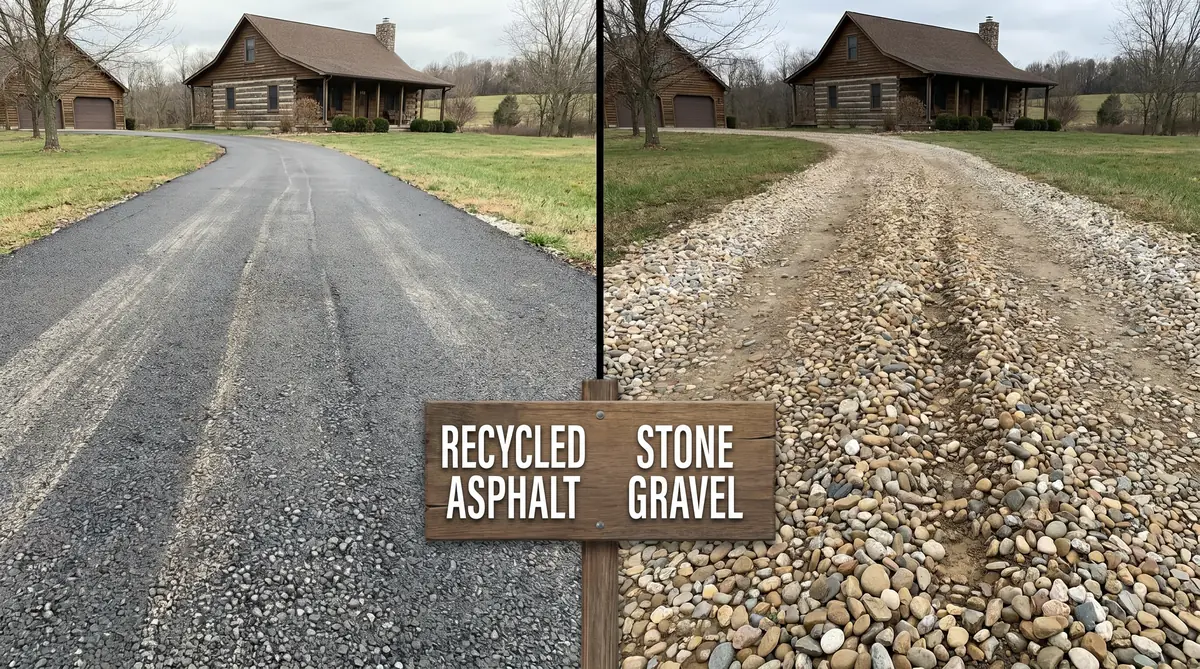
| Recycled asphalt (RAP) | $0.50–$2.00 | 20–30 yrs | Low–Medium | Utilitarian | Yes |
| Gravel / crushed stone | $0.50–$3.00 | Indefinite | Medium (raking, refill) | Rustic | Yes |
| New hot mix asphalt | $3.00–$7.00 | 20–30 yrs | Low (+ sealcoat every 3–5 yrs) | Smooth, uniform | No |
| Tar-and-chip | $2.00–$5.00 | 15–25 yrs | Low–Medium | Textured, natural | No |
| Concrete | $7.00–$14.00 | 30–50 yrs | Low | Clean, premium | No |
| Packed dirt | $0.10–$0.50 | 5–10 yrs | High (ruts, erosion) | Poor | Yes |
Thickness & Base Requirements
Proper depth is the single most important factor in recycled asphalt driveway longevity. Under-depth RAP will rut, shift, and sink, especially in areas with freeze-thaw cycles.
| Use Case | Crushed Stone Base | RAP Compacted Depth | Total Excavation |
|---|---|---|---|
| Foot path / walkway | 2–3 inches | 2 inches | 4–5 inches |
| Light residential (motorcycles, ATVs) | 3–4 inches | 2–3 inches | 5–7 inches |
| Standard residential driveway | 4–6 inches | 3–4 inches | 7–10 inches |
| Heavy vehicles (RVs, trucks, trailers) | 6–8 inches | 4–5 inches | 10–13 inches |
Installation Step-by-Step
Stake the layout
Mark the driveway boundaries with stakes and string line. Account for a 6-inch overhang beyond your intended edge if installing edging. Check for underground utilities before any excavation.
Excavate to depth
Remove 7–10 inches of existing soil (for a standard residential driveway). The sub-grade should be firm and free of organic material, roots, and debris. Slope the base 1–2% toward one side for drainage.
Install geotextile fabric (optional but recommended)
Lay woven geotextile fabric on the excavated sub-grade before adding base stone. This separates the stone from the soil, prevents migration, and dramatically extends the driveway's structural life — especially in clay-heavy soils.
Add crushed stone base
Spread 4–6 inches of #57 crushed stone or crusher run (compacted). This is the structural layer — do not skip it or reduce depth. Poor base preparation is the #1 cause of recycled asphalt driveway failure.
Compact the base
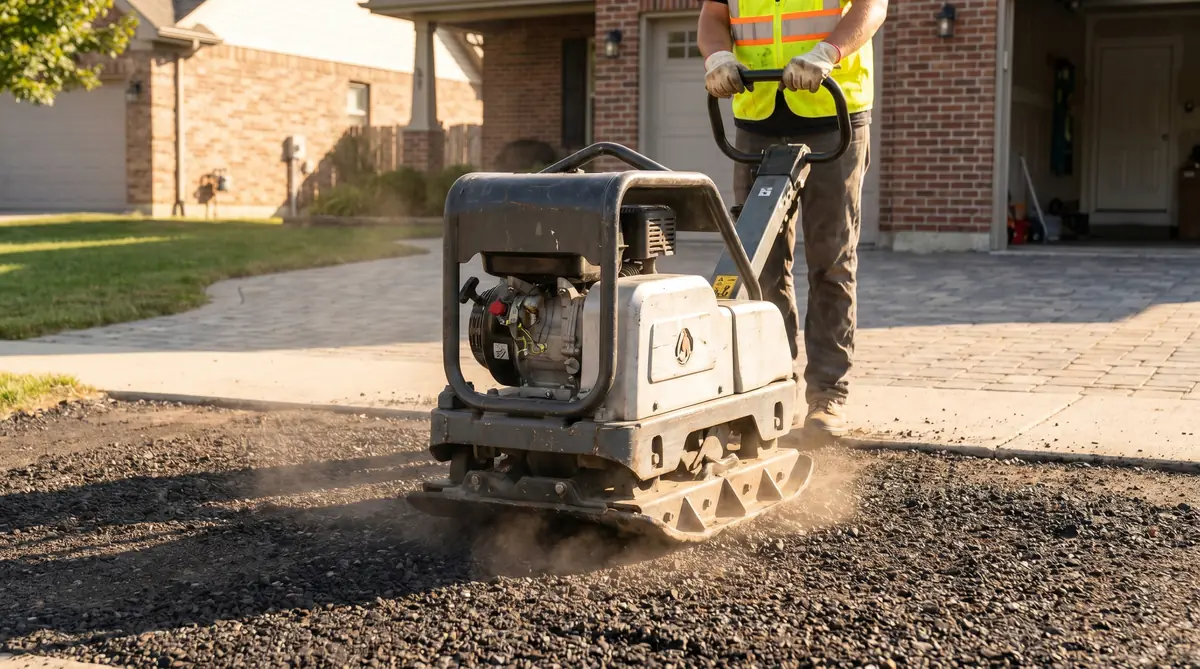
Make 2–3 passes with a plate compactor over the entire base surface. The stone should not shift or move under the compactor. Check for high and low spots and add or remove stone to achieve a flat, even grade.
Spread first RAP lift
Dump and spread the first lift of RAP to a loose depth of about 2.5 inches (compacts to roughly 2 inches). Use a rake or skid steer blade to achieve even distribution. Work from one end to the other in rows.
Compact first lift
Make 3–4 overlapping passes with the plate compactor. On warm days (70°F+), the residual binder will become slightly tacky as it warms — this is normal and indicates good binder content. The surface should feel firm and not shift underfoot after compaction.
Spread and compact second lift
Add the second RAP lift (another 1.5–2 inches loose) and compact again with 3–4 passes. The finished compacted surface should be 3–4 inches total RAP depth. Check with a straightedge for high spots and fill any low areas before final compaction.
Install edge restraints
Set plastic or steel landscape edging along both sides of the driveway and stake every 18–24 inches. Without edge restraints, RAP will slowly migrate laterally under traffic, causing edge crumbling and narrowing over time.
Compaction Methods
| Method | Best For | Quality | Cost |
|---|---|---|---|
| Plate compactor (forward plate) | Full driveway compaction; rental option | Excellent | $70–$120/day rental |
| Jumping jack / rammer | Edges and tight corners | Good for edges | $60–$100/day rental |
| Vibratory roller (walk-behind) | Large areas; best surface finish | Excellent | $150–$250/day rental |
| Vehicle tire method | No equipment available; small areas | Fair | Free (drive vehicle over plywood) |
| Hand tamper | Spot patches only | Poor for full driveway | $20–$40 purchase |
Does Recycled Asphalt Harden? The Self-Cementing Property
This is the key differentiator between RAP and plain crushed stone. Fresh RAP contains 4–7% residual bitumen by weight. That binder doesn't disappear — it just becomes inert and stiff at ambient temperatures. Under three conditions, it reactivates:
- Heat: On hot summer days, the binder softens, allowing particles to migrate and re-bond under load.
- Compaction pressure: Mechanical compaction forces particles into contact, squeezing the residual binder to the surface of each aggregate piece.
- Time: Over months and years of traffic and thermal cycling, the surface progressively hardens into something that looks and functions like aged asphalt.
Darker, blacker millings have more residual binder and self-cement better. Lighter gray millings have been more weathered and behave more like coarse gravel — still functional but without the same binding effect.
Maintenance Guide
| Task | Frequency | Notes |
|---|---|---|
| Inspect edges for spreading | Annually (spring) | Re-stake edging if sections have shifted; rake migrated material back |
| Fill potholes and ruts | As needed | Add fresh millings, hand-tamp or plate-compact; no mixing agents needed |
| Summer re-compaction | Every 1–2 years | On a hot day, run a plate compactor over any soft areas; re-hardens as it cools |
| Weed control | Spring / fall | Pre-emergent herbicide along edges; pull weeds before they root through the RAP layer |
| Top-dressing | Every 3–5 years | Spread 1 inch of fresh fine millings over the surface and compact; restores surface and adds fresh binder |
| Drainage check | Annually (fall) | Ensure edges and crown are still draining — standing water accelerates base softening |
Environmental Considerations
| Factor | Recycled Asphalt (RAP) | New Asphalt | Gravel |
|---|---|---|---|
| Virgin material required | None (100% recycled) | High (crude oil + virgin aggregate) | High (quarried stone) |
| Embodied carbon | Very low | High | Medium |
| Landfill diversion | Yes — diverts road waste | No | No |
| Permeability | Semi-permeable (better than new asphalt) | Impermeable | Fully permeable |
| Leaching risk | Low (trace PAHs below EPA limits) | Low (sealed surface) | None |
When to Choose New Asphalt Instead
Recycled asphalt is the right choice for most residential driveways — but there are situations where spending more on new hot mix asphalt makes better long-term sense:
- You want a smooth, uniform surface with a clean aesthetic for a high-value home
- The driveway will carry heavy vehicles (concrete trucks, loaded semi-trailers) regularly
- Local HOA or municipality requires paved asphalt or concrete specifically
- You're planning to sealcoat in the future (RAP is not compatible)
- The site has significant slope where a harder, more erosion-resistant surface is needed
- You need ADA-compliant smoothness for wheelchair or mobility aid access
For all other scenarios — rural driveways, farm roads, secondary access roads, budget-conscious homeowners, and anyone prioritizing value over aesthetics — recycled asphalt delivers outstanding performance per dollar. See our full blacktop vs concrete comparison if you're still weighing all options.
Frequently Asked Questions
How much does a recycled asphalt driveway cost?
Material runs $10–$25 per ton. A 600 sq ft driveway needs about 6 tons, so material cost is $60–$150. With delivery, base stone, excavation, and compaction, total installed cost runs $0.50–$2.00 per sq ft ($300–$1,200 for a 2-car driveway) — vs $3–$7/sq ft for new asphalt.
How long does a recycled asphalt driveway last?
20–30 years with proper base preparation, adequate compaction, edge restraints, and periodic top-dressing every 3–5 years. The base layer is more important than the RAP itself — a 4–6 inch compacted stone base is the foundation of a long-lasting driveway.
Does recycled asphalt harden like new asphalt?
Partially. The residual bitumen binder reactivates under heat and compaction, creating a self-cementing surface that's firmer than gravel. It does not achieve hot-mix density but firms up noticeably over the first summer, especially in warm climates.
What is the difference between recycled asphalt and asphalt millings?
Millings are the direct output of milling a road surface. RAP is the broader category including millings plus crushed demolition asphalt. For driveways, they behave identically. Both terms are used interchangeably by suppliers and contractors.
Is recycled asphalt better than gravel for a driveway?
Generally yes — RAP produces less dust, scatters less underfoot, self-cements into a firmer surface, and handles freeze-thaw better. Gravel is fully permeable and may cost less in rural areas with nearby quarries. For regular vehicle traffic, RAP is the better long-term investment.
Can I install a recycled asphalt driveway myself?
Yes. You need a RAP source, a delivery method, and a rented plate compactor ($70–$120/day). Follow the 9-step process above. The main DIY risk is under-compaction — don't skip multiple passes and always install in two lifts.
Does recycled asphalt leach chemicals into the ground?
RAP leaches trace PAHs and metals at levels generally below EPA thresholds for residential use. Avoid installation within 50 feet of a water well or in regulated drainage buffers. Most states allow RAP driveways without restriction — check your local rules.
How do I maintain a recycled asphalt driveway?
Annually: inspect edges and re-stake edging. As needed: fill potholes with fresh millings and compact. Every 1–2 years: re-compact soft spots on a hot day. Every 3–5 years: top-dress with 1 inch of fresh fine millings and compact. Do not sealcoat.