
Can You Put Asphalt Over Concrete? What Works, How Thick, and What It Costs
Quick Answer
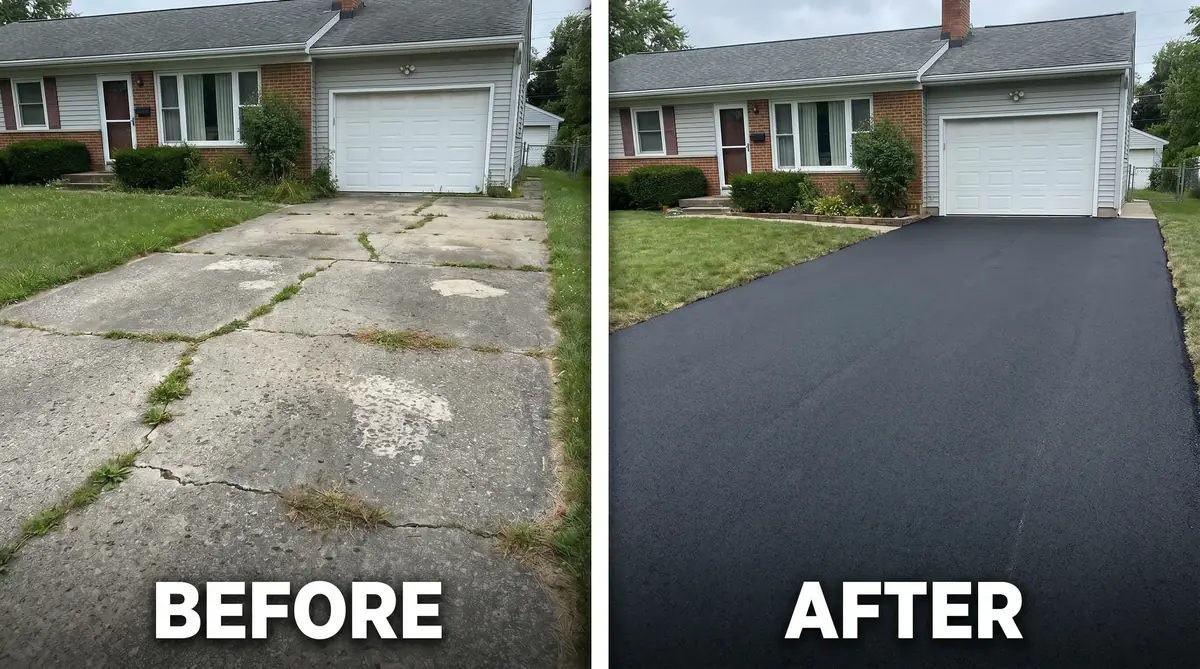
Yes, you can put asphalt over concrete as long as the concrete slabs are stable, meaning no rocking, no large sunken areas and no crumbling. The concrete is cleaned, cracks are sealed, a tack coat is sprayed so the asphalt bonds, and usually 2 to 3 inches or more of hot mix asphalt is laid and rolled. The main drawback is reflective cracking: the joints in the concrete tend to crack through the asphalt over time. Paving fabric over the joints and a thicker layer slow this down. Cost is about the same as an asphalt overlay, roughly $2 to $5 per square foot, plus joint treatment and edge work.
Many older homes have a concrete driveway that is cracked, stained or uneven but still solid underneath. Tearing it out is expensive and messy, so a common question is whether you can simply pave over it. The short answer to "can you put asphalt over concrete" is yes, and road agencies do it on highways every year. Whether it is a good idea for your driveway depends on the condition of the slabs, the height you have to play with at the garage and street, and how much cracking you are willing to live with.
This guide explains when asphalt over concrete works and when it does not, how thick the asphalt needs to be, why the joints crack through and how to slow that down, step by step how it is done, what it costs compared with removing the concrete, and the reverse question: can you pour concrete over asphalt?
When You Can Put Asphalt Over Concrete
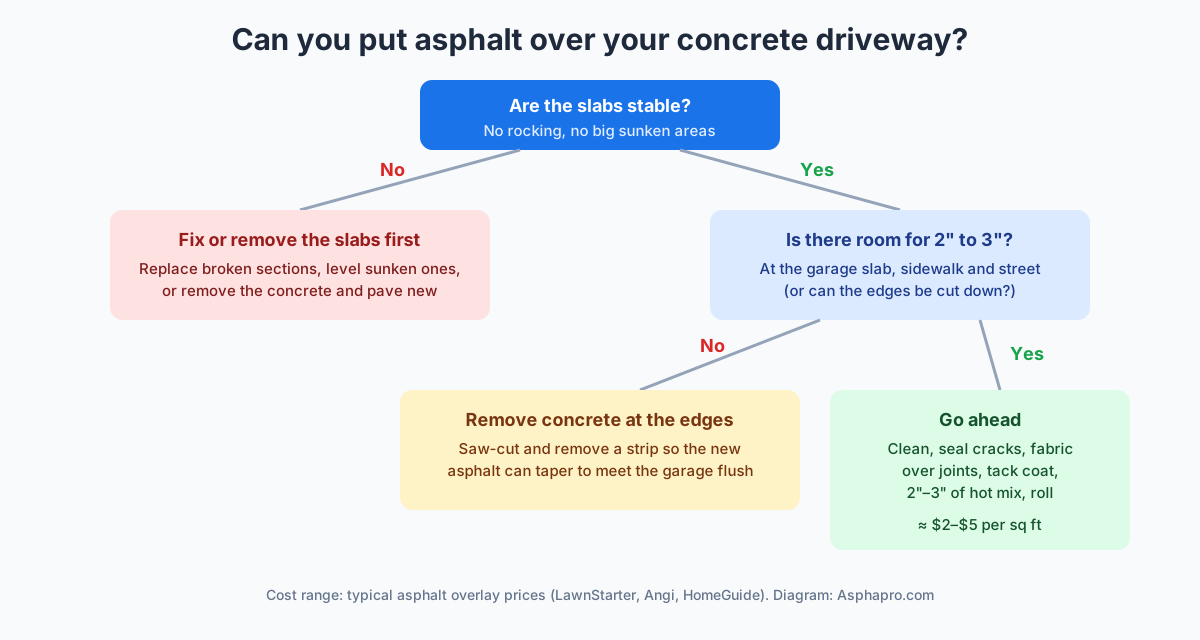
Asphalt over concrete is a good option when the concrete is acting as a solid, stable base. Check these before you get quotes:
- Slabs do not rock or move when you drive or walk over the joints.
- No large sunken or heaved areas. Small level differences can be filled by the asphalt; big steps between slabs cannot.
- Cracks are surface cracks, not slabs broken into loose pieces.
- Water drains away rather than pooling or flowing under the slabs.
- There is room for the extra height at the garage floor, sidewalk and street, or the edges can be cut down.
A quick test for rocking slabs: have someone drive slowly over each joint while you watch the slab edges, or stand on one side of a joint and rock your weight. Any visible movement, or a thump under the tire, means that slab needs to be stabilized before you put asphalt over concrete.
If the concrete fails any of these, fix it first or remove it. Paving asphalt over broken, rocking concrete just puts a nice-looking layer on a problem; the movement underneath will break the asphalt in the same places within a few seasons.
How Thick Should Asphalt Be Over Concrete?
For a residential driveway, asphalt over concrete is commonly laid at 2 to 3 inches of compacted hot mix. That is a little thicker than a typical asphalt-over-asphalt overlay, because the extra thickness helps the asphalt bridge the joints and slows reflective cracking.
| Asphalt thickness over concrete | Hot mix per 1,000 sq ft | Notes |
|---|---|---|
| 1.5 inches | about 9 tons | Thin; joints usually show through quickly |
| 2 inches | about 12 tons | Common minimum for a driveway |
| 3 inches | about 18 tons | Better for driveways with heavier vehicles; slower cracking |
| 4 inches or more | about 24 tons or more | Roads and heavy traffic; often placed in two lifts |
Tonnage uses about 145 pounds per cubic foot for compacted hot mix. Our asphalt tonnage calculator works out the exact tons for your driveway, and the asphalt price per ton guide covers material prices.
Why Asphalt Over Concrete Cracks at the Joints
Concrete driveways are made of slabs separated by joints, and every slab grows and shrinks a little with temperature. Asphalt is flexible, but only up to a point. Right above each joint, the asphalt has to stretch every time the slabs pull apart in cold weather, and eventually it cracks in a straight line that matches the joint below. Engineers call this reflective cracking, and it is the most common complaint about asphalt over concrete.
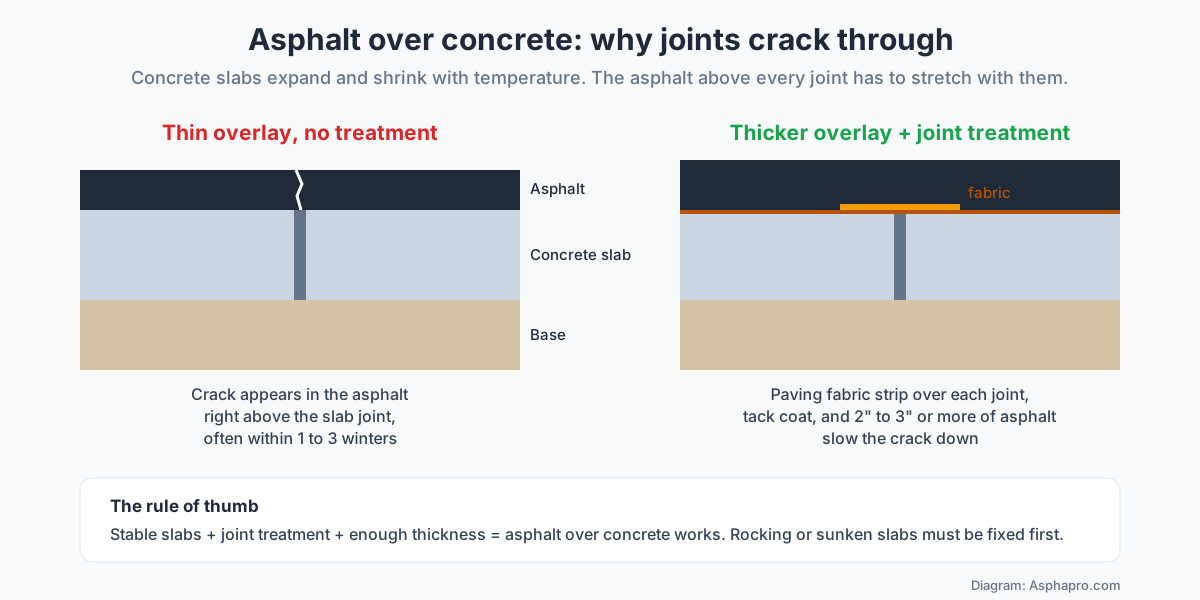
Reflective cracks are not a structural failure; the asphalt is still bonded and doing its job. But if they are left open, water gets in, the asphalt along the crack breaks down, and the cracks widen. You cannot fully prevent reflective cracking when you put asphalt over concrete, but you can slow it down and manage it:
- Thicker asphalt. Every extra inch spreads the movement over more material.
- Paving fabric or a crack-relief interlayer. A strip of asphalt-saturated fabric over each joint absorbs some of the movement before it reaches the surface.
- Saw and seal. On some projects, crews saw a straight joint in the new asphalt directly above each concrete joint and fill it with sealant. The crack forms where it is planned and stays sealed and neat.
- Crack sealing every year or two. Sealing reflective cracks as soon as they show keeps water out and the surface intact.
How to Put Asphalt Over a Concrete Driveway, Step by Step
- 1
Inspect and repair the slabs
Replace broken pieces, stabilize or level sunken slabs, and remove anything loose. This is the step that decides whether the asphalt over concrete will last.
- 2
Clean the surface
Pressure wash or sweep away dirt, oil and loose material. Oil spots are scrubbed or primed because asphalt does not bond well to them.
- 3
Seal cracks and joints
Open joints and cracks are cleaned and filled so they do not hold water under the new asphalt.
- 4
Cut the edges
At the garage slab, sidewalk and street, a strip of concrete is often saw-cut and removed so the new asphalt can meet those surfaces flush instead of leaving a lip.
- 5
Apply fabric over joints (recommended)
Paving fabric strips are laid over the joints, often bedded in a coat of asphalt.
- 6
Tack coat
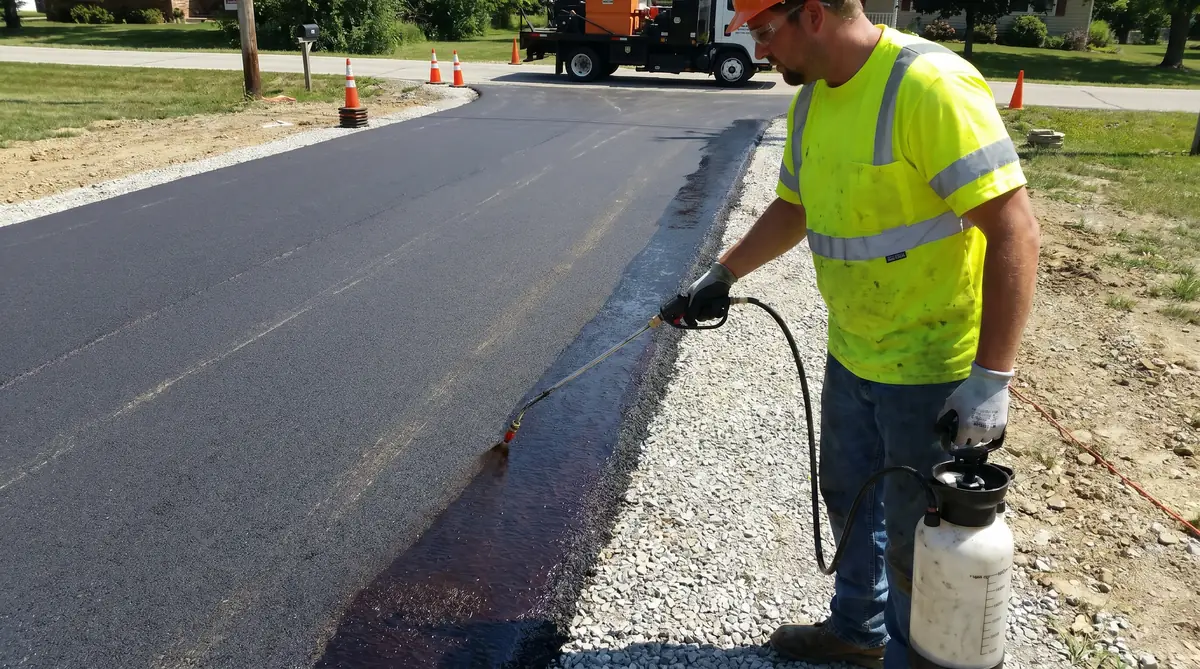
A thin coat of asphalt emulsion is sprayed over the whole surface so the hot mix bonds to the concrete. Without it, asphalt over concrete can slide or peel. Our tack coat calculator gives the gallons needed.
- 7
Pave and roll
Hot mix is laid with a paver, often a leveling layer first and then the surface layer, and rolled while hot.
How Much Does It Cost to Put Asphalt Over Concrete?
Putting asphalt over concrete is priced much like a standard asphalt overlay, about $2 to $5 per square foot for the asphalt itself, with extras for the concrete-specific work. Removing the concrete and paving new asphalt costs more because demolition, haul-off and base repair are added.
| Option | Typical cost | Notes |
|---|---|---|
| Asphalt over concrete (overlay) | $2 – $5 per sq ft | Plus joint fabric, slab repairs, edge cutting |
| Remove concrete + new asphalt driveway | $6 – $15 per sq ft | Includes demolition and base work |
| Repair concrete only | Varies widely | Patching, leveling or replacing slabs |
For a 600 square foot driveway, an asphalt overlay over concrete at $2 to $5 per square foot comes to about $1,200 to $3,000 before extras, compared with roughly $3,600 to $9,000 to remove the concrete and pave new. The saving is real, but remember that the overlay may show reflective cracks within a few years while a fully new asphalt driveway will not. Our guide to asphalt overlay cost breaks the overlay price down in detail, and the asphalt overlay calculator estimates tons and cost for your size.
Asphalt Over Concrete vs Removing the Concrete
| Asphalt over concrete | Remove concrete, pave new | |
|---|---|---|
| Up-front cost | Lower | Higher |
| Reflective cracking | Expected over time at joints | None |
| Height change | Raises surface 2"–3" | None |
| Base | Very strong (the concrete) | New gravel base |
| Time | Usually 1 day | Several days |
| Best for | Sound concrete, budget priority | Broken concrete or no room for height |
A stable concrete slab is actually an excellent base, stronger than most gravel. That is why asphalt over concrete can last a long time structurally, even when joint cracks appear on the surface. If you can accept some crack sealing as routine maintenance, the overlay is usually the better value. If you want a crack-free surface or the concrete is badly broken, removal is the better spend. See also the cost to replace a driveway with asphalt.
Worked Example: Asphalt Over a 20 × 30 ft Concrete Driveway
Here is how the numbers come together for a typical two-car concrete driveway of 600 square feet with a few cracked slabs and a garage at one end.
| Line item | Quantity | Cost range |
|---|---|---|
| Asphalt over concrete, 2.5" overlay | 600 sq ft | $1,200 – $3,000 |
| Hot mix needed (for reference) | about 9 tons | included above |
| Paving fabric over 5 joints | about 100 linear ft | small extra, quoted by contractor |
| Replace one broken slab section | about 40 sq ft | quoted separately |
| Saw-cut and remove 1-ft strip at garage | about 20 sq ft | quoted separately |
The overlay itself is the largest line. The repairs and edge work vary from job to job, which is why two quotes to put asphalt over concrete can be far apart. Ask each contractor to list them separately so you can compare like with like.
Measure Height and Drainage Before You Pave
The most common surprise when people put asphalt over concrete is not cracking but height. Two to three inches does not sound like much until a garage door no longer closes cleanly over a new lip, or rainwater starts running toward the house instead of away from it. Spend ten minutes measuring before you ask for quotes:
- Garage threshold. Measure from the top of the driveway concrete to the top of the garage floor at the door. If the gap is less than the planned asphalt thickness, the driveway edge must be cut down so the asphalt can taper to meet the garage floor flush.
- Sidewalk and street. Check the same at the sidewalk crossing and the street apron. A step at the street is hard on cars and snow plows.
- Slope. Check which way water flows now. The new surface should keep, or improve, the fall away from the house. Our driveway slope calculator helps you check the grade.
- Doors, drains and grates. Note any floor drain, trench drain or utility cover that will need raising or that the asphalt must meet.
Write the measurements down and take photos of each edge; they make quotes easier to compare. A good contractor will check all of this, but knowing the numbers yourself means you can tell straight away whether a quote has allowed for the edge work.
Asphalt Over Concrete Patios, Walkways and Garage Floors
The same rules apply to smaller areas, with a few differences. Patios and walkways do not carry vehicles, so a thinner asphalt layer is often enough, but they usually sit right against doors and steps where height is tight, and small areas are expensive per square foot for a paving crew. For a patio, pavers or a concrete resurfacer are often a better fit than asphalt over concrete.
Inside a garage, putting asphalt over the concrete floor is rarely a good idea. Asphalt softens with heat and oil, marks under jack stands and kickstands, and raises the floor against the door seal. For a garage floor, cleaning and sealing or an epoxy coating are the usual choices.
Signs the Job Was Done Right
- The new surface meets the garage, sidewalk and street flush, with no step.
- No puddles form on the finished asphalt after rain.
- The asphalt is the agreed thickness at the edges (you can see it at the sides).
- The surface is evenly compacted, with no loose or open areas.
- The contractor showed or described the tack coat and joint treatment before paving.
How Long Does Asphalt Over Concrete Last?
Structurally, asphalt over a sound concrete slab can last a long time, because the concrete is a stronger base than most gravel. What limits the life of the surface is cracking at the joints. Many homeowners see the first reflective cracks within a few winters, especially in cold climates with big temperature swings. With yearly crack sealing and sealcoating every few years, the asphalt over concrete can stay in good service for many years; without maintenance, water gets into the joint cracks and the asphalt along them starts to break down.
In general, the factors that decide the life of the overlay are the same ones listed throughout this guide: how stable the slabs were, how thick the asphalt is, whether the joints were treated, whether a tack coat was used, and how well water is kept off and away from the driveway.
Cold Climates vs Warm Climates
Climate matters more for asphalt over concrete than for most paving jobs. In cold climates, concrete slabs shrink in winter and open the joints, and freeze-thaw cycles work water into any crack. Reflective cracks show up sooner and open wider there, so thicker asphalt and joint treatment are worth more. In warm climates, the joints move less, and asphalt over concrete often performs better, although very hot summers can soften thin asphalt where cars turn. Wherever you live, sealing reflective cracks before winter is the single most useful maintenance step.
Maintenance After You Put Asphalt Over Concrete
- Seal reflective cracks every year or two. Use a hot-pour or rubberized crack sealer along each crack line as it appears. Our crack fill calculator estimates the sealer needed.
- Sealcoat every two to three years after the first year to protect the surface from sun and water. See sealcoating cost.
- Keep water off the edges. Downspouts and runoff along the sides soften whatever is under the edge.
- Patch early. If a joint crack starts to crumble, patch it before it becomes a pothole. Our asphalt repair cost guide covers prices.
Other Ways to Renew an Old Concrete Driveway
Asphalt over concrete is only one way to deal with a tired concrete driveway. Depending on what is wrong with it, one of these may suit you better:
| Problem | Better option |
|---|---|
| Stained or faded but sound | Pressure washing, cleaning and a concrete sealer |
| Surface flaking (spalling) but slabs solid | Concrete resurfacer (a thin cement-based overlay) |
| One or two sunken slabs | Slab lifting (mudjacking or foam) instead of overlaying |
| Want a different look, slabs sound | Asphalt over concrete, or pavers over concrete where heights allow |
| Many broken or heaved slabs | Remove the concrete and pave new asphalt or pour new concrete |
If your concrete is sound and you are mostly unhappy with how it looks, sealing or resurfacing the concrete is cheaper than putting asphalt over concrete and keeps the existing height. If you simply prefer the look and feel of asphalt, or want a uniform black surface across a patched concrete driveway, the overlay is the way to go. Our asphalt vs concrete driveway cost guide compares the two materials over their full life.
Can You Pour Concrete Over Asphalt?
The reverse question comes up just as often: can you put concrete over asphalt? Yes, if the asphalt and the base under it are solid. The asphalt becomes the base for the new concrete. A few things to plan for:
- Thickness. A concrete driveway over asphalt is usually at least 4 inches thick, and thicker where heavy vehicles drive. That is a big jump in height compared with an asphalt overlay.
- Levels. At 4 inches or more, garage floors, doors, sidewalks and drainage almost always need changes, or the asphalt has to be removed at the edges.
- Condition. Soft, rutted or alligator-cracked asphalt is not a good base; remove it first.
- Bonding. Concrete does not bond to asphalt like it bonds to old concrete. It acts as a separate slab sitting on top, which is fine for a driveway or patio.
For thin decorative jobs, there are polymer-modified concrete overlays and stamped overlays designed to go over sound asphalt, but they need a stable surface and are best done by specialists. For a normal concrete driveway, most contractors prefer to remove the asphalt and place the concrete on a compacted gravel base. Our concrete driveway calculator estimates the concrete you would need.
Asphalt Over Concrete vs Concrete Over Asphalt: Quick Comparison
| Asphalt over concrete | Concrete over asphalt | |
|---|---|---|
| Typical thickness added | 2" – 3" | 4" or more |
| Main risk | Reflective cracks at slab joints | Height problems; weak asphalt base |
| Bond to the layer below | Bonds with a tack coat | Acts as a separate slab on top |
| Time before use | Often a few days | About a week before driving, longer for full strength |
| Common choice | Renewing an old concrete driveway | Less common; usually the asphalt is removed instead |
In practice, asphalt over concrete is the far more common job, for driveways, parking lots and roads alike. Putting concrete over asphalt is possible, but because of the extra height most contractors remove the asphalt first.
Common Problems With Asphalt Over Concrete
- Reflective cracks at every joint. Expected over time; manage with fabric, thickness and crack sealing.
- Asphalt sliding or peeling. Usually from no tack coat or a dirty, oily surface.
- Bumps at the garage or street. Edges not cut down, leaving a step.
- Potholes over broken slabs. Loose concrete pieces were not removed before paving.
- Water problems. Raising the driveway sent water toward the house.
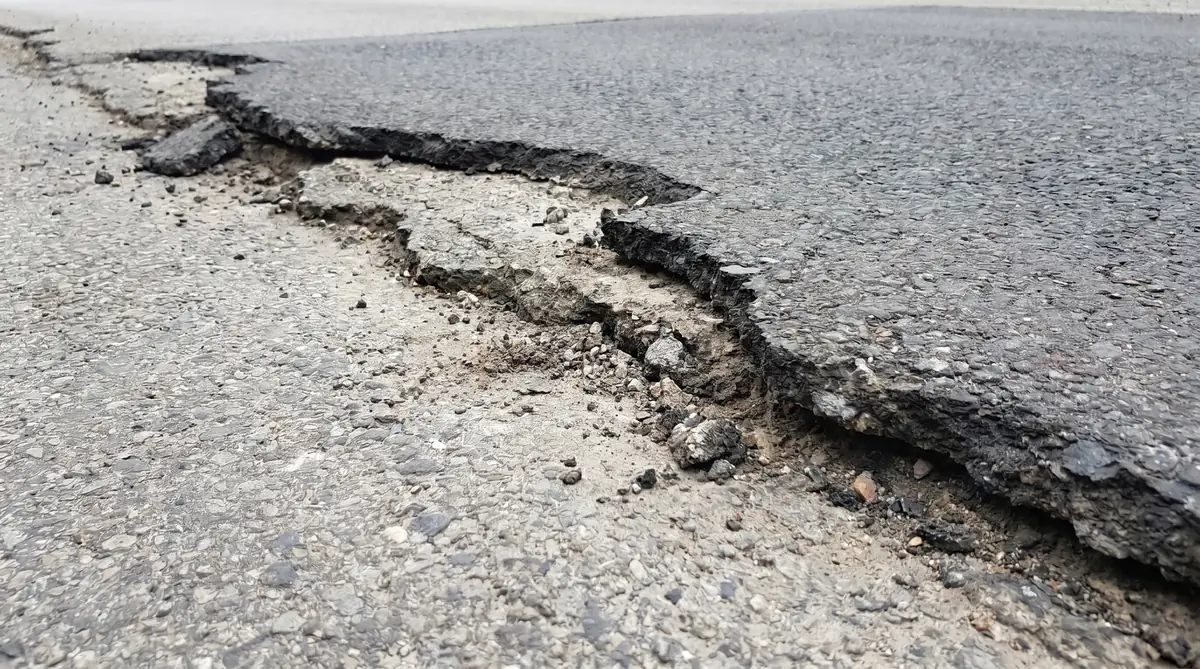
Asphalt Over Concrete Roads and Parking Lots
Highway agencies put asphalt over concrete pavement all the time to give old concrete roads a smoother, quieter surface. On roads, the concrete is often treated first: broken slabs are repaired, rocking slabs are stabilized, and in some cases the concrete is cracked into smaller pieces and seated with a heavy roller so it behaves more like a solid base. Overlays on roads are thicker than on driveways and often include saw-and-seal joints. On parking lots, the same approach applies at smaller scale. Our asphalt parking lot cost guide covers lot resurfacing prices.
Can You Asphalt Over Concrete Yourself?
Not realistically. Hot mix has to be delivered hot, spread to an even thickness and compacted with a roller before it cools, and the tack coat and fabric need the right equipment. What you can do yourself is the prep that lowers the price: clean the concrete, remove loose pieces, seal cracks and clear weeds from the joints. For small areas, cold patch can fill holes in concrete before paving, but the overlay itself is contractor work.
Questions to Ask Contractors
- How thick will the asphalt be after compaction?
- Will you use a tack coat over the whole surface?
- Will you put fabric over the joints, or saw and seal them?
- How will you handle the garage slab and street edge?
- What repairs will you make to the concrete first?
- What does the warranty cover if reflective cracks appear?
Frequently Asked Questions
Can you put asphalt over concrete?
Yes, if the slabs are stable. Clean, seal cracks, tack coat, and lay usually 2 to 3 inches or more of hot mix. Joints may crack through over time.
How thick should asphalt be over concrete?
Commonly 2 to 3 inches of compacted hot mix for a driveway. Thicker layers slow reflective cracking.
Can you blacktop over concrete?
Yes. Blacktop is another word for asphalt, so blacktop over concrete follows the same rules: stable slabs, tack coat and enough thickness.
Can you pour concrete over asphalt?
Yes, if the asphalt and base are solid. The new concrete is usually at least 4 inches thick, so levels at the garage and sidewalk must be checked.
How much does it cost to put asphalt over concrete?
About $2 to $5 per square foot for the asphalt, plus joint fabric, slab repairs and edge cutting. Removing the concrete and paving new costs about $6 to $15 per square foot.
Can you put asphalt over a cracked concrete driveway?
Yes, if the cracks are surface cracks and the slabs are not moving. Seal the cracks first and expect the larger ones to show through the asphalt over time. Broken, loose pieces must be removed and patched before paving.
Is it cheaper to put asphalt over concrete or remove the concrete?
Putting asphalt over concrete is usually much cheaper, about $2 to $5 per square foot compared with about $6 to $15 to remove the concrete and pave a new asphalt driveway.
Will asphalt stick to concrete?
Yes, when the concrete is clean and a tack coat is applied first. Without tack coat, asphalt can slide or peel off concrete.
Sources
- LawnStarter, Angi and HomeGuide asphalt driveway resurfacing and overlay cost pages — $2–$5 per sq ft overlay and $6–$15 replacement ranges. lawnstarter.com, homeguide.com
- Federal Highway Administration pavement resources on asphalt overlays of concrete pavement and reflective cracking. fhwa.dot.gov
- Images and diagrams: Asphapro.com.
Prices checked November 2026. Thickness figures are common practice; your contractor or engineer sets the final design.
Related Guides
- Can you pour concrete over concrete? — new concrete over old concrete
- Can you lay pavers over concrete? — sand-set vs mortar-set overlays