
Can You Pour Concrete Over Concrete? When It Works, How Thick, and How to Do It
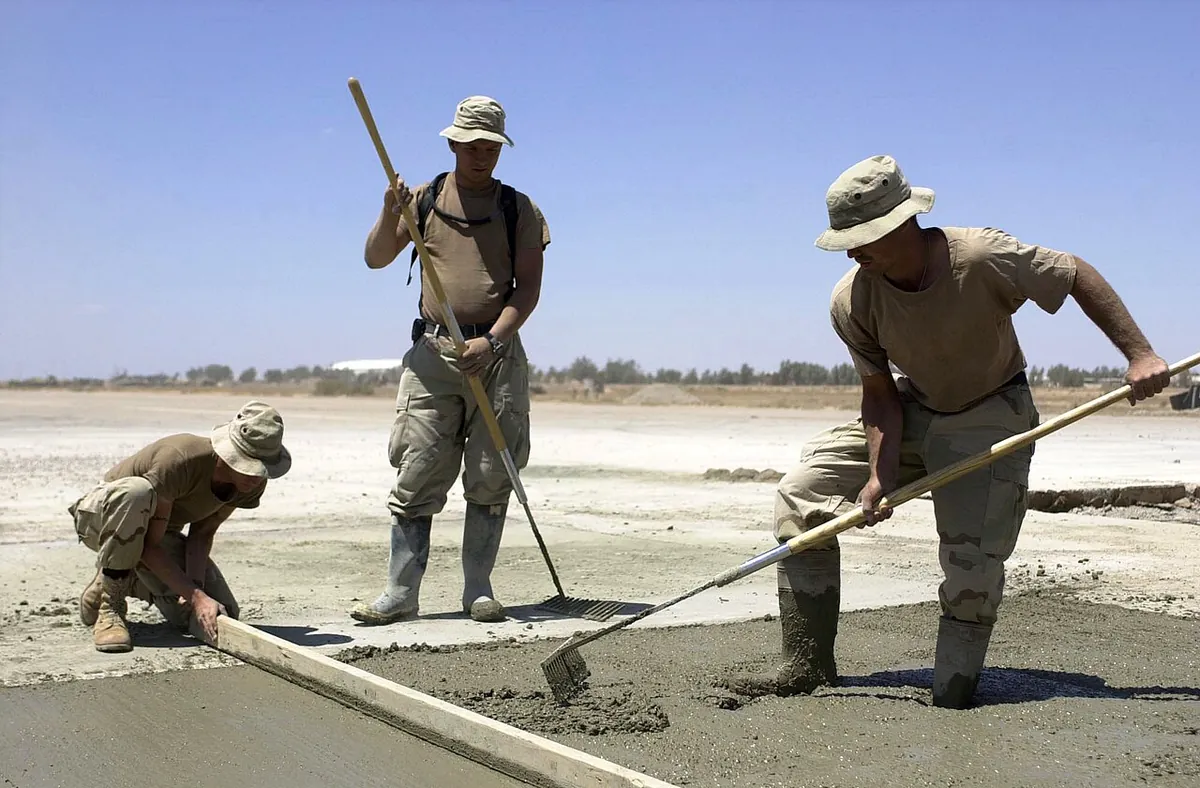
Photo: U.S. Navy / Jacob Johnson, Wikimedia Commons, public domain
Quick Answer
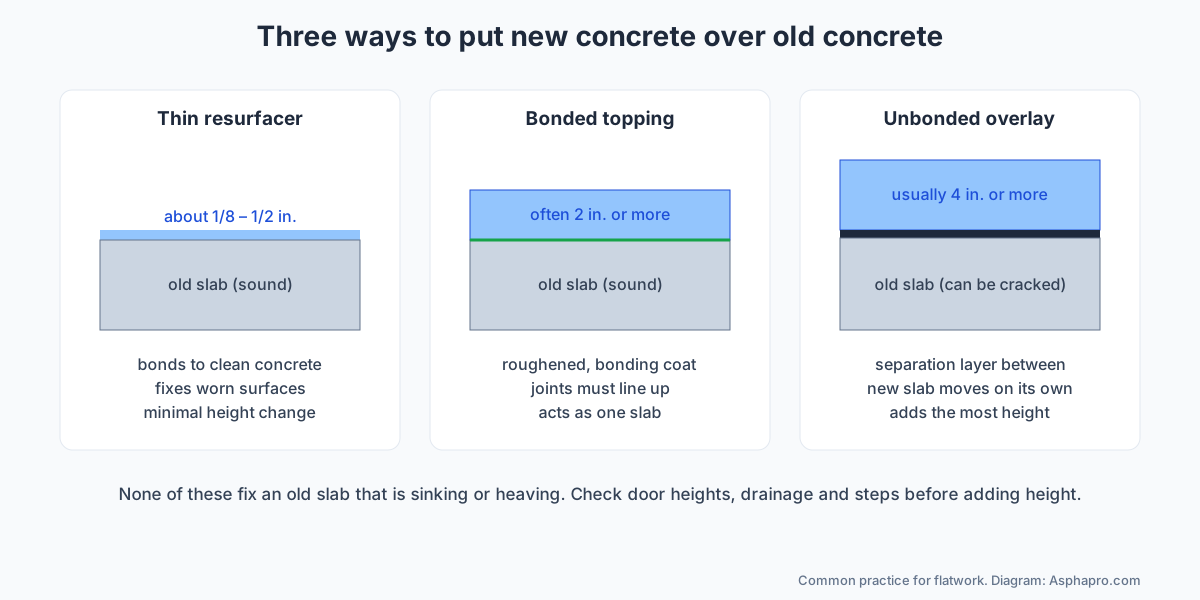
Yes, you can pour concrete over concrete if the old slab is stable, not sinking or heaving, and you plan for the extra height. There are three main approaches: a thin resurfacer (about 1/8 to 1/2 inch) for worn surfaces, a bonded topping that is commonly about 2 inches or more and bonds to a roughened, clean slab, or an unbonded overlay, usually 4 inches or more, poured over a separation layer so it acts as a new slab. Joints in a bonded topping must line up with joints below. Pouring over a slab that is moving, crumbling or badly cracked just copies the problems into the new layer.
Tearing out old concrete is noisy, heavy and expensive, so it is natural to ask whether you can simply pour new concrete on top. Sometimes you can, and it works well. Other times it creates new problems: doors that no longer open, water draining toward the house, steps with an uneven bottom riser, or a new layer that cracks along the old cracks within a year.
This guide explains when you can pour concrete on top of concrete, the difference between thin resurfacers, bonded toppings and unbonded overlays, minimum thickness, how to prepare the old slab, how to handle joints, height and drainage, and when removal is the better choice.
Can You Pour Concrete Over Concrete? Quick Decision Guide
Use these questions to decide quickly:
- Is the old slab moving? If it is sinking, heaving or rocking, the answer to "can you pour concrete over concrete" is no, not until the base is fixed.
- What is wrong with it? If it only looks bad, a resurfacer or decorative overlay is usually enough. If it is too thin or weak, a thicker unbonded overlay or replacement may be needed.
- How much height can you add? Measure at doors, garage thresholds, steps and drains. If you cannot add at least about 2 inches, a regular concrete topping will not work; consider a resurfacer.
- Can you prepare it properly? A bonded topping needs grinding or scarifying and thorough cleaning. If that is not possible, use an unbonded overlay or remove the slab.
- Will water still drain away? If not, the project will cause more problems than it solves.
If the answers line up, you can pour concrete over concrete successfully and skip most of the demolition.
When You Can Pour Concrete Over Concrete
Can you put concrete over concrete and expect it to last? Yes, if the old slab is solid and the new layer is the right thickness for the method. Pouring concrete over concrete fails when the old slab is cracked from base problems or when a thin layer is poured without bonding.
- The old slab is stable: no sinking, heaving or rocking sections.
- Cracks are not moving and have no large height differences.
- The surface is sound, not crumbling or delaminating in large areas.
- You have room for extra height at doors, garage thresholds, steps and drains.
- Drainage will still flow away from the house after the slab is raised.
When You Should Not
- The old slab is sinking or heaving; fix the base or remove it.
- There are many wide or active cracks; they will come through the new layer.
- The old concrete is crumbling, badly spalled, or contaminated with oil that cannot be removed.
- Raising the slab would block doors, change step heights, or send water toward the house.
- The new slab would sit higher than an adjoining garage floor or sidewalk and create a trip edge.
Option 1: Thin Resurfacer
If the old concrete is sound but the surface is worn, pitted, stained or scaled, a cement-based resurfacer is the simplest way to put new concrete on top of concrete. These polymer-modified products bond in layers from about 1/8 inch up to about 1/2 inch, depending on the product, and barely change the height. They are not structural; they renew the surface only. See concrete overlay cost for prices and coverage.
Option 2: Bonded Concrete Topping
A bonded topping is a new layer of concrete that is made to stick firmly to the old slab, so the two act as one thicker slab. Common practice for flatwork is a topping of about 2 inches or more, because thin layers of regular concrete crack and come loose. Getting a strong bond takes careful prep:
- Clean thoroughly: remove dirt, oil, paint, sealers and curing compounds.
- Roughen the surface: grinding, scarifying or shot-blasting exposes fresh, rough concrete for the new layer to grip.
- Repair: fill large cracks and holes, and remove any loose concrete.
- Dampen: bring the old slab to a saturated surface-dry condition, damp but with no standing water.
- Bonding coat: scrub a bonding agent or cement slurry into the surface right before placing the topping, following product instructions.
- Place and finish: pour the topping, screed, float and finish as with any slab.
- Match the joints: cut joints in the topping directly over the existing joints and cracks.
- Cure well: keep the topping moist; thin layers dry out fast.
Because a bonded topping moves with the old slab, any crack in the old concrete will tend to show through the new layer. Lining up joints controls most of that.
Option 3: Unbonded Overlay
An unbonded overlay is a new slab poured over the old one with a separation layer in between, such as plastic sheeting or a thin layer of sand or other bond breaker. The new slab does not stick to the old one, so it can move on its own, and cracks in the old concrete are less likely to telegraph through. The trade-off is thickness: an unbonded overlay works like a new slab and is usually at least about 4 inches thick, with its own reinforcement and joints. It adds the most height of the three options.
How Thick Does the New Concrete Need to Be?
| Approach | Typical thickness | Notes |
|---|---|---|
| Resurfacer | about 1/8 – 1/2 in. | Follow product limits |
| Bonded topping | often 2 in. or more | Roughened, bonded, joints matched |
| Unbonded overlay | usually 4 in. or more | Separation layer, works as a new slab |
| Thin regular concrete (1 in. or less) | not recommended | Cracks and delaminates |
The worst choice is usually a thin layer of regular concrete mix spread an inch thick over an old slab. It does not have the strength of a full slab or the bonding properties of a resurfacer, and it often cracks and pops loose.
Height, Doors and Drainage
Adding 2 to 4 inches of concrete changes everything around the slab. Before deciding, check:
- Doors: a raised patio or garage floor can block doors from opening or let water in under them.
- Garage thresholds: a raised driveway may meet the garage floor higher than the floor itself.
- Steps: a thicker landing or walkway makes the bottom step shorter than the others, which is a trip hazard.
- Drainage: the new surface must still slope away from the house, and drains must be raised.
- Edges: the new slab's edges sit higher than lawns and sidewalks; plan backfill or edging.
- Siding and weep holes: do not bury them; keep the slab below siding.
Pouring Concrete Over a Concrete Driveway
Driveways can be topped if the old slab is stable and the height works at the garage and street. Many driveway projects run into trouble at the garage door, where a few inches of extra height can make the driveway higher than the garage floor. A common fix is to remove the section in front of the garage and pour new concrete there at the original height, while topping the rest. If the driveway is badly cracked or sunken, replacement is usually better; see concrete driveway cost. You can also pave asphalt over a stable concrete driveway; see can you put asphalt over concrete.
Pouring Concrete Over a Concrete Patio
Patios are good candidates because they usually carry light loads. The main issue is the door: patios are often only a couple of inches below the threshold. Measure the gap before deciding on thickness. Make sure the new patio still slopes away from the house. A stamped overlay can give a new look with less height than a full topping.
Pouring Concrete Over a Basement or Garage Floor
Interior floors are often leveled with self-leveling underlayment rather than new concrete. For a thicker topping, check ceiling height, drains, door clearances and stair risers. Moisture from below can affect toppings and flooring, so test before covering the slab. See self-leveling concrete.
How to Assess the Old Slab
Before deciding whether you can pour concrete over concrete, walk the slab and test it:
- Look for height differences at cracks and joints. More than a small lip suggests settling or heaving.
- Tap with a hammer. A hollow or dull sound can mean voids underneath or a delaminated surface layer.
- Stand on slab corners and edges and feel for rocking.
- Check for water: puddles, stains or erosion near the edges point to drainage problems.
- Scrape the surface with a screwdriver. If it crumbles easily, the top layer is weak.
- Note oil stains and sealers, which must be removed for a bond.
- Measure clearances at doors, thresholds, steps and drains.
If the slab passes these checks, a topping or overlay is a reasonable option. If not, consider leveling, repair or replacement first.
Choosing a Mix for a Concrete Topping
For thinner bonded toppings, a mix with smaller stone, such as pea gravel or a "topping mix," places and finishes more easily and works better in thin sections than standard mix with large stone. Many bagged products are sold as sand or topping mix for layers around 1 to 2 inches, while full concrete mix suits layers of about 2 inches and more. For ready-mix, ask the supplier for a mix suited to a bonded topping of your thickness. A lower water content helps reduce shrinkage, which is important because a thin layer shrinking on top of an old slab that does not shrink can crack or curl. See types of concrete and how much a bag of concrete costs.
Reinforcement in Toppings and Overlays
Thin bonded toppings rely on the old slab for strength, so they are often poured without steel, sometimes with fiber added to reduce surface cracks. Unbonded overlays act as their own slab and usually get wire mesh or rebar like a new slab, set on chairs within the new layer. The thicker and more independent the new layer, the more it should be treated like a full slab, with proper joints and reinforcement. See concrete slab thickness.
Lining Up the Joints
Joints are where many toppings fail. The old slab already has control joints and probably some cracks. When you pour concrete on top of concrete with a bonded topping, any movement at those joints passes up into the new layer. Mark the location of each old joint on the forms or nearby walls before pouring, then cut or tool joints in the topping in exactly the same places. Where old cracks are wide or active, many contractors also add a joint over the crack. Isolation joints are needed where the topping meets the house, steps, posts and other slabs.
Curing Thin Concrete Layers
Thin layers lose water quickly, especially on warm, windy days, and an old dry slab underneath can pull water from the new concrete. That is why the old slab is dampened before pouring. After finishing, keep the topping moist for several days with water curing, wet coverings or a curing compound. Poor curing is a leading cause of cracking and weak, dusty surfaces in toppings. See how long concrete takes to cure.
Step by Step: A Small DIY Topping Project
For a small, stable patio or landing, here is how a homeowner might pour concrete over concrete with a bonded topping of about 2 inches:
- Check door clearance and drainage, and decide the final height.
- Pressure wash the slab and remove any sealer, paint or oil.
- Roughen the surface with a rented grinder or scarifier, then vacuum.
- Fill cracks and holes, and mark existing joints.
- Set edge forms to the new height with the right slope away from the house.
- Dampen the slab the night before and again before pouring, removing standing water.
- Scrub on a bonding agent or slurry coat just ahead of the concrete.
- Place, screed, float and finish the topping, then tool joints over the old ones.
- Cure carefully for several days.
For anything larger than a small patio, or for driveways and garage floors, a contractor with grinding equipment and experience in toppings is usually worth it.
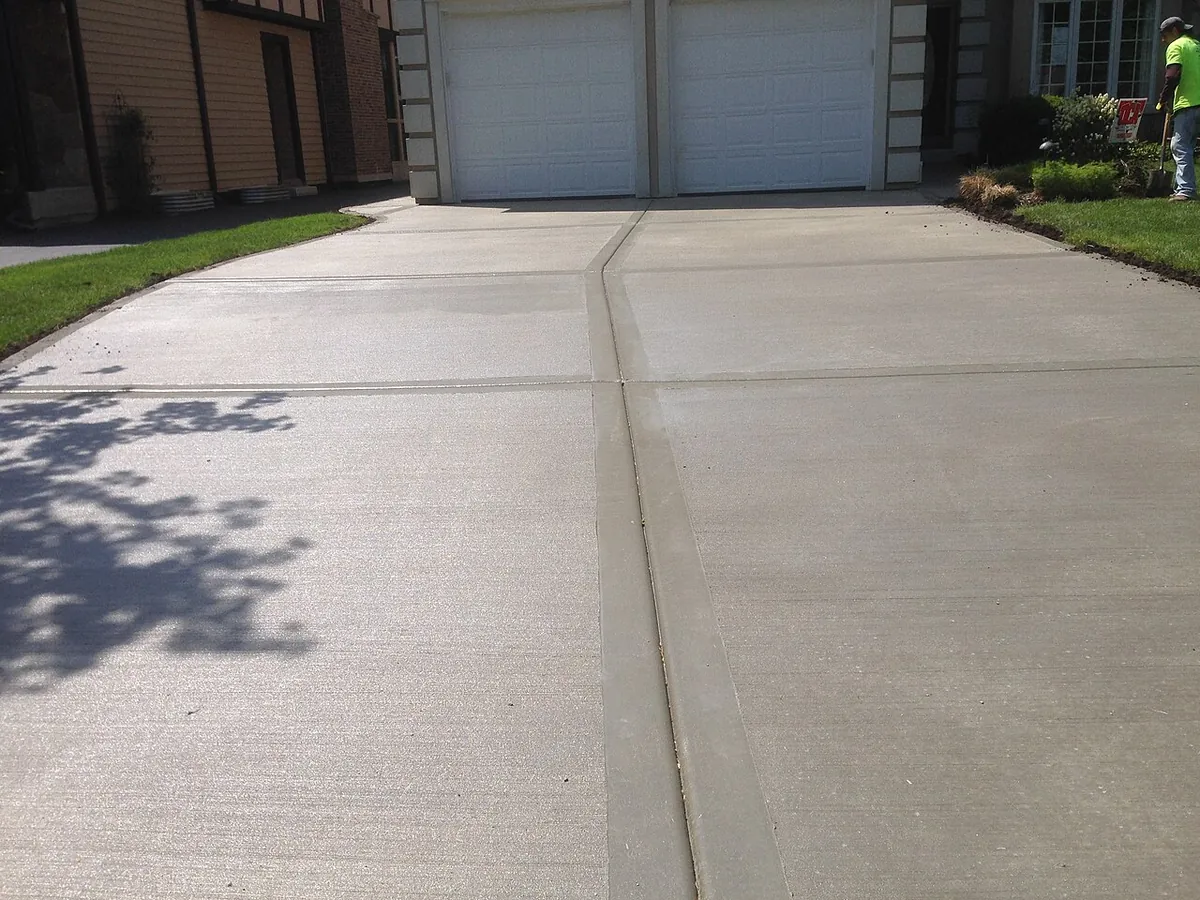
Photo: Catalano Concrete, Wikimedia Commons, CC BY-SA 4.0
Why Concrete Over Concrete Sometimes Fails
Most failures of pouring concrete on top of concrete come from three things: poor surface prep, a layer too thin for the method, and joints in the old slab that were not carried up into the new one.
- No bond: dirt, sealer or a smooth surface keeps the topping from sticking; it sounds hollow and later cracks or lifts.
- Too thin: regular concrete in a 1 inch layer cracks and breaks off.
- Joints ignored: cracks appear over every old joint and crack.
- Moving slab: settling and heaving crack the new layer.
- Fast drying: poor curing causes shrinkage cracks and curling at the edges.
- Height problems: water runs toward the house or under doors.
Alternatives to Pouring New Concrete on Top
- Resurfacing or decorative overlay: renews the surface with little height; see concrete overlay cost.
- Pavers over concrete: a decorative surface on a stable slab; see can you lay pavers over concrete.
- Asphalt over concrete: common on driveways; see can you put asphalt over concrete.
- Leveling: lift sunken slabs instead of covering them; see concrete leveling cost.
- Removal and replacement: the best option when the slab is failing; see how to remove concrete.
Pouring Over Old Steps and Sidewalks
Steps are tricky because every layer you add changes riser heights. Adding concrete only to the treads raises each step by the same amount, which keeps the middle risers equal but makes the bottom riser taller and the top riser at the door shorter. For steps, thin resurfacers or rebuilding the damaged parts usually work better than a thick topping; see how to fix concrete steps. For sidewalks, raising the walk can create a lip where it meets the driveway, the street or the neighbor's sidewalk, and public sidewalks must follow city standards. In most cases, damaged sidewalk panels are replaced rather than topped; see concrete sidewalk cost.
Weather and Timing
Toppings and overlays are more sensitive to weather than full-depth slabs because they are thin. Pour in mild weather, avoid hot sun and wind, and avoid freezing nights for several days after the pour. On warm days, start early, keep the old slab damp but not wet, and begin curing as soon as finishing is done. See pouring concrete in cold weather.
Three Real-World Scenarios
Worn but solid patio
A 20-year-old patio has a pitted, stained surface but no movement and only hairline cracks. The patio door threshold is just 1 inch above the slab. A thick topping would block the door, so a resurfacer or decorative overlay is the right choice, adding well under half an inch.
Thin, cracked garage apron
The driveway section in front of the garage is only about 3 inches thick and cracked into pieces, but the rest of the driveway is fine. Topping would raise the apron above the garage floor. The best fix is to remove the apron and pour a new, thicker section at the original height, then seal the rest.
Old shop floor with room to spare
An old, uneven shop floor is stable but rough, with plenty of clearance at the overhead door. An unbonded overlay of about 4 inches with mesh, over a plastic separation layer, gives a new, flat floor without demolishing the old one, though the doorway and any drains must be adjusted.
These examples show why the honest answer to "can you pour concrete over concrete" is often "yes, but": the slab, the height and the use all decide which method works.
Hiring a Contractor
Not every concrete contractor does bonded toppings. Ask whether they have done toppings or overlays on existing slabs, what thickness they recommend for your project, how they will prepare the surface, whether they will line up joints with the old ones, and how they will handle doors, steps and drains. Ask for photos of past jobs and a written scope. A contractor who suggests simply pouring an inch of regular concrete over a dirty slab is a red flag.
Cost: Topping vs Replacement
A bonded topping or unbonded overlay avoids most demolition, but it still needs concrete, labor and prep. Removal and replacement runs about $6 to $14 per square foot for plain concrete (removal $2 to $6 plus a new slab at $4 to $8). A topping may cost less if prep is simple, but grinding, raising drains and fixing edges can close the gap. Thin resurfacers are the cheapest, about $3 to $7 per square foot for basic overlays according to HomeGuide. Compare full quotes for both options. See concrete removal cost and concrete cost per sq ft.
Tools and Materials Checklist
- Pressure washer and degreaser to clean the old slab.
- Concrete grinder, scarifier or shot-blaster to roughen it (rentable).
- Shop vacuum to remove dust after grinding.
- Crack and patch materials for repairs before the topping.
- Form boards and stakes set to the new height and slope.
- Bonding agent or materials for a cement slurry coat.
- Topping mix, sand mix or ready-mix suited to the layer thickness.
- Screed, bull float, hand floats, edger and groover or saw for joints.
- Plastic sheeting, wet burlap or curing compound.
- Safety glasses, gloves, respirator for grinding dust, and knee pads.
Permits and Inspections
Pouring a topping on a private patio or walkway rarely needs a permit, but changes to driveways at the street, public sidewalks, garage floors that are part of a structure, and anything that changes drainage onto a neighbor's property may. Raising a garage floor can affect fire separation and door requirements in some codes. Check with your building department, especially for garages and driveways.
Frequently Asked Questions
Can you pour concrete over concrete?
Yes, if the old slab is stable and you have room for the extra height. Use a resurfacer for surface repairs, a bonded topping of about 2 inches or more, or an unbonded overlay of about 4 inches or more.
Can you pour concrete on top of concrete without a bonding agent?
For a bonded topping, a bonding agent or slurry coat is strongly recommended. For an unbonded overlay, you deliberately separate the layers instead.
How thin can you pour concrete over existing concrete?
Regular concrete should usually be at least about 2 inches as a bonded topping. For thinner layers, use a resurfacer designed for thin application.
Will cracks come through new concrete poured over old concrete?
Often, in a bonded topping, unless you cut joints over the old cracks and joints. An unbonded overlay reduces crack transfer.
Is it cheaper to pour over concrete or remove it?
It depends on prep and height issues. Thin resurfacing is usually cheapest. Thicker toppings can approach replacement cost once grinding and edge work are included.
Can you pour concrete over concrete for a driveway?
Yes, if the driveway is stable and the height works at the garage and street. Often the section in front of the garage is replaced at the original height while the rest is topped.
Do I need rebar when pouring over old concrete?
Thin bonded toppings usually do not use rebar. Unbonded overlays act as new slabs and typically get mesh or rebar.
How long does new concrete over old concrete last?
A well-bonded topping on a stable slab can last many years. Toppings over moving slabs, or without proper prep, often crack within a few seasons.
Can you pour concrete over concrete with paint or sealer on it?
Not for a bonded topping. Paint, sealers and coatings must be removed by grinding or blasting, or the new concrete will not bond. An unbonded overlay over a separation layer is less sensitive to what is on the surface.
What is the minimum thickness for a concrete topping?
For regular concrete, a bonded topping is usually at least about 2 inches. Thinner layers should use a resurfacer made for thin application.
Can I pour concrete over concrete in a basement?
Yes, with care. Check headroom, ceiling height, stairs, drains and moisture. Self-leveling underlayment is often a better choice for flattening a basement floor before new flooring or coatings go down on it.
Should I use a bonding agent or cement slurry?
Either can work for a bonded topping. Follow the product instructions, and place the new concrete while the bonding coat is still tacky.
Can I pour concrete over a cracked patio?
Yes, if the cracks are stable and the patio is not sinking. Repair cracks first and line up joints in the new layer.
Sources
- American Concrete Institute, guidance on bonded and unbonded concrete overlays (concrete.org). concrete.org
- HomeGuide, "How much does concrete resurfacing cost?" homeguide.com
- HomeGuide, "How much does concrete removal cost?" homeguide.com
- Sakrete, Flo-Coat Concrete Resurfacer specification sheet (resurfacer thickness range). Sakrete spec sheet
- Image credits: screeding photo by the U.S. Navy / Jacob Johnson (public domain), via Wikimedia Commons. Diagram by Asphapro.com.
Follow product instructions and local codes. Checked November 2026.
Related Guides
- How to remove paint from concrete — spray paint, epoxy and glue
- How to cut concrete — saws, blades and dust safety
- Can you lay pavers over concrete? — sand-set vs mortar-set overlays
- How to use self leveling concrete — prep, pour and dry times