
Cost to Replace Driveway with Asphalt — 2026 Prices & Material Comparisons
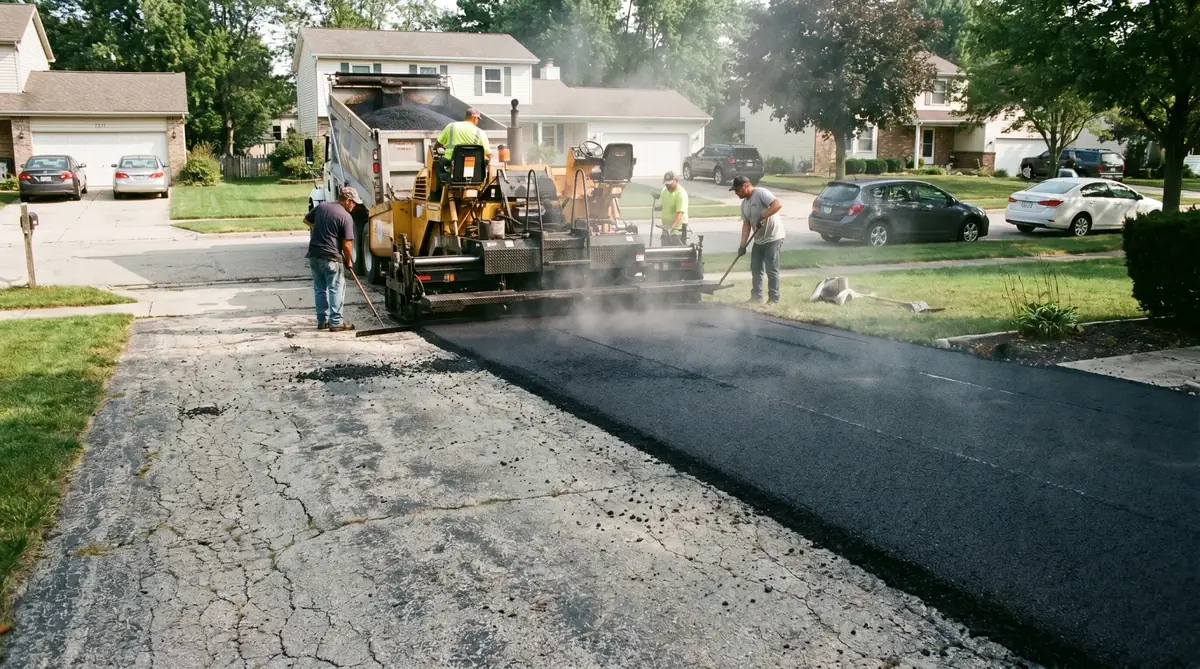
Whether your current driveway is cracked concrete, loose gravel, aging pavers, or crumbling chip seal, replacing it with asphalt is one of the most popular home improvement projects in the US — and for good reason. Asphalt costs 30–50% less to install than concrete, handles freeze-thaw cycles better, and can be repaired for a fraction of what concrete repairs cost.
The cost to replace a driveway with asphalt in 2026 ranges from $3,500 to $8,000 for a standard residential driveway — but that range swings significantly based on what you're replacing, how big your driveway is, and what condition the base is in. This guide breaks down every scenario so you know exactly what to budget.
Get an instant estimate: Use our driveway cost calculator or asphalt driveway calculator for a precise number based on your dimensions.
In this guide
Total Cost to Replace a Driveway with Asphalt (2026)
Here's what to budget based on driveway size. These figures include full removal of the existing surface, base preparation, and new asphalt installation:
| Driveway Size | Removing Gravel | Removing Concrete | Removing Pavers |
|---|---|---|---|
| 300 sq ft (small) | $1,200–$2,400 | $1,800–$3,600 | $2,000–$4,000 |
| 600 sq ft (standard) | $2,100–$4,200 | $3,200–$6,400 | $3,600–$7,200 |
| 800 sq ft (double car) | $2,800–$5,600 | $4,200–$8,400 | $4,800–$9,600 |
| 1,200 sq ft (large) | $4,200–$8,400 | $6,400–$12,800 | $7,200–$14,400 |
The wide range within each cell reflects regional labor costs, site accessibility, base condition, and asphalt thickness. The Northeast and West Coast run toward the high end; the Midwest and South run lower.
All Driveway Materials Compared by Cost
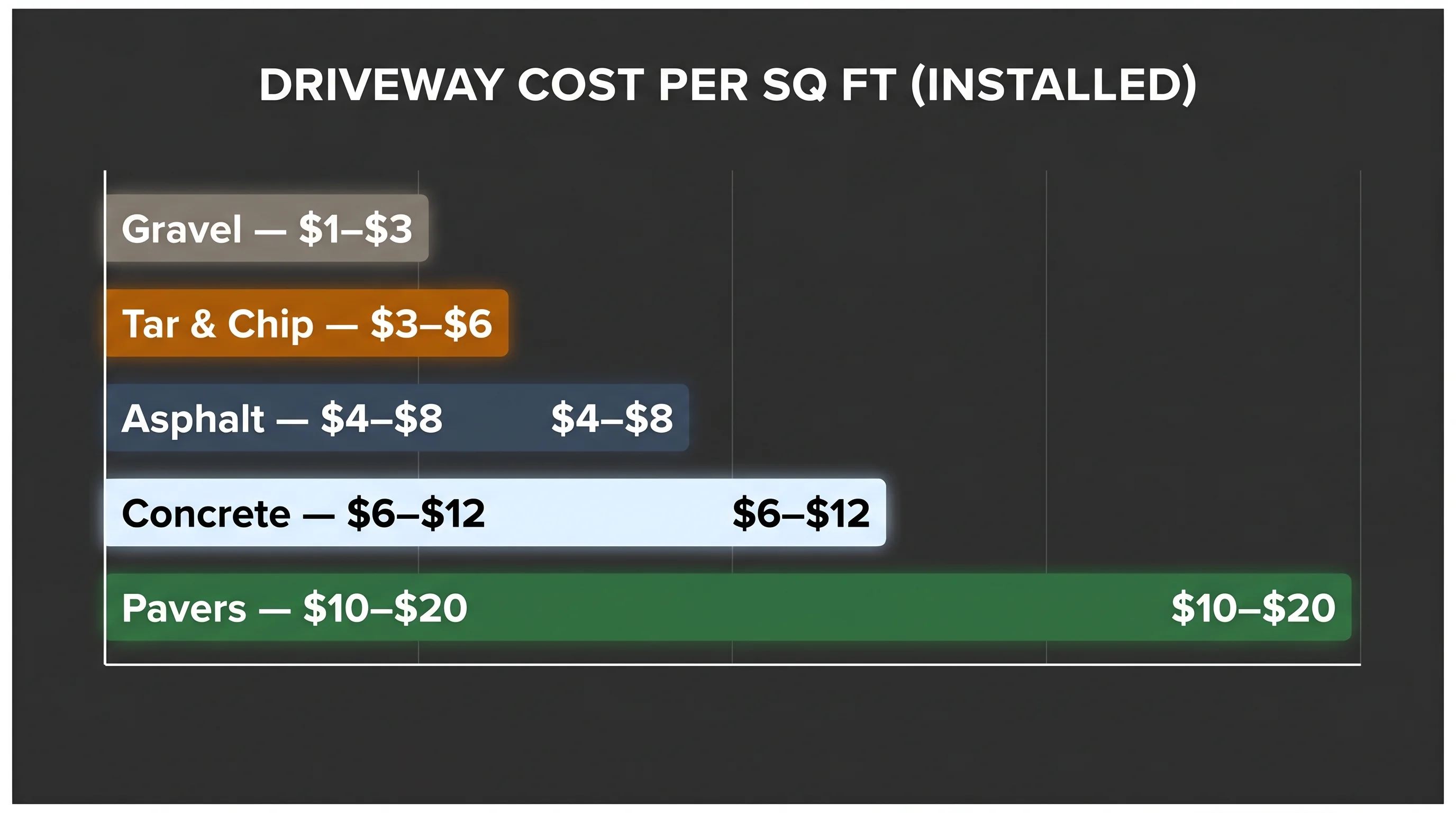
Before committing to asphalt, it helps to see where it sits relative to all your options:
| Material | Installed Cost/Sq Ft | Lifespan | Annual Maintenance | Best For |
|---|---|---|---|---|
| Gravel | $1–$3 | Indefinite (top-up needed) | $100–$300 | Rural, long driveways |
| Tar & chip | $3–$6 | 7–12 years | Low | Rural/semi-rural, rustic look |
| Asphalt | $4–$8 | 20–30 years | $50–$200 (sealing) | Most residential driveways |
| Concrete | $6–$12 | 30–50 years | Very low | Warm climates, minimal maintenance |
| Pavers (concrete) | $10–$20 | 25–50 years | Low (re-sanding) | High curb appeal, premium homes |
| Natural stone pavers | $15–$30+ | 50+ years | Low | Luxury properties |
Asphalt sits in the sweet spot for most homeowners: cheaper to install than concrete or pavers, looks great, handles traffic well, and is straightforward to repair. The main trade-off is the maintenance requirement — sealcoating every 2–3 years adds $50–$200 per application. See our best asphalt sealer for driveways guide to keep that cost low.
Replacing a Concrete Driveway with Asphalt
This is the most common conversion scenario. Concrete driveways crack over time — especially in freeze-thaw climates — and repairs become expensive. Many homeowners choose asphalt as the replacement because it's significantly cheaper to install and handles cold-climate movement better.
Concrete removal cost
Concrete removal is the most expensive demolition type at $2–$6 per square foot. Concrete is thick (typically 4–6 inches), heavy, and must be broken into manageable pieces before loading. A standard 600 sq ft concrete driveway produces 7–12 tons of debris. Most contractors include removal in their quote — always confirm this in writing.
| Phase | Cost per Sq Ft | 600 Sq Ft Example |
|---|---|---|
| Concrete removal & disposal | $2–$6 | $1,200–$3,600 |
| Base inspection & grading | $0.50–$1.50 | $300–$900 |
| New asphalt (2–3" installed) | $3–$5 | $1,800–$3,000 |
| Total | $5.50–$12.50 | $3,300–$7,500 |
Can you pave asphalt over concrete?
Technically yes, but most experienced contractors advise against it. Concrete slabs have expansion joints — saw cuts every 8–12 feet — and those joints will reflect through the new asphalt within 2–5 years, creating cracks in exactly the same pattern. If the concrete is in fair condition with no heaving or base problems, an overlay is a lower-cost short-term fix; if the concrete is heaving, cracked through, or poorly drained, removal is the right call.
Watch for hidden base problems
When concrete is removed, the sub-base condition is often worse than expected — soft spots, tree root intrusion, drainage issues. Budget an extra $500–$1,500 for base remediation. Contractors who skip this to save time are setting you up for early failure of the new asphalt.
Replacing a Gravel Driveway with Asphalt
This is the cheapest conversion scenario. Gravel removal costs just $0.50–$1.50 per square foot — it can often be pushed aside and reused as part of the asphalt sub-base rather than hauled away. This makes gravel-to-asphalt conversions significantly more affordable than concrete-to-asphalt.
| Phase | Cost per Sq Ft | 600 Sq Ft Example |
|---|---|---|
| Gravel removal or regrading | $0.50–$1.50 | $300–$900 |
| Base compaction & edging | $0.50–$1.00 | $300–$600 |
| New asphalt (2–3" installed) | $3–$5 | $1,800–$3,000 |
| Total | $4–$7.50 | $2,400–$4,500 |
The existing gravel base is a real advantage here. If it's already 4–6 inches deep and well-compacted, the contractor can regrade it and pave directly over it — skipping the cost of importing new base material. The key requirement is that the gravel is free of soft spots and properly graded for drainage.
Gravel conversion tip: add edging first
Gravel driveways typically have no defined edge. Before paving, contractors install timber, concrete curbing, or steel edging to contain the asphalt and prevent edge crumbling. Budget $3–$8 per linear foot for edging — it's not optional and significantly extends the life of the finished driveway.
Replacing Pavers or Brick with Asphalt
Paver driveways look great when new but are expensive to repair when individual bricks crack, settle unevenly, or the sand base washes out. Many homeowners convert to asphalt to eliminate ongoing maintenance headaches.
| Phase | Cost per Sq Ft | 600 Sq Ft Example |
|---|---|---|
| Paver removal & disposal | $1.50–$4 | $900–$2,400 |
| Sand base removal or prep | $0.50–$1 | $300–$600 |
| New asphalt (2–3" installed) | $3–$5 | $1,800–$3,000 |
| Total | $5–$10 | $3,000–$6,000 |
Note on salvage value: If the pavers are in good condition, they can often be salvaged and resold or reused — which may offset removal costs. Some contractors will deduct $0.50–$1.50/sq ft from removal cost if they can keep and resell the pavers. Ask before agreeing to standard disposal pricing.
The Driveway Replacement Process
-
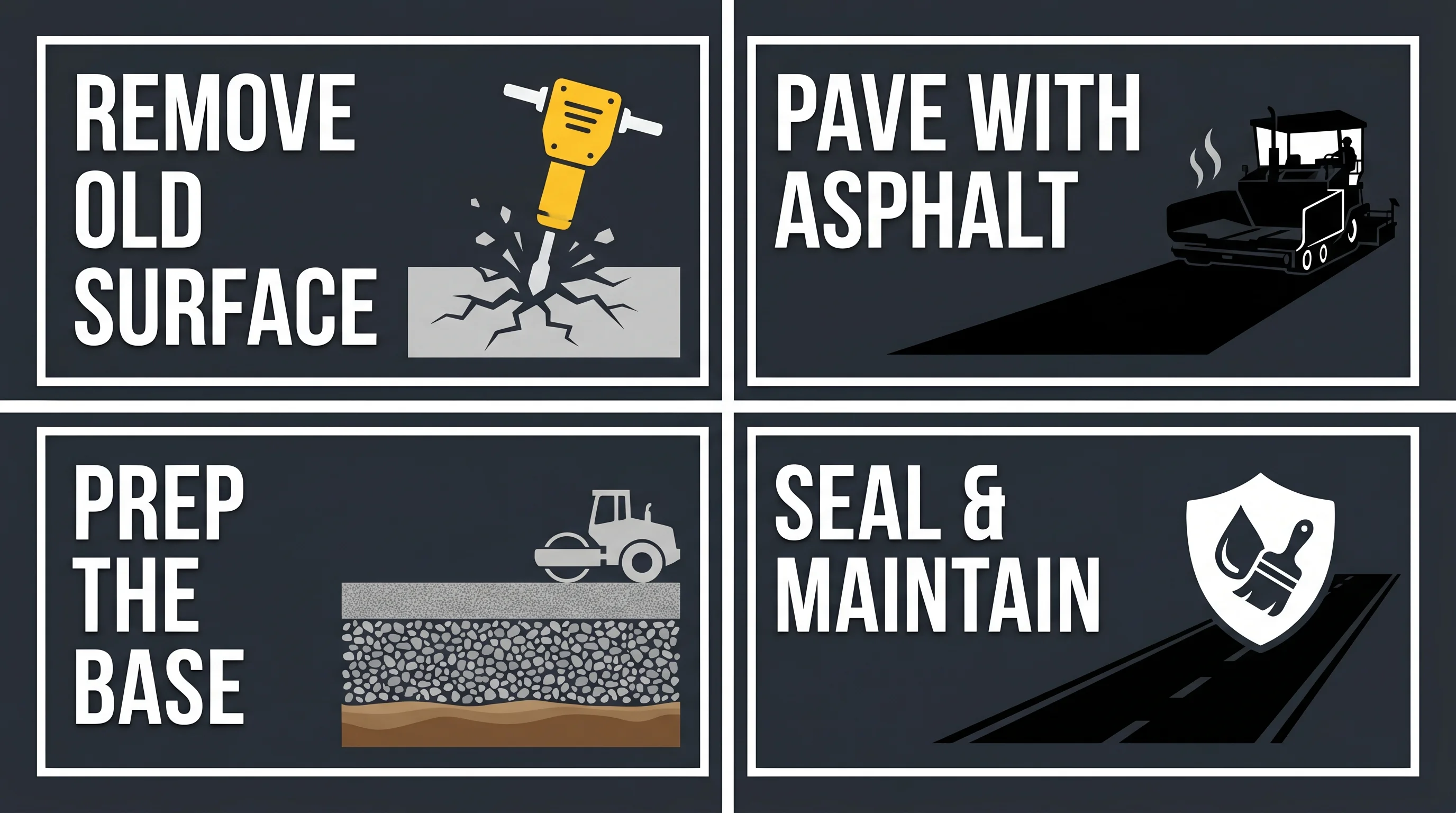
Remove the existing surface — Old concrete is broken up with a jackhammer or demolition equipment and loaded into dump trucks. Gravel is graded or excavated. Pavers are lifted individually or machine-scooped. All debris is hauled to a recycling facility or landfill.
-
Inspect and prepare the base — With the surface removed, the contractor checks the sub-base condition. Soft spots are excavated and filled with compacted aggregate. The entire base is graded for a minimum 2% slope away from the house to ensure drainage. This step determines how long your new driveway will last.
-
Install edging if needed — For gravel-to-asphalt conversions and driveways without curbing, edging forms are installed to contain the asphalt and prevent edge breakdown.
-
Apply tack coat — A thin emulsified asphalt layer is sprayed on the prepared base to bond the new hot mix asphalt to the surface below.
-
Pave with hot mix asphalt — A paving machine lays 2–3 inches of hot mix at 275–325°F. Edges and tight areas are finished by hand. For thicker specifications, paving is done in two lifts.
-
Compact with a roller — A vibratory steel drum roller makes multiple passes to compact the asphalt to proper density. Under-compaction is the leading cause of early rutting and cracking — verify your contractor uses a roller, not just a hand tamper.
-
Cure and seal — New asphalt stays off-limits to traffic for 24–48 hours. After 6–12 months of curing, apply the first coat of asphalt driveway sealer to lock in the surface and protect against UV and water damage.
Asphalt vs Other Materials: Pros & Cons
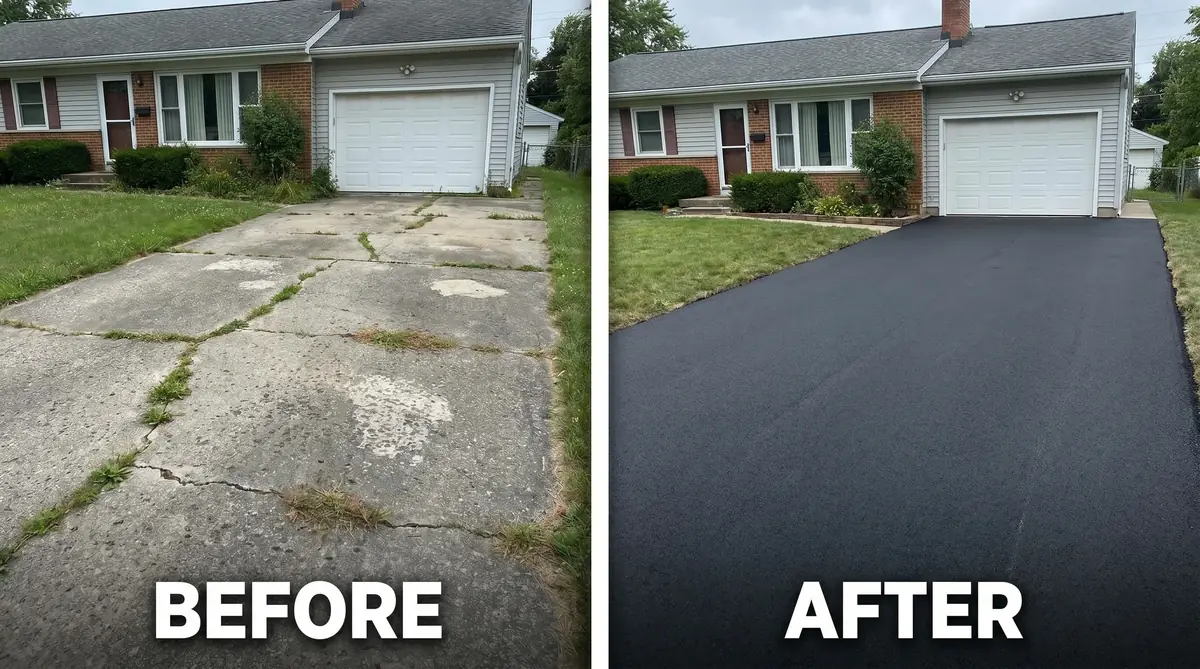
Asphalt vs Concrete
- Asphalt wins on: Upfront cost (30–50% cheaper), freeze-thaw flexibility, repairability, faster installation (driveable in 24–48 hours vs 7 days for concrete)
- Concrete wins on: Longevity (30–50 years vs 20–30), lower maintenance (no sealing required), appearance in warm climates, load capacity for heavy vehicles
- Cold climates: Asphalt flexes with freeze-thaw movement; concrete cracks. Asphalt is the clear choice in northern states.
- Hot climates: Asphalt softens in extreme heat and can develop ruts under heavy vehicles. Concrete holds up better in consistently hot regions like Phoenix or Las Vegas.
Asphalt vs Gravel
- Asphalt wins on: Appearance, dust control, no loose material tracking into house, easier snow removal, better drainage management
- Gravel wins on: Cost ($1–$3 vs $4–$8/sq ft), drainage (water passes through naturally), no base failure risk, easy spot repair
- Bottom line: Gravel is the right choice for long rural driveways (500+ ft) where paving cost is prohibitive. Asphalt makes sense for driveways under 300 ft where curb appeal and usability matter.
Asphalt vs Pavers
- Asphalt wins on: Upfront cost (50–70% cheaper), installation speed, uniformity, snow removal ease
- Pavers win on: Curb appeal, individual repair (replace one brick vs repave a section), longevity, can be relaid if base settles
- Bottom line: Pavers add $10,000–$20,000+ to a standard driveway for a premium look. Asphalt with quality edging and sealcoating looks excellent at a fraction of the cost.
How to Save on Replacing Your Driveway with Asphalt
- Get 3+ written quotes. Prices vary 20–40% between contractors. Itemized quotes (removal, base, paving separate) let you compare line by line.
- Ask about concrete recycling. Crushed concrete has value as road base material. Contractors who recycle may offer $0.50–$1/sq ft off removal costs.
- Reuse existing gravel base. If your existing base is in good shape, a good contractor can regrade and compact it rather than importing new material — saving $500–$1,500 on a mid-size driveway.
- Book in shoulder season. April–May or September–October scheduling often means better contractor availability and slightly lower pricing than peak summer.
- Combine with a neighbor's project. Contractors mobilize equipment once for two jobs — both parties save 10–15% on mobilization costs.
- Specify minimum 2-inch asphalt. Don't let contractors talk you into 1.5-inch lifts to save on material — minimum 2 inches is required for residential driveways. Verify this in writing.
Frequently Asked Questions
How much does it cost to replace a driveway with asphalt?
$3,500–$8,000 for a standard 600–800 sq ft driveway, all-in including removal and installation. Concrete-to-asphalt conversions run toward the higher end due to expensive concrete removal; gravel-to-asphalt conversions run lower. Use our driveway cost calculator for a precise estimate.
Is it cheaper to replace a concrete driveway with asphalt?
Asphalt installation is 30–50% cheaper than concrete. However, concrete removal costs $2–$6/sq ft — more than removing asphalt — which narrows the savings. On a 600 sq ft driveway, replacing concrete with asphalt typically saves $1,000–$3,000 vs replacing concrete with new concrete.
Can you pave asphalt over existing concrete?
Technically yes, but concrete expansion joints reflect through new asphalt as cracks within 2–5 years. It works as a temporary fix on structurally sound concrete but isn't a long-term solution. Full concrete removal produces a better result for the same or lower total cost over a 10-year period.
How much does it cost to replace a gravel driveway with asphalt?
$2,400–$4,500 for a standard 600 sq ft driveway — the cheapest conversion scenario because gravel removal costs just $0.50–$1.50/sq ft and the existing gravel base can often be reused. Total installed price runs $4–$7.50/sq ft depending on base condition and region.
How long does asphalt last compared to concrete?
Asphalt: 20–30 years with sealcoating every 2–3 years. Concrete: 30–50 years with minimal maintenance. In cold climates, asphalt often performs better in practice because freeze-thaw cycles crack concrete slabs while asphalt flexes. See our complete asphalt driveway lifespan guide.
What is the cheapest paved driveway option?
Tar and chip (chip seal) at $3–$6/sq ft is the cheapest paved surface. Asphalt at $4–$8/sq ft is next. Both are significantly cheaper than concrete ($6–$12/sq ft) or pavers ($10–$25/sq ft). For unpaved options, gravel at $1–$3/sq ft is by far the cheapest but requires more ongoing maintenance.