
Concrete Sealing Near Me — Find Local Services, Prices & What to Expect (2026)
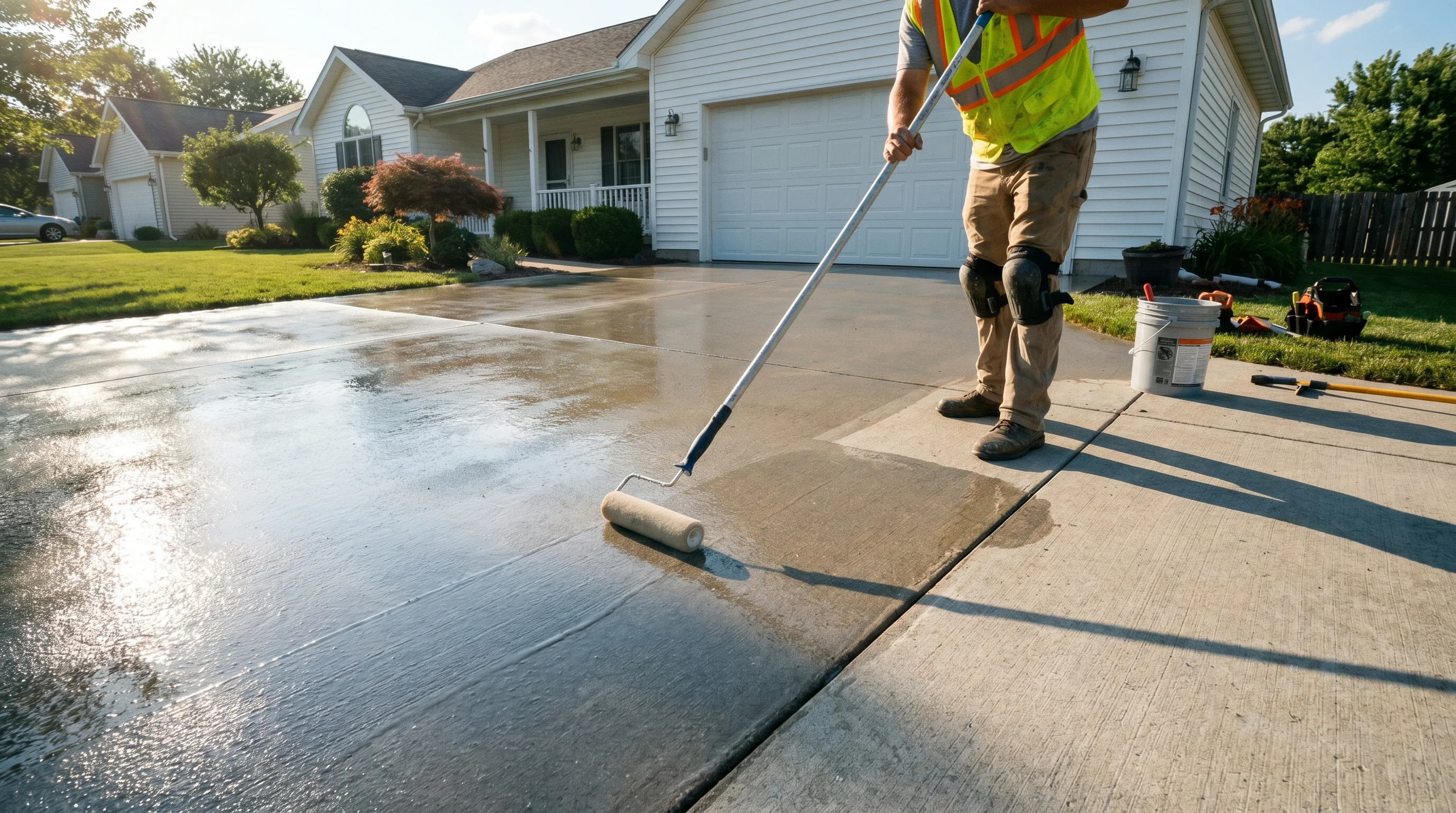
Searching "concrete sealing near me" surfaces pressure washers who also seal, dedicated concrete coating contractors, and general home service companies — and the quality difference between them is significant. The right sealer for your surface depends on climate, use, and appearance goals. The right contractor knows the difference. This guide walks through what concrete sealing costs in 2026, what to ask before booking, the red flags to avoid, and a state-by-state finder to start your search.
Quick Answer: What Does Concrete Sealing Cost?
Professional concrete sealing costs $0.20–$0.75 per square foot in 2026. A residential driveway (500–800 sq ft) runs $150–$350 with a penetrating sealer, or $200–$500 with acrylic or polyurethane. A two-car garage epoxy coating costs $600–$1,500 including prep. Most contractors have a $150–$200 minimum. Book a combined clean-and-seal to save 20–30% vs. separate services.
Find Concrete Sealing Contractors in Your State
Below is a starting list of regional concrete sealing and coating companies that may serve your area. Always verify licensing, insurance, and current availability before hiring.
🔍 State Concrete Sealing Finder
Concrete Sealing Service Types — What You're Actually Buying
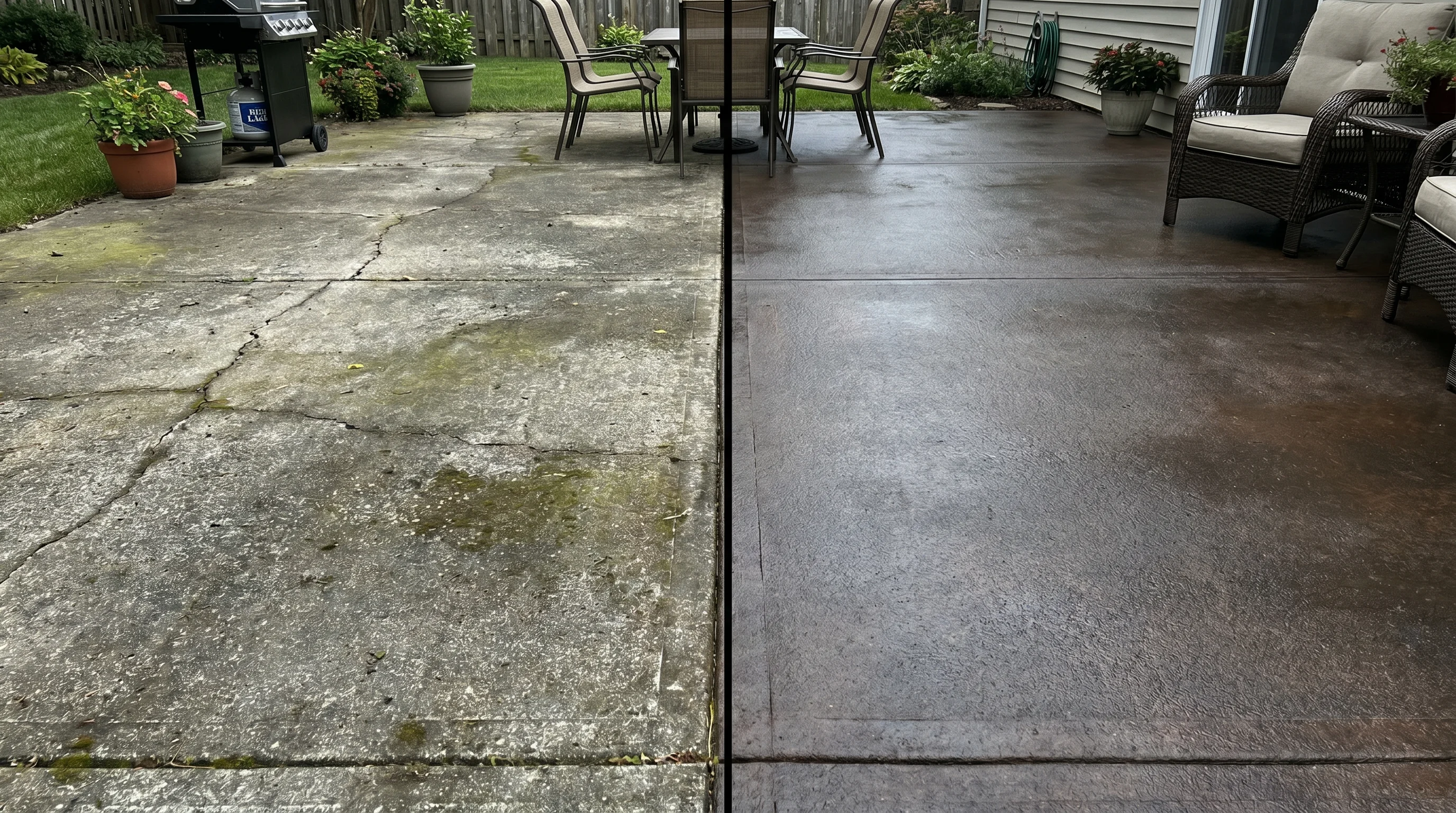
Not all concrete sealing services are the same product. The sealer type determines how it works, how long it lasts, how it looks, and what prep is required. Make sure you know which type is being quoted before you agree to the price:
| Sealer Type | How It Works | Finish | Lifespan | Typical Pro Cost |
|---|---|---|---|---|
| Penetrating silane-siloxane | Soaks into concrete, bonds inside pores — no surface film | Natural / invisible | 5–10 years | $0.20–$0.40/sq ft |
| Water-based acrylic | Surface film — thin protective layer, subtle sheen | Matte to satin | 1–3 years | $0.18–$0.35/sq ft |
| Solvent-based acrylic | Surface film — deeper penetration, enhanced color | Wet-look to gloss | 2–4 years | $0.25–$0.50/sq ft |
| Epoxy floor coating | Two-part chemical cure — hard film, high gloss | High gloss | 3–7 years | $0.50–$1.50/sq ft |
| Polyurethane | Flexible surface film — UV stable, abrasion resistant | Satin to gloss | 5–7 years | $0.45–$0.90/sq ft |
| Clean + seal combo | Full pressure wash prep followed by sealer application | Depends on sealer | Depends on sealer | $0.45–$1.00/sq ft total |
Concrete Sealing Prices by Surface Type
| Surface | Typical Size | Penetrating Sealer | Acrylic Sealer | Epoxy Coating |
|---|---|---|---|---|
| Residential driveway | 500–800 sq ft | $150–$280 | $180–$350 | N/A (not recommended outdoors) |
| Patio / pool deck | 300–600 sq ft | $100–$220 | $120–$280 | N/A (UV yellowing risk) |
| Garage floor (1-car) | 200–300 sq ft | $80–$140 | $100–$180 | $300–$600 |
| Garage floor (2-car) | 400–500 sq ft | $150–$240 | $180–$320 | $600–$1,200 |
| Sidewalk / walkway | 100–300 sq ft | $150 min charge | $150 min charge | N/A |
| Commercial parking lot | 5,000+ sq ft | $0.12–$0.25/sq ft | $0.15–$0.30/sq ft | $0.40–$0.80/sq ft |
How to Find a Trustworthy Concrete Sealing Contractor
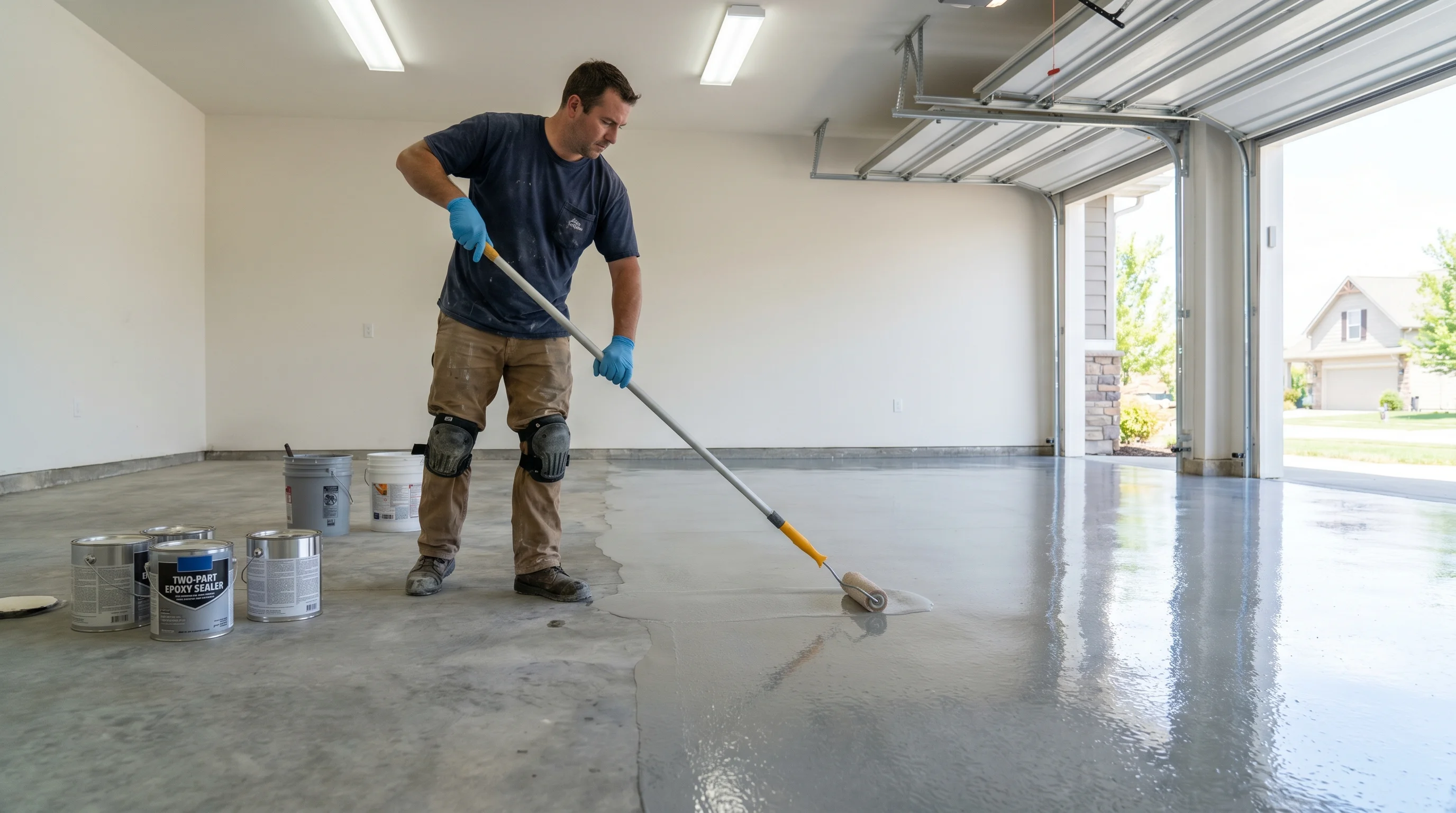
1. Search Google Maps with Specific Terms
- Search "concrete sealing [your city]" or "concrete coating contractor [your city]" — city-specific results surface local operators over national lead-gen sites
- Filter for 4+ stars with 15+ reviews — fewer than 10 reviews is too small a sample to trust
- Look at job photos in Google reviews — sealed concrete should look clean and uniform with no lap marks, white haziness, or peeling edges
2. Ask Specifically About Sealer Products
- A professional should be able to name the exact sealer product they use and explain why it's appropriate for your surface and climate
- Ask the active ingredient percentage for penetrating sealers — professional-grade products are typically 20–40% active silane-siloxane; consumer products are often 5–10%
- Ask whether they use a roller or sprayer — penetrating sealers should be flooded on with a sprayer; acrylic sealers should be rolled in thin coats
3. Verify Surface Prep Is Included
- No sealer performs well on a dirty, oily, or wet surface — surface prep is not optional
- Confirm pressure washing and degreasing are included in the quote for driveways and garage floors
- For epoxy garage floors, confirm acid etching or diamond grinding is included — epoxy applied without proper prep delamination is the most common epoxy failure
- Request a Certificate of Insurance before work begins — minimum $1M general liability plus workers' comp
- No prep included in the quote — sealer over a dirty or oily surface will peel within months; prep is not a premium add-on, it's the foundation of the job
- Won't name the sealer product — legitimate contractors know exactly what they're applying and aren't shy about it; vagueness usually means a cheap consumer product at a professional price
- Applying sealer over wet or damp concrete — film-forming sealers (acrylic, epoxy) applied to damp concrete turn white and delaminate; always ask about dry time requirements
- Applying thick coats to speed up the job — thick coats trap solvents, bubble, and peel; two thin coats is the professional standard
- No written quote or contract — verbal agreements leave you with no recourse if the sealer peels or is applied incorrectly
- Full payment demanded before work starts — industry standard is no deposit or small deposit (10–20%); balance on satisfactory completion
- Offering "lifetime" sealer guarantees — no sealer lasts forever; any contractor promising a lifetime guarantee on a film-forming sealer is misrepresenting the product
The Quote Checklist — What Every Written Quote Must Include
- Sealer product — exact brand name, product name, and type (penetrating silane-siloxane, water-based acrylic, solvent-based acrylic, epoxy, polyurethane)
- Active ingredient concentration — especially important for penetrating sealers where concentration determines performance
- Surface preparation — pressure wash PSI, degreasing for oil stains, acid etching for epoxy, crack filling if applicable
- Number of coats — most sealers require 2 coats; single-coat applications are often under-specified
- Coverage area — square footage to be sealed, measured and itemized
- Cure time — how long before foot traffic and vehicle traffic are permitted
- Warranty — separate warranty for materials (manufacturer) and workmanship (contractor); minimum 1 year on application
- Insurance — confirmation of current general liability and workers' comp coverage
- Payment terms — deposit percentage, final payment trigger (completion and inspection)
DIY vs Professional Sealing — Decision Guide
| Situation | DIY or Pro? | Reason |
|---|---|---|
| Small patio or walkway (<300 sq ft) | DIY | Low material cost, simple roller application, manageable for one person |
| Residential driveway with penetrating sealer | DIY or Pro | Penetrating sealers are easy to apply; pro adds value mainly through better prep equipment |
| Driveway with oil stains | Pro | Commercial degreaser + hot water extraction needed for proper prep; consumer equipment often insufficient |
| Stamped or decorative concrete | Pro | Wrong sealer or application method can damage color and texture; solvent-based products require ventilation management |
| Garage floor epoxy coating | Pro recommended | Surface grinding or etching, two-part mixing, pot life management, and anti-slip chip application require experience |
| Large area (1,000+ sq ft) | Pro | Professional spray equipment applies sealer faster and more evenly than a roller on large areas |
| Previously sealed (intact existing sealer) | DIY or Pro | If existing sealer is well-adhered, recoating with compatible product is straightforward |
| Previously sealed (peeling or flaking) | Pro | Strip and grind prep before reapplication requires professional equipment to do correctly |
What to Do Before the Contractor Arrives
A few simple steps on your end ensure the sealing contractor can do their best work and that you have a clear record of what was agreed:
- Clear the surface completely — remove all vehicles, furniture, planters, and stored items at least 2 hours before the scheduled arrival time
- Note all existing stains or damage — photograph oil stains, cracks, spalled areas, and any existing peeling sealer and share these with the contractor before they start; this avoids disputes about pre-existing conditions
- Confirm the weather window — remind the contractor the night before to check the forecast; if rain is expected within 24 hours, reschedule rather than sealing under risk of moisture contamination
- Confirm the curing restrictions — get clear written confirmation of how long to keep foot traffic and vehicle traffic off the sealed surface; have alternate parking arranged if your driveway is being sealed
- Keep pets and children away — sealer fumes (especially solvent-based products) are harmful in confined spaces; keep the area clear during application and for several hours afterward
Frequently Asked Questions
How much does concrete sealing cost near me?
Professional concrete sealing costs $0.20–$0.75 per square foot in 2026. A residential driveway runs $150–$350 with a penetrating sealer; $200–$500 with acrylic. A two-car garage epoxy coating runs $600–$1,500 including surface prep. Most contractors have a $150–$200 minimum charge. Combined clean-and-seal services cost 20–30% less than booking separately.
How often should concrete be professionally sealed?
Acrylic sealers: every 1–3 years. Epoxy coatings: every 3–7 years. Polyurethane: every 5–7 years. Penetrating silane-siloxane: every 5–10 years. Use the water bead test annually — if water absorbs rather than beading, resealing is needed regardless of the scheduled interval.
What is the best sealer for a concrete driveway?
For freeze-thaw and road salt climates: penetrating silane-siloxane (invisible, 5–10 years, no peeling risk). For mild climates with appearance priority: solvent-based acrylic (wet-look finish, 2–4 years). For decorative or stamped concrete: polyurethane (best UV stability and color enhancement). See our full concrete sealer guide for product recommendations.
Can I seal concrete myself?
Yes — penetrating sealers (pump sprayer) and acrylic sealers (roller) are DIY-friendly. The critical factor is surface prep — clean, dry, degreased concrete. Epoxy garage floor coatings are achievable DIY but require acid etching and precise two-part mixing. For large areas, oil-stained concrete, or decorative surfaces, professional application consistently produces better results.
What questions should I ask a concrete sealing contractor?
Ask: What sealer product and active ingredient concentration? How will the surface be prepared? How many coats? What are the dry times for foot and vehicle traffic? Do you carry general liability and workers' comp insurance? What warranty on materials and workmanship? Any contractor who can't answer these questions clearly is not the right contractor.