
Pavement vs Concrete — Which Is Better for Driveways, Roads & Parking Lots?
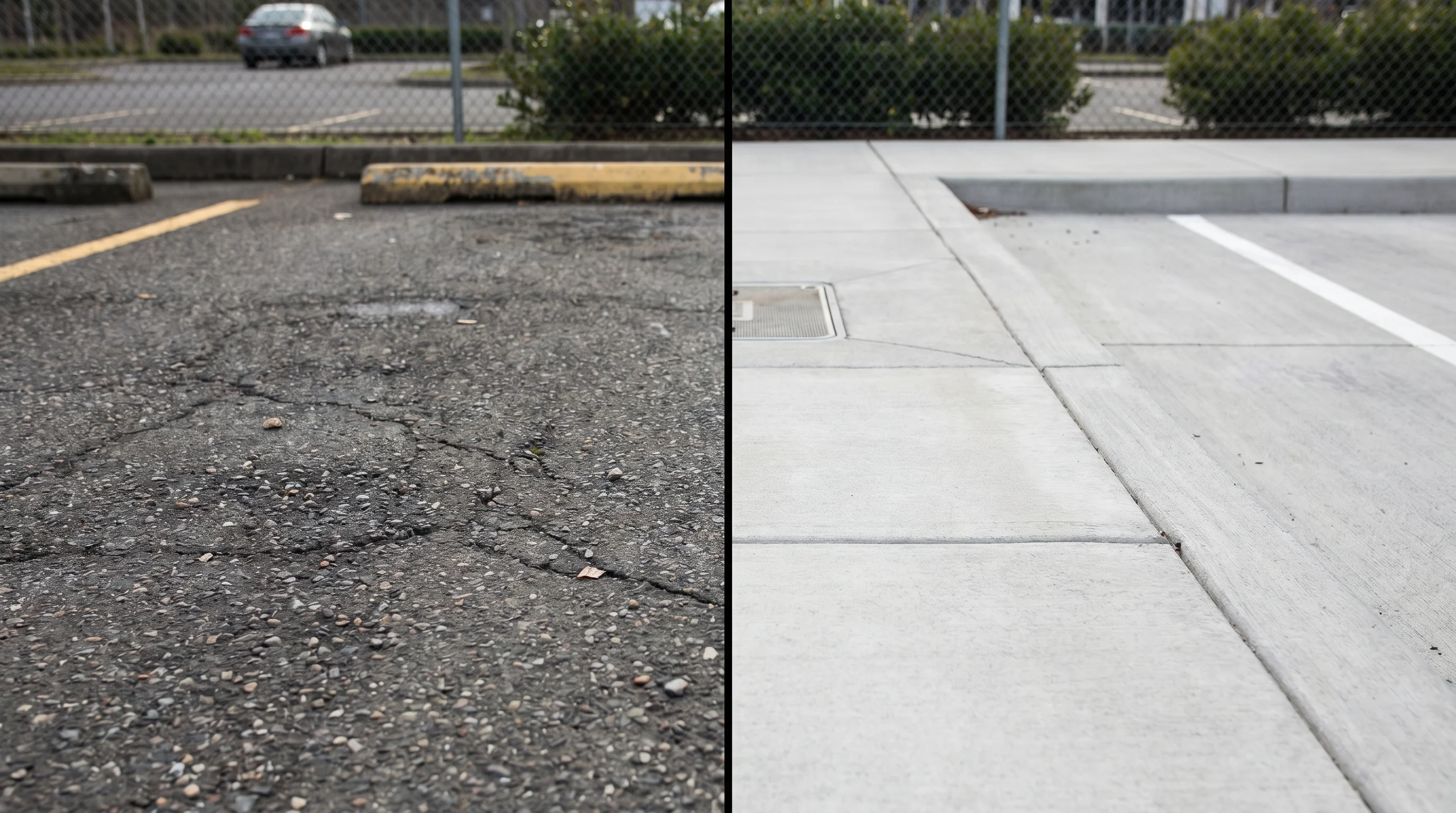
Quick Verdict by Use Case
Driveway: Asphalt pavement wins — lower install cost ($3–$7/sq ft vs $6–$12), easier repairs, driveable in 24 hours.
Road / Highway: Asphalt wins — faster to lay, quieter, cheaper to patch, better in freeze-thaw climates.
Parking Lot: Tie — asphalt for budget and repairability; concrete for high heat or heavy truck traffic.
Sidewalk: Concrete wins — rigid surface handles foot traffic better, lasts 40–50 years with minimal upkeep.
Hot Climate (desert SW): Concrete wins — asphalt softens and ruts in sustained extreme heat above 125°F surface temp.
What "Pavement" Actually Means
In everyday usage, "pavement" and "asphalt" are used interchangeably — and for good reason. Asphalt pavement (hot-mix asphalt, or HMA) is the dark, flexible surface material used on the majority of roads, driveways, and parking lots in the United States. It is made by combining aggregates (crushed stone, sand, gravel) with liquid asphalt cement as a binder, then compacting the mixture while hot.
Concrete, by contrast, is a rigid pavement made from Portland cement, aggregate, and water. It cures into a hard, inflexible slab that handles compressive loads extremely well but cannot flex. Both are legitimate paving materials — the right choice depends on application, climate, budget, and long-term maintenance expectations.
Roughly 94% of paved roads in the US are surfaced with asphalt pavement. Concrete is more common in rigid pavement applications like airport runways, bridge decks, and some interstate highways where long-term durability under extreme loads justifies the higher upfront cost.
Pavement vs Concrete — 8 Key Properties Compared
| Property | Asphalt Pavement | Concrete | Winner |
|---|---|---|---|
| Install cost | $3–$7/sq ft (driveway) | $6–$12/sq ft (driveway) | Asphalt |
| Lifespan | 20–30 years | 30–50 years | Concrete |
| Time to use after install | 24–48 hours | 5–7 days (full cure) | Asphalt |
| Repair ease & cost | Easy — patch, mill, overlay | Difficult — panel replacement | Asphalt |
| Cold climate performance | Flexible, handles freeze-thaw | Rigid — prone to joint cracking | Asphalt |
| Hot climate performance | Can soften/rut in extreme heat | Rigid, heat-stable | Concrete |
| Noise level | Quieter — absorbs tire noise | Louder — reflects tire noise | Asphalt |
| Heat island effect | High — absorbs heat, stays hot | Lower — reflects more sunlight | Concrete |
| Recyclability | 100% recyclable into new HMA | Recyclable as crushed base only | Asphalt |
Use-Case Breakdown — Which Wins for Each Application
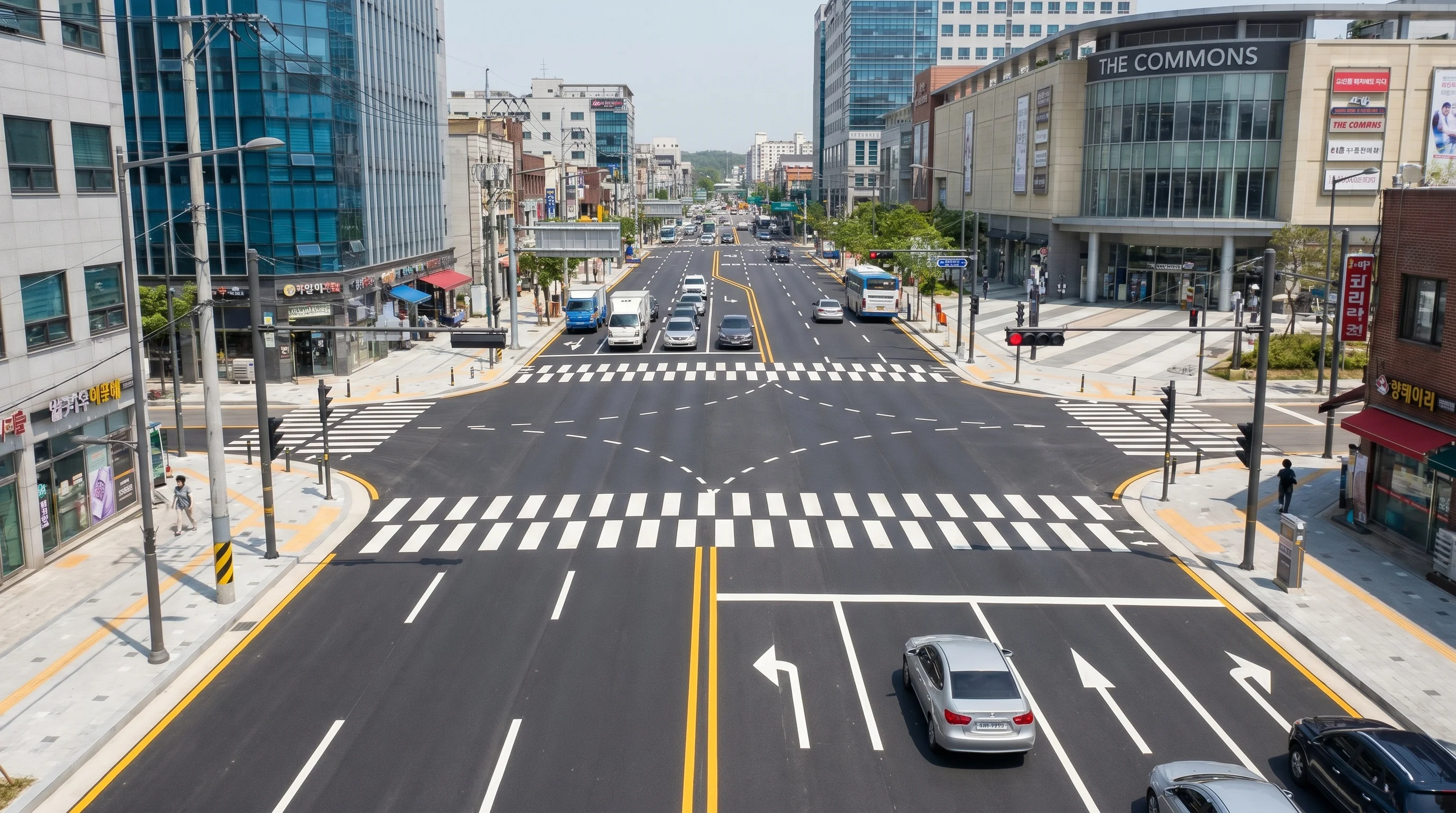
Residential Driveways
Asphalt wins. The cost gap is significant — an average 600 sq ft driveway costs $1,800–$4,200 in asphalt vs $3,600–$7,200 in concrete. Asphalt can be used within 48 hours of installation, cracks are cheap and easy to fill, and a reseal every 3–5 years extends the surface life considerably. Concrete lasts longer, but when it does crack or spall, repairs are expensive and visually obvious.
Roads and Highways
Asphalt wins by a wide margin. Approximately 94% of US roads are paved with asphalt pavement. The reasons are practical: asphalt can be laid and opened to traffic much faster, potholes and surface damage are far cheaper to repair than concrete panel replacement, and asphalt provides better ride quality. The ability to mill and overlay an asphalt road without full reconstruction is a major operational advantage for highway departments managing thousands of lane-miles.
Parking Lots
Tie — depends on traffic and climate. For most commercial parking lots, asphalt is the standard — lower upfront cost, easily restriped, quick repair of problem areas. For high-heat climates (Phoenix, Las Vegas) or lots with heavy truck traffic (loading docks, distribution centers), concrete holds up better under sustained load and doesn't soften in 120°F+ surface temperatures. Many large-format parking lots use asphalt for passenger areas and concrete at truck entry points and loading docks.
Sidewalks and Pedestrian Paths
Concrete wins. Sidewalks are subject to tree root intrusion, foot traffic, and ADA requirements for surface uniformity. Concrete panels can be individually replaced when a root lifts them. Asphalt sidewalks are less common and tend to become uneven over time as the flexible surface conforms to soil movement beneath — creating trip hazards that are costly to address without full removal and replacement.
Airport Runways and Aprons
Concrete wins for runways; asphalt for taxiways. Runway loads from heavy jets require the rigidity of concrete, which distributes extreme point loads without deforming. However, asphalt is common on taxiways and aprons where aircraft move slowly and loads are more distributed. Many airports use a hybrid approach — asphalt overlay on a concrete base — for maximum durability with a repairable surface.
Cost Comparison by Application
| Application | Asphalt Install | Concrete Install | Asphalt 10-yr Maintenance | Concrete 10-yr Maintenance |
|---|---|---|---|---|
| Residential driveway (600 sq ft) | $1,800–$4,200 | $3,600–$7,200 | $300–$800 (seal + crack fill) | $100–$400 (joint sealing) |
| Parking lot (10,000 sq ft) | $30,000–$70,000 | $60,000–$120,000 | $5,000–$15,000 | $2,000–$8,000 |
| Private road (500 lf, 12 ft wide) | $18,000–$42,000 | $36,000–$72,000 | $3,000–$8,000 | $1,500–$5,000 |
| Sidewalk (200 lf, 5 ft wide) | $2,000–$5,000 | $3,000–$8,000 | $500–$1,500 | $300–$800 |
Climate Performance
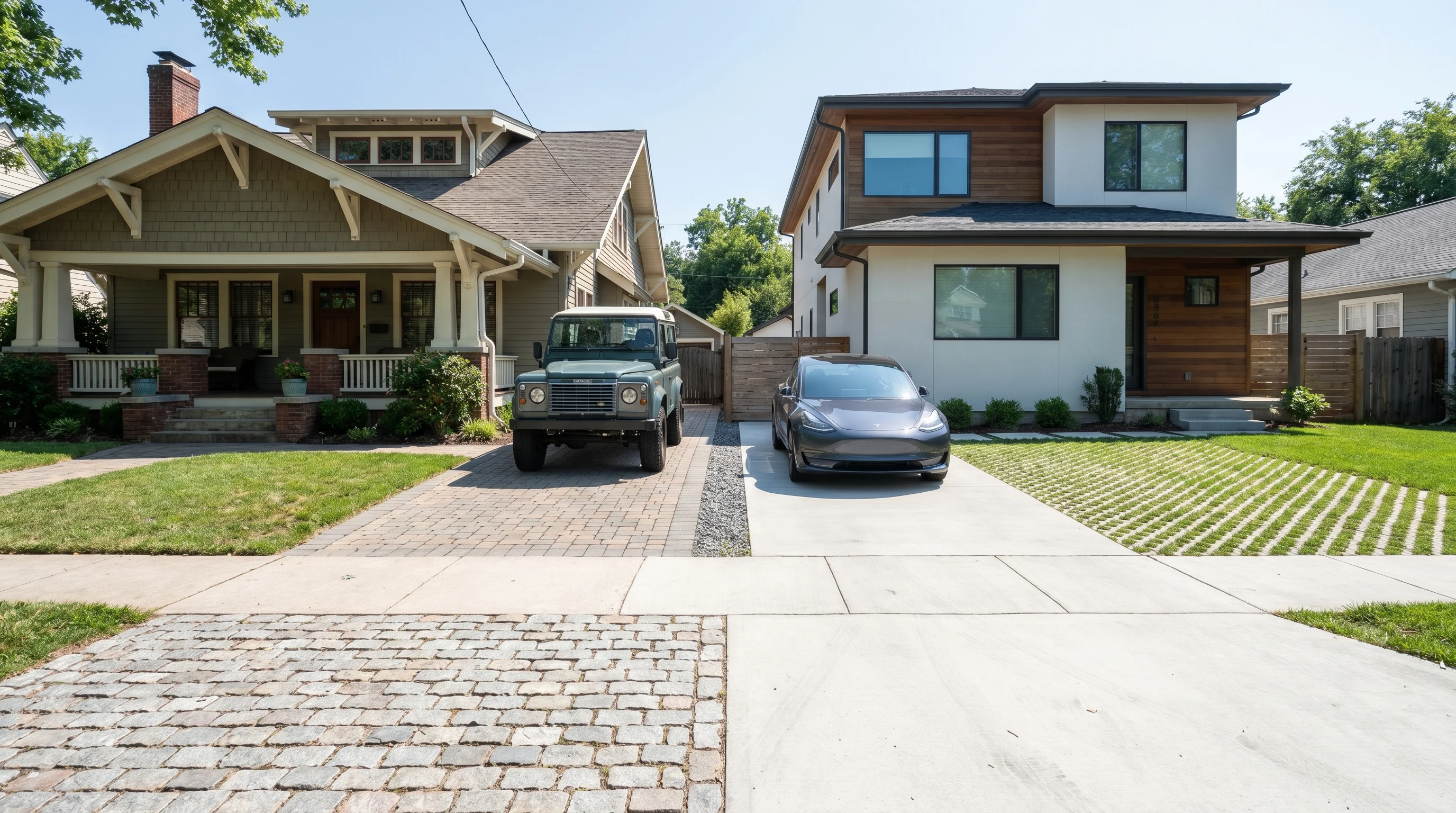
Cold Climates (Freeze-Thaw Zones)
Asphalt pavement has a clear advantage in cold climates. Its flexibility allows it to move slightly as the ground freezes and thaws without catastrophic cracking. Road salt — which is essential for ice control — does not damage asphalt but does cause pitting and scaling on concrete surfaces over time. When freeze-thaw damage does occur to asphalt (typically as surface cracking), repairs are inexpensive: fill the crack, or mill and overlay the surface if deterioration is widespread.
Concrete in cold climates suffers from joint cracking, panel heaving, and surface spalling. Deicing chemicals (calcium chloride, magnesium chloride) are particularly aggressive on concrete surfaces. Concrete driveways and sidewalks in northern states often require panel replacement within 15–20 years in areas with heavy salting, compared to 25–30 years in milder climates.
Hot Climates (Desert Southwest)
Concrete has the advantage in sustained extreme heat. Asphalt surface temperatures can exceed 150°F on a Phoenix summer afternoon — well above the temperature at which asphalt cement begins to soften. Heavy vehicles parked in the same spot for extended periods can cause rutting (permanent surface deformation) in standard HMA. Polymer-modified asphalt mixes resist heat rutting better, but still require more maintenance in extreme heat than concrete.
Concrete reflects more sunlight (higher albedo), stays cooler, and does not soften. It is a better long-term investment in desert climates where cooling bills are also a concern — a lighter-colored driveway reflects heat away from the home rather than radiating it.
Wet and Rainy Climates
Both materials perform adequately in wet climates with proper drainage design. Asphalt is slightly more permeable than concrete (standard HMA allows minimal water infiltration), though both rely primarily on surface drainage rather than permeability. Permeable asphalt and permeable concrete are specialty products available for applications where stormwater management is a priority — both allow water to pass through the surface into a stone recharge bed beneath.
- Budget is the primary concern — asphalt costs 30–50% less to install
- You live in a cold climate with significant freeze-thaw cycling or road salt use
- You want a surface that's driveable within 48 hours of installation
- You expect the surface to need repairs and want cheap, easy fixes
- Noise reduction matters — asphalt absorbs tire and road noise significantly better
- You plan to resurface rather than replace in 15–20 years
- You want a 40–50 year lifespan with minimal maintenance
- You are in a hot climate (desert SW) where asphalt softens in summer
- Heavy vehicles (trucks, RVs, forklifts) will park or operate on the surface
- You prefer the appearance and can budget for the higher upfront cost
- The application is a sidewalk, runway, or bridge deck where rigidity is critical
- Heat island reduction is a priority (lighter surface reflects more sunlight)
Frequently Asked Questions
Is pavement or concrete better for a driveway?
Asphalt pavement is better for most homeowners. It costs 30–50% less to install, is driveable within 48 hours, and is inexpensive to repair. Concrete lasts longer (30–50 years vs 20–30 for asphalt) but costs more upfront and is much harder to repair when damaged. In cold climates, asphalt's flexibility also handles freeze-thaw cycles better than rigid concrete.
Why do roads use pavement instead of concrete?
Asphalt pavement dominates road construction because it is faster to install, cheaper to repair, provides better ride quality, and performs better in cold climates. Concrete roads last longer but cost 2–3x more to build and require full-panel replacement when damaged — causing long lane closures. For most public road agencies, the lower lifecycle cost of asphalt makes it the standard choice.
Does concrete last longer than pavement?
Yes — properly installed concrete lasts 30–50 years vs 20–30 years for asphalt. However, asphalt can be resurfaced with a mill-and-overlay midway through its lifespan, extending the surface life at a fraction of full replacement cost. Over a 30-year window, lifecycle costs for both materials are often comparable when maintenance is factored in.
Which is better in cold climates?
Asphalt pavement. It is flexible and handles freeze-thaw cycles without cracking catastrophically. Road salt — essential in northern states — damages concrete surfaces over time (pitting, spalling) but does not harm asphalt. Freeze-thaw damage to asphalt is also cheap to repair: crack fill or mill-and-overlay vs expensive concrete panel replacement.
Which is better in hot climates?
Concrete performs better in extreme heat. Asphalt surface temperatures can exceed 150°F in desert climates, causing the material to soften and rut under heavy loads. Concrete stays rigid in heat, reflects more sunlight, and requires less maintenance in hot, dry climates like the desert Southwest.
Can you put asphalt pavement over concrete?
Yes — asphalt overlay on a concrete base is a common and effective approach. The concrete provides a stable base; the asphalt provides a smooth, repairable surface. The key risk is reflective cracking from concrete joints propagating upward into the asphalt, which is managed with a fabric interlayer or by milling the joints first.