
How to Replace Pool Light Bulbs and Fixtures: A Safe Step-by-Step Guide
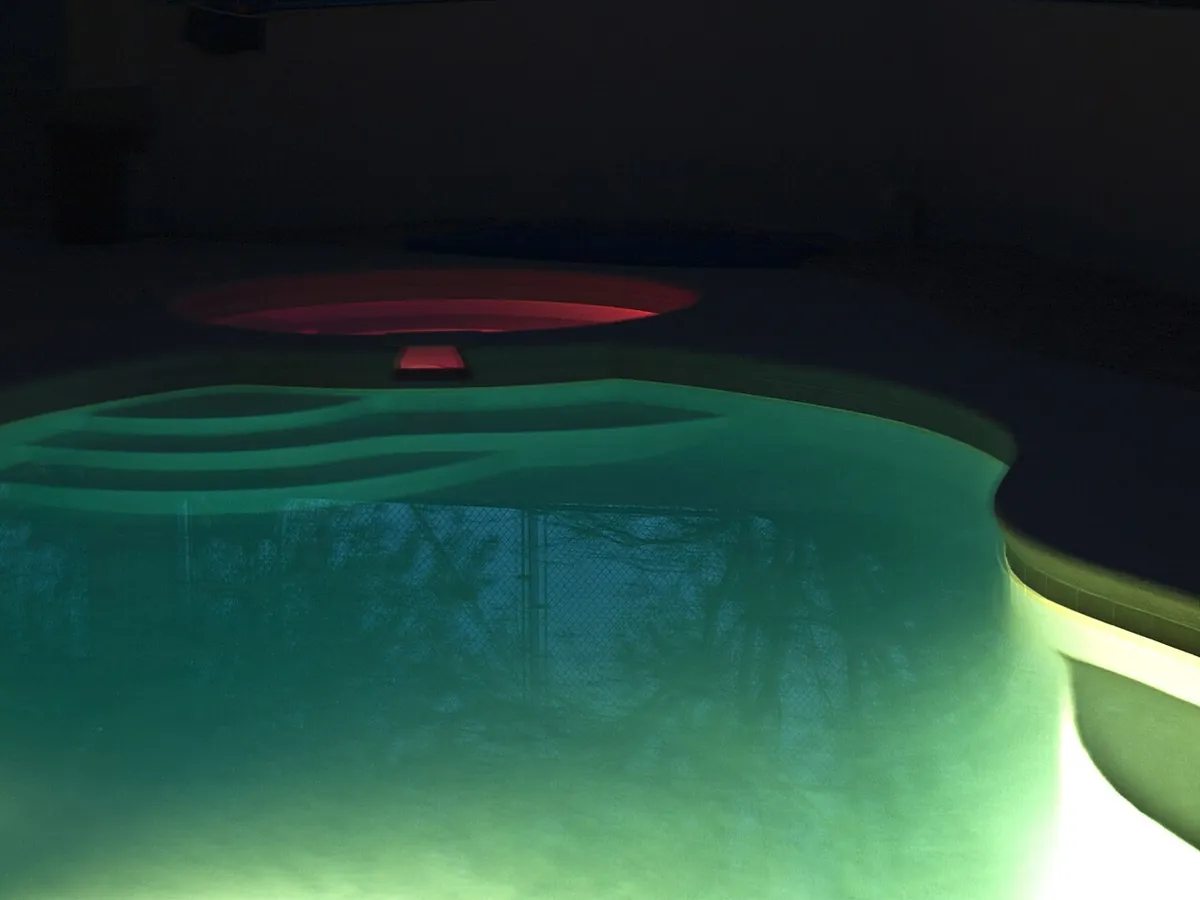
Photo: Dorian Wallender, Wikimedia Commons, CC BY-SA 2.0
Quick Answer
How to replace pool light bulbs: (1) turn off the breaker for the pool light and confirm the light switch does nothing; (2) remove the single pilot screw at the top of the light ring; (3) pry the fixture out of its niche and lift it onto the deck, using the extra cord coiled behind it; (4) open the fixture by removing the clamp ring or screws, then replace the bulb or install an LED replacement; (5) fit a new lens gasket, close the fixture and check it for leaks; (6) coil the cord back into the niche, push the light in and reinstall the pilot screw; (7) restore power and test, ideally with a GFCI test first. Never turn on a standard pool light out of water for more than a few seconds. Changing a bulb usually costs $20 to $300 in parts; a professional pool light replacement typically costs $300 to $1,000 or more for a new fixture.
A burned-out pool light is one of the most common pool repairs, and in most pools it can be fixed without draining the water. Wet-niche pool lights are designed to be lifted out of the wall and serviced on the deck. The extra cord coiled in the niche behind the light gives you enough slack to do that.
Electricity and water demand respect, though. This guide explains how pool lights are wired, how to change a pool light bulb safely, how to replace a pool light with an LED, when the whole fixture needs replacing, how to deal with leaks and fogged lenses, what pool light replacement costs, and when the job belongs with a licensed electrician.
How Pool Lights Work
Most inground pools have a wet-niche light: a sealed fixture that sits in a metal or plastic niche (a round housing) built into the pool wall. The niche is surrounded by water. The fixture's cord runs from the back of the light through a conduit to a junction box on the deck, then to a transformer (for low-voltage lights) or directly to a GFCI-protected circuit (for 120-volt lights). Several feet of extra cord are coiled in the niche so the light can be lifted onto the deck for service.
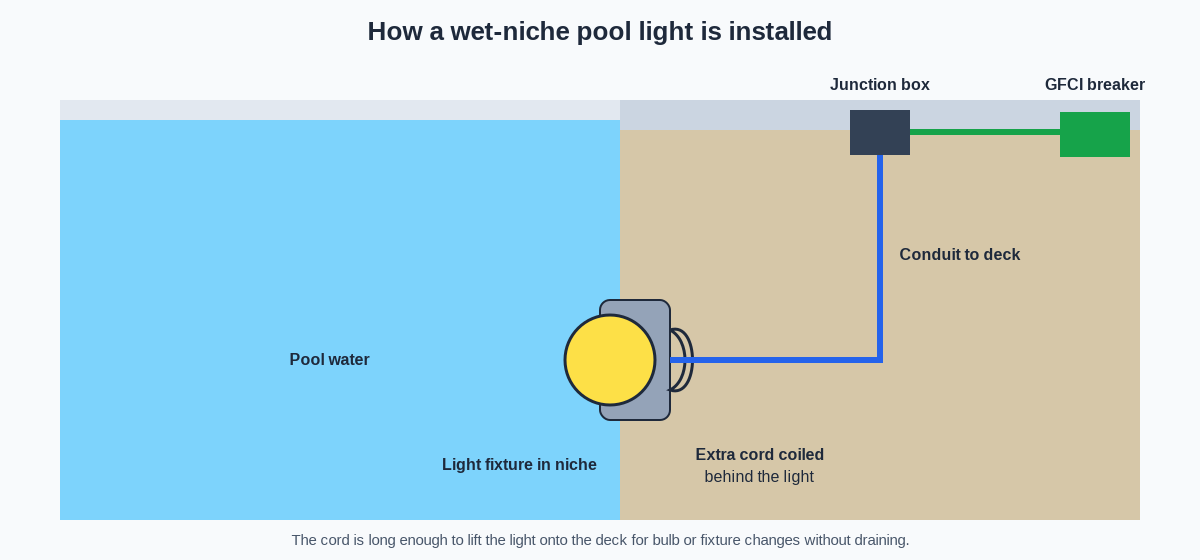
Diagram: Asphapro.com
Some pools, especially older commercial pools, have dry-niche lights serviced from a tunnel behind the wall. Many above ground pools use lights that mount in the return fitting or hang over the wall. Many newer pools use small low-voltage LED lights. Know which kind you have before you start.
Safety First
- Turn off power at the breaker, not just the wall switch. Label the breaker so no one turns it back on.
- Test that power is off by flipping the light switch; the light should stay dark.
- Check the GFCI. Every underwater pool light must be on a GFCI-protected circuit under the National Electrical Code (Article 680). Press the GFCI test button before and after the job; if it does not trip, call an electrician.
- Do not run a standard light out of water for more than a few seconds; many incandescent and halogen pool lights overheat and the lens can crack.
- Never pull the cord through the conduit yourself unless you know the wiring; replacing the cord means working in the junction box.
- If you see damaged wiring, burn marks or water in the junction box, stop and call a licensed electrician.
Tools and Parts You Need
- Screwdriver (often Phillips) for the pilot screw and lens screws.
- Replacement bulb or LED retrofit bulb matching your fixture's voltage and base.
- New lens gasket for your fixture model (always replace it).
- Towel to set the light on and dry hands.
- Pool pole with a brush head if the light is deep (to push it back in).
- Silicone lubricant suitable for pool gaskets.
- Optional: goggles or a snorkel mask if you need to reach the niche.
How to Change a Pool Light Bulb Step by Step
- Turn off the breaker and confirm the light is off.
- Find the pilot screw. It is a single screw at the top of the light ring, at about 12 o'clock. Remove it from the water's edge or by getting in the pool.
- Pry the light out. Gently lever the fixture out of the niche. There is usually a tab at the bottom that hooks into the niche.
- Lift it onto the deck. Uncoil the cord gently. Most installers leave enough cord to reach the deck without draining; if it is short, you may need to lower the water a little.
- Dry the fixture and set it on a towel, lens up.
- Open the lens. Remove the clamp band screw or the lens screws, then lift the lens and gasket off.
- Check the inside. If water is inside, the gasket failed. Dry everything; if there is corrosion, the fixture may need replacing.
- Replace the bulb. Use the same type, voltage and wattage, or an approved LED replacement.
- Fit a new gasket. Seat it evenly, lightly lubricated, and reattach the lens. Tighten clamp screws evenly so the seal is uniform.
- Leak test. Many pros submerge the fixture briefly in a bucket or the pool and watch for bubbles, then check inside again.
- Reinstall. Coil the cord neatly around the back of the fixture, set the bottom tab into the niche, push the light in and reinstall the pilot screw.
- Restore power and test. Turn on the breaker, test the GFCI, then switch on the light.
That is how to change a pool light in most inground pools, whether it has a white bulb or a colored LED. The whole job takes about 30 to 60 minutes once you have the right parts.
Replacing a Pool Light With an LED
Replacing pool lights with LED is one of the best upgrades you can make. LED pool lights use a fraction of the power, last many times longer, run cooler and often offer color shows. There are two ways to do it:
- LED retrofit bulb. Replaces the incandescent bulb inside your existing fixture. Cheaper, but performance depends on the fixture and lens.
- Complete LED fixture. A new sealed light with its own cord, sized to fit your existing niche. Brighter and more reliable, but installing the new cord is usually electrician work.
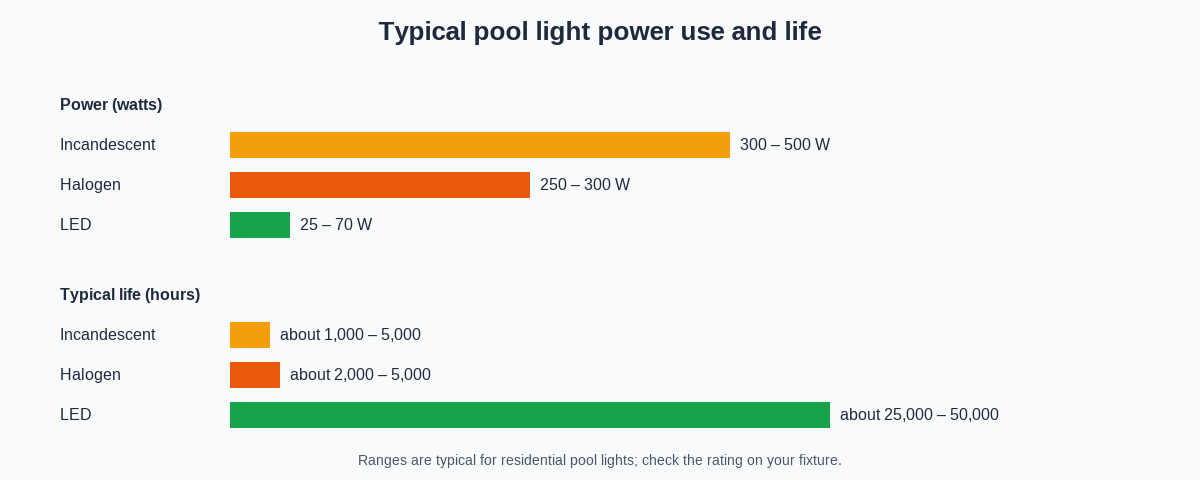
Chart: Asphapro.com
Check voltage before buying. Many pools use 120-volt lights; others use 12-volt lights with a transformer. An LED replacement must match the system voltage and fit the niche size. Major brands such as Pentair and Hayward make replacement fixtures sized for their own niches; when in doubt, note the brand and model on your existing fixture and buy a replacement listed for it.
When to Replace the Whole Pool Light Fixture
Replace the fixture rather than just the bulb when:
- The lens is cracked or the housing is corroded.
- Water keeps getting inside despite a new gasket.
- The cord is damaged, brittle or too short to reach the deck.
- The fixture is very old and parts are no longer available.
- You want to upgrade to a full LED fixture.
Pool light fixture replacement means feeding the new cord through the conduit to the junction box and connecting and bonding it. Many local codes require a licensed electrician for this. Typical pool light replacement cost for a new fixture with installation is $300 to $1,000 or more, depending on the fixture and how hard the cord is to pull.
Pool Light Replacement Cost
| Job | Typical cost |
|---|---|
| Incandescent or halogen replacement bulb | $20 – $60 |
| LED retrofit bulb | $80 – $300 |
| Lens gasket | $10 – $30 |
| Pro bulb change (service call) | $100 – $300 |
| New LED fixture (part only) | $250 – $800 |
| New fixture installed by a pro | $300 – $1,000+ |
| New niche or added light in an existing pool | $1,000 – $3,000+ |
Prices vary by brand, voltage, color features and local labor. Adding a new light where none existed is much more expensive because it means cutting into the pool wall and running new conduit. If the pool is being remodeled anyway, it is the best time to add or upgrade lights; see pool remodel cost.
Fixing a Leaking or Fogged Pool Light
Water or condensation inside the lens is a common problem. It usually means the gasket failed or the lens was tightened unevenly. Remove the light, open it, dry it completely, inspect for corrosion, fit a new gasket and reassemble. If the fixture keeps filling with water, replace it. Leaks can also happen around the niche or through the conduit, letting pool water escape; that is a pool leak rather than a bulb problem. See pool leak repair cost.
If the Light Does Not Work After a Bulb Change
- Check the GFCI and breaker. A tripped GFCI is the most common cause.
- Check the switch and timer.
- Check the bulb seating and that the new bulb matches the voltage.
- Check the transformer on low-voltage systems.
- If the GFCI trips immediately, there may be water in the fixture or a wiring fault; turn off the breaker and call an electrician.
Types of Pool Lights
- Incandescent pool lights. The traditional type, usually 300 to 500 watts. Cheap bulbs, high power use, shorter life.
- Halogen pool lights. Brighter and whiter than standard incandescent, still high power use.
- LED pool lights. The modern standard: low power, long life, white or color-changing. Available as full fixtures and retrofit bulbs.
- Fiber-optic lights. A light source in a box on the deck sends light through fiber cables to small points in the pool. No electricity at the pool wall, but less bright and the illuminator lamp needs replacing.
- Nicheless and small LED lights. Compact fixtures that mount in a small fitting, common in newer pools, vinyl and fiberglass pools, and spas.
How to Choose a Replacement Pool Light
Before buying a replacement pool light, gather this information from your existing fixture's label or manual:
- Voltage: 120V or 12V. They are not interchangeable.
- Niche size and type: large (about 10 inches) or small (spa size), and the niche brand.
- Cord length: long enough to reach the junction box with several feet left over to coil in the niche. Common lengths range from 30 to 150 feet.
- Pool surface: some fixtures are made for vinyl or fiberglass pools with different mounting rings.
- Color and brightness: white only or color-changing; how many lights the pool has.
- Control system: whether the light must sync with other lights or an automation system.
Buying the wrong cord length is a common mistake. Too short and it will not reach the junction box; far too long and the extra must be managed in the box. Measure the conduit run if you can, or match the old cord.
Low-Voltage vs 120-Volt Pool Lights
Many older pools have 120-volt lights connected through a GFCI. Newer pools often use 12-volt lights powered by a transformer, which reduces shock risk. When you replace a pool light, you must use a fixture rated for your system's voltage. Converting a pool from 120-volt to 12-volt lighting means adding a pool-rated transformer and is a job for an electrician. Low-voltage LED lights are a popular choice when the whole lighting system is being upgraded.
Changing Inground Pool Lights in Older Pools
Older pools can make changing out a pool light harder. Cords may be short because the original installer did not leave slack, niches may be corroded, and junction boxes may be below current height requirements. If you cannot lift the light to the deck, you may need to lower the water level below the light. If the niche screw holes are stripped or the niche is cracked, a niche repair kit or a new niche may be needed. Old fixtures may contain parts no longer made, which is a good reason to switch to a modern LED fixture.
Replacing Spa Lights
Spas attached to pools usually have small-niche lights. The process to change the light is the same: breaker off, remove the pilot screw, lift the light out, replace the bulb or fixture, reseal, reinstall and test. Spa water is hotter, so gaskets age faster; replace them every time you open the fixture.
Pool Lighting and Energy Costs
An old 500-watt incandescent pool light running four hours a night uses about 2 kilowatt-hours a night, around 60 kilowatt-hours a month. An LED light producing similar light might use 40 to 60 watts, a tiny fraction of that. Over a long season, the switch to LED often pays for the new bulb or fixture in a few years, before counting the fewer bulb changes. Combined with a variable-speed pump, LED lighting is one of the easiest ways to cut pool electricity costs; see cost to maintain a pool.
Caring for Pool Lights
- Keep water chemistry balanced; scale and low pH damage lenses and rings.
- Clean lenses gently when you brush the pool.
- Test the GFCI monthly.
- In cold climates, leave lights in the niche during winter; follow your pool closer's advice on water level.
- Replace the gasket every time you open the fixture.
- Watch for flicker or dimming, early signs of a failing bulb or connection.
Pool Light Replacement Kits
A pool light replacement kit usually includes a new sealed fixture with cord, a new lens and gasket, and sometimes an adapter ring to fit different niche sizes. Retrofit kits for LED conversion may include a bulb and a new lens. Before buying a pool light replacement kit, confirm the voltage, cord length, niche size and pool surface type. Kits made by the same company as your niche usually fit best; universal kits include adapter rings for several niche brands.
Swimming Pool Light Replacement: DIY or Pro?
Changing a swimming pool light bulb is a reasonable DIY job for a careful homeowner: the breaker is off, the fixture comes out on its cord, and the work happens on the deck. Swimming pool light replacement becomes pro work when it involves pulling a new cord through the conduit, opening the junction box, changing voltage, or repairing a niche. Many pool service companies will change a bulb for a modest service fee, which is worth it if the light is hard to reach or you are not comfortable with electrical work.
Common Mistakes When Replacing Pool Lights
- Turning off only the wall switch instead of the breaker.
- Reusing an old, flattened gasket.
- Tightening lens screws unevenly, which causes leaks.
- Using a bulb with the wrong voltage or wattage.
- Running a standard light out of water for too long.
- Pulling hard on a short cord and damaging the connection in the junction box.
- Forgetting to coil the cord behind the light, so it will not seat in the niche.
Lighted Pool Safety at Night
Good underwater lighting lets swimmers and supervisors see the whole pool floor, which is an important safety feature. A lighted pool also makes steps, benches and depth changes easier to see. If your pool light is out, avoid swimming after dark until it is fixed, and consider adding a second light if one fixture leaves dark areas. Pair underwater lights with deck lighting to reduce slips around the pool.
Above Ground Pool Lights
Above ground pools usually use one of three light types: a light that replaces the return jet fitting, a light that hangs over the top rail, or a magnetic or floating LED light. Return-fitting lights are low voltage with a plug-in transformer, so changing them is simple: unplug the transformer, remove the fixture from the return, and install the new one following the instructions. Always use lights rated for pool use and plug transformers into GFCI-protected outlets at the distance your code requires. See how to put up an above ground pool.
Pool Lighting Ideas
A lighted swimming pool is safer at night and makes the whole yard more usable. Common pool lighting choices include:
- Color-changing LED lights with preset shows and app control.
- Small step lights that mark entries and benches.
- Spa lights to match the pool.
- Deck and landscape lighting to light paths and reduce trip hazards.
- Water feature lights in waterfalls and bubblers; see pool ideas with waterfalls.
Planning a Pool Lighting Upgrade
If you are changing out a pool light anyway, it is a good moment to think about the whole lighting plan. Start with how you use the pool after dark: quiet evening swims need soft, even light; entertaining calls for color and accent lighting; safety calls for well-lit steps and edges. Count your existing niches and note where dark spots fall. A single 300-watt-equivalent LED usually lights a small pool well, while larger pools and free-form shapes often need two or more lights placed on the house side, shining away from where people sit so the light does not glare in their eyes.
Coordinate the pool, spa, water features and landscape lighting so colors match and everything can run from one switch, timer or app. If your pool has no light at all, adding one to an existing pool means cutting a niche into the wall, running conduit and wiring, and patching the surface, so it is usually done during a remodel or resurfacing. Low-cost options such as floating solar lights or magnetic LED lights add some glow without any wiring, but they do not replace a properly installed pool light for safety.
When to Call a Professional
Call a pool electrician or pool service company if:
- The GFCI does not trip when tested, or trips repeatedly.
- The cord must be replaced or pulled through the conduit.
- The junction box is corroded or full of water.
- The niche is cracked or loose.
- You are not sure which breaker controls the light.
Electrical work at pools is regulated for good reason. Paying for a safe, code-compliant installation is far better than risking a shock hazard.
Frequently Asked Questions
Do you have to drain a pool to change the light?
No. Wet-niche lights have enough cord to lift them onto the deck while the pool stays full. Only very short cords or damaged niches may require lowering the water.
How much does it cost to replace a pool light?
A bulb costs $20 to $300 depending on type; a new fixture installed by a pro usually costs $300 to $1,000 or more.
Can I put an LED bulb in my old pool light?
Often yes, if an LED retrofit bulb is made for your fixture's voltage and base. A complete LED fixture usually performs better.
How long do pool light bulbs last?
Incandescent and halogen pool bulbs often last 1,000 to 5,000 hours; LED pool lights often last 25,000 hours or more.
Why does my pool light keep filling with water?
The gasket is worn, the lens is cracked, or the clamp is not tightened evenly. Replace the gasket; replace the fixture if leaks continue.
Can I test a pool light out of the water?
Only for a second or two with standard lights, which can overheat quickly. Some LED fixtures tolerate brief testing; follow the maker's instructions.
How do I know if my pool light is 12V or 120V?
Check the label on the fixture or in the manual, or look for a transformer near the equipment; a pool-rated transformer usually means 12V lights.
How many lights does a pool need?
Many residential pools have one light; larger pools often use two to four, placed so the light shines away from the main viewing area.
How do you change a light in the pool without getting in?
Turn off the breaker, then use a screwdriver on a long handle or a pole attachment to reach the pilot screw, and a pool brush on a pole to push the fixture out and later back into the niche. Many owners still find it easier to step into the shallow end.
What size pool light do I need?
Match the niche: most inground pools use large niches for 10-inch-class lights, while spas and small pools use small niches. The fixture label or niche brand tells you which replacement fits.
Can I replace a pool light cord?
The cord on most wet-niche lights is part of the sealed fixture, so a damaged cord usually means a new fixture. Pulling the new cord through the conduit is electrician work.
Is it safe to swim with a broken pool light?
If the light is simply burned out and the GFCI works, it is generally safe. If the lens is cracked, water is in the fixture or the GFCI trips, turn the breaker off and keep swimmers out until it is repaired.
Sources
- NFPA 70, National Electrical Code (Article 680: pools and spas)
- U.S. CPSC: Pool and spa safety, including electrical hazards
- U.S. Department of Energy: LED lighting
- Electrical Safety Foundation International: pool and spa electrical safety
- HomeGuide: Pool repair cost (lights)