
How to Put Up an Above Ground Pool: Setup, Base, Liner and Equipment
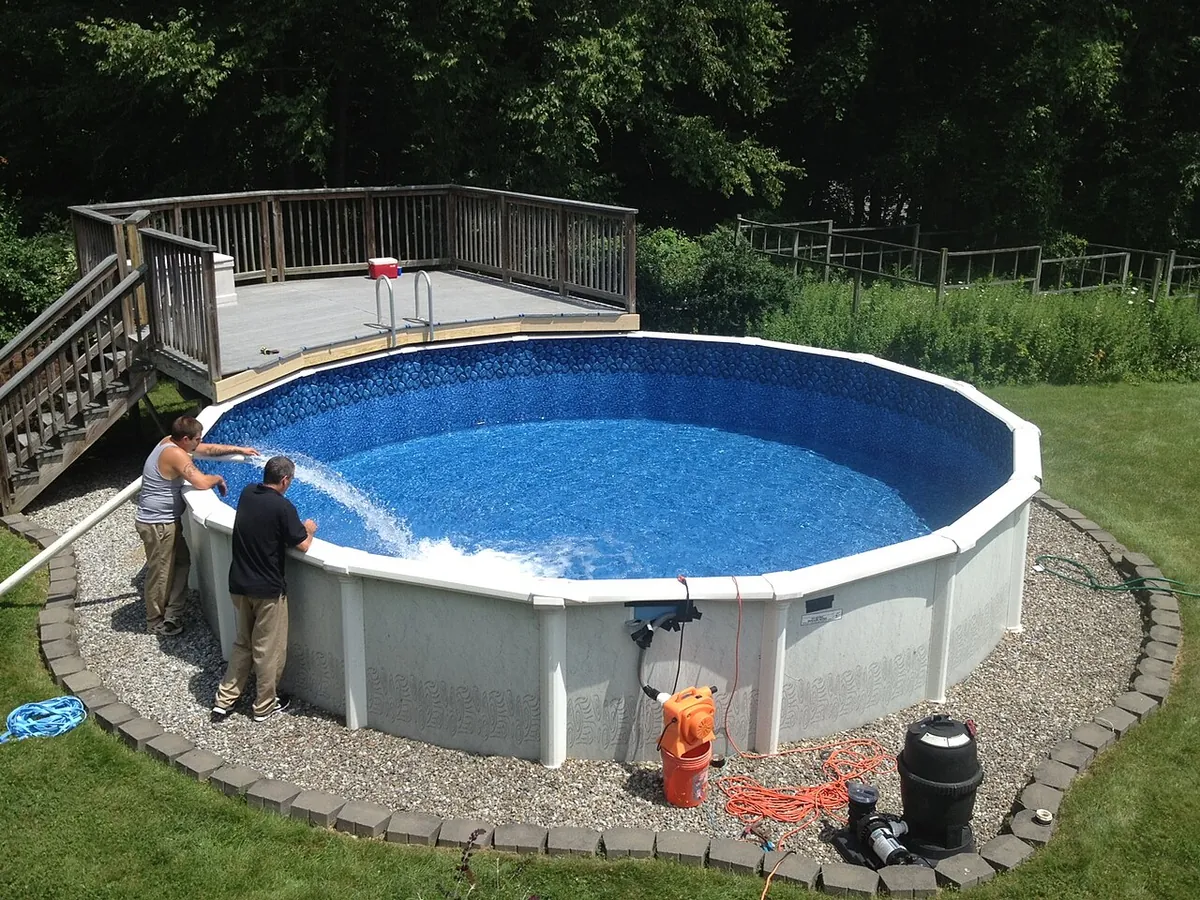
Photo: Chris Grazioli, Wikimedia Commons, CC BY 2.0
Quick Answer
How to put up an above ground pool: (1) check permits and choose a flat, sunny spot away from trees and power lines; (2) mark the circle or oval and level the ground by removing high spots, never by filling low ones; (3) lay the bottom track, footplates and pavers, and spread a 2-inch layer of sand or a foam pool pad inside; (4) stand the steel or resin wall, cut the skimmer and return openings, and fit the uprights; (5) hang the above ground pool liner, smooth it, and start filling slowly while you pull out wrinkles; (6) add the top rails and covers; (7) install the skimmer, return, above ground pool pump and filter, and connect them with hoses; (8) finish the ladder or stairs, deck, fence and electrical work. A typical 18 to 24 ft round pool takes two to four people one to three days. Professional above ground pool installers usually charge about $1,000 to $4,000 for installation.
An above ground pool is the fastest and cheapest way to get a real swimming pool in the backyard. A good above ground pool, set up properly, can last 10 to 20 years. Set up badly, on uneven ground or a poor base, it can wrinkle, leak, bow, or even collapse. Almost every problem with above ground pools traces back to the ground and the base, so this guide spends extra time on those steps.
Below you will find how to pick the size and type, permits, site choice, leveling, base options, the assembly process step by step, filling, pump and filter setup, and everything that goes around the pool: ladders, stairs, decks, heaters, covers, lights, fences, slides and landscaping. The last sections cover above ground pool maintenance and winterizing. For prices, see above ground pool installation cost.
Above Ground Pool Types, Shapes and Sizes
Wall materials
- Steel above ground pool. The most common type. Galvanized, coated steel walls with steel or resin top rails. Strong and affordable, but steel can rust if water sits against it or the coating is scratched.
- Resin above ground pool. Resin (plastic) parts do not rust and stay cooler in sun. Many pools are hybrids with a steel wall and resin rails, uprights and bottom track.
- Aluminum above ground pool. Light and rust-resistant, usually priced between steel and resin.
- Fiberglass above ground pool. Less common; some fiberglass shells can be installed partly or fully above ground with a supporting structure.
- Frame and inflatable pools. Metal frame pools and easy-set inflatable ring pools are seasonal pools, cheap and quick to set up, but not built to stay up year round in most climates.
- Above ground concrete pool. A raised concrete or block pool built partly above grade. It is really a custom inground-style build and costs far more.
Shapes
Round above ground pools are the easiest to build and the cheapest, because the water pressure pushes evenly on the wall. Oval above ground pools fit narrow yards and give more room to swim lengths, but need side braces or buttresses, which take more space and work. Rectangular above ground pools and square above ground pools look more like an inground pool and suit decks, but they need a strong frame and usually cost more.
Sizes
| Common size | Approx. water capacity (at 48 in wall) | Good for |
|---|---|---|
| 15 ft round (15x48) | about 4,600 gallons | Small yards, young children |
| 18 ft round (18x48) | about 6,600 gallons | Most families with small yards |
| 21 ft round | about 9,000 gallons | Families who want room to play |
| 24 ft round (24x52) | about 12,000 – 14,000 gallons | The most popular large size |
| 27 – 33 ft round | 16,000 – 25,000+ gallons | Big yards, the biggest above ground pools |
| 15 x 30 ft oval | about 11,000 gallons | Narrow yards, swimming lengths |
Wall heights are usually 48, 52 or 54 inches, giving a water depth of about 4 feet. Some pools offer an expandable liner that lets you dig a deeper center, creating an above ground pool with a deep end of 6 feet or more; the deepest above ground pool options need extra digging and careful planning around the wall. A 24 ft above ground pool is the most popular size because it gives a lot of swimming room without dominating the yard. To check gallons for your size, see how many gallons is my pool.
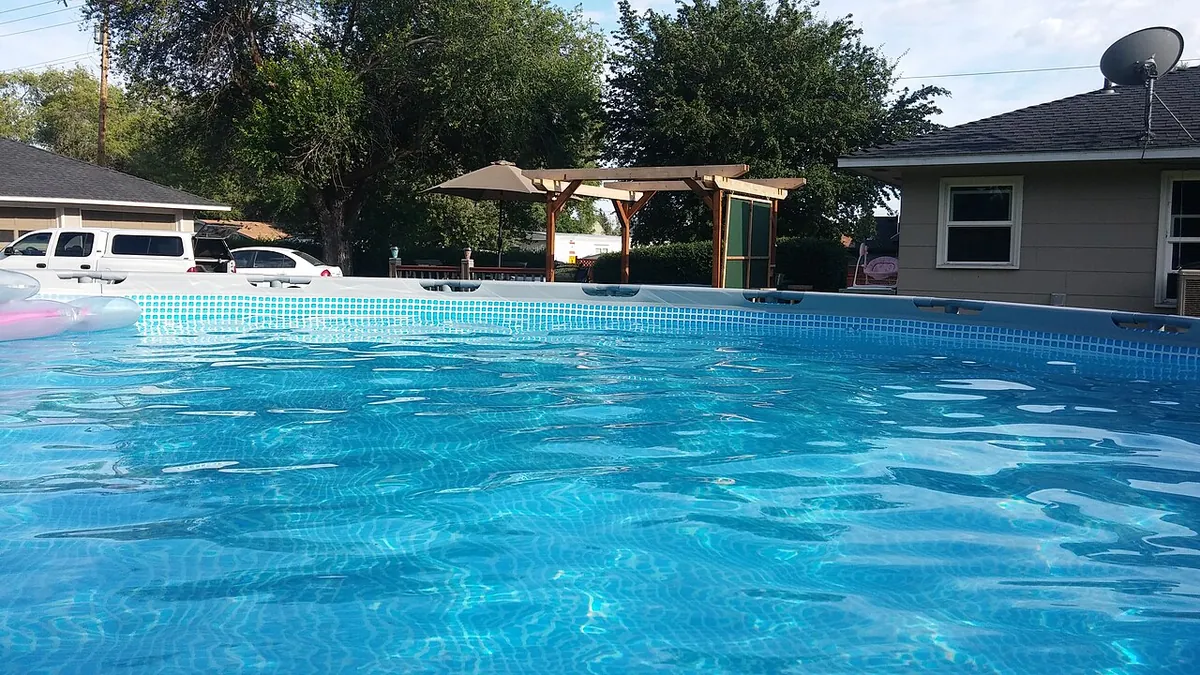
Photo: Stickman66, Wikimedia Commons, CC BY-SA 3.0
Step 1: Permits and Rules
Many towns require a permit for an above ground pool, especially if it holds more than 24 inches of water. Typical rules cover:
- Setbacks from property lines, the house, septic systems and easements.
- Barriers. Many codes treat the above ground pool wall as part of the barrier if it is at least 48 inches tall, with a removable or lockable ladder. Others require a separate fence.
- Electrical. A GFCI-protected circuit for the pump, minimum distances for outlets and overhead wires, and bonding.
- HOA rules on location and screening.
Call your building department before you buy. A permit for an above ground pool is usually inexpensive, but tearing down a pool that breaks the rules is not. Also call 811 before digging so buried utility lines are marked.
Step 2: Choose the Right Spot
- Flat ground. The flatter the site, the less digging. A slope can be leveled, but it takes work.
- Sun. Full sun warms the water and reduces algae.
- Away from trees. Roots can push up the base and puncture liners; leaves clog the skimmer.
- Away from power lines and at a safe distance from septic tanks and drain fields.
- Good drainage. Do not set the pool in a low spot where rain collects.
- Firm, undisturbed soil. Never build on fresh fill, an old stump hole or a buried trash pit; it will settle.
- Access for water and power, and a view from the house for supervision.
Step 3: Level the Ground
Leveling is the most important step when you put up an above ground pool. The finished ground should be level within about 1 inch across the whole pool footprint. Water is heavy, roughly 8.3 pounds per gallon, so a 24 ft pool holds more than 50 tons of water. Uneven ground makes the water deeper on one side and puts extra stress on the wall.
- Mark the area. Drive a stake in the center and use a string as long as the radius plus 1 foot to paint a circle on the grass.
- Remove the sod inside the circle with a sod cutter or flat shovel.
- Find the low spot. Use a long straight board with a level on it, or a laser or transit level, to check across the circle in several directions.
- Dig down the high spots to match the lowest point. Do not build up low spots with loose soil; it will settle under the water weight and the pool will tilt.
- Remove rocks, roots and debris, then tamp the soil firm.
- Check again. Take your time here; this step decides how well the pool performs for years.
For a full walk-through, see how to level an above ground pool. If the yard slopes a lot, you may need a small retaining wall or to dig the pool partly into the ground, which turns it into a semi above ground pool; see semi inground pool cost.
Step 4: Build the Base and Pad
The above ground pool base protects the liner from below and gives a smooth floor to stand on. The best above ground pool pad options are:
- Sand. The traditional base: about 2 inches of clean, fine masonry or mason sand, raked smooth and compacted. Sand for an above ground pool is cheap, but feet can leave dents, and sand can wash out if the liner leaks.
- Foam or felt pool pads. Pre-cut pads or rolls of foam board or geotextile laid over the leveled ground or over the sand. A pool pad for an above ground pool adds cushioning and protects against roots and stones.
- Concrete pads. Some owners pour a slab. It is very stable, but you still need a layer of padding on top so the liner does not wear against the concrete.
- Stone dust or screened stone. Used by some installers as a firm base, usually covered with a pad.
Most installers recommend a cove: a triangle of sand or a foam cove strip about 6 inches high around the inside base of the wall. It keeps the liner from slipping under the wall, which is a common cause of failure. Under the wall itself, set the bottom track on solid patio blocks or pavers buried flush with the ground, one under each upright, so the uprights do not sink.
Also ask what to put under an above ground pool besides sand and pads: many installers spray a non-staining weed and grass killer on the soil before the base goes down, because some grasses grow through sand and can damage a liner.
Step 5: Assemble the Wall and Frame
- Lay the bottom track pieces in a circle on the pavers, connecting them with the bottom plates, and check the diameter in several directions.
- Unroll the wall into the bottom track, working on a calm day with at least two or three people. A wind gust can fold a steel wall.
- Join the wall ends with the bolts and cover the seam with tape so the bolt heads cannot rub the liner.
- Position the skimmer opening so the prevailing wind pushes debris toward it, and near where the equipment will sit.
- Attach the uprights to the bottom plates and wall.
- Spread and shape the sand base and cove inside the wall if you did not do so earlier, then smooth it carefully.
Step 6: Hang the Liner
The above ground pool liner is the part that actually holds the water. There are three main types:
- Overlap liners drape over the top of the wall and are held by coping strips. They fit many sizes and are the most common.
- Beaded liners hang from a bead receiver track at the top of the wall, look cleaner, and are easier to replace.
- Expandable liners allow a deeper center.
Install the liner on a warm day, when the vinyl is soft and stretchy. Unfold it in the center, align the floor seam, and lift it over the wall. Work out wrinkles with your feet and hands, starting from the center. Many installers use a shop vacuum between the liner and the wall to pull the liner tight against the floor before filling. Then begin filling with an inch or two of water and keep smoothing until the floor is wrinkle-free.
For details on liner choices and fitting, see how to install an above ground pool liner.
Step 7: Top Rails, Fill and Openings
- Fit the top plates and top rails as the manual directs, then the upright and rail covers.
- Keep filling. Watch the liner; stop and adjust if it pulls or wrinkles.
- Cut the skimmer and return openings only when the water is a few inches below them. Fit the gaskets and faceplates first, then cut the liner inside the faceplate.
- Fill to mid-skimmer. A 24 ft pool can take more than a day with a garden hose. Water delivery by truck is faster; see pool water delivery cost.
Step 8: Pump, Filter and Hoses
The filtration system is what keeps the water clean. An above ground pool pump pulls water from the skimmer, pushes it through the filter, and returns it to the pool. Set the equipment on a level pad of concrete or pavers a few feet from the wall.
- Above ground pool filters come in three types: sand filters (simple and cheap to run), cartridge filters (good filtration, no backwashing, cartridges need cleaning) and DE filters (finest filtration, more upkeep).
- Pumps. Choose a pump sized for your pool volume and filter. A pump that turns over the water once every 8 hours is a common target. Variable-speed pumps cost more but save electricity.
- Hoses or hard plumbing. Above ground pool hoses with clamps are standard; rigid PVC plumbing is sturdier and leaks less.
- Electrical. Plug the pump into a GFCI-protected outdoor outlet at the distance your code requires, or have an electrician hardwire it. Never use an extension cord.
Prime the pump, start it, and check every connection for leaks. If you choose a sand filter, see cost to replace sand in a pool filter for later upkeep, and how to prime a pool pump.
Salt water above ground pools
Many above ground pools can run on saltwater with a salt chlorine generator added to the return line. Check that the pool maker allows salt: salt can speed corrosion on some steel walls, while resin parts handle it better. A saltwater above ground pool still contains chlorine, made from the salt. See salt vs chlorine pools.
Step 9: Ladders, Stairs and Steps
Every above ground pool needs a safe way in and out. Swimming pool ladders for above ground pools come in two main types: A-frame ladders that straddle the wall, and in-pool ladders or steps used with a deck. Pool stairs for above ground pools, wide steps with handrails, are easier for children and older swimmers. Look for ladders rated for the weight of your users, with a removable or lockable outside section to keep children out when the pool is not in use. Set the ladder feet on a mat or pad so they do not wear the liner. See above ground pool steps.
Step 10: Decks, Fences and Landscaping
Above ground pool decks. A deck turns an above ground pool into an outdoor living space. Options range from a small platform at the ladder to a full wraparound above ground pool deck. Decks must be built as freestanding structures, not attached to the pool, with footings that do not stress the pool frame. Treated wood, composite and aluminum are common materials. See above ground swimming pool deck ideas.
Above ground pool fence. Many pool kits offer a fence that mounts on the top rail. Combined with a lockable gate on the deck, it can meet barrier rules in some areas. Check your local code.
Landscaping. Landscaping for above ground pools usually means a gravel or mulch border, low shrubs, and pavers around the base. Keep soil and mulch from piling against a steel wall, which holds moisture and causes rust, and slope the ground away from the pool.
Extras: Heaters, Covers, Lights and Slides
- Above ground pool heater. Options include solar panels or mats, heat pumps and gas heaters. A solar cover alone can raise water temperature several degrees. See how to heat a pool.
- Above ground pool covers. Solar covers warm and reduce evaporation in season; winter covers keep out debris in the off-season. Fitted safety covers are available for some above ground pools.
- Above ground pool lights. Lights that mount in the return fitting, hang over the wall, or float. Use only low-voltage or properly rated pool lights.
- Above ground pool slides. Slides for above ground pools need enough water depth and must be installed exactly as the maker specifies. Many manufacturers warn that standard 4-foot-deep above ground pools are too shallow for slides and diving.
- Above ground pool cleaners. Manual vacuums, suction cleaners and robotic cleaners all work in above ground pools. See how to vacuum an above ground pool.
- Fountains and accessories. Return-mounted fountains add sound and cooling; above ground pool accessories also include skimmer socks, test kits, and wall-mounted cup holders.
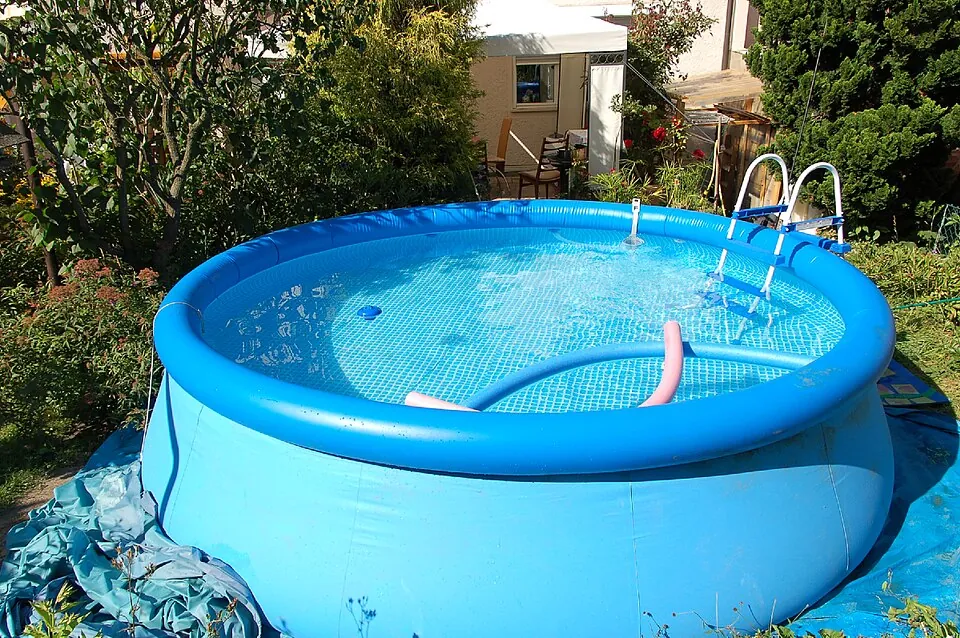
Photo: Ra Boe, Wikimedia Commons, CC BY-SA 3.0 DE
Setting Up Frame and Inflatable Above Ground Pools
Easy-set and metal frame pools follow the same rules for ground and base, but assembly is faster:
- Level the ground just as carefully; these pools are even more sensitive to slope because the walls are soft.
- Lay a ground cloth or pad.
- For inflatable ring pools, inflate the top ring, center the pool and fill slowly while the walls rise.
- For frame pools, assemble the frame legs and beams through the liner sleeves, then fill.
- Connect the included cartridge or sand filter pump.
These pools are usually taken down for winter. Dry the liner fully before storing to prevent mildew.
Above Ground Pool Setup Mistakes to Avoid
- Building up low spots with loose soil instead of digging down high spots.
- Skipping pavers under the uprights, so the frame sinks.
- Leaving rocks, roots or sharp objects under the base.
- Installing the liner on a cold day, which causes wrinkles.
- Cutting the skimmer and return openings before the water level is close.
- Setting the pump too far from the pool or above the water line without a check valve, making priming hard.
- Using an extension cord for the pump.
- Leaving a climbable ladder in place when the pool is unattended.
- Attaching a deck directly to the pool frame.
DIY or Hire Above Ground Pool Installers?
Many homeowners put up an above ground pool themselves with a few helpers, especially round pools up to 24 ft. Hiring above ground pool installers makes sense for oval pools, sloped yards, expandable deep-end liners, or if you lack time and help. Professional above ground pool installation typically costs $1,000 to $4,000 depending on size, ground prep and extras, and many pool stores offer packages that combine the pool and install. Electrical work should be done or checked by a licensed electrician in either case.
Above Ground Pool Maintenance and Upkeep
Above ground pool maintenance follows the same chemistry as any pool, on a smaller scale:
- Run the pump long enough each day to turn the water over at least once; see how long to run a pool pump.
- Test the water two or three times a week for chlorine and pH, weekly for alkalinity.
- Skim and brush the walls and floor weekly, and vacuum as needed.
- Clean the filter by backwashing a sand filter or rinsing a cartridge when pressure rises.
- Shock the pool after heavy use or storms.
- Inspect the frame for rust, and the liner for small leaks.
The upkeep on an above ground pool is usually lower in cost than an inground pool because the water volume is smaller. Above ground pool chemicals for a season often cost a few hundred dollars. See how to clean a pool and cost to maintain a pool.
Winterizing an Above Ground Pool
In freezing climates, winterising an above ground pool protects the liner, skimmer and equipment. The basic steps are: balance and shock the water, lower the water a few inches below the skimmer (or use a skimmer plug), remove and drain the pump and filter, add an air pillow in the center to protect the cover and wall from ice, and fit a winter cover with a cable and winch. Never drain an above ground pool completely in winter; the liner can shrink and the wall can collapse. Full steps are in how to winterize a pool.
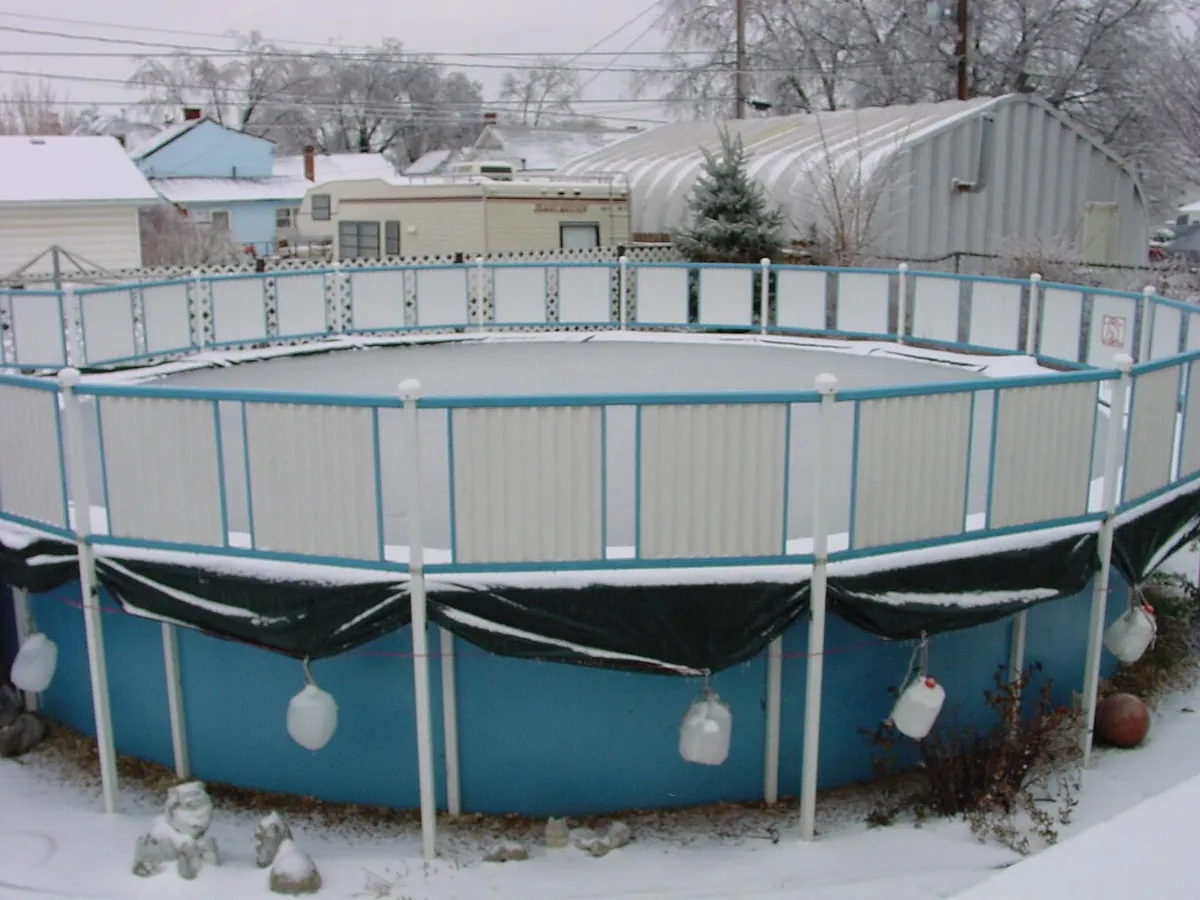
Photo: Jonathan Hogue, Wikimedia Commons, public domain
How Long It Takes to Put Up an Above Ground Pool
| Stage | Typical time (24 ft round, 3 people) |
|---|---|
| Permits and planning | Days to weeks |
| Site marking and leveling | 4 – 10 hours |
| Base, track and wall | 3 – 5 hours |
| Liner and start filling | 2 – 4 hours |
| Rails, openings, equipment | 3 – 5 hours |
| Filling | 12 – 36 hours by hose |
| Deck, fence, landscaping | Days, depending on scope |
Frequently Asked Questions
What do you put under an above ground pool?
Level, firm soil, then about 2 inches of fine sand or a foam or felt pool pad, with a cove around the inside base of the wall and pavers under each upright.
Can I put an above ground pool on grass?
No. Remove the sod first. Grass rots under the pool, leaves an uneven surface and some grasses can grow through the base.
How level does the ground need to be?
Within about 1 inch across the pool footprint. Dig down high spots rather than filling low ones.
Do I need a permit for an above ground pool?
Often yes, especially for pools deeper than 24 inches. Rules vary by town, so check with your building department.
How long does an above ground pool last?
A quality steel or resin above ground pool often lasts 10 to 20 years. Liners usually last 5 to 9 years.
Can you put an above ground pool on a slope?
Only after leveling the site by digging into the slope, sometimes with a small retaining wall. Never prop one side up with fill.
What size above ground pool is best?
For most families, 18 to 24 ft round. A 24 ft above ground pool gives plenty of room for play and is the most popular size.
Can an above ground pool be salt water?
Yes, if the manufacturer approves salt for that model. Resin parts handle salt better than bare steel.
How much does it cost to put up an above ground pool?
The pool kit can cost from about $1,000 to $8,000 or more, and professional installation adds about $1,000 to $4,000.
Sources
- U.S. Consumer Product Safety Commission: Pool and spa safety
- U.S. CPSC: Safety Barrier Guidelines for Residential Pools
- 811: Call before you dig
- HomeAdvisor: Above ground pool installation cost
- NFPA: National Electrical Code (Article 680, pools)