
Cost to Replace Asphalt Driveway — 2026 Prices & Full Breakdown
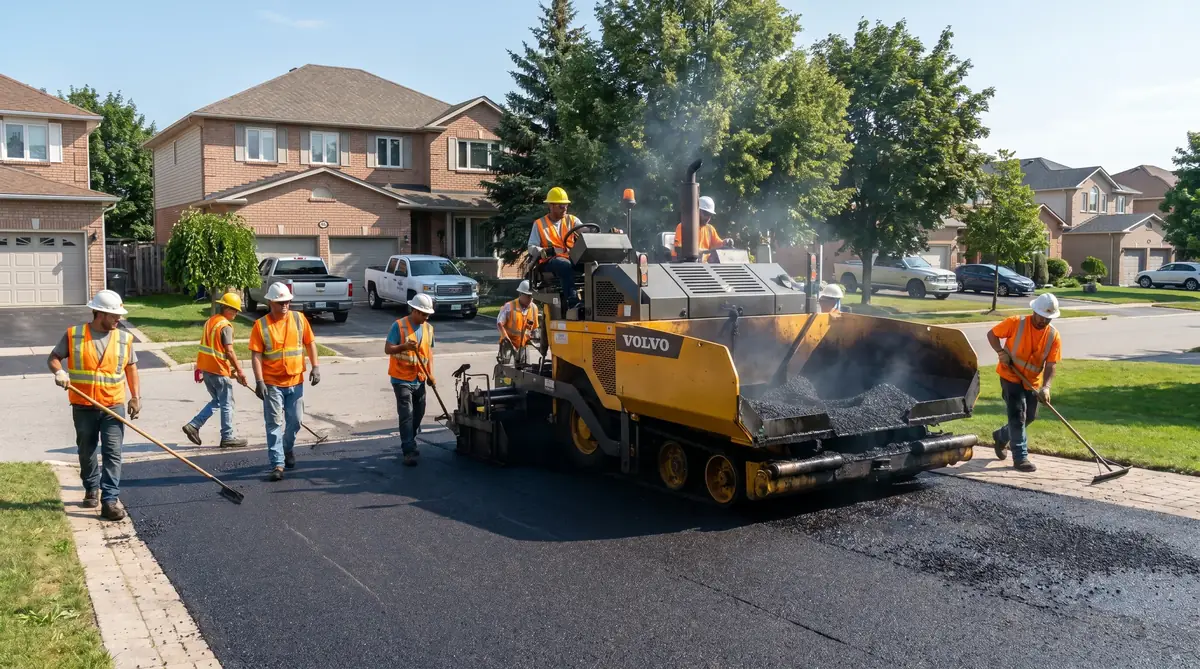
Replacing an asphalt driveway is one of the larger home improvement expenses most people face — but it's also one of the most straightforward to budget for if you understand what's actually driving the price. The average cost to replace an asphalt driveway in 2026 runs $3,500–$7,000 for a standard residential driveway, or $4–$8 per square foot all-in.
That range is wide because asphalt driveway replacement cost isn't just the new asphalt — it's removal, disposal, base work, labor, and material prices that all vary by region and site conditions. This guide breaks down every cost line so you know exactly what you're paying for and where you can save. If you're switching from a different material entirely, see our cost to replace driveway with asphalt guide for concrete, gravel, and paver conversions.
Want the number fast? Use our driveway cost calculator to get an instant estimate based on your driveway size and location.
In this guide
Average Asphalt Driveway Replacement Cost by Size (2026)
The biggest single driver of total cost is driveway size. Here's what to expect for common residential sizes:
| Driveway Size | Square Feet | Low Estimate | Average | High Estimate |
|---|---|---|---|---|
| Single car (small) | 200–300 sq ft | $1,200 | $1,800 | $2,800 |
| Single car (standard) | 400–500 sq ft | $2,000 | $3,000 | $4,500 |
| Double car | 600–800 sq ft | $3,200 | $4,800 | $7,000 |
| Large / long driveway | 1,000–1,500 sq ft | $5,000 | $8,000 | $12,000 |
| Very large / rural | 2,000+ sq ft | $8,000 | $13,000 | $20,000+ |
These figures include full tear-out of the existing driveway, base preparation, and 2–3 inches of new hot mix asphalt. Use our asphalt driveway calculator to get a precise material estimate, or the driveway installation cost calculator for a full installed price estimate.
Full Asphalt Driveway Replacement Cost Breakdown
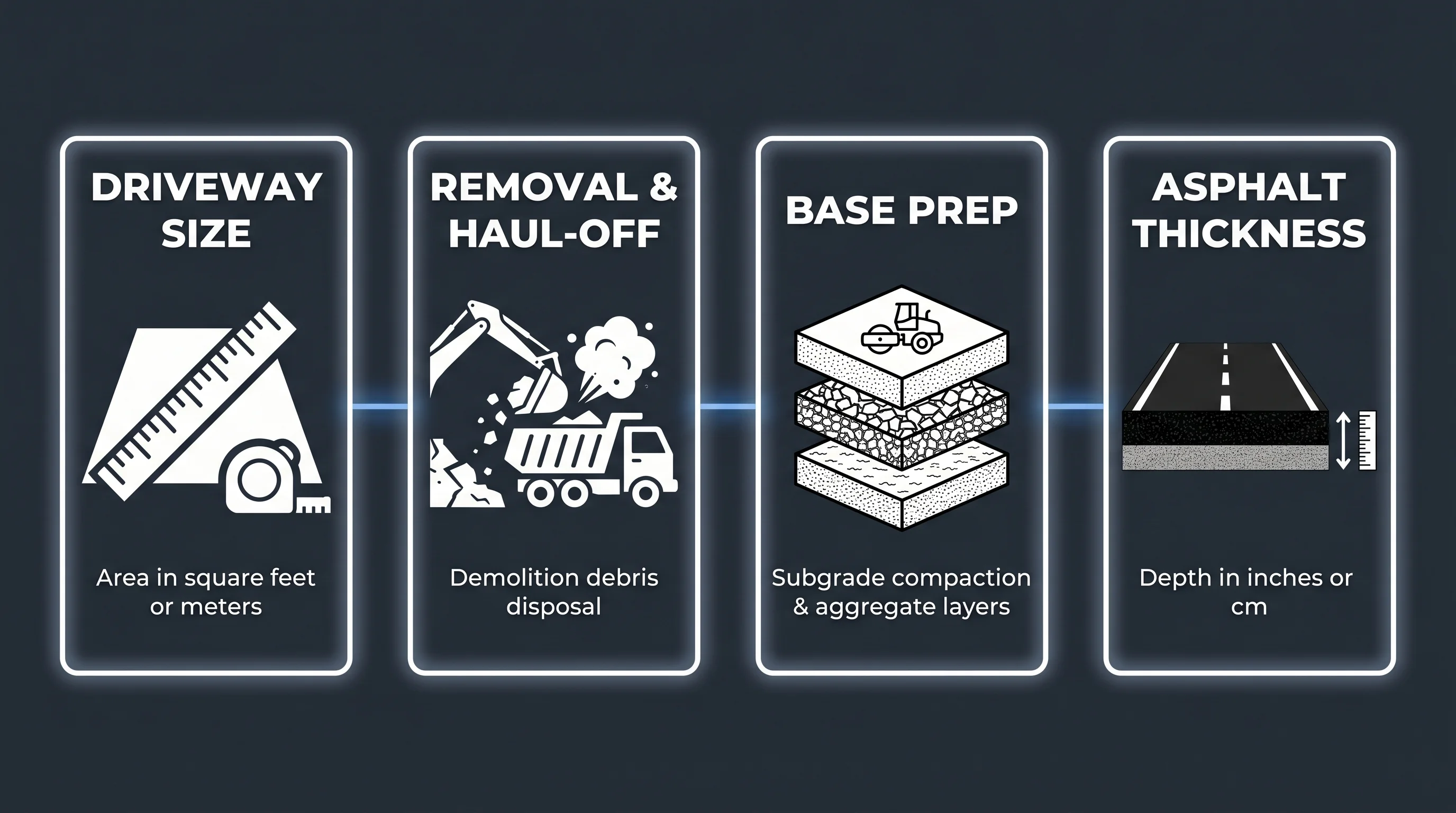
A replacement job has four distinct cost components. Understanding each helps you compare contractor quotes and spot what's included or missing.
| Cost Component | Typical Cost | % of Total | Notes |
|---|---|---|---|
| Removal & disposal | $1–$2/sq ft | 15–25% | Saw-cut, break up, haul, dispose |
| Base grading & prep | $0.50–$1.50/sq ft | 10–20% | Grading, compaction, adding base material |
| New asphalt material | $1.50–$3.00/sq ft | 30–40% | Hot mix at 2–3" compacted depth |
| Labor & equipment | $1.50–$2.50/sq ft | 25–35% | Paving machine, roller, crew time |
| Edging & finishing | $0.25–$0.75/sq ft | 5–10% | Clean edges, transitions to garage/street |
Total installed cost: $4–$8 per square foot. The low end ($4–$5) reflects favorable conditions: flat site, easy access, simple rectangular shape, rural area with lower labor costs. The high end ($7–$8+) reflects difficult access, curved or complex shapes, poor existing base requiring significant rework, and high-cost metro areas.
What Affects the Cost to Replace an Asphalt Driveway
1. Driveway Size
The most obvious factor. Larger driveways cost more in total but often less per square foot — equipment setup, mobilization, and crew costs are fixed regardless of size, so they get spread over more square footage on a bigger job. A 1,500 sq ft driveway often costs $5–$6/sq ft while a 300 sq ft driveway might cost $7–$9/sq ft.
2. Removal and Disposal
Tearing out the old driveway adds $1–$2 per square foot. Some contractors include this in their quote, others price it separately — always ask. Contractors who can sell the reclaimed asphalt as RAP (recycled asphalt pavement) to a local plant may offer lower removal costs since the material has value. Ask if they recycle — it can save you $200–$500.
3. Base Condition and Preparation
This is the most variable and often underestimated cost. If the existing base (gravel sub-base) is in good condition and properly graded, preparation costs are minimal. If there's soft spots, poor drainage, tree root damage, or inadequate depth, the contractor needs to add base material ($20–$40/ton for processed gravel) and re-compact. A poor base repair can add $500–$2,000+ to the total and is non-negotiable — skip it and your new asphalt will fail in 3–5 years.
4. Asphalt Thickness
Standard residential driveways get 2–3 inches of compacted hot mix. Each additional inch adds roughly $0.80–$1.20 per square foot in material cost. If you park heavy vehicles (RVs, boats, delivery trucks), specifying 3–4 inches upfront is far cheaper than replacing a cracked driveway in 8 years.
5. Shape and Accessibility
Simple rectangles are the cheapest to pave. Curved driveways, turnarounds, wide aprons, or driveways with tight access all increase labor costs because they require more hand-work and equipment repositioning. A horseshoe or circular driveway can cost 20–35% more per square foot than a straight one of the same area.
6. Region and Timing
Labor and material costs vary significantly by geography. Northeast and West Coast markets run $1.50–$2.50/sq ft more than Midwest and Southern markets. Scheduling in spring or fall shoulder seasons when contractors have more availability often secures better pricing than peak summer demand.
Asphalt Driveway Removal Costs
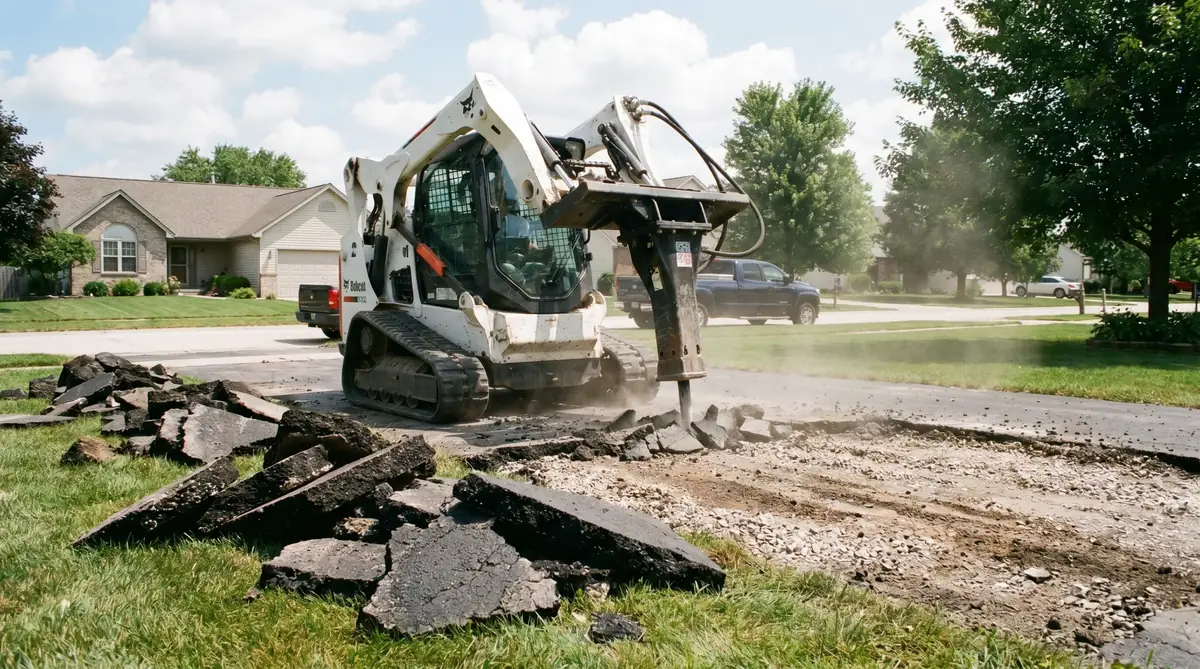
Removal is a distinct phase most homeowners underestimate when budgeting. Here's what the process involves and what it costs:
| Removal Task | Cost | Notes |
|---|---|---|
| Saw cutting edges | $2–$5/linear ft | Clean cuts at property lines, garage |
| Breaking up old asphalt | $0.50–$1.00/sq ft | Skid steer or jackhammer |
| Loading and hauling | $0.30–$0.60/sq ft | Per load to disposal site |
| Disposal fees | $50–$150/load | Landfill or recycling facility |
| Total removal (all-in) | $1–$2/sq ft | $600–$1,600 for 800 sq ft |
Save on removal: ask about RAP recycling
Old asphalt has real value as reclaimed asphalt pavement (RAP). Plants pay $10–$30 per ton for it. Contractors who haul to a recycling facility rather than a landfill save on disposal fees — and sometimes pass part of that saving to you. Always ask: "Do you recycle the removed asphalt?" If yes, negotiate a $0.25–$0.50/sq ft removal discount.
Replace vs Resurface: Which Is Right for Your Driveway?
Before committing to full replacement, it's worth checking whether resurfacing (overlay) is a viable option. Resurfacing adds 1.5–2 inches of new asphalt over the existing surface — no removal required — and costs roughly half as much.
| Resurfacing (Overlay) | Full Replacement | |
|---|---|---|
| Cost per sq ft | $2–$4 | $4–$8 |
| Total (800 sq ft) | $1,600–$3,200 | $3,200–$6,400 |
| Expected lifespan | 8–15 years | 20–30 years |
| Requires removal | No | Yes |
| Fixes base issues | No | Yes |
| Works on alligator cracks | No | Yes |
Choose resurfacing if: The existing surface has surface-level cracking only, less than 30% is deteriorated, the base is structurally sound, and there are no drainage or heaving issues.
Choose full replacement if: You have alligator cracking (base failure), heaving or depressions, drainage problems, the surface is over 20 years old, or more than 30% is deteriorated. Overlaying a failed base just delays inevitable full replacement — at greater total cost.
Use our driveway resurfacing cost calculator to compare both options for your specific driveway size.
The Asphalt Driveway Replacement Process
Understanding what contractors actually do helps you verify the work is being done correctly and ask the right questions when getting quotes.
-
Mark utilities and prep the site — Contractors call 811 (Dig Safe) to locate buried utilities before any excavation. Landscaping, irrigation heads, and edge lighting near the driveway are protected or temporarily removed.
-
Remove existing asphalt — Saw-cut clean edges at the property line, garage slab, and any abutting surfaces. Break up old asphalt with a skid steer or jackhammer, load into dump trucks, and haul for disposal or recycling.
-
Inspect and repair the base — This is the most critical step. The contractor grades the exposed sub-base, identifies soft spots, adds processed gravel where needed, and compacts everything to a minimum bearing capacity. Poor base work is the #1 cause of premature driveway failure — a good contractor spends as much time on base as on paving.
-
Grade for drainage — The base must slope away from the home (minimum 2% grade, ideally 3–5%) so water drains off and doesn't pool against the foundation. This is the right time to address any existing drainage issues permanently.
-
Apply tack coat — A thin layer of liquid asphalt emulsion is sprayed on the prepared base to bond the new hot mix to the surface below. Skipping tack coat causes delamination.
-
Pave with hot mix asphalt — A mechanical paver lays hot mix at 275–325°F. The paver operator controls depth and grade. Paving is done in one or two lifts depending on total thickness specified. Hand tools finish edges and tight areas the paver can't reach.
-
Compact with a roller — A vibratory steel drum roller makes multiple passes to compact the asphalt to the specified density. Edges get hand-tamped. Proper compaction is what gives asphalt its strength — under-compaction leads to rutting and early cracking.
-
Final grade check and cleanup — Contractor checks for proper slope, level transitions at garage slab and street, and removes all debris. New asphalt is closed to traffic for 24–48 hours minimum.
How to Save on Asphalt Driveway Replacement Cost
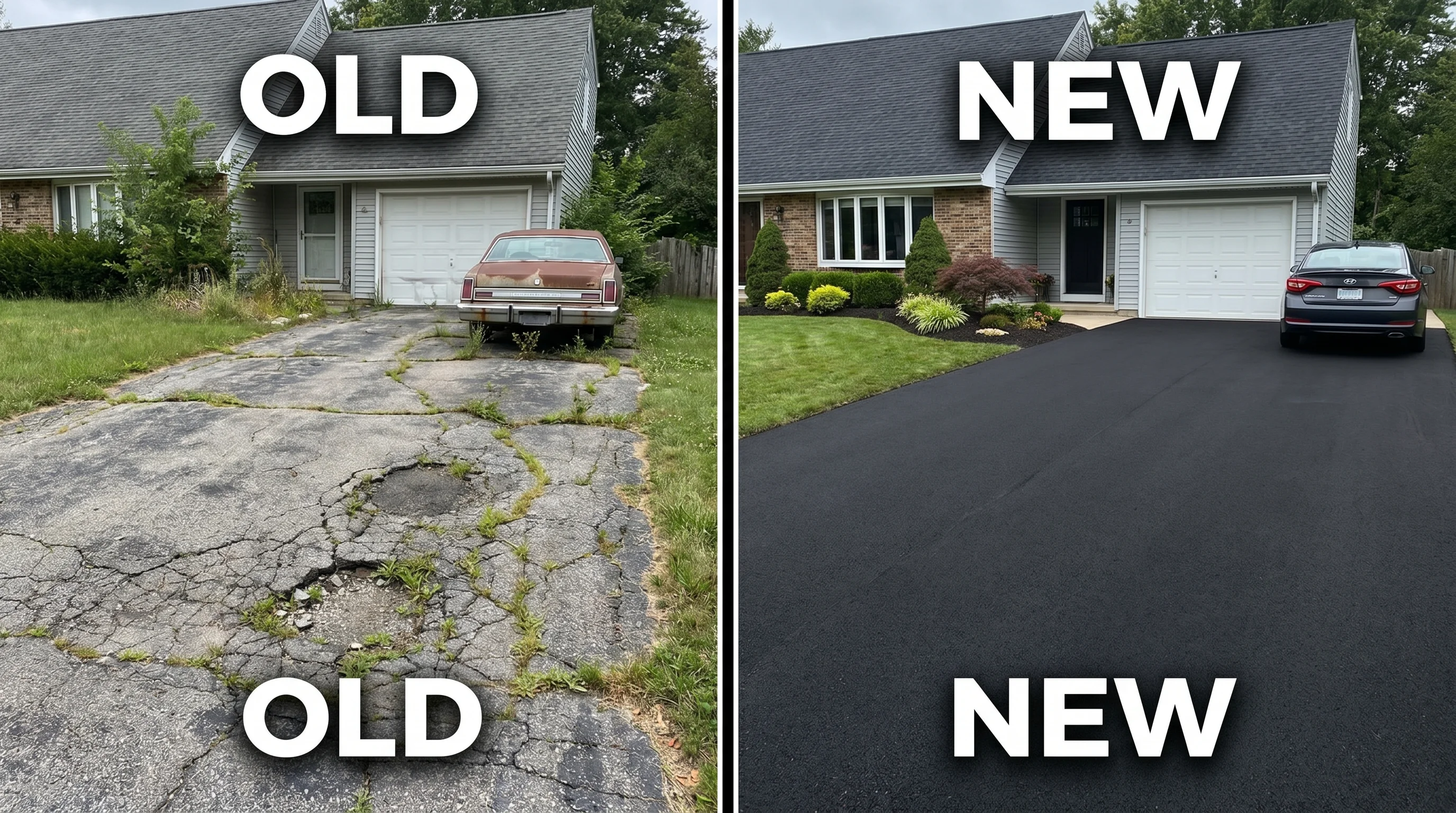
- Get 3+ quotes. Paving prices vary 20–40% between contractors for identical work. Always get at least three written quotes that itemize removal, base work, and paving separately so you can compare apples to apples.
- Schedule in shoulder seasons. Late spring (April–May) and early fall (September–October) often bring better pricing and faster scheduling than peak summer. Contractors have more flexibility and sometimes pass savings on to fill their calendar.
- Bundle with a neighbor. If a neighbor also needs their driveway done, getting both jobs done together cuts mobilization costs and can save 10–15% per driveway. Ask your contractor about multi-job discounts.
- Skip unnecessary upgrades. Decorative borders, stamped edges, and colored sealers add cost without meaningfully improving longevity. Focus budget on adequate thickness and quality base work instead.
- Ask about RAP credit. Contractors who recycle your old asphalt at a plant may offer a small discount on removal. Even $200–$400 off makes a difference on a mid-size job.
- Maintain what you have. If replacement isn't urgent, extend the current surface's life with asphalt crack filler and sealcoating every 2–3 years — buying yourself 5–7 more years at a fraction of replacement cost.
Watch out for low-ball quotes
Quotes significantly below the market range (e.g., $2/sq ft for a full replacement) almost always mean cut corners: inadequate base prep, thin asphalt, or a bait-and-switch where add-ons appear mid-job. Always ask for a written contract that specifies asphalt thickness, base work included, and compacted depth — not just total price.
Maintaining Your New Asphalt Driveway
A new asphalt driveway represents a significant investment. The right maintenance schedule protects it for 20–30 years:
- First 6–12 months: No sealcoating yet — let the asphalt cure and off-gas fully. Avoid parking in the same spot repeatedly as fresh asphalt can deform under concentrated load in hot weather.
- Year 1–2: Apply first coat of asphalt driveway sealer. Use our sealcoating calculator to estimate how much you need.
- Every 2–3 years: Reseal. Fill any cracks wider than 1/4" with asphalt crack filler before applying sealer.
- Year 15–20: Assess for overlay or resurfacing if surface cracking appears — much cheaper than a second full replacement.
Frequently Asked Questions
How much does it cost to replace an asphalt driveway?
$3,500–$7,000 for a standard double-car driveway (600–800 sq ft) in 2026, or $4–$8 per square foot all-in. This includes full tear-out, base prep, and 2–3 inches of new hot mix asphalt. Get an instant estimate with our driveway cost calculator.
How much does asphalt driveway removal cost?
$1–$2 per square foot, or $600–$1,600 for a standard 800 sq ft driveway. This covers breaking up, loading, hauling, and disposal. Ask contractors whether they recycle the old asphalt — this sometimes earns a small removal discount.
Is it cheaper to resurface or replace an asphalt driveway?
Resurfacing costs $2–$4/sq ft versus $4–$8/sq ft for full replacement — about half the price. But resurfacing only works if the base is structurally sound and less than 30% of the surface is deteriorated. Overlaying a failed base just delays replacement at greater long-term cost.
How long does a new asphalt driveway last?
20–30 years with proper maintenance — sealcoating every 2–3 years and prompt crack filling. Without maintenance, expect 12–15 years. The base preparation quality during installation is the single biggest factor in longevity. Read our full guide on how long an asphalt driveway lasts.
What is the best time of year to replace an asphalt driveway?
May through September in most of the US. Asphalt needs ambient temperatures above 50°F to be placed and compacted correctly. Late summer (August–September) often combines good weather with slightly better contractor availability than peak June–July.
How thick should a replacement asphalt driveway be?
2–3 inches of compacted hot mix asphalt over a 4–6 inch compacted gravel base for standard passenger vehicles. Specify 3–4 inches if you park heavy vehicles (RVs, trucks over 10,000 lbs). Thickness spec should appear in your written contract.