
Asphalt Milling Machine — Types, How They Work & Rental Costs (2026)
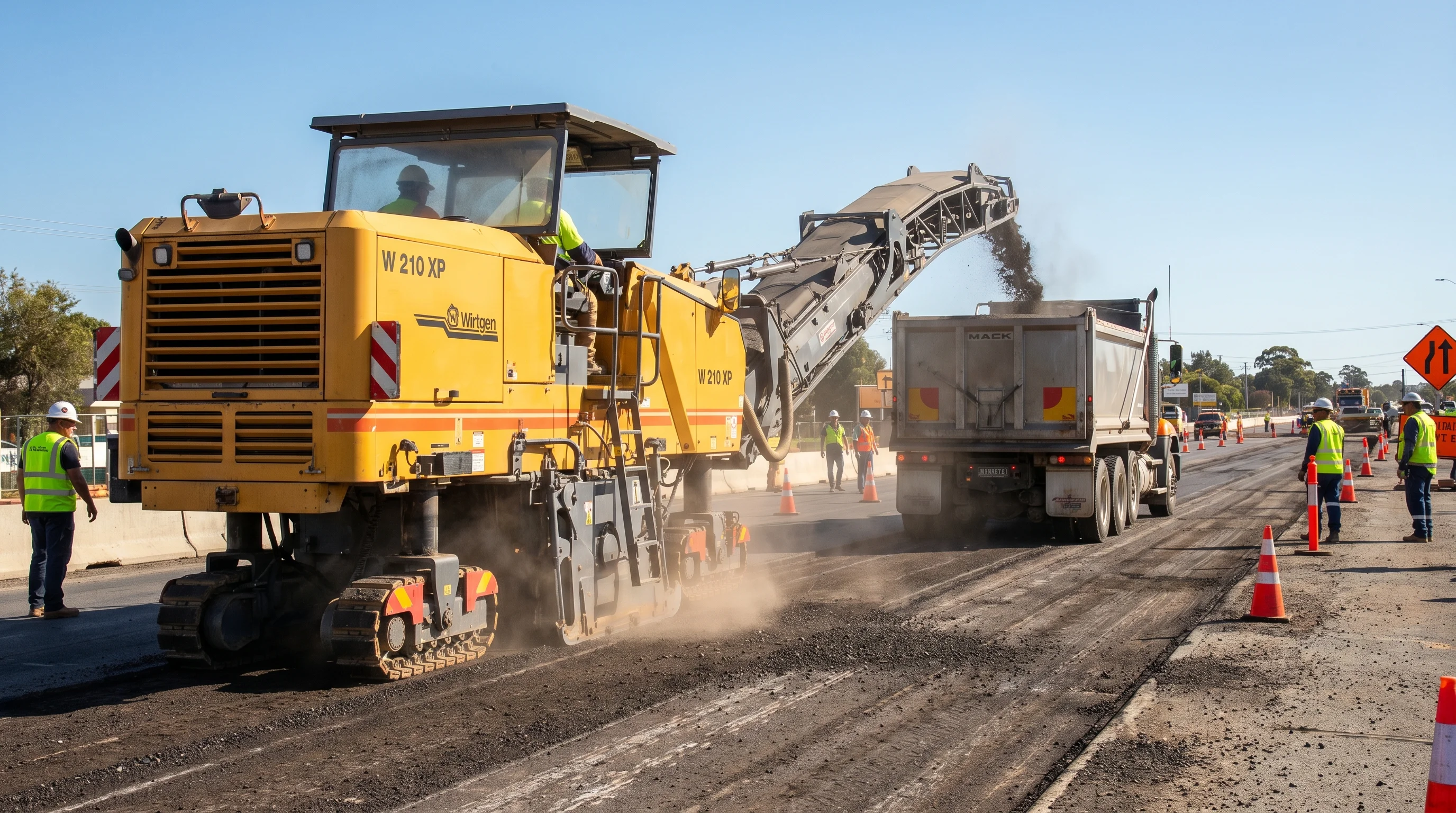
An asphalt milling machine — also called a cold planer, asphalt grinder, or road planer — is the piece of equipment that removes old asphalt surfaces without tearing out the entire road structure. It grinds the pavement to a precise depth, collects every bit of the material on a conveyor, and loads it into a truck for recycling. The result is a clean, profiled surface ready for a new layer of hot mix — faster, cheaper, and more sustainable than full demolition.
Whether you're a contractor researching equipment, a property owner trying to understand what a milling bid involves, or someone who wants to rent a small cold planer for a driveway project, this guide covers everything: how milling machines work, the different sizes available, rental and purchase costs, and what happens to all that milled-up asphalt.
In this guide
How an Asphalt Milling Machine Works
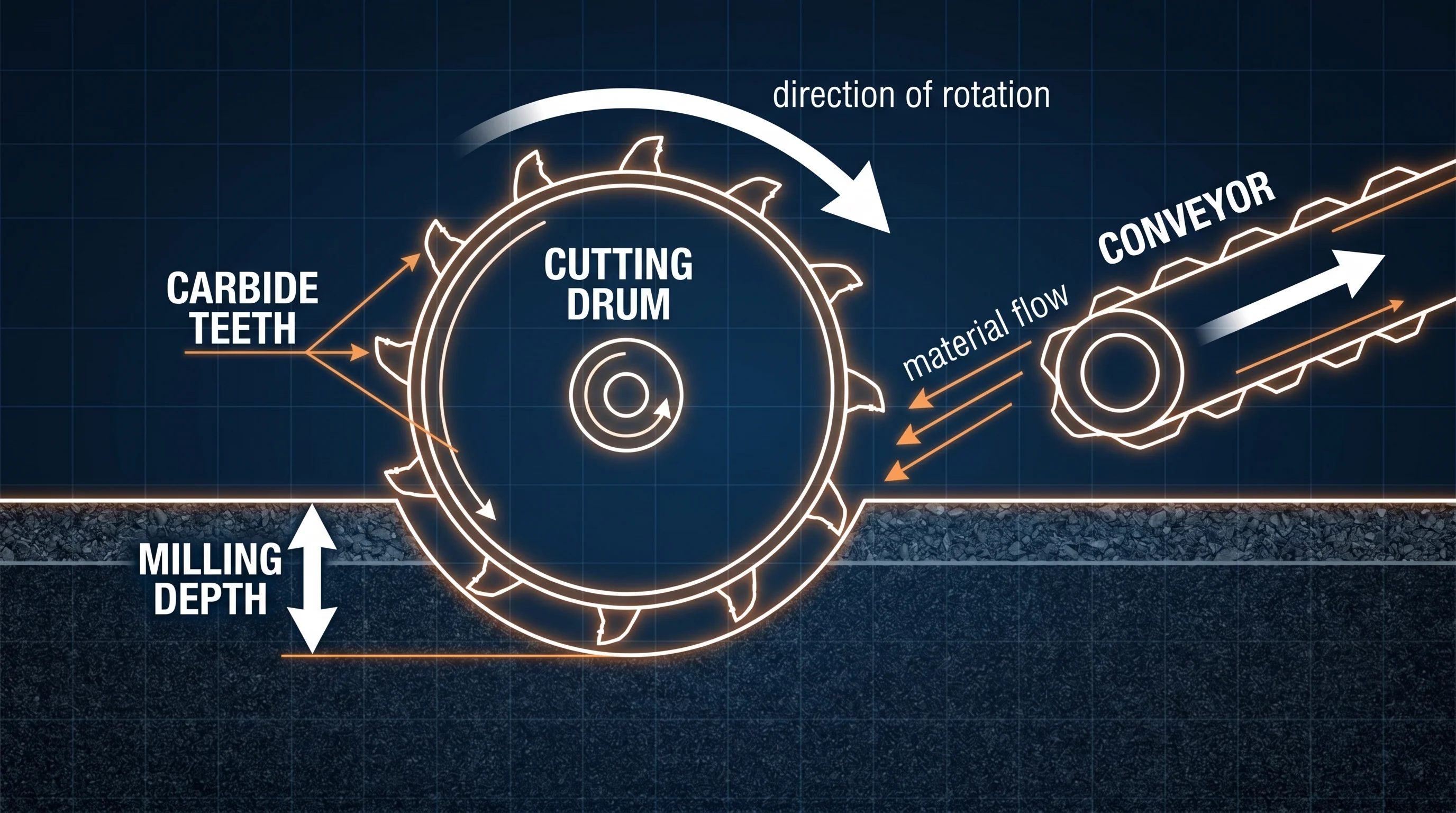
The core component of every milling machine is the cutting drum — a large steel cylinder mounted horizontally beneath the machine frame, studded with hundreds of carbide-tipped pick tools (also called teeth or bits). As the machine moves forward at 15–60 feet per minute, the drum rotates at high speed, and each carbide pick chips away at the asphalt surface.
Here's the complete process:
- Depth setting — The operator sets the cutting depth using hydraulic legs and grade sensors. Milling depth is typically 1.5–3 inches for surface removal, or deeper for full-depth reclamation.
- Cutting — The rotating drum grinds the asphalt into granular pieces ranging from fine powder to chunks about 1 inch across. The drum produces a consistent, profiled surface texture.
- Collection — A primary conveyor belt sweeps the milled material from directly behind the drum. A secondary (front or rear) conveyor transfers it up and out into a dump truck traveling alongside or ahead of the machine.
- Grade control — Modern machines use automated grade and slope control — sonic sensors or laser systems — to maintain a precise cut depth across uneven surfaces. This is critical for maintaining proper drainage grades on roads and parking lots.
- Water system — Milling generates heat and dust. An onboard water spray system cools the cutting drum, suppresses dust, and extends carbide bit life. Most machines carry 500–2,000 gallons of water.
Cold planer vs hot milling: "Cold planer" refers to the fact that milling is done at ambient temperature — no heat is applied to soften the asphalt first. This distinguishes it from hot-mix paving processes. Despite the name, the cutting action generates significant friction heat at the drum.
Types & Sizes of Asphalt Milling Machines
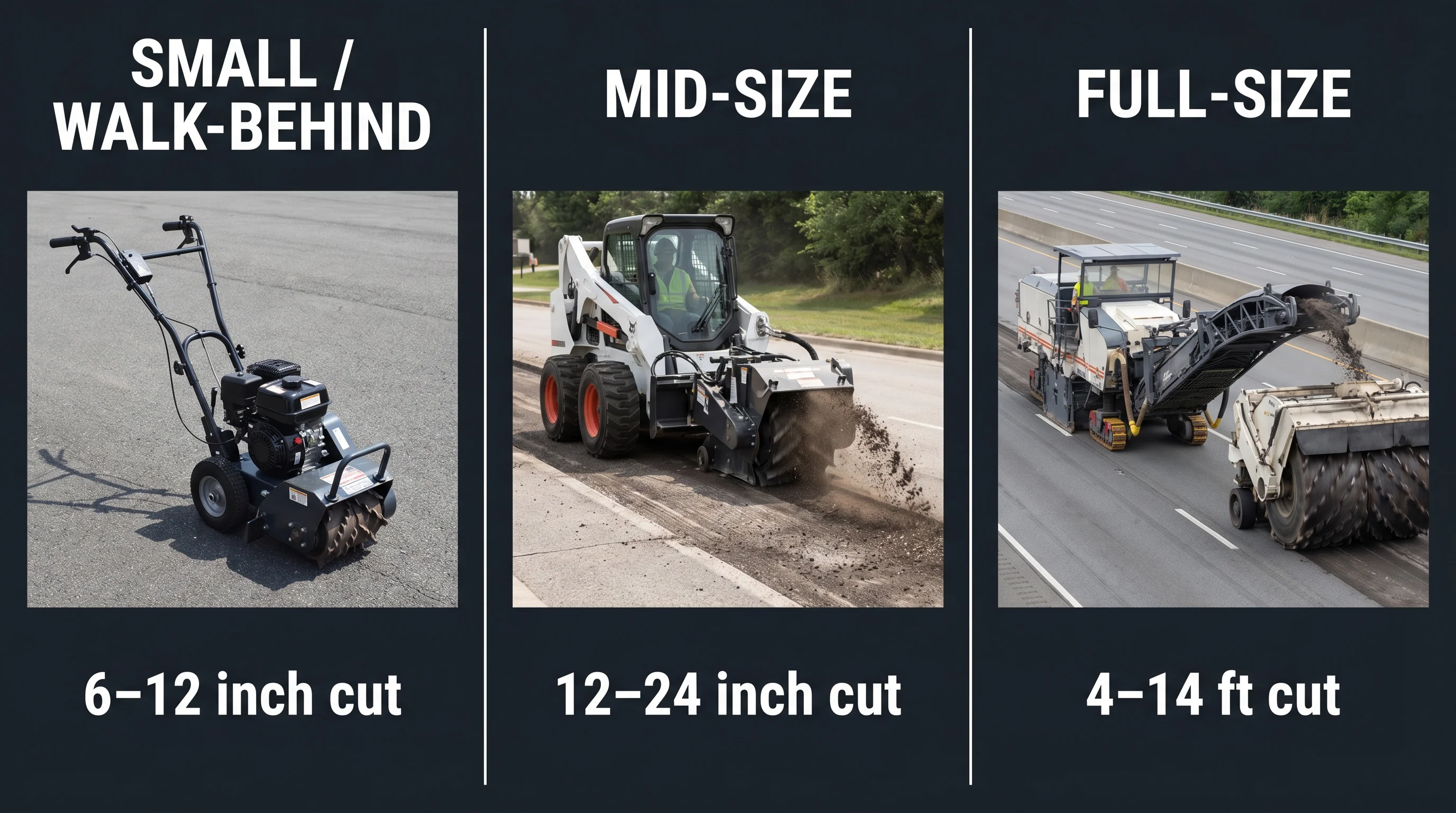
Milling machines are categorized primarily by drum width — which determines how wide a strip is cut in a single pass. Size drives both capability and cost dramatically.
Small / Walk-Behind Cold Planers (6–18 inch drum)
Compact, operator-walked units that attach to a walk-behind chassis or small skid steer. Best for tight access areas, driveway aprons, utility patches, and work where a full-size machine can't fit. Slow but precise. These are the machines available at general equipment rental houses.
Compact / Mid-Size Cold Planers (12 inches – 4 feet drum)
Self-propelled machines or skid-steer attachments covering 12 inches to 4 feet per pass. Used for parking lots, driveways, commercial properties, and smaller road repair projects. Faster than walk-behinds with better grade control. Available at specialty equipment rental houses.
Full-Size / Highway Cold Planers (4–14 foot drum)
The machines you see on highway resurfacing projects — massive self-propelled units with 4–14 foot cutting drums, capable of milling a full lane in a single pass. Equipped with advanced grade and slope control, high-capacity conveyors, and large water tanks. Not available for general rental — operated by paving contractors under project contracts.
| Machine Size | Drum Width | Best Use | Rental Available? |
|---|---|---|---|
| Walk-behind | 6–18 in | Driveways, patches, tight access | Yes — Home Depot, Sunbelt, United |
| Compact self-propelled | 18 in – 4 ft | Parking lots, small roads | Specialty rental houses only |
| Mid-size | 4–7 ft | Commercial streets, large lots | Contractor equipment only |
| Full-size highway | 7–14 ft | Highway resurfacing, lane-width cuts | No — project contracts only |
Top Asphalt Milling Machine Manufacturers
The cold planer market is dominated by a handful of manufacturers that produce the majority of machines used worldwide:
- Wirtgen (Germany) — The global market leader. Wirtgen cold planers set the industry standard from small W 50 models to massive W 250 highway machines. Known for precision grade control and drum quality. Part of the John Deere group since 2017.
- Caterpillar (US) — Strong lineup from the PM310 compact to the PM620/PM822 full-size highway machines. Excellent dealer support and parts availability in North America.
- Roadtec (US) — American manufacturer producing the RX series from compact to full-size. Popular with US contractors for domestic parts support.
- Bomag (Germany) — Best known for compactors but produces capable cold planers, including the BM series. Good mid-market option.
- XCMG / SANY (China) — Growing presence in developing markets. Lower purchase price with acceptable performance for lower-intensity applications.
For rental units, the specific brand matters less than drum width, condition, and water system functionality. For purchase decisions, Wirtgen and Caterpillar have the deepest parts and service networks in North America.
Asphalt Milling Machine Rental Costs (2026)
| Machine Type | Day Rate | Week Rate | Month Rate | Where to Rent |
|---|---|---|---|---|
| Walk-behind cold planer (6–12 in) | $300–$500 | $900–$1,500 | $2,500–$4,000 | Home Depot, Sunbelt, United Rentals |
| Walk-behind cold planer (12–18 in) | $450–$700 | $1,300–$2,000 | $3,500–$5,500 | Sunbelt, United, specialty |
| Compact self-propelled (up to 2 ft) | $800–$1,500 | $2,500–$4,500 | $7,000–$12,000 | Specialty rental only |
| Mid-size (2–4 ft) | $1,500–$3,000 | $5,000–$9,000 | $14,000–$22,000 | Contractor rental only |
Rental rates typically exclude delivery/pickup ($150–$400 per trip), fuel, and carbide bit replacement. Bits wear down quickly on abrasive or heavily aggregate-rich asphalt — budget $50–$200 in bit replacement for a full-day driveway job. Always ask the rental house what's included and whether a security deposit is required.
For most driveway jobs: hire a contractor instead
A professional milling contractor charges $0.75–$2.50/sq ft to mill a driveway — and brings the right-size machine, operator, dump truck, and disposal in one package. For a 600 sq ft driveway, that's $450–$1,500 total. Renting a walk-behind machine, operating it yourself, hauling millings, and returning the equipment often costs just as much in time and money — without the operator experience to maintain proper grade.
Asphalt Milling Machine Purchase Prices
Purchase prices span an enormous range depending on size, brand, and whether you're buying new or used:
| Machine Size | New Price | Used Price (Good Condition) |
|---|---|---|
| Walk-behind (6–12 in) | $8,000–$25,000 | $3,000–$12,000 |
| Compact self-propelled (up to 2 ft) | $50,000–$150,000 | $20,000–$75,000 |
| Mid-size (2–5 ft) | $200,000–$500,000 | $80,000–$250,000 |
| Full-size highway (5–14 ft) | $600,000–$2,000,000+ | $200,000–$800,000 |
Used milling machines are heavily traded on auction platforms like Ritchie Bros., IronPlanet, and Machinery Trader. Key inspection points when buying used: drum condition and bit count, hydraulic system, water system, conveyor belt wear, and engine hours relative to service records. A low-hour machine with a worn drum can cost $30,000–$80,000 to re-drum — always inspect before bidding.
Professional Asphalt Milling Cost
When you hire a milling contractor rather than renting a machine, pricing is typically per square foot for small jobs or per lane-mile for highway work:
| Project Type | Milling Cost | Includes |
|---|---|---|
| Residential driveway (up to 1 in) | $0.75–$1.50/sq ft | Milling, haul-off millings |
| Residential driveway (1–3 in) | $1.00–$2.50/sq ft | Milling, haul-off millings |
| Parking lot / commercial | $0.50–$1.25/sq ft | Milling, haul-off — volume discount |
| Road / street (contractor) | $0.30–$0.80/sq ft | High-volume pricing |
| Highway (per lane-mile) | $20,000–$60,000/lane-mile | Mobilization, milling, RAP hauling |
Use our asphalt milling calculator to estimate how many square feet you need milled and what material volume that produces. Pair it with the driveway resurfacing cost calculator to budget the complete mill-and-overlay project.
What Happens to the Asphalt Millings?
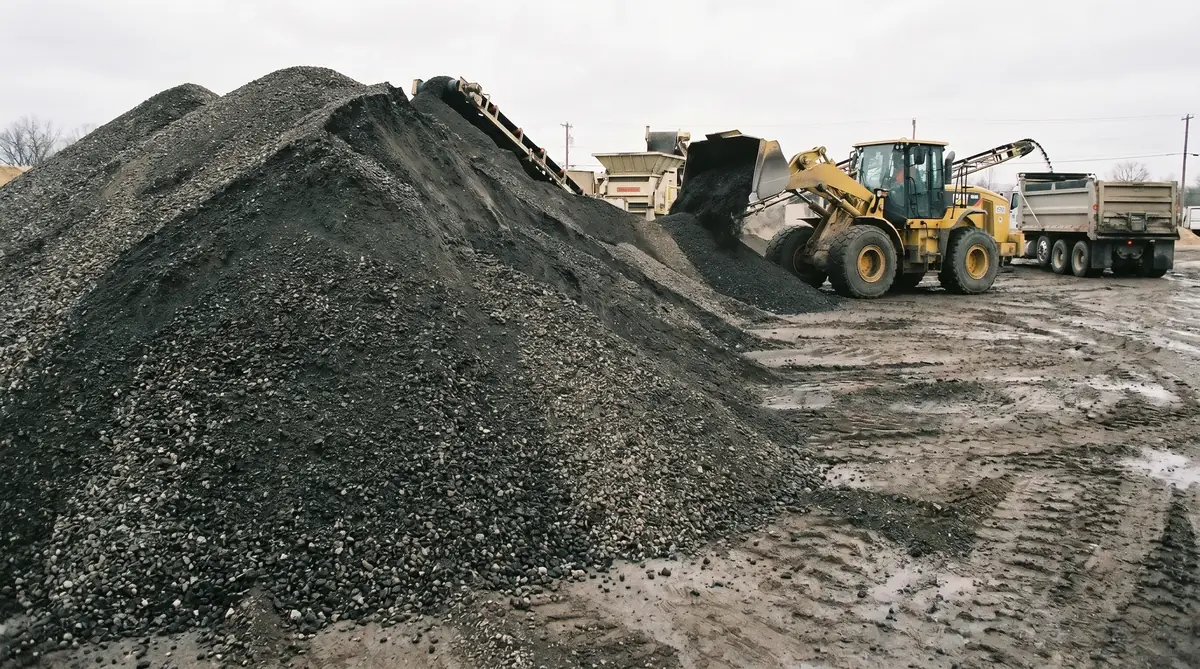
One of the great advantages of milling over full demolition is that 100% of the removed material is recyclable. Asphalt millings — also called reclaimed asphalt pavement (RAP) — are one of the most recycled materials in the US, with over 100 million tons reused annually.
Uses for asphalt millings
- Reincorporated into new hot mix asphalt — Most plants blend 10–30% RAP into new asphalt mixes. This reduces virgin material costs and is standard practice in the industry.
- Unpaved driveway surfacing — Millings spread and compacted make excellent unpaved driveways and parking areas. They bind together when heated by the sun, shed water, and resist erosion. Cost: $10–$40/ton delivered. See our asphalt millings guide for full details.
- Road shoulder and base material — State DOTs use RAP extensively for shoulder stabilization and as granular base under new pavement.
- Temporary access roads — Construction sites use millings for haul roads and staging areas.
- Pathway and trail surfacing — Millings compact into a smooth, stable surface for bike paths and walking trails at a fraction of full-paving cost.
If you're having a driveway milled and want to keep the millings for another purpose (secondary driveway, path, parking pad), tell the contractor in advance — otherwise they'll haul them to a plant for RAP credit. Some contractors will deduct $0.10–$0.30/sq ft from the milling price if you take the millings yourself since they avoid disposal/transport costs.
Milling vs Full Removal: When to Use Each
Milling and full removal are both ways to take up old asphalt, but they serve different purposes and have very different costs:
| Milling | Full Removal | |
|---|---|---|
| What's removed | Surface layer only (1.5–3 in) | Entire asphalt depth (3–6 in) |
| Base left intact | Yes | No |
| Cost | $0.50–$2.50/sq ft | $1–$3/sq ft |
| Followed by | Overlay / resurfacing | Full replacement or new material |
| Use when | Base is sound, surface worn | Base failed, full replacement needed |
| Material recycled? | 100% as RAP | Usually yes, but less efficiently |
Choose milling when: The existing asphalt base is structurally sound, drainage is adequate, and the surface layer (top 1.5–3 inches) is the problem — rutting, cracking, oxidation, or loss of skid resistance. Milling restores grade, removes surface distress, and provides a clean bonding surface for the new overlay.
Choose full removal when: The base has failed (alligator cracking, heaving, soft spots), you're switching to a different material, or the total asphalt depth is insufficient and needs to be rebuilt from scratch. For a complete cost comparison, see our cost to replace asphalt driveway guide.
Don't mill without checking the base first
Milling over a failed base just produces a thinner version of the same problem. Before ordering a mill-and-overlay project, have the contractor core the existing pavement to check base condition. A core costs $200–$500 and can save you from spending $3,000–$8,000 on a resurfacing that fails in two years.
Frequently Asked Questions
What is an asphalt milling machine?
A cold planer or asphalt grinder — a piece of road construction equipment that removes asphalt surfaces by grinding with a rotating carbide-tipped drum. It cuts to a precise depth, collects the milled material on a conveyor, and loads it into a truck for recycling as RAP. Sizes range from walk-behind units for driveways to full-size highway machines cutting 14-foot-wide swaths.
How much does it cost to rent an asphalt milling machine?
Walk-behind cold planers (6–18 inch drum) rent for $300–$700 per day at Home Depot, Sunbelt, or United Rentals. Compact self-propelled units (up to 2 foot drum) run $800–$1,500/day at specialty rental houses. Full-size highway machines aren't available for general rental — they operate under contractor project contracts at $5,000–$20,000+/day.
What are asphalt millings used for?
Primarily blended back into new hot mix asphalt as RAP (10–30% content). Separately, millings are sold for $10–$40/ton as unpaved driveway surfacing, road base material, parking lot sub-base, access road construction, and pathway surfacing. They compact well and bind in the sun — making them excellent low-cost gravel alternatives.
How deep can an asphalt milling machine cut?
Most commercial machines cut 0–12 inches in a single pass. Standard resurfacing jobs call for 1.5–3 inch cuts to remove the worn surface layer. Full-depth reclamation — grinding the entire asphalt depth plus some base material — uses cuts of 4–8 inches. Depth is controlled by hydraulic legs and grade sensors for precision.
What is the difference between milling and full asphalt removal?
Milling removes only the surface layer and leaves the structural base intact — it's used before resurfacing. Full removal demolishes the entire asphalt layer (and sometimes the base) for complete replacement. Milling costs $0.50–$2.50/sq ft; full removal costs $1–$3/sq ft. The right choice depends on base condition.
How much does professional asphalt milling cost?
$0.75–$2.50 per square foot for residential driveways and parking lots. A 600 sq ft driveway runs $450–$1,500 milled and hauled. Large commercial projects get volume pricing: $0.30–$0.80/sq ft. Use our asphalt milling calculator to estimate your specific project.