
Asphalt Emulsion Sealer — What It Is, How It Works & Best Products (2026)
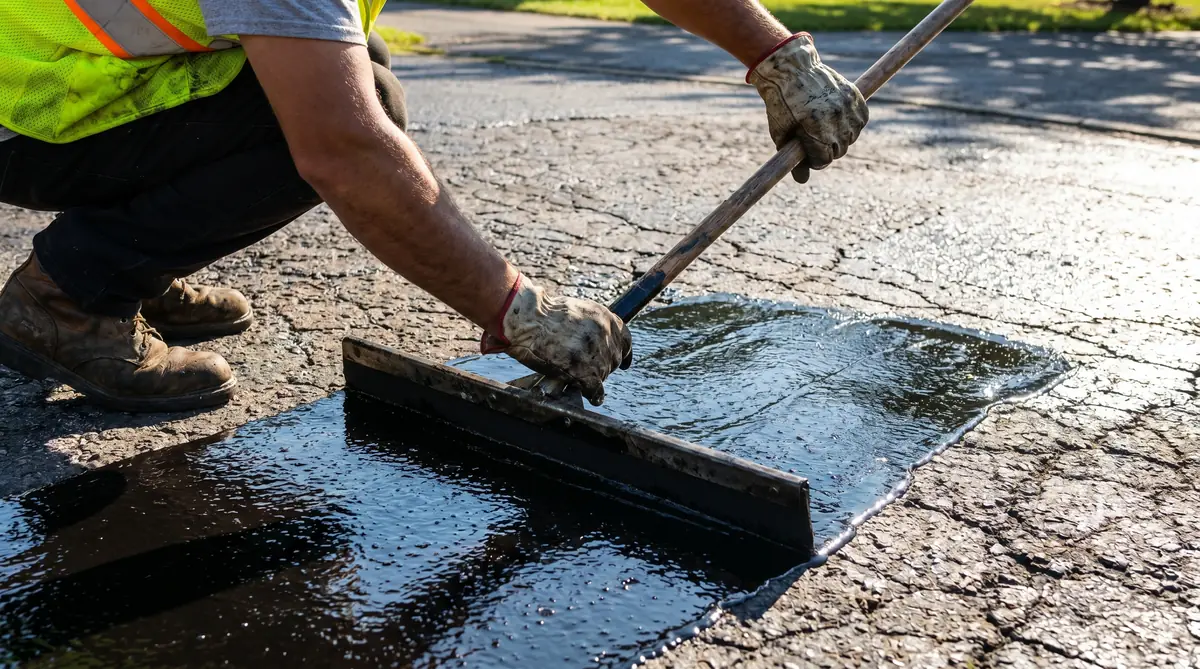
Asphalt emulsion sealer is the most widely recommended driveway sealer for residential use in 2026 — legal in all 50 states, chemically compatible with your pavement, and safer for the environment than coal tar. But not all emulsion sealers are equal. The difference between a $15 budget bucket and a $45 professional-grade product comes down to one number on the label: solid content.
This guide covers everything specific to asphalt emulsion: how it's formulated, the four subtypes, what solid content to demand, application steps, and common mistakes that cut a 3-year sealer life down to 18 months. For a broader comparison of all sealer types, see our Asphalt Sealer Guide.
What Is Asphalt Emulsion Sealer?
Asphalt emulsion sealer is made from three components suspended together:
- Asphalt binder — the same petroleum-based material used to make your driveway, ground fine and dispersed through the mixture
- Water — the carrier medium; evaporates during curing, leaving the protective film behind
- Clay emulsifiers — keep the asphalt particles suspended in water until application; also improve adhesion to the pavement surface
When you apply it, the water evaporates and the asphalt particles bond directly to the existing pavement — chemical-to-chemical compatibility that coal tar and acrylic sealers can't match. This is why emulsion sealer bonds exceptionally well to asphalt and resists peeling far better than coal tar on fresh or recently resurfaced pavement.
Asphalt Emulsion vs Coal Tar vs Acrylic
| Factor | Asphalt Emulsion | Coal Tar | Acrylic |
|---|---|---|---|
| Legality | ✅ All 50 states | ⚠️ Banned in MN, WI, DC + others | ✅ All 50 states |
| Lifespan | 2–4 years | 3–5 years | 2–3 years |
| Oil/gas resistance | Moderate | Excellent | Good |
| UV resistance | Good | Excellent | Very good |
| Bond to asphalt | Excellent (same chemistry) | Good | Moderate |
| Freeze-thaw flexibility | Excellent | Good | Moderate |
| Environmental impact | Low | High (PAH runoff risk) | Low |
| DIY cost (5 gal) | $20–$40 | $25–$45 | $35–$60 |
| Best for | Residential, cold climates | High-traffic, warm climates | New driveways, aesthetics |
For most homeowners — especially those in cold-climate states where coal tar is already banned or restricted — asphalt emulsion is the clear default choice.
Solid Content: The Number That Actually Matters
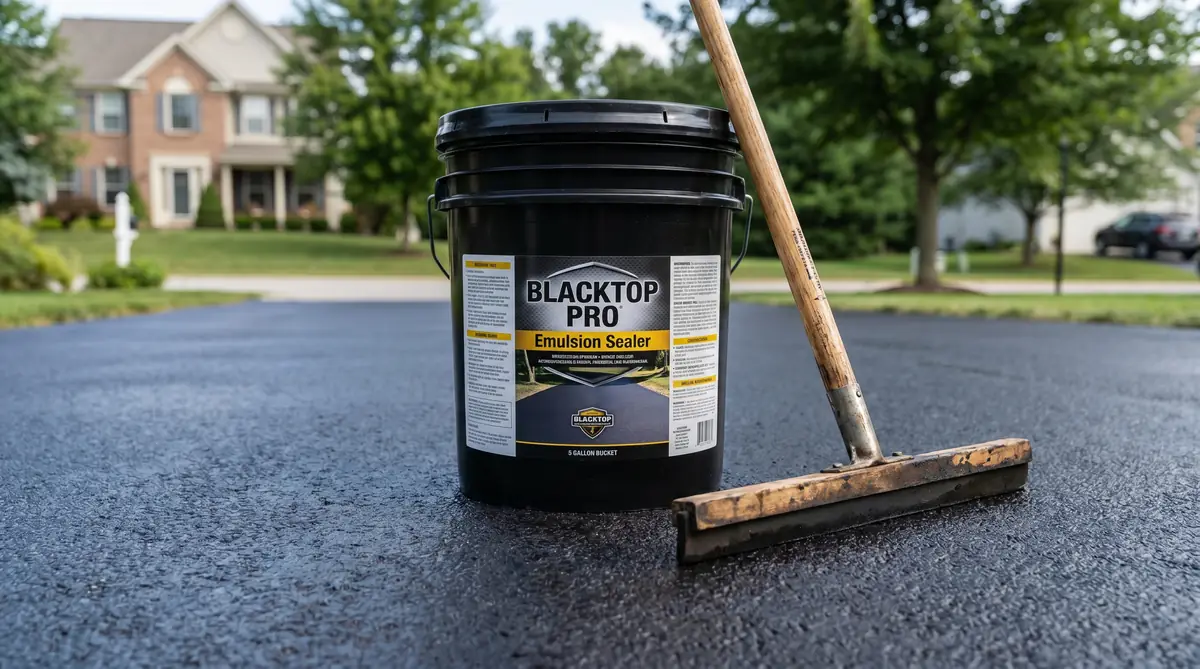
Solid content is the percentage of the product that remains on your driveway after the water evaporates. It's the single most important spec to check before buying — yet most homeowners never look at it.
| Solid Content | Film Thickness | Coats Needed | Expected Life | Typical Price (5 gal) |
|---|---|---|---|---|
| 20–25% (budget) | Very thin | 3–4 | 1–1.5 years | $12–$18 |
| 30–35% (standard) | Thin | 2–3 | 1.5–2.5 years | $18–$28 |
| 40–50% (quality) | Medium | 2 | 2.5–3.5 years | $28–$40 |
| 50%+ (professional) | Thick | 2 | 3–4 years | $35–$50 |
Calculate exactly how many gallons you need before buying: Sealcoating Calculator
The Four Types of Asphalt Emulsion Sealer
| Type | What's Added | Best For | Cost Premium | Lifespan |
|---|---|---|---|---|
| Standard emulsion | Nothing extra | Budget residential, light traffic | Baseline | 2–3 years |
| Polymer-modified | SBR or SBS rubber polymers | Driveways with moderate traffic, flex-prone areas | +20–30% | 3–4 years |
| Rubberized | Higher rubber content + filler aggregates | Hairline cracks, rough surfaces, high-flex areas | +30–50% | 3–5 years |
| Fast-dry emulsion | Accelerated evaporation agents | Cooler weather application, quick-turnaround jobs | +15–25% | 2–3 years |
For most homeowners: polymer-modified emulsion at 45–50% solids is the sweet spot — about $35–$45 per 5-gallon bucket, lasts 3–4 years, and handles temperature swings well. The rubberized type is worth the extra cost only if your driveway has a lot of fine surface cracking.
Coverage Rates & Cost Estimate (2026)
| Driveway Size | Gallons Needed (2 coats) | DIY Material Cost | Pro Application Cost |
|---|---|---|---|
| 400 sq ft | 4–6 gal | $35–$75 | $80–$160 |
| 600 sq ft | 6–9 gal | $55–$115 | $120–$240 |
| 800 sq ft | 8–12 gal | $70–$150 | $160–$320 |
| 1,000 sq ft | 10–15 gal | $90–$190 | $200–$400 |
Coverage rate is 70–100 sq ft per gallon per coat on a worn, porous driveway. Smooth, recently sealed surfaces cover at the higher end. Always buy 10–15% extra for edges and recoating thin spots. Use our Driveway Sealing Cost Calculator for exact pricing.
Before You Seal: Surface Prep
Sealer is only as good as the surface underneath it. Rushing prep is the #1 cause of premature peeling. Your driveway must meet these conditions before opening the first bucket:
- New asphalt: Wait minimum 90 days (ideally 6–12 months) before first seal. Fresh asphalt needs time to cure and off-gas oils. Sealing too early traps volatiles and causes bubbling.
- Cracks wider than ¼ inch: Must be filled before sealing. See our Asphalt Crack Filling Guide and use the Crack Fill Calculator for quantities.
- Oil stains: Treat with oil spot primer (available at hardware stores, $10–$15) — sealer will not bond over oil contamination.
- Temperature: Air and pavement must be above 50°F (10°C) and rising. Do not apply if rain is forecast within 24 hours.
Step-by-Step Application Guide
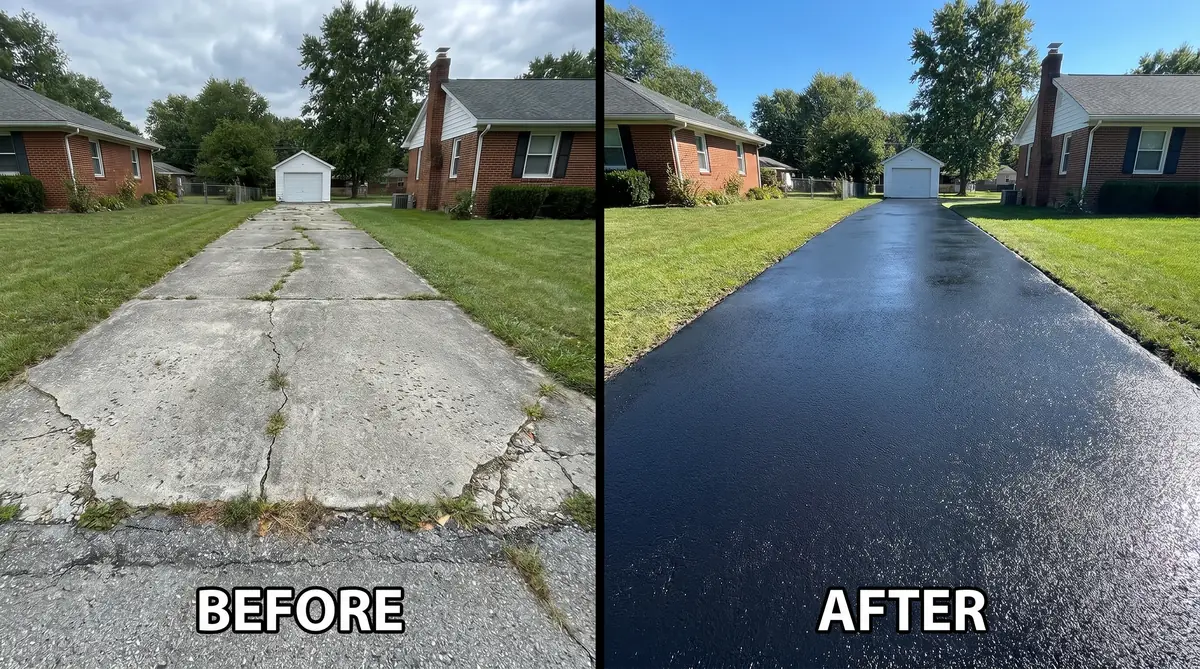
- Clean the surface. Sweep thoroughly, then pressure wash or scrub with a stiff brush and hose. Remove all dirt, leaves, and debris. Allow to dry completely — minimum 24 hours in dry weather.
- Treat oil stains. Apply oil spot primer to any petroleum stains. Let cure per product instructions (usually 1–2 hours) before proceeding.
- Fill cracks. Fill all cracks ¼ inch or wider with asphalt crack filler. Let cure 24 hours minimum before sealing over them.
- Edge the perimeter. Use a 4-inch brush to cut in around edges, garage aprons, and borders where a squeegee won't reach cleanly.
- Stir the sealer. Use a drill-mounted mixing paddle for 3–5 minutes. Emulsion sealer settles in storage — unmixed product gives uneven results.
- Apply first coat. Pour a ribbon of sealer across the width and spread with a squeegee or brush applicator in long, even strokes. Work toward an exit point — don't paint yourself into a corner. Aim for thin, even coverage.
- Cure between coats. Wait a minimum of 24 hours (48 hours preferred) between coats. The first coat must be fully dry and no longer tacky.
- Apply second coat. Apply perpendicular to the first coat direction for better, more even coverage. Keep traffic off for 24–48 hours after the final coat.
Common Mistakes That Ruin Emulsion Sealer
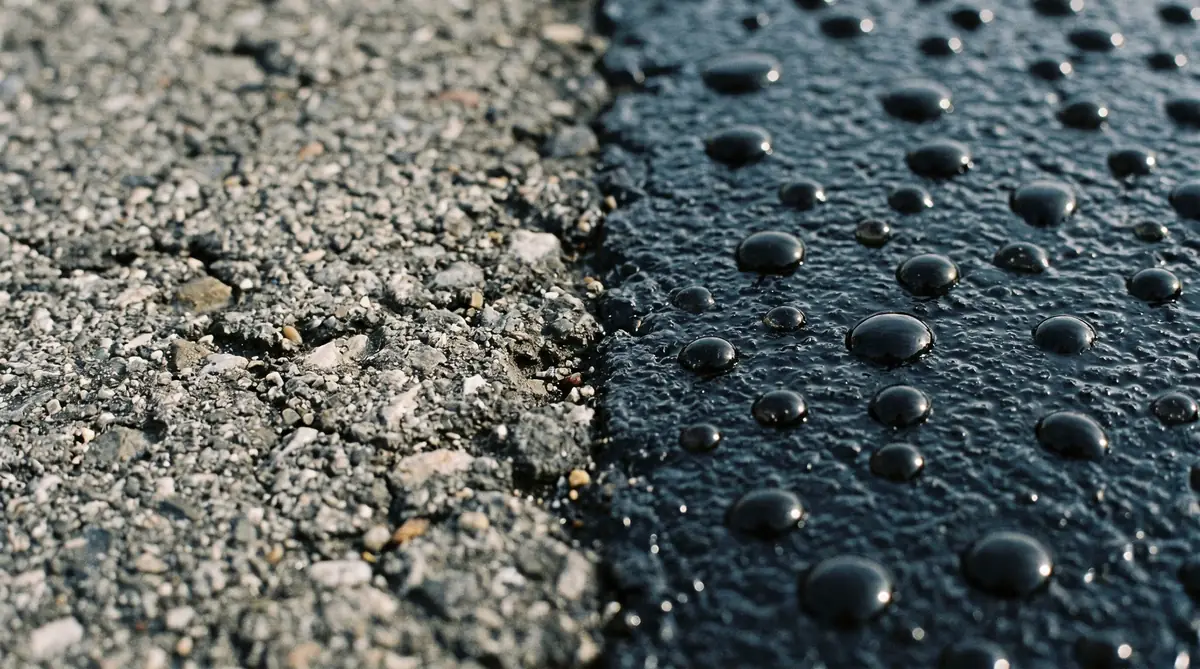
- Applying too thick. More sealer per coat ≠ better protection. Thick coats trap water underneath as the surface skins over. Two thin coats always outperform one heavy coat.
- Not stirring. Emulsion settles into layers in the bucket. Applying unstirred sealer means the first half of your driveway gets mostly water and the second half gets thick sludge.
- Sealing too soon after paving. New asphalt needs 90+ days to cure. Sealing within the first 30 days is the most common cause of sealer bubbling and adhesion failure.
- Skipping crack prep. Sealer bridges hairline cracks but cannot structurally repair cracks wider than ¼ inch. Sealing over large unfilled cracks traps moisture and accelerates cracking.
- Applying in cold or rainy weather. Emulsion sealer needs sustained temperatures above 50°F to cure properly. Applying when rain is imminent washes uncured sealer off the surface entirely.
- Resealing too soon. Resealing every year builds up an over-thick, brittle film that peels. Two to three years between applications is the right interval for quality 45–50% solids emulsion sealer.
Frequently Asked Questions
What is asphalt emulsion sealer?
Asphalt emulsion sealer is a water-based protective coating made from asphalt binder, water, and clay emulsifiers. It bonds chemically to asphalt pavement, protecting it from UV oxidation, water penetration, and light oil stains. It's legal in all 50 states and is the recommended choice for most residential driveways in 2026.
How long does asphalt emulsion sealer last?
Standard emulsion lasts 2–3 years. Polymer-modified emulsion lasts 3–4 years. Rubberized emulsion can last 3–5 years. Reapply when the surface fades to grey and water no longer beads on the surface.
Is asphalt emulsion sealer better than coal tar?
For residential driveways, yes — in most cases. Emulsion bonds better to asphalt, performs better in freeze-thaw climates, is legal everywhere, and carries no PAH runoff risk. Coal tar lasts slightly longer and resists petroleum stains better, making it preferable for commercial parking lots and gas station aprons where coal tar is still permitted.
What solid content should asphalt emulsion sealer have?
Minimum 35–40% for acceptable protection — 45–50%+ is ideal. Budget products at 20–25% solids require 3–4 coats to match what a quality product delivers in two. Check the technical data sheet, not the front label, for the actual solids percentage.
How much asphalt emulsion sealer do I need?
Plan for 70–100 sq ft of coverage per gallon per coat on a porous, worn surface. A 600 sq ft driveway needs roughly 6–9 gallons for two coats. Use our Sealcoating Calculator for an exact estimate with your driveway dimensions.