
DIY Pool Fence: Step-by-Step Guide to a Safe Pool Barrier
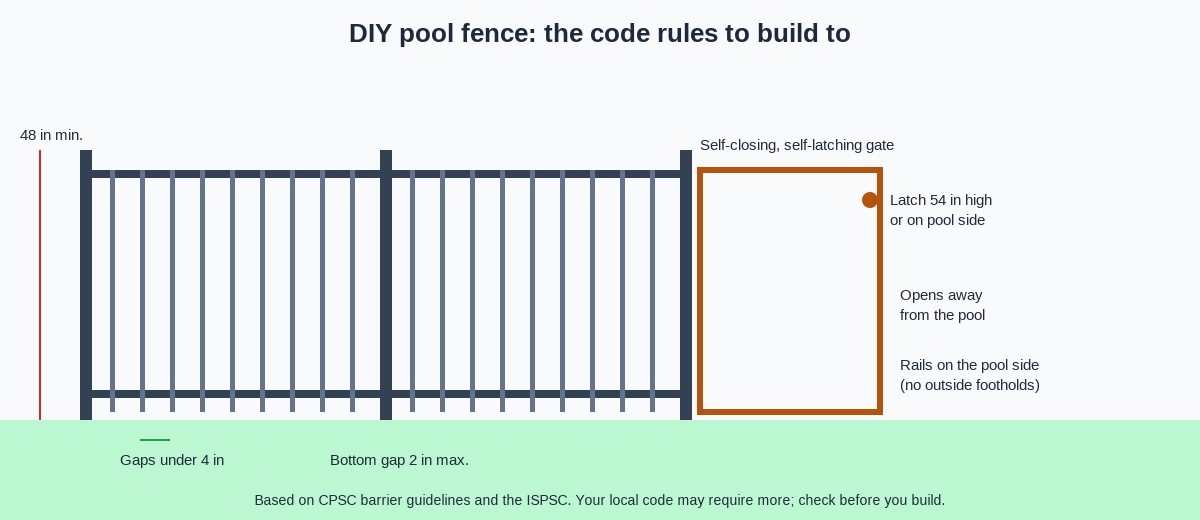
Diagram: Asphapro.com
Quick Answer
A DIY pool fence can save 30% to 50% of the cost of a pro install. The most popular options are a removable mesh DIY pool safety fence, which installs in poles set into holes drilled in the deck, and aluminum or vinyl panel kits set on posts in concrete. Whatever you choose, build to code: a barrier at least 48 inches high, no gap under the fence over 2 inches, no openings a 4-inch sphere can pass, rails on the pool side, and a self-closing, self-latching gate that opens away from the pool. Get a permit first. For about 120 feet, DIY materials cost roughly $1,200 to $4,800, and the job takes one day for mesh or two to four weekends for panels.
A fence is the most important safety barrier around a home pool. It keeps young children, pets and uninvited visitors away from the water when no adult is watching. Most towns require one before a pool can be filled, and many insurers ask for one too.
Many homeowners build a DIY pool fence to save money. With the right kit, a few tools and careful work, a pool fence DIY project is well within reach of a handy owner. This guide walks through planning, code rules, choosing a fence, tools, step-by-step installation and the mistakes to avoid. If you would rather hire a pro, see our guide to pool fence cost for installed prices.
Is a DIY Pool Fence a Good Idea?
A DIY pool fence is a good idea if you are comfortable with measuring, digging, using a level and drilling, and if you have a helper. Panel kits for aluminum and vinyl fences are designed for homeowners, with pre-made panels, posts and hardware. Removable mesh fence kits are also sold for DIY installation, though drilling clean holes in a concrete deck takes the right tools and some practice.
DIY is not a good idea if your yard is very steep, the deck is thick stone or pavers over concrete, or you are not confident you can meet the code exactly. A pool fence is a safety device, and a DIY pool fence that leaves a gap, a climbable rail or a gate that does not latch is a real risk. In those cases, hiring a pro, or at least having one handle the gates, is money well spent.
DIY Pool Fence Code Rules
Before you buy anything, learn the rules your DIY pool fence must meet. Most US towns follow the International Swimming Pool and Spa Code (ISPSC) or the International Residential Code, and the CPSC publishes barrier guidelines that many local rules copy. Common requirements are:
- Height: at least 48 inches, measured on the side away from the pool.
- Bottom gap: no more than 2 inches above the ground, or 4 inches over a hard surface such as concrete.
- Openings: no gap anywhere that a 4-inch sphere can pass through.
- Climbability: horizontal rails less than 45 inches apart must be on the pool side; vertical pickets then must be no more than 1 3/4 inches apart.
- Gates: self-closing and self-latching, opening outward away from the pool, with the release at least 54 inches high or on the pool side.
- Clear zone: no furniture, planters or equipment against the outside of the fence that a child could climb.
- House as a barrier: doors from the house into the pool area need alarms or self-closing devices.
Your town may have extra rules, such as a taller fence or a minimum distance from the water. Call the building department, ask what applies, and get a permit. Most towns inspect pool fences before the pool can be used.
Choosing a DIY Pool Safety Fence
Removable mesh fence. A DIY pool safety fence made of mesh uses aluminum poles and a strong see-through mesh. You drill holes about every 3 feet in the pool deck, set plastic or brass sleeves in the holes, and slide the poles in. The fence can be taken down for parties or for winter. It is the most popular fence made just for pools and the easiest for parents to see through. Kits are custom cut to your layout.
Aluminum panel fence. Aluminum pool-code panels come in 6-foot sections with posts, brackets and gates. They need posts set in concrete or bolted to a concrete deck with base plates. They are strong, rust-free and long-lasting.
Vinyl panel fence. Vinyl pool-code picket fences install much like aluminum, with routed posts that the rails slide into. They are low maintenance and easy to cut.
Wood fence. A wood DIY pool fence is the most work to build, because you frame each section from posts, rails and pickets. It must be built with the rails on the pool side and picket gaps small enough to meet code. Wood is cheap but needs regular care.
Chain link and glass are less common for DIY. Standard chain link openings are often too large for pool codes, and glass panels are heavy and need precise drilling and clamps.
Tools and Materials for a DIY Pool Fence
For a panel fence, you need a post hole digger or rented power auger, a level, a string line and stakes, a tape measure, a shovel, a wheelbarrow, bags of concrete mix, a drill and driver, a saw to cut panels, and the kit itself. For a mesh DIY pool safety fence, you need a rotary hammer with a core bit or a large masonry bit sized for the sleeves, a shop vacuum, chalk line, the sleeves and poles, and a tensioning tool that often comes with the kit. Gloves, eye and hearing protection, and a dust mask are needed for drilling concrete.
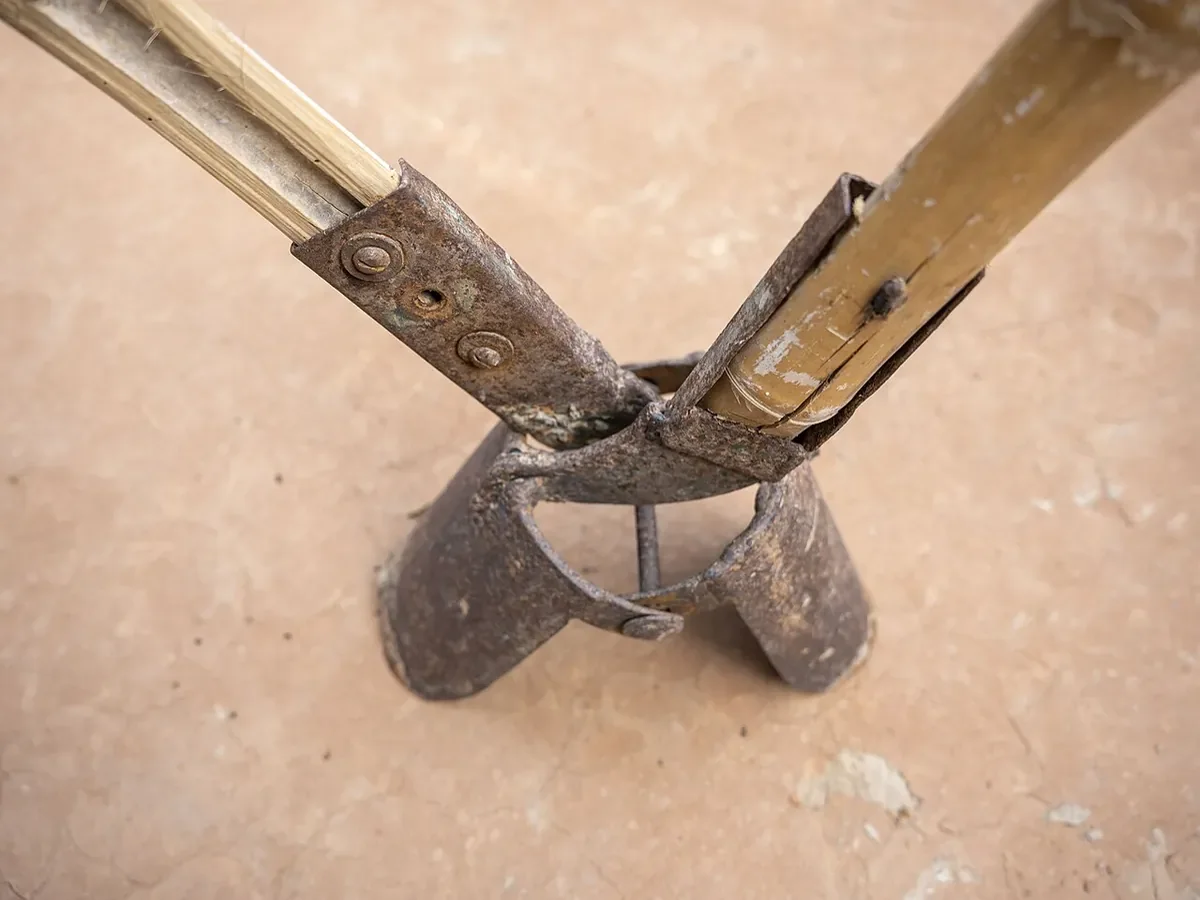
Photo: Tahmid, Wikimedia Commons, CC BY-SA 4.0
How to Install a DIY Pool Fence With Panels
1. Plan the layout. Draw the fence line on paper, marking corners, gates and post spacing. Panel fences usually have posts every 6 feet. Keep the fence a few feet from the water so people can walk inside it, and check setbacks from property lines.
2. Call 811. Have buried lines marked a few days before you dig.
3. Mark the line. Set stakes at corners and run a string line. Mark each post location with paint.
4. Dig the holes. Dig holes about 8 to 12 inches wide and 24 to 36 inches deep, or below the frost line in cold areas. Keep the bottom of each hole flat and add a few inches of gravel for drainage.
5. Set the end and gate posts first. Set the corner, end and gate posts in concrete, checking plumb on two sides and height with the string. Gate posts carry the most stress, so use heavier posts and more concrete if the kit allows.
6. Set line posts and panels. Many kits are easiest to install by setting a post, attaching a panel, then setting the next post. This keeps spacing exact. Keep the bottom of each panel no more than 2 inches above the ground.
7. Let the concrete cure. Brace posts and let the concrete set for at least 24 to 48 hours before hanging gates.
8. Install the gate. Hang the gate with self-closing hinges and a self-latching, magnetic pool latch. Adjust the hinge tension so the gate swings shut and latches from any open position, every time.
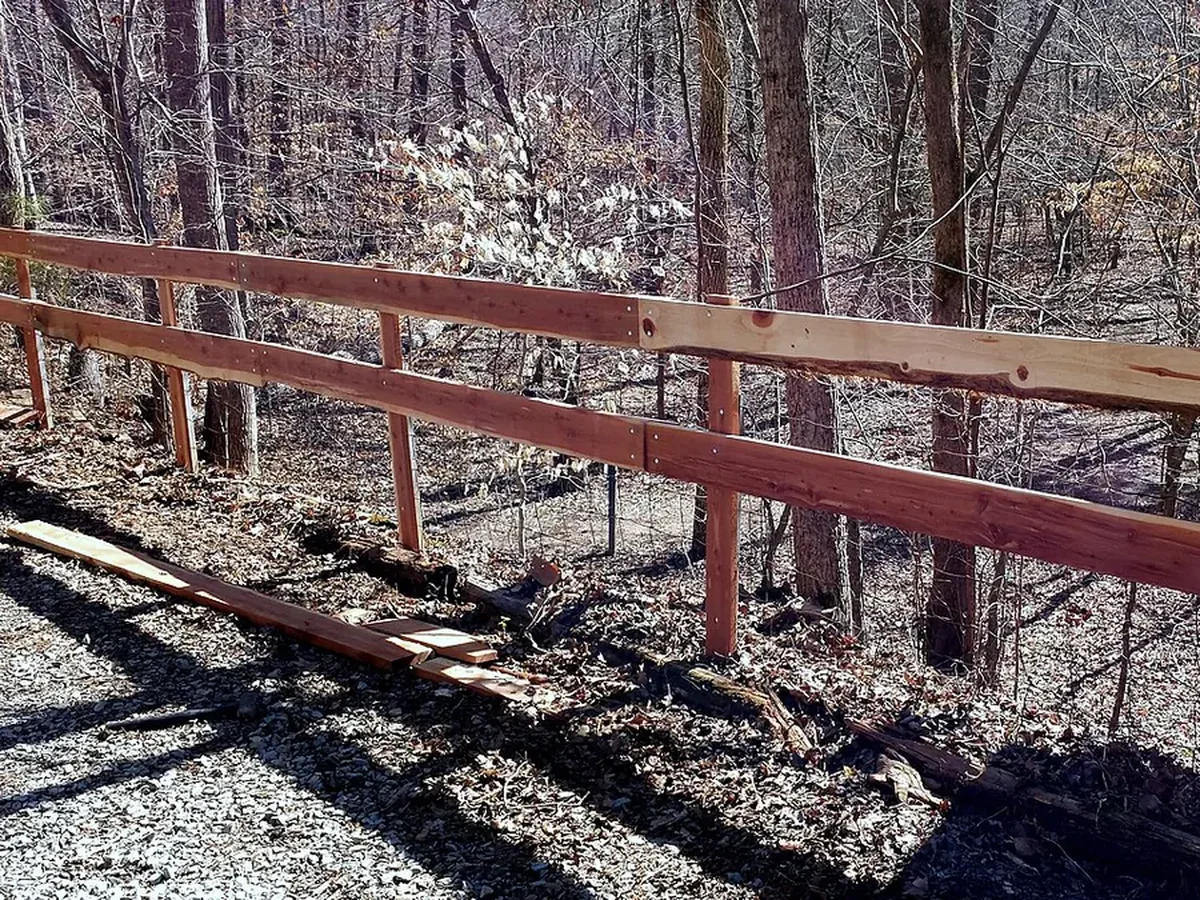
Photo: bobistraveling, Wikimedia Commons, CC BY 2.0
How to Install a Mesh DIY Pool Safety Fence
Measure and order the fence for your exact layout; mesh fence companies cut the sections to your measurements. Mark the fence line on the deck with a chalk line. Mark hole locations about every 36 inches, closer at corners and curves. Drill each hole to the depth and diameter the kit lists, usually about 1 inch wide and 4 inches deep, keeping the drill straight. Vacuum the dust, set the sleeves flush with the deck, and slide in the poles. Stretch each section so the mesh is tight and install the gate section. Removable mesh fences rely on tension, so tighten each section until it does not sag.
Planning the Layout of a DIY Pool Fence
Good planning is the part of a DIY pool fence project that saves the most time and money. Start with a sketch of the yard showing the pool, the house, doors, existing fences, trees, the equipment pad and property lines. Decide how close the fence will run to the water. A fence about 4 to 6 feet from the pool edge leaves room for a walkway and a few chairs inside the barrier while keeping the fenced area small. A larger fenced area takes more materials but can include a patio or lounge space.
Plan where the gate goes. Most people want the gate on the path from the house, and many add a second gate near the equipment pad for service. Each gate adds cost and is a weak point if it fails, so keep the number of gates to what you need. Make sure the pump, filter and any heater are either inside the barrier with access from the pool side, or outside it with their own access, so service does not mean propping a gate open.
Finally, check sight lines. Parents should be able to see the water from the house, so a see-through DIY pool fence such as mesh, aluminum pickets or vinyl pickets is safer than a solid privacy fence. If you want privacy, put a solid fence at the property line and keep the pool barrier see-through.
Building a DIY Pool Fence on a Slope
Sloped yards are the trickiest part of any DIY pool fence. Panels can be installed in two ways on a slope. With stepping, each panel is set level, and each one steps down from the last, leaving a triangle-shaped gap under each panel on the downhill side. You must fill those gaps so the bottom gap stays under 2 inches, often with soil, gravel or a short filler board. With racking, the panel is tilted to follow the slope so the bottom stays close to the ground. Many aluminum pool fence panels can rack a few inches per section; check the kit before you buy if your yard slopes.
Measure the slope along the fence line before you order. For a mesh DIY pool safety fence, the maker cuts each section to follow the ground, so give them accurate measurements of the change in height at each pole. On steep slopes, consider hiring a pro for the layout even if you do the rest of the work yourself.
DIY Pool Fence Gates
The gate is the most important part of a DIY pool fence, and the part most likely to fail inspection. It must close and latch on its own from any position, every time. Use hinges made for pool gates, which have adjustable spring tension, and a latch made for pools, which is usually magnetic and mounted high enough that small children cannot reach it. The gate must open outward, away from the pool, so a child pushing on it cannot force it open.
Hang the gate with a small, even gap at the latch side and check that the gate does not sag. Sagging gates are the most common reason a self-latching gate stops latching. Use a gate post set deeper and with more concrete than the line posts, and add a diagonal brace or anti-sag kit on wide gates. Test the gate every week during swim season. A pool fence DIY project is only as safe as its gate.
DIY Pool Fence for Above Ground Pools
Many above ground pools use the pool wall itself as the barrier, if the wall is at least 48 inches tall and the ladder or steps can be removed or locked. When the wall is shorter, or the pool has a deck that children can reach from outside, you may need a fence. A DIY pool fence for an above ground pool often runs along the top of the deck as a rail system, or around the pool at ground level. Mesh fences work well around above ground pools on concrete pads, while panels set in post holes work on lawns. Follow the same code rules for height, gaps and gates.
DIY Pool Fence Costs
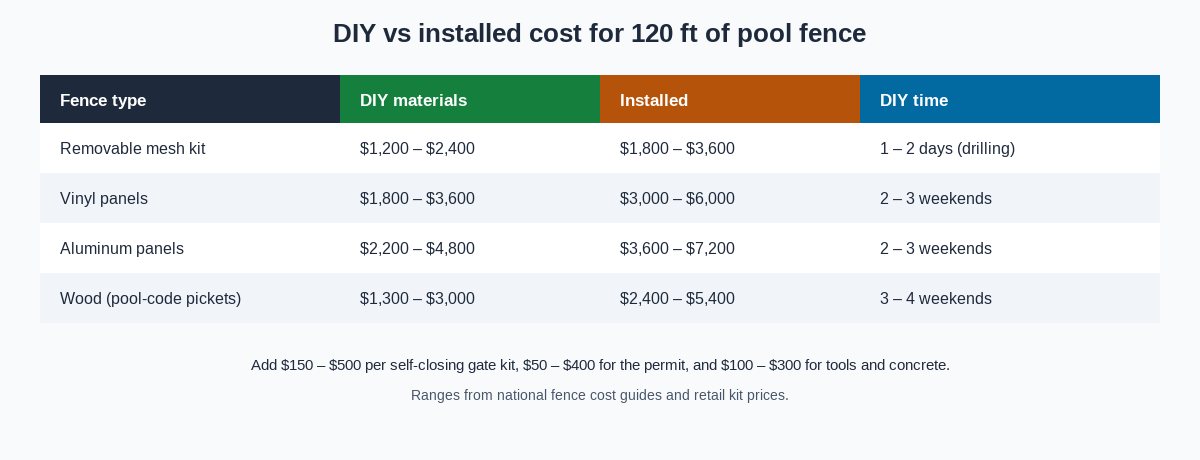
Chart: Asphapro.com
For a typical pool needing about 120 feet of barrier, DIY pool fence materials cost about $1,200 to $2,400 for a removable mesh kit, $1,800 to $3,600 for vinyl panels, $2,200 to $4,800 for aluminum panels and $1,300 to $3,000 for a wood picket fence. Self-closing gate kits add $150 to $500 each, permits $50 to $400, and tools and concrete $100 to $300 if you do not already own a rotary hammer or auger. Compared with professional installation, building a DIY pool fence usually saves 30% to 50%, mostly in labor.
Rental tools keep costs down. A power auger rents for about $60 to $120 a day, and a rotary hammer with core bits for about $50 to $100 a day. Plan the work so you need these tools for as few days as possible.
Getting Your DIY Pool Fence Inspected
Most towns inspect a new pool barrier before the pool can be filled or used. The inspector checks the fence height, gaps, the bottom clearance, climbable features, gate operation and latch height, and any doors or windows from the house that open into the pool area. Have your permit and approved plan on hand. Test the gate yourself several times before the inspection, from fully open and half open, to be sure it closes and latches. If the inspector finds a problem, fix it and schedule a re-inspection. Passing the inspection is the final step in a pool fence DIY project and protects you if there is ever a question about the barrier.
Common DIY Pool Fence Mistakes
The most common DIY pool fence mistakes are easy to avoid. Leaving gaps under the fence on uneven ground lets small children crawl under. Putting rails on the outside of the fence gives children footholds. Installing a gate that opens toward the pool, or a latch set too low, fails inspection and is unsafe. Using posts that are too shallow lets the fence lean over time. Placing grills, planters or pool equipment against the outside of the fence turns them into climbing aids. Forgetting the doors from the house that open into the pool area leaves a hole in the barrier. Skipping the permit can mean having to tear out and rebuild the fence later.
Caring for a DIY Pool Safety Fence
A DIY pool safety fence needs simple, regular care. Check gates weekly in the swim season and adjust hinge tension when the gate starts closing slowly. Check mesh fences for sagging sections and retighten them, and look for tears, especially near the bottom. Make sure sleeves in the deck are clear of debris so poles sit fully down. On panel fences, check posts for leaning and tighten brackets. Wash aluminum and vinyl with soap and water, and stain or seal wood every few years. Store removable mesh sections rolled and dry when taken down, and reinstall them before children are around the pool again.
Layers of Protection Beyond a DIY Pool Fence
A fence is the main barrier, but safety experts recommend layers of protection. Add alarms on doors that lead to the pool, a pool alarm that sounds when someone enters the water, and a safety cover when the pool is closed. Teach children to swim, learn CPR, and always have an adult watching the water when children are swimming. A well-built DIY pool fence works best as part of a full safety plan.
DIY Pool Fence Ideas by Material
The right DIY pool fence depends on your deck, yard and budget. On a concrete pool deck with young children at home, a removable mesh DIY pool safety fence is hard to beat: it is see-through, hard to climb and can be removed when only adults swim. On a lawn around the pool, aluminum panels give a clean, permanent look and need almost no upkeep. Vinyl picket panels suit traditional homes and are easy to cut for odd lengths. A wood DIY pool fence is the cheapest in materials but needs the most labor and care, and it must be designed to meet pool code, with rails inside and narrow gaps between pickets.
Some owners mix materials. A mesh fence around the pool edge can be paired with an existing wood privacy fence at the property line, giving both safety and privacy. Or an aluminum fence can run along the sides of the yard, with a mesh section across the patio that can be removed for parties. Any mixed DIY pool fence must still form a complete barrier with no gaps where the sections meet.
How Long Does a Pool Fence DIY Project Take?
Time depends on the type of fence and the site. A removable mesh fence for a typical pool takes one long day for two people once the sections arrive, most of it spent drilling holes. A panel fence takes longer: one day to lay out and dig, another to set posts in concrete, and a third to hang panels and gates after the concrete cures. Many owners spread a pool fence DIY project over two or three weekends. Wood fences that are built board by board can take three or four weekends. Add time for permits, ordering materials and the final inspection.
DIY Pool Fence vs Hiring a Pro
Building a DIY pool fence saves money, but a pro brings speed, tools and experience with local inspectors. A good compromise is to do the parts you are comfortable with and hire help for the rest. For example, you can buy and plan a mesh fence but hire someone with a core drill to drill the deck, or set the line posts yourself and have a pro hang and adjust the gates. Whatever you choose, the finished barrier must meet the code, pass inspection and keep children safe.
Working Safely While You Build
While the fence is going up, the pool has no barrier, so plan for safety during the build. Keep the pool covered with a safety cover or keep children away from the yard until the fence and gate are complete and tested. Store tools, concrete bags and drills where children cannot reach them. When drilling concrete, wear eye, ear and lung protection, and keep the dust out of the pool, since concrete dust raises pH and clouds the water. Vacuum and rinse the deck at the end of each work day. If you must leave the job half done overnight, use temporary fencing or a locked door to keep the pool area closed. These simple steps keep a DIY pool fence project safe from the first hole to the final inspection.
DIY Pool Fence: Key Points
- Build to code: 48 inches high, small gaps, pool-side rails, self-closing gate.
- Removable mesh and aluminum or vinyl panels are the easiest DIY options.
- Get a permit and pass the inspection before filling the pool.
- DIY saves 30% to 50% of the installed price.
Frequently Asked Questions
Can I install a pool fence myself?
Yes, in most towns. You still need a permit and an inspection, and the fence must meet the same rules as one built by a contractor.
What is the easiest DIY pool fence?
Aluminum or vinyl panel kits on a flat yard, or a removable mesh DIY pool safety fence on a concrete deck. Both come with all the parts and clear instructions, and most owners finish them in a few days.
How much does a DIY pool fence cost?
About $1,200 to $4,800 in materials for 120 feet, plus gates, permit and tool rental. That is 30% to 50% less than a professional install, and the savings grow on larger yards.
Do I need a permit for a DIY pool fence?
In most towns, yes. The fence will also be inspected before you can fill or use the pool. Ask the building department for its pool barrier handout, which lists the exact rules your DIY pool fence must meet.
Is a removable DIY pool safety fence as safe as a permanent fence?
Yes, when it is installed correctly, kept tight and put back up after it is removed. Most codes accept mesh fences that meet the standard rules, and their see-through mesh makes it easy to watch the water from the house.
Sources
- CPSC: Safety barrier guidelines for residential pools
- ICC: International Swimming Pool and Spa Code
- CDC: Preventing drowning
- Call 811: Know what's below