
Deck Ideas for Inground Pools: Materials, Layouts and Design Tips
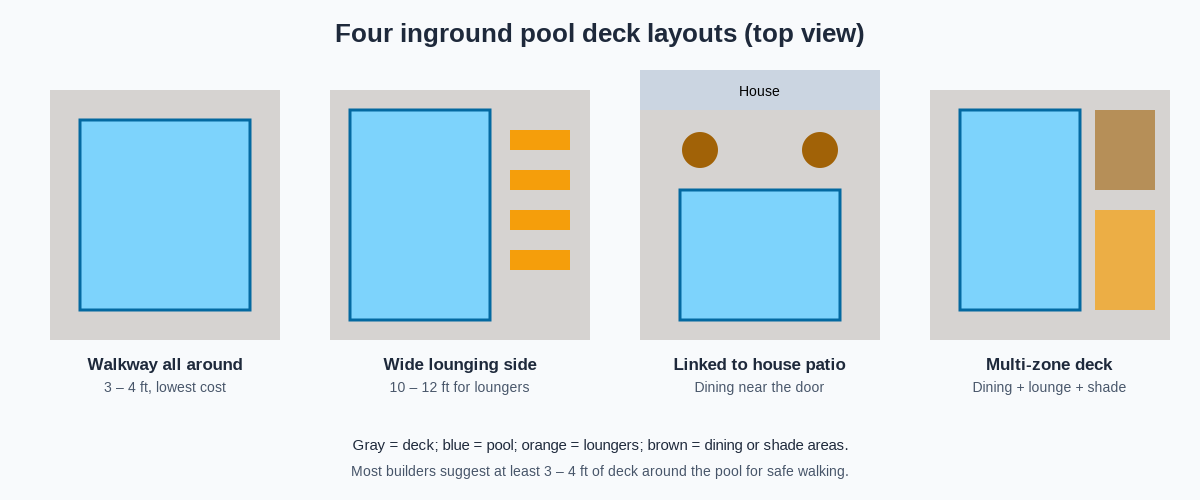
Diagram: Asphapro.com
Quick Answer
The best deck ideas for inground pools combine a surface that stays cool and slip resistant with a layout that gives room to walk, lounge and gather. Popular materials are broom-finish or stamped concrete ($6 to $20 per square foot), concrete pavers ($15 to $30), travertine ($20 to $40), natural stone ($20 to $45), porcelain pavers ($25 to $45) and, for raised areas, wood or composite decking ($25 to $60). Plan at least 3 to 4 feet of walkway around the pool and a wider 10 to 12 foot zone for loungers. For about 1,000 square feet around a 16 x 32 foot pool, decks run roughly $6,000 to $40,000 depending on material.
The deck around an inground pool does as much work as the pool itself. It is where people walk, sit, sunbathe, eat and watch children swim. A well-planned deck makes the pool feel like part of the house and yard; a cramped or hot, slippery deck makes the whole area less pleasant and less safe.
This guide collects deck ideas for inground pools by material, layout and style, with costs and practical tips on heat, grip, drainage and upkeep. For more general ideas, see our pool deck ideas and our guide to the concrete pool deck.
Inground Pool Deck Ideas by Material
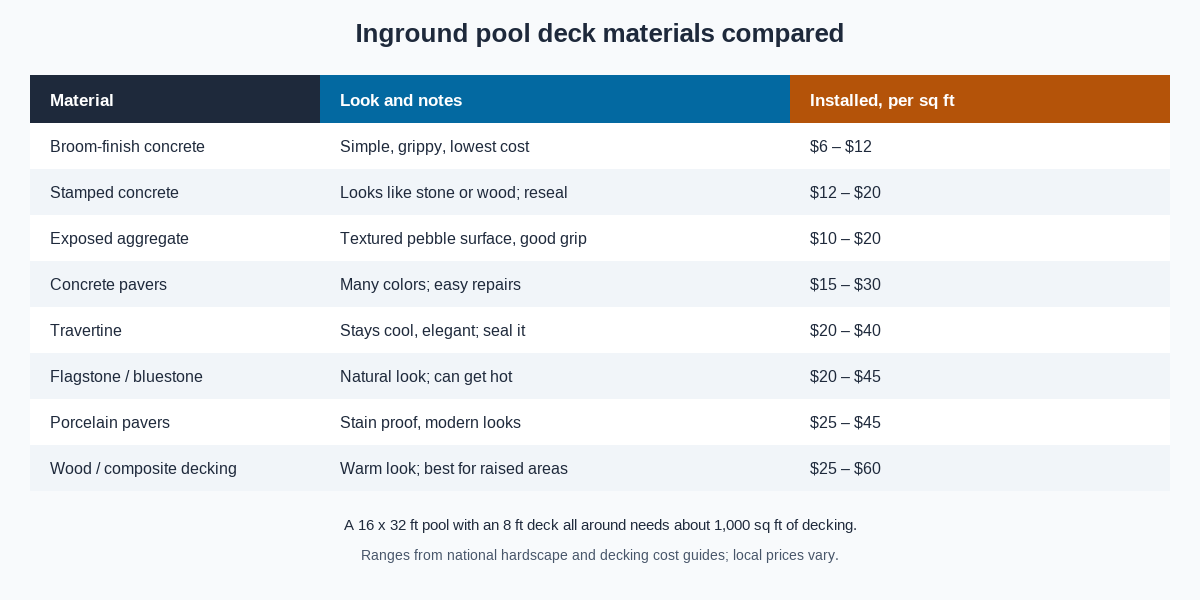
Chart: Asphapro.com
Broom-finish concrete. The classic, budget-friendly inground pool deck. A light broom texture gives good grip when wet, and the deck can be poured right up to the coping. Light colors stay cooler. Control joints help limit cracking.
Stamped concrete. Stamped concrete is pressed with patterns that look like stone, brick, slate or wood, then colored. It gives a high-end look for less than real stone, but it needs resealing every two to three years, and the sealer must include grit so the surface is not slippery.
Exposed aggregate. The top layer of cement is washed away to reveal small pebbles, creating a textured, non-slip surface with natural color variation. It hides dirt well and stays grippy when wet.
Concrete pavers. Interlocking pavers come in many colors, shapes and patterns, and single pavers can be lifted and replaced if they crack or settle. Joints let the deck flex with the ground, which helps in freeze-thaw climates.
Travertine. Travertine is one of the most popular pool deck materials because it stays cool underfoot, has a soft, elegant look and works well with matching coping. It must be sealed and is less suited to salt pools unless well maintained.
Flagstone and bluestone. Natural stone gives a timeless, natural look. Irregular flagstone suits garden pools; cut bluestone suits formal designs. Darker stone can get hot in the sun.
Porcelain pavers. Thick outdoor porcelain pavers resist stains, chemicals and fading, and come in wood, stone and concrete looks. Choose a textured, slip-rated finish.
Wood and composite decking. Raised wood or composite decks suit sloped yards, upper-level patios and areas next to the house, but are less common right at the pool edge, since constant splashing can wear wood. Composite resists moisture better than wood.
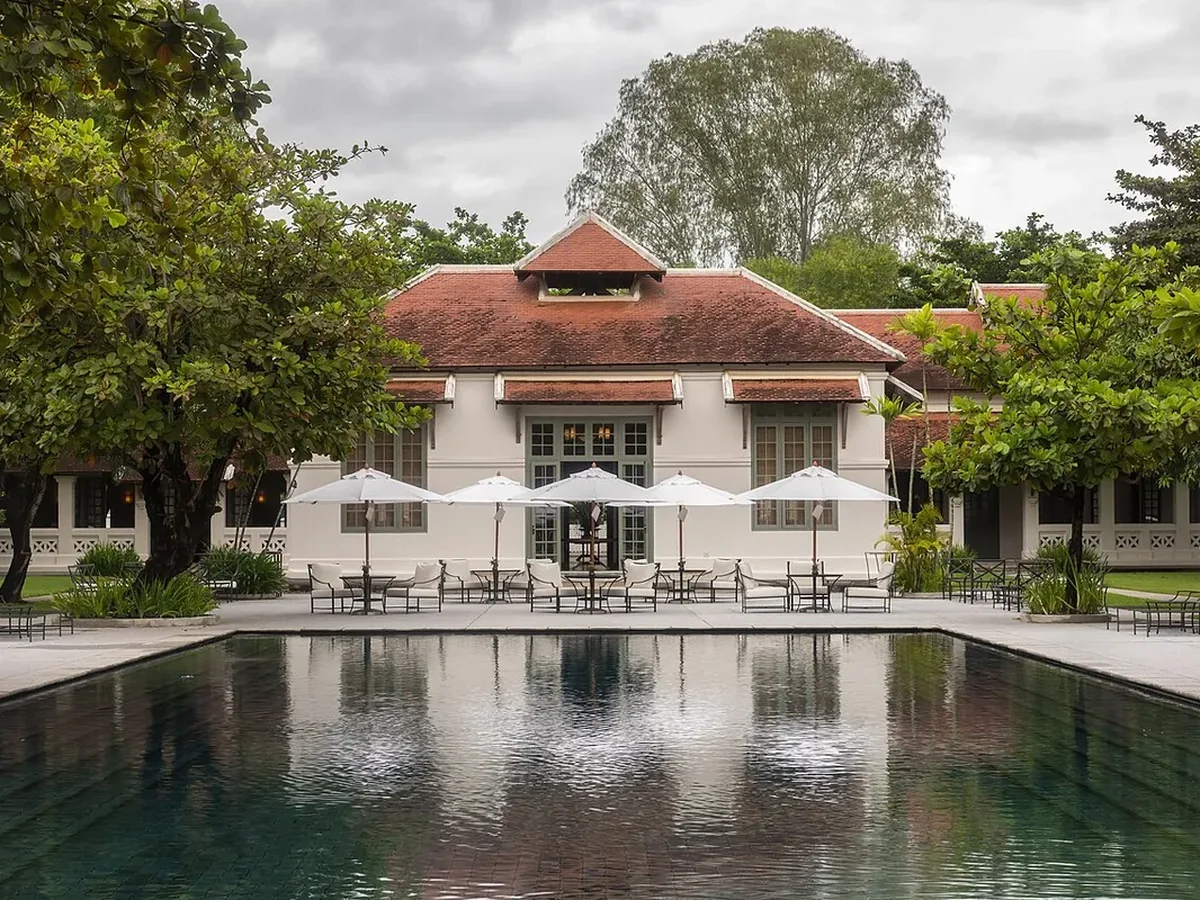
Photo: Basile Morin, Wikimedia Commons, CC BY-SA 4.0
Inground Pool Deck Ideas by Layout
Good inground pool deck ideas start with how people move and gather around the water. A walkway all around, 3 to 4 feet wide, is the minimum for safe walking and the cheapest layout, best for small yards. A wide lounging side, 10 to 12 feet deep along the sunniest side, fits a row of loungers and side tables while keeping the other sides narrow. A deck linked to the house patio puts dining near the back door, so food and drinks do not travel far, with the pool just beyond. A multi-zone deck uses changes in material, level or shade to create separate areas for lounging, dining and playing, which suits large families and frequent entertaining.
Place the widest deck where the afternoon sun falls if you love sunbathing, or where shade from the house or trees falls if you want to stay cool. Keep the path from the house to the pool short and direct, and leave space for the equipment pad, a storage box and a shower if you plan one.
In Ground Pool Deck Ideas by Style
Modern. Large-format porcelain or smooth concrete in gray or white, flush coping, linear drains and minimal planting give a clean, architectural look. Pair with a dark pool finish and slim, low furniture.
Mediterranean. Travertine or stamped concrete in warm sand tones, terracotta pots, olive trees and a pergola recreate a coastal villa feel. Mosaic accents and blue tile complete the look.
Tropical. Light pavers or travertine with palms, lush planting, a thatched umbrella or cabana and bright cushions give a resort style. Pebble-finish pools and rock waterfalls fit well.
Traditional. Brick or bluestone pavers with neat borders, boxwood hedges and classic furniture suit colonial and craftsman homes.
Natural. Irregular flagstone, boulders at the pool edge and native planting blend the pool into the landscape. These in ground pool deck ideas work especially well with freeform pools.
Pool Deck Ideas for Inground Pools With Shade
Shade makes a deck usable through the hottest hours. Pool deck ideas for inground pools often include a pergola over the dining or lounging zone, cantilever umbrellas that can swing over loungers, shade sails stretched between posts, or a cabana with curtains. Trees give natural shade but drop leaves into the water, so plant them away from the pool edge and choose clean species. Keep shade structures on the deck rather than over the water so the pool still warms in the sun and stays free of falling debris. See our guide to pool pergola ideas.
Lighting, Fire and Outdoor Kitchens
Lighting extends deck use into the evening. Step lights, low path lights, LED strips under coping and string lights over dining areas add safety and atmosphere. Fire features, such as a gas fire pit or fireplace at one end of the deck, create a gathering spot on cool nights; keep them well away from the water and from loungers. An outdoor kitchen with a grill, counter and small refrigerator turns the deck into an outdoor living room, ideally placed near the house and downwind of the pool. Plan electrical and gas lines before the deck is poured or laid, since adding them later means cutting the deck.
Inground Swimming Pool Deck Ideas for Safety
Safety is part of every good design. Choose slip-resistant surfaces: broom-finish concrete, exposed aggregate, textured pavers and honed stone all give grip when wet; polished stone and glossy tile do not. Light colors stay cooler for bare feet. Keep the deck free of trip hazards such as raised paver edges, hoses and cords. Slope the deck away from the pool about 1/8 to 1/4 inch per foot so water drains to deck drains or the lawn. Include a pool barrier, usually a 4-foot fence with self-closing gates, around the pool area. These inground swimming pool deck ideas protect swimmers as well as the pool. See our guide to pool fence cost.
Semi Inground Pool Deck Ideas
Semi-inground pools sit partly above ground, often 2 to 4 feet, so the deck usually rises to meet the pool's top rail. Semi inground pool deck ideas include a raised wood or composite deck that wraps one or more sides, with steps down to a ground-level patio; a stone or block wall around the exposed side, topped with coping that doubles as seating; and a half deck with built-in benches and planters. Build raised decks on their own footings, never resting on the pool wall, and include railings and a gate. See our guides to cost of semi-inground pool projects and how to build a deck around a pool.
Inground Pool With Deck: Wood and Composite Ideas
An inground pool with deck boards right to the edge is less common than concrete or stone, but it can look stunning, especially with a modern pool or in a garden setting. The deck must be built low with good airflow and drainage underneath, using pressure-treated framing and moisture-resistant boards such as composite, PVC or tropical hardwood. Many designs use stone or concrete coping at the edge and start the wood deck a foot or two back, protecting the boards from constant splashing. Composite boards should be light in color and rated for wet areas so they stay cooler and grip well.
Inground Pool Decking Ideas on a Budget
If budget is tight, these inground pool decking ideas help. Start with broom-finish concrete, which costs the least and lasts for decades; add colored or stamped borders for interest without stamping the whole deck. Keep the full-width lounging area on one side and narrow walkways elsewhere. Use pavers only in a small feature area. Build in phases: pour the essential deck now and add a patio, pergola or kitchen later. Choose concrete or paver colors that stay cool so you do not need costly cool-deck coatings.
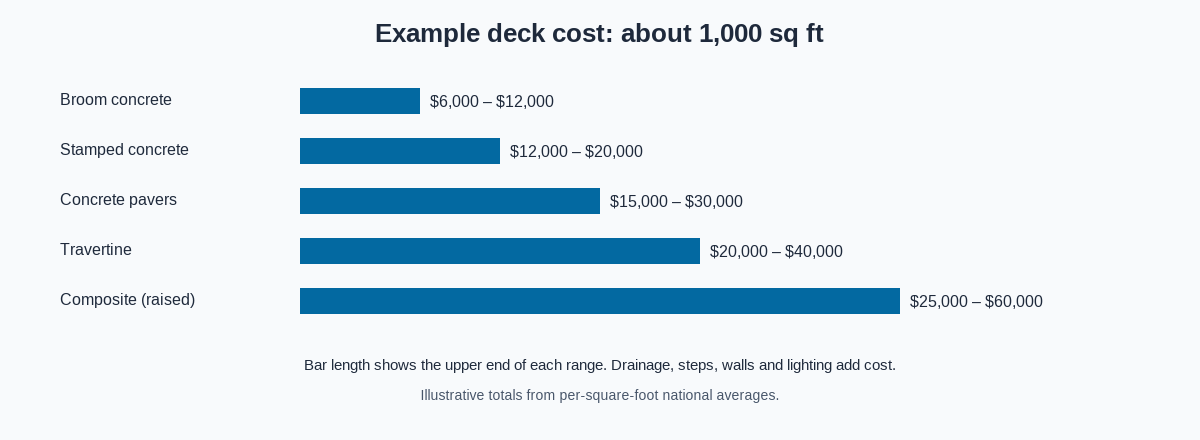
Chart: Asphapro.com
Inground Pool Deck Cost
Deck cost depends on area and material. For about 1,000 square feet around a 16 x 32 foot pool, broom concrete costs roughly $6,000 to $12,000, stamped concrete $12,000 to $20,000, pavers $15,000 to $30,000, travertine $20,000 to $40,000, and raised composite decking $25,000 to $60,000. Extras such as deck drains, steps, retaining walls, lighting, cool-deck coatings and sealing add to the total. Removing an old deck adds $2 to $6 per square foot. If your existing concrete deck is sound but worn, resurfacing can cost much less than replacing it; see our guide to concrete pool deck resurfacing.
Drainage and Expansion Joints
Every pool deck needs a plan for water. The deck should slope away from the pool so splash-out and rain run to deck drains, a lawn or a planting bed, never back into the pool or toward the house. An expansion joint filled with flexible sealant must separate the deck from the pool coping, since the deck and pool shell move differently. Without it, coping cracks and pops loose. Control joints in concrete decks guide cracks into straight lines. Paver decks need a well-compacted base and edge restraints so pavers do not shift.
Caring for an Inground Pool Deck
Rinse the deck regularly to remove pool chemicals, salt and dirt. Reseal stamped concrete, natural stone and pavers every two to three years, using a sealer with slip-resistant additives. Re-sand paver joints as needed and pull weeds early. Check and replace the expansion joint sealant around the coping when it cracks or pulls away. Fix cracks and lifted pavers promptly to prevent trip hazards and water getting under the deck. In freezing climates, avoid de-icing salt on concrete and stone near the pool.
More Deck Ideas for Inground Pools
Sun shelf extension. Extend the deck material onto a shallow tanning ledge in the pool so the deck seems to flow into the water.
Built-in benches and planters. Low walls at the deck edge double as seating and hold plants, saving space for furniture.
Two-tone borders. A band of darker pavers or stone around the pool and a lighter field beyond outline the pool and add depth.
Grass joints. Large concrete or stone slabs with grass strips between them soften the deck and help drainage, best away from the pool edge.
Raised spa deck. A spa set a step or two above the main deck, with its own small landing, creates a separate retreat.
Outdoor shower pad. A small area with a drain and an outdoor shower near the deck keeps sand and grass out of the pool.
Cool-deck coating. A textured acrylic coating over concrete stays cooler and adds grip, a popular update for hot climates.
These deck ideas for inground pools can be mixed to suit your yard. Pick one or two standout features and keep the rest simple, so the pool and deck feel calm and planned.
Deck Ideas for Inground Pools in Small Yards
In small yards, every square foot counts. Deck ideas for inground pools in tight spaces include a narrow walkway on three sides and a wider area on the sunny side for two loungers, built-in benches instead of chairs, and a single deck material from the house to the pool to make the space feel larger. Light colors and large-format pavers or porcelain reduce visual clutter. A plunge or compact pool leaves more room for decking; see our guide to swimming pool ideas for small backyard spaces.
Deck Ideas for Inground Pools on Sloped Yards
Sloped yards turn into opportunities with tiered decks. One of the most effective deck ideas for inground pools on slopes is to set the pool on a level terrace cut into the hill, with a retaining wall on the high side that doubles as seating, and a lower terrace or lawn on the downhill side. Raised composite or wood decks can bridge from an upper patio to the pool level. Retaining walls and steps add cost, so plan them with the pool builder. On steep sites, an infinity edge facing the view can make the most of the slope.
Planting Around a Pool Deck
Plants soften hard decks and add privacy, but choose them carefully. Good choices are clean, evergreen shrubs, ornamental grasses, palms in warm climates, and potted plants that can be moved. Avoid trees and shrubs that drop leaves, flowers, berries or needles into the water, and thorny plants near walkways. Keep beds a few feet from the pool edge, use mulch or gravel that will not wash onto the deck, and plan irrigation so sprinklers do not wet the deck or spray into the pool.
Furniture and Accessories
Measure your furniture carefully before finalizing the layout. A chaise lounge needs about 3 by 7 feet, plus walking space. A dining table for six needs about 10 by 12 feet. Choose furniture made for wet, sunny areas: powder-coated aluminum, resin wicker, teak and quick-dry cushions. Add a storage box for toys and cushions, towel hooks or racks, and a side table for drinks beside each pair of loungers so the deck stays tidy.
Inground Pool Deck Ideas: Worked Examples
Family pool on a budget. A 16 x 32 foot pool gets a 4-foot broom-concrete walkway on three sides and a 12-foot lounging area on the south side, about 800 square feet total, for about $8,000. A stamped border adds $1,500.
Entertainer's deck. A 18 x 36 foot pool gets a travertine deck of about 1,200 square feet with a dining zone under a pergola near the house and a lounge zone by the water, for about $36,000 including the pergola footings and lighting.
Sloped garden. A freeform pool on a hillside gets a flagstone deck on the pool terrace, a stone retaining wall with seat-height coping on the high side, and steps down to a lawn, for about $30,000 in hardscape.
Choosing Pool Deck Ideas for Inground Pools in Your Climate
Climate should guide your choice of pool deck ideas for inground pools. In hot, sunny regions, the main concern is heat: light travertine, light pavers and concrete with a cool-deck coating keep feet comfortable, while dark stone and dark composite can become painfully hot. Shade structures matter more, too. In cold regions, freeze-thaw cycles are the main concern: pavers flex rather than crack, and dense stone and porcelain resist frost; avoid porous stone that absorbs water. Use air-entrained concrete for poured decks, and never use rock salt on the deck in winter. In wet or humid areas, focus on grip and drainage, and choose materials that resist mold and algae. In coastal or salt-pool settings, choose materials that resist salt, such as porcelain, granite and well-sealed concrete.
Updating an Old Inground Pool Deck
If your pool deck is cracked, stained or dated, you have several options short of a full replacement. Pressure washing and resealing can refresh concrete and pavers. A decorative overlay or cool-deck coating can resurface sound concrete with new color and texture for much less than new concrete. Pavers can be laid over an existing slab in some cases, if heights at doors and coping allow. Cracked areas can be cut out and replaced with a new material as a border or accent. A new coping and waterline tile paired with a resurfaced deck can make an old pool look new. See our guides to concrete pool deck repair and pool coping ideas.
Working With a Contractor
Get at least three quotes from hardscape or pool contractors with experience building pool decks. Ask how they will prepare the base, what thickness and reinforcement they use for concrete, how they handle drainage and the expansion joint at the coping, and what sealer or finish they apply. For pavers, ask about base depth, compaction and edge restraints. Check reviews and visit decks they built several years ago. A well-built deck should last 20 to 30 years or more with basic care, regular cleaning and resealing every few years.
Planning Inground Pool Deck Ideas Step by Step
Turning inground pool deck ideas into a finished deck is easier with a simple plan. First, list how you will use the space: swimming, lounging, dining, cooking, play or all of these. Second, sketch the yard with the pool, house doors, sun and shade, and the equipment pad, then mark zones for each use. Third, choose a main material that suits your climate and budget, and an accent material for borders or feature areas. Fourth, size each zone using your furniture measurements and leave walkways of at least 3 to 4 feet. Fifth, plan drainage, lighting, gas and water lines before any concrete is poured. Finally, get quotes that list the base, thickness, finish, drains and sealing so you can compare them fairly.
Following these steps makes it much easier to choose between deck ideas for inground pools that look good in photos and ones that truly fit how your family lives. A deck designed around real use, with enough space, shade and grip, will be enjoyed for decades and will add to the appeal of the whole home.
Inground Swimming Pool Deck Ideas for Families
Families with children need decks that are safe, tough and easy to watch over. Good inground swimming pool deck ideas for families include a wide, shaded seating area with a clear view of the whole pool, textured surfaces that stay grippy when kids run (even though they should not), and a storage box for toys so the deck stays clear. Place the gate and fence so children cannot reach the pool without passing an adult. A small lawn or play area next to the deck gives kids somewhere to play away from the water's edge. Choose stain-resistant materials such as pavers, porcelain or sealed concrete that shrug off sunscreen, juice and chalk.
Deck Ideas for Inground Pools: Key Points
- Choose cool, slip-resistant materials suited to your climate.
- Plan 3 to 4 ft of walkway and 10 to 12 ft for lounging.
- Concrete is cheapest; travertine and stone cost more but stay cooler.
- Slope the deck away from the pool and include an expansion joint.
Frequently Asked Questions
What is the best deck material for an inground pool?
Travertine for comfort and looks, broom-finish concrete for budget and grip, and pavers for flexibility and easy repairs. In cold climates, pavers and dense stone handle freeze-thaw cycles best.
How wide should a pool deck be?
At least 3 to 4 feet for walking, and 10 to 12 feet where you want loungers or tables. Dining areas for six people need about 10 by 12 feet of clear space.
What are the cheapest deck ideas for inground pools?
Broom-finish concrete with a simple border is the cheapest durable option, about $6 to $12 per square foot. Keep the wide lounging area to one side to save more.
Which inground pool deck ideas stay coolest?
Light travertine, light concrete with a cool-deck coating and light-colored pavers stay coolest under bare feet, even in strong summer sun.
Can I put a wood deck around an inground pool?
Yes, with good drainage and airflow, moisture-resistant boards, and ideally stone or concrete coping at the pool edge to take the constant splashing.
Do semi inground pool deck ideas need permits?
Usually yes. Raised decks, railings and pool barriers are commonly covered by local building codes, so check with your building department first.
Sources
- HomeGuide: Pool deck cost
- Concrete Network: Pool decks
- Natural Stone Institute
- ICC: International Swimming Pool and Spa Code