
Pool Fence Cost: What You Will Pay by Material and Size
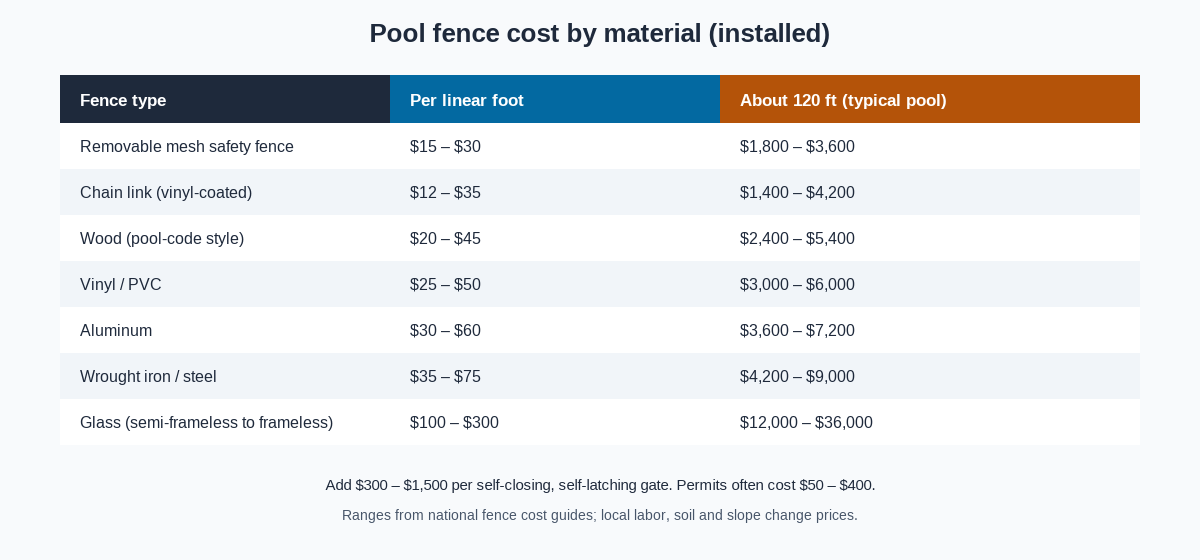
Chart: Asphapro.com
Quick Answer
The average pool fence cost is about $1,500 to $9,000 installed for a typical backyard pool needing around 100 to 150 linear feet of fence. By material, expect about $15 to $30 per linear foot for a removable mesh pool safety fence, $12 to $35 for vinyl-coated chain link, $20 to $45 for wood, $25 to $50 for vinyl, $30 to $60 for aluminum, $35 to $75 for wrought iron, and $100 to $300 per foot for glass, which puts glass pool fence cost at around $12,000 to $36,000. Add $300 to $1,500 per self-closing, self-latching gate and $50 to $400 for permits. Most pool fences must be at least 4 feet tall with gaps under 4 inches.
A fence is the single most important safety feature for a backyard pool. Drowning is a leading cause of death for young children, and most child drownings in home pools happen when a child gets into the pool area without an adult knowing. A proper barrier with a self-closing gate gives you a layer of protection and is required by law for most residential pools in the United States.
This guide breaks down pool fence cost by material, size and features, explains what drives the price, covers code rules that affect what you can build, and shows how to save without cutting corners on safety. For design inspiration, see our swimming pool fence ideas.
How Much Does a Pool Fence Cost?
How much does a pool fence cost for your yard? The answer comes down to three numbers: the length of fence you need, the price per linear foot for the material you choose, and the number of gates. A fence that wraps closely around a 16 x 32 foot pool with a 4-foot walkway on each side runs about 120 linear feet. A fence along the property line around a whole backyard might need 200 to 300 feet, though in that case the house wall often counts as one side, and every door leading to the pool area needs an alarm or a self-closing device.
For 120 feet of fence, the cost of pool fence materials and labor ranges from about $1,400 for basic chain link to $9,000 for wrought iron, and well over $12,000 for glass. Most homeowners choose mesh, aluminum or vinyl and spend $2,000 to $7,000.
Pool Fence Cost by Material
Mesh pool safety fence
Removable mesh fences use a strong, see-through mesh stretched between aluminum poles that slip into sleeves drilled into the pool deck. They are made specifically for pools, are hard for children to climb, and can be taken down when adults use the pool without kids around. The pool safety fence cost for mesh is about $15 to $30 per linear foot installed, or about $1,800 to $3,600 for a typical pool. Self-closing mesh gates add $300 to $700. The mesh usually lasts 8 to 15 years before it needs replacing.
Chain link
Chain link is the cheapest permanent option at about $12 to $35 per linear foot. Standard chain link has openings that are often too large to meet pool codes, because a child can use them as footholds. Pool-code chain link uses smaller mesh, often 1 1/4 inch or less, or adds slats. Vinyl-coated chain link in black or green looks better and resists rust.
Wood
Wood fences cost about $20 to $45 per linear foot. For pools, the design must avoid horizontal rails on the outside that act as a ladder, and gaps between boards must be small. Solid wood fences give privacy but block the view of the pool from the house, which is a safety concern. Wood needs staining or sealing every few years.
Vinyl
Vinyl or PVC fences cost about $25 to $50 per linear foot. They are low maintenance, do not rot or rust, and come in pool-code picket styles. Vinyl can crack in very cold weather and fade in strong sun.
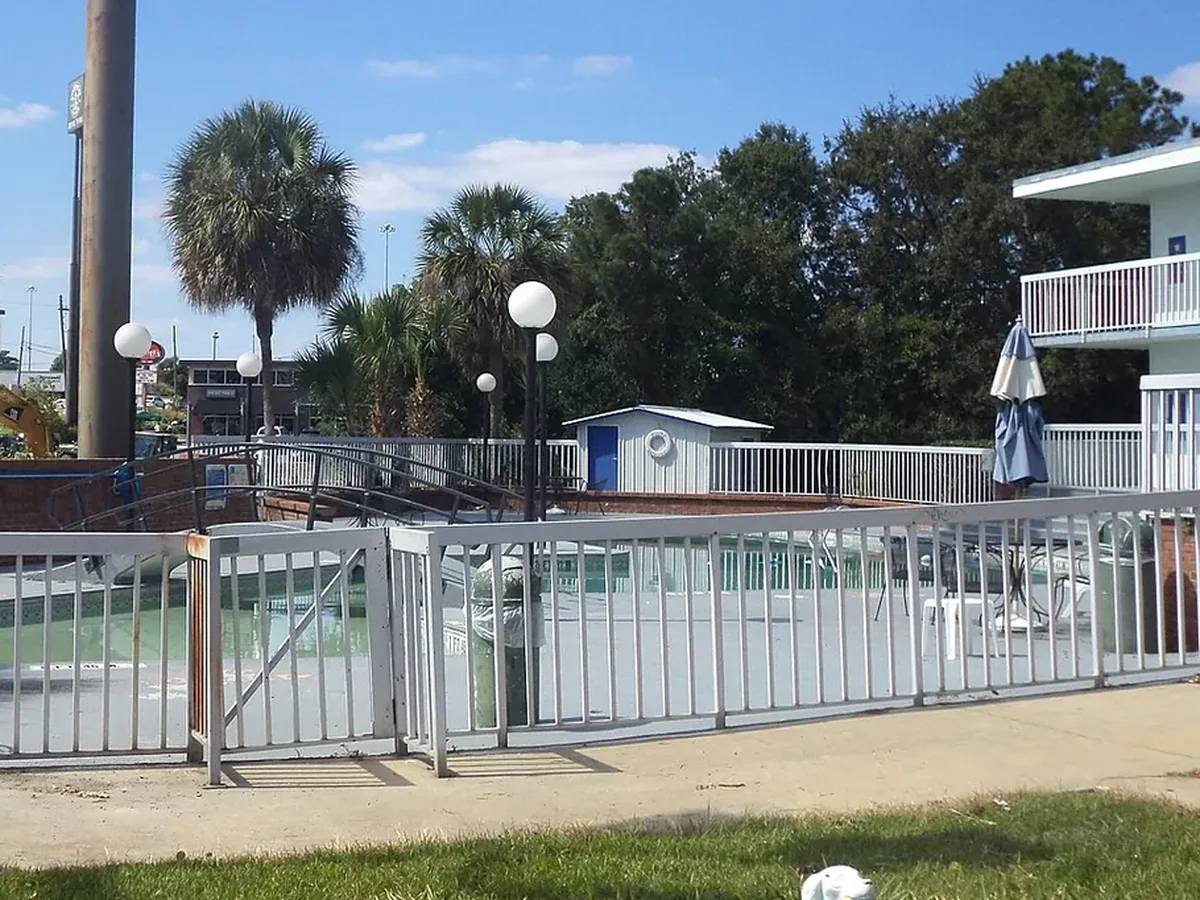
Photo: Michael Rivera, Wikimedia Commons, CC BY-SA 3.0
Aluminum
Aluminum is the most popular permanent pool fence. It costs about $30 to $60 per linear foot installed, does not rust, needs little upkeep and comes in pool-code designs with narrow picket spacing and rails on the inside. Powder-coated black aluminum is a common choice for a clean look.
Wrought iron and steel
Wrought iron and steel fences cost about $35 to $75 per linear foot. They are very strong and look classic, but steel can rust, especially near salt water pools, and needs repainting. Most "wrought iron" fences sold today are actually steel or aluminum made to look like iron.
Glass
Glass pool fences use thick tempered safety glass panels, either held by slim posts (semi-frameless) or by small clamps or spigots set into the deck (frameless). They give a clear view of the pool and a modern look. Glass pool fence cost is about $100 to $300 per linear foot installed, so a typical pool fence costs $12,000 to $36,000. Glass needs regular cleaning to stay clear, especially near sprinklers and hard water.
Pool Fence Installation Cost
Labor usually makes up 30% to 50% of the pool fence installation cost. Installers charge about $10 to $30 per linear foot for labor alone, depending on the material and the site. Mesh fences require drilling holes into concrete or paver decks for the pole sleeves, which takes skill and special bits. Aluminum, vinyl and wood fences need post holes dug and set in concrete. Glass fences need precise core drilling or a concrete curb and careful handling of heavy panels.
Several site conditions raise the cost of installation:
- Hard ground or rock that makes digging post holes slow.
- Slopes that need stepped or racked panels.
- Drilling through pavers, stone or thick concrete for mesh or glass.
- Removing an old fence, often $3 to $6 per linear foot.
- Many corners or curves that need extra posts and cuts.
- Limited access for equipment in tight backyards.
Pool Safety Fence Installation Cost for Mesh Fences
Because mesh fences are made for pools, the pool safety fence installation cost depends mainly on the deck material. On a standard concrete deck, installers core-drill holes about every 3 feet and set plastic or brass sleeves, then slide in the poles. On pavers, they may set sleeves into concrete footings under the pavers. Expect about $5 to $10 per foot of the total to be drilling labor. Most mesh fences can be installed in a single day.
Photo: DimiTalen, Wikimedia Commons, CC0
Pool Fence Cost for Gates
Gates are a big part of pool fence cost. Every pool fence needs at least one gate, and the gate is where most safety failures happen. Pool gates must be self-closing and self-latching, open outward away from the pool, and have the latch at least 54 inches above the ground or on the pool side out of a child's reach. A basic self-closing gate costs about $300 to $700 installed for mesh, vinyl or aluminum fences, and $800 to $1,500 for glass or custom metal gates. Gate hardware alone, such as spring hinges and magnetic latches, costs about $50 to $200 if you are upgrading an existing gate.
Pool Fence Code Rules That Affect Cost
Most US building codes follow the International Swimming Pool and Spa Code (ISPSC) or the International Residential Code, and the CPSC publishes safety barrier guidelines that many towns use. Common requirements include:
- Barrier at least 48 inches high, measured on the side away from the pool.
- Gap under the fence no more than 2 inches above grade, or 4 inches over a solid surface.
- No openings that allow a 4-inch sphere to pass.
- Horizontal rails less than 45 inches apart placed on the pool side, with vertical members spaced no more than 1 3/4 inches.
- Self-closing, self-latching gates that open away from the pool.
- Doors from the house to the pool area fitted with alarms or self-closing devices if the house forms part of the barrier.
Local rules vary, and some states and counties require taller fences or have their own pool barrier laws. Your building department will tell you what applies, and a permit inspection checks the fence before you fill the pool.
Pool Fence Installation Cost: DIY vs Professional
Some fence types are DIY-friendly. Aluminum and vinyl panel kits come with posts, panels and hardware, and a handy homeowner can install 100 feet over a couple of weekends, saving $10 to $25 per linear foot in labor. Mesh fence kits are also sold for DIY, but drilling clean, straight holes in concrete takes a rotary hammer or a core drill and practice. Glass fences are best left to professionals because of the weight of the panels and the precision needed.
If you install a fence yourself, follow the maker's instructions and the local code closely, and make sure the gate closes and latches every time from any open position. A pool fence that fails inspection or does not latch reliably defeats its purpose.
Ways to Lower Pool Fence Cost
- Fence closer to the pool rather than around the whole yard, if your code allows.
- Use the house or an existing code-compliant fence as one side, with door alarms.
- Choose mesh or aluminum instead of glass.
- Mix materials: glass on the view side, aluminum or mesh on the others.
- Get three or more quotes from fence companies that specialize in pools.
- Install in the off season, when fence companies are less busy.
Pool Fence Cost Examples
Example 1: mesh fence around an inground pool. A family with a 16 x 32 foot inground pool and young children wants a fence they can remove for adult parties. The fence runs 4 feet out from the pool edge on all sides, about 120 linear feet, with one self-closing gate. At $22 per foot plus $500 for the gate, the pool safety fence cost comes to about $3,140. Installation takes one day, and the permit costs $100.
Example 2: aluminum fence with two gates. A homeowner wants a permanent black aluminum fence around a pool and patio, about 150 linear feet with one walk gate and one double gate for equipment. At $45 per foot, the fence costs $6,750, plus $600 for the walk gate and $1,100 for the double gate, for a total of about $8,450. The cost of pool fence materials is about 60% of that, with labor making up the rest.
Example 3: glass on one side, aluminum on the rest. A homeowner wants a clear view of the pool from the living room. They install 30 feet of semi-frameless glass at $180 per foot facing the house, and 90 feet of aluminum at $40 per foot on the other three sides, plus a glass gate at $1,200. Total: $5,400 + $3,600 + $1,200 = $10,200. Full glass would have cost about $22,000, so the mixed design cuts the glass pool fence cost by more than half.
Example 4: DIY vinyl kit. A handy owner installs 100 feet of pool-code vinyl panels from a home center kit at about $18 per foot for materials, plus $250 for a self-closing gate kit and $150 in concrete and tools. Total: about $2,200, compared with $3,500 to $5,000 for professional pool fence installation of the same fence.
What Affects Pool Fence Cost the Most
Length is the biggest factor in pool fence cost. Every extra foot adds material and labor, so the size of the fenced area matters more than any other choice. A fence 4 feet from the pool edge needs much less material than one along the yard's edges, but it also leaves less room for chairs and walkways. Many owners choose a middle ground that encloses the pool and a patio area.
Material is the second factor. The difference between mesh at $20 per foot and glass at $200 per foot is tenfold, so the material choice can change the total from a few thousand dollars to tens of thousands. Height matters too: a 5-foot fence costs 10% to 25% more than a 4-foot fence in the same material.
The number of gates is the third. Each self-closing gate adds hundreds of dollars, and double gates for equipment or mowers cost more. Many owners plan one main gate near the house and a second gate only if needed for access.
Finally, location and site conditions affect pool fence installation cost. Labor rates are higher in large cities and the Northeast and West Coast. Rocky soil, steep slopes, paver decks and tight access all add time. Getting quotes from at least three local companies is the best way to see what the cost of pool fence work really is in your area.
Above Ground Pool Fence Cost
Above ground pools often use the pool wall itself as part of the barrier, as long as the wall is at least 48 inches tall and the ladder or steps can be removed, locked or protected by a gate. For many above ground pools, the main safety expense is a lockable or removable ladder, which costs $100 to $400, or a deck with rails and a self-closing gate. If the wall is shorter than 48 inches or the pool sits next to a deck or slope that children could climb, a fence may still be required. In that case, the same per-foot prices apply, though the smaller size of most above ground pools keeps the total pool fence cost lower, often $1,200 to $4,000. For deck options, see our guide on how to build a deck around a pool.
Long-Term Pool Fence Cost
The upfront price is only part of the story. Over 20 years, the total cost of pool fence ownership includes maintenance and replacement. A mesh fence may need new mesh panels every 8 to 15 years, at roughly half the original cost. Wood needs staining every 2 to 4 years, about $1 to $3 per square foot each time, and may need board replacements. Steel needs touch-up painting to stop rust. Aluminum and vinyl need only occasional washing. Glass needs frequent cleaning, and spigot hardware should be checked for corrosion, especially in salt pools.
Gates need the most attention on any fence. Hinges sag, springs weaken and latches wear out, so check them monthly in the swim season and replace hardware when the gate no longer closes and latches on its own. Budget $50 to $200 every few years for gate hardware.
Pool Fence Cost and Home Insurance Rules
Many homeowners insurance companies require a fence around a pool, and some will not cover pool-related liability without one. A pool raises your liability risk, and insurers often ask about fences, gates, diving boards and slides when you add a pool to your policy. In some cases, a code-compliant fence with self-closing gates can help keep premiums lower or prevent a policy from being canceled. When you plan your fence, ask your insurance agent whether they have specific requirements, so you do not pay for a fence that still falls short.
Pool Safety Fence Cost: Removable vs Permanent
Removable mesh fences and permanent fences both meet most pool codes, but they suit different households. A removable mesh pool safety fence is popular with families who have young children now but want an open pool deck later, or who host gatherings where the fence would be in the way. It is also less visible than most permanent fences. The downside is that it can be left open or taken down and not put back, which removes the protection.
Permanent fences such as aluminum, vinyl and glass are always in place and add to the home's look and value. They usually cost more upfront but last longer. Some families use both: a permanent perimeter fence around the yard and a removable mesh fence around the pool itself for extra protection while children are small. Comparing the pool safety fence cost of each option against how your family uses the pool helps you choose.
Questions to Ask Pool Fence Installers
Before you sign a contract, ask each installer a few questions. Are you licensed and insured in this state? Will you pull the permit and arrange the inspection? Does your quote include gates, hardware, concrete, drilling and removal of the old fence? What warranty do you give on materials and labor? How will you protect my pool deck and plumbing while drilling or digging? How long will the job take, and will the pool area be safe each night while the work is underway? Clear answers protect you from surprise charges and make it easier to compare pool fence installation cost between companies.
Pool Fence Cost by Region
Where you live changes pool fence cost as much as the material. In the South and Midwest, where labor rates are lower and soil is often easy to dig, a mesh or aluminum fence often lands at the low end of the ranges above. In the Northeast, California and other high-cost areas, the same pool fence installation cost can run 20% to 40% higher. Cold climates need deeper post holes below the frost line, which adds labor and concrete. Coastal areas may need stronger posts and corrosion-resistant hardware for wind and salt air, which also raises the cost of pool fence materials.
Demand matters too. Spring and early summer are the busiest season for fence companies, as new pools go in and owners prepare for swimming. Booking in late fall or winter, where the ground allows, can mean shorter waits and better pricing on pool fence cost. Some companies also offer discounts when the fence is installed at the same time as a new pool or deck.
Glass Pool Fence Cost in Detail
Glass pool fence cost depends on the system. Semi-frameless glass uses slim aluminum or steel posts between panels and is the cheaper glass option, often $100 to $180 per foot. Frameless glass uses spigots or hidden channels set into the deck, so the fence looks like a single sheet of glass, and usually costs $175 to $300 per foot. Panel thickness, usually 12 mm tempered safety glass, hardware finish, and whether the deck needs a new concrete curb all affect the price. Glass gates with self-closing hinges and magnetic latches add $800 to $1,500 each. Because glass panels are made to measure, allow several weeks for ordering.
Pool Fence Cost: Key Points
- Most pool fences cost $1,500 to $9,000 installed; glass costs $12,000 to $36,000.
- Mesh safety fences run $15 to $30 per foot; aluminum $30 to $60; glass $100 to $300.
- Gates add $300 to $1,500 each and must be self-closing and self-latching.
- Codes usually require a 48-inch barrier with no openings over 4 inches.
Frequently Asked Questions
What is the cheapest pool fence?
Pool-code chain link or a DIY aluminum or mesh kit. A removable mesh pool safety fence is often the cheapest option made specifically for pools.
How much does a glass pool fence cost?
About $100 to $300 per linear foot installed, so $12,000 to $36,000 for a typical pool.
How much does a pool fence cost per foot?
About $15 to $75 per linear foot installed for most materials, and $100 to $300 per foot for glass. Mesh and chain link sit at the low end; wrought iron and custom metal at the high end.
What is the pool safety fence cost for a small pool?
For a small pool or plunge pool needing about 60 to 80 feet of fence, a mesh safety fence costs roughly $1,000 to $2,400 installed, plus a gate.
Does pool fence installation cost include the permit?
Sometimes. Many installers pull the permit and add the fee to the quote; others leave it to the homeowner. Ask before you sign.
Is a pool fence required by law?
In most US towns, yes. Codes require a barrier at least 48 inches high around residential pools, with self-closing, self-latching gates.
How long does it take to install a pool fence?
Mesh fences usually take one day. Aluminum, vinyl and wood take one to three days for a typical pool, and glass can take several days plus time to order the panels.
Does a pool fence add value to a home?
A well-built fence makes a pool safer and more appealing to families, and it is often required to pass inspection when a home is sold. Glass and aluminum fences tend to add the most appeal.
Can I put up a pool fence myself to save on cost?
Yes, many owners install aluminum, vinyl or mesh kits themselves. You still need a permit and an inspection, and the gate must close and latch every time.
Sources
- CPSC: Safety barrier guidelines for residential pools
- ICC: International Swimming Pool and Spa Code
- CDC: Preventing drowning
- HomeGuide: Pool fence cost