
How to Get Blood Out of Concrete: Fresh Spills, Dried Stains and Disinfecting
Quick Answer
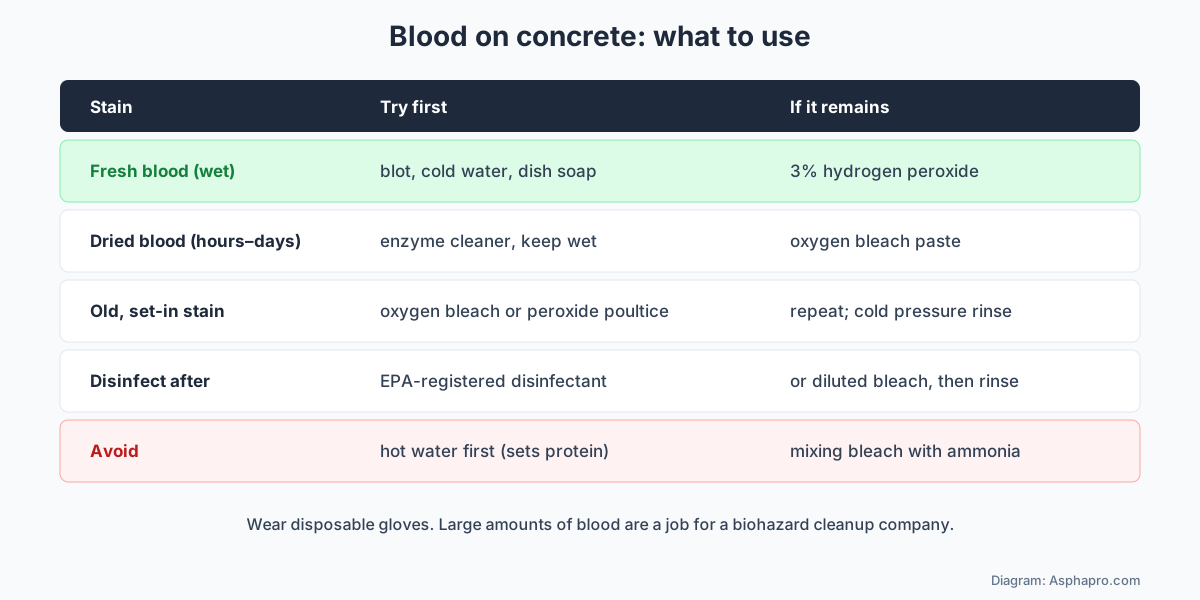
To get blood out of concrete, put on disposable gloves, blot up wet blood with paper towels, then rinse and scrub with cold water and dish soap. Hot water can set the proteins in blood, so stay with cold water at first. For stains that remain, apply an enzyme cleaner and keep it wet for 15 to 30 minutes, or pour on 3% hydrogen peroxide, let it fizz, and scrub. For dried or old blood, use an oxygen bleach paste or a peroxide poultice and repeat as needed. Finish by disinfecting with an EPA-registered disinfectant or diluted bleach, and rinse. Large amounts of blood should be handled by a professional biohazard cleanup company.
Blood on concrete happens more often than most people think. A cut while working in the garage, a nosebleed on the patio, a pet injury in the driveway, fish cleaning on the dock, or a deer hung in the garage during hunting season can all leave dark red or brown stains. Concrete is porous, so blood soaks in quickly and dries to a rusty brown that does not come out with a quick hose rinse.
This guide explains how to get blood out of concrete step by step, for both fresh spills and old dried stains. It covers which cleaners work and why, how to clean blood off concrete safely, how to disinfect the area afterward, and when to call a professional.
Safety First
Blood can carry bloodborne pathogens, including hepatitis B, hepatitis C and HIV. The risk from a small household spill is low, but basic precautions are easy and sensible, and they matter more if the blood is from someone you do not know.
- Wear disposable nitrile or latex gloves. Use eye protection if you will be scrubbing or spraying.
- Cover any cuts on your hands or arms.
- Use paper towels and disposable rags you can throw away.
- Keep kids and pets away until the area is cleaned and disinfected.
- Bag used towels and gloves and put them in the trash, following local rules.
- Wash your hands well with soap and water when you are done, even if you wore gloves.
The OSHA Bloodborne Pathogens Standard sets the rules for workplaces where workers may contact blood. If the spill is at a business, follow your employer's exposure control plan. If the spill is large, such as after an accident, injury, crime or unattended death, do not clean it yourself; call a trained biohazard or trauma cleanup company.
What You Need
- Disposable gloves and paper towels.
- Cold water, a bucket and a hose or spray bottle.
- Dish soap.
- An enzyme cleaner (sold for pet stains or as a protein stain remover).
- 3% hydrogen peroxide (the common drugstore strength).
- Oxygen bleach powder (sodium percarbonate) for older stains.
- Stiff nylon brush.
- An EPA-registered disinfectant, or household bleach for a diluted bleach solution.
- Plastic sheet and an absorbent powder if you need a poultice.
Why Cold Water First
Blood is mostly water, red blood cells and proteins such as hemoglobin and fibrinogen. When proteins are heated, they denature and bind tightly to surfaces, the same way an egg white turns solid when cooked. Rinsing blood with hot water can cook those proteins into the concrete pores and make the stain harder to remove. Cold water keeps proteins soluble so they can be rinsed and scrubbed out.
The iron in hemoglobin is also why old blood turns brown and can leave a slightly rusty tint. That is why oxygen-based cleaners and, in rare cases, a mild rust remover help with very old blood stains.
Step 1: Blot and Rinse Fresh Blood
- Put on gloves.
- Blot up as much wet blood as you can with paper towels. Press, do not rub, so it does not spread.
- Pour or spray cold water on the area to dilute what is left.
- Blot again.
- Add a squirt of dish soap to cold water, scrub with a stiff nylon brush, and rinse.
If you act within a few minutes, this is often all you need on sealed or smooth concrete. On rough, porous concrete, a faint stain may remain, which is what the next steps are for.
Step 2: Use an Enzyme Cleaner
Enzyme cleaners contain proteases, enzymes that break proteins into smaller pieces that rinse away. They are made for blood, urine, vomit and other organic stains, which is why many are sold for pet messes.
- Wet the stain with cold water.
- Spray or pour the enzyme cleaner over the blood, extending past the edges.
- Let it sit 15 to 30 minutes, or as the label says. Keep it wet; enzymes stop working when dry.
- Scrub with a nylon brush.
- Rinse with cold water and blot.
- Repeat for stubborn spots.
Enzyme cleaners work best at mild temperatures. Very hot sun can dry them too fast, so work in shade or cover the area with plastic to keep it wet. Do not mix enzyme cleaners with bleach, which destroys the enzymes.
Step 3: Use Hydrogen Peroxide
Drugstore 3% hydrogen peroxide reacts with an enzyme in blood called catalase and breaks down, releasing oxygen bubbles. The foaming helps lift blood out of pores, and peroxide also lightens the color of the stain.
- Pour 3% hydrogen peroxide onto the blood stain.
- Let it fizz for a few minutes.
- Scrub with a brush.
- Blot and rinse with cold water.
- Repeat until it stops fizzing and the stain is gone or faint.
Peroxide is a mild bleach. On bare gray concrete this is usually not a problem, but it can lighten stained, dyed or colored concrete, so test a hidden spot first. Do not mix peroxide with vinegar in the same container; it can form a more corrosive acid.
Step 4: Oxygen Bleach for Dried Blood
Oxygen bleach powder (sodium percarbonate) releases hydrogen peroxide and washing soda when it is mixed with water. It is a strong, color-safe cleaner for organic stains and is gentler on concrete than chlorine bleach.
- Mix the oxygen bleach powder with warm water as directed, or into a thick paste with a little water. (Warm water activates the powder; by this stage the proteins are already set, and rinsing first with cold water removes loose blood.)
- Spread the paste or solution over the blood stain.
- Let it sit 15 to 30 minutes, keeping it damp.
- Scrub and rinse with cold water.
- Repeat if needed.
Step 5: Poultice for Old, Set-In Blood
Blood that has dried for days or weeks has soaked deep into the concrete. A poultice holds a cleaner against the stain for hours and pulls the dissolved stain up as it dries.
- Mix an absorbent powder, such as diatomaceous earth, talc or baking soda, with hydrogen peroxide or an enzyme cleaner into a thick paste.
- Spread it about 1/4 inch thick over the blood stain and slightly past the edges.
- Cover with plastic and tape the edges.
- Leave it 12 to 24 hours.
- Remove the plastic, let it dry, scrape off and rinse.
- Repeat if any stain remains.
Step 6: Disinfect the Area
Removing the visible stain does not always mean the area is disinfected. After cleaning, disinfect where the blood was:
- Use an EPA-registered disinfectant labeled for bloodborne pathogens and follow its contact time; the surface must stay wet for that long.
- Or use a diluted household bleach solution. The CDC's guidance for cleaning up blood spills commonly cites about a 1:10 dilution of household bleach for spills on surfaces, left on for the stated contact time, then rinsed.
- Never mix bleach with ammonia, vinegar or other cleaners; toxic gases can form.
- Rinse with clean water afterward so bleach does not sit on the concrete.
Disinfect after removing blood, not before. Bleach on blood can react with proteins and set the stain, and disinfectants work better on a clean surface.
How to Get Blood Off Concrete Driveways
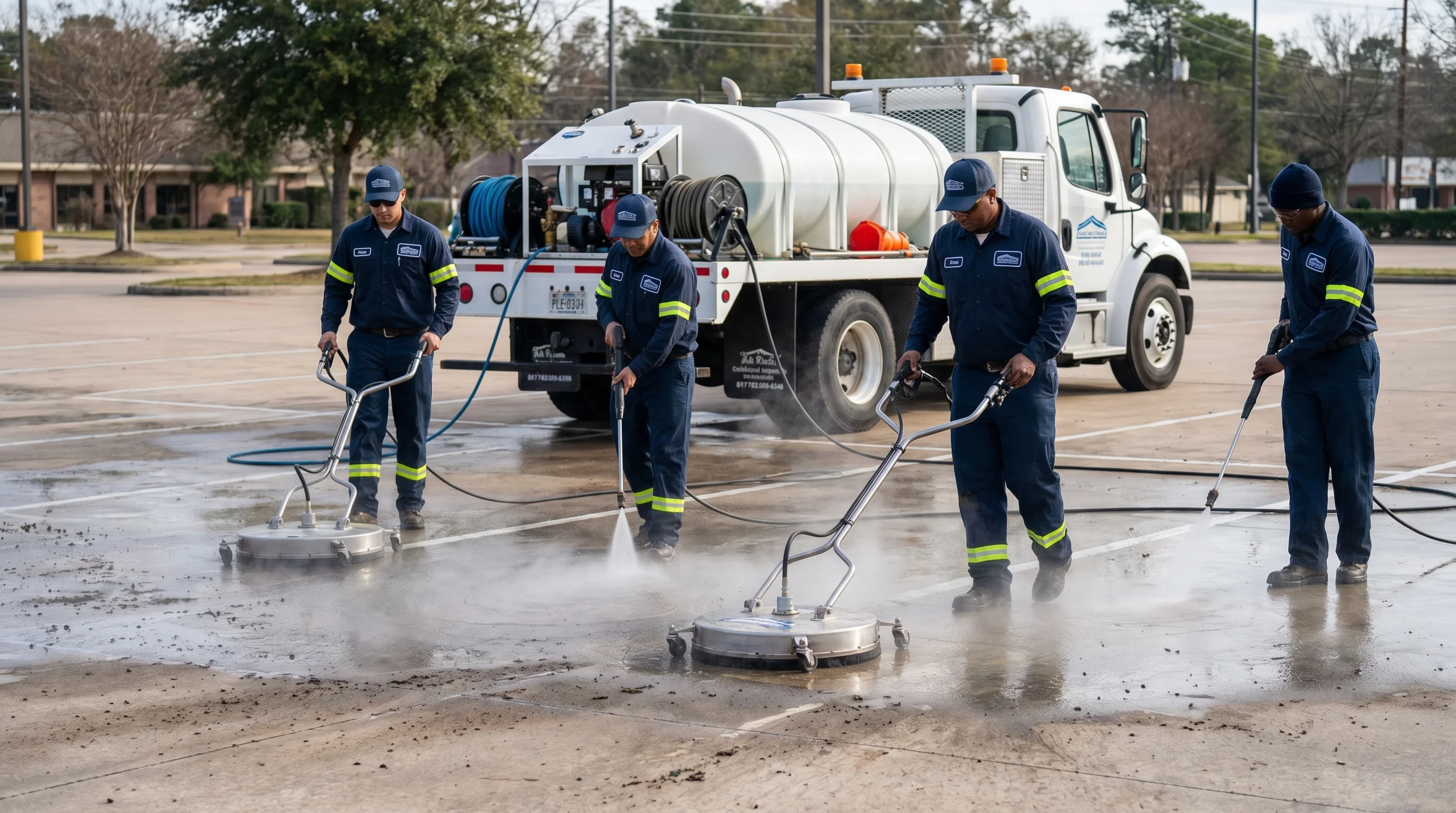
Driveway concrete is usually broom finished and outdoors, so blood can bake in the sun. Work quickly, in shade if possible, and keep cleaners wet. After treating the stain, rinse the area well with cold water. A pressure washer on a cold setting can help rinse loosened blood from the texture, but use a wide tip and do not blast fresh blood, which can spray contaminated water around. Collect or absorb heavy runoff instead of washing it into the street drain.
How to Clean Blood Off Concrete Garage Floors
Garages are where hunters hang and process game, where people cut themselves on tools, and where pets get hurt. Open the doors for airflow. Use the same blot, cold rinse, enzyme and peroxide steps. A wet-dry vacuum is helpful for picking up rinse water on a flat garage floor. If the floor is coated with epoxy, blood usually wipes up easily with cold water and soap because it cannot soak in.
Hunting and game processing
If you process deer or other game in a garage, put down a heavy plastic tarp under the work area first. Keep a bucket of cold water, dish soap and an enzyme cleaner nearby, and clean drips as they happen rather than at the end of the day. Larger amounts of blood and fluids attract insects and animals and can smell quickly, so finish with a disinfectant.
Patios, Pool Decks and Docks
Outdoor patios and pool decks are often sealed or colored. Start with cold water and soap, then enzyme cleaner. Test peroxide or oxygen bleach before using them on colored concrete. Keep cleaners and disinfectant runoff out of pools. On docks and fish cleaning areas, rinse often while working and use an enzyme cleaner afterward to break down fish blood and slime that can leave odors.
Pet Blood
Dog and cat injuries often leave scattered drops on walkways and driveways. Take care of the pet first. Then clean the drops with cold water, soap and an enzyme cleaner. Enzyme cleaners also remove the protein smell that can draw pets back to the spot. Choose pet-safe products and rinse well so pets do not lick residue.
How Blood Stains Change Over Time
The method you need depends on how long the blood has been on the concrete. Fresh blood is liquid, bright red and mostly water. Within minutes it starts to clot as fibrinogen proteins link together. Within hours outdoors, the water evaporates and the blood stain turns dark red, then brown, as hemoglobin oxidizes. After a few days, dried blood has bonded with the cement paste in the pores, and after weeks it may have been through rain, sun and foot traffic that pushed it deeper.
- Minutes old: fresh blood blots and rinses out with cold water and soap.
- Hours old: an enzyme cleaner or hydrogen peroxide is usually needed.
- Days old: dried blood needs enzyme cleaner kept wet, plus oxygen bleach.
- Weeks old or more: old blood often needs a poultice and repeat rounds.
So the single most useful tip on how to get blood out of concrete is speed. Even a quick cold rinse right away, before you have proper cleaners, keeps the blood stain from setting.
Is Your Concrete Sealed? A Quick Test
Drip a little water on a clean spot near the blood stain. If it beads up and sits on top, the concrete is sealed and blood probably has not soaked in far; mild cleaners will likely work. If the water darkens the concrete and soaks in within a minute, the concrete is bare and porous, and you should expect to need enzyme cleaner, peroxide or a poultice to remove blood from concrete completely.
Household Alternatives
If you do not have an enzyme cleaner on hand, a few household products can help you clean blood off concrete.
Meat tenderizer
Unseasoned meat tenderizer contains papain or bromelain, enzymes that break down proteins. Mix it with cold water into a paste, spread it on the blood stain, let it sit 30 to 60 minutes while damp, scrub and rinse. It works on the same idea as a store-bought enzyme cleaner.
Ammonia solution
A tablespoon of household ammonia in a cup or two of cold water can help break down dried blood. Use it outdoors or with good ventilation, and never mix ammonia with bleach, which creates toxic chloramine gas. Rinse well before disinfecting.
Salt paste
Salt mixed with cold water into a paste can help draw out fresh blood and acts as a mild scrub. It is a simple first step if you have nothing else, but rinse thoroughly, since salt left on concrete is not good for it over time; see does salt damage concrete.
Baking soda and cornstarch
Both make useful pastes and poultice bases. Mixed with hydrogen peroxide, they hold the peroxide against the blood stain longer, which helps with dried blood on rough concrete.
Laundry stain removers
Many laundry pre-treatments contain enzymes made for protein stains like blood. Read the label; if it lists protease or enzymes, it can work on concrete as well as fabric. Rinse thoroughly.
A Worked Example: Garage Floor After a Tool Cut
Say someone cut a hand on a saw blade in the garage, and drops of blood fell across a few feet of bare concrete floor and dried overnight.
- Put on gloves, open the garage door and get a bucket of cold water.
- Wet the dried blood with cold water and let it soften for a few minutes.
- Spray an enzyme cleaner over every spot and a little beyond. Lay plastic over the larger spots so they stay wet.
- After 30 minutes, scrub with a nylon brush and blot with paper towels.
- Pour 3% hydrogen peroxide on the spots that still show. Let it fizz, scrub and blot.
- One larger spot still shows a brown shadow. Mix baking soda and peroxide into a paste, cover with plastic overnight, then scrape and rinse.
- Disinfect the whole area, wait the contact time, rinse, and pick up the water with a wet-dry vacuum.
- Bag the towels and gloves and wash hands.
Tools That Make It Easier
- Stiff nylon brush: reaches into the pores without scratching. Avoid wire brushes, which can leave metal bits that rust.
- Spray bottles: help keep cleaners wet on the blood stain during the dwell time.
- Plastic sheeting: slows drying for enzyme cleaners and poultices.
- Wet-dry vacuum: lifts rinse water from garage floors and basements without spreading it.
- Disposable towels: safer than reusable rags for anything involving blood.
Disposing of Cleanup Materials
For small household spills, used paper towels, gloves and rags can usually be bagged, tied and placed in the regular trash. Double bagging adds a margin of safety. Rinse water from a small spill can typically go down a household drain connected to the sewer, not a storm drain. Businesses and large spills fall under stricter rules for regulated medical waste, which is one more reason to bring in a professional for anything beyond a small amount of blood.
Methods That Do Not Work Well
- Hot water first: sets proteins and makes the stain harder to lift.
- Chlorine bleach first: disinfects but can set and darken blood stains; use it after cleaning.
- Pressure washing alone: spreads contaminated water and rarely removes set-in blood.
- Vinegar: mild acid that does little to blood proteins and can etch concrete.
- Letting it sit: every hour in the sun makes blood harder to remove.
Troubleshooting
A brown shadow remains
That is usually iron from hemoglobin or deep protein. Use a peroxide or oxygen bleach poultice. A light brown tint that remains after several rounds can sometimes be lifted with a mild oxalic acid rust remover; see how to remove rust stains from concrete.
The area smells
Organic residue is still in the pores. Apply an enzyme cleaner again and keep it wet longer, then disinfect.
The cleaned spot is lighter
Peroxide or oxygen bleach lightened the surface, or the spot is simply cleaner than the rest of the slab. Cleaning the wider area evenly blends it in.
When to Call a Biohazard Cleanup Company
Professional trauma and biohazard cleaners are trained and equipped to handle large amounts of blood and body fluids safely. They use protective gear, hospital-grade disinfectants, and proper disposal of contaminated material. Call one if:
- There is a large amount of blood, such as after a serious accident or injury.
- The blood is from an unknown person, a crime scene or an unattended death.
- Blood has soaked into multiple surfaces, such as concrete plus wood, drywall or carpet.
- You are not comfortable handling it.
Homeowners insurance may cover some trauma cleanup costs, depending on the policy and situation. For crime scenes, some states have victim compensation programs that help with cleanup costs. Check with your insurer or local victim services.
DIY vs Professional Cost
Cleaning a small blood stain yourself costs very little. Dish soap, a bottle of 3% hydrogen peroxide, a box of gloves and an enzyme cleaner are all common, low-cost household items, and many homes already have most of them. Oxygen bleach powder is sold next to laundry detergent. For most people learning how to remove blood from concrete after a cut or nosebleed, the total is the price of a cleaner or two.
Professional biohazard cleanup is priced by the job, based on how much blood there is, how many surfaces are affected, and how much material must be removed and disposed of. It costs far more than DIY, but it includes trained technicians, protective equipment, hospital-grade disinfectants and legal disposal. For a small blood stain on a driveway, DIY is the right call. For anything larger, the cost of a pro is worth the safety.
How to Prevent Blood Stains on Concrete
- Seal bare concrete so liquids sit on top longer.
- Coat garage floors with epoxy or polyaspartic if you work there often; see concrete coating cost.
- Use a heavy tarp under game processing or fish cleaning.
- Keep a small cleanup kit in the garage: gloves, paper towels, enzyme cleaner and peroxide.
- Clean drops right away instead of at the end of the job.
For other stains, see how to remove oil stains from concrete.
Quick Reference by Situation
- How to get blood off concrete after a small cut: blot, cold water and dish soap, then a disinfectant wipe-down.
- How to remove blood from concrete that dried overnight: enzyme cleaner kept wet for 30 minutes, then hydrogen peroxide.
- How to clean blood off concrete after game processing: cold rinse as you work, enzyme cleaner, oxygen bleach for leftovers, disinfect.
- How to get blood out of concrete that is weeks old: peroxide or oxygen bleach poultice, repeated two or three times.
Frequently Asked Questions
What is the best way to get blood out of concrete?
Blot, rinse with cold water and dish soap, then use an enzyme cleaner or 3% hydrogen peroxide. Use oxygen bleach or a poultice for old stains, then disinfect.
Does hydrogen peroxide remove blood from concrete?
Yes. It fizzes on contact with blood, lifts it from pores and lightens the stain. Test first on colored concrete.
Will bleach remove blood from concrete?
Bleach disinfects but can set blood stains if used first. Clean the blood off, then disinfect with diluted bleach and rinse.
Should I use hot or cold water on blood?
Cold. Hot water cooks the proteins in blood and helps them bond to the concrete.
How do you get old dried blood off concrete?
Use an enzyme cleaner kept wet, then an oxygen bleach paste or a peroxide poultice. Repeat as needed.
Can a pressure washer remove blood stains?
It can rinse loosened blood but rarely removes set-in stains alone, and it can spray contaminated water. Treat the stain first.
Does blood stain concrete permanently?
Usually not. Fresh blood comes out with cold water and soap. Old stains may need several rounds of enzyme cleaner, peroxide or a poultice but can almost always be faded a lot.
Is it safe to clean up blood myself?
Small household spills are generally safe to clean with gloves and disinfectant. Large spills or unknown sources should be handled by a biohazard cleanup company.
Does meat tenderizer remove blood from concrete?
It can. Unseasoned meat tenderizer contains protein-dissolving enzymes. Make a paste with cold water, leave it 30 to 60 minutes, scrub and rinse.
How long does it take to clean blood off concrete?
Fresh blood takes minutes. Dried blood usually takes 30 to 60 minutes with enzyme cleaner and peroxide. Old blood stains may need an overnight poultice.
Can I use ammonia on blood stains?
A weak ammonia and cold water solution can help on dried blood. Never mix it with bleach, and ventilate well.
Will a blood stain come back after cleaning?
If blood soaked deep, some can wick back up as the concrete dries. Repeat the poultice until no color returns.
How to clean blood out of concrete cracks and joints?
Spray an enzyme cleaner or hydrogen peroxide into the crack, let it sit, and scrub with a narrow brush or old toothbrush. Rinse with cold water and repeat. Blood in cracks often needs two or three rounds.
Sources
- OSHA, Bloodborne Pathogens Standard, 29 CFR 1910.1030. osha.gov
- CDC, Guidelines for Environmental Infection Control (cleaning blood spills). cdc.gov
- U.S. EPA, selected disinfectant lists and label guidance. epa.gov
- Manufacturer labels for enzyme cleaners, hydrogen peroxide and oxygen bleach.
- Image credits: images and chart by Asphapro.com.
This guide covers household cleanup. Follow product labels and local rules. Checked November 2026.
Related Guides
- How to remove rust stains from concrete — oxalic acid and safe methods
- How to clean concrete without a pressure washer — brush, hose and the right cleaner