
Does Salt Damage Concrete? Deicers, Scaling, Spalling and Protection

Photo: U.S. Air Force, Tech. Sgt. Anthony Plyler, Wikimedia Commons, public domain.
Quick Answer
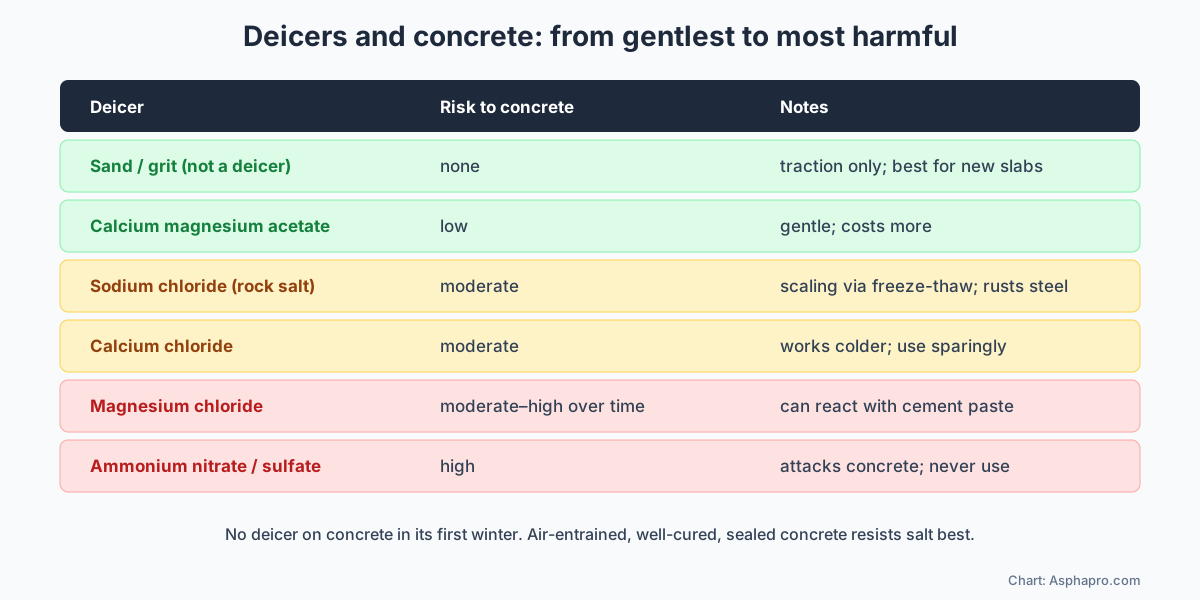
Yes, salt can damage concrete, mostly indirectly. Rock salt (sodium chloride) melts ice into salty water that soaks into the concrete and goes through more freeze-thaw cycles, which causes scaling: the top layer flakes off. Salt also corrodes steel reinforcement, which can lead to cracking and spalling. New concrete (in its first year), non-air-entrained concrete and poorly finished surfaces are most at risk. Calcium chloride works at lower temperatures and is often used on concrete, but it still contributes to freeze-thaw damage and corrosion, so use it sparingly. Magnesium chloride can react with cement paste over time with repeated heavy use. Ammonium nitrate and ammonium sulfate attack concrete chemically and should never be used. Sand, sealers, air-entrained concrete and shoveling first all reduce damage.
Every winter, homeowners in cold climates face the same tradeoff: ice on the driveway and steps is dangerous, but deicing salt can wear away the concrete. Many people notice their driveway or front steps flaking after a few winters and wonder whether salt is the cause. It often is, along with how the concrete was made and finished.
This guide explains how salt damages concrete, whether calcium chloride and magnesium chloride are safe for concrete, the difference between concrete scaling and spalling, which deicers to use, and how to protect new and old concrete.
How Salt Damages Concrete
Salt rarely dissolves good concrete directly. Instead, it causes damage in several indirect ways:
- More freeze-thaw cycles: salt melts ice, and the resulting water soaks into the concrete's pores. When temperatures drop again, that water refreezes. Water expands about 9% when it freezes, creating pressure inside the pores. Each cycle can break off a little of the surface.
- Higher saturation: salt draws and holds moisture, keeping concrete wetter, so more of it is vulnerable to freezing.
- Osmotic and salt crystallization pressure: differences in salt concentration and salt crystals forming in pores add internal stress near the surface.
- Corrosion of reinforcement: chlorides that reach steel rebar or mesh break down the protective layer around the steel. Rusting steel expands, cracking and spalling the concrete above it.
- Chemical attack: some deicers, especially those containing ammonium, and magnesium compounds with heavy repeated use, react with the cement paste itself.
Concrete Scaling vs Spalling
Scaling and spalling are both surface damage, but they have different causes and look different.
| Feature | Scaling | Spalling |
|---|---|---|
| What it looks like | Thin flakes peel off; rough, pitted surface; exposed sand and small stones | Larger, deeper chunks break off, often round or shell-shaped |
| Depth | Usually shallow, a fraction of an inch | Deeper, can expose rebar |
| Main causes | Freeze-thaw with deicers, weak surface from finishing with bleed water, poor curing, no air entrainment | Corroding rebar, freeze-thaw of saturated concrete, poor joints, impact, fire |
| Where seen | Driveways, walks, steps, garage aprons | Edges, joints, over rebar, bridges, balconies, walls |
| Fix | Resurface, overlay, or replace if severe | Cut out to sound concrete, treat steel, patch |
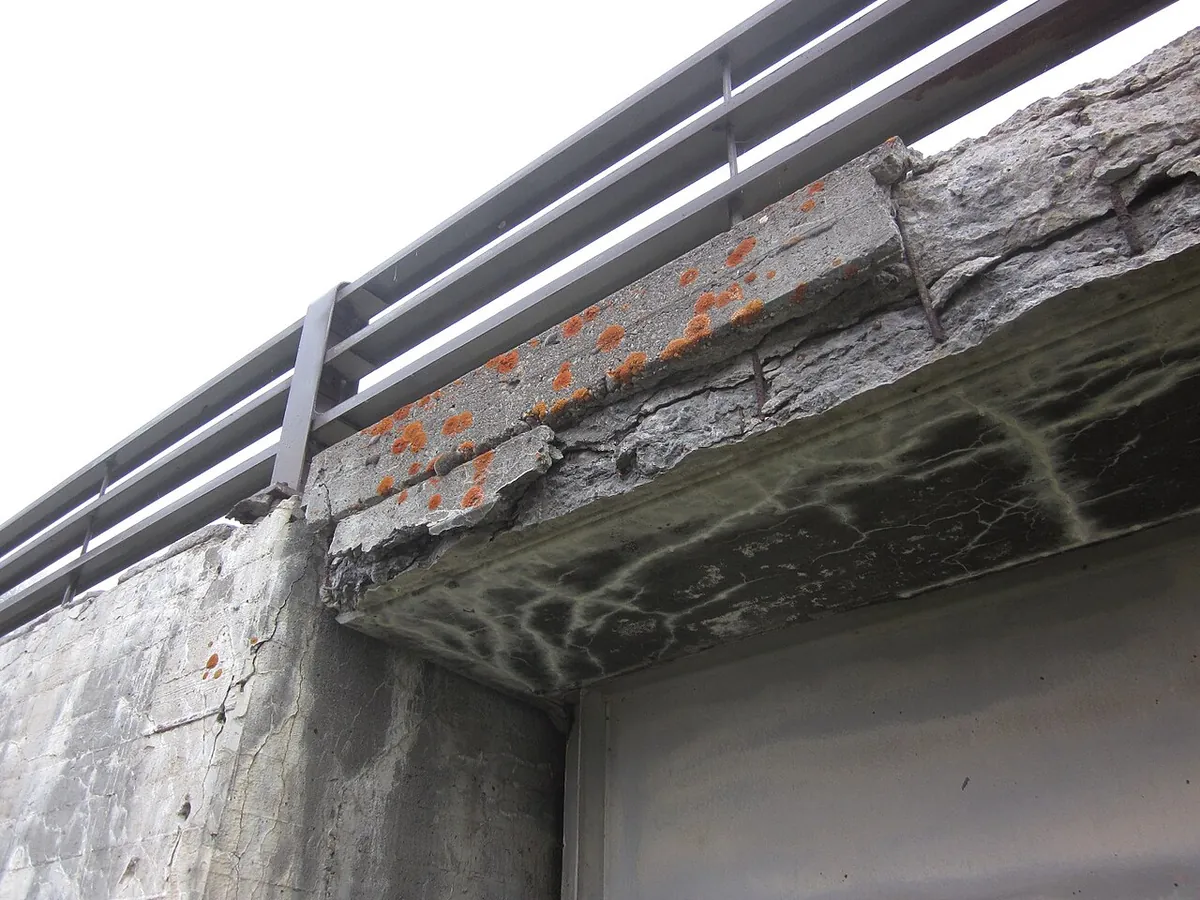
Photo: NPS / Doug Madsen, Yellowstone National Park, Wikimedia Commons, public domain.
Is Calcium Chloride Safe for Concrete?
Calcium chloride is one of the most common deicers for concrete. It melts ice at much lower temperatures than rock salt and releases heat as it dissolves, so it works fast. For homeowners, it is often recommended over rock salt for very cold weather because less is needed.
But it is not harmless. Like rock salt, it creates brine that soaks into concrete and drives freeze-thaw cycles, and its chloride corrodes steel. Heavy, repeated use can contribute to scaling, especially on young or poorly made concrete. Calcium chloride also attracts moisture, keeping surfaces damp. Use it sparingly, only enough to break the bond between ice and concrete, then shovel the slush away.
Is Magnesium Chloride Safe for Concrete?
Magnesium chloride is often marketed as a pet- and plant-friendlier deicer. It works at low temperatures and is less corrosive to metal than some salts in certain conditions. However, research on concrete has found that magnesium chloride at high concentrations and with repeated exposure can react chemically with cement paste, weakening it, in addition to the usual freeze-thaw and chloride effects. For occasional home use at label rates, it is generally acceptable on mature, good-quality concrete, but it is not a "concrete-safe" guarantee.
Deicers to Avoid
Ammonium nitrate and ammonium sulfate, sometimes found in fertilizers and some deicing products, chemically attack concrete and can cause rapid deterioration. Never use fertilizer or ammonium-based products to melt ice on concrete. Check deicer labels for these ingredients.
Safer Options
- Shovel early and often: removing snow before it is packed into ice reduces the need for any deicer.
- Sand, grit or non-clumping kitty litter: give traction without melting, and do not harm concrete.
- Calcium magnesium acetate (CMA): considered gentle on concrete and vegetation; slower and more expensive.
- Use less: follow label rates. More salt does not melt ice much faster but adds brine.
- Remove slush: shovel away melted slush so brine does not sit on the slab.
- Heated mats or snow-melt systems: for steps and walks, an investment that avoids chemicals.
Why Some Concrete Resists Salt and Some Does Not
Two driveways on the same street can get the same salt every winter, and one flakes apart while the other looks fine for decades. The difference is usually in how the concrete was made, placed and cured.
- Air entrainment: air-entrained concrete has billions of tiny bubbles that give freezing water room to expand. The Portland Cement Association notes entrained air is usually 4 to 7% of the volume. Exterior concrete in freeze-thaw climates without air entrainment is far more likely to scale.
- Water-cement ratio: lower water content makes denser, less permeable concrete that absorbs less brine. Water added on site to make concrete easier to pour weakens the surface.
- Finishing: troweling bleed water back into the surface, or over-finishing air-entrained concrete, creates a weak top layer that scales easily.
- Curing: concrete that dries too fast has a weaker, more porous surface.
- Age: young concrete has not developed full strength and is still saturated. The first winter is the most dangerous.
- Drainage: slabs where water and brine pool, such as low spots, garage aprons and the bottoms of steps, scale first.
This is why scaling is often a combination of salt and the concrete itself. Good concrete can handle reasonable deicer use; weak concrete may scale even with little salt. See what concrete is made of and types of concrete finishes.
Salt You Did Not Put Down
Even homeowners who never use salt can see salt damage. Cars carry salty slush from treated roads and drip it on driveways and garage floors, especially near the garage door. City plows push salty snow onto the driveway apron and sidewalk. Neighbors' deicer can wash downhill. Rinsing salty slush off the garage floor and apron during winter thaws, and in spring, helps limit this hidden exposure.
Protecting New Concrete
- No deicers the first winter: the common advice from concrete associations and contractors is to avoid deicing chemicals on concrete during its first winter. Use sand for traction and shovel promptly.
- Plan the pour: concrete placed late in fall has less time to cure and dry before freezing weather. Earlier pours give the slab more time.
- Order air-entrained concrete for exterior work in freeze-thaw climates.
- Insist on good finishing and curing: no finishing with bleed water on the surface, and at least about a week of curing.
- Seal it: once cured and dry, apply a penetrating sealer before the first winter if timing allows; follow the sealer label for minimum concrete age. See how to seal concrete.
Protecting Existing Concrete
- Seal it: a penetrating silane or siloxane sealer repels water and chloride-laden brine and is one of the best defenses against scaling. Reapply as the label recommends, often every few years.
- Shovel first: remove as much snow as possible before using any deicer.
- Use the least deicer that works: scatter, do not pile. Most products work best in a thin, even layer.
- Choose the right product: CMA or calcium chloride sparingly; avoid ammonium-based products.
- Remove slush: do not let brine sit on concrete; push it off the slab onto gravel or an area where runoff will not pool.
- Rinse in spring: wash salt residue off driveways, walks and garage floors once temperatures stay above freezing.
- Fix drainage: regrade or add drains where water ponds on concrete.
Choosing a Sealer to Fight Salt
Penetrating sealers are the go-to choice for protecting driveways, walks and steps from salt. Silane and siloxane sealers soak into the surface and line the pores with a water-repellent layer, so brine beads up instead of soaking in, while still letting water vapor escape. They do not change the look much and do not make the surface slippery. Film-forming acrylic sealers add sheen and color depth on decorative concrete, but they wear faster in traffic areas and can be slippery when wet. For salt protection on plain exterior concrete, a penetrating sealer is usually the better pick.
Apply sealers to clean, dry concrete in mild weather, following the label for minimum concrete age, coverage and recoat timing. Test water beading each fall: sprinkle some water on the slab, and if it soaks in quickly and darkens the concrete instead of beading up on the surface, it is time to reseal before the first freeze arrives.
Repairing Salt-Damaged Concrete
Light scaling
Clean the surface, remove loose flakes with a pressure washer or wire brush, and apply a penetrating sealer to slow further damage. If the look bothers you, a thin concrete resurfacer can restore a uniform surface.
Moderate scaling
Remove all weak, loose concrete by pressure washing or grinding, then apply a polymer-modified resurfacer or overlay, followed by a sealer once cured. Overlays bond best to sound, clean concrete. See concrete overlay cost.
Severe scaling or spalling
If scaling is deep, the slab is crumbling, or rebar is exposed and rusting, partial or full replacement may be needed. For spalls over rebar, cut out damaged concrete to sound material, clean or treat the steel, and patch with a repair mortar. See concrete repair cost and concrete removal cost.
Steps, Garage Floors and Pool Decks
- Steps: treads are small, heavily salted and often poorly drained, so they scale first. Heated mats, sand, and sealing help. See how to fix concrete steps.
- Garage floors: salt from car tires collects near the door and under parking spots. Mats that hold meltwater, regular rinsing and a coating protect them. See concrete coating cost.
- Pool decks: saltwater pools expose decks to salt year-round. Sealers and regular rinsing are important, and pool deck concrete in cold climates should be air-entrained.
Salt and the Environment
Deicing salt does not stay on your driveway. Brine runs off into soil, lawns, gardens and storm drains, where chlorides can harm plants, trees, and streams. Salt also corrodes cars, metal railings and fences. Using less salt, choosing alternatives where possible, and shoveling first helps your concrete, your yard and local waterways. Many cities now offer guidance on reduced salt use for homeowners.
Pets and Deicers
Rock salt and many chloride deicers can irritate pets' paws and are harmful if eaten in quantity. "Pet-safe" deicers are often based on magnesium chloride, urea, CMA or other compounds. They may be gentler on paws but are not automatically gentle on concrete; urea-based products are less damaging chemically but still create meltwater that drives freeze-thaw cycles. Wipe pets' paws after walks and store deicers out of reach.
Common Myths
- "Salt eats concrete." Plain salt mostly causes damage through freeze-thaw and corrosion, not by dissolving concrete directly.
- "Calcium chloride is completely safe for concrete." It is widely used and better than ammonium products, but it still contributes to damage with heavy use.
- "Pet-safe means concrete-safe." Not necessarily; check the ingredients.
- "Scaling means the contractor used bad concrete." It can, but deicers on young concrete and poor drainage are also common causes.
- "Sealers make concrete salt-proof." They greatly reduce damage but need reapplication and do not fix weak surfaces.
How Each Deicer Works and How Cold It Works
Deicers lower the freezing point of water, turning ice into brine. They differ in how cold they keep working, how fast they act, and their side effects:
- Sodium chloride (rock salt): the cheapest and most common. It works well near freezing but slows down a lot as temperatures fall into the teens and below. Below that, people tend to add more and more salt, which means more brine soaking into concrete.
- Calcium chloride: pellets or flakes that work into much colder temperatures and give off heat as they dissolve, so they melt quickly. Because less is needed in deep cold, it can mean less total chemical on the slab, but each application is still a chloride brine.
- Magnesium chloride: works in cold weather and is often sold as a gentler choice for pets and plants. On concrete, use it at label rates and avoid heavy repeated applications.
- Potassium chloride: a gentler option for plants but less effective in deep cold.
- Calcium magnesium acetate (CMA): chloride-free, gentle on concrete, metal and plants. It works more slowly and costs more.
- Urea: used on some airport surfaces and in some "safe" products. Less corrosive, but less effective in cold, and it adds nitrogen to runoff.
- Blends: many retail products mix salts to balance cost and cold performance. Read the label for ingredients, especially ammonium compounds.
Whatever you choose, the amount matters as much as the type. A thin, even scatter after shoveling is enough to break the ice bond so you can scrape the rest off.
A Winter Routine That Protects Concrete
- Before winter: clean the concrete, fix low spots and drainage, seal cracks and joints, and apply a penetrating sealer if it is due. See why concrete cracks for joint sealing.
- Before storms: some homeowners apply a light anti-icing treatment so ice does not bond as strongly, which reduces the amount needed later. Use a small amount of a concrete-friendlier product.
- During storms: shovel often so snow does not pack into ice.
- After shoveling: scatter a small amount of deicer only where ice remains, or use sand for grip.
- During thaws: push slush and brine off the slab so it does not soak in and refreeze.
- In spring: rinse the driveway, walks, steps and garage floor thoroughly to remove salt residue, and inspect for scaling or spalls.
Signs Your Concrete Has Salt Damage
- Thin flakes or chips peeling off the surface, often starting where water collects.
- Exposed sand and small stones, giving a rough, sandpaper feel.
- Pitting in patches, often near the garage door, the bottom of the driveway, or on step treads.
- White salt residue or efflorescence on the surface.
- Rust stains, cracks or spalls over embedded steel.
- Edges and joints crumbling.
Catching scaling early matters. Light damage can be cleaned and sealed to slow it down; once scaling has spread across a slab, a resurfacer or replacement is usually needed.
A Worked Example: Front Steps and Walkway
Say a homeowner's front steps and walk, poured eight years ago, have started flaking on the step treads and at the bottom of the walk where water pools. They use rock salt generously every storm.
- In spring, they pressure wash the steps and walk to remove loose material and salt residue.
- The steps have light scaling; the low spot on the walk has moderate scaling down about ¼ inch.
- They apply a polymer-modified resurfacer to the walk's damaged area and the step treads after cleaning, following the product's prep steps.
- Once cured, they apply a penetrating silane-siloxane sealer to all the concrete.
- They regrade the soil near the walk so water drains away instead of pooling.
- The next winter, they shovel promptly, use calcium chloride sparingly only on ice, and sand on the steps, and rinse everything in spring.
Three winters later, the concrete still looks sound. The combination of repair, sealing, drainage and lighter deicer use made the difference.
Does Salt Damage Concrete in Every Climate?
Where winters are mild and freezing is rare, salt on concrete is used less, and the main risk is corrosion of steel from occasional brine or from coastal salt air. In places with many freeze-thaw cycles each winter, such as much of the northern U.S. and Canada, salt damage concrete problems are far more common, because every thaw and refreeze drives brine deeper. Very cold places that stay frozen all winter can actually see fewer cycles than places that bounce around freezing. So the real question is not just how much salt on concrete you use, but how often the slab freezes and thaws while wet.
Coastal homes face a different version of the problem: airborne sea salt and spray deposit chlorides on concrete year-round, corroding rebar in balconies, seawalls and foundations. Sealers, adequate concrete cover over steel, and corrosion-resistant reinforcement are the usual defenses there.
Quick Reference
- Does salt damage concrete? Yes, mainly by increasing freeze-thaw scaling and by corroding reinforcement.
- Is calcium chloride safe for concrete? Commonly used and effective in deep cold; safer than ammonium products, but use it sparingly on mature, sealed concrete.
- Is magnesium chloride safe for concrete? Acceptable at label rates on good concrete; heavy repeated use can weaken cement paste.
- Concrete scaling vs spalling: scaling is thin surface flaking from freeze-thaw and deicers; spalling is deeper chunks, often from rusting rebar.
- Salt on new concrete: avoid it for the first winter; use sand.
- Best protection: air-entrained concrete, good finishing and curing, a penetrating sealer, shoveling first, and as little deicer as possible.
Choosing Between Calcium Chloride and Magnesium Chloride
If you are deciding between the two, think about temperature, amount and your concrete. Is calcium chloride safe for concrete compared with rock salt? For very cold snaps, it can be the better choice, because a small amount does what a large pile of rock salt cannot. Is magnesium chloride safe for concrete compared with calcium chloride? Both are chlorides and both create brine; magnesium chloride has the added concern of chemical reaction with cement paste under heavy use. For most homeowners with good, sealed, air-entrained concrete, either one used lightly, after shoveling, is reasonable. For new, unsealed or already scaling concrete, sand or CMA is the safer path.
Whatever you use, keep the amount small. The answer to whether salt will damage your concrete depends more on how much ends up soaking into the slab, and how often it freezes, than on the brand on the bag.
So does salt damage concrete? It can, and the damage adds up over winters. But salt is only part of the story. Good concrete, a fresh coat of penetrating sealer, a shovel used early, a light hand with deicer, and a spring rinse keep most driveways, walks and steps sound for decades. Where damage has started, catching scaling early and resurfacing or sealing it is far cheaper than replacing a slab after years of flaking. And for new slabs, the single most important rule is simple: no salt on concrete during its first winter, only sand.
Frequently Asked Questions
Does salt damage concrete?
Yes. It increases freeze-thaw damage, leading to scaling, and its chlorides corrode reinforcement, causing cracks and spalls.
Is calcium chloride safe for concrete?
It is commonly used and works in colder weather, but it still contributes to freeze-thaw damage and corrosion. Use it sparingly.
Is magnesium chloride safe for concrete?
Generally acceptable in small amounts on mature concrete, but heavy repeated use can chemically weaken cement paste.
What is the difference between scaling and spalling?
Scaling is thin surface flaking, usually from freeze-thaw and deicers. Spalling is deeper chunks breaking off, often from rusting rebar.
Can I use salt on new concrete?
Avoid all deicing salts on concrete in its first winter. Use sand for traction.
What is the safest ice melt for concrete?
Calcium magnesium acetate is among the gentlest. Sand gives traction without any chemical risk.
How long should new concrete go without salt?
Avoid deicers through the first winter, usually about a year for concrete poured in summer or fall.
Does sealing concrete prevent salt damage?
A penetrating sealer greatly reduces brine absorption and scaling. Reapply it every few years.
Can scaled concrete be repaired?
Yes. Light scaling can be sealed or resurfaced; deep damage may need partial replacement.
Is it OK to use kitty litter on concrete?
Yes. Non-clumping litter or sand adds traction without chemical damage.
Sources
- Portland Cement Association, concrete durability, air entrainment and deicer guidance. cement.org
- American Concrete Institute, guidance on durability and scaling resistance. concrete.org
- Image credits: spreader photo U.S. Air Force (public domain); spalling photo NPS (public domain), both Wikimedia Commons; chart by Asphapro.com.
Always follow deicer labels. Checked November 2026.
Related Guides
- How to reseal concrete — sealer types and dry times