
How to Clean Concrete Without Pressure Washer Tools: Patios, Walls, Moss and Water Stains
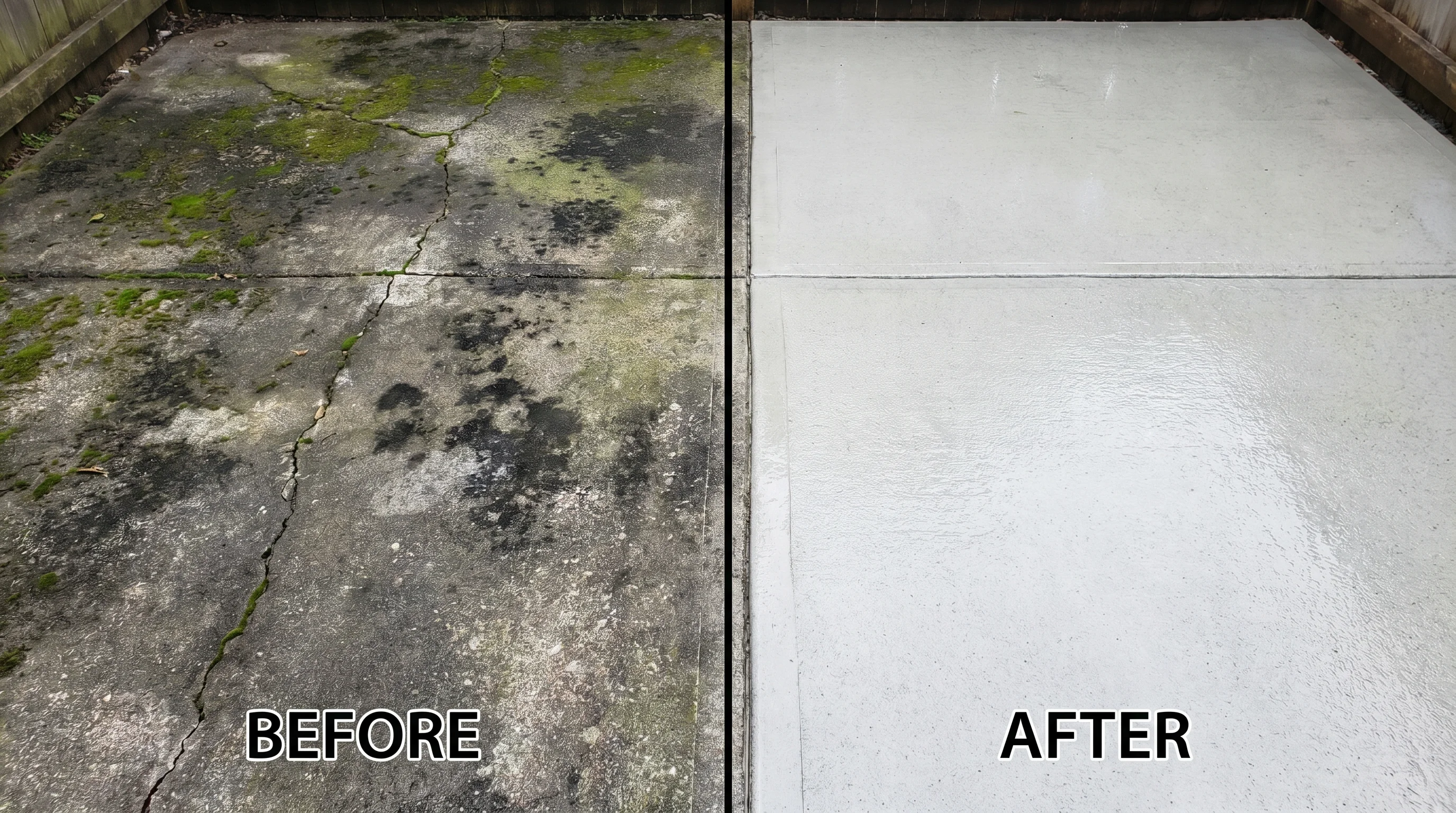
Quick Answer
To clean concrete without a pressure washer, sweep off loose dirt, wet the surface with a hose, apply a cleaner (dish soap and warm water for light dirt, oxygen bleach for moss, algae and mildew, or a concrete cleaner for heavy grime), let it sit 10 to 15 minutes, scrub with a stiff deck brush, and rinse with a hose and a high-pressure spray nozzle. For water and mineral stains, use diluted white vinegar on concrete, but never acid on limestone. For moss, scrape it first, then treat and scrub. Work in sections and keep the cleaner wet.
You do not need a pressure washer to get concrete clean. A stiff brush, a garden hose, the right cleaner and some elbow grease handle most dirt, mildew, moss and stains on patios, walkways, driveways, steps and walls. Hand cleaning is also gentler on older concrete, sealed or decorative surfaces and soft stone such as limestone, which a pressure washer can damage.
This guide explains how to clean concrete without pressure washer equipment step by step, which cleaner to use for each problem, how to clean moss from concrete, how to remove water stains from concrete, and how to clean outside limestone and concrete walls safely.
Why Clean Concrete Without a Pressure Washer?
- No equipment needed: you may not own one, and renting takes time and money.
- Gentler on the surface: high pressure can etch concrete, leave stripes, blow out joint sand, and strip sealers.
- Safer for soft materials: limestone, old brick, mortar joints and historic masonry can be damaged by high pressure.
- Less water and overspray: useful in drought areas, on balconies, or near windows, siding and plants.
- Better for small jobs: steps, a small patio or a few stains are faster by hand.
- Quieter: no engine noise for neighbors.
In short, learning how to clean concrete without pressure washer gear is mostly about three things: the right cleaner for the problem, enough dwell time, and a stiff brush. Once you clean concrete this way a couple of times, it becomes a quick routine, and cleaning concrete by hand twice a year keeps most patios, walks and driveways looking good with no machine at all.
What You Need
- Push broom or leaf blower.
- Stiff nylon deck brush on a long handle, plus a hand scrub brush for corners.
- Garden hose with an adjustable high-pressure spray nozzle.
- Bucket and a garden pump sprayer.
- Cleaner: dish soap, oxygen bleach powder (sodium percarbonate), a concrete cleaner, white vinegar or a degreaser depending on the problem.
- Plastic scraper or flat shovel for moss.
- Gloves, eye protection and old shoes.
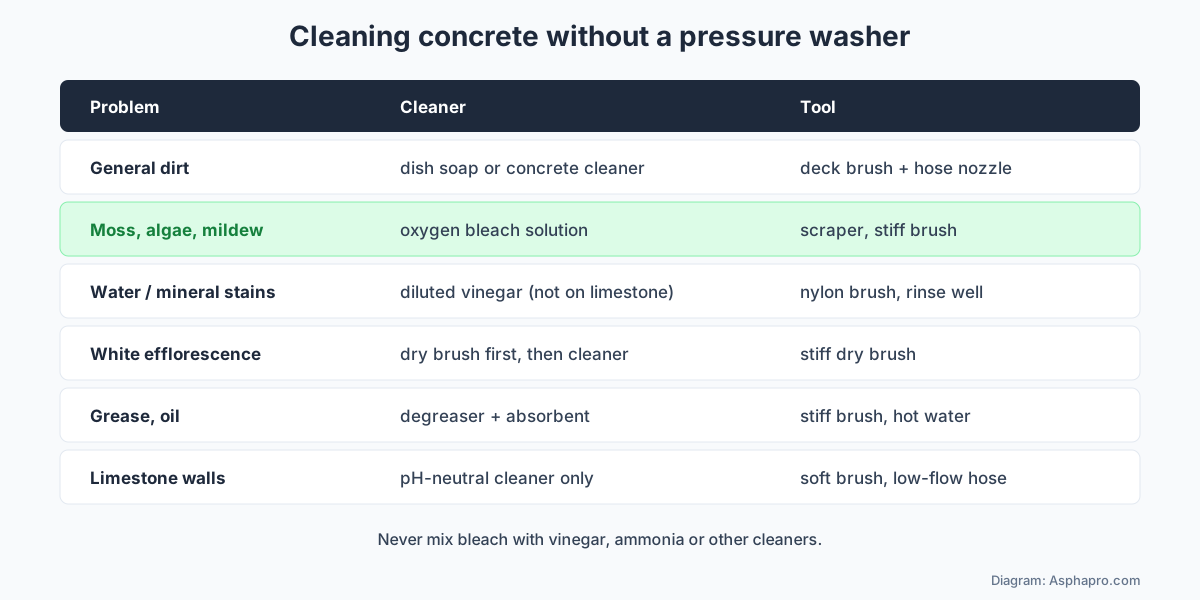
Step-by-Step: The Basic Method
- Clear and sweep: move furniture, pots and mats. Sweep or blow off leaves, dirt and debris.
- Protect plants: wet nearby plants and grass so cleaner runoff is diluted. Cover delicate plants with plastic.
- Pre-wet the concrete: soak the surface with the hose. Wet concrete absorbs less cleaner, so more stays on the dirt.
- Apply cleaner: spread it with a pump sprayer or watering can, working in sections of about 10 by 10 feet.
- Let it dwell: wait 10 to 15 minutes, or as the label says. Do not let it dry; mist with water if needed.
- Scrub: scrub with a stiff deck brush in overlapping strokes, then across.
- Rinse: use the hose's strongest spray setting, working from the high side to the low side so dirty water runs off cleaned areas.
- Repeat: move to the next section. Re-treat any stubborn spots.
- Dry: let the concrete dry and check for spots you missed.
Brushes and Tools for Cleaning Concrete by Hand
The right brush does most of the work when you clean concrete without a pressure washer. A few tips on choosing tools:
- Deck brush: a stiff nylon or polypropylene deck brush on a long handle is the main tool. A brush head about 10 to 12 inches wide covers ground fast while still letting you push hard.
- Push broom with stiff bristles: good for spreading cleaner and moving rinse water, and for scrubbing broad, lightly soiled areas.
- Hand scrub brush: for edges, steps, corners and around posts.
- Grout or detail brush: for control joints, cracks and stamped textures.
- Pump sprayer: applies cleaner evenly with less waste than pouring from a bucket.
- Hose nozzle: a jet or turbo setting is the closest thing to a pressure washer for rinsing.
- Rotary scrub attachment for a drill: a nylon brush that fits a cordless drill speeds up scrubbing small areas and steps.
- Squeegee: moves water off flat slabs and garage floors.
Replace brushes when the bristles flatten. Worn bristles slide over dirt instead of digging into the surface texture.
Cleaning Concrete in Different Weather
Mild, overcast days between about 50 and 80°F are best for cleaning concrete. Cleaners stay wet longer, and the surface dries evenly afterward. On hot, sunny days, work early in the morning or in the evening, use smaller sections, and mist the cleaner to keep it from drying. In cold weather, avoid cleaning when temperatures will drop below freezing before the concrete dries, because water in the pores can freeze. Rain after cleaning is fine, but heavy rain right after applying a no-rinse moss treatment may wash it off before it works.
Which Cleaner to Use
| Cleaner | Use it for | Mix / notes |
|---|---|---|
| Dish soap | Light dirt, foot traffic, food spills | A squirt in a bucket of warm water |
| Oxygen bleach (sodium percarbonate) | Moss, algae, mildew, organic stains | Mix with warm water per label; plant-friendlier than chlorine bleach |
| Commercial concrete cleaner | Heavy grime, mixed stains | Follow dilution on label |
| White vinegar | Light mineral and water stains on concrete | Dilute 1:1 with water; rinse well; not for limestone or marble |
| Baking soda | Small spots, mild scrub | Paste with water |
| Degreaser | Oil, grease, grill drips | See our oil stain guide |
| Diluted chlorine bleach | Severe mildew (not moss on plants) | Use sparingly; never mix with ammonia or acids |
Trisodium phosphate (TSP) was a classic heavy-duty concrete cleaner, but phosphate products are restricted in some areas because of water pollution, and many stores now sell TSP substitutes. Check local rules and labels.
Garden Hose Tips
A good nozzle makes a big difference when you clean concrete without a pressure washer. A jet or high-pressure setting rinses loosened dirt out of the surface texture. Some hose-end "power" nozzles and turbo nozzles boost the spray further. Hold the nozzle close to the surface, sweep it side to side, and push dirty water toward the edge or drain rather than back over cleaned areas. If water pressure is low, a squeegee or push broom helps move rinse water off the slab.
Spot Cleaning Common Stains
When you clean concrete, you will often find a few spots that the general wash does not lift. Here is what usually works for each:
- Leaf and tannin stains: brown shadows from wet leaves fade with oxygen bleach and sunlight.
- Bird droppings: scrape, then clean with dish soap or oxygen bleach; wear gloves.
- Wine, coffee and soda: dish soap and warm water, or oxygen bleach for set-in spots.
- Grill grease: degreaser and hot water; an absorbent overnight for fresh drips.
- Chewing gum: freeze it with ice, scrape, then clean the residue with a citrus cleaner.
- Candle wax: chill and scrape, then a little heat and a paper towel to absorb what is left.
- Paint drips: see how to remove paint from concrete.
- Blood: cold water first, then enzyme cleaner; see how to get blood out of concrete.
Clean spots first, then do the general cleaning so the whole slab dries to an even color. Cleaning concrete in that order avoids a patchy look where you scrubbed hardest.
How to Clean Moss From Concrete
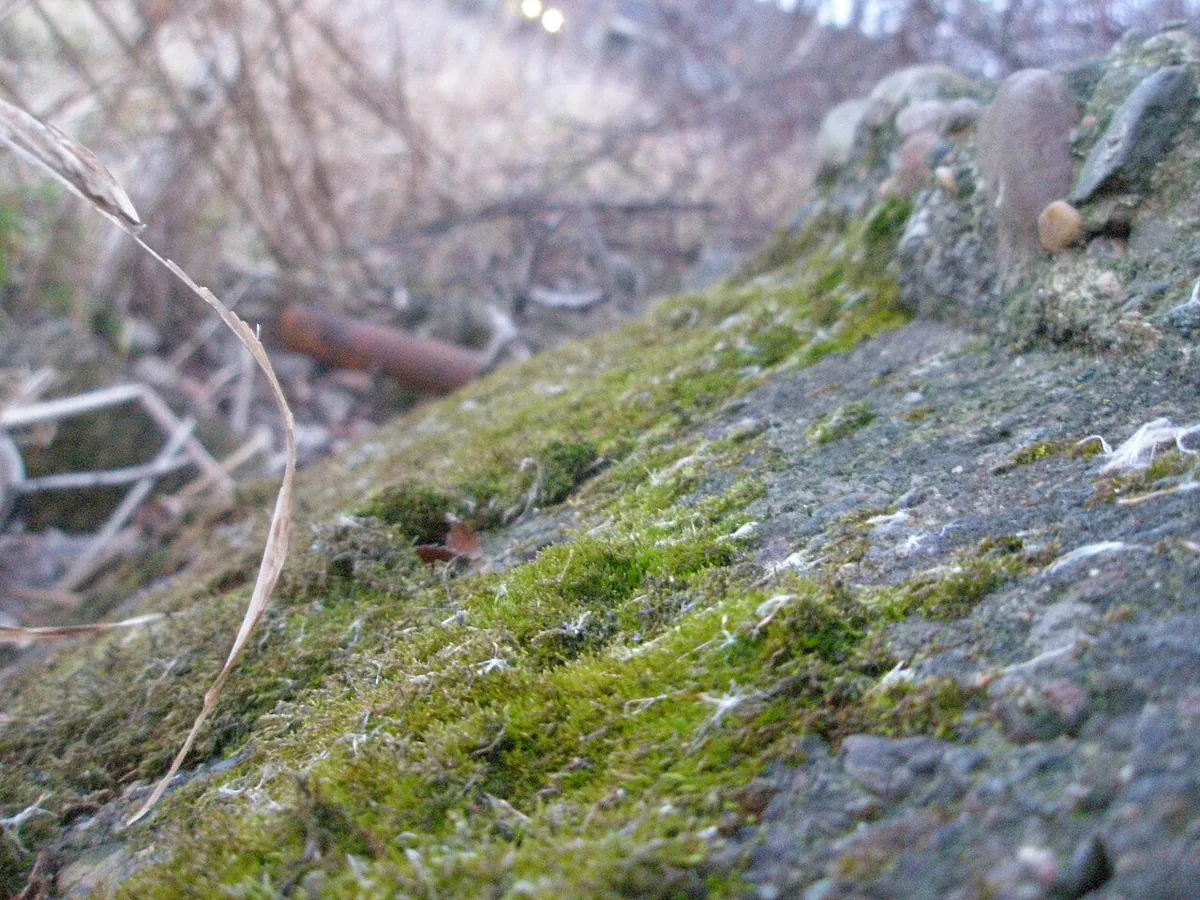
Photo: peterk17700, Moss on Concrete in Todd Park, Wikimedia Commons, CC BY-SA 3.0.
Moss grows on concrete that stays damp and shaded, especially on north-facing walks, steps under trees and areas with poor drainage. It is slippery when wet and holds moisture against the surface.
- Scrape: on a dry day, scrape thick moss off with a flat shovel, plastic scraper or stiff brush.
- Treat: apply an oxygen bleach solution or a moss and algae cleaner labeled for hard surfaces. Let it sit as directed.
- Scrub: scrub with a stiff brush, paying attention to joints and cracks where moss roots.
- Rinse: rinse thoroughly with the hose.
- Repeat: heavy growth may need a second treatment a week later.
Some moss treatments are meant to be left on without rinsing so the moss dies and washes away with rain over several weeks. Follow the product label. Avoid salt, which kills moss but damages concrete; see does salt damage concrete.
Keeping moss away
- Trim trees and shrubs to let in sunlight and air.
- Fix drainage so water does not sit on the concrete.
- Sweep regularly to remove leaves and soil that feed moss.
- Seal concrete after cleaning to reduce water absorption; see how to seal concrete.
- Fill cracks and joints where moss takes hold.
Algae, Mildew and Black Spots
Green film is usually algae. Black or gray spots are often mildew or mold, common in humid climates and shaded areas. An oxygen bleach solution or a cleaner made for mildew on hard surfaces, applied, left to dwell and scrubbed, usually removes both. For black mold questions, see mold on concrete.
How to Remove Water Stains From Concrete
"Water stains" on concrete can mean a few different things:
Hard water and mineral spots
White or gray spots and rings from sprinklers, dripping faucets and pools are usually minerals like calcium and magnesium left when water evaporates. On concrete, scrub with a 1:1 mix of white vinegar and water, let it sit a few minutes, scrub and rinse well. Do not leave vinegar on for long, as acid can etch the surface. Commercial hard water removers made for concrete also work.
Efflorescence
Efflorescence is a white, powdery or crusty deposit caused by water moving through the concrete and leaving salts on the surface. Brush it off dry with a stiff brush first; wetting it can push the salts back in. If some remains, use an efflorescence cleaner made for masonry. It often comes back until the source of moisture is fixed.
Dark water marks and rings
Dark patches that come and go are often just moisture in the concrete, such as from planters, downspouts or a damp base. They fade as the concrete dries. If they stay, mildew or dirt may be trapped; clean with oxygen bleach.
Orange water stains
Orange bands from sprinklers are iron from well water. These are rust stains; see how to remove rust stains from concrete.
How to Clean Outside Limestone and Concrete Walls
Walls need a gentler approach than flat slabs, because water runs down them, streaks easily, and some materials are soft.
Limestone
Limestone is calcium carbonate, which dissolves in acid. Never use vinegar, muriatic acid or acidic cleaners on limestone; they etch and damage it. Use a pH-neutral cleaner or one labeled safe for limestone, a soft natural or nylon brush, and a low-pressure hose rinse. The National Park Service's guidance on cleaning historic masonry recommends always using the gentlest method possible and testing first.
Concrete and block walls
- Wet the wall from the bottom up, then apply cleaner from the bottom up so drips do not leave clean streaks on dry, dirty areas below.
- Let it dwell, then scrub with a long-handled brush.
- Rinse from the top down.
- Use oxygen bleach or a masonry cleaner for green growth and black streaks.
- On painted walls, use a mild cleaner to avoid lifting paint.
Retaining walls and block walls with mortar joints should be cleaned gently; aggressive scrubbing can loosen old mortar. See concrete block wall cost.
Garage Floors and Basements
Indoors, you cannot hose freely, so use a mop and bucket or a floor scrubber. Sweep or vacuum, mop with a concrete cleaner or diluted degreaser, scrub stubborn spots with a brush, then mop with clean water and pick up the water with a wet-dry vacuum. Open doors and run a fan to dry it quickly, especially in basements where humidity feeds mildew. Coated floors need only a pH-neutral cleaner.
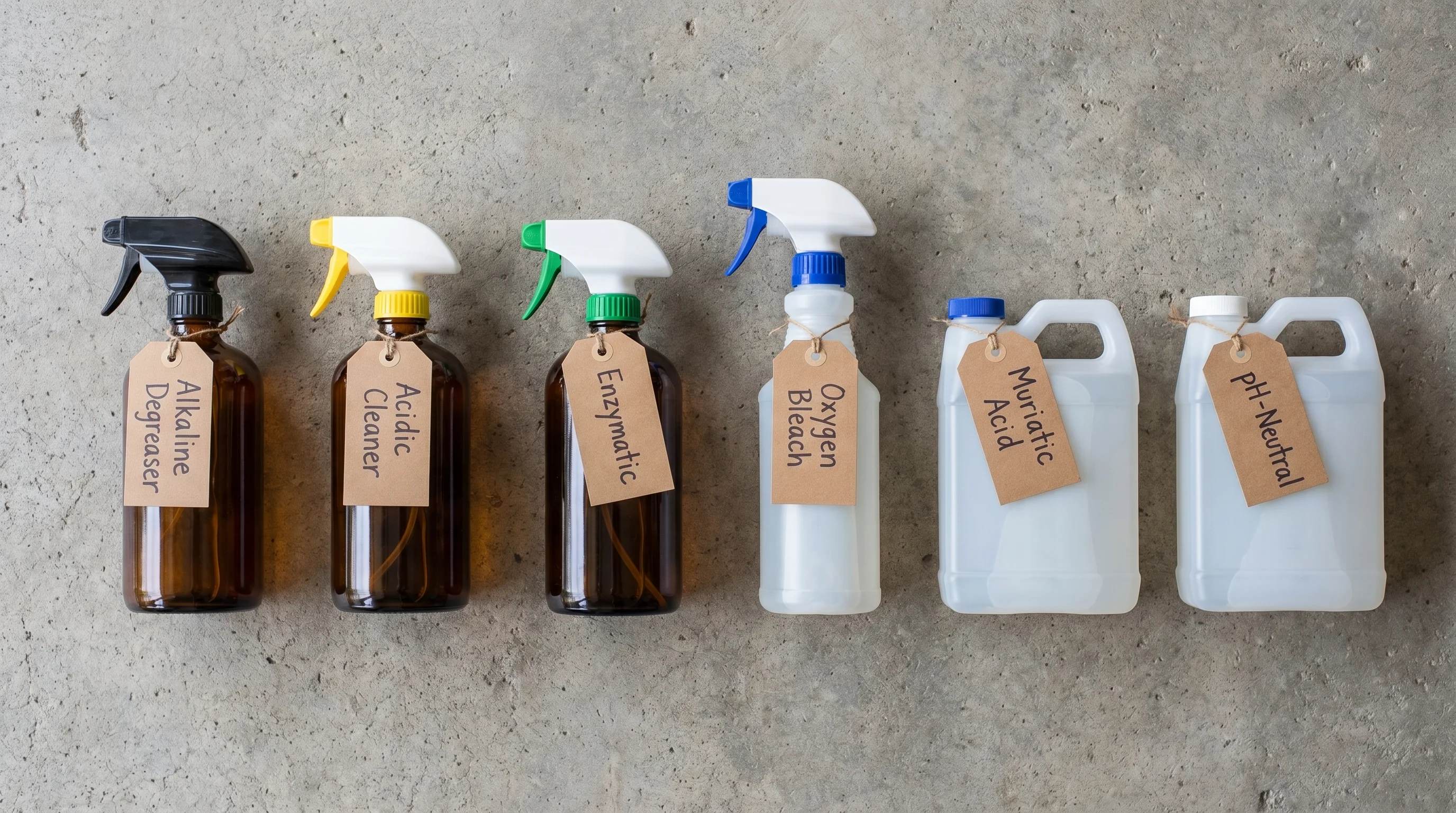
Cleaning by Surface
Driveways
Driveways collect tire marks, oil drips, leaves and road grime. Treat oil spots first with a degreaser and absorbent, then clean the whole driveway in sections with a concrete cleaner and a deck brush. Rinse from the garage toward the street so dirty water flows away from the clean part. For marks from tires, see how to get tire marks off concrete.
Patios
Patios get food spills, grease from grills, plant pot rings, bird droppings, pollen and mildew in shaded corners. Move furniture and planters, sweep, and use dish soap or oxygen bleach depending on what you see. Grease under the grill needs a degreaser. Metal furniture rings are rust; treat them separately.
Steps and walkways
Steps and walks are high-traffic and often shaded, so they collect dirt and slippery algae or moss. Clean steps from the top down, one step at a time, with a hand brush for edges and corners. Slippery growth is a safety issue, so treat it promptly. For worn or broken steps, see how to fix concrete steps.
Pool decks
Pool decks need cleaners that will not upset pool water. Rinse cleaners away from the pool, and avoid getting chlorine bleach or acids into the water. Many pool decks have a textured coating or sealer, so use a soft to medium brush and gentle cleaners. Regular rinsing removes sunscreen, body oils and chlorine residue before they build up.
Stamped, colored and sealed concrete
Decorative concrete is usually sealed. Use a pH-neutral cleaner or dish soap and a soft or medium nylon brush. Avoid acids, strong degreasers and wire brushes that can dull sealers and fade color. Hand cleaning is usually better than a pressure washer for these surfaces, because high pressure can strip sealer from stamped textures. Reseal every few years as the manufacturer recommends. See stamped concrete vs pavers.
Exposed aggregate
Exposed aggregate has stones showing on the surface, which traps dirt between stones. A stiff brush reaches into the gaps. Avoid acid cleaners, which can loosen the cement around the stones. Sealing helps keep it looking fresh.
A Worked Example: Shaded Patio With Mildew and Moss
Say a 12 by 16 foot concrete patio sits on the north side of a house under a maple tree. It has green algae across most of it, moss in the joints, a few black mildew spots and white rings from planters.
- On a dry, overcast morning, the homeowner moves furniture and planters and sweeps leaves.
- They scrape the moss out of the control joints with a putty knife and flat shovel.
- They wet the lawn edge and flower bed, then wet the patio.
- They mix oxygen bleach with warm water per the label in a bucket, pour it into a pump sprayer and spray one half of the patio.
- After 15 minutes, keeping it damp, they scrub with a stiff deck brush, then a hand brush along the joints.
- They rinse with the hose's jet setting, pushing water toward the lawn.
- They repeat on the other half.
- For the white planter rings, they scrub with a 1:1 vinegar and water mix, wait a few minutes, scrub again and rinse well.
- A week later, once the patio is dry, they apply a breathable penetrating sealer and trim the tree to let in more light.
The whole job takes a morning, uses no pressure washer, and leaves the patio clean without etching or stripes.
Natural and Plant-Friendly Options
If you want to keep chemicals away from garden beds, kids and pets, you have good options:
- Oxygen bleach: breaks down into water, oxygen and soda ash. It is much gentler on plants than chlorine bleach when used as directed.
- Dish soap: mild and effective on everyday dirt.
- Baking soda: safe, mild abrasive for small areas.
- Diluted vinegar: natural acid for light mineral stains on concrete; avoid near acid-sensitive stone and rinse well.
- Boiling water: poured on weeds and moss in cracks, it kills them without chemicals. Be careful of splashes.
- Plain scrubbing: sometimes a stiff brush and water are all you need, especially if you clean regularly.
How Often to Clean Concrete
- Sweep: weekly or as leaves and dirt build up.
- Spot clean spills: right away, especially oil, grease, wine and food.
- Full scrub: once or twice a year, usually spring and fall.
- Shaded, damp areas: check for moss and algae every few months.
- Seal: every few years for most penetrating and film-forming sealers; follow the product guidance.
Common Mistakes
- Letting cleaner dry on the surface, which leaves residue and stops it working.
- Using acids on limestone, marble or decorative stone.
- Mixing bleach with vinegar, ammonia or other cleaners, which can create toxic gases.
- Scrubbing with wire brushes, which scratch and can leave rust spots.
- Cleaning in hot, direct sun, which dries cleaner too fast.
- Washing dirty water over already cleaned areas.
- Skipping the rinse.
Safety
- Wear gloves and eye protection, especially with bleach, oxygen bleach and degreasers.
- Never mix cleaning products.
- Wet concrete with algae or moss is slippery; wear shoes with good grip.
- Keep kids and pets away until the surface is rinsed and dry.
- Do not wash concentrated cleaners into storm drains.
When a Pressure Washer or a Pro Is Worth It
Hand cleaning works for most homes, but a pressure washer saves time on very large driveways, heavily soiled concrete or commercial areas. If you do use one, keep pressure moderate, use a surface cleaner and avoid it on limestone and decorative concrete. Professional concrete cleaners can also handle big jobs, hot-water cleaning and sealing in one visit. See concrete cleaning near me for what pros offer.
After Cleaning: Seal for Easier Upkeep
Once concrete is clean and fully dry, usually after 24 to 48 hours of good weather, a sealer makes future cleaning much easier. Penetrating sealers soak in and repel water and stains while keeping a natural look and good grip. Film-forming acrylic sealers add sheen and color depth but can be slippery and wear in traffic areas. See concrete sealer and how to seal concrete.
Quick Reference by Situation
- How to clean concrete without pressure washer equipment on a patio: sweep, wet, dish soap or oxygen bleach, scrub with a deck brush, rinse with a hose nozzle.
- How to clean moss from concrete steps: scrape, oxygen bleach or moss cleaner, scrub joints, rinse, then let in more light.
- How to remove water stains from concrete near sprinklers: vinegar and water for white mineral spots, rust remover for orange ones.
- How to clean outside limestone and concrete walls: pH-neutral cleaner on limestone, oxygen bleach on concrete, apply bottom up, rinse top down.
- How to clean concrete without a pressure washer in a garage: mop and degreaser, scrub, rinse with a mop, pick up water with a wet-dry vacuum.
Frequently Asked Questions
What is the best way to clean concrete without a pressure washer?
Sweep, pre-wet, apply a cleaner, let it dwell, scrub with a stiff deck brush and rinse with a hose nozzle.
What is the best homemade concrete cleaner?
Warm water with dish soap for general dirt, oxygen bleach for organic growth, and diluted vinegar for mineral spots on concrete (not limestone).
Does vinegar clean concrete?
Diluted vinegar removes light mineral deposits. It does little for grease and can etch concrete if left too long.
How do I clean moss from concrete?
Scrape it off, treat with oxygen bleach or a moss cleaner, scrub and rinse. Improve sunlight and drainage to prevent regrowth.
Can I use bleach on concrete?
Diluted bleach kills mildew but can harm plants. Oxygen bleach is a gentler choice. Never mix bleach with ammonia or acids.
How do you clean limestone walls?
Use a pH-neutral cleaner, a soft brush and a low-pressure rinse. Never use acids on limestone.
How do you remove water stains from concrete?
For white mineral spots, scrub with a 1:1 vinegar and water mix and rinse well. Brush efflorescence off dry. Orange water stains are rust.
Does dish soap clean concrete?
Yes. Dish soap and warm water with a stiff brush remove everyday dirt and light grease from concrete.
Can I clean concrete with baking soda and vinegar?
Use them separately. Mixing them makes them foam and cancel each other out. Baking soda works as a scrub; vinegar works on mineral spots.
How long should concrete dry before sealing?
Usually 24 to 48 hours after cleaning in dry weather. Follow the sealer label.
Sources
- National Park Service, Preservation Brief 1: Cleaning and Water-Repellent Treatments for Historic Masonry Buildings. nps.gov
- U.S. EPA, guidance on keeping cleaning chemicals out of storm drains. epa.gov
- Manufacturer labels for concrete cleaners, oxygen bleach and moss and algae removers.
- Image credits: moss photo by peterk17700, Wikimedia Commons (CC BY-SA 3.0); other images and chart by Asphapro.com.
Always follow product labels. Checked November 2026.
Related Guides
- Can mold grow on concrete? — what kills it and drying a cellar
- How to get concrete splash off bricks — fresh splatter, lumps and haze