
How to Remove Rust Stains From Concrete: Mild to Strong Methods
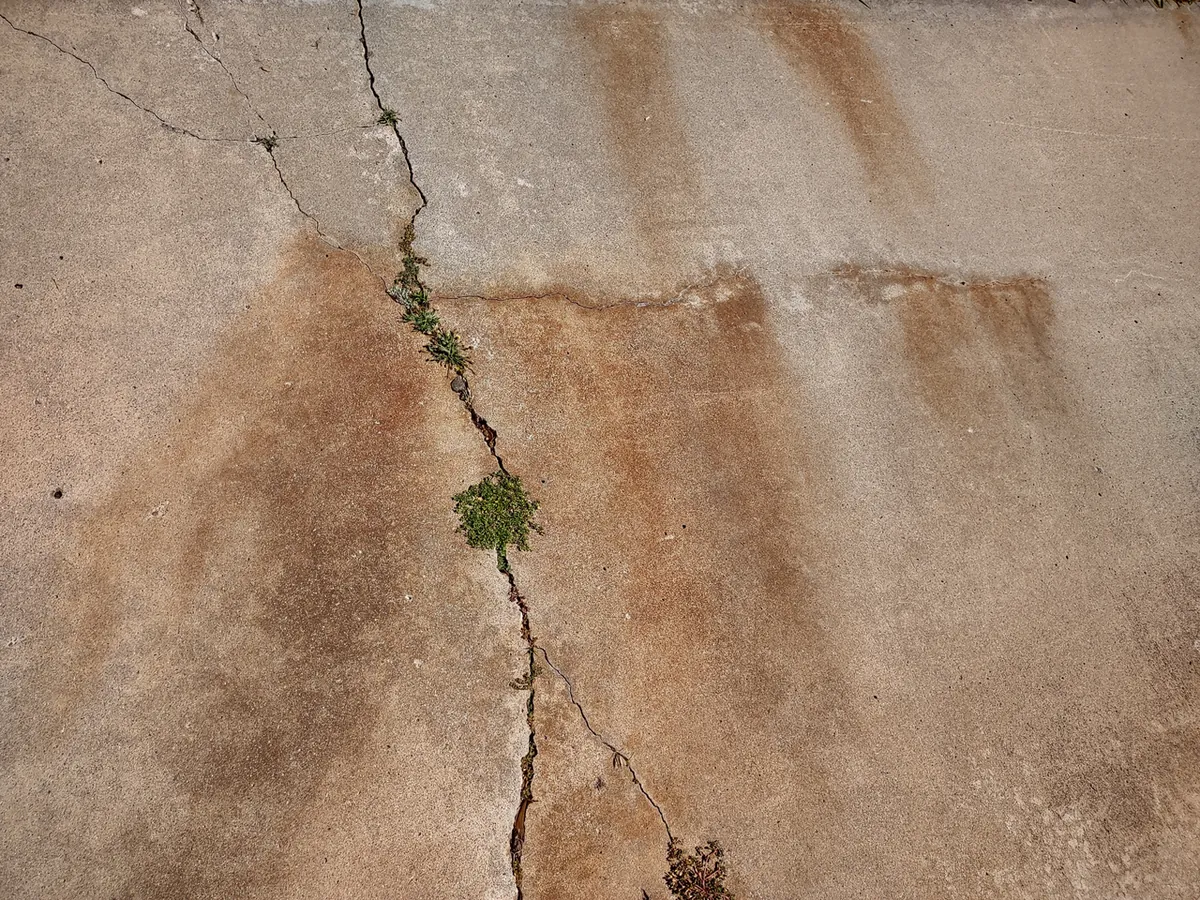
Photo: Wikimedia Commons user, Rust stains from cracks in concrete, CC BY-SA 4.0.
Quick Answer
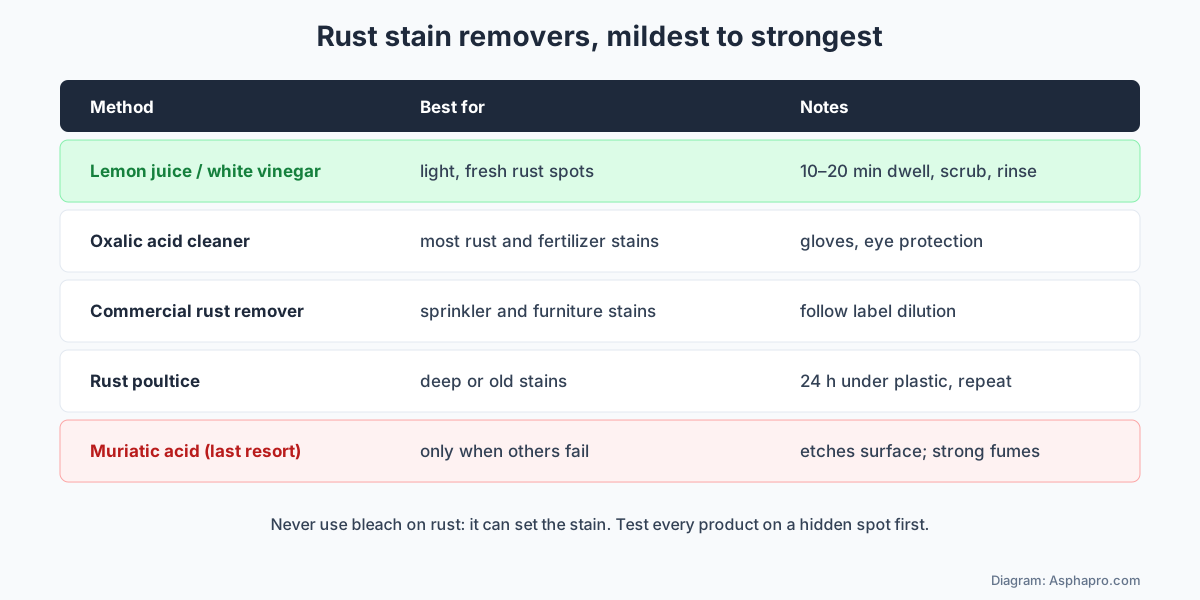
To remove rust stains from concrete, start mild: pour lemon juice or white vinegar on the rust, let it sit 10 to 20 minutes, scrub with a stiff nylon brush and rinse. If the rust stain remains, use an oxalic acid based rust remover, which is the active ingredient in many concrete rust cleaners, following the label and wearing gloves and eye protection. For deep or old rust stains, apply a rust poultice and leave it covered for a day. Muriatic acid is a last resort because it etches the concrete surface. Never use bleach on rust, and always test on a hidden spot first.
Rust stains are some of the most stubborn marks on concrete. They show up as orange, brown or reddish spots and streaks on driveways, patios, pool decks, garage floors and walls. Unlike dirt or mildew, rust does not wash away with soap and water, because the stain is iron oxide bonded to the surface of the concrete. To get rust off concrete, you need a mild acid that dissolves iron oxide, and the right amount of patience.
This guide explains how to remove rust stains from concrete step by step, starting with household products and moving to stronger cleaners only when needed. It also covers where rust stains come from, how to get rust stains out of concrete that is sealed or colored, how to deal with fertilizer and sprinkler stains, and how to keep rust from coming back.
Where Rust Stains on Concrete Come From
Knowing the source matters, because if you do not stop it, the rust comes back no matter how well you clean. The most common sources are:
- Metal objects: patio furniture legs, grills, planters with metal bases, tools, cans, bikes and toys left on the slab. Water runs off them and leaves rings and streaks.
- Fertilizer: many lawn fertilizers contain iron. Granules that land on a driveway or sidewalk dissolve when wet and leave small orange dots.
- Sprinklers and well water: irrigation water with high iron content leaves orange bands on concrete, walls and fences where the spray hits again and again.
- Rebar and wire mesh: steel inside the slab can rust when water gets in through cracks or shallow cover. The rust bleeds out as streaks from cracks, like in the photo above.
- Iron in the aggregate: some stones and sands contain iron minerals such as pyrite that rust at the surface, leaving small spots that seem to appear on their own.
- Gutters, railings and fences: rusting metal above the concrete drips orange water down onto it.
Fresh rust is easiest to remove. Rust that has been baking in the sun for months or years has had time to sink into the pores and is harder to lift, though most rust stains on concrete can still be removed or greatly faded.
What You Need
Removing rust stains from concrete works best with mild acids, so most of this list is about applying them safely and rinsing well:
- Lemon juice or white vinegar for light stains.
- An oxalic acid based rust remover made for concrete, or a powder cleanser containing oxalic acid.
- Stiff nylon scrub brush (no wire brushes; they can leave new rust behind).
- Bucket, clean water and a hose.
- Plastic sheet and tape for poultices; an absorbent powder such as diatomaceous earth or talc.
- Chemical-resistant gloves, eye protection and old clothes.
- Baking soda to neutralize acid residue if the label calls for it.
Step 1: Clean the Area and Test a Hidden Spot
Sweep away dirt and debris, then wash the area with water and a little dish soap so you can see the rust stain clearly and the cleaner can reach it. Rinse and let the surface dry, or at least drain any standing water.
Every acid reacts with concrete to some degree. Before treating a visible rust stain, try your product on a small hidden spot, such as a corner behind a planter. Wait for it to dry and check for lightening, etching or color change. This is especially important on colored, stamped, stained or sealed concrete.
Step 2: Try Lemon Juice or White Vinegar
For light, fresh rust marks, household acids often work. Lemon juice contains citric acid and white vinegar contains acetic acid, both of which dissolve small amounts of iron oxide.
- Pour undiluted lemon juice or white vinegar directly on the rust stain.
- Let it sit for 10 to 20 minutes. Do not let it dry out; add more if needed.
- Scrub firmly with a stiff nylon brush.
- Rinse thoroughly with clean water.
- Repeat once or twice if the rust is fading but not gone.
Do not leave vinegar on for hours. Even mild acids can etch the cement paste at the surface if left too long, leaving a lighter, rougher patch.
Step 3: Use an Oxalic Acid Rust Remover
Oxalic acid is the go-to ingredient for rust on concrete. It reacts with iron oxide and turns it into a water-soluble compound that rinses away, and it is far less aggressive on concrete than muriatic acid. Many concrete rust removers and some powder cleansers rely on it.
- Put on gloves and eye protection.
- Wet the surrounding concrete and nearby plants with water so runoff is diluted.
- Apply the rust remover to the rust stain as the label directs, either as a liquid, gel or paste made from powder.
- Let it dwell for the recommended time, keeping it wet.
- Scrub with a nylon brush.
- Rinse thoroughly. Some products recommend neutralizing with a baking soda solution afterward.
- Let it dry and inspect. Repeat if needed.
Oxalic acid is toxic if swallowed and irritating to skin and eyes, so store it out of reach of kids and pets and follow the label carefully. If you are cleaning a whole patio, rinse well so no residue is left where people walk barefoot.
Step 4: Use a Poultice for Deep Rust Stains
When rust has soaked deep into the pores, a surface scrub may only lighten it. A poultice keeps the rust remover in contact with the stain longer and pulls the dissolved iron back up as it dries.
- Mix an absorbent powder such as diatomaceous earth or talc with a liquid rust remover into a thick paste.
- Spread it about 1/4 inch thick over the rust stain, slightly past its edges.
- Cover with plastic and tape the edges.
- Leave it for about 24 hours, or as the product directs.
- Remove the plastic, let the poultice dry, scrape it off and rinse.
- Repeat if some color remains.
Commercial rust poultices are also sold premixed. They are a good option for decorative concrete because they work slowly without hard scrubbing.
Step 5: Muriatic Acid as a Last Resort
Muriatic acid (a diluted form of hydrochloric acid) dissolves rust quickly, but it also dissolves the cement paste at the surface of the concrete. It leaves an etched, lighter area, can expose sand and stone, and gives off strong, harmful fumes. It also reacts with any metal it touches.
Use it only when gentler methods fail, and only if you are comfortable with the safety steps:
- Wear acid-resistant gloves, goggles, long sleeves and, ideally, a respirator rated for acid gas.
- Work outdoors with good airflow, upwind of the work area.
- Always add acid to water, never water to acid. Follow the label dilution; many guides start around 1 part acid to 10 parts water or weaker.
- Wet the concrete first so the acid does not soak in too fast.
- Apply to the rust stain only, scrub briefly, then rinse heavily.
- Neutralize with a baking soda solution and rinse again.
- Protect plants, metal, cars and nearby surfaces from splashes and fumes.
Because it etches, muriatic acid may make the cleaned spot look different from the rest of the slab. Many homeowners end up cleaning the whole area to even it out. If you are not sure, call a concrete cleaning pro.
How to Get Rust Off Concrete From Fertilizer
Fertilizer rust stains look like a spray of small orange dots on a driveway or sidewalk next to a lawn. They are common and can be stubborn because there are so many small spots.
- Sweep or blow fertilizer granules off concrete right after spreading, before watering or rain.
- For fresh dots, try lemon juice or vinegar and a stiff brush.
- For older dots, use a rust remover made for fertilizer stains, which is usually oxalic acid based, and treat the whole area evenly.
- Rinse well, as some cleaners can harm grass along the edges.
Spreading fertilizer with a deflector shield, or with a drop spreader along the driveway edge, prevents most of these stains.
How to Clean Rust Off Concrete From Sprinklers
Orange bands from sprinklers come from iron in well water. Cleaning them is the same as other rust stains, but they come back each time the sprinklers run. The lasting fix is to change the water, not the concrete:
- Install an iron filter or treatment system on the irrigation line.
- Adjust sprinkler heads so they do not spray on driveways, walks and walls.
- Use rust stain treatments designed for regular use in iron-water areas.
How to Get Rust Stains Out of Concrete From Furniture and Tools
Rings from metal furniture legs, grills and planters are usually small and close to the surface. Lemon juice, vinegar or an oxalic acid cleaner usually works. Afterward, add plastic or rubber feet to furniture, put planters on saucers and store tools off the slab. Treat or paint rusting metal so it stops dripping.
Rust Stains From Rebar and Cracks
Rust bleeding from cracks is different from surface rust. It means the steel inside the concrete is corroding. Rusting steel expands, which can widen cracks and break off chunks of concrete, called spalling.
You can clean the surface stain with the methods above, but it will return unless the moisture problem is fixed. Small cracks can be sealed. Exposed or badly rusted steel needs proper repair: remove loose concrete, clean or treat the steel, and patch with a repair mortar. On structural elements such as walls, balconies and foundations, have a professional look at it. See concrete repair cost and why concrete cracks.
Sealed, Colored and Stamped Concrete
Learning how to get rust stains off concrete that has a sealer or color needs extra care. Acids can dull a sealer, lighten color and remove some of the surface finish.
- If the rust is on top of a sealer, start with a gentle cleaner; the sealer may have kept rust from soaking in.
- Use the mildest product that works and test first.
- Prefer poultices over hard scrubbing on stamped textures.
- Avoid muriatic acid on colored or stamped concrete.
- Reseal the area once it is clean and dry. See how to seal concrete.
How Rust Removers Work
How do you get rust off of concrete with a cleaner when scrubbing alone does nothing? Rust is iron oxide stuck in the pores. Acids like oxalic and citric acid react with it and turn it into a form that dissolves in water, so it rinses away. That is why the cleaners work and plain soap does not.
Rust is iron oxide, a reddish compound that forms when iron or steel reacts with oxygen and water. When rusty water dries on concrete, tiny particles of iron oxide settle into the surface pores and bond with the cement paste. That is why scrubbing with soap does almost nothing: soap lifts oils and dirt, but it does not change iron oxide.
Acids do. Citric acid in lemon juice, acetic acid in vinegar, oxalic acid in most rust removers and hydrochloric acid in muriatic acid all react with iron oxide and turn it into iron compounds that dissolve in water. Once dissolved, the iron rinses away. The stronger the acid, the faster this happens, but the more it also attacks the concrete itself, because cement paste is alkaline and reacts with acid too.
Oxalic acid sits in a useful middle ground. It binds iron especially well, so it removes rust efficiently at strengths that are fairly gentle on concrete. That is why it is the main ingredient in so many products sold for rust on driveways, patios and pool decks. Some newer rust removers use other chelating agents that grab iron without much acidity, which can be a good choice for decorative or colored surfaces.
A Worked Example: Patio With Furniture Rings and Fertilizer Dots
Say you have a broom-finished patio with orange rings from a metal table and chairs, and a scatter of small orange dots along the lawn edge from last season's fertilizer.
- Move the furniture off the patio and sweep.
- Wash with water and dish soap, rinse, and let the surface drain.
- Test vinegar on one chair ring. After 15 minutes and a scrub, it fades but does not disappear.
- Test an oxalic acid rust remover on a hidden spot behind a planter. No etching or color change once dry.
- Wet the lawn edge and the patio. Apply the rust remover to the rings and over the whole band of fertilizer dots, not just individual dots, so the area cleans evenly.
- Let it dwell as the label says, scrub, and rinse heavily, soaking the grass edge again.
- After drying, two rings still show faintly. Apply a rust poultice to those overnight and rinse.
- Once dry for a day or two, apply a penetrating sealer and add rubber feet to the furniture.
This step-up approach uses the mildest product that works and saves strong cleaners for the last stubborn spots.
Pool Decks
Pool decks often have rust from metal furniture, pool tools, ladder anchors and iron in fill water. Pool chemicals can also react with metals in the water and leave stains. Rinse rust remover away from the pool so it does not drain into the water and upset its balance. If staining is coming from the pool water itself, test the water and treat metals in the pool, not just the deck. Many pool decks are sealed or have a decorative coating, so use mild methods first.
Garage Floors and Basements
Indoor concrete rusts from tools, toolboxes, metal shelving feet, paint cans and the metal edges of storage bins. Ventilation is the key difference indoors. Open doors and windows, use a fan, and avoid muriatic acid in closed spaces. A gel or paste rust remover is easier to control on a floor than a liquid, and you can wipe up the residue with a damp mop and a bucket instead of hosing it toward a floor drain. If your garage floor is coated with epoxy, rust usually sits on top and wipes off with a mild cleaner.
Concrete Walls and Vertical Surfaces
Rust on walls, retaining walls, columns and steps usually comes from sprinklers, railings, gutters or rebar. Gel rust removers cling to vertical surfaces better than liquids. Work from the bottom up when applying so drips do not streak clean areas below, and rinse from the top down. Rust running from cracks in a wall points to corroding steel inside and should be checked by a contractor, especially on retaining walls that hold back soil, because corroding steel weakens the wall over time and the repair gets bigger the longer it waits. See concrete block wall cost.
Aftercare: Neutralize, Rinse and Seal
After any acid treatment, rinse until the water runs clear. If the product label calls for it, neutralize with a solution of baking soda and water, then rinse again. Leftover acid keeps reacting with the surface and can leave a white haze. Let the concrete dry completely, usually a day or two in good weather, before applying a sealer. A penetrating sealer slows water and staining agents from soaking in, which makes the next rust spot easier to clean.
Methods That Do Not Work Well
- Bleach: chlorine bleach does not remove rust and can react with iron to darken or set the stain.
- Pressure washing alone: water pressure does not dissolve rust and can etch concrete. Use it to rinse after a rust remover.
- Wire brushes: steel bristles can leave tiny metal pieces that rust into new spots.
- Cola: the mild phosphoric acid can lighten a tiny spot but leaves sticky residue.
- Mixing cleaners: never mix acids with bleach or other chemicals; dangerous gases can form.
Safety and Runoff
Rust removers are acids. Wear gloves and eye protection, keep kids and pets away, and rinse thoroughly. Wet nearby plants before and after to dilute runoff, and keep acid off metal, painted surfaces and cars. Do not wash concentrated cleaners into storm drains. Read the label and the safety data sheet for your product, and follow its disposal directions.
Troubleshooting
The rust stain only faded
Repeat the treatment, or switch to a poultice so the cleaner stays in contact longer. Old rust stains often need two or three rounds.
The rust stain came back
The source is still active, such as iron in sprinkler water, fertilizer, rusting rebar or a metal object nearby. Find and stop the source.
The cleaned area is lighter than the rest
Acid etched or cleaned the surface. Cleaning the whole slab evenly, or applying a sealer, usually blends the difference.
The rust stain turned darker
This can happen if bleach or an alkaline cleaner was used. Rinse well and use an oxalic acid product.
Hiring a Pro
Concrete cleaning and pressure washing companies treat rust with commercial products and can clean an entire driveway or pool deck evenly. Prices vary by region and area, and many charge a minimum fee. A pro makes sense for large areas, heavy sprinkler staining, decorative concrete or when muriatic acid seems needed. Rust from rebar is a repair job, not a cleaning job, so get a contractor to assess the crack.
How to Prevent Rust Stains on Concrete
- Put rubber or plastic feet under metal furniture and grills.
- Keep tools, cans and metal objects off concrete, especially when wet.
- Sweep fertilizer off hard surfaces right away.
- Aim sprinklers away from concrete or treat iron in well water.
- Seal concrete to slow staining and make cleanup easier.
- Seal cracks early so water does not reach rebar.
- Treat or paint rusting metal railings and gutters.
If you are dealing with oil instead of rust, the chemistry is different: acids do not remove oil. See how to remove oil stains from concrete.
Quick Reference by Situation
- How to get rust off concrete from a can or tool ring: lemon juice or vinegar, 10 to 20 minutes, scrub, rinse.
- How to clean rust off concrete driveways with fertilizer dots: oxalic acid rust remover over the whole area, scrub, rinse well.
- How to get rust stains out of concrete walls from sprinklers: rust remover, then fix the water source with an iron filter or new spray pattern.
- How to remove rust stains off concrete that is old and deep: rust poultice for 24 hours, repeated as needed.
- How to get rust out of concrete near rebar cracks: clean the stain, then repair the crack and steel.
Frequently Asked Questions
What is the best way to remove rust stains from concrete?
Try lemon juice or vinegar first, then an oxalic acid rust remover. Use a poultice for deep stains and muriatic acid only as a last resort.
Does vinegar remove rust from concrete?
White vinegar removes light, fresh rust spots. Let it sit 10 to 20 minutes, scrub and rinse. Older stains usually need oxalic acid.
Does lemon juice remove rust stains?
Yes, on small, light stains. The citric acid dissolves some rust. It is gentle but works slowly.
Will muriatic acid remove rust from concrete?
Yes, but it etches the surface and has strong fumes. Use it only diluted, with full protective gear, after milder methods fail.
Does bleach remove rust stains?
No. Bleach does not dissolve rust and can make the stain darker or harder to remove.
Can a pressure washer remove rust stains?
Not by itself. It can rinse away loosened rust after a rust remover, but water pressure does not dissolve iron oxide.
How do you get fertilizer rust stains off concrete?
Use an oxalic acid rust remover made for fertilizer stains over the whole area, scrub and rinse. Sweep fertilizer off concrete to prevent new stains.
Why does rust keep coming back on my concrete?
The source is still active, such as iron-rich sprinkler water, fertilizer, rusting rebar or a metal object.
Is oxalic acid safe for plants?
Concentrated runoff can harm plants. Wet plants before and after, rinse well, and keep the product off leaves and soil.
How long does it take to get rust off concrete?
Light spots take minutes. Most stains need 15 to 30 minutes of dwell time. Deep stains may need an overnight poultice and repeat rounds.
Can you use a powder cleanser with oxalic acid on concrete?
Yes, many people use powder cleansers that contain oxalic acid on small rust spots. Make a paste, let it sit, scrub and rinse, and test first.
Should I seal concrete after removing rust?
Yes. Once the concrete is clean and dry, a sealer slows new stains and makes cleaning easier.
How do you get rust stains off of concrete without acid?
For light, fresh stains, try a paste of baking soda and water or a commercial rust remover labeled safe for concrete, scrubbed in and rinsed. Most deep stains still need a mild acid such as lemon juice, vinegar or oxalic acid.
How to get rust off of concrete steps and walls?
Use a gel rust remover so it stays on the surface, let it work for the time on the label, scrub, and rinse from the bottom up to avoid streaks. Test first in a hidden spot.
Sources
- CDC / NIOSH Pocket Guide to Chemical Hazards (oxalic acid and hydrogen chloride). cdc.gov
- U.S. Environmental Protection Agency, guidance on keeping chemicals out of storm drains. epa.gov
- Manufacturer labels and safety data sheets for oxalic acid rust removers and muriatic acid.
- Image credits: rust stain photo by a Wikimedia Commons user (CC BY-SA 4.0); other images and chart by Asphapro.com.
Always follow product labels and safety data sheets. Checked November 2026.
Related Guides
- How to get blood out of concrete — enzyme cleaners and disinfecting
- How to remove oil stains from concrete — fresh spills and old stains
- How to clean concrete without a pressure washer — brush, hose and the right cleaner