
How to Remove Oil Stains From Concrete: Fresh Spills, Old Stains and Grease
Quick Answer
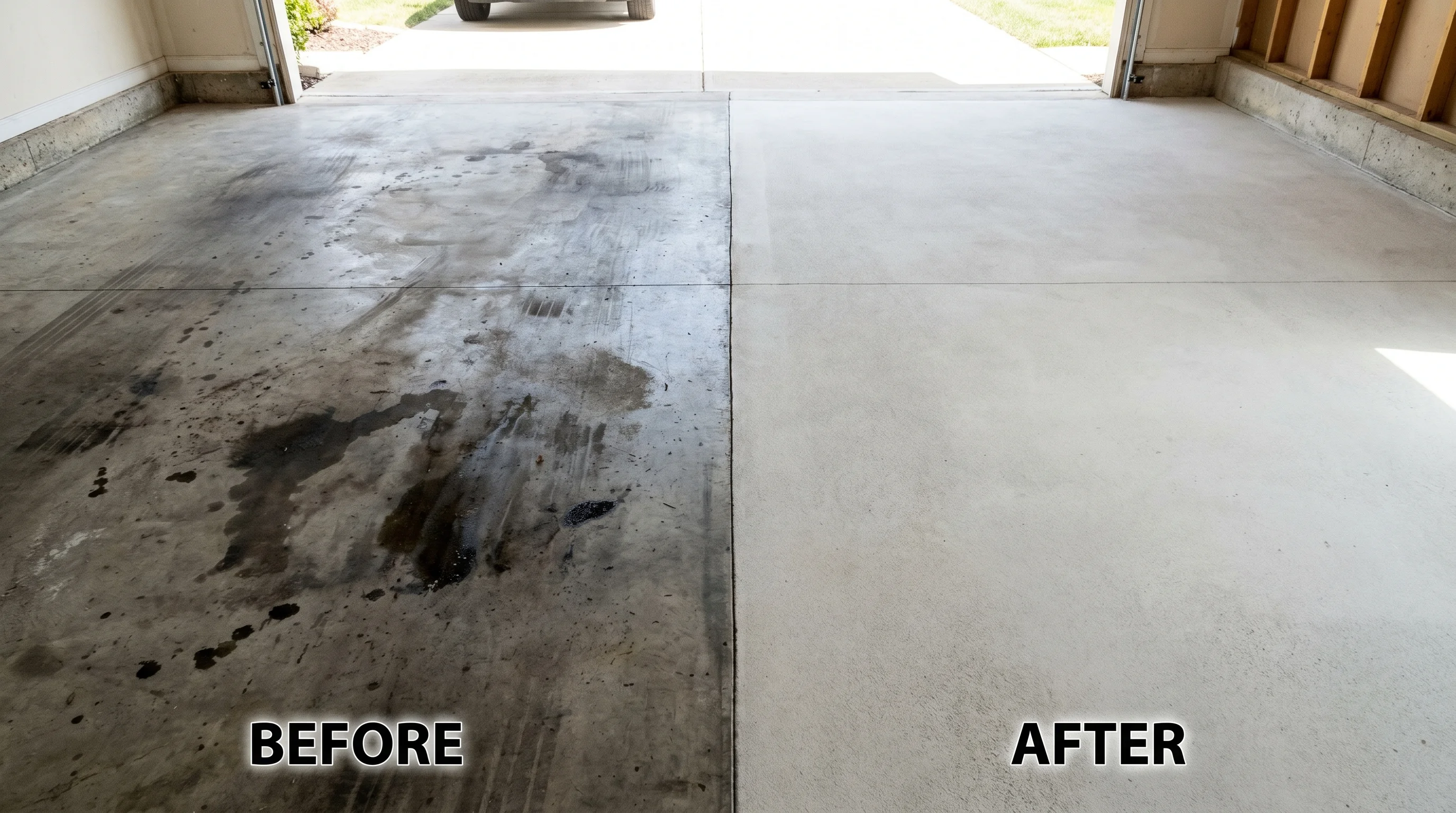
To remove oil stains from concrete, act fast: blot fresh oil, cover it with cat litter, baking soda or sawdust, let it absorb for several hours and sweep it up. For stains that remain, scrub with hot water and dish soap or a concrete degreaser using a stiff nylon brush, then rinse. For old, soaked-in motor oil stains, apply a poultice (an absorbent powder mixed with degreaser or solvent into a paste), cover it, let it dry for a day, and scrape it off, repeating if needed. Enzyme-based oil cleaners can break down stubborn stains over several days. Avoid acid cleaners on oil, and never wash oil into storm drains.
Oil and concrete are a bad combination. Concrete is porous, so motor oil, transmission fluid, grease and cooking oil soak into the surface and leave dark stains that seem permanent. The good news is that most oil stains on concrete driveways and garage floors can be removed or greatly lightened with the right method, especially if you start before the oil has time to soak deep into the pores.
This guide explains how to get oil stains out of concrete step by step, from fresh spills to old stains, what to use for motor oil vs grease, how to clean oil off concrete driveways, garage floors and sealed or decorative concrete, and how to prevent new stains.
What You Need
Removing oil stains from concrete takes the same few supplies whether the stain is a fresh drip or years old; only the order and the waiting time change. Gather these before you start:
- Absorbent: clay cat litter, baking soda, cornstarch, sawdust or a commercial oil absorbent.
- Stiff nylon scrub brush (avoid wire brushes on decorative concrete).
- Dish soap or a concrete-safe degreaser.
- Hot water, bucket and a hose or pressure washer.
- Poultice materials for old oil stains: absorbent powder plus degreaser or a suitable solvent.
- Plastic sheet and tape to cover poultices.
- Gloves, eye protection and good ventilation.
Step 1: Absorb Fresh Oil Right Away
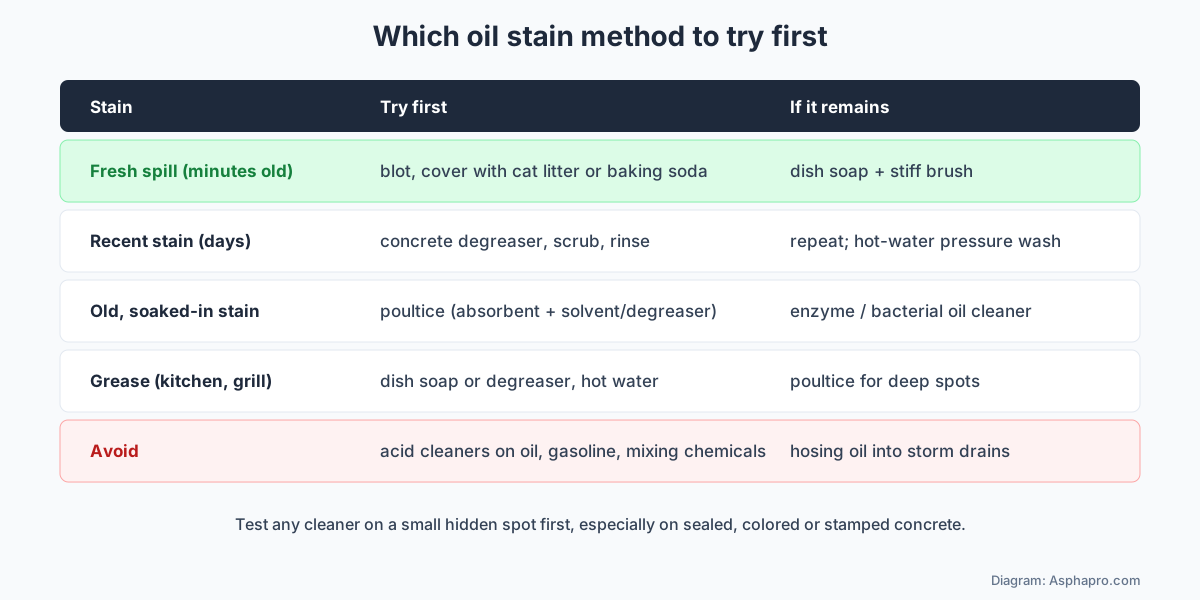
The faster you act, the less oil soaks in. For a fresh spill:
- Blot up as much liquid oil as you can with rags or paper towels. Do not rub, which spreads it.
- Cover the spot with a thick layer of clay cat litter, baking soda, cornstarch or sawdust.
- Grind the litter into the oil stain with your shoe or a brick to help it pull oil from the pores.
- Leave it for several hours or overnight.
- Sweep up the oily absorbent and dispose of it as your local rules require.
This step alone often removes most of a fresh spill. Any shadow left behind can be cleaned in step 2.
Step 2: Scrub With Dish Soap or Degreaser
For stains that are a few hours to a few days old:
- Wet the area with hot water.
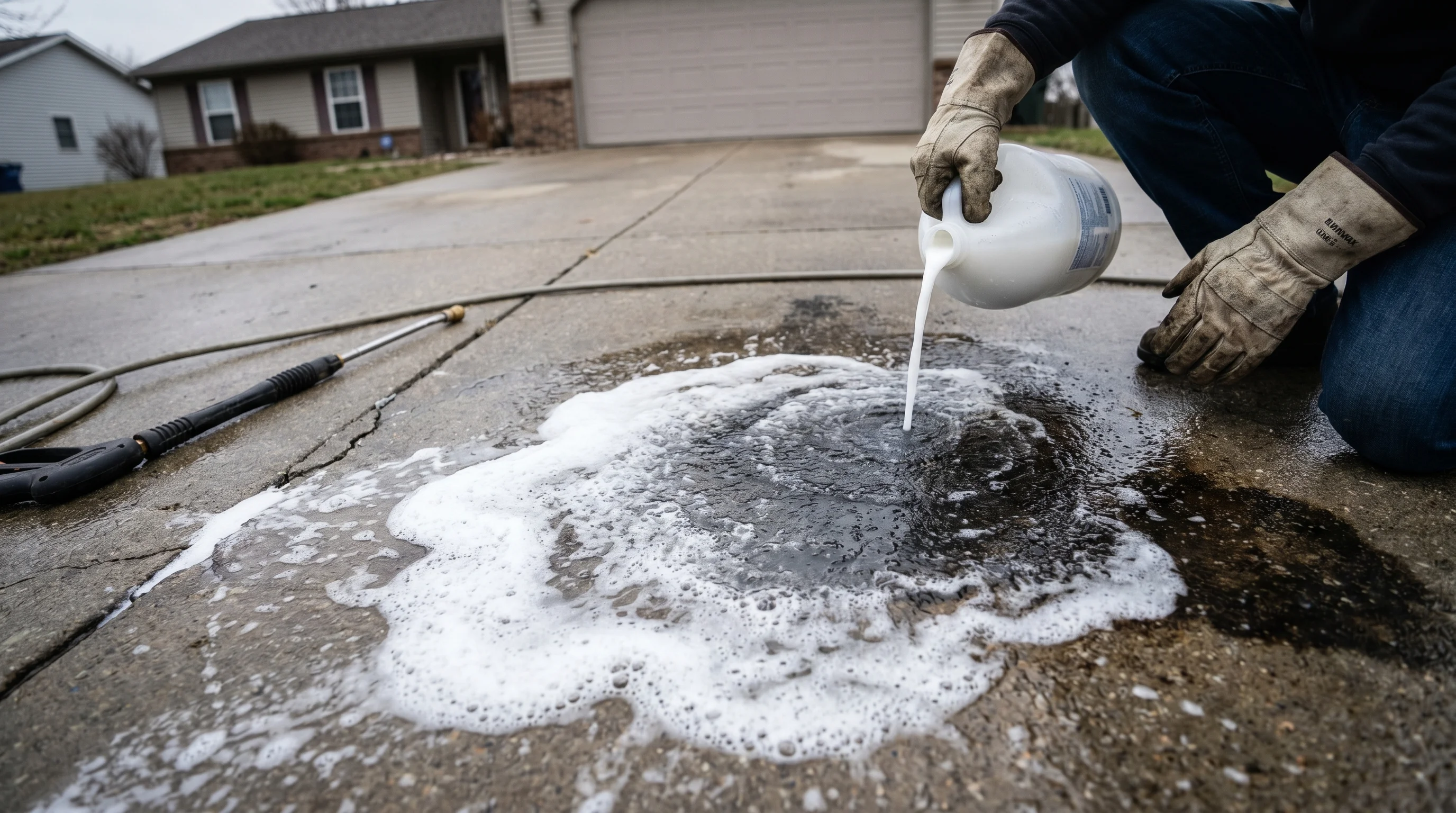
- Apply a generous amount of dish soap or a concrete degreaser.
- Scrub hard with a stiff nylon brush for several minutes.
- Let it sit for the time on the product label.
- Scrub again and rinse with hot water.
- Repeat as needed; several rounds may be required.
Hot water works better than cold because it thins the oil. A pressure washer with a degreaser attachment, especially a hot-water unit, helps on driveways, but use care on sealed or decorative surfaces. See how to clean concrete.
Step 3: Use a Poultice for Old Oil Stains
How to remove old oil stains from concrete is mostly a matter of time. Oil that has sat for months has soaked deep, so the goal is to pull it back up to the surface, a little at a time, with something that absorbs as it dries.
This is also the best way to remove oil stain from concrete that is sealed or colored, because a poultice works without harsh scrubbing. If you only need to know how to remove oil stain from concrete that is a week or two old, one round is often enough.
Old motor oil stains have soaked deep into the concrete. A poultice pulls the oil back up as it dries:
- Clean the surface with soap and water and let it dry.
- Mix an absorbent powder (such as diatomaceous earth, baking soda, cat litter ground fine or a commercial poultice powder) with a degreaser or a solvent recommended for oil into a thick paste, like peanut butter.
- Spread the paste about 1/4 to 1/2 inch thick over the oil stain, slightly past its edges.
- Cover with plastic and tape the edges, then poke a few small holes so it dries slowly.
- Leave it for 24 hours or until fully dry.
- Scrape off the dried poultice, rinse, and repeat if the oil stain remains.
Poultices often take two or three rounds on very old stains, but they can lighten stains that scrubbing cannot.
Step 4: Try an Enzyme or Bacterial Cleaner
Enzyme or microbial oil cleaners contain microorganisms or enzymes that break down hydrocarbons into harmless byproducts. You spray or spread them on, keep the area damp, and let them work for days. They are slower than degreasers but effective on stubborn stains and gentler on surrounding concrete and plants.
How to Get Motor Oil Off Concrete
Motor oil, engine oil and transmission fluid all clean up the same way. How to get engine oil off concrete starts with soaking up what is still wet, then degreasing what has soaked in. If you are figuring out how to clean motor oil off concrete under a car that leaks every day, fix the leak or use a drip pan first, or the stain will keep coming back.
Motor oil is the most common driveway and garage stain. Fresh drips respond well to cat litter followed by dish soap or degreaser. Used engine oil contains combustion residue that darkens stains, so old drips often need a poultice. For a car that drips regularly, fix the leak and put a drip pan or mat under the engine until it is repaired. The same steps work for transmission fluid and power steering fluid.
How to Get Grease Off Concrete
Grease is thicker than oil, so it sits on top longer and soaks in more slowly. How to get grease stains off concrete starts with scraping up as much as you can with a plastic putty knife. How to remove grease from concrete after that is the same as oil: a strong degreaser, a stiff brush and hot water.
If you are working out how to get grease out of concrete that has been there for years, skip straight to the poultice in Step 3. A degreaser alone will lift the surface layer, but the grease deeper in the pores needs time and an absorbent to pull it back up.
Cooking grease from grills, fryers and kitchens, and lubricating grease from equipment, are thicker than oil. Scrape off any solid grease first with a plastic scraper. Then use hot water and dish soap, which is designed to cut cooking grease, or a degreaser. For grease stains under a grill, cleaning regularly and using a grill mat helps prevent buildup.
How to Remove Oil From a Concrete Driveway
How to get oil off concrete driveway surfaces is easier than garage floors in one way: you can rinse freely and use a pressure washer. Just keep the rinse water out of storm drains, because oil runoff is a pollutant.
- Start with absorbent for any fresh oil.
- Pre-wet the whole stained area, apply degreaser, and scrub.
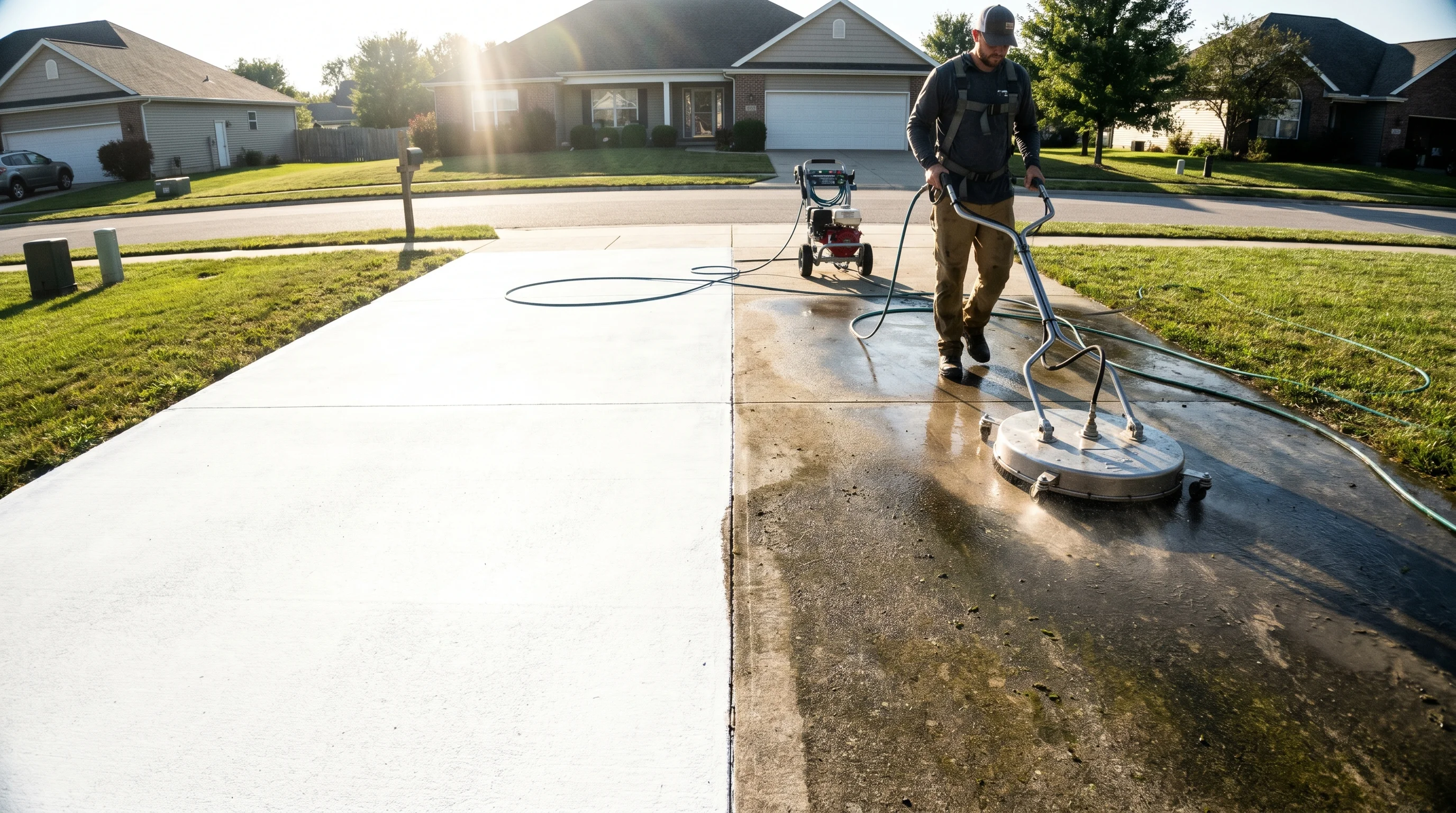
- Pressure wash with a surface cleaner attachment for even results, working from the top of the slope down.
- Treat remaining spots with a poultice.
- Once clean and dry, consider sealing the driveway to make future spills easier to clean; see how to seal concrete.
Garage Floors
Garage floors collect years of drips. Ventilate well by opening doors. On bare concrete, use the same steps as a driveway, but control rinse water so it does not flow into floor drains connected to storm sewers. Coated floors, such as epoxy, usually wipe clean with mild cleaners; avoid harsh solvents that can damage the coating. See concrete coating cost.
Why Oil Stains Concrete So Badly
Concrete looks solid, but it is full of tiny pores and capillary channels left behind when the water in the mix evaporates during curing. When motor oil lands on bare concrete, those channels pull it down and sideways the same way a paper towel pulls up a spill. Within an hour, a drip that looked like it was sitting on top is already a few millimeters into the slab. After a few weeks, oil can sit deep enough that scrubbing the surface only reaches part of it.
That is why knowing how to remove oil stains from concrete is really about two jobs. The first job is pulling liquid oil out of the pores before it spreads. The second job is breaking down or lifting the oil that has already soaked in. Absorbents handle the first job. Soap, degreaser, poultices and enzyme cleaners handle the second. Most failed attempts skip the first job or expect a single scrub to do the second.
Driveway concrete is often broom finished, which adds texture and surface area, so oil spreads into more grooves. Garage slabs are usually smoother and troweled harder, so oil may soak in a little more slowly. Old concrete that has weathered and lost its surface paste is the most porous of all and stains the fastest. If you want background on the material itself, see what concrete is made of.
How Old Is Your Stain? A Quick Test
Before choosing a method, figure out what you are dealing with. Picking the right starting point saves hours and keeps you from using strong products where dish soap would do.
- Shiny or wet look: liquid oil is still on the surface. Go straight to absorbent (Step 1).
- Dark but dry, edges sharp: the oil stain is recent, usually days or a couple of weeks. Degreaser and scrubbing (Step 2) usually work.
- Dark, dull, edges fuzzy or spread wide: the oil has wicked deep and sideways. Plan on a poultice (Step 3) or enzyme cleaner (Step 4).
- Drop of water test: drip a little water on the oil stain. If it beads up, oil is still at the surface. If it soaks in slowly, the surface oil is gone and what you see is deeper.
An oil stain under a parked car that has dripped for years is usually several layers of old and new oil. Treat it as an old stain even if part of it looks fresh. Start with absorbent to pull the newest oil, then move to a poultice for the rest.
Dish Soap vs Degreaser vs Solvent
People asking how to get oil out of concrete usually want to know which product to buy. Each type works in a different way, and the right pick depends on the oil stain and the surface.
| Cleaner | How it works | Best for | Watch out for |
|---|---|---|---|
| Dish soap | Surfactants surround oil so water can rinse it away | Fresh oil, cooking grease, light stains | Needs hot water and a lot of scrubbing |
| Concrete degreaser (water based) | Strong surfactants and alkaline builders break up oil | Recent motor oil stains, garage floors, driveways | Can dull sealers; rinse well |
| Citrus or solvent degreaser | Dissolves oil so it can be lifted or absorbed | Poultice mixes, heavy grease | Fumes, flammability, label rules |
| Enzyme / microbial cleaner | Microbes or enzymes digest hydrocarbons | Old, deep stains; areas near plants | Slow; needs moisture and warm weather |
| Commercial poultice kit | Absorbent and cleaner premixed | Old stains, decorative concrete | Several rounds may be needed |
For most homeowners, a good routine is dish soap for fresh drips and a water-based concrete degreaser for anything older. Keep a solvent product for the poultice step on a very old stain, and only use it with good airflow and away from flames, pilot lights and water heaters.
Household Methods: What Works and What Doesn't
Search for how do you get oil off of concrete and you will find dozens of kitchen remedies. Here is what each one really does for cleaning oil off concrete:
Search for how to get oil stains out of concrete and you will find many kitchen-cabinet tricks. Some help, some do very little, and a few cause new problems.
Cat litter
Plain clay cat litter is cheap and absorbent. It works best on fresh oil. Grinding it in with your foot breaks the granules into a finer powder that touches more of the surface. Clumping litter also works but can turn sticky. On old stains, litter alone barely changes the color.
Baking soda
Baking soda absorbs fresh oil and, mixed with water and a little dish soap into a paste, gives you a mild abrasive scrub. It is a good choice for small fresh drips and is safe around kids and pets. It will not reach deep oil.
Laundry detergent powder
Powdered laundry detergent contains surfactants and builders similar to many degreasers. Sprinkle it on, wet it into a paste, let it sit, and scrub. It is a reasonable budget option for recent stains.
Cola
Soaking an oil stain with cola overnight is a common tip. The mild acid can loosen some surface grime, but it does little to motor oil itself, leaves sugar residue that attracts dirt and insects, and acid etches concrete over time. A degreaser is a better choice.
WD-40 and similar sprays
Spraying a lubricant on an oil stain can loosen and dissolve some old oil so it can be blotted or scrubbed. But you are adding more oil-based product, so it must be followed right away with absorbent and soap or degreaser. It is a small-stain trick, not a full method.
Oven cleaner
Oven cleaner is strongly alkaline and can break down oil on bare concrete. It is also harsh on skin, eyes, sealers, coatings and plants. If you use it, wear gloves and eye protection, test a hidden spot, keep it off colored or sealed concrete, and rinse thoroughly.
Vinegar and other acids
Vinegar and muriatic acid do not dissolve oil and can etch the concrete surface, leaving a lighter, rough patch around the oil stain. Save acids for rust and efflorescence, not oil. See how to remove rust stains from concrete.
Gasoline and paint thinner
Never use gasoline to clean concrete. It is a fire and health hazard and spreads the oil stain. Paint thinner and similar solvents can dissolve oil, but they are flammable and should only be used in small amounts in a poultice, outdoors or with strong ventilation, following the label.
Pressure Washer Tips for Oil Stains
A pressure washer is a tool for rinsing and lifting loosened oil, not a stand-alone answer. Blasting a fresh stain with water alone can push oil deeper or spread it into a wider, lighter smear. Used after degreaser, it speeds up the job a lot.
- Degrease first: apply degreaser, let it dwell, and scrub before you spray.
- Hot water helps: rental hot-water pressure washers cut oil far better than cold-water home units.
- Use a surface cleaner: the round attachment gives an even result and avoids stripes on a driveway.
- Pick the right tip: a 25-degree or 40-degree tip is safer than a narrow 0-degree tip, which can etch concrete.
- Keep moving: holding the wand in one spot can leave marks, especially on older or softer concrete.
- Control runoff: sweep and absorb oily water instead of letting it run to the street.
After pressure washing the whole driveway, the clean area may look lighter than the rest. Washing the full slab gives a more even look than spot cleaning a single stain.
Sealed, Stamped, Colored and Decorative Concrete
Learning how to clean oil off concrete gets trickier when the concrete has a sealer, stain, dye or stamped pattern. Strong degreasers, solvents and high pressure can dull or strip a sealer and fade color.
- Blot and absorb fresh oil right away; sealed concrete often keeps oil on the surface longer, which works in your favor.
- Start with dish soap and warm water and a soft-bristle brush.
- Test any degreaser on a hidden spot and use the mildest product that works.
- If oil got through a worn sealer, a poultice is gentler than repeated hard scrubbing.
- Plan to reseal the cleaned area once it is dry.
Stamped concrete has deep texture where oil collects. A soft brush reaches into the grooves better than a wide push broom. For more on decorative slabs, see stamped concrete vs pavers.
Safety and Disposal
Oil and many cleaners are pollutants. The EPA notes that oil and chemicals washed into storm drains often flow untreated into local streams and lakes. Follow these basics:
- Wear chemical-resistant gloves and eye protection, especially with degreasers and oven cleaner.
- Ventilate garages by opening doors and using a fan.
- Never mix cleaners, especially bleach with ammonia or acids.
- Keep kids and pets away until the area is rinsed and dry.
- Bag oily absorbent and dispose of it as your local waste rules require; many auto parts stores and household hazardous waste sites take used oil.
- Block or absorb rinse water so it does not reach storm drains.
Troubleshooting
The oil stain came back after drying
This is called wicking. Oil deeper in the slab rises toward the surface as water evaporates. It means the oil is not all gone yet. Repeat the poultice, which uses the same drying action to pull oil into the paste instead of back to the surface.
There is a light ring around the oil stain
Strong cleaners, acids or pressure washing can clean or etch the area around the oil stain so it looks lighter than the rest of the slab. Cleaning the whole driveway or garage floor usually blends it in.
There is a white film
Soap or degreaser residue left behind can dry white. Rinse more thoroughly with clean water. White, crusty deposits may also be efflorescence, which is salts, not cleaner.
Nothing seems to work
Very old, repeated stains may never disappear fully. Options are a professional hot-water cleaning, an enzyme treatment over several weeks, or covering the area with a coating or overlay. See concrete overlay cost.
Common Mistakes
- Waiting days to deal with a fresh spill.
- Rubbing liquid oil, which spreads it.
- Hosing oil off before degreasing, which pushes it deeper and into drains.
- Using acid on oil stains.
- Using a wire brush or narrow pressure tip on decorative concrete.
- Expecting one round to remove an old stain; plan on several.
- Skipping the final rinse and leaving residue.
Hiring a Pro
Pressure washing and concrete cleaning companies use hot-water units, commercial degreasers and surface cleaners that most homeowners do not own. Pricing varies by region and driveway size, and many companies charge a minimum visit fee. For a single small stain, doing it yourself is usually cheaper. For a whole driveway with many stains, or a garage floor you plan to coat, a pro cleaning can be worth it. Ask whether stain treatment is included or extra, and whether they capture runoff.
If you are planning bigger work on the slab, such as resurfacing, repairs or a new coating, cleaning the oil is usually part of surface prep. See concrete repair cost and concrete leveling cost.
How to Prevent Oil Stains on Concrete
- Fix leaks: the best prevention is stopping the drip at the car.
- Use a drip pan or garage mat: place it under the engine where your car parks.
- Seal the concrete: a penetrating sealer slows oil from soaking in and makes cleanup easier.
- Coat the garage floor: epoxy and polyaspartic coatings resist oil; see concrete coating cost.
- Keep absorbent handy: a bag of cat litter in the garage means you can act within minutes.
- Do oil changes on cardboard or a tarp: it catches drips and spills.
- Grill on a mat: protects patios from grease.
If your driveway is asphalt instead, the methods are different because solvents can soften blacktop. See how to remove oil stains from asphalt.
Quick Reference by Situation
Here is the short version of how to remove oil stains from concrete for the situations people run into most. Use it as a checklist once you have read the steps above.
- How to get oil off concrete right after a spill: blot, cover with cat litter or baking soda, grind it in, wait overnight, sweep, then wash with dish soap.
- How to remove motor oil from concrete under a parked car: fix the leak, absorb the newest oil, scrub with a concrete degreaser, then poultice the dark center.
- How to remove oil stains from concrete driveway slabs with many spots: degrease all of them, pressure wash the whole driveway with a surface cleaner, then poultice what remains.
- How to clean engine oil off concrete in a garage: ventilate, use a water-based degreaser, scrub, wet-vac or absorb the rinse water instead of hosing it out.
- How to get grease stains out of concrete patios: scrape, scrub with hot water and dish soap, then use a poultice on deep grill drips.
- How to get oil stains off concrete that is sealed or stamped: blot fast, use mild soap and a soft brush, test any degreaser first, then reseal.
- How to get oil out of concrete that is years old: plan on two or three poultice rounds or an enzyme cleaner over several weeks.
Whatever the situation, the same rule applies: pull out liquid oil first, break down what soaked in second, and rinse well last. Patience matters more than the brand of cleaner. Most homeowners who learn how to remove oil from concrete the slow, layered way get far better results than those who try one strong product once.
Frequently Asked Questions
What is the best way to remove oil stains from concrete?
Absorb fresh oil with cat litter or baking soda, scrub with hot water and dish soap or degreaser, and use a poultice for old oil stains.
Does cat litter remove oil from concrete?
Clay cat litter absorbs fresh oil well, especially if ground in and left overnight. It does less on old, set-in stains.
How do you get old oil stains out of concrete?
Use a poultice of absorbent powder and degreaser or solvent, covered and left to dry, then scrape off. Repeat two or three times if needed, or use an enzyme cleaner.
Will a pressure washer remove oil stains?
It helps, especially hot-water units with degreaser, but pressure alone rarely removes deep oil. Combine it with degreaser and scrubbing.
Does baking soda remove oil from concrete?
Baking soda absorbs fresh oil and works as a mild scrub with dish soap. Old stains usually need a degreaser or poultice.
Can oil stains be removed completely?
Fresh stains usually can. Very old stains may lighten a lot but leave a faint shadow, especially on porous concrete.
Does WD-40 remove oil stains from concrete?
It can loosen small old stains so they can be blotted and scrubbed, but follow it right away with absorbent and degreaser.
Does Coke remove oil from concrete?
Cola does little to motor oil and leaves sticky residue. A degreaser or dish soap works better.
Does vinegar remove oil stains?
No. Vinegar does not dissolve oil and can etch concrete. Use soap, degreaser or a poultice.
How long should a poultice sit?
Usually 24 hours or until the paste is completely dry, so it can pull the oil up as it dries.
How do you get grease out of concrete?
Scrape off solid grease, then scrub with hot water and dish soap or degreaser. Use a poultice on deep spots.
Does sealing concrete prevent oil stains?
A sealer slows oil from soaking in and makes cleanup easier, but spills still need to be wiped up quickly.
How do you get grease stains out of concrete in a garage?
Scrape off the excess, cover the spot with a powdered degreaser or cat litter to soak up what is fresh, then scrub with a concrete degreaser and hot water. For old stains, finish with a poultice and repeat if needed.
How to remove an oil stain from concrete without a pressure washer?
Use a degreaser and a stiff nylon brush, rinse with a bucket of hot water, and blot with old towels. For deep stains, a poultice of absorbent powder and solvent pulls oil out without any pressure washing.
How to get oil stain off concrete that is sealed?
Wipe it up quickly with paper towels, then clean with dish soap and warm water. Sealed concrete resists oil, so most stains stay on the surface. Avoid strong solvents that can soften the sealer.
Sources
- U.S. Environmental Protection Agency, guidance on keeping oil and pollutants out of storm drains. epa.gov
- Manufacturer instructions for concrete degreasers, poultices and enzyme oil cleaners.
- Image credits: images and chart by Asphapro.com.
Always follow product labels and local disposal rules. Checked November 2026.
Related Guides
- How to remove rust stains from concrete — oxalic acid and safe methods
- How to get blood out of concrete — enzyme cleaners and disinfecting
- How to get tire marks off concrete — degreasers and hot tire pickup
- How to remove paint from concrete — spray paint, epoxy and glue
- How to clean concrete without a pressure washer — brush, hose and the right cleaner