
How to Level an Above Ground Pool: Ground Prep, Base and Fixes
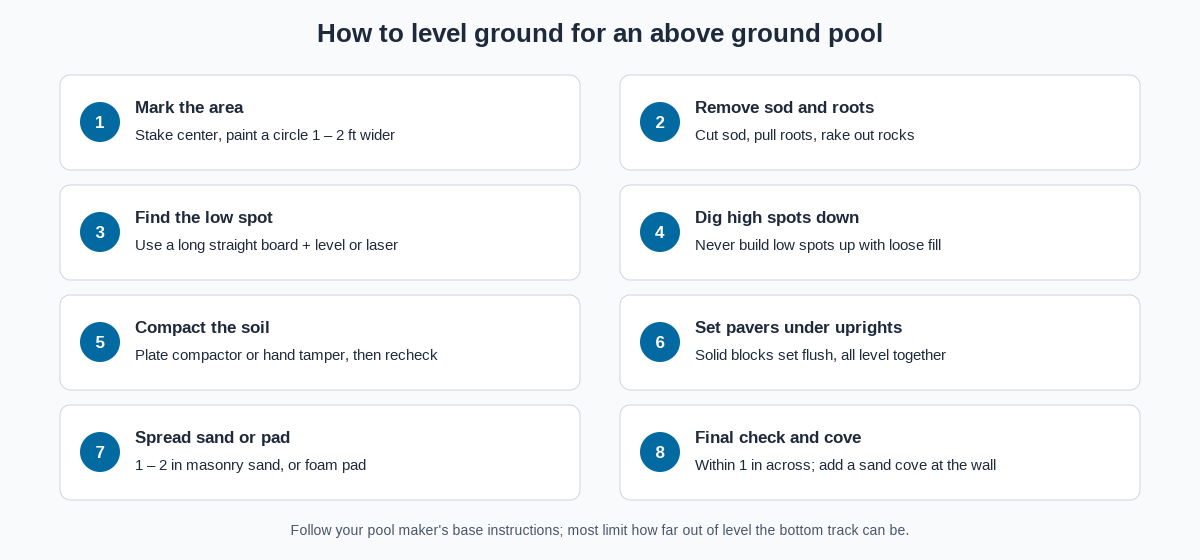
Diagram: Asphapro.com
Quick Answer
To level an above ground pool, level the ground before you set it up. Mark a circle 1 to 2 feet wider than the pool, remove the sod and roots, then use a long straight board and a level (or a laser level) to find the lowest spot. Dig the high areas down to match it rather than building up low spots with loose soil, which settles. Compact the ground, set solid pavers flush under each upright, then spread 1 to 2 inches of masonry sand or lay a foam pad. Aim to be within about 1 inch across the whole pool. If a filled pool is badly out of level, drain it and re-level the base; small shims under a full pool rarely fix the problem.
A level base is the single most important part of putting up an above ground pool. Water always settles level, so if the ground slopes, the water sits deeper on one side and puts uneven pressure on the wall and frame. A pool that is more than a couple of inches off can buckle, bulge, pull the liner out of the track or even collapse. It also looks wrong, with the waterline visibly higher on one side. Taking the time to learn how to level a pool properly before filling it saves money, protects the warranty and keeps the pool safe.
This guide explains how to level ground for above ground pool installs, what to put under above ground pool liners, how level the pool needs to be and how to fix a pool that is not level. For the full setup, see our guide on how to put up an above ground pool.
How Level Does an Above Ground Pool Need to Be?
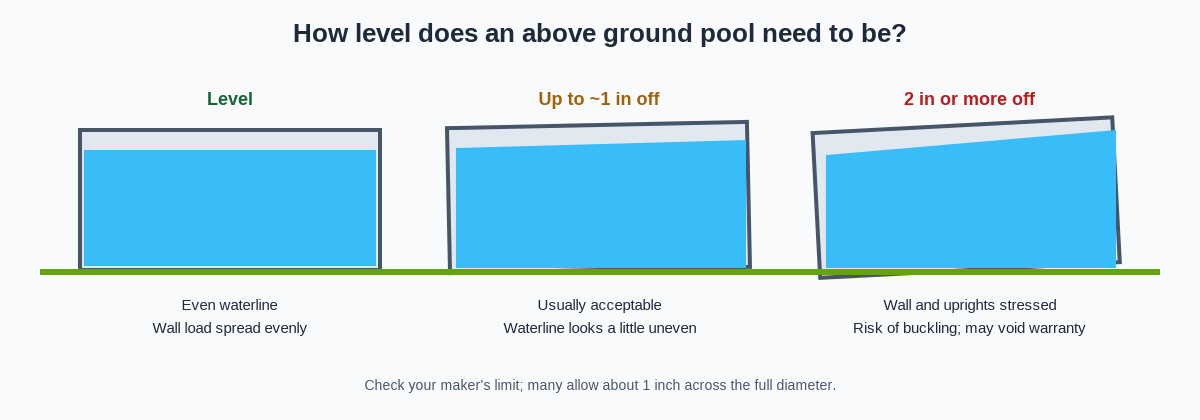
Diagram: Asphapro.com
Most pool makers ask for the ground to be level within about 1 inch across the full diameter of the pool. Some allow a little more, and some less; check your manual, since being outside the maker's limit can void the warranty. At 1 inch, the waterline looks slightly uneven but the pool is safe. At 2 inches or more, the wall on the deep side carries far more load, the top rails can twist, and the risk of a wall failure rises. An above ground pool level within half an inch is ideal.
Tools You Need to Level Ground for Above Ground Pool Setup
To level ground for an above ground pool you will need: a tape measure, a stake and string to mark the circle, landscape marking paint, a flat shovel and a sod cutter (or a sharp spade), a long, straight 2x4 or 2x6 board (8 to 12 feet), a 4-foot level, a hand tamper or a rented plate compactor, a garden rake, a wheelbarrow, solid concrete pavers (usually 2 x 8 x 16 inches) for the uprights, masonry sand or a foam pad, and optionally a laser level or a transit level, which makes the job faster and more accurate on large pools.
How to Level Ground for Above Ground Pool: Step by Step
Step 1: Choose and Mark the Site
Choose the flattest spot in your yard that gets good sun, is away from trees and overhead lines, and is not over septic lines, buried utilities or drainage paths. Drive a stake in the center, tie a string to it, and measure out to the radius of the pool plus 6 to 12 inches. Walk the string around the stake and mark the circle with paint. For oval pools, follow the maker's layout instructions.
Step 2: Remove Sod, Roots and Debris
Cut and remove all grass and sod inside the circle. Grass left under the pool rots, leaves soft spots and can grow through the liner. Remove roots, rocks, sticks and anything sharp. If you have aggressive weeds or grasses such as nutgrass, consider a ground cloth or a soil treatment safe for use under pools.
Step 3: Find the Low Spot
Lay your long straight board across the circle with the level on top. Check in many directions, like the spokes of a wheel, and note which areas are high and which are low. A laser level makes this easier: set it up near the center, take readings with a measuring rod around the circle, and mark the high spots. The goal is to find the lowest point in the circle. That will be your target grade.
Step 4: Dig the High Spots Down
Remove soil from the high areas until they match the lowest spot. This is the most important rule of how to make ground level for above ground pool installs: dig down, do not build up. Loose soil, topsoil or sand piled on low spots compresses under thousands of pounds of water and settles unevenly, leaving the pool out of level within weeks. Undisturbed soil is firm and stable. Check level often as you dig.
Step 5: Compact the Ground
Once the circle is level, compact the soil with a hand tamper or a plate compactor. Lightly water dry soil first so it packs better. Check level again after compacting and fix any spots that moved.
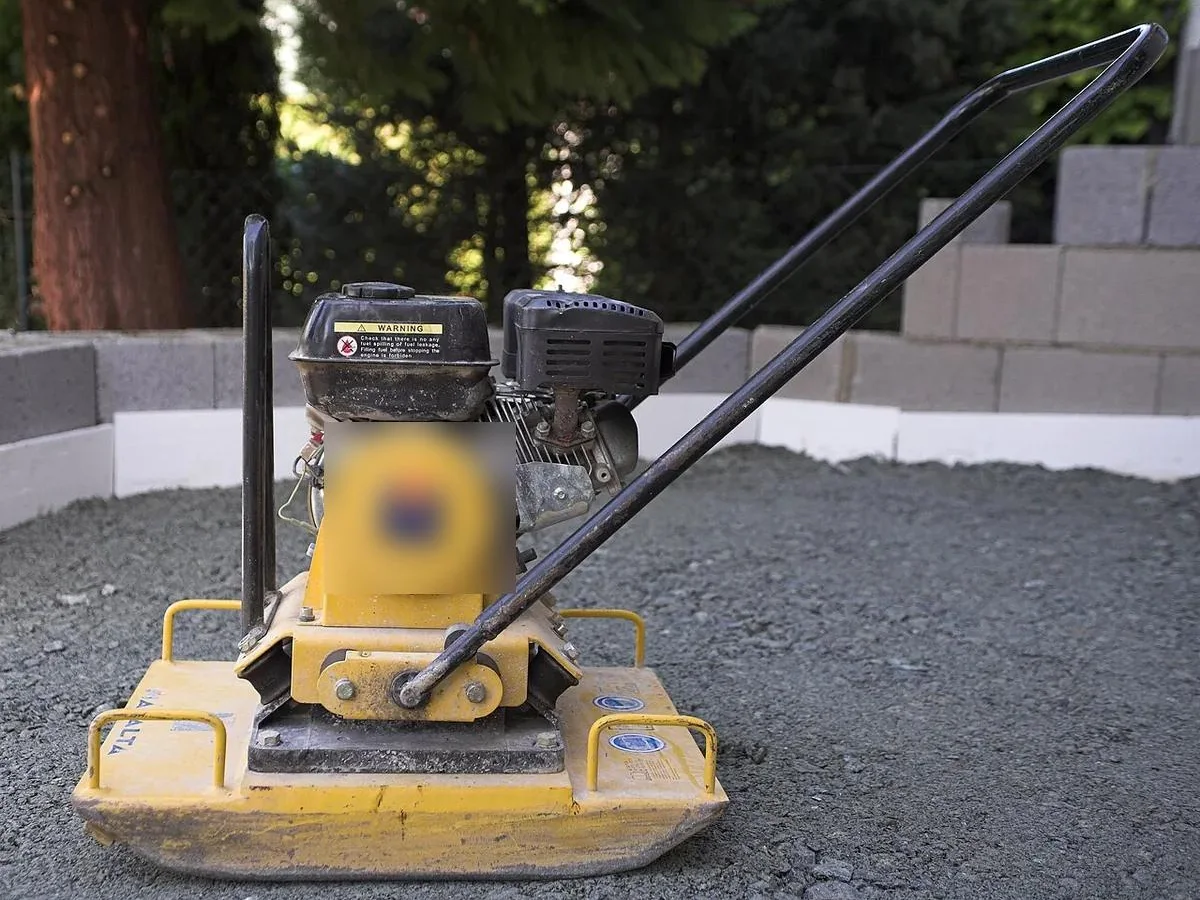
Photo: Mr.checker, Wikimedia Commons, CC BY-SA 3.0 (logo blurred)
Step 6: Set Pavers Under the Uprights
Lay out the bottom track or plates according to your pool's instructions, and mark where each upright will sit. Dig small holes so each solid paver sits flush with the ground. Use the level and the long board to make sure every paver is level with the others across the circle. The pavers stop the uprights from sinking into the soil under the weight of the water. Use solid pavers, not hollow blocks, which can crack.
Step 7: Spread Sand or Lay a Pad
Spread 1 to 2 inches of clean masonry sand over the leveled area inside the track, and smooth it with a long board or a screed. Remove any pebbles. Many installers wet and tamp the sand. Alternatively, use a foam pool pad or interlocking foam floor tiles, which give a softer floor and protect the liner from stones. A ground cloth under the sand blocks weeds.
Step 8: Final Check and Cove
Before you set the wall, check the whole area one last time. Once the wall is up, build a sand cove, a 6 to 8 inch sloped ridge of sand around the inside base of the wall, to support the liner where the floor meets the wall. Then install the liner and start filling. Watch the waterline as the first few inches go in; if it is badly off, stop and fix the base now, while it is still easy.
What to Put Under Above Ground Pool Liners
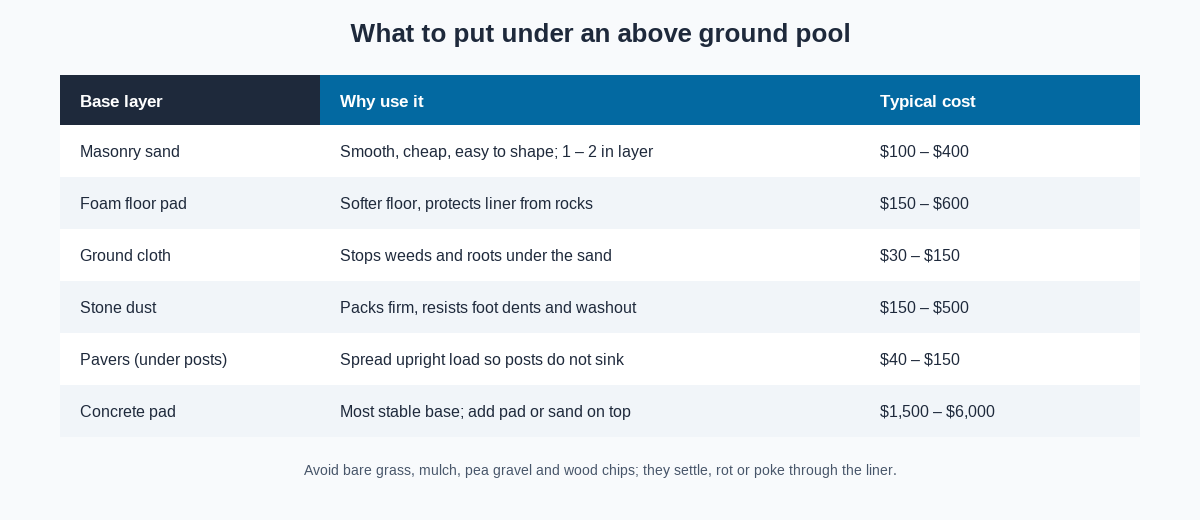
Chart: Asphapro.com
Masonry sand is the most common choice. It is fine, smooth, cheap and easy to shape into a level floor and a cove. Its downside is that feet can leave dents in the floor over time.
Foam pool pads and interlocking foam tiles give a soft, smooth floor and protect the liner. They are popular over sand or directly over well-leveled, compacted soil.
Ground cloth or geotextile under the sand blocks weeds and roots.
Stone dust (screenings) packs firmly and resists foot dents and washout, though it is harder on liners without a pad on top.
Concrete pads give the most stable base, especially for large pools and resin pools. Always add a foam pad or sand layer on top of concrete to protect the liner. See concrete pads.
Avoid pea gravel, mulch, wood chips, bare grass and loose topsoil; they shift, settle or rot, and stones can poke through the liner.
How to Level a Pool That Is Already Full
Learning how to level a above ground pool after it has been filled is harder. Water weighs about 8.3 pounds per gallon, so even a small pool weighs many tons. You cannot safely jack up or slide a full pool. If the pool is off by less than about an inch and the wall looks straight, many owners leave it. If it is off by more, drain the pool partly or fully, remove the liner if needed, and fix the base properly. Some installers can correct a small slope by draining most of the water, lifting the low side slightly and packing sand under the track, but this is risky and should only be done by a pro. Adding shims or wedges under a full pool rarely works and can damage the wall.
How to Level an Above Ground Pool Without Digging
Can you level an above ground pool without digging? On very flat ground, you may only need to remove sod and tamp the soil. On sloped ground, digging is almost always needed. Building up the low side with sand alone is not recommended because sand washes out and compresses. Some owners build a timber or block retaining edge and fill it with compacted crushed stone, but this needs careful work and still involves some digging. For slopes over a few inches, the best options are digging the high side down or hiring a pro to cut and fill properly.
How to Check Above Ground Pool Level
There are several ways to check above ground pool level, before and after setup. Before the wall goes up, use a long straight board and a 4-foot level, or a laser or transit level with a measuring rod, across the base in many directions. A rotating laser level is the fastest: set it in the middle, take a reading at each upright position, and compare. Every reading should be within about an inch of the others.
After the pool is filled, the easiest check is the waterline. Measure from the top rail down to the water surface at several points around the pool, ideally at each upright. If the distances differ by more than about an inch, the pool is out of level. You can also hold a level on the top rail, but top rails can twist, so the waterline method is more reliable. Checking pool levels this way at the start of each season, and after heavy rain, shows whether the base has settled. A level pool should show nearly the same distance from rail to water everywhere.
How to Level a Pool on a Slope
Many yards are not flat. If the slope across the pool area is under 2 to 3 inches, digging the high side down is usually enough. For steeper slopes, the amount of digging grows quickly, and you may need a small retaining wall on the high side to hold back the soil around the dug-out area. Keep the pool wall itself away from the retaining wall; soil should never press against the wall of a standard above ground pool. On larger slopes, renting a mini excavator or skid steer, or hiring a landscaper, saves days of hand digging.
Some owners on sloped lots choose a semi inground pool instead, setting it partly into the hill. That requires a pool rated for backfill. Knowing how to level a pool on a slope also means planning drainage: rain running downhill toward the pool can wash out the sand base and soften the soil under the uprights. A shallow swale or French drain on the uphill side directs water around the pool. See in ground vs above ground pool for more on partly buried pools.
How to Make Ground Level for Above Ground Pool Without a Laser
You do not need expensive tools to make ground level for above ground pool installs. The classic method uses a long, straight board and a level. Drive a stake in the center of the circle and screw one end of a long 2x4 to it so it can pivot. Put a level on the board and swing it around the circle like a clock hand, digging high spots and checking as you go. When the board stays level all the way around, the base is level. Another simple method uses a clear water hose filled with water: water seeks its own level, so the water in both ends of the hose shows the same height, letting you compare points across the area. Both methods are slower than a laser but accurate when done carefully.
Above Ground Pool Level Problems After Setup
Even a well-leveled pool can shift over time. Common causes of above ground pool level problems after setup include soil settling, especially where fill was added; uprights sinking because pavers were missing, cracked or set on soft soil; erosion from rain washing out the sand base; and frost heave in cold climates, where freezing soil lifts the ground unevenly. Signs include a waterline that is higher on one side, a wall that bulges or leans, uprights that are no longer vertical, and the liner pulling out of the track.
Small changes, under an inch, can be watched. Larger changes need action. Check that downspouts, sprinklers and runoff are not soaking the ground around the pool. If an upright has sunk, a pro may be able to partly drain the pool and reset the paver. If the whole base has shifted, the pool usually needs to be drained and re-leveled. Catching above ground pool level problems early, before the wall bends, keeps the fix cheaper.
Hiring a Pro to Level a Swimming Pool Base
Many owners do their own leveling, but hiring a pro can make sense for large pools, sloped yards, rocky ground or tight schedules. Professional site prep to level a swimming pool base usually costs about $300 to $1,500 for typical above ground pools, and more on steep slopes or where retaining walls are needed. Many pool installers include basic leveling in their installation price, so ask exactly what is included. A pro brings a laser level, a compactor and experience, and can often finish in a day what takes a homeowner a weekend or more. See above ground pool installation cost.
Leveling Different Above Ground Pool Types
Steel and resin frame pools with uprights need the most careful leveling, with solid pavers under each upright and the bottom track sitting flat. These are the pools most at risk if the base is off.
Soft-sided and frame pools (such as metal frame pools with a vinyl wall) are often smaller and lighter, but they still need level, firm ground. Many collapse or lean if set on even a small slope. Remove grass, level the soil and use a ground cloth.
Inflatable ring pools need level ground too; if the ground slopes, water rushes to the low side and the ring can tip and spill.
Oval pools with side supports follow the same rules, but the straight side buttresses need especially firm, level footings. Follow the maker's layout and footing instructions exactly.
Common Mistakes: How to Level a Pool the Right Way
When people ask how to level an above ground pool and still get it wrong, the most common mistake is building up low spots with loose soil or sand instead of digging high spots down. The second is skipping compaction, which lets soft soil settle under the weight of the water. Others include leaving grass under the pool, using hollow blocks under uprights, setting pavers on unleveled soil, using too thick a layer of sand (which shifts and lets feet dig in), and not checking level often enough while working. Many people also fill the pool before checking the waterline and only notice it is off when it is too late to fix easily. Taking your time with each step is the best way to get a level pool the first time. An extra hour of checking with the board and level costs far less than draining, re-leveling and refilling a pool later in the summer.
How Long Does It Take to Level Ground for Above Ground Pool Setup?
For a typical 18 to 24 foot round pool on fairly flat ground, leveling by hand takes one to two days for two people, including removing sod, digging, compacting, setting pavers and spreading sand. Sloped yards, rocky soil or large ovals can take longer. With a laser level, compactor and a small machine, a pro may finish in a few hours. Plan your setup weekend so the base is fully done the day before you assemble the wall, and do not rush the final checks. Rain can soften a fresh base overnight, so cover it with a tarp if storms are coming.
How to Level Ground for Above Ground Pool on Clay, Sand or Rocky Soil
Soil type changes how you level ground for above ground pool installs. Clay soil is firm when dry but swells when wet and shrinks when dry, so the base can move with the seasons. Dig down to firm, undisturbed clay, compact it well, and add a layer of compacted stone dust or crushed stone under the sand to spread the load and improve drainage. Keep water from pooling around the base. Sandy soil drains well but can shift and wash out; compact it thoroughly and consider a border of pavers or timber around the base to hold it in place. Rocky soil is stable but hard to dig; remove sharp rocks near the surface and use a thicker foam pad to protect the liner. On any soil, the rule for how to level a pool stays the same: dig to firm ground, compact, and avoid loose fill.
Keeping the Pool Level Over Time
Once your pool is set up, a few habits keep it level for years. Direct roof downspouts and sprinklers away from the pool so the ground under it stays dry and firm. Fill any small washouts at the edge of the base with sand or stone dust. Check pool levels at the waterline each spring and fall, and look at the uprights to see if any are leaning or sinking. In cold climates, keep water in the pool over winter at the level the maker recommends; an empty pool is more likely to shift with frost. If you add a deck later, make sure it is built on its own footings and does not rest on or push against the pool wall. These simple steps keep an above ground pool level and protect the wall, liner and warranty.
Should You Hire a Pro to Level Swimming Pool Ground?
If your yard is flat and the pool is small, leveling it yourself is very doable. If you face a slope of more than a few inches, rocky or clay soil, a large oval pool, or limited time, paying someone to level swimming pool ground is often money well spent. A level base is the foundation of the whole project. A mistake here can cost far more later in a bent wall, a ruined liner or a pool that has to be drained and rebuilt. Ask installers how they will level the site, what tools they use, and whether they guarantee the base will be within the maker's tolerance.
How to Level an Above Ground Pool: Key Points
- Level the ground before setup to within about 1 inch across.
- Dig high spots down to the lowest point; do not build up low spots.
- Compact the soil and set solid pavers under each upright.
- Finish with masonry sand or a foam pad and a sand cove.
Frequently Asked Questions
How far off level can an above ground pool be?
Most makers allow about 1 inch across the full pool. More than 2 inches risks damage to the wall and frame and may void the warranty, so check your manual for the exact limit.
Can I use sand to level ground for a pool?
Use sand as a smooth top layer of 1 to 2 inches, not to fill low spots, since it settles and washes out under the weight of the water.
Do I need pavers under an above ground pool?
Yes, under each upright, so posts do not sink into the soil. Use solid concrete pavers set flush with the ground and level with each other.
How to level a pool on a slope?
Dig the high side down to match the low side, add drainage on the uphill side, or hire a pro for slopes of more than a few inches.
What happens if an above ground pool is not level?
The wall carries uneven pressure and can buckle or collapse, and the liner may pull out of the track. That is why learning how to level an above ground pool before filling it matters so much.
Can I level a pool with water in it?
Only small fixes, and only by a pro. Usually you must drain the pool, fix the base, and refill it.