
Inground Pool Hoses vs Above Ground Pool Hoses: Size, Fit and Uses
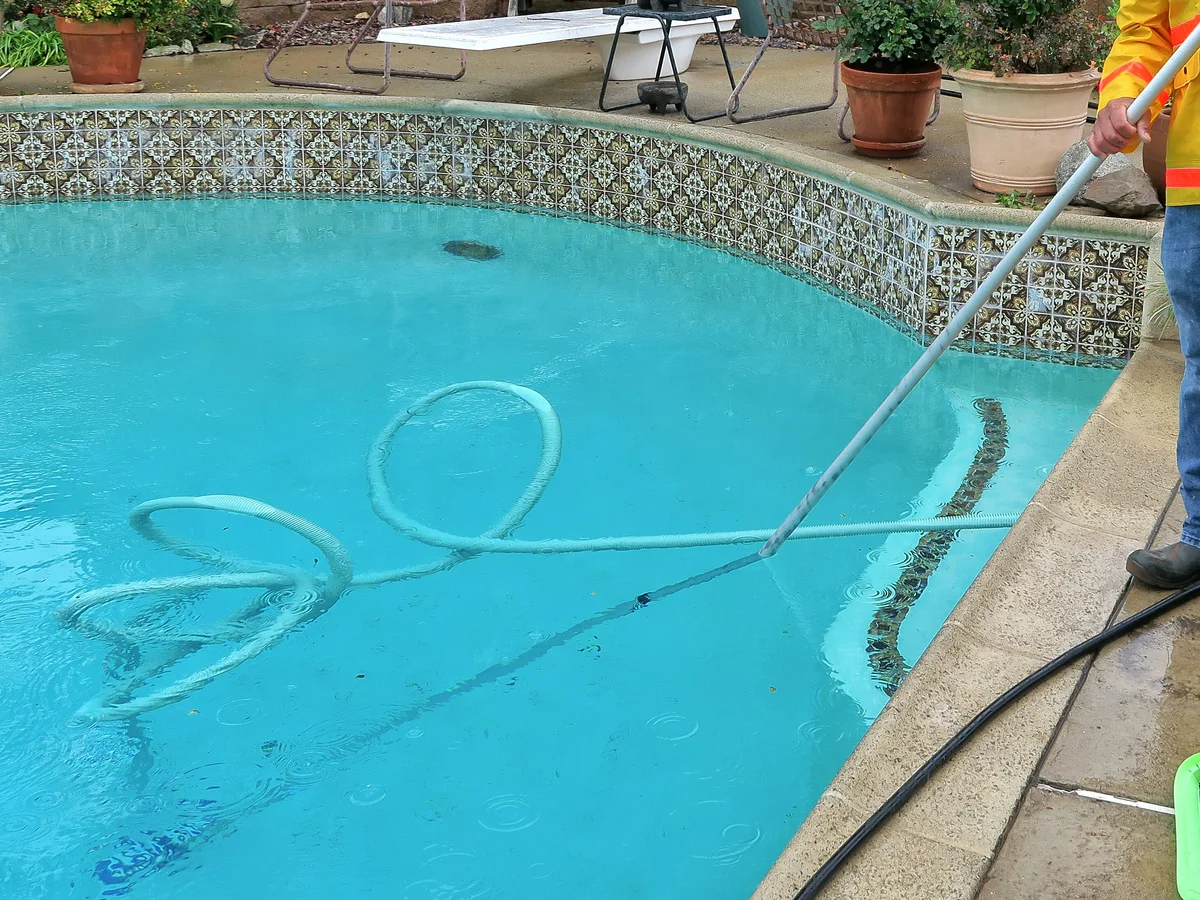
Photo: Russ Allison Loar, Wikimedia Commons, CC BY-SA 4.0
Quick Answer
The main difference in inground pool hoses vs above ground pool hoses is size and job. Inground pool vacuum hoses are almost always 1.5 inches in diameter and 30 to 50 feet long, with heavier walls and swivel cuffs. Above ground pool vacuum hoses are often 1.25 inches (some are 1.5) and 18 to 36 feet long, lighter and cheaper. Inground pools use rigid PVC pipe for the pump and filter, so hoses are mainly for vacuuming, suction cleaners and backwashing. Above ground pools usually use flexible hoses with clamps to connect the skimmer, pump, filter and return. You can use an inground hose on an above ground pool if the ports are 1.5 inches or you add an adapter; a thin above ground hose is usually too short and weak for an inground pool.
Walk down the pool aisle of any store and you will see hoses labeled "for inground pools" and "for above ground pools", often hanging side by side and looking almost the same. Pool owners reasonably ask whether the difference matters. It does. The wrong hose can be too short to reach the deep end, too narrow to fit the skimmer, too weak to hold its shape under suction or simply the wrong part for the job. Comparing inground pool hoses vs above ground pool hoses before you buy saves a second trip and a lot of frustration.
This guide explains every kind of pool hose, how inground and above ground versions differ, how to measure for the right one, what they cost and how to make them last. For cleaning tips, see how to vacuum above ground pool floors and how to clean pool surfaces.
Inground Pool Hoses vs Above Ground Pool Hoses at a Glance
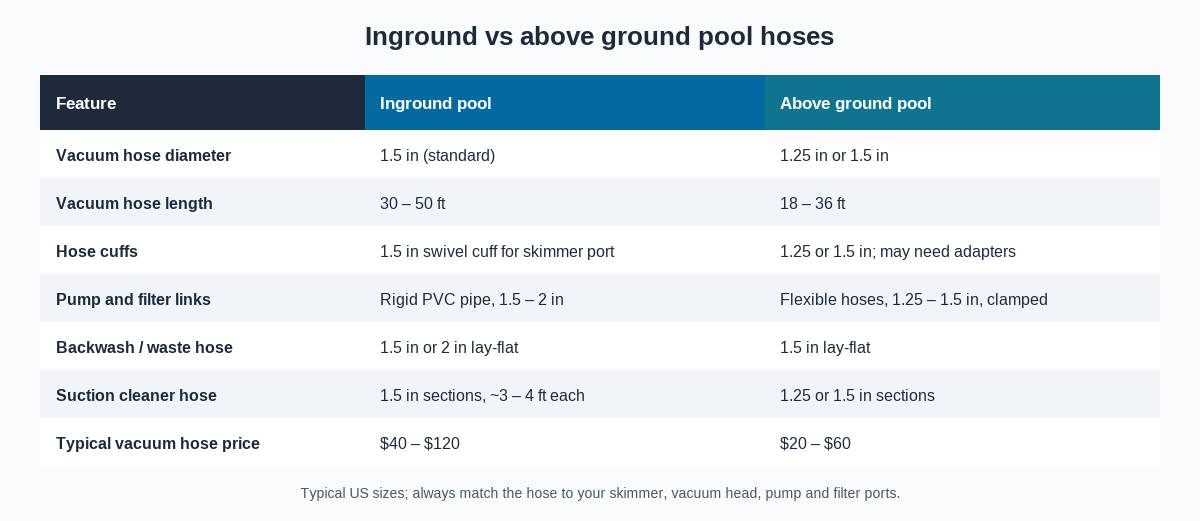
Chart: Asphapro.com
The table sums up inground pool hoses vs above ground pool hoses. The two biggest differences are diameter and length. Inground pools are bigger and deeper, so their hoses must be longer, and inground skimmers and vacuum ports are built around a 1.5-inch standard. Above ground pools are smaller and shallower, and many of their pumps, skimmers and filters use 1.25-inch fittings, although 1.5-inch fittings are now common on larger above ground pools too. The rest of this guide explains each hose type in detail.
Types of Pool Hoses
Before comparing inground pool hoses vs above ground pool hoses, it helps to know the main hose types:
Vacuum hoses connect a manual vacuum head on a telescopic pole to the skimmer or a dedicated vacuum port. The pump pulls water and debris through the hose and into the filter. These are the hoses most people mean when they say "pool hose".
Pump and filter hoses carry water between the skimmer, pump, filter and return fitting. On above ground pools these are usually flexible hoses held on with clamps. Inground pools use rigid PVC pipe instead.
Backwash or waste hoses are flat, roll-up hoses that attach to the waste port of a sand or DE filter's multiport valve and carry dirty backwash water away to a drain or yard area.
Suction cleaner hoses are made of short sections that snap together and connect an automatic suction cleaner to the skimmer or vacuum port.
Garden hoses fill and top up the pool. They are the same for both pool types.
Inground Pool Hoses vs Above Ground Pool Hoses: Vacuum Hoses
Vacuum hoses are where the inground pool hoses vs above ground pool hoses question comes up most. Inground vacuum hoses are almost always 1.5 inches in inside diameter. They come in lengths from 25 to 50 feet, with 30, 35, 40 and 50 feet being most common. They usually have a heavier, spiral-wound wall that resists kinking and crushing under strong suction, and a swivel cuff on at least one end so the hose does not twist as you move the vacuum around the pool.
Above ground vacuum hoses come in 1.25-inch and 1.5-inch diameters. Smaller, older and budget above ground pools often have 1.25-inch fittings, while many newer pools and skimmers use 1.5 inches. Lengths are usually 18 to 36 feet, since above ground pools are smaller and you usually vacuum from the edge or a deck. The walls are lighter, which makes the hose cheaper and easier to handle but more prone to kinking and wear.
The photo at the top of this page shows a long vacuum hose floating in an inground pool. Notice how much hose is needed to reach across a pool of that size; an 18 or 24-foot above ground hose would not reach the far side.
How Long Should a Pool Vacuum Hose Be?
A simple rule: the hose should reach from the skimmer or vacuum port to the farthest point of the pool, including the bottom of the deep end, with a little slack. Measure from the skimmer to the farthest corner, add the deepest water depth and add a few feet. For a 16 by 32 foot inground pool with a skimmer on one long side and an 8-foot deep end, the farthest corner may be about 30 feet away, so a 35 or 40-foot hose works. For a 24-foot round above ground pool, a 24 to 30-foot hose usually reaches everything. Too much hose is awkward and can lose suction; too little means you cannot reach corners. This is one of the most practical differences in inground pool hoses vs above ground pool hoses.
Pump and Filter Hoses: Rigid Pipe vs Flexible Hose
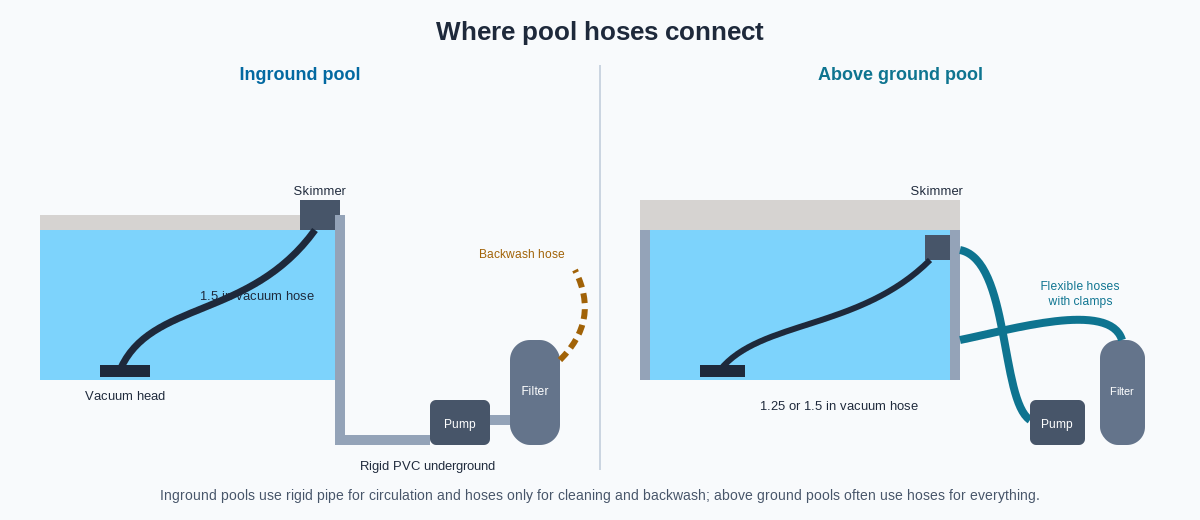
Diagram: Asphapro.com
The diagram shows another big difference in inground pool hoses vs above ground pool hoses. Inground pools are plumbed with rigid PVC pipe, usually 1.5 or 2 inches, buried underground and glued together. There are no hoses between the skimmer, pump, filter and returns; hoses are used only for cleaning and backwashing.
Above ground pools often use flexible hoses for circulation. A hose runs from the skimmer to the pump, another from the pump to the filter and another from the filter back to the return fitting in the pool wall. These hoses are usually 1.25 or 1.5 inches, with smooth ends that slide over barbed or threaded fittings and are held with stainless steel hose clamps. Many above ground pool owners upgrade to rigid PVC or flexible PVC pipe for fewer leaks and better flow, especially on larger pools with bigger pumps.
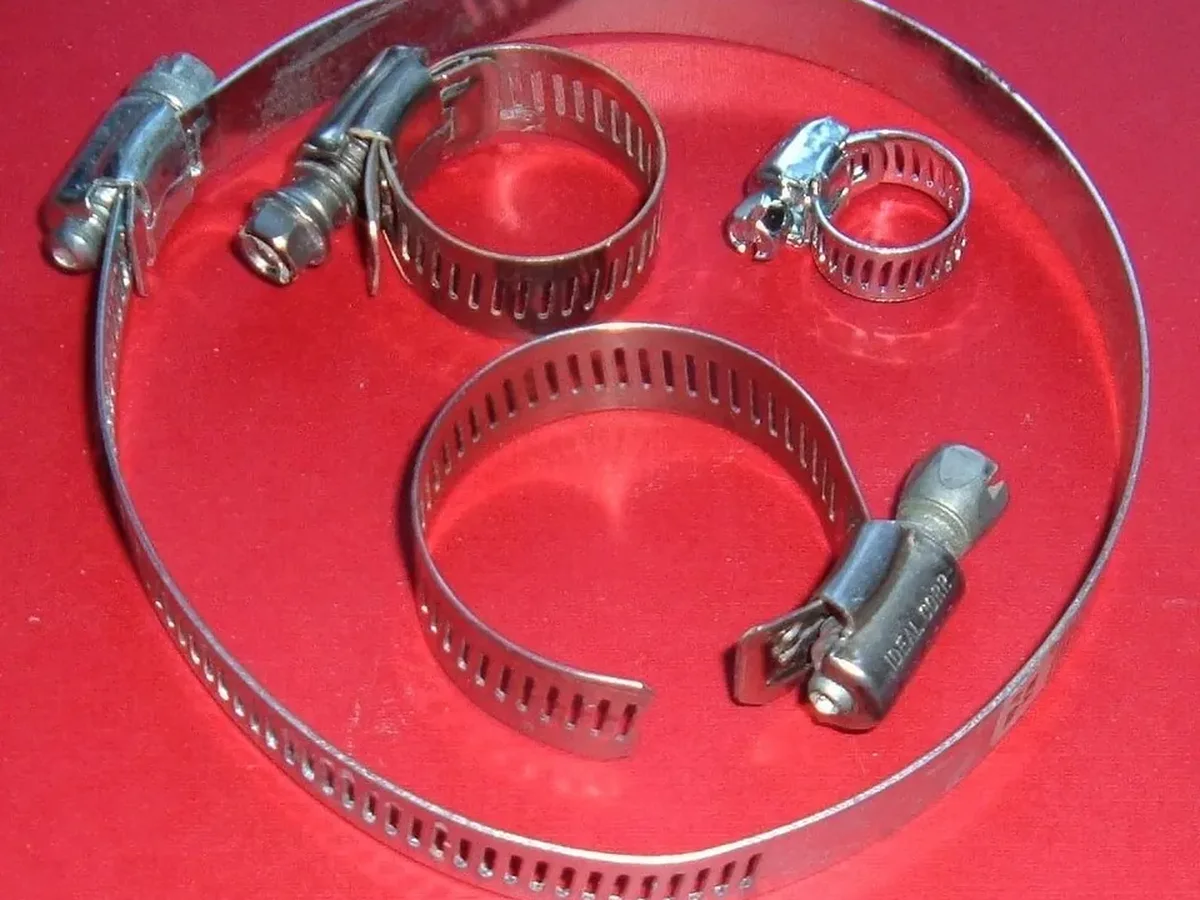
Photo: ArnoldReinhold, Wikimedia Commons, CC BY-SA 3.0
Stainless steel screw clamps like these are what hold above ground pump and filter hoses in place. Use two clamps per connection where space allows, tighten firmly but not so hard that you crush the hose, and check them at the start of each season. A loose clamp on the suction side lets air into the pump, which causes bubbles in the return, loss of prime and noisy running. See how to prime a pool pump if air gets in.
Backwash Hoses
Backwash hoses are flat, reinforced vinyl hoses that roll up for storage. For inground pools with large sand or DE filters, 1.5 or 2-inch backwash hoses are common, matching the waste port size on the multiport valve. Above ground filters usually use 1.5-inch backwash hoses. Lengths of 25 to 50 feet let you send the water to a suitable drain or area of the yard. Check local rules; some areas do not allow chlorinated backwash water to run into storm drains or onto neighbors' property. When comparing inground pool hoses vs above ground pool hoses for backwashing, the main issue is matching the waste port size and having enough length to reach an approved discharge point.
Suction Cleaner Hoses
Automatic suction cleaners use segmented hoses, typically in 1-meter or 3 to 4-foot sections that snap together. Most inground suction cleaners use 1.5-inch hose sections. Some above ground suction cleaners use 1.25-inch hoses. Use the number of sections the cleaner's manual recommends: usually enough to reach the farthest point of the pool plus one extra section. Too few sections stop the cleaner reaching corners, while too many reduce suction and can tangle.
Can You Use Inground Pool Hoses on an Above Ground Pool?
Often yes, with some care. If your above ground pool skimmer and vacuum fittings are 1.5 inches, an inground vacuum hose will fit and work well. It will be sturdier than many above ground hoses, but it may be longer than you need and heavier to handle. If your fittings are 1.25 inches, you need a 1.5 to 1.25-inch adapter or a hose with the matching cuff. Also, small above ground pumps may struggle to pull water through a very long 1.5-inch hose, reducing suction. In most cases, choosing between inground pool hoses vs above ground pool hoses for an above ground pool comes down to matching diameter and buying a sensible length.
Can You Use Above Ground Pool Hoses on an Inground Pool?
Usually not well. Many above ground hoses are 1.25 inches, which will not fit a standard inground skimmer or vacuum port without an adapter, and their shorter lengths may not reach the far end of an inground pool. Thin walls can collapse under the stronger suction of an inground pump, especially a large single-speed pump. If you are in a pinch, a 1.5-inch above ground hose of enough length can work for occasional use, but a proper inground hose is a better long-term choice.
How to Measure Your Pool Fittings
To choose correctly between inground pool hoses vs above ground pool hoses, measure the inside diameter of the skimmer's vacuum plate or suction port, the vacuum head's hose connection and, for above ground pools, the pump and filter ports. Use a ruler or caliper across the inside of the opening. A reading close to 1 1/4 inches means 1.25-inch fittings; close to 1 1/2 inches means 1.5-inch fittings. Check the pump and filter manuals too, which list port sizes. If you have an old hose that fits, its size is usually printed on the cuff.
Inground Pool Hoses vs Above Ground Pool Hoses: Price
Above ground vacuum hoses usually cost $20 to $60, depending on length and diameter. Inground vacuum hoses run about $40 to $120, with heavy-duty, kink-resistant and long hoses at the top of the range. Above ground pump and filter hoses cost $10 to $30 each. Backwash hoses cost $20 to $60. Suction cleaner hose sections cost $5 to $15 each. Better hoses with UV inhibitors, swivel cuffs and thicker walls last longer and are worth the extra few dollars for most owners.
How to Make Pool Hoses Last
Sun is the biggest enemy of pool hoses. UV light makes vinyl stiff and brittle, which leads to cracks and air leaks. Store hoses in the shade or indoors when not in use, coiled loosely without kinks. Rinse them with fresh water after vacuuming. Do not leave vacuum hoses floating in the pool for days; chlorine and sun speed up wear. Keep hoses away from sharp edges and do not drag them across rough concrete. For above ground pump and filter hoses, check for cracks near the clamps each season and replace them when they become stiff. Well-kept hoses usually last two to five seasons; cheap ones left in the sun may last only one.
Signs Your Pool Hose Needs Replacing
- Cracks, splits or holes, especially near the cuffs.
- Air bubbles in the pump basket or returns while vacuuming.
- Loss of suction or the vacuum head lifting off the floor.
- The hose kinks or collapses easily.
- Stiff, brittle material that does not coil well.
- Loose or broken cuffs.
Inground Pool Hoses vs Above Ground Pool Hoses: Materials
Most pool hoses are made from one of three plastics. Polyethylene (PE) hoses are light and cheap and are common in budget above ground hoses. They float well but can stiffen in cold weather and crack after a few seasons in the sun. EVA (ethylene vinyl acetate) hoses are more flexible, resist kinking better and stay supple in cool water, which makes them popular for mid-range and premium inground vacuum hoses. PVC is used for flexible pump and filter hoses and for backwash hoses, and in rigid form for inground plumbing. Many good hoses also have a spiral reinforcement wound into the wall to stop collapse under suction, plus UV inhibitors to slow sun damage. When you compare inground pool hoses vs above ground pool hoses, the inground versions more often use EVA or heavier reinforced walls, which explains much of the price difference.
Upgrading Above Ground Pool Hoses to PVC
Many owners of larger above ground pools replace the flexible pump and filter hoses with rigid or flexible PVC pipe. PVC does not crack in the sun as quickly, holds tight at glued joints, reduces air leaks on the suction side and often improves flow because its smooth inside walls create less friction than corrugated hose. A typical upgrade uses 1.5-inch schedule 40 PVC with threaded adapters at the pump and filter, unions so the equipment can be removed for winter, and a short piece of flexible PVC to absorb vibration. The job usually costs $50 to $150 in parts for a handy owner. It narrows the gap between inground pool hoses vs above ground pool hoses, since the above ground pool then works much like an inground system for circulation and only needs hoses for cleaning and backwash. If you do this, make sure you can still winterize the pool easily and that the pipe does not put weight on the pump or filter ports.
How to Vacuum With a Pool Hose Without Losing Prime
Whichever hose you use, the method is the same. Attach the vacuum head to the pole and the hose to the head. Lower the head into the pool to the bottom near the skimmer. Then fill the hose with water: either hold the free end over a return jet until bubbles stop coming out of the vacuum head, or feed the hose down into the pool hand over hand so water fills it from the head end. Keeping the free end under water, connect it to the skimmer vacuum plate or the suction port. If air gets into the pump, the pump may lose prime, so watch the pump basket for bubbles. Vacuum slowly in overlapping strokes so you do not stir up debris. For heavy debris or algae, set the filter to waste if your pool allows it. See how to turn on pool pump if the pump stops after you vacuum.
Inground Pool Hoses vs Above Ground Pool Hoses in Winter
In cold climates, both kinds of hoses should come out of the pool and be stored indoors for winter. Drain them completely, coil them loosely and store them in a garage or shed where they will not freeze or be crushed. For above ground pools, the pump and filter hoses are usually disconnected at closing so the pump and filter can be drained and stored indoors; plug the skimmer and return fittings in the pool wall. Inspect the hoses when you remove them and replace any that are cracked before next season. Rigid inground plumbing stays in the ground and is protected by blowing out the lines and adding pool antifreeze where needed. This is another practical difference between inground pool hoses vs above ground pool hoses: above ground owners handle more hoses every spring and fall.
Troubleshooting Pool Hose Problems
Vacuum head does not stick to the floor. Suction is weak. Check for a full skimmer or pump basket, a dirty filter, air in the hose or a crack. Make sure the hose diameter matches the fittings; a 1.25-inch hose on a 1.5-inch port with a loose adapter lets air in.
Hose keeps kinking. Cheap or cold hoses kink easily. Warm the hose in the sun before use, uncoil it fully and consider a reinforced EVA hose.
Water leaks at above ground pump connections. Tighten or replace the clamps, add a second clamp or wrap the fitting threads with Teflon tape. If the hose end is split, cut off the damaged part if there is enough length, or replace the hose.
Bubbles from the return jets. Air is getting into the suction side, often at the skimmer-to-pump hose. Check every clamp and the pump lid O-ring.
Buying Checklist
Before you buy, confirm the diameter of your fittings, measure the length you need, choose a hose with swivel cuffs on at least one end, look for UV protection and a reinforced wall, and check the return policy in case the fit is wrong. For above ground pools, buy matching hose clamps and a spare hose for the most worn connection. For inground pools, a good 1.5-inch vacuum hose of the right length usually lasts several seasons if stored out of the sun.
Inground Pool Hoses vs Above Ground Pool Hoses for Spas and Hot Tubs
Spas and hot tubs rarely need a long vacuum hose. Small handheld or battery vacuums are easier for a tub, and portable hot tubs use built-in plumbing rather than external hoses. An inground spa attached to a pool can be vacuumed with the pool's 1.5-inch hose by moving the head into the spa. Keep hoses clear of spa heaters and jets.
Inground Pool Hoses vs Above Ground Pool Hoses: Worked Examples
18 by 36 foot inground pool. The skimmer sits at the shallow end and the deep end is 8 feet deep. The farthest corner is about 38 feet away, so the owner buys a 1.5-inch, 45-foot EVA vacuum hose with swivel cuffs for about $85. It reaches every corner without strain.
24-foot round above ground pool. The skimmer and pump use 1.25-inch fittings. The owner buys a 1.25-inch, 27-foot vacuum hose for about $30, plus two new 1.25-inch pump hoses and four stainless clamps for the season.
Above ground pool with 1.5-inch fittings and an old inground hose. An owner who moved from a house with an inground pool already has a 40-foot, 1.5-inch hose. It fits the new above ground skimmer directly. The pump is small, so suction is weaker with the long hose, but it works; a shorter 30-foot hose would perform a bit better. This shows that the line between inground pool hoses vs above ground pool hoses is mostly about size and fit.
Inground Pool Hoses vs Above Ground Pool Hoses: Key Points
- Inground vacuum hoses are 1.5 inches and 30 to 50 feet long.
- Above ground vacuum hoses are 1.25 or 1.5 inches and 18 to 36 feet long.
- Inground pools use rigid PVC for circulation; above ground pools often use clamped hoses.
- Match the hose to your fittings; adapters bridge 1.25 and 1.5 inches.
- Store hoses out of the sun to make them last.
Frequently Asked Questions
Are inground and above ground pool hoses the same?
No. Inground vacuum hoses are usually 1.5 inches and longer, with heavier walls. Above ground hoses are often 1.25 inches and shorter.
What size hose does an above ground pool use?
Most use 1.25 or 1.5-inch hoses. Measure your skimmer and pump ports to be sure.
Can I use a 1.5 inch hose on a 1.25 inch fitting?
Yes, with a 1.5 to 1.25-inch adapter or a hose cuff made for the smaller fitting.
How long should my pool vacuum hose be?
Long enough to reach the farthest point of the pool from the skimmer, including the deepest water, plus a few feet.
Why does my vacuum hose lose suction?
Usually because of air leaks from cracks, loose cuffs or an empty hose, a full skimmer or pump basket, or a dirty filter. Fill the hose with water before connecting it.
How often should I replace pool hoses?
Every 2 to 5 seasons, depending on quality, sun exposure and care.
Do I need different hoses if I switch from an above ground to an inground pool?
Usually yes. Most inground pools need a longer 1.5-inch vacuum hose, and you will no longer need pump and filter hoses, since the equipment is connected with rigid PVC pipe. Keep your backwash hose if the waste port size matches.
Sources
- CDC: Healthy swimming
- US Department of Energy: Swimming pool pumps
- EPA WaterSense
- CPSC: Pool and spa safety