
How to Drain a Pool Safely: Inground, Above Ground and Partial Drains
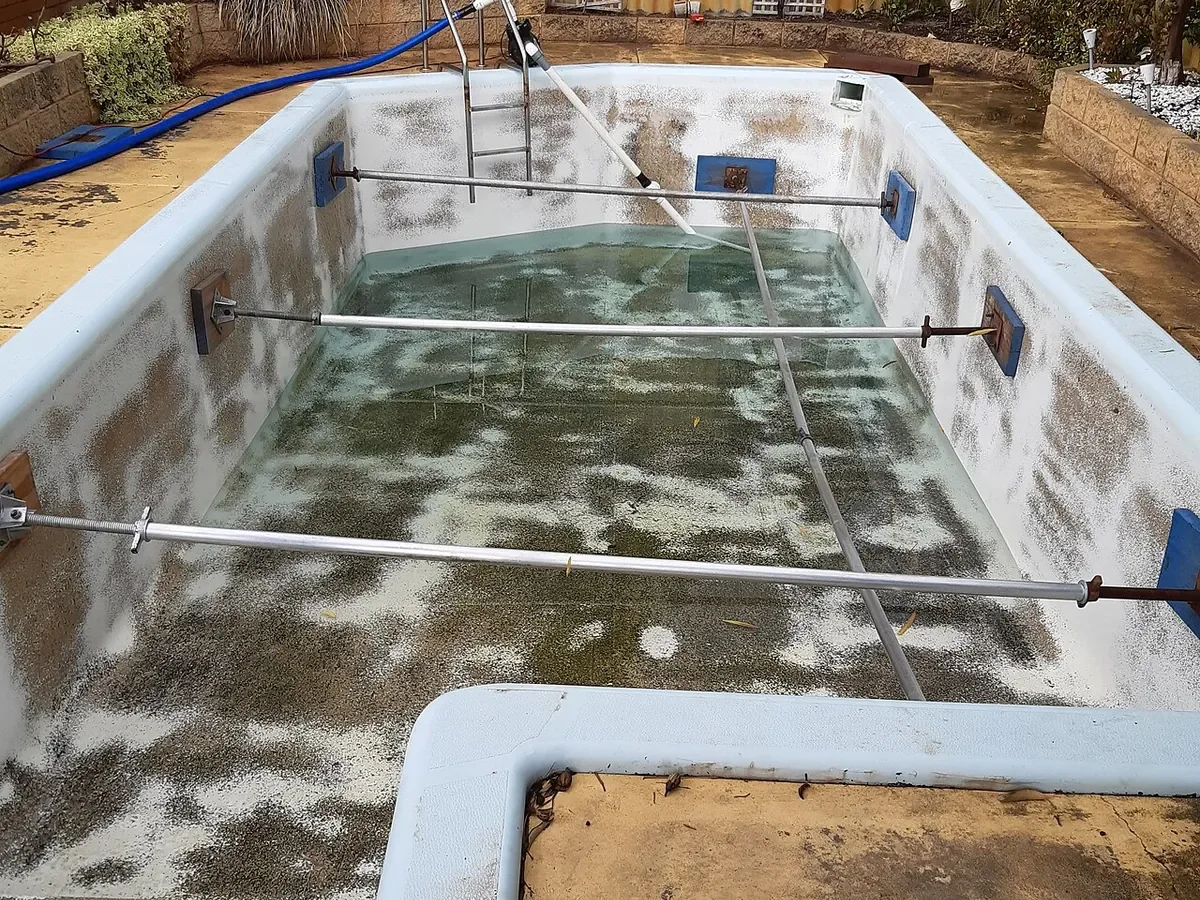
Photo: Calistemon, Wikimedia Commons, CC BY-SA 4.0 (cropped)
Quick Answer
How to drain a pool: (1) check your local rules for where pool water may go, often a sanitary sewer cleanout or your own lawn, not the storm drain; (2) stop adding chlorine and let it drop below about 0.1 to 0.5 ppm, and balance pH near neutral; (3) place a submersible pump in the deep end and run its discharge hose to the approved outlet (or use the pool pump on WASTE for partial drains, or a garden hose siphon for small pools); (4) watch the pump and stop before it runs dry; (5) never leave a vinyl or fiberglass pool fully empty, and check groundwater and the hydrostatic relief valve on concrete pools before draining completely; (6) refill promptly. A 20,000 gallon pool takes about 6 to 16 hours with a typical submersible pump and much longer with a hose.
Most pools never need to be drained completely. Water can stay in a well-kept pool for years, and partial drains handle most chemistry problems. But sometimes draining is necessary: to resurface or repair a concrete pool, replace a vinyl liner, clean up after a flood, or fix water that has become impossible to balance. When you do drain a pool, it pays to do it carefully, because an empty pool can be damaged by groundwater, sun and weather, and pool water can harm the environment if it is dumped in the wrong place.
This guide explains how to drain a pool safely: when to drain and when not to, local rules, preparing the pool water, the three main methods, draining above ground and easy-set pools, partial drains, how long it takes, the drains built into your pool, and refilling. For the cost of putting water back, see swimming pool filling cost.
When You Should Drain a Pool
- Resurfacing, replastering or major repairs to a concrete pool; see replaster pool cost.
- Replacing a vinyl liner; see pool liner replacement cost.
- Very high total dissolved solids, calcium or cyanuric acid that partial drains cannot fix.
- Severe contamination after floods or sewage backups.
- Acid washing a stained plaster pool.
- Removing a pool; see cost of removing a pool.
When You Should Not Drain a Pool
- To fix green or cloudy water. Shocking, brushing and filtering are almost always cheaper and faster; see how to clean a green pool.
- In hot, sunny weather for plaster pools, which can crack or dry out, or vinyl liners, which shrink.
- When the water table is high, such as after heavy rain, which raises the risk of the pool lifting.
- Without a plan to refill quickly.
- Fiberglass and vinyl pools without professional advice; they are not designed to sit empty.
Step 1: Check Local Rules for Draining Pool Water
Pool water contains chlorine, salt and other chemicals that can harm streams, fish and plants. Many cities ban draining pool water into storm drains, which flow untreated to rivers and lakes. Common rules include:
- Drain to the sanitary sewer through a household cleanout, not the storm drain.
- Or drain onto your own lawn or landscaping slowly enough that it soaks in and does not run off the property.
- Reduce chlorine to a low level before draining and keep pH near neutral.
- Saltwater pools may be restricted from draining onto landscaping because salt harms soil and plants.
- Some areas require a permit or notification before draining.
Call your city's water or public works department, or check its website, before you drain a pool. The U.S. Environmental Protection Agency explains why chlorinated water should be kept out of storm drains.
Step 2: Prepare the Water
- Stop adding chlorine several days before draining, and turn off any salt chlorine generator or tablet feeder.
- Test chlorine and wait until it falls to the level your city allows, often below about 0.1 to 0.5 ppm. Sun breaks chlorine down within a few days; a dechlorinating product works faster.
- Check pH and adjust toward 7 if needed.
- Remove debris with a leaf rake so it does not clog the pump.
- Turn off pool equipment at the breaker: pump, heater, lights, cleaner.
Step 3: Understand Hydrostatic Pressure
Groundwater pushes up on an empty pool from below. When a pool is full, the weight of the pool water holds it down. When it is empty, a high water table can lift a concrete pool out of the ground, crack it, or float a fiberglass shell. Vinyl liners can be pushed up and wrinkled. Before draining completely:
- Avoid draining after heavy rain or in seasons with a high water table.
- Concrete pools usually have a hydrostatic relief valve in the main drain that opens to let groundwater in and relieve pressure. A pool professional should check and, if needed, open it.
- Fiberglass pools should be drained only under the guidance of the manufacturer or installer.
- Vinyl pools should almost never be drained completely except for liner replacement.
If you are unsure, a partial drain is far safer than a full drain.
Step 4: Choose a Draining Method
Method 1: Submersible pump (best for most pools)
A submersible utility pump is the most common way to drain an inground pool. Many rental stores rent them by the day.
- Attach a discharge hose to the pump and run it to the approved outlet, such as a sewer cleanout.
- Lower the pump to the deepest part of the pool using a rope, not the power cord.
- Plug the pump into a GFCI-protected outlet, keeping the cord and connection out of the pool water.
- Run the pump, checking the discharge and outlet regularly so water does not back up or flood.
- Turn the pump off before it runs dry; most pumps leave an inch or two of water.
- Remove the rest with a wet vac or sponge if needed.
Method 2: Using the pool pump
Many inground pools with sand or DE filters can drain to waste using the pool's own pump. Set the multiport valve to WASTE or DRAIN and route the waste hose to an approved outlet. This method only works while the skimmer or main drain can still supply water, so it is good for partial drains but not for draining a pool completely. Never run the pool pump dry; it can overheat and damage the seal. For more on valve settings, see how to backwash a pool.
Method 3: Garden hose siphon
Learning how to drain a pool with a hose is useful for small pools and when no pump is available. It is slow but free:
- Submerge the entire garden hose in the pool to fill it with water, or hold one end on a faucet until water runs out the other end.
- Cap or hold the outlet end, carry it to a spot lower than the pool's water level, and release.
- Gravity keeps the pool water flowing as long as the outlet is lower than the water surface.
- Use a wider, shorter hose for more flow, and several hoses to speed things up.
A siphon only works if the outlet is downhill from the pool, and it stops when the pool water drops to the level of the outlet.
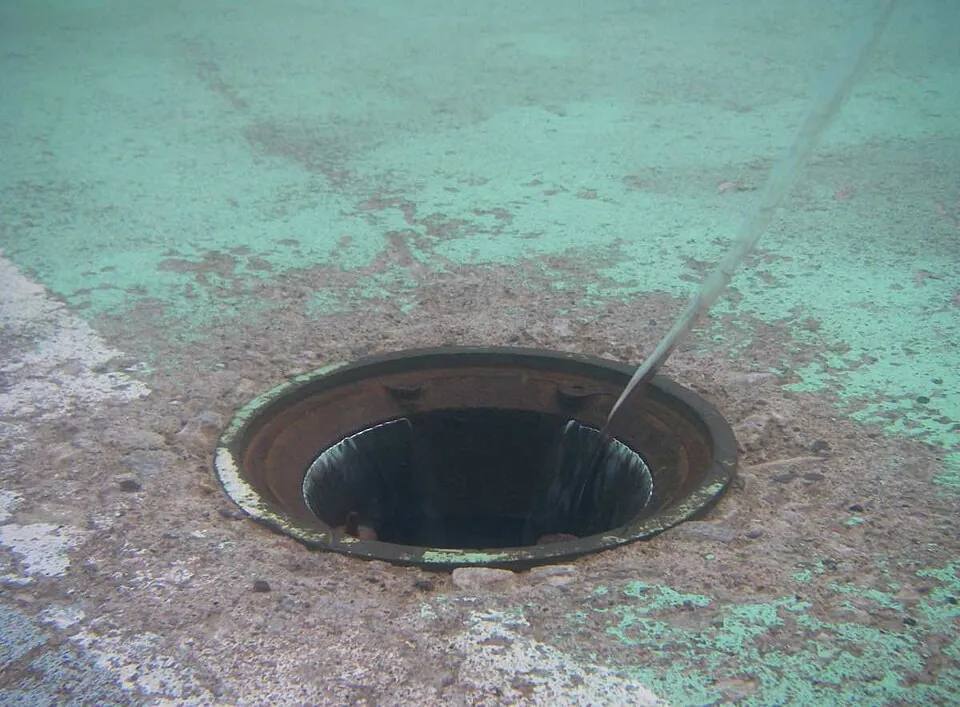
Photo: Glogger, Wikimedia Commons, CC BY-SA 3.0
How to Drain an Above Ground Pool
Above ground pools are drained for liner replacement, moving or taking down the pool, or winter in some climates. Methods:
- Drain plug or drain valve. Many easy-set and frame pools have a drain plug near the bottom. Attach a garden hose adapter, run the hose to an approved spot, and open the valve.
- Submersible pump for faster draining of larger steel-wall pools.
- Garden hose siphon if the yard slopes away from the pool.
- Pool pump on WASTE if the filter system allows.
Never drain an above ground pool completely in winter if you plan to leave it standing; the liner can shrink and the walls can collapse. For winter, lower the pool water only below the skimmer and returns. See how to winterize a pool.
How to Drain an Easy-Set or Frame Pool
Small inflatable and frame pools usually have a drain plug and a hose connector. Remove the inner plug, screw on the connector and hose, then open the drain. When most water is out, tilt or push the sides to move the rest to the drain. Rinse and dry the liner completely before folding and storing it to prevent mildew.
Partial Draining: Lowering the Water
Most chemistry problems can be fixed by replacing part of the pool water. Replacing 20% to 50% of the pool water lowers high cyanuric acid, calcium or salt by about the same percentage. Partial drains are much safer for vinyl, fiberglass and plaster than full drains. Use the pool pump on WASTE or a submersible pump, watch the water level, and refill right away. In winter, partial draining below the skimmer is part of closing many pools.
How Long Does It Take to Drain a Pool?
Time depends on pool volume and the flow rate of your method. A typical submersible utility pump moves about 1,500 to 3,600 gallons per hour; a garden hose siphon often moves only a few hundred gallons per hour.
| Pool volume | Submersible pump (about 2,000 gal/hr) | Garden hose siphon (about 300 gal/hr) |
|---|---|---|
| 5,000 gallons | about 2.5 hours | about 17 hours |
| 10,000 gallons | about 5 hours | about 33 hours |
| 20,000 gallons | about 10 hours | about 67 hours |
| 30,000 gallons | about 15 hours | about 100 hours |
Your city may also limit the discharge rate into a cleanout or onto a lawn. If you do not know the pool volume, use a pool water calculator or the formula length × width × average depth × 7.5; see how many gallons is my pool.
Choosing a Pool Drain Pump
A pool drain pump, usually a submersible utility pump, is the fastest way to drain a pool. When choosing a draining pump for a pool:
- Flow rate: look at gallons per hour at the height you need to lift the pool water. A pump rated 2,000 to 3,600 gallons per hour drains most backyard pools in under a day.
- Discharge size: most pool drain pumps use a garden hose or a 1 to 1.5 inch discharge hose. Larger hoses move more water.
- Lift height: if you must pump water uphill to a cleanout, choose a pump with enough lift.
- Automatic shutoff: some pumps stop when water runs low, protecting the motor.
- Rental vs buying: renting a pump for a day is often cheaper than buying one for a single job; buying makes sense if you also need it to pump water off a winter cover.
Always use the pool drain pump with a GFCI-protected outlet and keep connections out of the pool water.
The Right Pool Hose for Draining
A dedicated discharge or backwash hose works better than a standard garden hose for draining. Flat backwash hoses roll up for storage and carry more water. When you drain a pool with a pump, make the hose long enough to reach the approved outlet, and secure the end so it does not whip around or slip out of the cleanout. If you use a garden hose to siphon, a 3/4 inch hose drains faster than a 1/2 inch hose, and two hoses drain about twice as fast as one.
How to Drain a Pool Without a Pump
If you do not have a pump, you can still drain a pool using gravity, as long as part of your yard is lower than the pool water level. A garden hose siphon works for small pools and partial drains. Some above ground pools have a drain plug that lets you attach a hose directly. For larger inground pools, draining without a pump is very slow, so most owners rent a pump for the day.
Draining Saltwater Pools
Saltwater pools usually hold about 3,000 to 3,500 ppm of salt. That much salt can damage lawns, gardens and soil if you drain onto landscaping, and some areas ban draining salt water onto the ground at all. Drain saltwater pools to the sanitary sewer where allowed, or have a pool company advise on local rules. Turn off and remove the salt cell before draining a pool completely. See how to add salt to a pool for refilling the salt afterward.
Draining a Pool After a Flood or Storm
After floods, pools can fill with muddy water, debris, chemicals and sewage. Do not swim until the pool water is cleaned. In many cases, a full drain is not needed: remove debris, shock heavily, filter and vacuum to waste. If the pool is badly contaminated, drain it, clean it thoroughly and refill. Before you drain a pool after a flood, check that the groundwater level has dropped, because saturated soil increases the risk of the pool lifting.
Common Mistakes When Draining a Pool
- Draining into the street or storm drain where it is not allowed.
- Draining a vinyl or fiberglass pool completely without professional advice.
- Draining when the water table is high after rain.
- Leaving a plaster pool empty in hot sun for days.
- Letting the pool pump run dry while draining.
- Forgetting to turn off the heater, lights and other equipment.
- Flooding a neighbor's yard with discharge water.
How Much Does It Cost to Drain a Pool?
Draining a pool yourself costs little: a pump rental often runs $40 to $100 a day, plus the cost of refilling. A professional pool draining service usually costs a few hundred dollars, more when combined with acid washing, cleaning or repairs. The bigger cost is usually refilling, especially if you need trucked water. Plan the whole job, including refill and start-up chemicals, before you drain the pool.
Pool Drains, Drain Covers and Deck Drains
Several different parts of a pool are called drains:
- Main drain: the outlet at the deepest point of an inground pool, connected to the pump. It circulates water from the bottom; it does not empty the pool by gravity.
- Pool drain covers: grates over the main drain. Federal law (the Virginia Graeme Baker Pool and Spa Safety Act) requires anti-entrapment covers on public pools, and modern compliant covers are strongly recommended for home pools. Check covers for cracks every season and replace them on schedule.
- Hydrostatic relief valve: a valve in or near the main drain that relieves groundwater pressure on an empty pool.
- Deck drains and trench drains: channels in the pool deck that carry rain and splash water away. See concrete trench drain.
- Overflow drains: outlets near the top of the wall that prevent overfilling during heavy rain.
- Drain plugs: on above ground and easy-set pools, used to empty the pool.
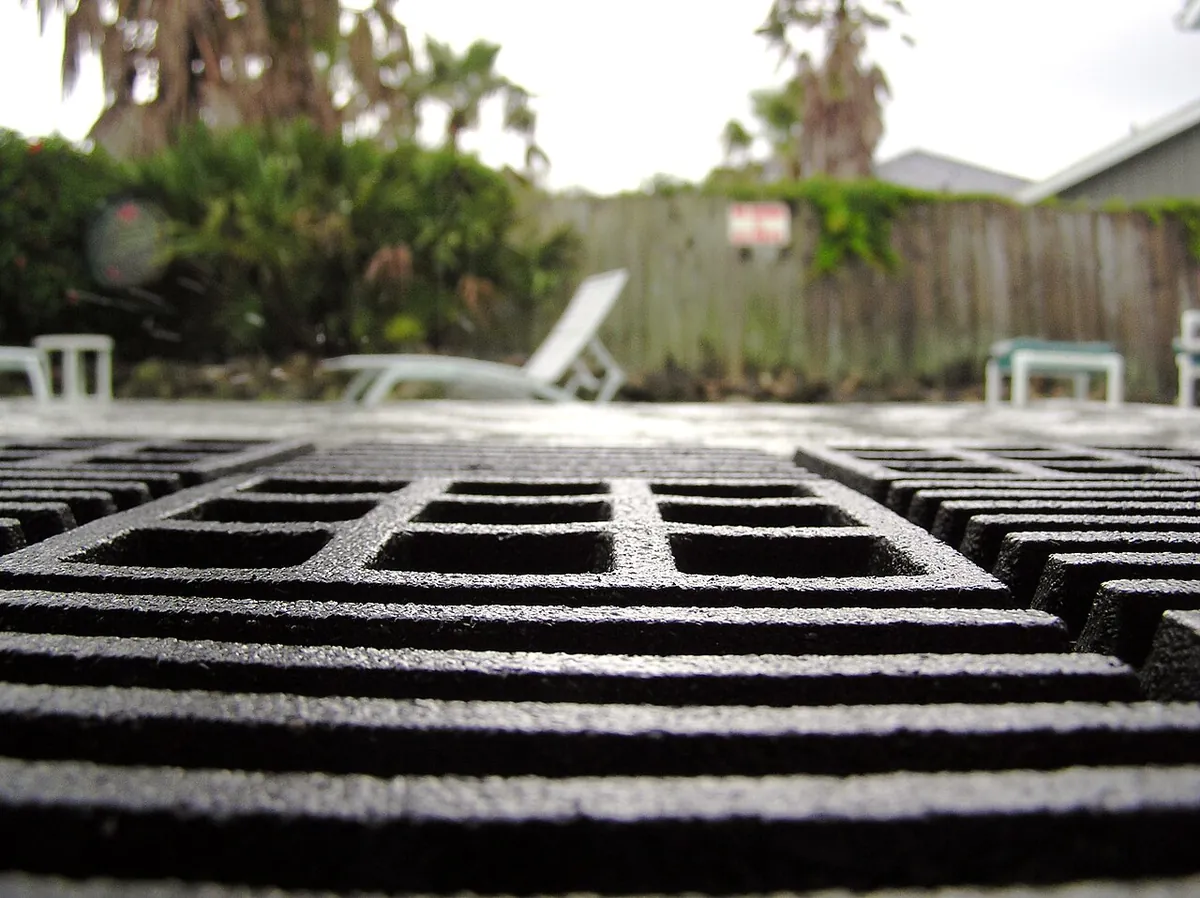
Photo: J Rawls, Wikimedia Commons, CC BY 2.0
Safety When Draining a Pool
- Keep children and pets away from an empty or partly drained pool; falls into an empty pool are dangerous.
- Use GFCI-protected outlets and keep electrical connections dry.
- Never enter the pool while a submersible pump is running.
- Lift pumps by a rope, not the cord.
- Watch the discharge area to prevent flooding your yard, a neighbor's yard or your home.
- Do not leave the pool empty longer than necessary.
Refilling After Draining
Refill as soon as the work is done. For new plaster, fill continuously without stopping. For vinyl liners, smooth wrinkles in the first few inches. Then balance the pool water: alkalinity, pH, calcium hardness, stabilizer and chlorine. Many owners combine a hose with trucked water to refill faster; see pool water delivery cost.
Pool Draining Service
If you would rather not do it yourself, a pool company can drain the pool, check the hydrostatic valve, clean or acid wash the surface, and refill. Pool draining service often costs a few hundred dollars, more with acid washing or repairs. It is worth considering for fiberglass pools, pools in areas with high groundwater, or when you are unsure about local discharge rules.
How to Drain an Inground Pool Step by Step
Here is the full sequence for how to drain an inground pool completely for resurfacing or major repairs:
- Confirm local discharge rules and schedule the repair crew so the pool is empty for as short a time as possible.
- Stop adding chlorine and let the pool water sit until chlorine is low and pH is near neutral.
- Check the forecast and the water table; avoid draining a pool right after heavy rain.
- Turn off all pool equipment at the breaker.
- Set up the pool drain pump in the deep end with its pool hose running to the approved outlet.
- Run the pump and check the outlet often for backups or flooding.
- As the pool water level drops, have a pool professional check the hydrostatic relief valve.
- Stop the pump before it runs dry; remove the last water with a wet vac.
- Complete the repair work, then refill promptly and balance the pool water.
How Do You Drain a Pool Halfway?
To lower the pool water for a chemistry fix or winter closing, use the pool pump on WASTE or a submersible pump, and mark the target level on the tile with tape. Check the level every 30 minutes. For winter, stop a few inches below the skimmer opening for mesh covers or as your closing guide directs. For chemistry fixes, a partial drain of 20% to 50% followed by refilling with fresh water usually brings high readings down. A partial drain is the safest way to drain a pool of any type, because the remaining pool water keeps the shell or liner in place.
Draining a Pool for Winter
In freezing climates, inground pools are not drained completely for winter. Instead, the water is lowered below the skimmer and returns, lines are blown out and plugged, and a winter cover is installed. Above ground pools are lowered a few inches below the skimmer. Draining a pool completely for winter can damage it, because freezing ground and groundwater can push on an empty shell or liner. See how to winterize a pool for the full closing steps.
How to Drain a Pool: Key Points
- Check where pool water may legally go before you drain a pool.
- Let chlorine drop and keep pH near neutral before draining.
- Use a submersible pool drain pump for full drains, the pool pump on WASTE for partial drains, and a pool hose siphon for small pools.
- Watch for high groundwater; never leave vinyl or fiberglass pools empty without guidance.
- Refill promptly and rebalance the pool water.
Frequently Asked Questions
Can I drain my pool into the street?
Often no. Many cities prohibit draining pool water into streets and storm drains, and fines can apply. Use a sanitary sewer cleanout or your lawn if allowed.
How do you drain a pool with a hose?
Fill the hose with water, keep one end in the pool and place the other end lower than the water surface; gravity siphons the pool water out.
Can I use my pool pump to drain the pool?
Yes for partial drains with a sand or DE filter set to WASTE, but not for draining completely, because the pump must never run dry.
How long does it take to drain a pool?
About 6 to 16 hours for a typical inground pool with a submersible pump, and days with a garden hose, depending on the pool size and the outlet.
How do you drain an above ground swimming pool quickly?
Use a submersible pump with a large discharge hose, or open the drain valve and add a pump. A garden hose siphon is the slowest option.
Where should I put the pool water when draining?
Usually into a sanitary sewer cleanout, or onto your own lawn if your city allows it and the water is dechlorinated. Never into a neighbor's yard or a storm drain where prohibited.
Do I need to dechlorinate pool water before draining?
In many areas, yes. Let chlorine drop naturally over a few days or use a dechlorinating product, and keep pH near neutral.
Can a pool pop out of the ground when drained?
Yes, if groundwater is high. Concrete pools have hydrostatic relief valves for this reason, and fiberglass pools should only be drained with professional guidance.
Should I drain my pool every year?
No. Most pools only need draining every several years, or when repairs or water chemistry require it. Good filtration, regular testing and partial drains keep the pool water usable for a long time.
Can you drain a vinyl or fiberglass pool?
Only with care and usually only for liner replacement or repairs, with professional guidance, because the liner can shrink and fiberglass shells can lift.
Sources
- U.S. EPA: keeping pollutants out of storm drains
- U.S. CPSC: Virginia Graeme Baker Pool and Spa Safety Act (drain covers)
- CDC: Healthy Swimming
- Pool & Hot Tub Alliance: pool care resources