
Concrete Pads: Uses, Sizes, Thickness, How to Pour One and Cost
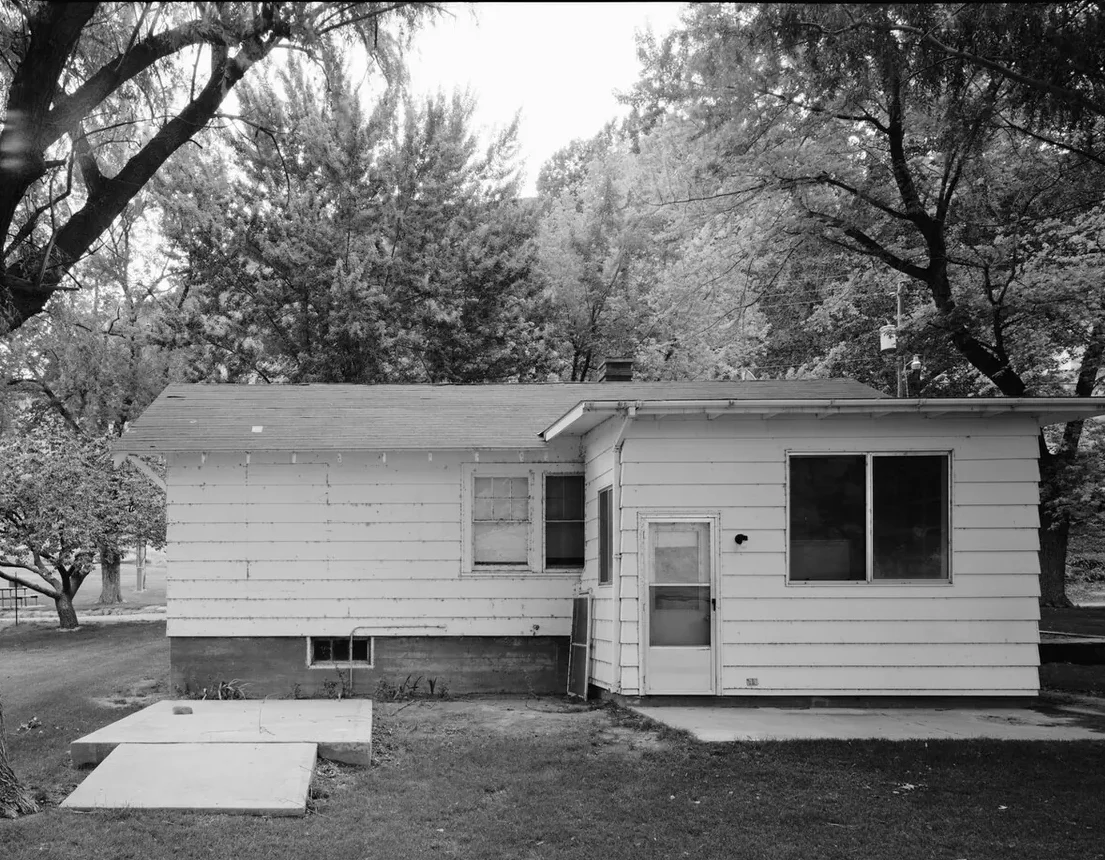
Photo: Historic American Buildings Survey (public domain), Wikimedia Commons (cropped)
Quick Answer
Concrete pads are small, flat concrete slabs that give a level, solid, durable base for sheds, air conditioners and heat pumps, hot tubs, generators, trash cans, grills, carports, RVs and more. Most are 4 inches thick on a 4 inch compacted gravel base, with wire mesh or fiber for small pads, and 5 to 6 inches with rebar for hot tubs and vehicles. Make the pad a few inches larger than whatever sits on it, and slope it slightly away from buildings. A DIY pad costs about $3 to $6 per square foot in materials; professionally poured concrete pads typically cost $6 to $12 per square foot, with a minimum charge of a few hundred dollars for small jobs. Small precast pads and concrete sprinkler donuts cost much less.
A concrete pad is one of the simplest and most useful concrete projects around a home. It keeps equipment level and off wet ground, stops weeds and mud, spreads weight evenly so heavy items do not sink, and gives a clean, finished look. The photo above, taken behind an old cottage, shows two concrete pads that outlasted the storage shed they once supported, still flat and solid decades later. That durability is exactly why concrete pads are so popular.
This guide covers the most common uses for concrete pads, how big and thick they should be, base and reinforcement, how to pour a concrete pad step by step, precast options, concrete sprinkler donuts, carport floor designs with pavers and concrete, maintenance, common mistakes and costs.
Common Uses for Concrete Pads
Sheds and outbuildings. A concrete pad is the strongest, longest-lasting foundation for a storage shed, workshop or garden building. It keeps the floor dry, resists rodents, and can double as the floor itself. See concrete shed foundation.
Air conditioners and heat pumps. Outdoor condenser units sit on small concrete pads to stay level, drain properly and stay out of mud and standing water. Many are set on precast or composite pads, but poured concrete pads are common, especially for larger units.
Hot tubs and spas. A filled hot tub can weigh 3,000 to 6,000 pounds or more, so it needs a level, reinforced concrete pad. Most hot tub makers require a level, solid base and will not honor warranties if the tub sits on uneven ground.
Generators. Standby generators need a level, solid base, often specified by the manufacturer, with clearance from the house.
Trash and recycling cans, grills and smokers. A small concrete pad keeps bins and grills stable and clean and protects the lawn.
Carports, RVs, boats and trailers. Larger, thicker concrete pads give vehicles a firm, clean place to park. See the carport section below.
Basketball hoops, playsets, dog kennels and benches. Pads provide a stable, easy-to-clean surface.
Patio extensions and landings. Small pads at doors and gates make landings, step bases and spots for planters. See concrete porch and how to pour a concrete patio.
Size and Thickness of Concrete Pads
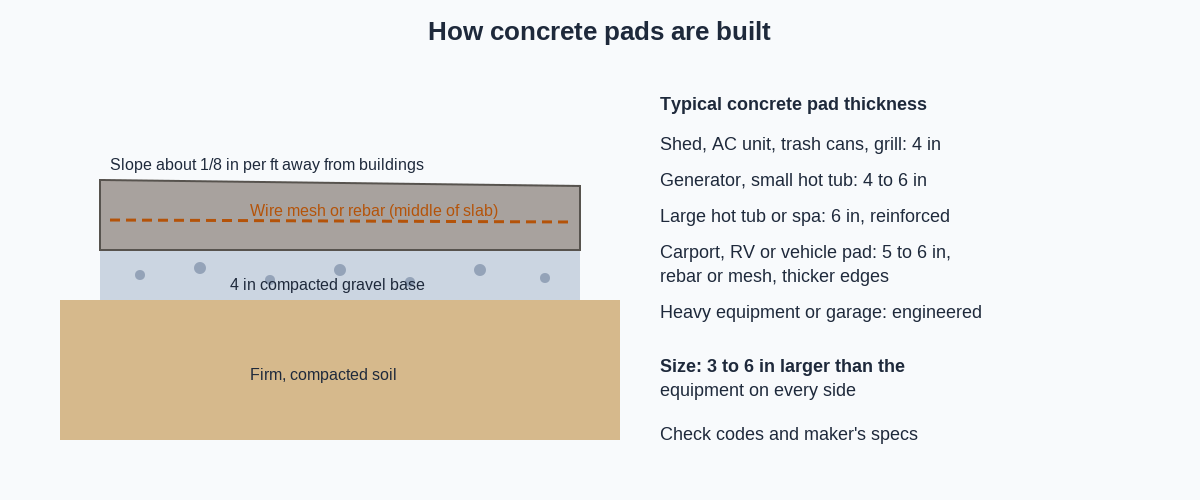
Make a concrete pad a little larger than whatever will sit on it, typically 3 to 6 inches beyond the equipment or building on each side, so edges are not loaded and water drips onto the concrete rather than the soil. For sheds, many builders make the pad the same size as the shed footprint or slightly larger, so the walls sit fully on concrete. For hot tubs, a pad at least 6 inches larger than the tub on every side leaves room for steps and the cover lifter. For air conditioners and generators, follow the maker's pad size and clearance requirements.
Thickness depends on the load, as the diagram shows. A 4 inch pad is standard for sheds, AC units, trash cans, grills and walkways. Hot tubs usually call for 4 to 6 inches, with 6 inches and reinforcement for large tubs. Carports, RV pads and anything vehicles drive on should be 5 to 6 inches thick with rebar or heavy mesh, thickened at the edges. Very heavy equipment, such as large generators, tractors or commercial units, should be engineered. Thicker concrete pads also resist cracking better in soft or clay soils. See concrete slab thickness and how thick should a concrete driveway be.
Base and Reinforcement
The ground under a concrete pad matters as much as the concrete. Remove grass, roots and topsoil, which compress and decay, down to firm soil. Spread 4 inches of crushed stone or gravel base and compact it with a plate compactor or hand tamper, in layers if it is thicker. The base drains water, gives a uniform support and reduces frost heave. Under pads for living spaces or where moisture matters, such as a workshop, add a vapor barrier over the gravel. See vapor barrier under concrete and road base calculator.
Reinforcement controls cracking and holds the concrete pad together if it does crack. Small 4 inch concrete pads can use welded wire mesh, synthetic fibers in the mix, or both. Larger pads, hot tub pads and vehicle pads should use #3 or #4 rebar in a grid 12 to 18 inches apart, set on chairs so it sits in the middle of the slab. See rebar in concrete, wire mesh for concrete and fiber reinforced concrete.
How to Pour a Concrete Pad
1. Plan. Choose the location, check setbacks and any permit requirements, call 811 to locate utilities, and decide on size and thickness. Make sure the concrete pad will slope about 1/8 inch per foot away from buildings for drainage.
2. Excavate. Mark the outline with stakes and string, a few inches larger than the pad. Dig out sod and soil to the depth of the base plus the slab, minus any height you want the pad above grade.
3. Build the forms. Set 2x4 or 2x6 boards on edge around the perimeter, held by stakes every 3 to 4 feet, with the tops at the finished height and slope. Check that the corners are square by measuring the diagonals. See how to build concrete forms and concrete stakes.
4. Add the base. Spread and compact the gravel base inside the forms.
5. Place reinforcement. Lay mesh or rebar on chairs, and set any anchor bolts or sleeves needed for equipment or posts.
6. Mix or order concrete. For a small pad, mix bagged concrete; an 80 lb bag yields about 0.6 cubic feet, so a 4 by 4 foot pad 4 inches thick needs about 9 bags. For pads larger than about 1 cubic yard, ready-mix delivery is usually easier. See how to mix concrete, how many bags of concrete in a yard and concrete mixer rental cost.
7. Pour and screed. Fill the forms, working the concrete into the corners, and pull the reinforcement up into the middle of the slab. Screed the surface flat with a straight board across the forms.
8. Float and finish. Float the surface, edge the perimeter, and apply a broom finish for outdoor traction or a smooth trowel finish for a shed floor. Cut or tool control joints in pads larger than about 8 to 10 feet in either direction. See concrete bull float, brushed concrete and control joints in concrete.
9. Cure. Keep the concrete pad damp or covered for at least a week. Wait at least 7 days before placing light equipment and longer, ideally 28 days, before putting a filled hot tub or vehicles on it. See how long does concrete take to cure.
Concrete Pads for Hot Tubs
Hot tubs are one of the most demanding uses for concrete pads. A typical four to six person hot tub holds 300 to 500 gallons of water, and with the shell, cabinet and people inside, the total load is often 3,000 to 6,000 pounds spread over about 50 to 70 square feet. The pad must be level within about 1/4 inch across its length, because an uneven base twists the shell and cabinet and can crack the acrylic or the frame. Most manufacturers recommend a reinforced concrete pad 4 to 6 inches thick on compacted gravel, slightly larger than the tub. Plan the electrical supply before pouring: hot tubs need a dedicated GFCI-protected circuit with a disconnect within sight of the tub, and running conduit under or beside the pad before the concrete goes in is much easier than trenching later. Leave room around the tub for access panels, steps and the cover lifter, and slope the pad slightly so splash water and rain drain away from the tub base. Wait for the concrete to cure for about four weeks before filling the tub, and never put a full tub on a pad that is only a few days old. Concrete pads for hot tubs can be finished with a broom texture for grip, or stamped and colored to match a patio.
Concrete Pads for AC Units and Heat Pumps
Outdoor air conditioner condensers and heat pumps need a level base so the compressor and refrigerant lines are not stressed and condensate drains correctly. Small concrete pads, poured or precast, are the traditional solution. A typical residential AC pad is about 3 by 3 or 3 by 4 feet and 3 to 4 inches thick, set a couple of inches above the surrounding grade on compacted gravel. For heat pumps in snowy climates, the unit is often raised on brackets or legs above the pad so snow and ice do not block the coil, and the pad should drain well because heat pumps shed water during defrost cycles. Keep the concrete pad level, keep plants and mulch at least a couple of feet away for airflow, and check local codes for clearances from windows, property lines and other equipment. If an existing pad has sunk or tilted, it can be lifted, releveled or replaced when the unit is next serviced or replaced.
Concrete Pads for Generators
Standby generators are heavy, vibrate when running, and must be installed on a stable, level, noncombustible base at specific distances from windows, doors, vents and the house, as set by the manufacturer and fire and electrical codes. Many generator makers supply a composite pad, but a poured concrete pad is often preferred for larger units or soft ground. The pad is usually 4 inches thick and a few inches larger than the generator, with conduit for the electrical connection and gas line stubbed up in the right places before the pour. Anchor bolts may be required in high-wind areas. Because generators are often installed alongside an electrical upgrade, coordinate the concrete pad with the electrician and gas installer so everything lines up.
Concrete Pads for Sheds
For sheds, concrete pads double as a foundation and a floor. A 4 inch slab on a 4 inch gravel base, thickened to 8 to 12 inches around the edges in cold climates or for larger sheds, carries the walls and the contents and keeps rodents out. The concrete pad should be exactly square and level so the shed kit or framing fits, with anchor bolts or straps set in the wet concrete to hold the walls down in wind. A smooth trowel finish makes the floor easier to sweep, while a light broom finish is safer if the shed will be used as a workshop with wet boots. Pour the pad an inch or two above grade and slope the surrounding ground away so water does not run in under the door. See concrete shed foundation for more detail.
Fixing a Sunken or Cracked Concrete Pad
Over time, some concrete pads settle, tilt or crack, usually because the base was not compacted, water washed soil out from under one edge, or the pad was too thin for the load. A small concrete pad under an AC unit or trash cans can often be lifted with a pry bar and reset on fresh compacted gravel, or simply replaced with a precast pad. Larger concrete pads that have sunk can be raised by slab lifting, where contractors pump polyurethane foam or cement grout under the slab through small holes. Cracks can be filled with a flexible crack filler, and a worn or stained surface can be resurfaced. If a pad is badly broken or still moving, breaking it out and pouring a new concrete pad on a proper base is the lasting fix. See concrete leveling cost, how to fix cracks in concrete and how to remove concrete.
Precast and Prefabricated Pads
For air conditioners, heat pumps, generators and small equipment, precast concrete pads and lightweight composite pads are quick alternatives to pouring. Precast concrete pads are sold in standard sizes, such as 24 by 36 or 36 by 36 inches and 2 to 4 inches thick, and set on a leveled gravel or sand base. Composite and plastic pads are lighter and easier to handle but can shift. For hot tubs, some homeowners use interlocking plastic spa pads on compacted gravel, or pavers on a gravel base, instead of a concrete pad, if the tub maker allows it. For sheds, deck blocks and gravel pads are other options. See concrete deck blocks and precast concrete.
Concrete Sprinkler Donuts
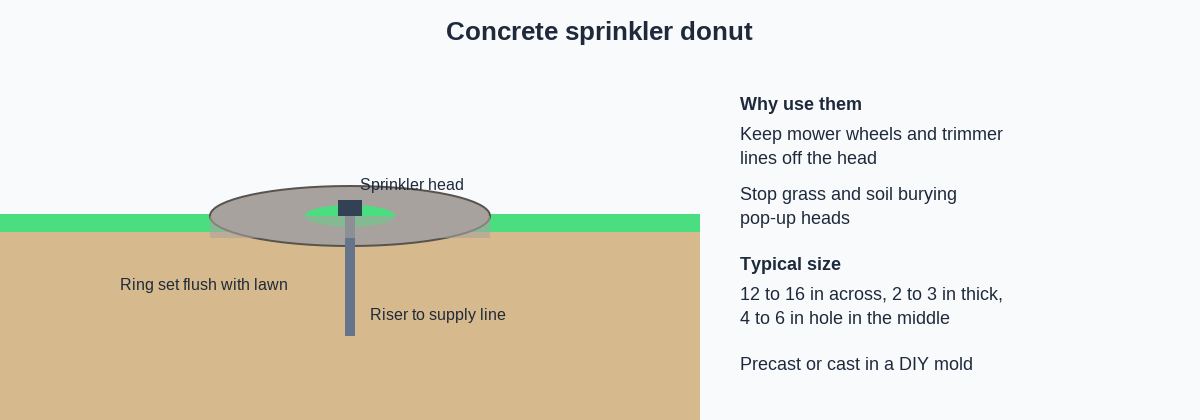
A concrete sprinkler donut is a small, ring-shaped concrete pad set flush with the lawn around a sprinkler head, as shown in the diagram above. The ring keeps mower wheels and string trimmers away from the head, protects it from damage, and stops grass and thatch from growing over pop-up heads and blocking the spray. Concrete sprinkler donuts are especially popular on large lawns, sports fields, parks and commercial landscapes, and along edges where heads are hit often. They are typically 12 to 16 inches across, 2 to 3 inches thick, with a 4 to 6 inch hole in the middle.
You can buy precast sprinkler donuts concrete suppliers make in bulk, or cast your own using a round mold such as a plant saucer or bucket lid with a smaller cup in the center, filled with a sand-rich concrete mix. To install one, dig out the turf around the head to the depth of the donut, set the donut level with the surrounding soil so the mower passes over it, check that the head pops up and sprays freely through the hole, and backfill around the edge. Rubber and plastic sprinkler donuts are also sold, but a concrete sprinkler donut is heavier, stays put and lasts much longer. See concrete curb machine for mower strips along beds.
Carport Floor Designs with Pavers and Concrete
A carport floor, whether under an attached carport, a freestanding metal carport or an open-sided garage, takes the weight of vehicles, oil drips, and water blowing in from the sides. Concrete pads are the most common and practical carport floors, but combining pavers and concrete opens up many design options.
Plain concrete pad. The simplest and most affordable: a 5 to 6 inch reinforced slab with a broom finish, sloped to drain out of the carport. It is easy to clean and handles any vehicle.
Concrete with a paver border. A concrete pad framed by a band of pavers or brick gives a finished, upscale look and ties the carport to paver walkways and patios.
Concrete wheel strips with pavers or gravel between. Two concrete strips for the tires, with pavers, gravel or grass pavers between and around them, reduce the amount of concrete, let water soak in, and soften the look. This is a classic design for older homes.
Pavers over a concrete base. Pavers set on a concrete pad, with mortar or a sand bed, give the look of a paver floor with the strength of concrete underneath. See can you lay pavers over concrete.
Stamped or colored concrete. A stamped pattern that imitates pavers or stone, or a colored concrete pad, gives a decorative look in one pour. See stamped concrete driveway and stamped concrete vs pavers.
Permeable designs. Permeable pavers or pervious concrete let rain soak through, reducing runoff where impervious-surface limits apply. See pervious concrete.
Whatever the design, plan the carport floor so water drains away from the house and out of the carport, include anchor bolts or footings for carport posts, and match the height to the driveway so there is no trip edge.
Finishes and Looks for Concrete Pads
Most concrete pads get a simple broom finish for grip or a smooth trowel finish for indoor-type use, but a pad in a visible spot can look more finished with a little extra effort. Tooled edges with a rounded edger look neat and resist chipping. A smooth troweled border around a broom-finished center gives a framed look at almost no extra cost. Integral color or a stain helps a pad blend with the house or patio, and stamped patterns can make a hot tub or grill pad match a stamped patio. Exposed aggregate gives a natural, textured surface that hides stains. Surrounding a concrete pad with gravel, mulch or planting softens its edges and helps drainage. For pads next to the house, keep the top at least a few inches below siding and any weep holes, and slope the surface away from the foundation. See types of concrete finishes and decorative concrete.
For pads that will be seen from the street, such as carport floors, trash enclosures and RV pads beside a driveway, matching the finish and color of the existing driveway makes the new concrete look like part of the original design rather than an add-on.
Permits and Rules
Small concrete pads for AC units, trash cans and grills rarely need a permit. Larger pads, shed foundations, carport slabs, and pads that change drainage or increase impervious surface may require a permit, especially in areas with lot-coverage limits. Hot tubs and generators often require electrical permits, and their concrete pads may be inspected as part of that work. Check setback requirements from property lines and clearances from windows, vents and utilities, and check HOA rules before pouring, since some associations limit the size, location or appearance of concrete pads visible from the street.
Maintenance and Common Mistakes
Concrete pads need little care: keep them clean, fill any cracks, and seal them every few years if exposed to oil, salt or freeze-thaw, and keep soil and mulch from building up against the edges. Common mistakes include skipping the gravel base, which leads to settling and cracking; making the concrete pad too thin for the load; forgetting the slope, so water pools against buildings or under equipment; pouring on soft fill or topsoil; leaving out control joints on larger pads; and loading the pad too soon. Placing a filled hot tub on a pad that is not level or not cured can crack the pad and void the tub warranty. See why does concrete crack and concrete sealer.
Concrete Pads Cost
Typical US costs for concrete pads are about $3 to $6 per square foot in materials for DIY, and $6 to $12 per square foot installed by a contractor, with higher prices for thick, reinforced or decorative pads and difficult access. Because contractors have minimum charges, small concrete pads often cost $300 to $800 regardless of size. Examples: a 3 by 3 foot AC pad costs about $50 to $150 DIY or $250 to $500 installed; a 10 by 12 foot shed pad about $600 to $1,200 DIY or $1,000 to $2,000 installed; an 8 by 8 foot hot tub pad 6 inches thick about $700 to $1,500 installed; and a 20 by 20 foot carport pad about $3,000 to $6,000 installed. Precast AC pads cost about $30 to $150, and concrete sprinkler donuts about $5 to $20 each, so protecting every head on a typical lawn costs well under a few hundred dollars. See concrete cost per square foot, 20x20 concrete slab cost and concrete slab cost.
Frequently Asked Questions
How thick should a concrete pad be?
4 inches for sheds, AC units and light uses; 4 to 6 inches for hot tubs; 5 to 6 inches with rebar for carports and vehicles.
Do concrete pads need gravel underneath?
Yes. A 4 inch compacted gravel base drains water, supports the slab evenly and reduces cracking and frost heave.
Does a concrete pad need rebar?
Small pads can use mesh or fibers. Hot tub, carport and vehicle pads should have rebar.
What is a concrete sprinkler donut?
A ring-shaped concrete pad set flush around a sprinkler head to protect it from mowers and trimmers and keep grass from covering it.
How long before I can use a new concrete pad?
Light items after about 7 days; filled hot tubs, vehicles and heavy loads after about 28 days.
Sources
- Portland Cement Association: concrete slabs on ground
- American Concrete Institute: ACI 332 residential concrete
- US Department of Energy: installing outdoor AC and heat pump units
- Call 811 before you dig
Related Guides
- Concrete stakes — wood and steel form stakes
- Chicken coop concrete floor — slabs, bedding and predators
- Cinder block outdoor kitchen — building a block grill island
- 80 lb bags of concrete — yield, price and how many bags you need
- Sakrete concrete mix — High Strength, 5000 Plus and Fast Setting compared
- Gravel base for concrete — best base material, thickness, compaction and quantities