
Tiny Red Bugs on Concrete: Clover Mites, Concrete Mites and How to Get Rid of Them
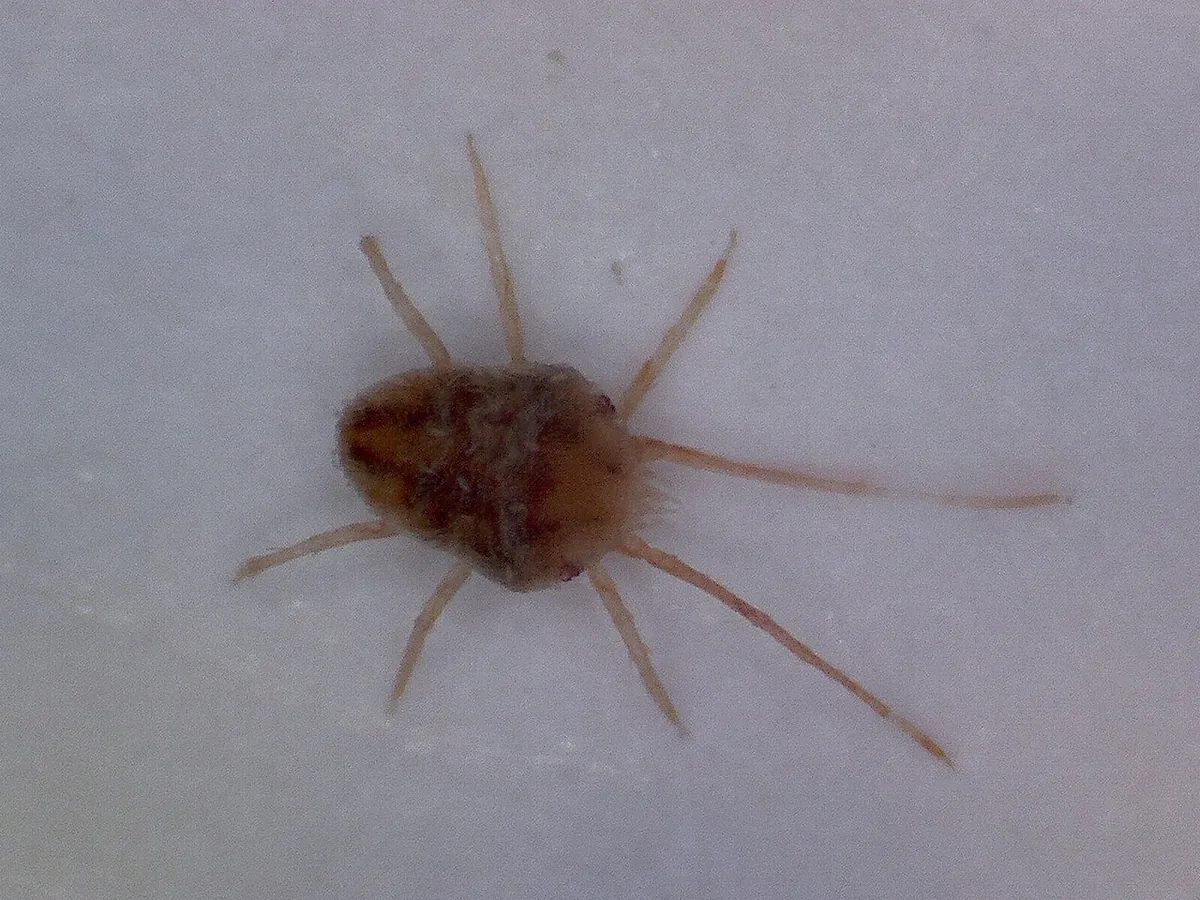
Photo: PerAsperaAdInferos, Clover mite under a digital microscope, Wikimedia Commons, CC BY-SA 4.0.
Quick Answer
The tiny red bugs on concrete you see on sidewalks, patios, foundations and windowsills are almost always clover mites (Bryobia praetiosa), or a lookalike called the concrete mite (Balaustium). They are about the size of a period on a printed page, bright red to reddish brown, and the clover mite has very long front legs. They show up in large numbers on warm, sunny concrete in spring and fall, feed on grass and plants, and sometimes wander indoors. They are a nuisance, not a danger: university extension services say clover mites do not bite people, spread disease or damage concrete, but they leave a red stain when crushed. To control them, keep an 18 to 24 inch plant-free strip next to the foundation, seal cracks, and vacuum, wipe or hose them off rather than squashing them. Insecticides are rarely needed.
Every spring, many homeowners notice what looks like moving red dust on their concrete: hundreds of tiny red dots crawling over the patio, the front steps, the sunny side of the foundation, and sometimes inside on windowsills. They are alarming in large numbers and leave red smears on walls and curtains when you try to wipe them away. The good news is that these little red bugs on concrete are almost always harmless mites that come and go with the seasons.
This guide explains what are the tiny red bugs on concrete, why they love concrete so much, whether they bite or cause damage, how to tell clover mites from other red bugs, and simple, safe ways to keep them off your patio and out of your house.
Concrete Tiny Red Bugs: Quick Facts
| Question | Answer |
|---|---|
| What are they? | Usually clover mites; sometimes concrete mites (Balaustium) |
| Size | About the size of a printed period, under 1 millimeter |
| Color | Bright red, reddish brown, sometimes greenish brown |
| When | Mostly spring and fall, on cool sunny days |
| Where | Sunny concrete, foundations, walls, windowsills, siding |
| Do they bite? | Clover mites do not bite people or pets |
| Do they damage concrete? | No; they only leave red stains if crushed |
| What do they eat? | Grasses, clover and other plants, not concrete |
| How to control? | Plant-free strip, seal cracks, vacuum or wash off |
What Are the Tiny Red Bugs on Concrete?
Clover mites
Clover mites are the most common answer to what are the little red bugs on concrete. They are not insects but mites, relatives of spiders and ticks, with eight legs. Adults are tiny, about 0.75 to 0.85 millimeters, and have front legs that are noticeably longer than the others and often held forward like antennae. That long first pair of legs is the easiest way to recognize them with a magnifying glass. Penn State Extension and other university sources describe them as reddish brown to red, sometimes appearing greenish after feeding.
Clover mites feed on grasses, clover, weeds and many garden plants by sucking plant juices. They are most active in cool weather, which is why they appear in spring and again in fall. In the heat of summer, they rest as eggs, often laid in cracks and crevices of concrete, foundations, siding and bark, and in winter they shelter in similar protected spots.
Concrete mites
A second, very similar red mite is often called the concrete mite or sidewalk mite, from the genus Balaustium. Iowa State University extension specialists have described red mites seen running across masonry and sidewalks in the sun, rather than on lawns, that turned out to be Balaustium rather than clover mites. They look much the same to the naked eye: tiny, bright red and fast-moving on sunny concrete. Concrete mites feed on pollen and small organisms as well as plants. Without a microscope, most homeowners cannot tell a concrete mite from a clover mite, and the control steps are the same.
Other red bugs you might see
- Spider mites: tiny mites usually found on plant leaves with fine webbing, not crawling over concrete.
- Chiggers: red larvae that bite people, but they live in grass and brush, not on bare concrete, and are almost too small to see.
- Velvet mites: larger, bright red, fuzzy mites seen on soil, especially after rain.
- Red bugs (true bugs): insects like boxelder bugs and red-shouldered bugs are much larger, often black and red, and have six legs.
If the bugs are pinhead-sized, red, crawling in large numbers over sunny concrete and walls in spring or fall, they are almost certainly clover mites or concrete mites.
How to Identify Clover Mites Up Close
If you want to be sure what the tiny red bugs on concrete are, a simple magnifying glass or a phone camera on macro mode is enough. Look for these signs:
- Eight legs, which separates mites from tiny insects with six.
- A very long first pair of legs, often held out in front, which is typical of clover mites.
- An oval, slightly flattened body, red, reddish brown or greenish brown.
- Slow to moderate movement on walls and concrete, while concrete mites (Balaustium) tend to run quickly in bright sun.
- A red smear when crushed, which comes from pigments in the mite's body, not blood.
If you still are not sure, many county extension offices will identify a sample for free or a small fee. Put a few mites in a small sealed container with a damp cotton ball, or take a clear close-up photo, and contact your local extension service.
Do Mites on Concrete Mean Anything About the Concrete?
Not really. Clover mites and concrete mites do not point to a problem with the concrete itself. They are simply attracted to warm, sunny surfaces near lawns. The only connection is cracks: a foundation or patio with many open cracks gives them more places to shelter and lay eggs. Sealing those cracks helps with mites and also protects the concrete from water and freeze-thaw damage.
Why Do Tiny Red Bugs Like Concrete?
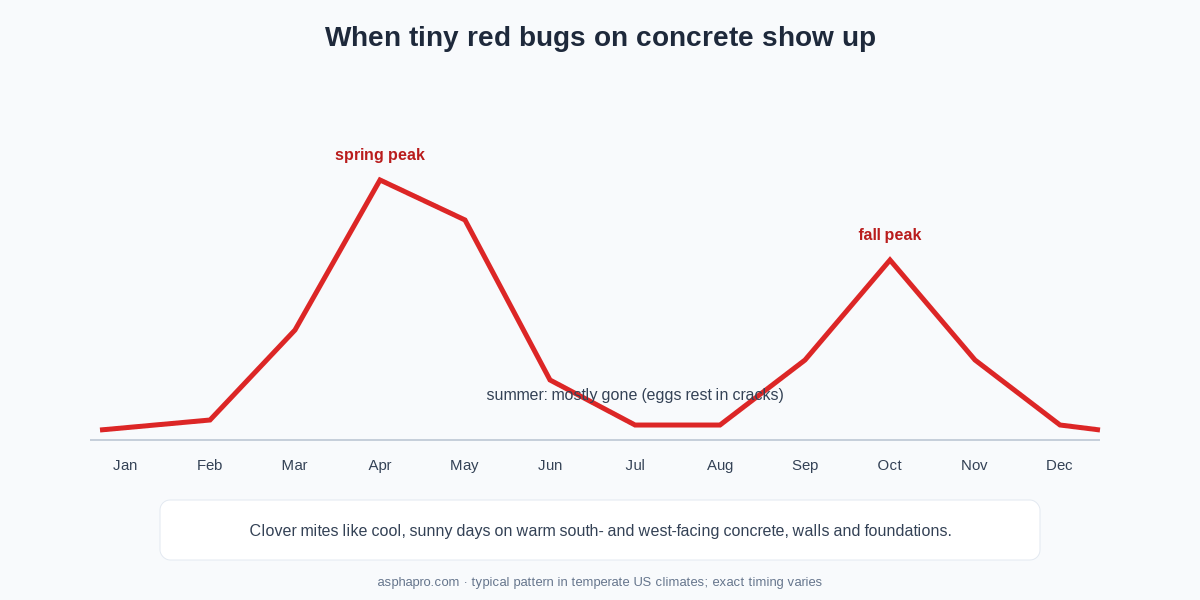
Mites on concrete are not feeding on it. They gather there for a few reasons:
- Warmth. Concrete absorbs sunlight and warms up quickly on cool spring and fall days, giving the mites a warm place to be active. South- and west-facing walls, steps and patios are favorites.
- Shelter for eggs. Cracks, joints and rough surfaces in concrete and foundations are perfect places to lay eggs and to rest through summer heat and winter cold.
- Close to food. Lawns and plants right next to patios, walks and foundations give them food, and the concrete is the nearest warm spot.
- Movement toward buildings. As they move from the lawn toward the house, they cross the concrete, climb the foundation, and can find their way in around windows and doors.
Lush, heavily fertilized lawns right up against the foundation tend to support large populations, which is why extension services often point to the lawn edge as the key area to manage.
Are Tiny Red Bugs on Concrete Harmful?
For people and pets, no. University extension fact sheets from Penn State, Ohio State and others agree that clover mites do not bite humans or animals, do not spread disease and do not infest food or furniture. They do not damage concrete, wood or the structure of the house.
The problems are mostly about nuisance and stains:
- Red stains. Crushed mites leave a red smear on walls, curtains, carpets and clothing that can be hard to remove.
- Large numbers. Thousands of mites on a patio or coming in around windows can be unpleasant.
- Lawn and plant feeding. In very large numbers they can cause silvery or pale patches on grass, usually minor.
Clover mites that come indoors cannot survive long without plants to feed on, and they do not breed inside homes. Indoors they tend to gather on sunny windowsills and the walls around them, and most die within a few days. That is why vacuuming and sealing entry points is usually all you need inside, while the real control happens outdoors at the lawn edge and foundation.
How to Get Rid of Little Red Bugs on Concrete
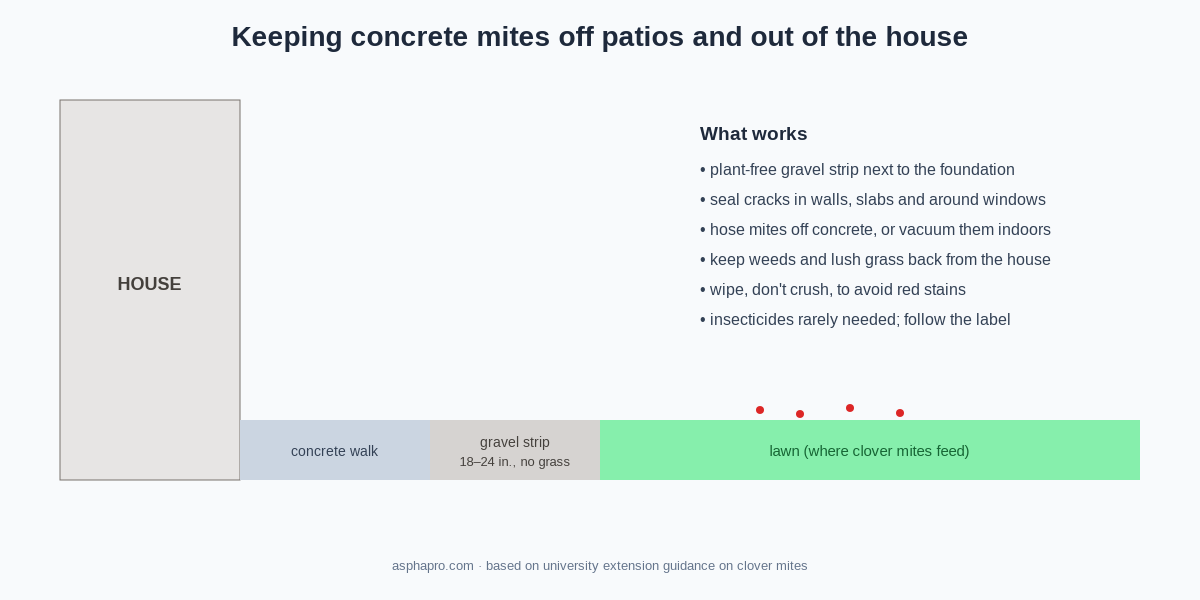
Outdoors on patios, walks and walls
- Hose them off. A strong spray of water knocks clover mites off concrete and walls. It is simple and safe, and often enough to keep a patio usable during a peak.
- Create a plant-free strip. Extension services commonly recommend an 18 to 24 inch strip of bare soil, gravel, stone or mulch with no grass or weeds right next to the foundation. Mites have trouble crossing it and have no food there.
- Seal cracks. Fill cracks in foundations, slabs and walls, and caulk gaps around windows and doors, to reduce the hiding and egg-laying spots near the house. See how to repair concrete cracks.
- Manage the lawn edge. Avoid heavy fertilizing of grass right next to the house, and keep weeds and clover back from patios and walks.
- Use insecticidal soap or an approved product if needed. For very heavy infestations, spot-treat the foundation, lawn edge and plant-free strip with a product labeled for clover mites, following the label exactly. Many sources note that chemical treatment is rarely necessary.
Indoors on windowsills and walls
- Vacuum them up with a crevice tool rather than crushing them.
- Wipe gently with a damp cloth or sponge, rinsing often, to avoid smearing red stains.
- Use double-sided tape on windowsills as a temporary barrier during peaks.
- Seal entry points around windows, doors and utility openings.
How to Clean Red Mite Stains Off Concrete and Walls
Red stains from crushed mites usually come off concrete with water and a scrub brush, or a mild detergent. On painted walls and fabrics, blot with a damp cloth and mild soap as soon as possible; avoid rubbing, which spreads the stain. On porous concrete or stucco, a light pressure wash or a concrete cleaner usually removes stubborn marks. See how to clean concrete for safe methods.
Preventing Tiny Red Bugs on Concrete Next Season
- Plan the plant-free strip before spring, so it is in place when mites become active.
- Seal cracks and joints in foundation walls, steps and slabs in the fall, after the fall peak.
- Trim plants away from walls and windows, and avoid lawns growing right up to the foundation.
- Keep the lawn healthy but not overfed next to the house.
- Watch sunny walls on the first warm days of spring and hose off early groups before they move indoors.
The Clover Mite Life Cycle
Understanding how clover mites live explains why the tiny red bugs on concrete show up when they do. Almost all clover mites are female. They reproduce without mating, laying eggs that hatch into more females, so a population can grow quickly in good conditions. A general life cycle, as described by university extension services:
- Eggs: bright red, round and very small, laid in cracks and crevices in concrete, foundation walls, siding, bark and under loose paint. Eggs laid in late spring often rest through the summer.
- Larvae and nymphs: the young mites hatch in cool weather, feed on grass and plants, and molt several times as they grow.
- Adults: active in spring and fall when temperatures are cool but sunny. They move up walls and across concrete looking for warm spots and places to lay eggs.
- Generations: there can be more than one generation per year, which is why there are two peaks, one in spring and one in fall.
Because eggs and resting mites spend much of the year in the cracks of concrete and foundations near the lawn, sealing those cracks and keeping grass away from the foundation are the most lasting forms of control.
On a Wall or Cement? Tiny Red Bugs on Concrete and Other Surfaces
People often notice the mites on a wall or cement. Tiny red bugs on concrete patios and walks are the most visible, but the same mites gather on many warm, sunny surfaces near lawns:
- Brick and block walls, especially on the south and west sides.
- Stucco and stone on foundations and garden walls.
- Siding and window frames, from which they may enter the house.
- Concrete steps and porches, where they cluster on the sunny edges.
- Pool decks and patios surrounded by lawn.
- Car tires and outdoor furniture parked or set on lawn edges.
If you see swarms of red mites on concrete only in a few sunny areas, that tells you where to focus a plant-free strip and crack sealing.
Clover Mites vs Chiggers vs Spider Mites
| Mite | Where you see it | Bites people? | Notes |
|---|---|---|---|
| Clover mite | Warm concrete, walls, windows, lawns | No | Long front legs; red stain when crushed |
| Concrete mite (Balaustium) | Sunny concrete, sidewalks, walls | Generally not a concern | Looks almost identical to the eye; runs fast in sun |
| Chigger (larva) | Tall grass, brush, woods | Yes, itchy bites | Nearly invisible; not seen crawling on concrete |
| Spider mite | Undersides of plant leaves | No | Fine webbing on plants; a garden pest |
| Velvet mite | Soil, often after rain | No | Larger, fuzzy, bright red |
If you are getting itchy bites, the cause is almost certainly not the little red bugs on concrete. Look for chiggers in tall grass, or other biting insects.
Are Concrete Mites Safe for Kids and Pets?
Yes. Clover mites and concrete mites are not known to bite or harm children, dogs or cats. Pets may sniff or step on them, and children may get red smears on their hands and clothes, but there is no health risk. The bigger safety question is about pesticides: if you treat for mites, use only products labeled for clover mites and for the area you are treating, follow all label instructions, and keep kids and pets off treated areas for the time the label says. Many families never need any chemical treatment at all.
Natural Remedies: What Works and What Doesn't
- Water spray: works well to knock mites off concrete and walls; repeat as needed.
- Vacuuming: the best indoor method; empty the canister or bag outdoors.
- Plant-free strip: one of the most effective long-term steps, recommended by many extension services.
- Insecticidal soap: can kill mites it contacts, but has no lasting effect; best for spot use.
- Sticky tape barriers: useful on windowsills for short periods.
- Diatomaceous earth or home remedies: results are mixed, and powders can wash away on outdoor concrete. They are not a substitute for removing grass at the foundation and sealing cracks.
Tiny Red Bugs on Concrete and Your Landscape
Landscape changes make the biggest long-term difference to how many tiny red bugs on concrete you see. Mites thrive where thick, well-fertilized grass and clover grow right up to warm walls and patios. Consider:
- Replacing the grass along the foundation with a gravel or stone strip, or plants that clover mites do not favor.
- Edging lawns so grass does not grow into patio and walk joints.
- Adjusting sprinklers so lawns along the house are not constantly lush and wet.
- Keeping firewood, debris and leaf piles away from foundations.
These changes also help keep other pests away from the house and reduce moisture against the foundation, which is good for the concrete too.
When to Call Pest Control
Most homeowners can manage clover mites themselves. Consider a licensed pest control professional when:
- Large numbers keep coming indoors despite sealing and cleaning.
- You are not sure what the bugs are, especially if people are getting bitten.
- The infestation covers a large building, such as a school, office or apartment complex.
A professional can confirm the species and, if needed, apply a targeted treatment to the foundation and lawn edge.
Myths About Little Red Bugs on Concrete
- "They are baby spiders." They are mites, related to spiders but a different group.
- "They are eating the concrete." They do not eat concrete; they feed on plants and use concrete for warmth and shelter.
- "They are dangerous." Clover mites are a nuisance, not a health risk.
- "Bleach will get rid of them." Bleach is unnecessary and can damage plants and surfaces; water and vacuuming work better.
- "They mean the house is dirty." Clover mites come from the lawn and are common on clean, new homes.
Do Sealers Keep Mites Off Concrete?
Sealing concrete does not repel mites, but it does help in a small way: sealed concrete has fewer open pores and fine cracks where eggs can be laid, and it is easier to rinse clean. Crack filling matters more than surface sealer. If you are sealing a patio or walk anyway, fill the cracks and joints first. See how to reseal concrete.
A Year-Round Plan for Mites on Concrete
| Season | What the mites do | What you do |
|---|---|---|
| Late winter | Shelter in cracks as eggs or resting mites | Plan the plant-free strip; check foundation cracks and window seals |
| Early spring | Become active on the first warm, sunny days | Hose off early groups on sunny walls and patios; vacuum any indoors |
| Mid to late spring | Peak numbers; lay eggs in cracks | Keep hosing and vacuuming; spot-treat only if severe |
| Summer | Mostly disappear; eggs rest in cracks | Install the gravel strip; seal cracks and joints; edge the lawn |
| Fall | A second, usually smaller peak | Hose off and vacuum; finish sealing before winter |
Following this calendar for a year or two usually cuts the number of tiny red bugs on concrete around the house dramatically, without any pesticide.
Tiny Red Bugs on Concrete in Apartments and Condos
In apartment and condo buildings, clover mites often appear on balconies, sunny concrete walkways and ground-floor windowsills next to large lawns. Individual residents can vacuum and wipe them up indoors and use tape on sills, but the lasting fixes, such as plant-free strips, crack sealing and landscape changes, are usually up to building management. If mites come in through gaps around windows or balcony doors, report it so the building can seal them. Ground-floor units next to lawns see the most activity.
Why New Homes and New Lawns Often Have More Mites
New homes often have new sod or seeded lawns that are watered and fertilized heavily to get them established, and that lush grass grows right up to fresh concrete walks, patios and foundations. That combination, plenty of food plus warm, new concrete with fresh shrinkage cracks, makes new neighborhoods prime territory for clover mites. Numbers often settle down once lawns mature and owners add mulch or gravel beds along the foundation.
A Simple Weekend Plan to Get Rid of Them
- Saturday morning: vacuum all mites from windowsills and indoor walls; wipe smears with a damp cloth.
- Saturday afternoon: hose down the patio, steps, walks and sunny walls; check where the biggest groups are.
- Saturday evening: caulk gaps around windows and doors on the sunny sides of the house.
- Sunday: remove a strip of grass 18 to 24 inches wide along the worst sections of foundation and replace it with landscape fabric and gravel or stone.
- Over the next weeks: fill cracks in the foundation, steps and slabs next to the lawn, and keep hosing off mites on warm days.
Most homeowners see a big drop in mites on concrete and indoors after these steps. If a few still appear on the warmest days, a quick rinse with the hose is usually all it takes, and the numbers keep falling as the plant-free strip and sealed cracks take away their favorite places to live.
Frequently Asked Questions
What are the tiny red bugs on concrete?
They are usually clover mites, or a similar mite called the concrete mite. Both are tiny, bright red and gather on warm concrete in spring and fall.
Do the little red bugs on concrete bite?
Clover mites do not bite people or pets, according to university extension sources. They are a nuisance because of their numbers and the red stains they leave when crushed.
Why are there so many mites on concrete in spring?
Clover mites are most active in cool, sunny weather. Concrete warms quickly in the sun, and cracks in concrete and foundations are where they shelter and lay eggs.
How do I get rid of concrete tiny red bugs?
Hose them off outdoors, vacuum them indoors, keep an 18 to 24 inch plant-free strip by the foundation, and seal cracks and gaps. Pesticides are rarely needed.
Do clover mites damage concrete?
No. They do not eat or damage concrete. They only use it for warmth and shelter, and leave red stains if crushed.
Will tiny red bugs on concrete go away on their own?
Yes. Activity drops sharply in hot summer weather and in winter, though they often return the next spring and fall.
Sources
- Penn State Extension: Clover Mites
- Ohio State University Extension: Clover Mites (HYG-2095)
- University of Kentucky Entomology: Clover Mites
- Iowa State University Extension: Clover Mites, More Abundant Than Usual
- Utah State University Extension: Clover Mite