
Can Rats Chew Through Concrete? Rodent Entry Points and Signs of Termites

Photo: G. Scott Segler, NYC Brown Rat, Wikimedia Commons, CC BY-SA 4.0.
Quick Answer
Rats generally cannot chew through solid, well-cured concrete, but they can gnaw through weak, poorly made or crumbling concrete, soft mortar joints, cinder block edges, and anything around concrete such as wood, plastic, foam, rubber seals and some soft metals. In practice, rats usually get into concrete buildings through existing cracks, gaps around pipes, gaps under doors, vents and burrows under slab edges, then enlarge them with their teeth. To keep them out, seal cracks with cement or epoxy patch, pack gaps with steel wool or copper mesh and seal over it, use metal collars and door sweeps, and add buried wire mesh at slab edges. Termites do not eat concrete either, but they travel through cracks, joints and utility gaps in slabs, so watch for mud tubes, swarmers and discarded wings.
People often hear that rats can chew through almost anything, including concrete. Rat teeth are remarkably hard and never stop growing, and rats gnaw constantly to keep them worn down. But a solid concrete foundation or slab is one of the best barriers a home can have against rodents. The real risk lies in the weak points: cracks, gaps, mortar, and the softer materials attached to concrete.
This guide answers whether rats can chew through concrete, explains where rodents actually get in around concrete, how to rodent-proof slabs, foundations and walls, and how to recognize signs of termites in concrete slab homes.
How Strong Are Rat Teeth?
Rats are rodents, and all rodents have continuously growing incisors. Rat incisors are coated with hard enamel on the front, and the softer dentin behind wears faster, keeping a chisel-like edge. Rat enamel is often cited as being around 5.5 on the Mohs hardness scale, harder than iron and similar to some glass. That lets rats gnaw through wood, plastic pipe, rubber, drywall, foam insulation, soft metals like aluminum and lead, and weak masonry.
Concrete is a mix of hard stone and sand bound by cement paste. Good concrete is dense and strong, and the stone in it is often harder than rat enamel. Rats cannot make meaningful progress through a thick, sound, well-cured slab. But concrete varies widely. Old, porous, poorly mixed or crumbling concrete, and especially soft mortar between blocks or bricks, is a different story.
Can Rats Chew Through Concrete? The Detailed Answer
- Sound, cured concrete: rats generally cannot chew through it.
- Weak or poorly cured concrete: soft, sandy, dusty concrete can be gnawed, especially at edges and cracks.
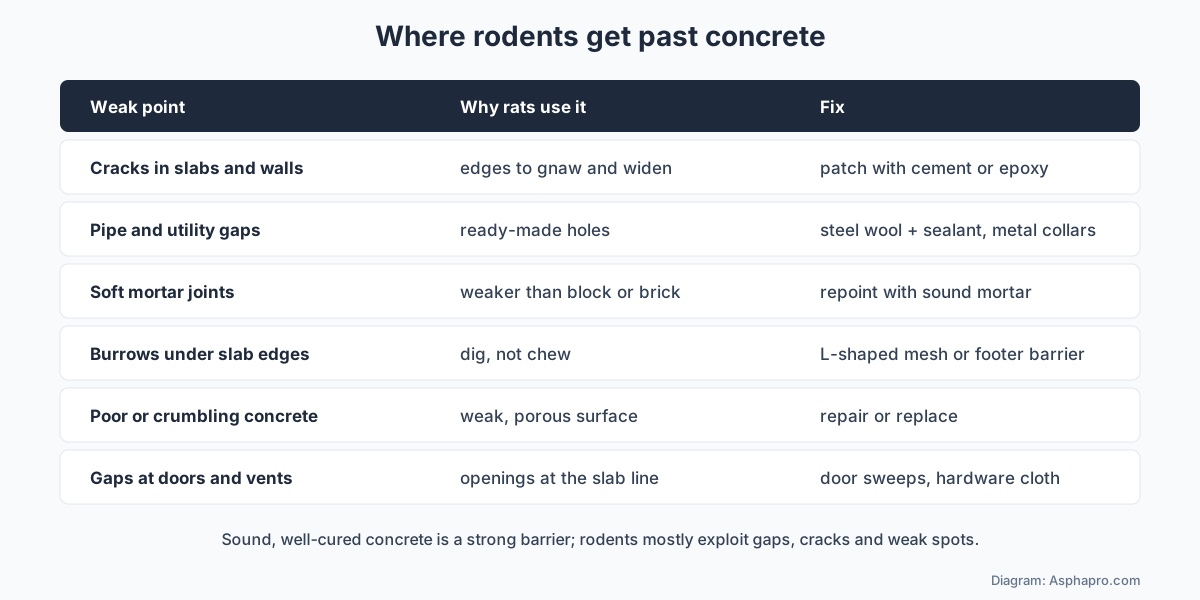
- Cracks and broken edges: rats use their teeth to widen existing cracks and chip at broken edges until they fit.
- Mortar joints: mortar is weaker than concrete block or brick, and old, deteriorated mortar can be gnawed and dug out.
- Cinder block: hollow block has thin face shells; damaged or weak block can be breached, especially at corners and holes.
- Concrete patches and grout: weak patching materials can be gnawed out.
So the practical answer is that rats rarely chew through good concrete, but they are excellent at finding and enlarging any weakness in and around it.
Why Rats Gnaw at All
Rats do not chew on concrete because they want to eat it. Their front teeth grow continuously throughout their lives, so they must gnaw regularly to keep them at a usable length. They also gnaw to get to food, water and shelter, and to make openings bigger. A rat that smells food or warmth on the other side of a wall will work at any edge it can get its teeth on: the lip of a crack, a crumbling mortar joint, the rounded edge of a broken block, or the soft rubber seal under a door. Concrete with a smooth, hard, unbroken face gives it nothing to grab.
That behavior explains why exclusion works. Remove the edges and openings, and rats move on to easier targets. It also explains why rats sometimes leave scratch and gnaw marks on concrete even when they fail to get through: they are testing it.
Seasonal Pressure
Rodent problems often rise in fall and early winter, when outdoor food becomes scarce and temperatures drop. Rats and mice look for warm shelter, and homes with garages, basements and crawl spaces are prime targets. Late summer and early fall are good times to inspect the foundation, seal gaps, repair cracks and fix door seals. Termite swarms, on the other hand, are most common in spring, often after warm rains, which is when you are most likely to see winged termites or piles of wings indoors.
Health and Safety Notes
Rats and mice can carry diseases and contaminate food and surfaces with droppings and urine. When cleaning up after rodents, avoid sweeping or vacuuming dry droppings, which can stir up dust. Public health guidance generally recommends wetting droppings and nesting material with a disinfectant or bleach solution, wearing gloves, and wiping them up. Ventilate enclosed spaces first. For large infestations or crawl spaces with heavy contamination, professional cleanup is safer.
Inspection Checklist for Slab and Foundation Homes
- Walk the outside perimeter, looking for burrows, gnaw marks, mud tubes and gaps at the slab line.
- Check where every pipe, wire, cable and vent enters the house.
- Inspect garage door seals and the door frame at the slab.
- Look for cracks in the slab, foundation walls and steps.
- Check mortar joints on block and brick foundations.
- Inside, check under sinks, behind appliances and in the garage and basement for droppings and holes.
- Probe wood near the slab for hollow spots, as EPA suggests for termites.
- Note any musty smell, wings or mud in cracks.
Doing this once or twice a year catches most problems early, while fixes are still small and cheap, and long before rats or termites have a chance to settle in and cause real damage to the house.
How Rats Get Into Concrete Buildings
- Gaps around pipes and utilities: where plumbing, gas lines, electrical conduit and dryer vents pass through foundation walls and slabs.
- Cracks in foundations and slabs: settlement and shrinkage cracks give rodents a starting point.
- Under doors: garage doors and exterior doors with worn seals leave gaps at the slab.
- Vents and openings: crawl space vents, weep holes and openings without screens.
- Burrows under slab edges: Norway rats are strong burrowers and dig under patios, sheds, steps and shallow slab edges, sometimes creating voids under concrete.
- Sewer and drain lines: rats can enter through broken sewer pipes and floor drains without proper covers.
- Roofs and upper levels: roof rats climb and enter high, away from concrete entirely.
A common pest-control rule of thumb is that young rats can squeeze through holes around the size of a quarter and mice through holes about the size of a dime, so even small gaps matter.
What Rats Can and Cannot Chew Through
Knowing which materials hold up helps you choose the right fix for each gap.
- Can chew through: wood, plastic and PVC pipe, rubber and vinyl door seals, foam insulation and spray foam, drywall, caulk and silicone on their own, window screens, thin aluminum, lead, soft and crumbling mortar, and weak concrete patches.
- Hard for rats: sound, well-cured concrete, hard brick and stone, steel and galvanized sheet metal, heavy galvanized hardware cloth with small openings, and stainless or copper mesh packed tightly into gaps.
That is why expanding foam or caulk alone is not a rodent barrier. Rats chew through it quickly. Pack the gap with steel wool or copper mesh first, then seal over it, or use a cement-based patch for openings in masonry and concrete.
Choosing Materials for Lasting Repairs
When you seal entry points, choose materials that match the job and will last. For cracks and holes in concrete and block, a polymer-modified repair mortar or hydraulic cement fills the void and hardens to a surface rats cannot easily gnaw. For gaps around pipes, pack copper or stainless steel mesh tightly into the opening, then cover it with mortar or a durable sealant so it stays in place and blocks drafts. Copper and stainless mesh last longer than plain steel wool, which can rust and stain concrete. For vents and larger openings, use heavy galvanized hardware cloth with small openings, fastened with masonry screws or anchors; see types of concrete anchors. For door bottoms, use metal-reinforced sweeps or thresholds. Avoid relying on foam, plastic or caulk alone anywhere rats can reach, because they chew through those quickly.
Signs Rats Are Getting Into Your Home
- Droppings along walls, in cabinets, the garage or the basement.
- Gnaw marks on wood, plastic, wiring and food packaging.
- Greasy rub marks along walls and around holes where rats travel repeatedly.
- Scratching or scurrying sounds in walls, ceilings or under floors, especially at night.
- Burrows and runways outside along the foundation.
- Nests made of shredded paper, fabric or insulation.
- Pets acting interested in a particular spot along a wall, cabinet or floor.
If you see these signs, find and seal the entry points while dealing with the rats already inside. Exclusion is the long-term fix; trapping alone does not stop new rats from coming in.
Garages and Basements
Garages are the most common rodent entry point in many homes, because large doors leave gaps at the slab and garages are full of clutter and stored food like pet food and birdseed. Replace worn garage door bottom seals with rodent-resistant seals, add a threshold seal, seal gaps where the door frame meets the slab, and store food in metal or heavy plastic bins. In basements, check where the slab meets the foundation walls, around the sump pit, floor drains and utility penetrations, and seal any gaps. Basement block walls with deteriorated mortar should be repointed.
A Worked Example: Rats Under a Patio
Say a homeowner sees rats running under the edge of a concrete patio next to the house, and finds droppings in the garage.
- A pest professional sets traps along the patio edge and in the garage and identifies burrows under two corners of the patio.
- After activity stops, the burrows are collapsed and filled with gravel and a sand-cement mix.
- The homeowner digs a trench along the open patio edges and buries galvanized hardware cloth about 12 inches deep, bent outward at the bottom.
- In the garage, they replace the door's bottom seal, seal a gap where a pipe enters the wall with copper mesh and mortar, and move birdseed into a metal can.
- A crack in the garage slab that rats had chewed at the edge is patched with a concrete repair compound.
Months later, there are no new droppings or burrows. The concrete was never the weak point; the gaps around it were.
How to Rodent-Proof Concrete
- Inspect: walk the foundation inside and out with a flashlight. Look for gaps, cracks, gnaw marks, droppings, grease rub marks and burrows.
- Seal cracks: fill cracks in slabs and foundation walls with a concrete patch, hydraulic cement or epoxy filler. See concrete repair cost.
- Seal utility gaps: pack openings with steel wool or copper mesh, which rodents dislike chewing, then seal over with cement, mortar or sealant. Use metal escutcheons or collars around pipes.
- Repoint mortar: replace soft, crumbling mortar in block and brick foundations. See mortar vs concrete.
- Cover vents: install heavy hardware cloth (galvanized wire mesh) over vents and openings.
- Fix doors: add door sweeps and garage door bottom seals; consider metal kick plates.
- Block burrowing: bury an L-shaped barrier of galvanized hardware cloth along the edges of patios, sheds and steps, extending down and outward, or pour a concrete footer or curtain wall.
- Cover drains: use sturdy drain covers and check sewer lines for breaks.
- Remove attractions: store food and garbage in sealed containers, remove clutter and woodpiles near the house, and trim vegetation.
Signs of Termites in Concrete Slab Homes
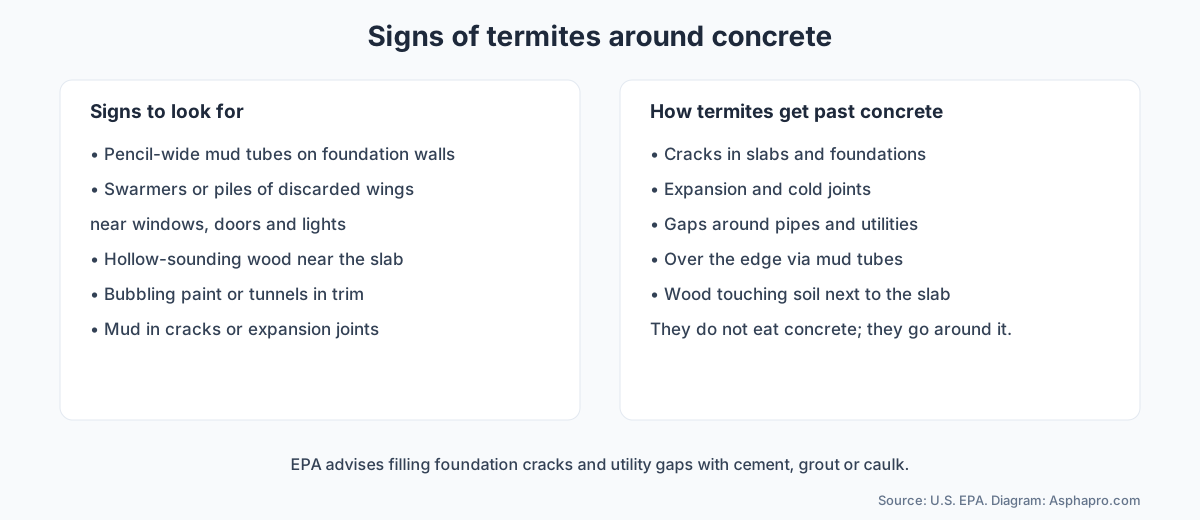
Termites do not eat concrete. They eat wood and other cellulose. But subterranean termites live in the soil and need moisture, so they travel from the ground to the wood in your house through any path they can find, including tiny cracks in concrete slabs, cold joints, expansion joints, gaps around plumbing and electrical penetrations, and over the outside of foundation walls inside mud tubes. A concrete slab makes termite activity harder to see, because the action is underneath or inside walls.
What to look for
- Mud tubes: pencil-width tunnels of soil and saliva on foundation walls, slab edges, piers or inside cracks. Termites build them to stay moist as they travel. Break a section open; if it is rebuilt in a few days, the colony is active.
- Swarmers and wings: in spring, winged reproductive termites swarm, often near windows, doors and lights, and leave piles of shed wings. EPA notes termite wings are roughly equal in length, while ant front wings are longer than the hind wings, which helps tell them apart.
- Hollow wood: EPA suggests probing exposed wood with a flathead screwdriver to check for hollow spots. Baseboards, door frames and sill plates near the slab are common places.
- Bubbling or rippled paint and drywall: termite tunnels under the surface can show as blisters or lines.
- Mud in cracks or joints: soil packed into slab cracks, expansion joints or around pipes where none should be.
- Sticking doors and windows: moisture from termite activity can swell frames.
Preventing termites around concrete
EPA recommends reducing openings that give termites access by filling cracks in cement foundations and gaps where utilities pass through walls with cement, grout or caulk. It also advises keeping soil around the foundation dry, fixing leaks promptly, keeping wood and firewood away from the house, and, during construction, using a concrete foundation and keeping a ventilation space between soil and wood. EPA notes that steel mesh and sands of particular sizes have been shown to work as physical barriers. For active infestations, licensed pest professionals can apply soil treatments or baits.
Rats Burrowing Under Concrete
Norway rats are strong diggers. They often burrow under the edges of patios, sidewalks, sheds, steps and garage slabs, where the soil is protected and dry. Over time, burrows can create voids under concrete, which may lead to cracking or settling. Signs include holes at slab edges, loose soil piles, runways in grass, and droppings nearby.
- Remove the rats first: use traps or a licensed pest professional; sealing burrows with rats inside can push them into the house.
- Fill burrows: collapse and fill burrows with soil, gravel or a sand-cement mix.
- Add a barrier: bury galvanized hardware cloth along the slab edge, about a foot or more deep and bent outward in an L shape, so digging rats hit the mesh.
- Fill voids under slabs: if burrows have undermined the slab, slabjacking or foam injection can fill voids and relevel it. See concrete leveling cost.
Rodent-Proofing New Construction
If you are building a new slab, foundation, shed pad or addition, you can make it much harder for rodents and termites from the start:
- Use good, well-cured concrete with proper joints to limit cracks. See why concrete cracks.
- Add a thickened edge or concrete curtain wall around shed and patio slabs, extending below grade, to stop burrowing.
- Plan utility penetrations and seal them during construction with appropriate collars and sealants.
- Keep wood framing off soil; use treated sill plates and the required clearances.
- Install physical termite barriers or soil treatments where required or recommended locally.
- Screen all vents and openings.
Can Rats Chew Through Cinder Block, Mortar and Concrete Patches?
Many homes have block foundations or patched concrete, so it helps to know how each holds up.
- Can rats chew through concrete block? Solid, sound concrete block is hard for rats, but hollow block has thin face shells and open cores. Rats can get into the cores through damaged blocks, open tops or holes, and travel inside the wall. Cap open cores and fill holes.
- Can rats chew through mortar? Old, soft or crumbling mortar is one of the easiest masonry materials for rats to gnaw and dig out. Repointing with sound mortar closes this route.
- Can rats chew through a concrete patch? Weak or thin patches, especially those made with too much water or applied without good bond, can be gnawed. Use a strong repair mortar or hydraulic cement, and fill the full depth of the hole.
- Can rats chew through concrete that is old? Old concrete that has scaled, crumbled or lost its surface paste is softer at the surface. Rats may gnaw at edges and cracks, especially where they already have a foothold.
- Can rats chew through a concrete slab from below? Rats rarely chew up through a sound slab. They dig under its edges instead, or enter through gaps around plumbing.
Other Pests and Concrete
- Mice: smaller than rats and able to fit through very small gaps; they also cannot chew through good concrete but exploit cracks and utility gaps.
- Squirrels: strong chewers that usually enter through roofs, soffits and vents rather than concrete.
- Groundhogs and other burrowers: can dig under slabs, steps and sheds, creating voids that cause concrete to crack or sink.
- Carpenter ants: do not eat wood or concrete but nest in damp wood; they may trail along foundation cracks.
- Cockroaches: travel through drains, gaps and cracks in slabs, especially in warm climates.
- Termites: use cracks and joints in concrete to reach wood, as covered above.
Common Myths About Rats and Concrete
- "Rats can chew through anything." They can chew through many materials, but sound concrete, steel and heavy mesh stop them.
- "Expanding foam keeps rats out." Rats chew through foam easily. Use steel or copper mesh and cement-based sealants.
- "A concrete slab house is rat-proof." Slab homes still have gaps at doors, pipes, vents and roofs.
- "Termites can't get into slab homes." They can, through cracks, joints and utility gaps.
DIY or Call a Professional?
Sealing a few small gaps and cracks, adding door sweeps and screening vents are good DIY projects. Call a licensed pest professional if you see signs of an active infestation, termite mud tubes or swarmers, burrows under slabs near the house, or droppings in living areas. Pest professionals can identify species, find hidden entry points, and use traps, baits or treatments safely. For concrete repairs like filling voids under a slab or replacing broken sections, a concrete contractor is the right call. See concrete repair cost and how to fix concrete steps.
Quick Reference
- Can rats chew through concrete? Not sound, well-cured concrete; they gnaw weak spots, cracks, edges and mortar.
- Where rats get in: pipe gaps, cracks, door gaps, vents, drains, burrows under slab edges.
- Best sealing materials: steel or copper mesh plus cement or sealant, hardware cloth, metal flashing, concrete patch.
- Signs of termites in concrete homes: mud tubes, swarmers and wings, hollow wood, mud in cracks.
- Termite prevention: fill foundation cracks and utility gaps, keep soil dry, keep wood off soil.
So can rats chew through concrete? Rarely through good concrete, but they will find every crack, gap and soft spot around it. Sealing those weak points, and keeping an eye out for signs of termites in concrete slab homes, protects your house far better than relying on the concrete alone.
Frequently Asked Questions
Can rats chew through concrete?
Not through sound, well-cured concrete, but they can gnaw weak concrete, cracks, edges and mortar joints.
Can mice chew through concrete?
Mice cannot chew through good concrete either, but they squeeze through very small gaps and cracks.
What can rats not chew through?
Sound concrete, steel, heavy galvanized hardware cloth and metal flashing are strong barriers.
Can termites eat concrete?
No. Termites travel through cracks, joints and utility gaps in concrete to reach wood.
What are signs of termites in a concrete slab house?
Mud tubes on foundation walls, swarmers or discarded wings, hollow wood near the slab, and mud in cracks or joints.
Does steel wool keep rats out?
Packed into gaps and sealed over with cement or sealant, steel or copper mesh is an effective rodent barrier.
Can rats chew through cinder block?
Sound block is hard for them, but they enter hollow cores through holes, damaged blocks and open tops, and gnaw soft mortar.
Can rats dig under a concrete slab?
Yes. Norway rats burrow under slab edges. Bury hardware cloth along edges or use a concrete curtain wall.
How do termites get through concrete?
Through cracks, expansion joints and gaps around pipes and utilities, or over the foundation in mud tubes.
Will sealing concrete cracks stop termites?
It helps. EPA recommends filling foundation cracks and utility gaps with cement, grout or caulk as part of prevention.
Sources
- U.S. EPA, Termites: How to Identify and Control Them. epa.gov
- Pest-control and extension guidance on rodent exclusion (common hole-size rules of thumb, sealing materials).
- Image credits: rat photo by G. Scott Segler, Wikimedia Commons (CC BY-SA 4.0); diagrams by Asphapro.com.
For active infestations, consult a licensed pest control professional. Checked November 2026.