
Can Mold Grow on Concrete? Causes, Cleanup and Keeping It Dry
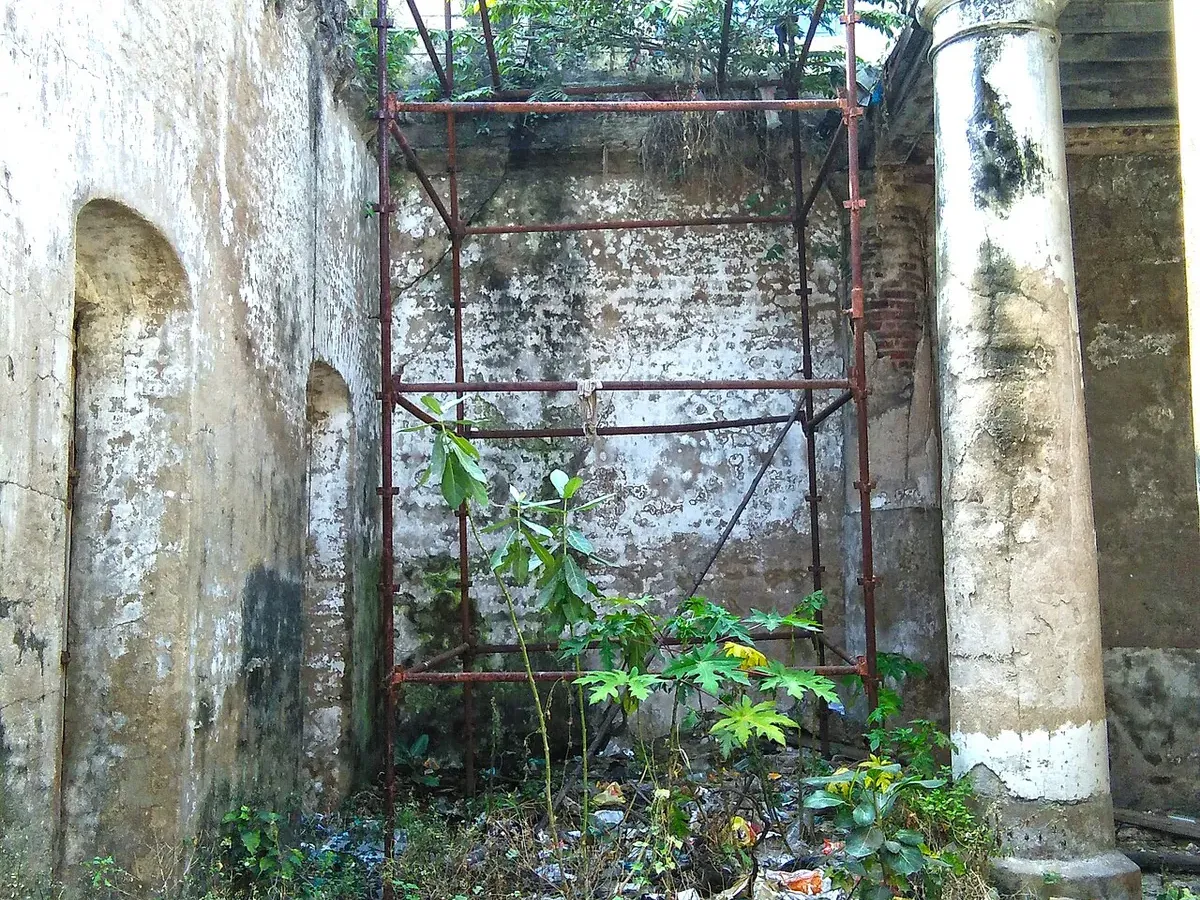
Photo: Rashika Agarwal, Fungus staining and mold growth on the walls, Wikimedia Commons, CC BY-SA 4.0.
Quick Answer
Yes, mold can grow on concrete. Concrete is not food for mold, but it is porous and holds moisture, and the dust, dirt, soap film and organic debris on its surface give mold all it needs. Mold on concrete is most common in damp basements and cellars, on shaded patios and on walls that stay wet. To get rid of it, scrub with detergent and water, then treat with a diluted bleach solution (the CDC suggests no more than 1 cup of household bleach per gallon of water) or an EPA-registered mold cleaner, rinse and dry quickly. The EPA says the key to mold control is moisture control: keep indoor humidity below 60%, ideally 30 to 50%, and fix leaks, drainage and condensation, or the mold returns.
Many homeowners are surprised to see black, green or white fuzzy patches on a concrete basement floor or wall. Concrete feels like stone, so it seems like mold should not be able to grow on it. But mold does not need wood or drywall to grow. It needs moisture, a little organic material and the right temperature, and damp concrete often provides all three.
This guide answers the question "can mold grow on concrete?" in detail, explains what kills black mold on concrete, whether mold on concrete is dangerous, how to get rid of mould on concrete safely, and how to make a concrete cellar dry so the mold does not come back.
Why Mold Can Grow on Concrete
Does mold grow on concrete itself? Not really. Concrete is not food for mold, but the dust, soil, leaves and soap film that collect on it are, and concrete holds moisture well. Give mold that thin layer of food plus steady dampness, and it will grow on a slab or wall just as it would on wood.
Mold is a fungus that spreads by tiny spores floating in the air. Spores are everywhere, indoors and outdoors. They only grow into visible colonies when they land on a surface with enough moisture and food. Here is how concrete supplies both:
- Moisture: concrete is porous. It absorbs water from the soil, rain, leaks, flooding and humid air, and it releases moisture slowly. A basement wall or slab can stay damp for long periods.
- Food: concrete itself is inorganic, but its surface collects dust, dirt, pollen, skin cells, soap residue, paint, adhesive and bits of wood and paper. These organic materials feed mold.
- Temperature: most common indoor molds grow at the same temperatures people find comfortable.
- Darkness and still air: basements, crawl spaces and shaded corners have little sunlight and airflow, which helps mold.
So the real answer to "can mould grow on concrete" is that mold grows on what is on the concrete, fed by the water in the concrete. Clean, dry concrete in a well-ventilated space rarely grows mold. Dirty, damp concrete in a closed basement often does.
Where Mold Grows on Concrete
- Basement and cellar walls: especially near the floor, in corners, behind stored boxes and furniture, and where groundwater seeps through.
- Basement floors: under carpets, rugs, cardboard boxes and wooden pallets that trap moisture.
- Crawl spaces: damp, dark and often unventilated.
- Garages: in corners where water from cars and snow pools.
- Outdoor patios, steps and walls: in shaded, damp areas, usually as green algae, black mildew or moss.
- Behind finished walls: mold may grow on the concrete behind drywall or insulation in finished basements, where you cannot see it.
Mold vs Efflorescence vs Mildew
Not every spot on concrete is mold. Telling them apart helps you pick the right fix.
| What you see | Likely cause | Quick test |
|---|---|---|
| White, crystalline, powdery or crusty deposits | Efflorescence (salts left by water moving through concrete) | Crumbles to powder; dissolves in water or vinegar; does not smear |
| White, fuzzy, cottony growth | Mold | Smears or lifts when wiped; may smell musty |
| Black, green or gray spots or patches | Mold or mildew | Smears; often musty smell; spreads over time |
| Green film outdoors | Algae | Slimy when wet |
| Dark wet patches that come and go | Moisture only | Dry out and fade without cleaning |
Efflorescence is not harmful by itself, but it is a sign that water is moving through the concrete, which means mold could follow. Treat both as moisture warnings.
Is Mold on Concrete Dangerous?
Mold on concrete is not a structural danger; it does not weaken the concrete. The concern is health and indoor air quality. The CDC notes that people exposed to damp and moldy environments may have symptoms such as stuffy nose, wheezing, and red or itchy eyes or skin. People with allergies, asthma or weakened immune systems can have more serious reactions.
"Black mold" is a common name for Stachybotrys chartarum, but many molds are black or dark green. The CDC says you do not need to identify the type of mold; all mold should be treated the same way: remove it and fix the moisture problem. Most mold on basement concrete is a common household species, but it is still worth removing.
Mold on concrete can also be a sign of hidden mold on nearby materials such as drywall, wood framing, carpet and stored items, which are more likely to be damaged. If the basement smells musty but you see little mold, check behind finished walls and under flooring.
Signs You Have a Moisture Problem
Mold on concrete is usually the last sign of a moisture problem, not the first. Watch for these earlier warnings:
- A musty or earthy smell, especially in summer or after rain.
- White efflorescence on walls or the floor.
- Dark, damp patches near the bottom of walls.
- Peeling or bubbling paint on concrete walls.
- Rust on metal shelving legs, appliance feet or nails in the basement.
- Condensation on cold water pipes, windows or the walls.
- Warped wood, swollen baseboards or damp cardboard.
- A hygrometer reading consistently above 60%.
Catching these signs early lets you fix the cause before mold on concrete spreads to stored items, drywall and framing, which are far harder and costlier to clean.
Safety Gear for Mold Cleanup
For small areas of mold on concrete that you clean yourself, the EPA recommends an N-95 respirator, long gloves and goggles without vent holes. Wear old clothes you can wash right away. Keep children, pets and anyone with asthma or allergies out of the area while you work. Seal off the space with plastic if mold is heavy, and use a fan in a window blowing out so spores leave the house instead of spreading upstairs. Wash your hands and change clothes when you finish, and bag cleanup rags and moldy debris before carrying them through the house.
What Kills Black Mold on Concrete
Because concrete is a hard, non-absorbent surface compared with drywall or carpet, mold on it can usually be cleaned rather than removed. Options include:
- Detergent and water: the EPA recommends scrubbing mold off hard surfaces with detergent and water, then drying completely. This removes most surface mold.
- Diluted bleach: the CDC's mold cleanup guidance says to use no more than 1 cup of household laundry bleach in 1 gallon of water. Apply, scrub, let it sit, rinse and dry. Never mix bleach with ammonia or other cleaners.
- EPA-registered mold and mildew products: follow the label for dwell time.
- Hydrogen peroxide (3%): spray, let it sit 10 minutes, scrub and rinse. It is a gentler alternative to bleach.
- White vinegar: can kill some molds when sprayed undiluted and left for an hour before scrubbing. It is a weak acid, so rinse concrete afterward.
- Borax solution: a common household option for scrubbing mold; does not need rinsing on hard surfaces per many cleaning guides, but rinse concrete if residue remains.
Whatever product you use, the physical scrubbing and drying matter as much as the chemical. Dead mold can still cause allergic reactions, so remove it rather than just killing it.
How to Get Rid of Mould on Concrete: Step by Step
- Fix the water source first, or at least plan to: cleaning without fixing moisture only buys time.
- Protect yourself: wear an N-95 respirator, gloves and goggles, as the EPA recommends for mold cleanup. Ventilate with open windows and a fan blowing outside.
- Remove clutter: move boxes, rugs and stored items. Throw away moldy porous items such as cardboard and carpet padding.
- Vacuum loose mold: use a HEPA vacuum to pick up loose spores and dust. Do not dry brush or sweep, which spreads spores.
- Scrub with detergent and water: use a stiff nylon brush.
- Treat: apply diluted bleach, hydrogen peroxide or a mold cleaner. Let it sit as directed.
- Scrub again and rinse: wipe or rinse with clean water.
- Dry fast: use fans and a dehumidifier. The EPA advises drying water-damaged areas within 24 to 48 hours to prevent mold growth.
- Check after a week: look for regrowth, which signals ongoing moisture.
When to call a professional
The EPA suggests that if the moldy area is larger than about 10 square feet, you should consult its guidance on mold remediation and consider a professional. Also call a pro if mold is in your HVAC system, if there was sewage or contaminated water, or if anyone in the home has health concerns.
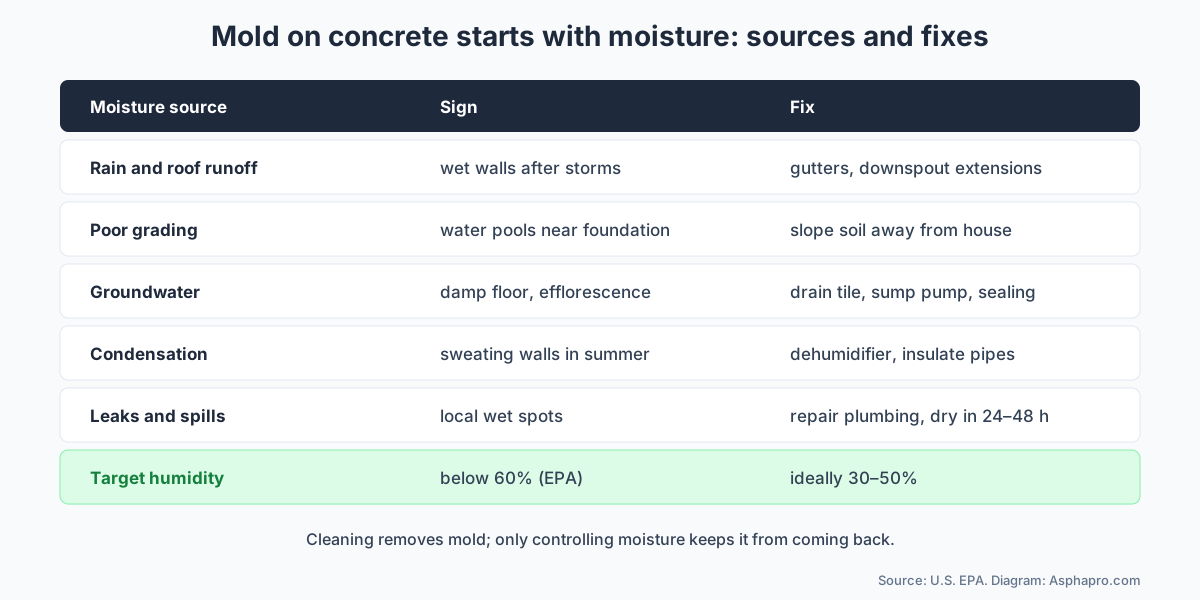
How to Make My Concrete Cellar Dry
Mold on concrete keeps coming back until the moisture is under control. Here is how to dry out a concrete cellar or basement, from cheapest to biggest fixes.
1. Find out where the water is coming from
Tape a 2-foot square of plastic sheet to the floor or wall, seal all edges, and leave it for 24 to 48 hours. If moisture appears under the plastic, water is coming through the concrete. If moisture forms on top, it is condensation from humid air. This simple plastic sheet test is a quick first check.
2. Fix gutters and downspouts
Clean gutters and extend downspouts several feet away from the foundation. Roof water dumped next to the house is one of the most common causes of wet basements.
3. Grade the soil away from the house
Soil should slope away from the foundation. A common guideline is about 6 inches of drop over the first 10 feet. Fill low spots and keep mulch and soil below siding.
4. Control humidity
Run a dehumidifier set to keep relative humidity below 60%, ideally 30 to 50% as the EPA recommends. Empty it often or connect a drain hose. Use a cheap hygrometer to check levels.
5. Stop condensation
In summer, warm humid air hits cool concrete walls and condenses. Insulate cold water pipes, close windows on humid days, run the dehumidifier, and avoid drying laundry in the basement without venting.
6. Seal cracks and the concrete surface
Seal small cracks with a masonry crack filler or hydraulic cement for active leaks. Masonry waterproofing coatings can reduce dampness through walls but will not stop water under pressure. See how to seal concrete and concrete repair cost.
7. Interior drainage and a sump pump
For groundwater, a contractor can install an interior perimeter drain under the slab edge that carries water to a sump pump. This is a common and effective fix for basements that take on water.
8. Exterior waterproofing
The most complete fix is excavating outside, applying waterproofing to the foundation wall and installing footing drains. It is also the most expensive. See concrete footing cost for related foundation work.
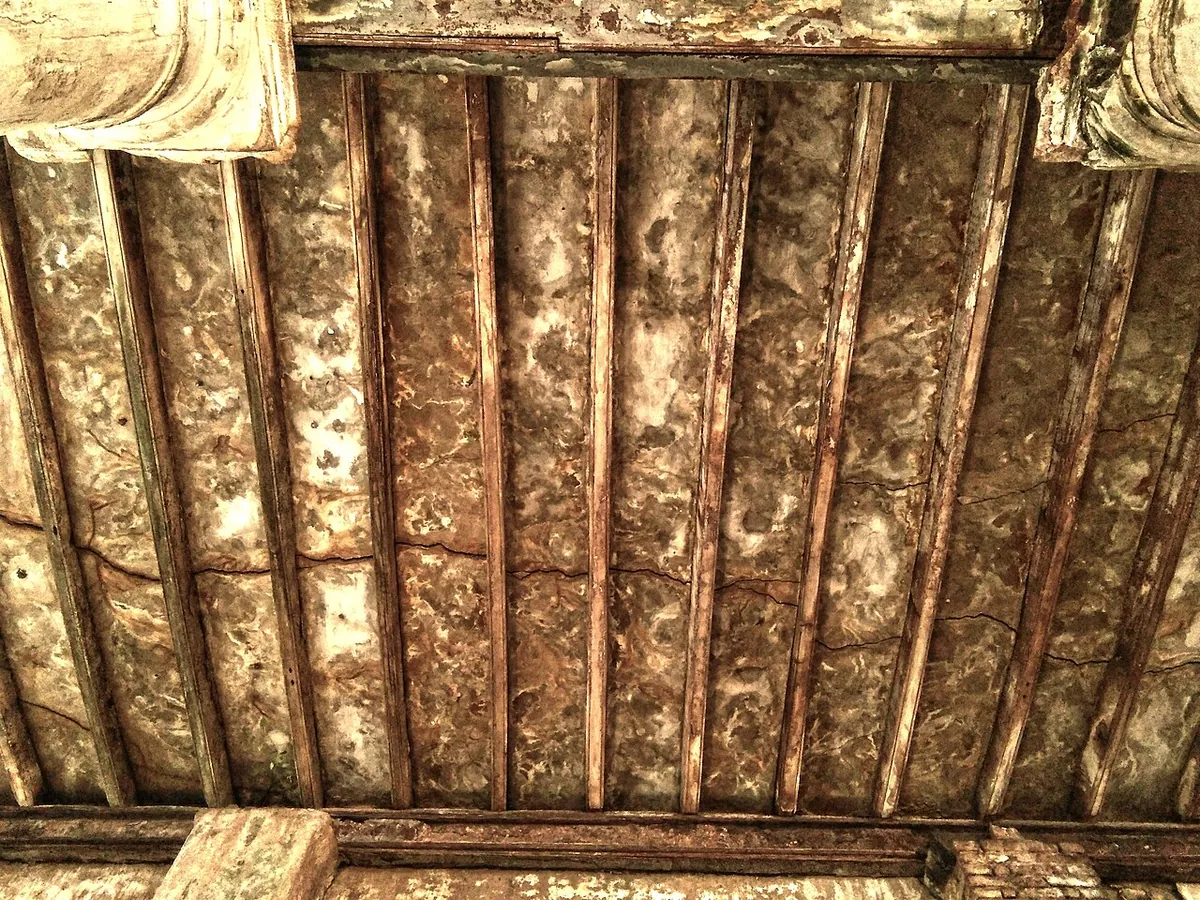
Photo: Rashika Agarwal, Dampness penetration, Wikimedia Commons, CC BY-SA 4.0.
Moisture Fixes Compared
| Fix | Solves | Relative cost | DIY? |
|---|---|---|---|
| Clean gutters, extend downspouts | Roof runoff near the foundation | Low | Yes |
| Regrade soil | Surface water flowing toward the house | Low to medium | Often |
| Dehumidifier | Humid air, condensation | Low | Yes |
| Insulate pipes, seal air leaks | Condensation | Low | Yes |
| Seal cracks, masonry coating | Minor seepage, dampness | Low to medium | Yes |
| Interior drain and sump pump | Groundwater under and around the slab | Medium to high | Pro |
| Exterior waterproofing and footing drains | Water against the foundation wall | High | Pro |
| Crawl space encapsulation | Damp crawl spaces | Medium to high | Pro or skilled DIY |
Start with the cheap outside fixes. Many basements that seem to need expensive waterproofing dry up once gutters, downspouts and grading are corrected and a dehumidifier runs through humid months.
A Worked Example: Musty Cellar With Black Spots
Say a homeowner has an unfinished concrete cellar that smells musty every summer. There are black spots along the bottom 2 feet of one wall and on the cardboard boxes stored against it.
- They buy a hygrometer and find the cellar at 72% relative humidity in July.
- The plastic sheet test on the wall shows moisture on the room side, meaning condensation, and a little under the plastic near the floor, meaning some seepage too.
- Outside, a downspout empties right next to that wall, and the soil slopes toward the house.
- They extend the downspout 6 feet, add soil to slope the ground away, and move storage onto plastic shelving away from walls.
- They throw out the moldy boxes, wear an N-95 respirator and gloves, HEPA vacuum the wall, scrub with detergent and water, treat with diluted bleach, rinse and dry with fans.
- They run a dehumidifier with a drain hose set to 45%.
- A month later, humidity holds near 45 to 50%, the smell is gone and there is no regrowth.
This is typical: mold on concrete is usually a moisture problem with simple causes, and fixing those causes is what ends it.
Mold After a Basement Flood
After a flood, mold can start growing within 24 to 48 hours. Act fast:
- Make sure the power is safe before entering a flooded basement.
- Pump or vacuum out standing water.
- Remove wet carpet, padding, cardboard, drywall and insulation that cannot be dried quickly; the CDC advises throwing away porous items that cannot be cleaned and dried.
- Clean concrete floors and walls with detergent and water, then disinfect if floodwater was contaminated.
- Run fans and dehumidifiers continuously until materials are dry.
Floodwater from rivers or sewage backups can contain bacteria and chemicals, so wear protective gear and consider professional cleanup.
Finished Basements and Hidden Mold
In finished basements, mold often grows where you cannot see it: on the concrete behind drywall, on the back of paper-faced drywall, in fiberglass batts pressed against cold walls, and under carpet pads. Signs include a musty smell, peeling paint at the base of walls, stained baseboards and allergy symptoms that worsen downstairs.
If you plan to finish a basement, fix moisture first, then use materials that tolerate occasional dampness. Many building scientists recommend rigid foam insulation against concrete walls rather than fiberglass batts directly against concrete, so warm, humid air cannot reach the cold surface and condense. Leave a gap at the bottom of drywall, use moisture-resistant drywall or non-paper-faced products, and choose flooring rated for below-grade use.
Concrete Slab Moisture and Flooring
Concrete slabs on the ground can release moisture vapor upward. Under vinyl, laminate, carpet or wood flooring, that moisture can get trapped and feed mold or break down adhesives. Flooring makers often require a moisture test before installation, such as the calcium chloride test (ASTM F1869) or an in-slab relative humidity test (ASTM F2170). If moisture levels are too high, a moisture barrier or vapor retarder underlayment, or a moisture-mitigating coating, may be needed. New slabs also need time to dry; see how long concrete takes to cure.
Mold and Mildew on Outdoor Concrete
Outdoors, black spots and green film on concrete are usually mildew and algae rather than the indoor molds people worry about. They are mostly a cleaning and slip hazard issue. Clean with oxygen bleach or a mildew cleaner and a stiff brush, and improve sunlight and drainage. See how to clean concrete without a pressure washer.
Garage Mold
Garages get mold where snowmelt and rain from cars pools, along walls with poor drainage outside, and on stored cardboard and wood. Squeegee water toward the door, store items on shelves off the floor, and fix grading at the garage walls. A coated garage floor sheds water more easily; see concrete coating cost.
Crawl Spaces
Crawl spaces with bare soil floors are a major moisture source. Encapsulation covers the soil and walls with a heavy vapor barrier, seals vents and air leaks, and adds a dehumidifier or conditioned air. Building codes in some areas allow unvented, conditioned crawl spaces built this way. This often reduces mold and musty smells in the whole house above.
Prevention Checklist
- Keep indoor humidity below 60%, ideally 30 to 50%.
- Dry spills and leaks within 24 to 48 hours.
- Keep gutters clean and downspouts extended.
- Grade soil away from the foundation.
- Store items on plastic shelves, not on the floor or against walls.
- Use plastic bins instead of cardboard boxes in basements.
- Vent dryers and bathrooms outdoors.
- Seal cracks and consider a breathable masonry sealer.
- Inspect basements a few times a year, especially after heavy rain, and look behind stored items and in corners where air does not move.
Common Myths About Mold on Concrete
"Concrete is stone, so mold cannot grow on it"
False. Mold on concrete is common. Mold can grow on concrete because of the dust and organic film on its surface and the water held in its pores. A damp basement wall is one of the most common places to find mold on concrete in a home.
"Bleach is the only thing that works"
Not true. The EPA's first recommendation for mold on hard surfaces is detergent and water, followed by thorough drying. Bleach, peroxide and registered mold cleaners can help, but scrubbing and drying do most of the work.
"Painting over mold fixes it"
No. Paint over mold on concrete traps it, and it often grows through or peels the paint. Clean, dry and fix moisture first. Mold-resistant paints and masonry coatings help only on a clean, dry wall.
"If I cannot see mold, there is no problem"
A musty smell means mold is likely growing somewhere, even if it is behind walls, under flooring or inside stored items.
"Black mold on concrete is always toxic black mold"
Many molds look black. The CDC advises treating all mold the same way: remove it and fix the moisture, without needing to identify the species.
Quick Reference
- Can mold grow on concrete? Yes, when concrete stays damp and dirty, especially in basements, cellars and shaded outdoor areas.
- Can mould grow on concrete floors under rugs? Yes. Lift rugs and boxes, clean and dry the slab, and keep storage off the floor.
- What kills black mold on concrete? Detergent scrub, then diluted bleach (no more than 1 cup per gallon), 3% hydrogen peroxide or an EPA-registered mold cleaner, then fast drying.
- Is mold on concrete dangerous? Not to the concrete, but it can affect breathing and allergies. Remove it.
- How to get rid of mould on concrete for good: clean it, then keep humidity below 60% and fix leaks, drainage and condensation.
- How to make my concrete cellar dry: gutters and downspouts, grading, a dehumidifier, crack sealing, and drainage with a sump pump for groundwater.
Frequently Asked Questions
Can mold grow on concrete?
Yes. Mold grows on dust and organic film on concrete when the concrete stays damp, especially in basements and shaded areas.
What kills black mold on concrete?
Scrubbing with detergent and water, then diluted bleach (no more than 1 cup per gallon), hydrogen peroxide or an EPA-registered mold cleaner. Dry quickly afterward.
Is mold on concrete dangerous?
It does not harm the concrete, but it can cause allergy and breathing symptoms, especially for sensitive people. Remove it and fix the moisture.
How do I get rid of mould on concrete permanently?
Clean it, then control moisture: fix drainage, run a dehumidifier, stop leaks and condensation. Without moisture, mold cannot return.
Does vinegar kill mold on concrete?
Undiluted white vinegar can kill some mold left on for an hour. Scrub, rinse and dry. It is weaker than bleach.
How do I make my concrete cellar dry?
Fix gutters and grading, run a dehumidifier, seal cracks, and for groundwater install drainage and a sump pump.
Can mold grow on concrete floors?
Yes, especially under rugs, boxes and carpet where moisture is trapped. Keep floors clean, dry and uncovered where possible.
Does bleach kill mold on concrete?
Diluted bleach kills surface mold on concrete. Scrub first, apply no more than 1 cup per gallon of water, rinse and dry, and never mix it with ammonia.
Can mold grow inside concrete?
Mold grows mainly on the surface and in surface pores where organic material collects. It does not eat or weaken the concrete.
Will sealing concrete stop mold?
Sealing reduces moisture absorption and makes cleaning easier, but it will not stop mold if humidity or water problems remain.
Should I test for mold?
The CDC says testing is usually not needed; if you can see or smell mold, remove it and fix the moisture.
Sources
- U.S. EPA, A Brief Guide to Mold, Moisture and Your Home. epa.gov
- CDC, Mold: cleanup and health information. cdc.gov
- Image credits: photos by Rashika Agarwal, Wikimedia Commons (CC BY-SA 4.0); chart by Asphapro.com.
This guide is general information, not medical advice. Checked November 2026.
Related Guides
- Can rats chew through concrete? — rodent entry points and termites