
Concrete Repair Cost in 2026: Crack, Driveway and Slab Repair Prices
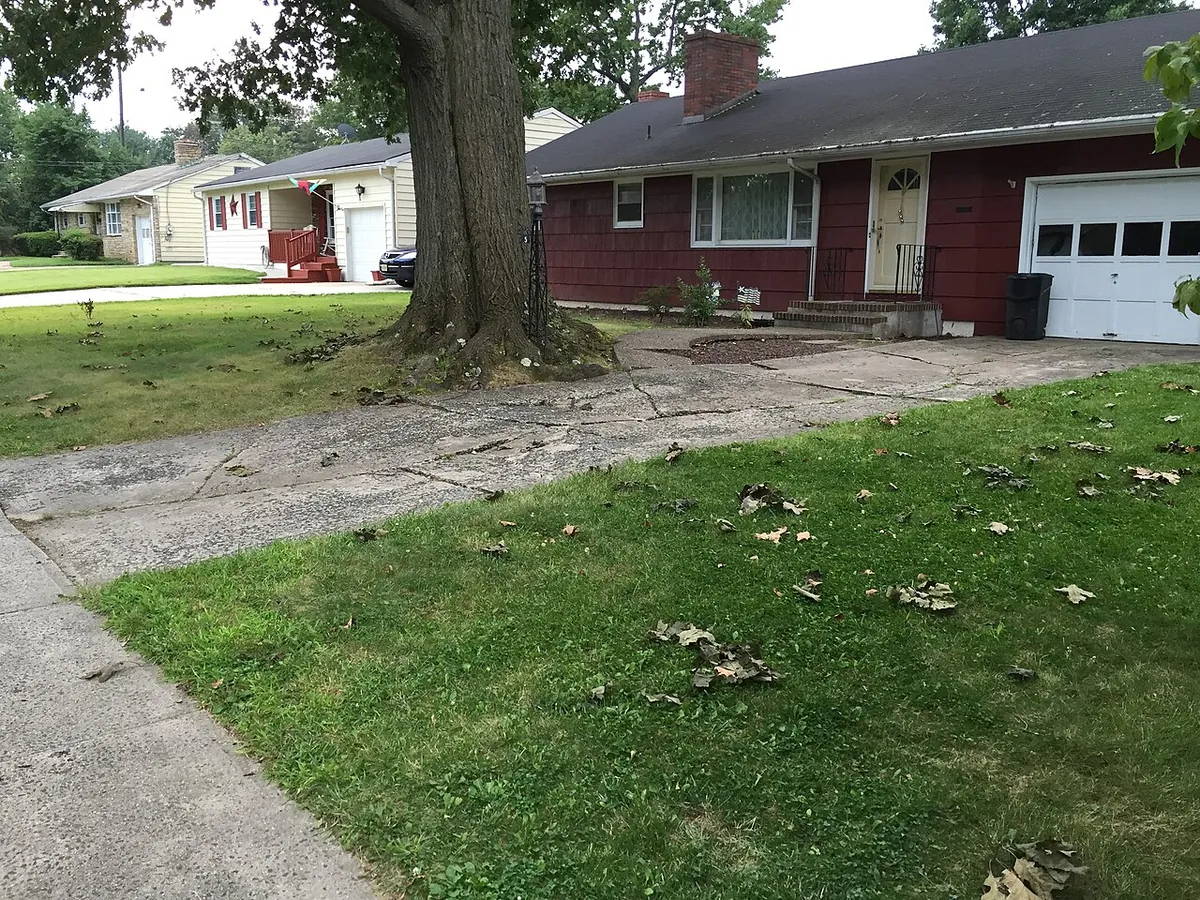
Photo: Famartin, Wikimedia Commons, CC BY-SA 4.0
Quick Answer
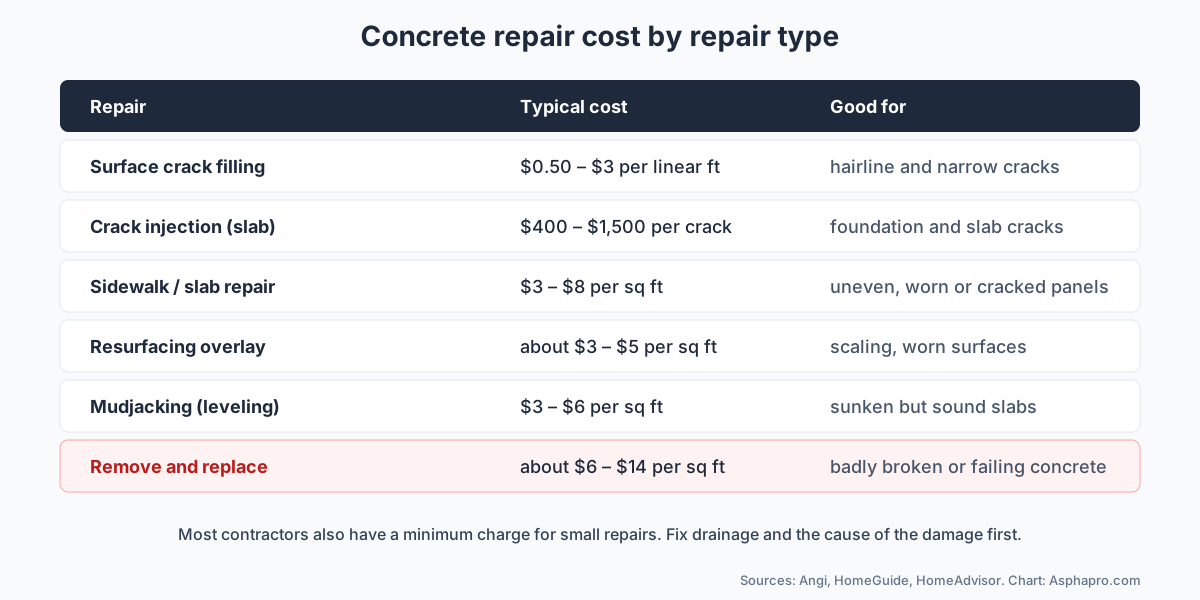
Concrete repair cost in 2026 depends on the problem. Filling minor surface cracks costs about $0.50 to $3 per linear foot, according to Angi. Repairing cracked, worn or uneven sidewalk and slab sections usually costs about $3 to $8 per square foot, and injecting a structural crack in a slab costs about $400 to $1,500 per crack, according to HomeGuide. Resurfacing a worn slab runs about $3 to $5 per square foot, and lifting a sunken slab about $3 to $6. Full replacement usually costs $6 to $14 per square foot, so repair often saves half or more.
Concrete is durable, but it is not immune to damage. Driveways crack, sidewalks lift, patios sink, steps crumble at the edges, and garage floors pit and stain. The good news is that many of these problems can be repaired for far less than replacement, as long as the slab underneath is basically sound and the cause of the damage is fixed.
This guide covers concrete repair cost by type of damage, concrete crack repair cost, concrete driveway repair cost, how to repair large cracks in a concrete driveway, DIY options, and how to decide between repair and replacement. Price ranges come from Angi, HomeGuide and HomeAdvisor, listed in the sources.
Concrete Repair Cost at a Glance
| Repair | Typical cost | Source |
|---|---|---|
| Minor surface crack filling | $0.50 – $3 per linear ft | Angi |
| Hairline slab crack repair | $250 – $800 per crack | HomeGuide (foundation slabs) |
| Epoxy or polyurethane crack injection | $400 – $1,500 per crack | HomeGuide (foundation slabs) |
| Sidewalk and slab repair | $3 – $8 per sq ft | HomeGuide |
| Sidewalk repair or replacement | $5 – $15 per sq ft | Angi |
| Resurfacing overlay | about $3 – $5 per sq ft | Resurfacing guides |
| Mudjacking (leveling) | $3 – $6 per sq ft | HomeGuide |
| Remove and replace | about $6 – $14 per sq ft | Removal $2 – $6 plus new $4 – $8 |
Concrete Crack Repair Cost
Cracks are the most common concrete problem, and the concrete crack repair cost depends on how wide, deep and active the crack is:
- Hairline and shrinkage cracks (narrower than about 1/8 inch) are mostly cosmetic. Sealing them with a flexible crack filler keeps water out. Angi puts minor surface crack filling at about $0.50 to $3 per linear foot.
- Wider cracks (about 1/8 to 1/2 inch) often need to be cleaned, widened slightly into a "V" or square groove, and filled with a patching compound or polyurethane sealant. Many contractors charge a minimum job fee, so small repairs may cost a few hundred dollars.
- Structural cracks in foundation slabs or walls are often injected with epoxy or polyurethane. HomeGuide puts injection at about $400 to $1,500 per crack.
- Cracks with height difference, where one side is higher than the other, signal settling or heaving. Filling them does not fix the cause; leveling or replacement may be needed.
See why concrete cracks to understand which cracks are normal and which point to a bigger problem.
Concrete Driveway Repair Cost
Driveways see cars, weather, salt and oil, so they need more repairs than patios. Typical concrete driveway repair cost depends on the damage:
| Driveway problem | Typical repair | Approximate cost |
|---|---|---|
| Hairline and small cracks | Clean and seal with crack filler | $0.50 – $3 per linear ft |
| Large cracks | Rout, fill with flexible sealant or patching compound | a few dollars per linear ft, often a job minimum |
| Surface scaling or spalling | Resurfacing overlay | about $3 – $5 per sq ft |
| Sunken sections | Mudjacking or foam lifting | $3 – $6 (mud) or $5 – $25 (foam) per sq ft |
| Broken or heaved panels | Remove and replace those panels | about $6 – $14 per sq ft |
| Oil stains | Degreaser and poultice | DIY cost of supplies |
Replacing only the damaged panels between control joints is often a cost-effective middle ground. The new concrete may not match the old color perfectly, but it restores a safe, solid surface. For full replacement prices, see concrete driveway cost.
How to Repair Large Cracks in a Concrete Driveway
How to repair large cracks in concrete driveway slabs depends on whether the crack is still moving. A wide crack that has stayed the same for a season can be cleaned out and filled; a crack that keeps widening or has one side higher than the other is a sign of base trouble that filler alone will not fix.
Large cracks, roughly 1/4 inch wide or more, need more than a bead of caulk. Here is the typical process:
- Check for movement. If one side is higher than the other, or the crack keeps growing, find the cause first: settling, tree roots, drainage or heavy loads.
- Clean the crack. Remove loose concrete, dirt and weeds with a wire brush, screwdriver and shop vacuum or air blower.
- Widen the top if needed. A chisel or grinder can shape the crack into an inverted "V" or square groove so the filler grips.
- Add backer rod. For deep cracks, press foam backer rod into the crack so the sealant sits at the right depth.
- Fill. Use a flexible polyurethane or self-leveling concrete crack sealant for cracks that move with temperature, or a cement-based patching compound for static cracks and broken edges.
- Tool and cure. Smooth the surface flush with the slab, and let it cure as directed before driving on it.
Cracks wider than about 1/2 inch, cracks with large height differences, or cracks that run across most of the driveway are signs the slab may need leveling or panel replacement. See concrete leveling cost.
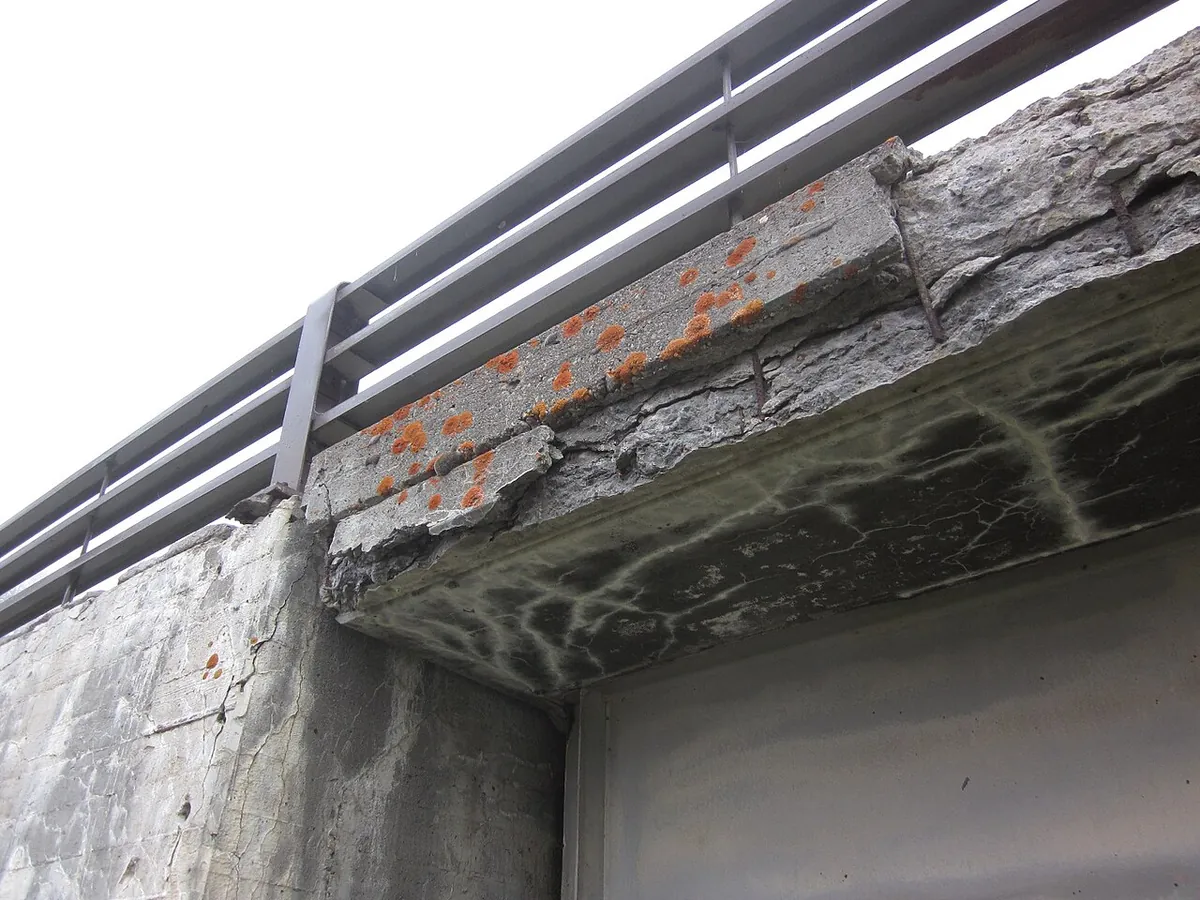
Photo: NPS / Doug Madsen, Wikimedia Commons, public domain
Repairing Spalled and Scaled Concrete
Spalling and scaling are surface damage that calls for concrete repair, where the top layer flakes, pops off or crumbles. Common causes are freeze-thaw cycles, de-icing salt, water added to the surface during finishing, poor curing and rusting rebar near the surface. Small spalls can be patched with a cement-based repair mortar. Wider scaling across a slab can often be fixed with a resurfacing overlay, about $3 to $5 per square foot, if the concrete underneath is sound. If rebar is rusting and pushing the concrete apart, the rust must be treated or the steel replaced, which is a bigger repair. See does salt damage concrete and concrete overlay cost.
Repairing Concrete Steps
Concrete steps often need repair when they chip at the corners and edges, or pull away from the house. Broken corners can be rebuilt with repair mortar and a simple form. Steps that have pulled away from the house, sunk or broken apart may need to be lifted, rebuilt or replaced. See concrete steps cost and how to fix concrete steps.
Repairing Sidewalks
HomeGuide puts sidewalk repair at about $3 to $8 per square foot for moderate cracks, surface wear or uneven sections. Raised panels can be ground down, sunken panels lifted, and badly broken panels replaced. In many cities, homeowners are responsible for the public sidewalk in front of their homes. See concrete sidewalk cost.
Concrete Repair Cost by Area of the Home
Patios
Patio repairs usually involve cracks, sunken sections near the house, and worn or stained surfaces. Sealing cracks and cleaning is inexpensive. Lifting a patio that slopes toward the house typically falls in the mudjacking range of about $3 to $6 per square foot. A resurfacing overlay can make an old, scaled patio look new for about $3 to $5 per square foot, and can add color or texture at the same time.
Garage floors
Garage floors develop cracks, pitting from salt and road grime, oil stains, and sometimes settled sections at the door. Cracks can be filled with epoxy or polyurethane fillers; pitting can be patched and then covered with a coating. Many owners combine repair with an epoxy coating, which HomeGuide prices at about $4 to $10 per square foot installed. See concrete coating cost.
Basement floors
Basement slabs crack from shrinkage and sometimes from settling or water pressure. Hairline shrinkage cracks are common and usually cosmetic. Cracks that leak water, widen over time or have height differences should be checked by a foundation or waterproofing specialist, since the fix may involve drainage as well as crack repair. HomeGuide's figures for cracked slab foundation repair, about $250 to $800 for hairline cracks and $400 to $1,500 for injection per crack, are a useful guide.
Pool decks
Pool decks crack and sink as water gets under them, and the joint between the deck and the coping often fails. Repairs include sealing the expansion joint, lifting sunken sections with foam (which resists water), and resurfacing with a textured coating for grip. Deck repair should be coordinated with any pool plumbing nearby.
Foundation slabs
Cracks in a house slab foundation range from harmless shrinkage cracks to signs of serious settlement. Watch for cracks wider than about 1/4 inch, cracks with one side higher than the other, doors and windows that stick, and cracks in walls above the slab. Those call for a foundation specialist, not a simple patch. Foundation repair can cost far more than flatwork repair, depending on the cause.
Concrete Crack Repair: Which Product for Which Crack?
Choosing the right material is the biggest factor in whether a crack repair lasts. Concrete cracks that open and close with temperature, such as long driveway cracks and joints, need a flexible sealant that stretches as the slab moves. Rigid patching compounds work well for static cracks, broken corners and small holes, but they can crack again if the slab keeps moving. Epoxy is very strong and works for fine, non-moving cracks in floors and some structural repairs; polyurethane injection is often preferred for basement cracks that leak because it stays flexible and fills the crack as it expands. For a quick summary: flexible sealant for moving cracks, cement patch for static damage, injection for structural or leaking cracks. Using the right product keeps your concrete crack repair cost from turning into a repeat expense.
Concrete Driveway Repair: Panels vs Whole Driveway
Concrete driveways are usually divided into panels by control joints, which makes partial replacement possible. If one or two panels are broken or sunken while the rest are sound, the contractor can saw-cut along the joints, remove only those panels, and pour new concrete with dowels or rebar tying into the old panels. This keeps the concrete driveway repair cost far below the price of a whole new driveway. The new panels may look lighter at first, and may never match perfectly, but they restore a safe, even surface. If many panels are failing, replacing the whole driveway is usually better value.
Who Repairs Concrete?
- Concrete contractors and flatwork companies handle crack repair, panel replacement, overlays and new slabs.
- Concrete leveling companies specialize in mudjacking and polyurethane foam lifting.
- Foundation repair specialists handle structural cracks, settlement and foundation slabs.
- Coating contractors repair and coat garage and basement floors.
- Handymen can handle small crack sealing and minor patches.
Get at least two or three quotes, and ask each contractor to explain the cause of the damage and how their repair addresses it.
DIY Concrete Repair Products
| Product | Use | Notes |
|---|---|---|
| Concrete crack sealant (polyurethane, self-leveling) | Cracks that move with temperature | Stays flexible; use backer rod in deep cracks |
| Concrete patching compound | Static cracks, small holes, broken edges | Cement-based; bonds to clean, damp concrete |
| Vinyl concrete patcher | Thin patches and feathered edges | Good for shallow surface repairs |
| Concrete resurfacer | Worn, scaled or stained surfaces | Thin overlay over a sound slab |
| Repair mortar | Rebuilding step corners and deeper spalls | Can be formed and shaped |
| Epoxy crack filler or injection kit | Fine cracks in floors and walls | Rigid; best for non-moving cracks |
For most DIY jobs, supplies cost far less than a contractor's minimum charge. Bagged repair products cost more per pound than regular concrete mix; see how much a bag of concrete costs.
How to Prevent Future Concrete Damage
- Control water: extend downspouts, slope soil away from slabs and fix low spots where water pools.
- Seal cracks early: small cracks let water reach the base, which leads to settling and bigger cracks.
- Seal the surface: a penetrating sealer every few years resists water and salt; see how to seal concrete.
- Limit de-icing salt, especially on young concrete; see does salt damage concrete.
- Keep heavy loads off edges, and avoid parking heavy trucks or dumpsters on thin slabs.
- Watch trees near slabs; roots can lift and crack concrete over time.
- Clean oil and rust stains promptly; see how to remove oil stains from concrete.
Timing and Weather for Concrete Repairs
Most crack sealants and patching products need dry conditions and temperatures above a minimum, often around 40 to 50°F, to cure properly. Check the label. Spring and fall are popular for repairs because temperatures are moderate. Avoid repairing just before heavy rain, and keep traffic off repairs for the time the product requires. In cold climates, sealing cracks in the fall before freeze-thaw season helps keep water out over winter.
Three Concrete Repair Cost Examples
Driveway with several cracks
A 600 square foot driveway has about 60 linear feet of cracks up to 1/4 inch wide. A contractor routs and seals them with polyurethane sealant. At a few dollars per linear foot plus a job minimum, the concrete repair cost is a few hundred dollars.
Scaled front walk
A 4 × 40 foot walk (160 square feet) has a flaking surface from salt. A resurfacing overlay at about $4 per square foot costs about $640, much less than replacing the walk.
Sunken patio section
A 12 × 12 foot patio section near the house has dropped 2 inches. Mudjacking at about $4 per square foot costs about $580, plus joint sealing along the house.
Repair or Replace?
| Situation | Usually best |
|---|---|
| A few narrow cracks, otherwise sound | Repair: seal cracks |
| Worn, scaled or stained surface on a sound slab | Repair: resurface or clean and seal |
| Sunken but intact slab | Repair: level with mudjacking or foam |
| A few broken panels | Replace those panels only |
| Widespread cracking, heaving or crumbling | Replace the slab |
| Old, thin slab with repeated failures | Replace with a thicker slab |
A good rule of thumb: if repairs would cover more than about a quarter to a third of the surface, or the slab is near the end of its life, replacement is often better value. See concrete removal cost and the cost to pour a concrete slab.
What Affects Concrete Repair Cost
- Type of damage: crack sealing is cheap; leveling, resurfacing and panel replacement cost more.
- Size of the area: larger areas cost more in total but often less per square foot.
- Crack width and movement: moving cracks need flexible sealants and sometimes routing.
- Cause of the damage: drainage fixes, root barriers or leveling may be needed for a lasting concrete repair.
- Access: backyard and interior repairs take more labor.
- Finish matching: matching color or texture on decorative concrete adds time.
- Minimum charges: many contractors have a minimum job price, so small concrete repairs often cost a few hundred dollars.
- Region: labor rates vary widely, which changes the concrete repair cost more than materials do.
Concrete Repair Cost vs Replacement Over Time
Repair is cheaper today, but it is worth thinking about the next ten or twenty years. A slab with a few cracks on a good base can be repaired and sealed for a small fraction of replacement, and it may last many more years. A slab that is thin, badly drained and already broken in several places tends to need more repairs every year, and the repair bills add up. When the concrete repair cost of the next few years starts to approach the cost of a new slab, replacement is the better investment. A thicker new slab on a proper base, with good drainage and joints, will usually need far fewer repairs. See how long concrete lasts.
Concrete Repair Cost by Region
As with other concrete work, labor makes up most of the concrete repair cost. Expect higher prices in large metro areas with high wages and strong demand, and lower prices in smaller towns with many contractors. Seasonal demand matters too: spring brings a rush of repair requests after winter damage, while late summer and fall can be easier to schedule.
Questions to Ask a Concrete Repair Contractor
- What caused the damage, and how will your repair address the cause?
- What product will you use for the cracks, and is it flexible or rigid?
- Is there a minimum charge, and what does the concrete repair cost include?
- How long will the repair last, and is there a warranty?
- Will the repair match the existing color and texture?
- When can I walk and drive on the repaired area?
DIY Concrete Repair
Many small concrete repairs are good DIY projects, and doing them yourself keeps the concrete repair cost low. Hardware stores sell crack fillers in caulk tubes and squeeze bottles, patching compounds, vinyl patchers, resurfacers and repair mortars. DIY costs are mostly the price of supplies and a few tools: a wire brush, chisel, shop vacuum, trowel and caulk gun. The keys to a lasting DIY repair are a clean, dry crack, the right product for the crack width and movement, and following cure times. Leave structural cracks, foundations and large leveling jobs to professionals.
Budgeting for Concrete Repairs
A simple way to budget is to walk your property once a year, note every crack, sunken panel and worn spot, and price each item. Small concrete repairs, such as sealing a few cracks, often fit in a few hundred dollars and can be done yourself. Mid-size repairs, like leveling a sidewalk panel or resurfacing a patio, usually run several hundred to a couple of thousand dollars. Larger concrete repairs, such as replacing driveway panels or fixing a foundation crack, can cost more and should be planned ahead. Fixing problems while they are small almost always keeps the total concrete repair cost lower, because water and freeze-thaw damage make cracks grow every season they are left open.
Frequently Asked Questions
How much does concrete repair cost?
It depends on the damage: about $0.50 to $3 per linear foot for minor crack filling, about $3 to $8 per square foot for slab and sidewalk repair, and about $400 to $1,500 per crack for structural crack injection.
What is the concrete crack repair cost per foot?
Angi puts minor surface crack filling at about $0.50 to $3 per linear foot. Wider cracks that need routing and sealing cost more, and many contractors charge a minimum fee.
How much does concrete driveway repair cost?
Small crack repairs may cost a few hundred dollars with minimums, resurfacing about $3 to $5 per square foot, leveling about $3 to $6, and replacing broken panels about $6 to $14 per square foot.
How do you repair large cracks in a concrete driveway?
Clean the crack, shape the top into a groove if needed, add backer rod in deep cracks, fill with a flexible polyurethane sealant or patching compound, and smooth it flush.
Is it cheaper to repair or replace concrete?
Repair is usually much cheaper if the slab is sound. Replacement makes sense when damage is widespread or the slab keeps failing.
How much does it cost to repair a concrete patio?
Crack sealing may cost a few hundred dollars with minimums, resurfacing about $3 to $5 per square foot, and lifting a sunken patio about $3 to $6 per square foot.
What is the concrete crack repair cost for a basement floor?
Hairline cracks in slab foundations often cost about $250 to $800 per crack to repair, and epoxy or polyurethane injection about $400 to $1,500 per crack, according to HomeGuide.
How long does a concrete repair last?
A well-done repair on a sound slab can last many years, especially when the cause, such as drainage, is fixed. Repairs on failing slabs may need redoing sooner.
What is the cheapest concrete repair?
Sealing small concrete cracks yourself is the cheapest concrete repair, often just the cost of a tube or bottle of crack filler and a wire brush.
Can a concrete repair match the old color?
Not always. Patches and new panels are often lighter at first. A resurfacing overlay over the whole area gives the most even look, and a sealer can help blend small patches over time. Ask to see photos of their past concrete repairs before you hire a contractor for the job at your home.
When should I call a pro for concrete crack repair?
Call a professional for cracks wider than about 1/4 inch, cracks with one side higher than the other, cracks that keep growing, foundation cracks and any crack that leaks water.
Does homeowners insurance cover concrete repair?
Usually not for normal wear, gradual settling or cracking. Some policies cover damage from sudden events; check your policy and talk to your insurer.
Can I repair concrete myself?
Yes, for small cracks, spalls and surface wear. Leave structural cracks, foundations and leveling to professionals.
Sources
- Angi, "How much does concrete driveway repair cost?" angi.com
- Angi, "Cracks in a concrete driveway: repair or replace?" angi.com
- HomeGuide, "How much does cracked slab foundation repair cost?" homeguide.com
- HomeGuide, "How much does a concrete sidewalk cost?" (sidewalk repair). homeguide.com
- HomeGuide, "Mudjacking cost" and "Concrete removal cost." homeguide.com
- Image credits: driveway photo by Famartin (CC BY-SA 4.0) and spalling photo by NPS / Doug Madsen (public domain), via Wikimedia Commons. Chart by Asphapro.com.
Prices checked November 2026. They are national ranges; local prices can be higher or lower.
Related Guides
- How to remove rust stains from concrete — oxalic acid and safe methods
- Can mold grow on concrete? — what kills it and drying a cellar
- How to cut concrete — saws, blades and dust safety
- Why does concrete crack? — causes, joints and prevention
- Does salt damage concrete? — deicers, scaling and protection
- How long does concrete last? — lifespan by project
- How to use self leveling concrete — prep, pour and dry times
- Can concrete burn? — fire resistance and heat damage
- Can rats chew through concrete? — rodent entry points and termites