
How to Keep Bees Away From Pool Water: Safe Methods That Work
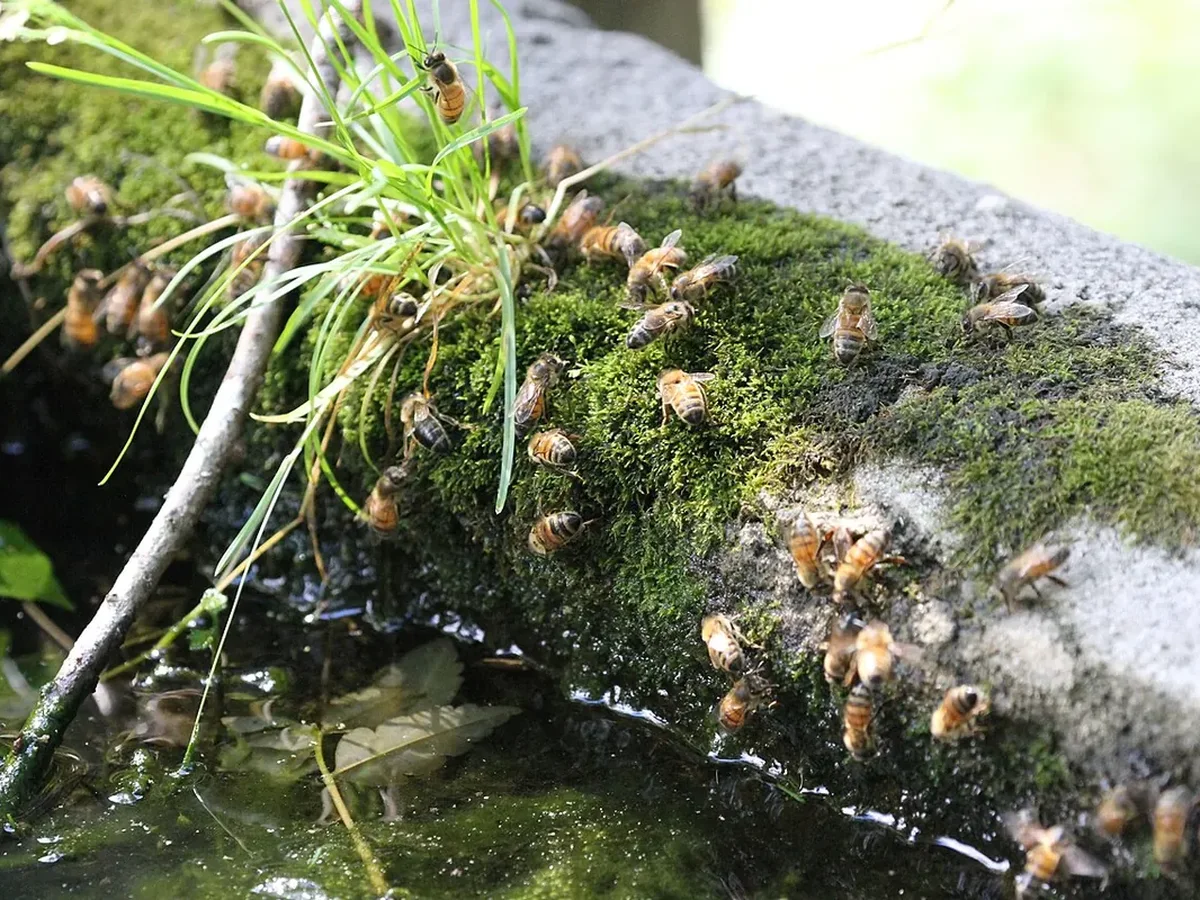
Photo: abbeyprivate, Wikimedia Commons, public domain
Quick Answer
To keep bees away from pool water, give them a better water source first. Set up a shallow birdbath or tray with stones, 50 to 100 feet away, and start it early in spring before bees learn to use your pool. Keep the pool covered when not in use, fix leaks and wet spots near the deck, remove flowers, sugary drinks and food near the water, and call a local beekeeper if a hive is nearby. For wasps and yellowjackets, find and remove nests (with a pro for large ones) and use traps away from the pool. Scents and sprays help little. Do not kill honey bees; they are important pollinators.
On hot days, bees and wasps often show up around pools, landing on the water, the coping and wet steps. Honey bees collect water to cool their hives and dilute stored honey. Wasps need water too, and yellowjackets are also drawn to sugary drinks and food. For swimmers, especially children and anyone allergic to stings, insects around the pool are a real concern. The good news is that learning how to keep bees away from pool water does not require harsh chemicals, just a few simple changes made early in the season.
This guide explains how to keep bees away from pool areas safely and humanely, how to keep wasps away from pool decks, and what to do about hives and nests. For other pool pests, see how to keep ducks out of pool water.
How to Keep Bees Away From Pool Water Starts With Why They Come
Honey bees need a lot of water in hot weather. Forager bees carry water back to the hive, where other bees spread it over the comb and fan their wings to cool it, like an evaporative cooler. Bees also use water to dilute honey for feeding young bees. A single colony can collect over a quart of water a day in summer, and far more during a heat wave. Bees find water by smell and by memory; once a group of foragers learns that your pool is a reliable source, they keep coming back and recruit others. Interestingly, bees are often attracted to the smell of chlorine and minerals, which helps them find water.
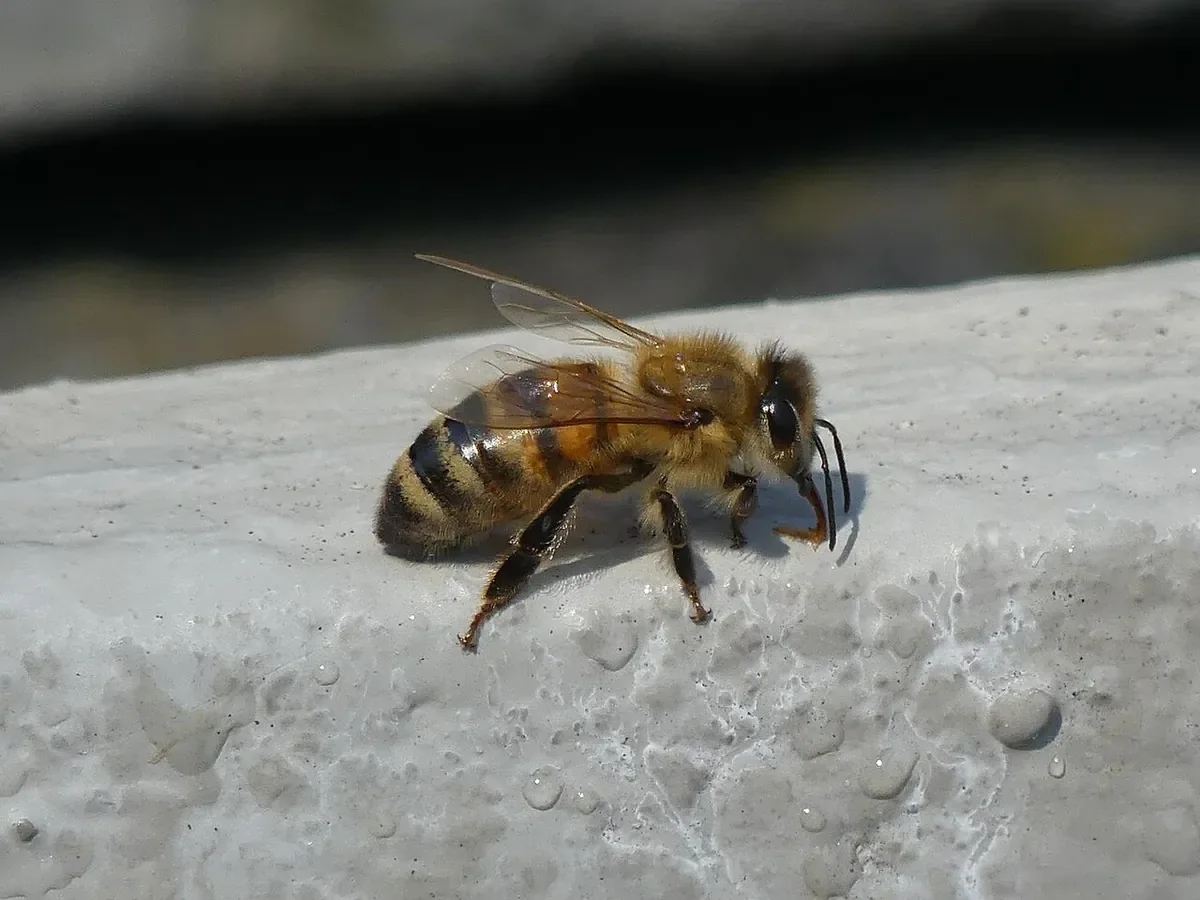
Photo: Reinhard Müller, Wikimedia Commons, CC BY-SA 4.0
How to Keep Bees Away From Pool: 12 Methods
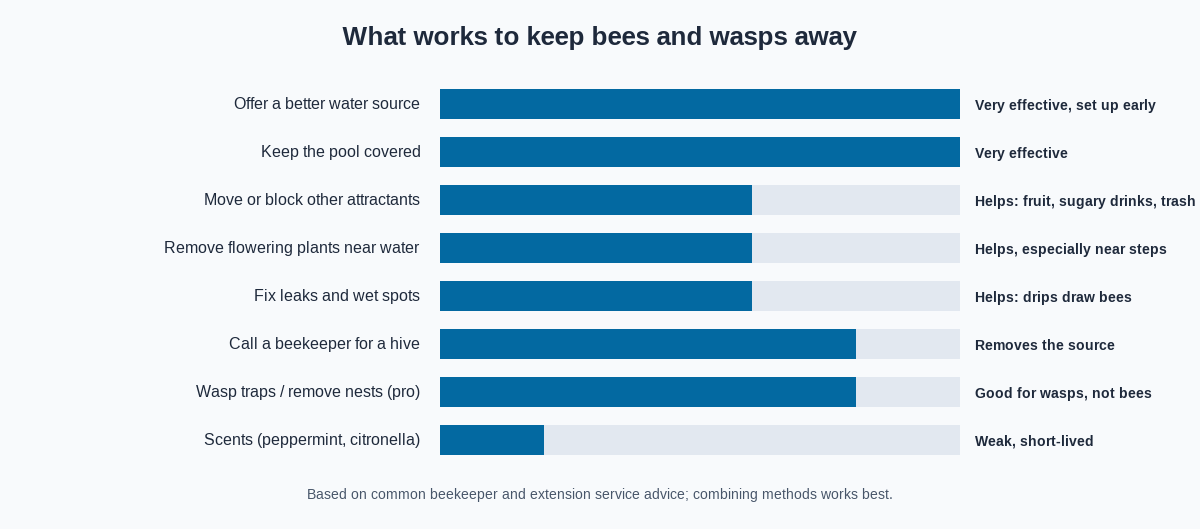
Chart: Asphapro.com
1. Offer a better water source. This is the most effective method. Set up a shallow birdbath, a plant saucer or a bucket with floating corks or stones so bees can land and drink without drowning. Place it in a sunny spot 50 to 100 feet away from the pool, ideally between the pool and where the bees come from. Bees like water with a slight scent, so adding a pinch of salt or a little pool water at first can help them find it. Keep it full every day.
2. Start early in spring. Bees are creatures of habit. Set up the alternative water source before the pool opens and before the weather gets hot, so foragers learn to use it first.
3. Cover the pool. A solid or automatic cover removes the water source. Even a solar cover reduces open water. Once the bees switch to another source, you can uncover more often.
4. Gradually move the water. If bees already use your pool, place a bowl of water near the pool where they land, then move it a few feet farther away each day until it is well away from the swim area.
5. Fix leaks and wet spots. Dripping hose bibs, leaking equipment, damp deck areas and puddles all attract bees. Dry them up and repair the source so new puddles do not form.
6. Remove sugary drinks and food. Keep lids on drinks, clean up spills and keep trash bins covered, emptied often and away from the pool.
7. Move flowering plants. Flowers right next to the pool bring bees close to swimmers. Plant them farther away, at the edges of the yard.
8. Call a beekeeper. If you see a large number of bees, there may be a hive or swarm nearby. Many local beekeepers will collect swarms for free. Do not try to remove a hive yourself.
9. Talk to neighbors. If a neighbor keeps bees, ask them to provide water near their hives.
10. Run water features. Moving water from fountains or a robotic cleaner can make the surface less inviting, though some bees will still land on edges.
11. Deal with wasp nests. For wasps, remove nests early in the season while they are small, or call a pest control professional.
12. Skip unproven repellents. Peppermint oil, citronella, cucumber slices and fake wasp nests have limited effect. Pool chemical "bee repellents" are generally not recommended.
How to Keep Wasps Away From Pool Areas
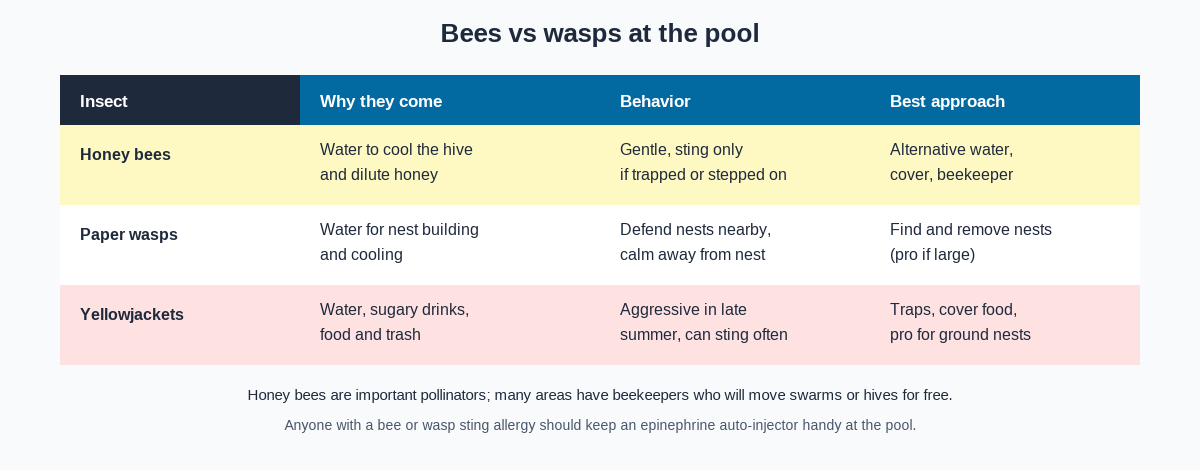
Chart: Asphapro.com
Wasps come to pools for water, and yellowjackets are also attracted to food, sugary drinks and trash, especially in late summer. To keep wasps away from pool decks, check eaves, fences, play sets, deck railings and the ground for nests in spring and remove small ones early. Hang commercial wasp traps away from the pool, so they draw wasps away rather than toward swimmers. Keep food and drinks covered, and empty trash often.
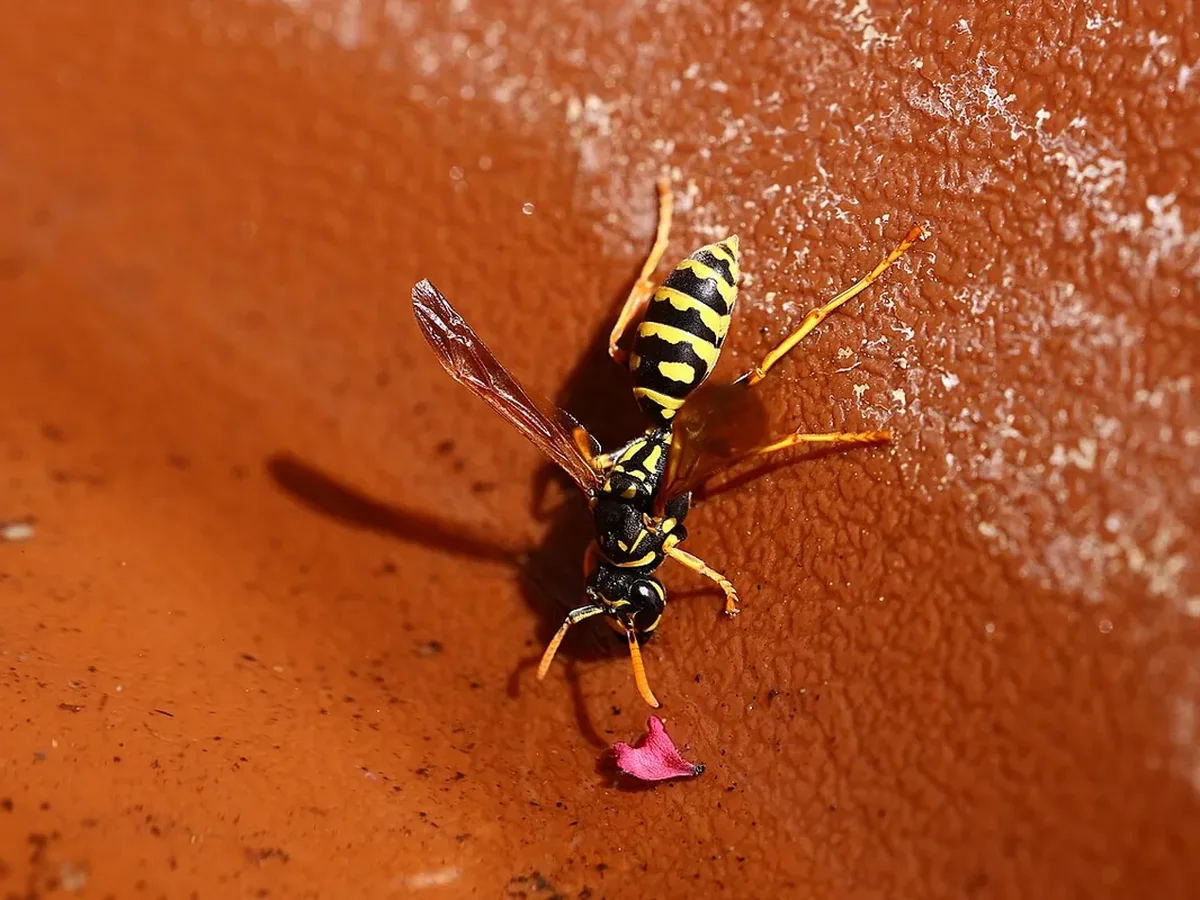
Photo: Sanjay Acharya, Wikimedia Commons, CC BY-SA 4.0
How Do I Keep Bees Away From My Pool Without Harming Them?
Many owners ask, "How do I keep bees away from my pool without hurting them?" The answer is to work with the bees' habits rather than against them. Bees are not looking to bother swimmers; they are looking for a dependable drink. If you give them a more attractive, reliable water source farther away and make the pool less available, most will switch. Avoid sprays and poisons near the water, which can harm bees, children and pets, and can contaminate the pool. Honey bees are vital pollinators for gardens and crops, and their numbers have been under pressure, so humane methods are the right choice. With patience, a few weeks of steady changes are usually enough.
How to Keep Bees Away From Your Pool With a Bee Water Station
A good water station is the key to how to keep bees away from your pool. Use a wide, shallow container, such as a large plant saucer, a birdbath or a shallow tub. Fill it with pebbles, marbles, corks or a floating piece of wood, so bees have a safe place to stand while drinking; bees cannot swim and will drown in open water. Place it in full or partial sun, since bees prefer water that is not too cold. Put it 50 to 100 feet from the pool, if possible on the side where the bees fly in. To attract them, add a pinch of salt or a small amount of pool water at first; bees often like the scent of minerals and chlorine. Refill it daily, especially in hot weather, because if it dries up even once, bees will return to the pool. Over time, you can stop adding salt or pool water once the bees are trained to the new source.
How to Keep Bees Away From My Pool When a Neighbor Keeps Bees
If a neighbor has hives, bees may be coming from a few houses away. Talk with your neighbor; most beekeepers want to keep good relations and will gladly set up a reliable water source near their hives, which is part of good beekeeping practice. Some areas have local rules requiring beekeepers to provide water. Meanwhile, set up your own water station between the hives and your pool, and use a cover when the pool is not in use. With both changes, how to keep bees away from my pool becomes much easier, and the bees will continue their good work in local gardens.
How to Keep Bees Away From Your Pool Skimmer
Bees that land on the water often get trapped and drown, then collect in the skimmer basket. Empty the skimmer often and wear gloves, since dying bees can still sting. A small floating "critter ramp" in the skimmer or at the edge of the pool can help bees and other insects climb out. Floating rafts or a few floating toys also give bees a landing spot so they do not drown, though this can encourage more landing. Removing dead bees quickly also reduces the smell of alarm pheromones that can make other bees defensive.
Bee and Wasp Stings at the Pool
Most stings cause pain, redness and swelling that fade in a few hours. For a bee sting, scrape the stinger out quickly with a fingernail or card. Wash the area, apply a cold pack, and use an antihistamine or pain reliever if needed. Wasps do not leave stingers and can sting more than once. Watch for signs of a severe allergic reaction: trouble breathing, swelling of the face or throat, hives spreading over the body, dizziness or fainting. Call emergency services right away if these appear, and use an epinephrine auto-injector if one has been prescribed. Anyone with a known allergy should keep their auto-injector at the pool, and others should know where it is.
Africanized Honey Bees
In parts of the southern United States, including Texas, Arizona, southern California and Florida, Africanized honey bees are present. They look like regular honey bees but defend their nests much more aggressively. If you see a large number of bees around the pool, especially near a wall void, meter box, old tire or shed, do not disturb them. Call a professional bee removal service or a local beekeeper experienced with Africanized bees. Keep children and pets away from the area until the bees are removed.
How to Keep Wasps Away From Pool Areas With Ground Nests
Yellowjackets often nest in the ground, in old rodent burrows, under decks or in landscape walls. Ground nests near pools are dangerous because people can step on or mow over them, which provokes many stings. Look for a steady stream of wasps going in and out of a hole in the ground. Mark the area and keep people away. Nest removal is best done by a pest control professional, usually at night when the wasps are inside. In late summer and fall, yellowjacket colonies are at their largest and most aggressive, so check for nests in spring and early summer when they are small.
How to Keep Bees Away From Pool Water All Season
Early spring: set up the bee water station, check eaves and deck railings for new wasp nests, and fix leaks. Late spring: open the pool with a cover ready, and keep the water station full every day. Summer: cover the pool when not in use, keep drinks covered, empty the skimmer often and watch for new nests. Late summer: hang yellowjacket traps away from the pool and keep food indoors. Fall: close the pool with a tight cover and keep the water station going until the first frost, so bees keep their habit for next year.
How to Keep Bees Away From Pool: Myths
"Dryer sheets repel bees." There is little evidence they work.
"Peppermint oil or vinegar in the pool keeps bees away." These add contaminants to the water and have little lasting effect.
"Fake wasp nests keep bees away." They may deter some paper wasps but not honey bees looking for water.
"Raising chlorine will drive bees off." Bees are often attracted to chlorinated water, and very high chlorine is unsafe for swimmers.
How to Keep Bees Away From My Pool: Worked Examples
Example 1: bees at the steps. Each afternoon, dozens of bees land on the wet pool steps. The owner sets out a plant saucer with pebbles and a splash of pool water right next to the steps, then moves it 10 feet away each day for a week, ending 80 feet away by the garden. Bee visits to the pool drop to a few a day, and the owner keeps the saucer full all summer.
Example 2: neighbor's hives. A neighbor two houses away keeps three hives. The owner explains the problem, and the neighbor adds a bee waterer near the hives. The owner also covers the pool when it is not in use. Within two weeks, the problem is mostly solved.
Example 3: yellowjackets in August. Yellowjackets swarm around drinks at the pool. The owner finds a ground nest near the fence, calls a pest control service to remove it, hangs two traps at the far end of the yard and keeps drinks in covered cups. The pool becomes comfortable again within a few days.
Landscaping to Keep Bees and Wasps Away
Plant choices around the pool affect how many bees and wasps visit. Flowering shrubs, clover in the lawn and herbs like lavender and mint all attract bees, which is good for the garden but not right next to the water. Move strongly flowering plants at least 15 to 20 feet from the pool and choose grasses, ferns, evergreen shrubs and low-flowering groundcovers for beds near the deck. Keep the lawn mowed so clover does not flower near bare feet. Fruit trees near the pool drop fruit that attracts wasps in late summer; pick up fallen fruit often. These changes do not need to remove all flowers from the yard, just move them farther from swimmers. See landscaping ideas for inground pools.
Covers and Bees
A cover is one of the simplest answers to how to keep bees away from pool water, because bees cannot drink what they cannot reach. Automatic covers make this easy, but even a solar cover reduces the water surface bees can use. Some bees will land on a solar cover where puddles form, so pump off standing water and keep the cover clean. After a few days with the pool covered and a water station available, most foragers switch to the new source. You can then use the pool normally and close the cover when you are done.
When to Call a Professional
Call a beekeeper or bee removal service if you see a swarm (a large ball of bees on a branch, fence or wall), a steady stream of bees entering a wall, roof, shed or meter box, or a large number of bees that do not respond to a water station after a couple of weeks. Swarms are usually calm and often move on within a day or two, but a beekeeper can collect them safely. Call a pest control professional for large wasp or yellowjacket nests, ground nests near walkways, or any nest that people cannot avoid. Many beekeepers collect swarms for free; removing an established hive from a wall costs $200 to $1,500 depending on access and repairs.
Keeping Kids and Pets Safe
Children often walk barefoot around the pool, where bees land on wet decks and steps. Teach children to watch where they step and not to swat at bees. Keep drinks in cups with lids and straws, since bees and wasps can crawl into open cans. Pets can be stung on the nose or paws when they snap at insects; watch for swelling and call a vet if it is severe. If anyone in the family has a sting allergy, follow their doctor's plan and keep emergency medication nearby whenever the pool is in use.
Why Bees Like Chlorinated Water
It surprises many owners that bees seem to prefer pool water to fresh water. Bees find water partly by smell, and plain fresh water has little scent. Pool water, with chlorine, salt and minerals, gives off a stronger smell that helps foragers locate it. Bees may also take in useful minerals from water that is not perfectly clean, which is why they sometimes prefer damp soil, wet stones or muddy puddles. Understanding this helps explain the trick of adding a little salt or pool water to a new water station. Once bees learn that the station is reliable, the scent matters less and they keep returning out of habit.
Pool Water Features and Bees
Waterfalls, deck jets, sheer descents and spillover spas create splashes and wet surfaces that bees love. The constantly wet stone or tile edges are ideal landing spots. If bees gather at a water feature, try turning it off for part of the day while you train them to a water station, or run it only in the evening when bees are less active. Dry off wet coping around features where possible. Once the bees have moved to their new source, you can run features normally again. These small changes are an often-overlooked part of how to keep bees away from pool water.
Best Times of Day to Swim
Honey bees are most active on warm, sunny afternoons and less active early in the morning, in the evening and on cool, cloudy days. If bees are a problem while you are still training them to a new water source, plan swims for the morning or evening when fewer bees are flying. Yellowjackets, though, are active all day in late summer and are drawn to food at any time. Keep snacks indoors or in sealed containers, especially at parties, and serve drinks in cups with lids.
How to Keep Bees Away From Your Pool for Good
The most lasting answer to how to keep bees away from your pool is a combination of habits: keep a dependable water station going all season, every season; cover the pool when you are not using it; keep the area around the pool dry, tidy and free of food; plant flowers farther from the water; and deal with nests and hives early with the help of a beekeeper or pest professional. Bees remember water sources from year to year, so once they are trained to your station, each new season gets easier.
Bees, Wasps and Pool Chemistry
Bees and wasps that drown in the pool add a small amount of organic matter, but not enough to change water chemistry much in most pools. Large numbers of dead insects, though, can clog skimmer baskets and filters and use up a little chlorine. Empty baskets often during busy periods and keep chlorine steady. Never add pesticides, soaps, oils or home remedies to pool water to repel insects; they can harm swimmers, cause foam and cloudiness, and damage the filter. Keeping the water balanced and the deck clean is enough.
Helping Pollinators While Protecting Swimmers
Bees are welcome in the garden, just not in the pool. A pollinator-friendly yard can still be a safe swimming area. Put flowering plants and a bee water station at the far side of the yard, keep the pool area planted with low-flowering greenery, and use the methods in this guide to guide bees to their own water. This balance gives bees the water and flowers they need while keeping the pool comfortable for swimmers. Many owners find that once a good water station is in place, bees almost disappear from the pool for the rest of the season.
How to Keep Bees Away From Pool: Key Points
- Give bees a better water source 50 to 100 feet away, starting in spring.
- Cover the pool and dry up leaks and wet spots.
- Remove sugary drinks, food and flowers near the water.
- Call a beekeeper for hives; remove wasp nests early.
Frequently Asked Questions
Why are bees attracted to my pool?
They need large amounts of water to cool their hive and dilute honey in hot weather, and they are often drawn by the scent of chlorine and minerals. Once foragers find a reliable source, they keep returning and recruit others.
Does chlorine kill bees?
Bees can drown in pools because they cannot swim; chlorine at normal pool levels is not the main threat. Floating ramps or a nearby water station with stones help keep bees from drowning.
Will vinegar keep bees away from my pool?
It has little lasting effect, and adding vinegar to pool water upsets the chemistry. A better water source farther away works much better.
Can I kill the bees around my pool?
Avoid killing honey bees, which are important pollinators. Call a local beekeeper to collect swarms or remove hives, and use humane methods to move foragers to another water source.
Are wasps more dangerous than bees at the pool?
Yellowjackets can be more aggressive, especially in late summer when colonies are large and natural food is scarce. They also sting more than once, unlike honey bees.
What if someone is stung at the pool?
Remove the stinger quickly, wash the area, apply a cold pack and watch for signs of an allergic reaction such as trouble breathing or facial swelling, which need emergency care.
Sources
- EPA: Pollinator protection
- CDC NIOSH: Insects and scorpions
- Penn State Extension: Bees, wasps and hornets
- USDA Forest Service: Pollinators